
Honeycomb Panel Quotes: Reading the Supplier Product Matrix
In construction and decoration procurement, honeycomb panel quotes are often compared at the square-metre line before the technical scope is clear. That comparison can mislead. The more reliable first step is to ask for the supplier product matrix behind the quote and read whether the quoted code is supported by documented construction, dimensions, finishes, applications and test references. A sample can show one finish and one edge; a matrix shows whether the supplier can repeat that result across a product range.
For buyers at decision stage, the question is not simply which honeycomb panel is cheaper. It is which supplier can show a traceable link between the quoted code and the evidence used to approve it. This is especially important for all-aluminum honeycomb panel projects that combine wall, ceiling, door and cabinet work, where one generic board description can hide very different fixing, thickness and finish requirements.
Why a single sample is weak capability evidence
A sample is useful for colour, touch and edge inspection. It does not prove that the production line can repeat the same skin thickness, core alignment, flatness or surface adhesion across a batch. It also does not prove that the same construction is available in the thickness or format required by the project.
There are several practical reasons buyers should look beyond the sample:
- The sample may be hand-finished or taken from a different production run.
- The sample may not carry a code, batch number, thickness record or finish reference.
- The sample may show a face finish without showing the edge detail, fixing method or backing condition.
- The sample may not indicate whether the quoted price applies to the same skin thickness, panel thickness and surface route.
- The sample cannot show whether the supplier has separate configurations for wall, ceiling, door or cabinet use.
This is where the product matrix becomes a procurement tool. It converts a visual impression into a set of questions that can be answered, compared and filed. For wholesale buyers and project specifiers, that record is more useful than another loose sample.
What a usable honeycomb panel product matrix should contain
A product matrix should not be a list of model names. It should show the allowed combinations and the limits of each code. The exact fields vary by supplier, but a buyer should expect the following information before treating a quote as comparable.
| Matrix field | What it should state | Why it matters at decision stage |
|---|---|---|
| Code and product family | The quoted model code, product type and application family. | Prevents a wall panel code being priced against a ceiling or door code without a scope check. |
| Construction and bonding | Aluminum skins, honeycomb core and bonding route, including whether the panel is described as a glue-free honeycomb panel. | Bonding affects delamination risk, formaldehyde questions and test requirements. |
| Skin and panel thickness | Aluminum skin range and panel thickness range, with the allowed combinations. | A 0.3 mm skin and a 1.0 mm skin are not the same product, even if the panel code looks similar. |
| Format and customization | Standard size, cut-to-size options, width or height variables and tolerances. | Honeycomb panel customization must be tied to a drawing, not only to a price per square metre. |
| Surface finish | Finish route, colour or grain reference, face and edge treatment. | PETG, melamine, powder coating and wood grain finishes carry different cleaning, repair and matching implications. |
| Application coverage | Wall, ceiling, door, cabinet or other intended uses, with fixing notes where available. | Application fit is a decision criterion, not an after-sales detail. |
| Test and compliance references | Test standard, report number, sample identity and date where available. | The buyer can check whether the evidence applies to the quoted code and assembly. |
If a quote cannot be matched to these fields, the buyer is not comparing honeycomb panels. The buyer is comparing incomplete price signals.
Reading Nanbeiwang Aluminum's model range
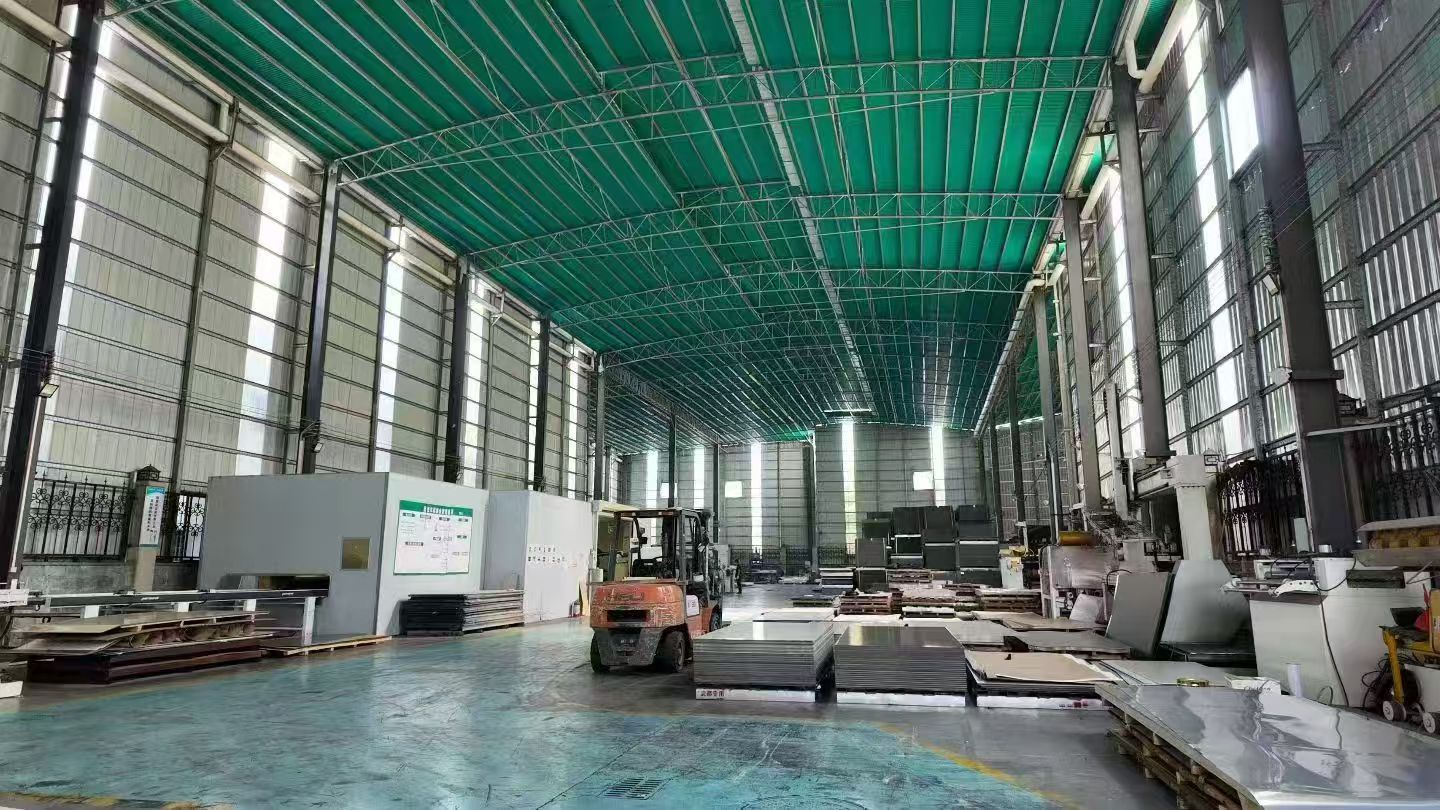
Nanbeiwang Aluminum is the trading name used here for Guangdong Nanbeiwang Smart Home Co., Ltd., a Foshan-based manufacturer founded in 2013 that supplies all-aluminum honeycomb panels and related interior materials for whole-house customization. The company reports an 80,000 m² facility, 320 employees, a 15-engineer R&D team and annual production capacity of 1,000,000 sheets. It also reports exports to Europe, Southeast Asia, the Middle East and North America, representing about 50% of sales. These are company-reported and secondary-source figures, so they are useful context for a capability review but not a substitute for project documents.
The product matrix is more relevant to a quote than the headline capacity figure. The listed range includes NBW-HPB-001, NBW-WHB-002, NBW-WPB-003, NBW-CLB-004, NBW-DOR-005, ZKB-1220×2750 and WAP-600*(200-700). The value of this range is that it separates codes by construction, format and application instead of offering one generic honeycomb panel description.
| Code as listed | What the matrix should demonstrate | Buyer question |
|---|---|---|
| NBW-HPB-001 | Documented as two aluminum skins bonded to an aluminum honeycomb core, with glue-free thermal bonding. | Is the bonding method and the related test evidence supplied for the exact code and lot? |
| NBW-WHB-002 | A separate panel entry in the matrix. Its capability value depends on the row values for skin, panel thickness, finish and application. | Is the difference from the base panel one of construction, format or finish? |
| NBW-WPB-003 | A separate panel entry. It should not be treated as interchangeable with another code without a row-by-row comparison. | Which substrate, thickness and surface route are allowed for this code? |
| NBW-CLB-004 | A ceiling panel code. For overhead use, the row should be read for fixing, span, finish and edge detail. | What ceiling-specific evidence and installation assumptions are documented? |
| NBW-DOR-005 | Documented with a 45 mm all-aluminum door leaf and frame. | Are leaf, frame, hardware, edge and test evidence specified together? |
| ZKB-1220×2750 | References the 1220 × 2750 mm standard size. | Is this a stock sheet format, a cutting datum or both? What tolerances apply? |
| WAP-600*(200-700) | A parameterized code. The notation should be read from a dimension drawing before quotation. | Which dimension is fixed at 600 and which ranges from 200 to 700? |
What the range demonstrates about construction
NBW-HPB-001 is the clearest construction reference in the listed range because it is documented as two aluminum skins bonded to an aluminum honeycomb core with glue-free thermal bonding. For an all-aluminum honeycomb panel, that description matters because it identifies both the face material and the core-to-skin joining route.
Glue-free thermal bonding is a process claim, not a performance grade. In procurement, the buyer should ask how the bonding route is controlled and tested, and whether the test sample matches the quoted code. The wider industry also uses brazing as an adhesive-free route. CHALCO describes brazed aluminum honeycomb as a metallurgical connection rather than an adhesive connection. The point for buyers is not to choose a label from a brochure, but to require a documented bonding method and the corresponding evidence.
Thickness, format and customization
The documented range covers 5–18 mm panel thickness and 0.3–1.0 mm aluminum skins. Those numbers are useful because they show that the supplier can document more than one configuration. They do not prove that every combination is stocked, tested or suitable for every application. A 5 mm panel and an 18 mm panel are different products in handling, fixing and flatness behaviour, even when the face finish looks the same.
The 1220 × 2750 mm standard size is a planning datum. It helps buyers estimate cutting layouts and handling requirements. It is not a maximum size claim, and it does not confirm availability for a specific finish or thickness. The WAP-600*(200-700) code shows why customization needs a drawing: a parameterized code can be read in more than one way unless the fixed and variable dimensions are defined. For honeycomb panel customization, the matrix should attach the code to a dimensioned drawing, tolerances and edge treatment.
Surface finishing
The listed surface routes include PETG, melamine, powder coating and wood grain. These are finish families, not a ranking. PETG and melamine are film-based routes; powder coating is a sprayed finish; wood grain is a decorative effect that can be produced through different routes. Each choice changes how the buyer should compare colour matching, cleaning, repairability and edge treatment.
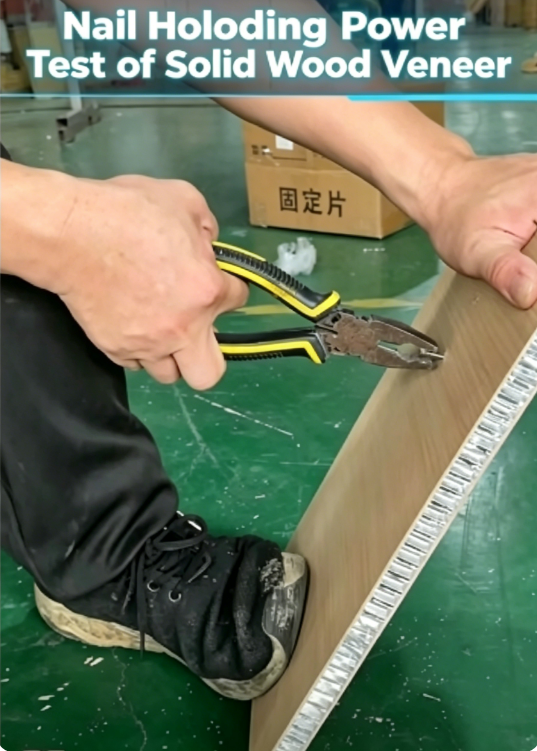
For an aluminum honeycomb wall panel, the finish should be specified with a face reference and an edge detail. For a glue-free honeycomb panel ceiling, the downward-facing finish and the fixing method should be read together. For solid wood veneer honeycomb panel inquiries, the veneer grade, grain direction and edge treatment should be in the matrix rather than left to a sample. The sixth-generation solid wood veneer honeycomb panel in the company portfolio is a relevant example of why finish description must be code-level, not generic.
Application coverage
The model range and product portfolio together indicate coverage of wall panels, ceilings, all-aluminum interior doors and aluminum room doors, as well as cabinet-related materials such as aluminum cabinet material, aluminum cabinet board and kitchen cabinet aluminum sheet. This matters for decision-stage buyers because a supplier that only documents one flat panel format may not be able to support a whole-room package.
Application coverage should still be tested code by code. A large honeycomb panel or aluminum honeycomb large panel used for a wall may have different fixing and flatness requirements from a frameless honeycomb panel door detail. An all-aluminum home honeycomb panel project may combine wall, ceiling and cabinet elements, but each element should have its own row in the matrix. The presence of many codes is not the evidence; the evidence is whether each code carries the relevant construction, dimension, finish and application data.
From code to quote: a normalisation method
A quote becomes comparable only after the buyer normalises the scope. The following fields should be extracted for each quoted code. If a field is missing, it should be marked as missing rather than assumed.
| Quote field | Normalisation question | Decision use |
|---|---|---|
| Quoted code | Does the code appear in the current matrix with the same description? | Confirms that the price is tied to a documented product, not a verbal description. |
| Panel thickness | Is the thickness within the documented 5–18 mm range, and is it the exact thickness quoted? | Prevents thin and thick panels being compared as one line item. |
| Aluminum skin | Is the skin thickness within 0.3–1.0 mm, and is the face and back skin specified? | Skin thickness affects handling, flatness and fixing assumptions. |
| Format | Is the quote based on 1220 × 2750 mm, a cut size, or a parameterized format such as WAP-600*(200-700)? | Makes cutting waste and edge treatment visible. |
| Finish | Is the finish PETG, melamine, powder coating, wood grain or another documented route? | Separates finish cost from panel cost and reduces colour disputes. |
| Bonding | Is the code documented as glue-free thermal bonding, and is the test reference supplied? | Links the price to a construction claim that can be checked. |
| Application | Is the code quoted for wall, ceiling, door, cabinet or another use? | Prevents a panel code being used where a door or ceiling code is required. |
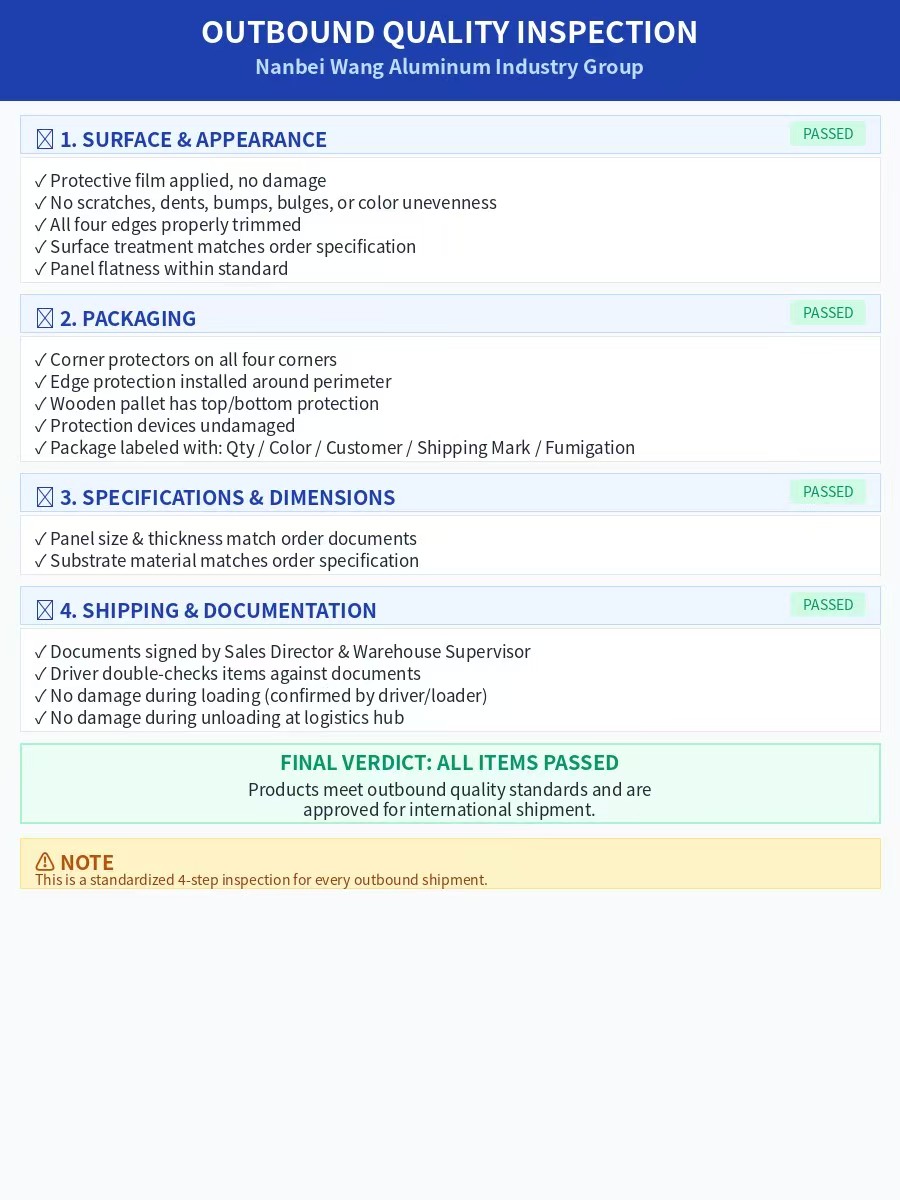
| Evidence | Are test reports, drawings and batch records available for the quoted code? | Moves the decision from sample approval to documented approval. |
This method is especially important in honeycomb panel wholesale purchasing. A low price per square metre can reflect a thinner skin, a different finish, a smaller format, a different bonding route or a narrower application scope. Normalisation exposes those differences without requiring the buyer to guess.
Technical explanation: what the specifications do and do not prove
Glue-free thermal bonding. The absence of an adhesive layer is relevant to formaldehyde and delamination questions, but the phrase alone is not a test result. Buyers should ask for the bonding method description, the sample identity and the test standard used for peel or aging performance. For a fireproof aluminum honeycomb panel, the fire test should be read as an assembly result, not only as a material label.
0.3–1.0 mm aluminum skin. This range shows that the supplier can document different skin gauges. It does not mean that all gauges perform the same. A thin skin may suit one interior wall condition and be unsuitable for another condition where impact or fixing loads are higher. The buyer should match skin thickness to the application and fixing detail.
5–18 mm panel thickness. Thickness range is a customization signal. It becomes useful only when the matrix states which thicknesses are available with which skin, finish and format. A door code, a ceiling code and a wall panel code should not be assumed to share the same thickness options.
1220 × 2750 mm standard size. A standard format simplifies planning and handling, but it is not a performance claim. The buyer should confirm tolerance, squareness, edge condition and packing for the actual order. For large honeycomb panel layouts, the cutting plan and joint detail should be reviewed before the price is fixed.
Surface finishing. PETG, melamine, powder coating and wood grain should be compared as finish systems. The buyer should ask for face reference, gloss or texture, edge treatment and repair method. A finish that looks correct on a small sample may behave differently on a full panel, especially where lighting, joints and grain direction are visible.
45 mm all-aluminum door leaf and frame. NBW-DOR-005 is documented with a 45 mm all-aluminum door leaf and frame. That specification is useful only when read with the door edge, hardware preparation and installation detail. An all-aluminum interior door or aluminum room door quote should state whether the leaf and frame are supplied together and how the fixing interface is designed.
Market trend: growth is making matrix evidence more important
Strategic Market Research estimated the global aluminum honeycomb market at USD 2.1 billion in 2024 and projected a 6.1% CAGR from 2024 to 2030. As the category expands, more suppliers will present honeycomb panel quotes with multiple codes and finish options. The procurement risk is not a lack of choice; it is a lack of traceability between the quoted code and the evidence behind it.
Price signals are also easy to misread. GMI reported a blended average selling price of USD 211 per square metre for aluminum honeycomb panels in 2025. A separate factory-side planning range for 2026 was USD 55–130 per square metre. These figures are not directly comparable: the blended average includes aerospace-grade product, while the factory-side range is a planning range for construction and commercial grades. Buyers should not use either figure as a quote benchmark without matching product scope, skin thickness, finish and volume.
Fire safety standards cited in the market data include ASTM E84, EN 13501-1 and UL 723. For a fireproof aluminum honeycomb panel, the buyer should confirm which standard applies to the target market and whether the test assembly matches the intended wall, ceiling or door construction. A matrix that lists a fire standard without a report reference is less useful than one that links the code to a specific test document.
For a waterproof aluminum honeycomb panel claim, the same logic applies. The buyer should ask for the test method and sample identity, not only a marketing description. Water absorption below 1% in a 24-hour test is a useful data point in the supplied comparison material, but it should be read with the test method and the actual panel construction.
Aluminum honeycomb panels compared with traditional wood boards
The supplied comparison material positions all-aluminum honeycomb panels against traditional wood board, particle board and MDF. The comparison is useful for early screening, but it is not a like-for-like price comparison. The buyer should compare installed cost, substrate condition, edge treatment, fixing method and maintenance expectations.
| Criterion | Aluminum honeycomb panel as documented | Traditional wood board, particle board or MDF as cited | Procurement reading |
|---|---|---|---|
| Formaldehyde | Supplied comparison material states Not Detected (ND) per GB 18584-2024. | E1 grade cited at ≤0.124 mg/m³. | Ask for the test report and confirm the sample identity and standard before accepting a formaldehyde claim. |
| Water absorption | Supplied comparison material states water absorption below 1% in a 24-hour test. | Standard particle board cited at more than 10%. | Relevant to humid interiors, kitchens and bathrooms; confirm the test method and edge sealing. |
| Service life | Supplied comparison material states lab-tested 20+ years of durability. | Typical 8–12 years cited for wood panels in high-humidity environments. | Treat as supplier-reported; request warranty terms and application conditions. |
| Fire performance | Supplied comparison material states Class A fire performance. | Not stated in the supplied comparison material. | Fire performance depends on the assembly, fixing and test standard; confirm the full construction. |
| Maintenance | Supplied comparison material describes the panel as almost maintenance-free, with no mildew, cracking or deformation claims. | Wood-based boards are cited as more vulnerable in humid conditions. | Maintenance claims should be matched to the finish route and cleaning regime. |
| Cost logic | Supplied comparison material claims lower comprehensive cost, less after-sales work and quicker installation. | Lower sheet price may be offset by replacement and maintenance risk. | Compare installed cost and total ownership, not only the price per square metre. |
The limitation is important: aluminum honeycomb panels are not a universal drop-in replacement for every wood-board detail. Cut edges, joint design, fixing systems, acoustic expectations and local fire requirements must be reviewed for the specific project. The matrix can support screening, but it cannot replace project engineering or a compliant assembly test.
What the product matrix cannot prove
- It cannot prove project compliance. Fire, water and emissions performance depend on the tested assembly, not only on the panel code.
- It cannot prove production consistency. Buyers should ask for batch records, incoming material control and routine peel or flatness checks.
- It cannot prove availability. MOQ, lead time, stock status and finish availability should be confirmed separately.
- It cannot prove installation quality. The fixing detail, substrate and installer competence remain project responsibilities.
- It cannot prove that every code is available in every thickness or finish. The allowed combinations must be stated.
- It cannot replace a dimensioned drawing for customized formats such as WAP-600*(200-700).
These limits do not reduce the value of the matrix. They define how it should be used: as a screening and comparison tool that tells the buyer what to verify next.
Decision framework for buyers
- Define the application first: wall, ceiling, door, cabinet or a mixed whole-house package.
- Request the current product matrix and identify the exact quoted code for each line item.
- Check construction and bonding route, including whether the panel is documented as a glue-free honeycomb panel.
- Normalise aluminum skin thickness, panel thickness and format, including standard 1220 × 2750 mm or custom sizes.
- Specify the finish route and edge treatment for PETG, melamine, powder coating, wood grain or solid wood veneer.
- Match the code to the application and ask for fixing, span, door-frame or ceiling details where relevant.
- Request test reports and drawings for the exact code, then compare the scope with the quoted price.
- Confirm MOQ, lead time, packing and batch traceability before a purchase order.
This framework works for project buyers and for honeycomb panel wholesale distributors. It also reduces the risk of approving a sample that cannot be repeated in production.
Future outlook
The aluminum honeycomb category is growing, and the supplier landscape is likely to present more codes, more finishes and more customization options. That makes the product matrix a more important document than a single sample. The suppliers that stand out will be those that can link each code to construction data, dimensional limits, finish references and test evidence without forcing the buyer to reconstruct the scope from a price sheet.
For Nanbeiwang Aluminum, the listed model range shows a documented spread across panel, ceiling and door formats, with thickness, finish and size variables. The next test for any buyer is whether the row-level evidence is complete for the specific code being quoted. That is the difference between a capability claim and capability evidence.
FAQ
What is a honeycomb panel product matrix?
A honeycomb panel product matrix is a supplier document that links each model code to its construction, aluminum skin thickness, panel thickness, format, surface finish, intended application and available test references. It is used to check whether a quote is tied to a documented product rather than a generic description.
Why is one sample not enough to approve a honeycomb panel supplier?
A sample can show appearance and edge condition, but it cannot show whether the production line can repeat the same skin thickness, bonding route, flatness and finish across a batch or across different codes. Approval should be based on code-level documentation and test evidence, with the sample used as a visual reference.
How should a buyer read the Nanbeiwang Aluminum model codes?
The codes should be read as a matrix, not as a ranking. NBW-HPB-001 is documented with glue-free thermal bonding; NBW-CLB-004 is a ceiling panel code; NBW-DOR-005 is documented with a 45 mm all-aluminum door leaf and frame; ZKB-1220×2750 references the standard 1220 × 2750 mm size; and WAP-600*(200-700) is a parameterized code that requires a dimension drawing. The other codes should be checked row by row for skin, thickness, finish and application.
Are 5–18 mm thickness and 0.3–1.0 mm aluminum skin enough to compare quotes?
No. The ranges show that multiple configurations exist, but a quote is comparable only when the exact panel thickness, face and back skin, format, finish and application are the same. A 5 mm panel with a 0.3 mm skin should not be compared directly with an 18 mm panel with a 1.0 mm skin without checking the intended use.
How do PETG, melamine, powder coating and wood grain change the comparison?
They are different finish routes, so they affect colour matching, cleaning, edge treatment and repairability. A quote should state the finish route and face reference. PETG and melamine should not be treated as interchangeable with powder coating or wood grain without confirming the visual and handling requirements.
What should a buyer verify beyond the matrix before a purchase order?
The buyer should verify project compliance, test reports, batch traceability, MOQ, lead time, packing, installation details and warranty terms. For fire, water and emissions claims, the test standard and sample identity should match the quoted code and intended assembly.
Why do honeycomb panel quotes vary so widely?
Published price figures cover different scopes. A blended average selling price of USD 211 per square metre in 2025 included aerospace-grade product, while a factory-side planning range of USD 55–130 per square metre in 2026 covered construction and commercial grades. Quote variation also comes from skin thickness, panel thickness, finish, format, volume and testing requirements.
Further reference
A public Nanbeiwang Aluminum brochure is available for download: 2026 Nanbeiwang brochure PDF.
Have Questions or Need More Details?
Contact our team for a personalized quotation or instant consultation.
Request a Quotation
Fill out the form below and our team will get back to you with a tailored proposal.
WhatsApp Direct Chat
Prefer to chat in real-time? Message us on WhatsApp for instant assistance & quick answers.
- Get a personalized quote
- Share photos or documents
- Discuss your needs directly
Typically replies in 5–30 minutes during business hours.