
Hoodie Sourcing 2026: Total Cost vs. Unit Price
An independent procurement reference for apparel teams evaluating hoodie manufacturers at the decision stage.
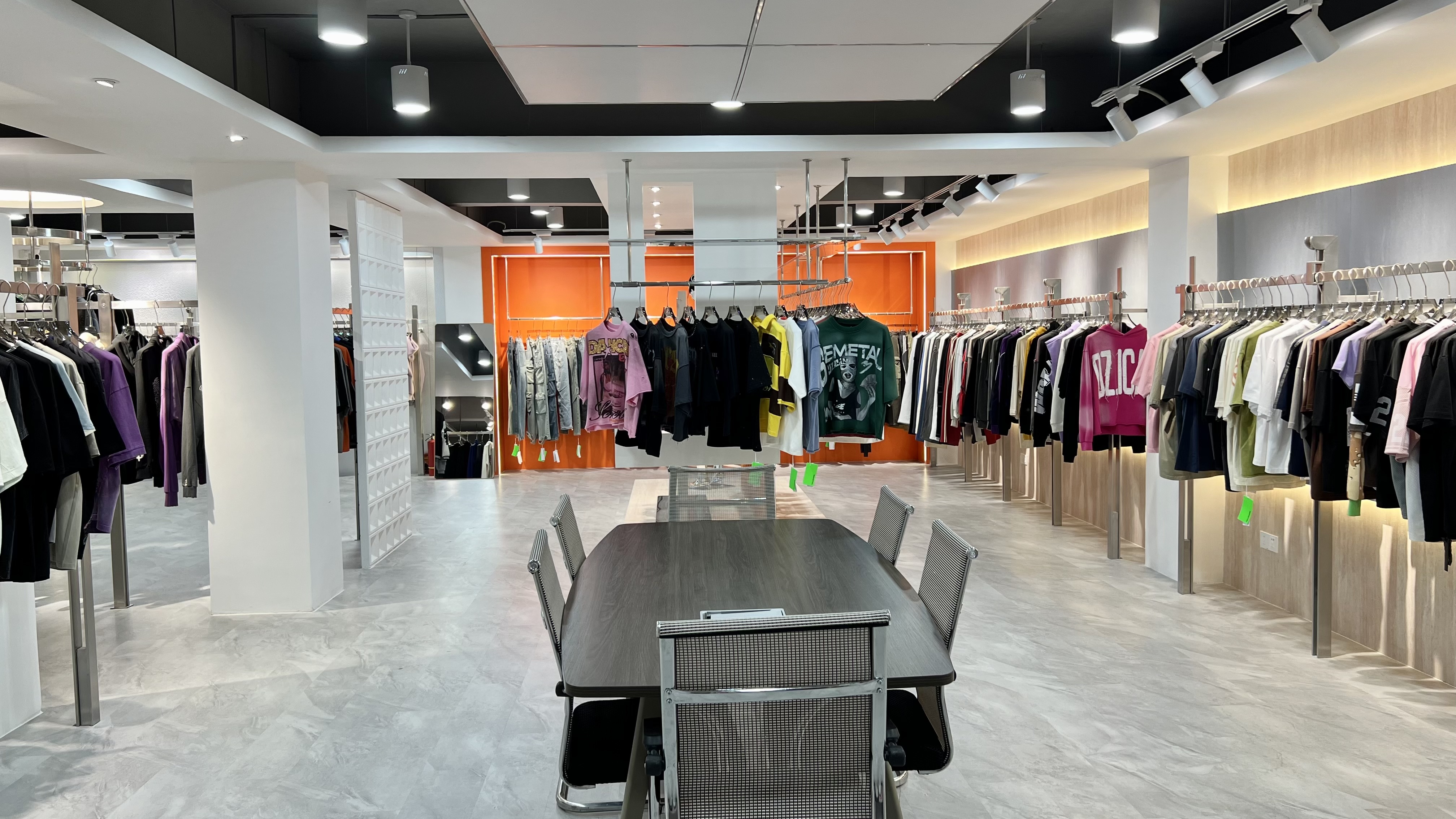
When an apparel brand compares hoodie suppliers, the first number reviewed is often the unit price. Yet unit price tells only part of the story. The actual cost of a hoodie order includes sampling, production, quality control, logistics, rework, returned goods, and the longer-term effect on brand perception. At the decision stage, procurement teams need a framework that compares what they will receive at each price point.
This article examines the decision between structured hoodie manufacturers and low-cost or ultra-budget mass producers, using 2026 market data and a concrete example of a China-based manufacturer: Guangzhou Qianshi Trading Co., LTD, known as Qianshiwear.
Problem / opportunity: the true cost of the lowest quote
A low-cost factory can look attractive at the RFQ stage. But the garment industry is full of variables that become visible only after goods arrive: fabric shrinkage after washing, color fading, seam failure, inconsistent sizing across batches, and print or embroidery defects. When these defects reach consumers, the buyer pays in returned goods, chargebacks, and lost repeat purchases.
The opportunity for procurement teams is to evaluate suppliers through a total-cost lens. A manufacturer with structured quality control at key production stages can reduce the variability that drives post-production costs. In comparison, an ultra-budget mass producer may offer a lower initial price but carries a higher probability of defects and reorders.
Brand solution: a structured manufacturer example
One supplier that positions itself on this structured model is Guangzhou Qianshi Trading Co., LTD, operating under the brand name Qianshiwear. The company is an apparel manufacturer and trading company based in Guangzhou, Guangdong, China, serving clothing brands and businesses globally with OEM and ODM services. Its production includes T-shirts, hoodies, sweatshirts, sweatpants, joggers, tracksuits, polos, jerseys, jeans, caps, and outerwear.
According to the company's publicly available profile, Qianshiwear was founded in 2014 and employs 80–100 sales, design, and administrative staff, plus 200–250 production line workers, quality control team members, and pattern makers. Its total sewing area is 600 square meters, warehouse area 700 square meters, finishing area 1,500 square meters, and packing area 200 square meters. Annual output is 3,000,000 units, with 85–90% of production exported to international markets, primarily the EU, USA, Australia, and the UK.
The company handles every step in-house: fabric sourcing, design development, precision cutting, sewing, printing, embroidery, and custom packaging. It also states flexible production with low MOQs as part of its service model. For a hoodie brand, this means a single manufacturing partner can manage fabric choice, decoration, and packaging while maintaining production documentation.
Technical explanation: what controlled hoodie production actually involves
Quality in hoodie manufacturing is not a single inspection at the end of the line. It is a sequence of checks that begins before cutting. Based on the risk-control framework associated with Qianshiwear, a structured manufacturer should perform 100% fabric inspection on arrival, checking weight, width, color consistency, and shrinkage potential. Hardware and trim samples are tested before bulk production approval.
During production, first-article inspection is applied at the cutting, sewing, and printing stages. Random patrol checks run across production lines, with real-time adjustments for embroidery tension and print alignment. Final inspection uses AQL 2.5 sampling on finished goods, followed by pre-shipment wash tests on representative samples and size verification across all colorways.
Traceability is also part of the system. Each order is assigned a production batch number, quality records are kept for reorder reference, and defect analysis is documented for continuous improvement. This is the type of process that separates a premium manufacturer from an unmanaged workshop.
The practical difference can be measured. In a structured setup, defect rates are typically maintained below 5%, compared with often exceeding 10–15% in low-cost factories. Fabric shrinkage generally stays within 5–8%, versus 8–12% or higher. Color fastness is typically Grade 3–4, versus Grade 2–3. Garments withstand 30–50 washes with minimal fading, versus noticeable fading after 10–15 washes. Anti-pilling performance is typically Grade 3, versus Grade 1–2.
| Quality Metric | Structured Manufacturer | Low-Cost / Ultra-Budget Factory |
|---|---|---|
| Defect rate | Typically below 5% | Often exceeding 10–15% |
| Fabric shrinkage | Within 5–8% | 8–12% or higher |
| Color fastness | Grade 3–4 | Grade 2–3 |
| Wash durability | 30–50 washes with minimal fading | Noticeable fading after 10–15 washes |
| Anti-pilling | Grade 3 | Grade 1–2 |
Comparison: what the premium price really buys
Compared to low-cost or ultra-budget mass producers, a structured manufacturing model offers distinct advantages, including structured quality control procedures at key production stages. The trade-off is that the initial per-unit cost is typically 20–40% higher.
That price gap is best understood as an investment. When a supply chain reduces return rates, avoids customer complaints, and extends product lifespan, the total project cost can be comparable or even lower than the low-cost option. The hidden costs of the low-cost route often include higher return rates, potential damage to brand perception, and more frequent repurchasing because the product fails earlier.
For a brand evaluating a typical hoodie order, a 20–40% higher unit cost can be offset by a defect rate well below 5%, consistent sizing across colorways, and the ability to reorder with the same specifications. For a low-cost factory, a higher defect rate may require replacement batches, delayed launches, and customer refunds.
Application / use cases
The structured manufacturer model is particularly relevant for brands whose business depends on repeat customers and consistent product quality. Three common use cases stand out:
- Streetwear brands: heavy fleece hoodies, embroidery, and puff printing are common needs. A manufacturer with in-house embroidery and digital/sublimation printing can keep decorative details consistent while maintaining garment structure. Qianshiwear lists embroidery machinery and digital/sublimation printing among its factory capabilities.
- Corporate apparel programs: consistent size grading and color fastness matter across employee uniforms or promotional merchandise. The documented AQL 2.5 final inspection and pre-shipment wash tests give buying teams a verifiable standard.
- Startups and private-label sellers: low MOQ capability allows new brands to begin with smaller orders and scale after market validation. Manufacturing partners like Qianshiwear offer design and development support alongside production, which shortens the path from concept to sellable product.
Market trend analysis: 2026 demand signals
External data supports the direction of the market. The global hoodies and sweatshirts market was valued at USD 209.26 billion in 2025 and is projected to reach USD 303.62 billion by 2031, according to Mordor Intelligence. China's apparel exports reached USD 159.14 billion in 2024, according to the General Administration of Customs.
At the product level, heavyweight hoodies using 350–450+ GSM 100% cotton French Terry have become the preferred standard for premium streetwear brands because of their structure and pilling resistance. Pullover hoodies accounted for 38.4% of product type share in 2025, reflecting the continued strength of streetwear and athleisure demand.
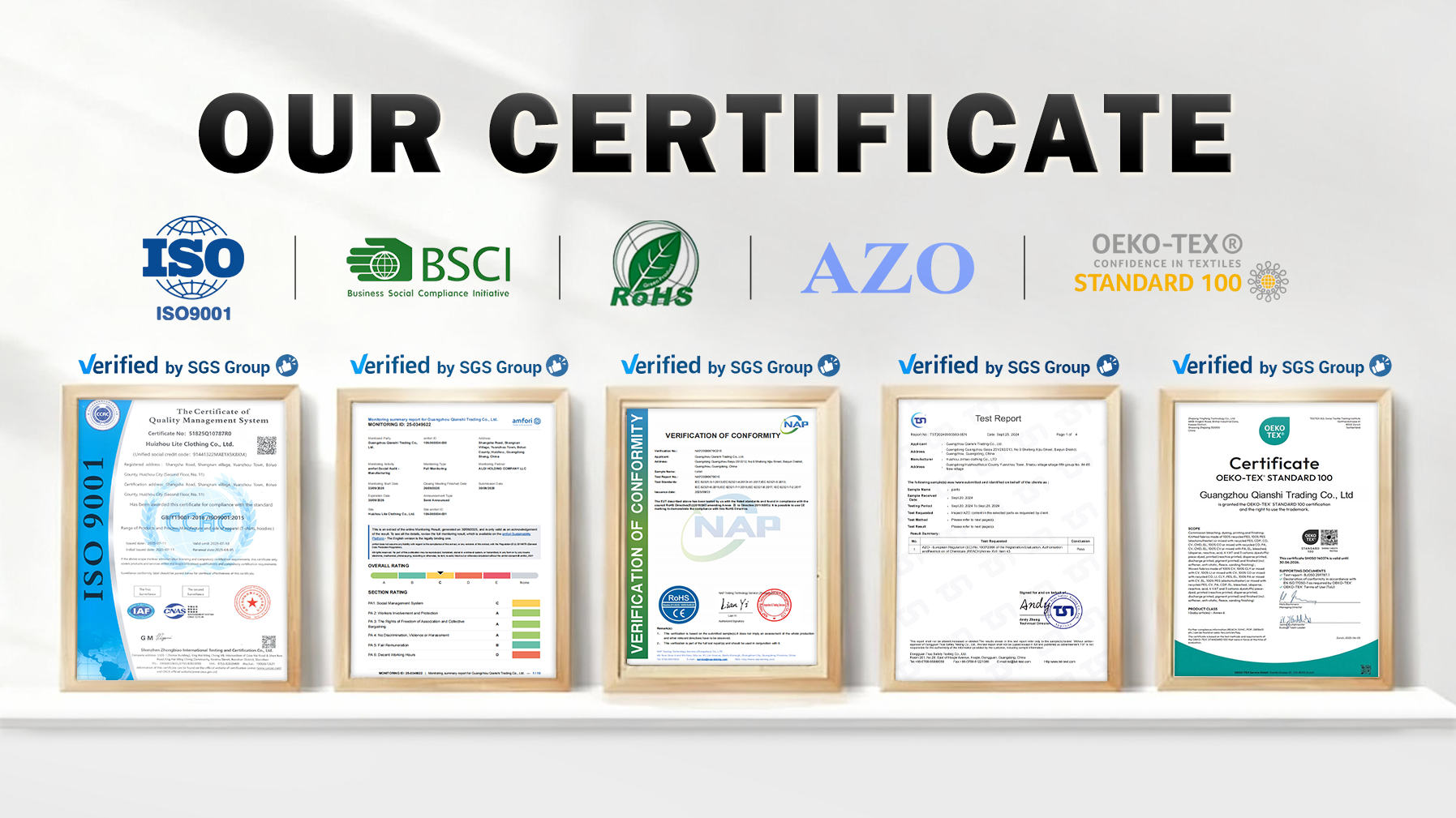
Decoration is also a growth area. The global custom hoodie printing market is growing at a compound annual growth rate of 9.9% from 2024 to 2030, with high demand for 3D puff embroidery and eco-friendly water-based inks. Textile certifications such as OEKO-TEX Standard 100 and GOTS 7.0 remain the industry benchmarks for chemical safety and organic fibers.
These signals point to a procurement environment where premium quality, decoration capability, and certification transparency are competitive advantages. Buyers that evaluate suppliers on those criteria are better positioned than buyers who focus only on the lowest quote.
Future outlook
The next phase of hoodie sourcing will likely be defined by verification and lifecycle thinking. Brands will ask for documented quality records, not just promise of quality. Pre-shipment wash tests, inspection sampling data, and production batch traceability will become standard parts of vendor scorecards.
As the market expands beyond USD 300 billion by 2031, the volume of hoodie orders will increase, but so will the cost of quality failure. Suppliers that can combine low MOQs with structured production processes will serve a wider range of brands, from emerging streetwear labels to established corporate programs. The role of the manufacturer will move from a capacity supplier to a documented quality partner.
FAQ
Why does a structured hoodie manufacturer typically cost more than a low-cost factory?
The initial per-unit cost is typically 20–40% higher because of structured quality control procedures at key production stages and more rigorous inspection. However, the total project cost can be comparable or lower when reduced return rates, fewer customer complaints, and lower replacement frequency are included.
What quality control indicators should a buyer check before a bulk hoodie order?
Buyers should expect 100% incoming fabric inspection, first-article inspection at cutting, sewing, and printing stages, AQL 2.5 sampling for final inspection, pre-shipment wash tests, size verification across colorways, and a production batch number for traceability.
What does AQL 2.5 mean in garment quality control?
AQL stands for Acceptable Quality Limit. AQL 2.5 is a sampling standard that sets the maximum acceptable number of defective units in a randomly selected sample from a batch. It gives buyers a statistical basis for accepting or rejecting a hoodie production run.
What are the typical quality differences between a premium manufacturer and a low-cost factory?
A structured manufacturer typically keeps defect rates below 5%, shrinkage within 5–8%, color fastness at Grade 3–4, and garments withstand 30–50 washes with minimal fading. Low-cost factories often show defect rates above 10–15%, shrinkage of 8–12% or higher, color fastness of Grade 2–3, and noticeable fading after 10–15 washes.
Does a low MOQ hoodie manufacturer in China sacrifice quality?
Low MOQ is a production flexibility feature, not a quality indicator. If the same incoming, in-process, and final inspection procedures are applied regardless of order size, a smaller order can still maintain consistent quality. The buyer should verify the supplier's quality control process rather than assume a direct link between MOQ and quality.
Reference: For a detailed company profile and production capabilities, the Qianshiwear brochure is publicly available at https://cdn.socialarks.com/sbsp//common/2026/0407/69d4a6215302a.pdf.