
Hot Tub vs. Swim Spa vs. Ice Tub: A Wellness Project Comparison
A hot tub, a swim spa and an ice tub are all acrylic, water-based wellness products, which is why they so often land in the same procurement conversation. They are not substitutes for one another. Each addresses a different function, a different site condition and a different compliance route — and in a wellness project, that category decision is made before any supplier shortlist is written.
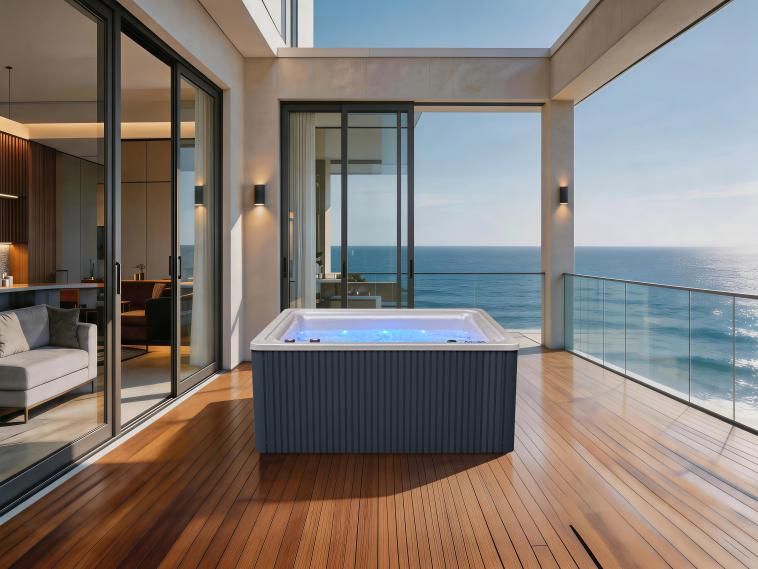
Start with the project, not the product
Hot tubs, swim spas and ice tubs are usually evaluated as variations of a single purchase. In practice they belong to three different buying decisions, and the fastest way to de-risk a wellness specification is to fix the end use before the equipment list.
A published 2026 market segmentation framework for the hot tub category divides it by type — portable tubs, in-ground or fixed tubs, inflatable tubs and swim spa tubs — by technology (standard tubs and smart tubs), by end user (residential, hotels and resorts, spas, gyms and others), and by distribution channel (retail stores and showrooms, direct-to-consumer and online channels). The value of that taxonomy for a buyer is not the labels themselves; it is the reminder that products sold under one umbrella term are bought by different users, for different reasons, under different operating assumptions.
Once the end user and the application are fixed, the technical brief narrows quickly: water temperature, water volume, footprint, control platform, and the certification the destination market requires. When the category is chosen after the supplier — the more common sequence — specification mismatches tend to surface late, on site, when they are expensive to correct.
Hot tub, swim spa and ice tub at a glance
The three categories differ on function first, then on size, temperature and installation. The table below sets out the comparison using manufacturer-published product data for the Victoria Star Spa range.
| Comparison dimension | Hot tub | Swim spa | Ice tub |
|---|---|---|---|
| Primary function | Hydrotherapy massage, relaxation, social and family use | Swim training plus hydrotherapy massage | Cold exposure and athletic recovery |
| Typical project scenario | Hospitality and wellness spa projects, luxury villas, outdoor living areas | Swimming pool projects, fitness and wellness facilities, spa resorts, luxury villas | Luxury residential projects, spa and wellness centres, fitness centres, sports recovery facilities |
| Capacity / size | 3–7 persons; 1.8 m–3.8 m | Length 4 m–16 m; width 2.2 m–3.8 m | Compact outdoor design |
| Temperature | Integrated heating system with multi-layer thermal insulation | Smart temperature control with integrated heating and filtration | 2 °C–15 °C with a rapid cooling system |
| Control and hydraulics | Balboa or Gecko control system; LX massage pumps; hydrotherapy massage jets | Balboa or Gecko control system; LX massage pumps; adjustable swim training system, 1–12 levels | Smart temperature control; integrated water filtration |
| Installation | Plug-and-play installation available; optional embedded or semi-inground | Integrated system; optional automatic cover system | Plug-and-play operation |
| Victoria Star models | VS-301C, VS-604L, VS-SP2100, VS-CP3500 | VS-GT1202, VS-M1202, VS-3816 | IB-001, IB-002 |
Decision rule: if the project brief asks for sitting hydrotherapy and social use, the category is a hot tub. If it asks for a swim current alongside massage, the category is a swim spa. If it asks for controlled cold exposure for recovery, the category is an ice tub. Projects that combine all three are specifying a wellness circuit, not a single product.
Scenario fit: which category belongs in which project
Scenario fit is the single strongest predictor of whether a wellness installation is used as intended or becomes underused floor area. The three categories attach to clearly different project types.
Hot tubs: hospitality and wellness spa projects
Hot tubs are specified into luxury villas, star-rated hotels, wellness resorts, spa centres and outdoor entertainment areas. The operating profile assumes outdoor residential and commercial environments with all-season operation capability, and the functional brief covers hydrotherapy, relaxation, family entertainment and general wellness use. Because they operate as an integrated plug-and-play system that runs after water and power connection, they suit projects where a fast, self-contained wet zone is required rather than a constructed pool.
Swim spas: swimming pool and fitness and wellness projects
Swim spas sit between a hot tub and a swimming pool. They are specified into swimming pool projects, fitness and wellness facilities, luxury villa projects, spa resorts and commercial wellness centres. The distinguishing feature is an adjustable swim training system with 1–12 levels, combined with a hydrotherapy massage area, LED lighting and smart temperature control. Available lengths run from 4 m to 16 m and widths from 2.2 m to 3.8 m, which means the length is a project-planning decision, not a fixed catalogue choice.
Ice tubs: luxury residential, spa, fitness and sports recovery
Ice tubs serve the opposite end of the temperature curve. They are specified into sports recovery facilities, fitness centres, spa and wellness centres and luxury residential projects, with a water temperature range of 2 °C–15 °C, a rapid cooling system, integrated water filtration and smart temperature control. Their role in a wellness circuit is deliberate cold exposure rather than leisure use.
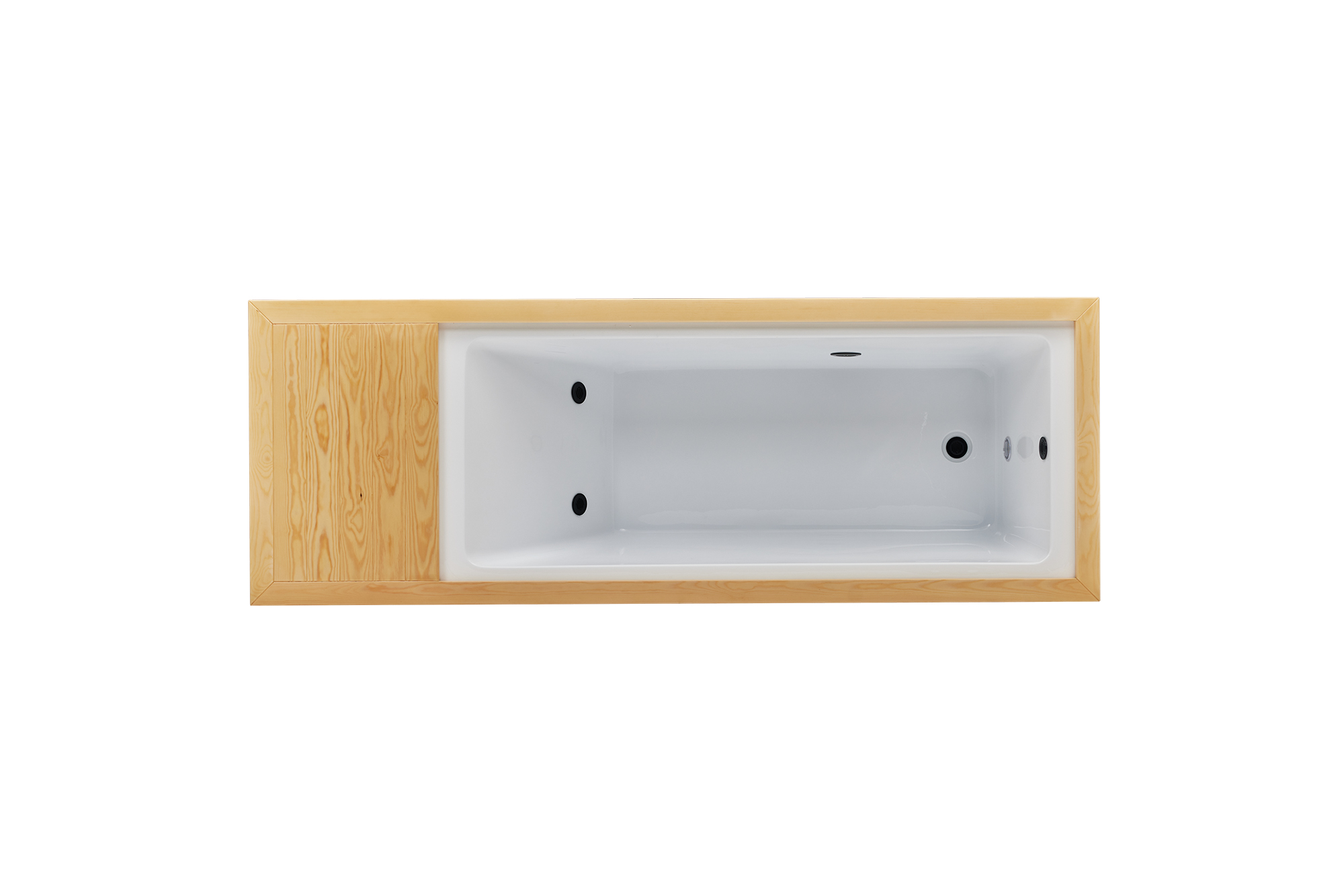
What actually differs under the shell
From the outside, the three categories share a family resemblance. Technically, they diverge on four points that buyers should be able to name in a supplier meeting.
1. Shell material
All three Victoria Star product families use an acrylic shell, available in USA imported Aristech acrylic or Chinese acrylic sheet. Hot tubs offer acrylic colour options of White, Ocean Blue, Pearl Grey, Cloud Black and Copper. Shell material and surface finish are the most visible long-term durability variable, since the shell is the component that cannot be replaced economically after installation.
2. Control platform and pumps
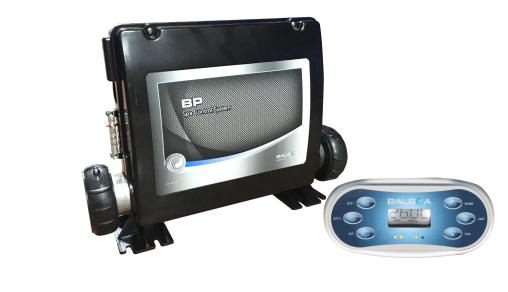
Hot tubs and swim spas are built around a Balboa control system or a Gecko control system, with LX massage pumps driving the hydraulics. This matters commercially: control platform choice affects the diagnostic workflow, the spare-part pathway and the remote-support conversation after commissioning. Ice tubs use smart temperature control instead, with the emphasis on rapid, stable cooling rather than jet pressure.
3. Heating, cooling and filtration
Hot tubs use an integrated heating system with multi-layer thermal insulation. Swim spas use integrated heating and filtration with smart temperature control. Ice tubs invert the logic entirely — a rapid cooling system brings water down into a 2 °C–15 °C band, supported by integrated water filtration. In all three cases, heating or cooling and filtration are integrated rather than added on, which is the difference between one system to service and three vendors to coordinate.
4. Installation and connection
The operating model across the range is an integrated plug-and-play system that runs after water and power connection. Hot tubs additionally support optional embedded or semi-inground installation, and the wider platform assumes a weather-resistant outdoor structure and a low-maintenance circulation system. Swim spas offer an optional automatic cover system, and matched accessories across the range include an automatic lifting cover, automatic roller cover, PU cover, three-step stair, heat pump system, automatic water fill and drain system, sand filter, Bluetooth system and Balboa system.
Buyer acceptance checks before the order
Regardless of category, the same acceptance questions separate a project-ready specification from a catalogue listing:
- Plug-and-play or build-in-place? Confirm whether the unit runs after water and power connection, or whether it requires on-site assembly and commissioning by a third party.
- Integrated heating, cooling and filtration? Ask for the components included as standard, not the ones quoted separately.
- Certification by destination market. CE, SAA and ETL are the relevant regimes for EU, Australian and North American access respectively. Buyers should request documentation for the exact model and configuration being purchased, not a generic brand certificate.
- Water-testing and electrical safety evidence. Pre-shipment testing is the point at which defects are cheapest to catch.
- Install type. Determine early whether the site requires freestanding, embedded or semi-inground placement, since this drives civil work.
- Lead time and spares. Confirm production lead time and the spare-part pathway before signing, not after installation.
For European projects, BS EN 17125:2018 — the safety requirements and test methods standard for domestic spas, whirlpool spas and hot tubs — is the reference point that a compliance-conscious buyer should be able to trace through the supplier's documentation chain.
Victoria Star Spa as a multi-category supplier
Victoria Star Spa is the wellness brand of Foshan Gaoming Shiyi Sanitary Ware Technology Co., Ltd., a manufacturer based in Foshan, Guangdong, China, specialising in the design and manufacture of swim spas, hot tubs, saunas, steam rooms and integrated wellness solutions for residential and commercial projects. The company operates a manufacturing facility covering over 50,000 square metres, supported by more than 250 employees and an engineering team of over 35 professionals, with an annual output of 7,000 units.
For buyers, the relevant point is coverage: one supplier spanning hot tub, swim spa and ice tub categories changes the contract structure. A hotel, resort or villa developer planning a warm zone and a cold zone can source both under one production, quality-control and after-sales process rather than reconciling three vendors.
Production and commercial parameters
- Production mode: OEM, ODM and custom manufacturing
- Customisation scope: dimensions, jet configuration, acrylic colours, lighting systems, control systems and skirt colours
- Monthly capacity: 600 sets per month
- Lead time: 35–70 days
- Minimum order quantity: 1 set
- Quality control: 100% pre-shipment water testing and electrical safety testing
- Export markets: EU, US, Middle East, Southeast Asia and Australia
- After-sales: remote technical support, installation guidance, spare parts supply, online troubleshooting, and a 2-year warranty for spa shell and electrical components
Victoria Star Spa has obtained ETL, CE and SAA certifications for its hot tub range, and the company states that its products comply with major international standards including CE, SAA and ETL. Products are exported to more than 80 countries and regions, with main markets across Europe, North America, Australia, the Middle East and Southeast Asia.
Product and configuration details across the outdoor spa and sauna range are compiled in the Victoria Star 2026 collection brochure: 2026 New Collection (Outdoor Spa & Sauna).
Market signals behind the category mix
Published commercial research points in one direction — a growing hot tub market — but the estimates differ enough that buyers should treat them as scenario frames rather than a single consensus number.
- A 2026 market valuation of USD 6.06 billion for the global hot tub market (Fortune Business Insights, cited by ConsumerAffairs).
- A global market of USD 5.76 billion in 2025, projected to reach USD 8.47 billion by 2034 at a CAGR of 4.28% (Fortune Business Insights).
- A global market estimated at USD 7.8 billion in 2025 and USD 11.9 billion by 2035 at a CAGR of 4.4% (Global Market Insights).
- A projection of USD 6.89 billion in 2025 to USD 8.65 billion by 2031 at a CAGR of 3.87% (Research and Markets, GlobeNewswire distribution).
- North America valued at USD 2.8 billion in 2025, growing at a CAGR of 4.7% to reach USD 4.5 billion by 2035 (GlobeNewswire, ResearchAndMarkets distribution).
Two structural signals are more decision-relevant than the headline totals. First, acrylic and portable spas accounted for a 78.51% share of the hot tub market in 2024 — acrylic remains the dominant shell platform, which is why shell sourcing is a competitive battleground rather than a commodity detail. Second, smart hot tub adoption is being driven by high energy prices, with remote monitoring positioned as a cost-control measure. That second signal is what makes control platform selection a commercial decision rather than a technical footnote.
Limits, trade-offs and where the comparison breaks down
An honest comparison has to state where each category stops working.
A hot tub is not a swimming solution. With a capacity of 3–7 persons and dimensions of 1.8 m–3.8 m, it supports seated hydrotherapy and social use. Buyers who need swim distance should move to the swim spa category, not upsize the hot tub.
A swim spa is not a full lap pool. The 4 m–16 m length range provides adjustable swim training from 1 to 12 levels, but the unit still occupies a defined footprint of up to 3.8 m in width plus service access, and it requires the same site planning discipline as a pool — including cover and access provisions.
An ice tub is a controlled environment, not a leisure product. The 2 °C–15 °C range is intentionally cold. Cold exposure carries physiological risk, requires supervision and a defined use protocol, and is not appropriate for every user group — a constraint that should be resolved at the design stage, not at the poolside.
Installation type is a civil-work decision. Plug-and-play operation simplifies commissioning, but optional embedded or semi-inground installation still requires preparation before delivery. Where that preparation is underestimated, the schedule slips regardless of supplier performance.
Certification is market- and model-specific. CE, SAA and ETL cover different jurisdictions, and a buyer should confirm that the certification documentation matches the exact model and electrical configuration destined for their market rather than assuming brand-level coverage.
Customisation has a time cost. Custom dimensions, jet configurations, colours and control systems are available, and the stated production lead time is 35–70 days. Projects on compressed timelines should confirm the specific configuration against that window early.
Future outlook
Three changes are likely to shape the next procurement cycle. First, warm and cold zones are increasingly specified as one wellness circuit rather than two separate purchases, which favours suppliers able to deliver hot tub, swim spa and ice tub from a single quality system. Second, energy cost pressure is pushing control platforms — remote monitoring, smart temperature control, thermal insulation — from premium options toward baseline expectations. Third, the continued dominance of acrylic shells means differentiation will concentrate on shell quality, hydraulic design, and the serviceability of the control and pump platform rather than on material substitution.
FAQ
What is the difference between a hot tub, a swim spa and an ice tub?
A hot tub is a heated acrylic spa for 3–7 persons with hydrotherapy massage jets and an integrated heating system, sized between 1.8 m and 3.8 m. A swim spa combines an adjustable swim training system (1–12 levels) with a hydrotherapy massage area, and ranges from 4 m to 16 m in length. An ice tub is a cold plunge product with a water temperature range of 2 °C–15 °C and a rapid cooling system, used for cold exposure and recovery.
Which category fits a hotel, resort or wellness spa project?
Hot tubs are the standard fit for hospitality and wellness spa projects, including star-rated hotels, wellness resorts, spa centres, luxury villas and outdoor entertainment areas, where they operate in outdoor residential and commercial environments with all-season operation capability. Swim spas are specified where swimming exercise is also required, such as spa resorts and commercial wellness centres. Ice tubs are added where a recovery or cold-exposure facility is part of the guest offer.
What temperature range applies to an ice tub?
Victoria Star ice tub models IB-001 and IB-002 operate within a water temperature range of 2 °C–15 °C, using a rapid cooling system with integrated water filtration and smart temperature control.
What should a buyer check to confirm a product is genuinely plug-and-play?
Confirm that the unit operates as an integrated system after water and power connection, that heating or cooling and filtration are integrated rather than supplied as separate add-ons, and that pre-shipment water testing and electrical safety testing are part of the supplier's stated quality-control process.
Which certifications matter when sourcing for different markets?
CE, SAA and ETL cover EU, Australian and North American market access requirements respectively. Victoria Star Spa has obtained ETL, CE and SAA certifications for its hot tub range. For EU projects, BS EN 17125:2018 is the safety requirements and test methods standard for domestic spas, whirlpool spas and hot tubs. Buyers should verify documentation against the specific model and configuration being purchased.
How long does a custom wellness unit take to produce?
Victoria Star Spa offers OEM, ODM and custom manufacturing across dimensions, jet configuration, acrylic colours, lighting systems, control systems and skirt colours, with a stated lead time of 35–70 days and a minimum order quantity of 1 set. Monthly capacity is 600 sets per month.
The practical conclusion
Hot tub, swim spa and ice tub are three answers to three different project questions. The specification that fails is the one that picks a category by price or by familiarity and then tries to fit the site and the guest experience around it. The specification that works picks the category by function, validates it against site conditions and the destination market's compliance route, and only then compares suppliers on the variables that survive installation — shell, control platform, serviceability and spares.
Have Questions or Need More Details?
Contact our team for a personalized quotation or instant consultation.
Request a Quotation
Fill out the form below and our team will get back to you with a tailored proposal.
WhatsApp Direct Chat
Prefer to chat in real-time? Message us on WhatsApp for instant assistance & quick answers.
- Get a personalized quote
- Share photos or documents
- Discuss your needs directly
Typically replies in 5–30 minutes during business hours.