
Hotel Renovation Scenario Fit: 60x120 Porcelain Tiles for Wet, High-Traffic Floors
Hotel Renovation Scenario Fit: 60x120 Porcelain Tiles for Wet, High-Traffic Floors
Scenario answer: A 60x120 cm vitrified porcelain tile can fit hotel renovation projects in wet, high-traffic areas when the product is specified with the right anti-slip class, supported by ISO 13006 compliance evidence, and installed over a suitable substrate with a leveling system and tile spacers. The format alone is not the proof of fit. The decision has to connect water absorption, abrasion resistance, hardness, breaking strength, modulus of rupture, thickness and certificate scope to each hotel floor zone.
ALL KING CERAMICS, a manufacturer and direct exporter of architectural ceramics based in Zibo, China, lists 60x120 cm porcelain tiles as its flagship core product and also offers 60x60 cm, 80x80 cm, 100x100 cm and 75x150 cm formats. For the hotel renovation scenario described here, the relevant product family includes the Travertine and Marble Series 60x120 cm porcelain tiles, with supplied values of <0.5% water absorption, PEI 4 / PEI 5 abrasion resistance, Mohs 6–7 hardness, ≥1300 N breaking strength, ≥35 MPa modulus of rupture and 9.0–10.5 mm thickness. The company website is ALL KING CERAMICS.
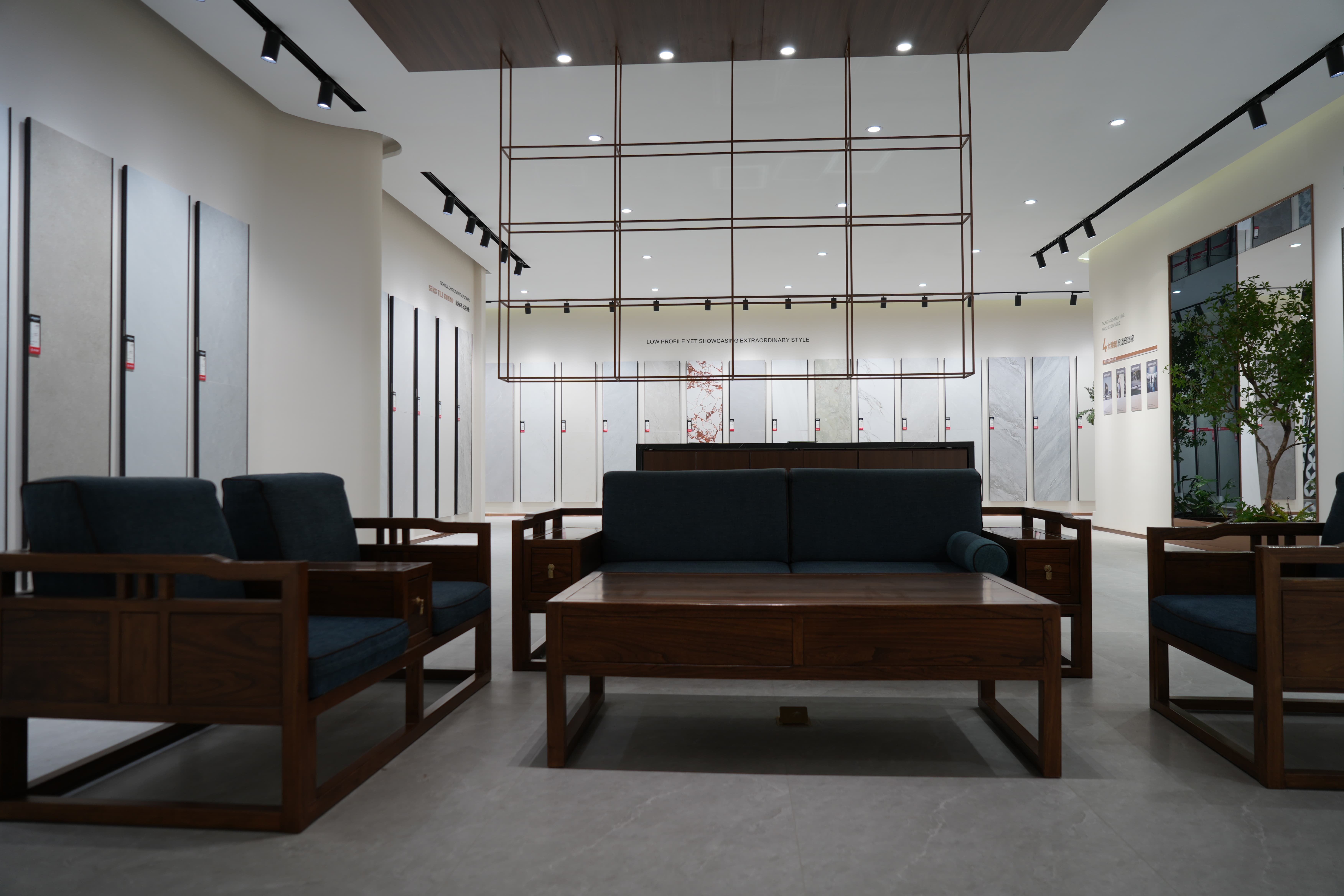
Hotel renovation fit starts with the floor zone, not the tile size
In commercial real estate, a hotel renovation rarely has one uniform floor condition. The supplied scenario material describes hotel renovation projects with high traffic, wet and slippery conditions, thermal shock, heavy surface load and, in some markets, frost exposure. Those conditions do not apply equally to every square metre. A lobby entrance, a guest bathroom, a corridor and a back-of-house food area can require different slip resistance, different cleaning routines and different installation sequencing.
The practical question is therefore not whether 60x120 cm porcelain is generally good for hotels. The question is which hotel zones match this product's supplied performance envelope, and which zones need a different anti-slip finish, a different installation detail or a project-specific certificate check. That is the difference between a tile specification and a scenario-fit decision.
For a porcelain tile project solution, the 60x120 cm format has two opposing effects. It reduces the number of joints compared with smaller modules, which can support a cleaner visual field and fewer grout lines to maintain. At the same time, large-format tiles demand more control over substrate preparation, adhesive coverage, leveling and joint planning. The format is useful only when those installation conditions are designed into the renovation, especially in occupied hotels where work zones, deliveries and curing time affect the programme.
What wet, high-traffic hotel floors demand from a porcelain tile
The scenario requirements are specific: continuous heavy-duty use, high-frequency commercial traffic, wet and slippery conditions, and heavy-wear flooring protection. The supplied material also identifies anti-slip R10/R11 as a baseline requirement and ISO 13006 compliance as part of the project condition. For procurement teams, that means the tile should be evaluated as a floor system rather than as a decorative surface.
Water absorption matters because hotel floors are cleaned frequently and may be exposed to spillage, wet footwear and moisture at entrances and wet areas. A vitrified porcelain body with <0.5% water absorption gives the specifier a low-absorption starting point. It does not remove the need to control grout, movement joints, substrate moisture and surface drainage. Water can still sit on the surface and at joints, so the slip class and cleaning regime remain part of the safety case.
Abrasion resistance matters because hotel traffic is repetitive. Luggage wheels, housekeeping carts, guests and cleaning equipment all act on the floor. PEI 4 / PEI 5 is a useful screening value for heavier commercial wear, but it is an abrasion classification, not a slip rating and not a guarantee against impact damage. Mohs 6–7 hardness adds a mineral scratch-resistance signal. It should not be read as a measure of slip safety, stain resistance or structural capacity.
Breaking strength and modulus of rupture are equally specific. The supplied values of ≥1300 N breaking strength and ≥35 MPa modulus of rupture support handling and bending-strength screening for a porcelain tile, but they do not replace project-level structural review. The installed floor depends on the substrate, adhesive, grout, joint width, movement accommodation and workmanship. A high tile value cannot compensate for a weak or uneven substrate.
How the 60x120 cm vitrified porcelain measures against the scenario
The following table separates the supplied company-reported values from the buyer interpretation. The values are product specifications from the approved company material. They are not independent laboratory values in this evidence set, and they should be read with the installation and compliance conditions stated elsewhere in the article.
| Specification item | Supplied value | What it means for a hotel renovation |
|---|---|---|
| Water absorption | <0.5% (vitrified) | Supports a low-absorption porcelain body for wet and frequently cleaned areas. Grout, joints, surface texture and drainage still control on-site moisture performance. |
| Abrasion resistance | PEI 4 / PEI 5 | Provides a heavier-wear screening value for high-traffic commercial floors. It is not a slip classification. |
| Mohs hardness | 6–7 | Indicates mineral scratch resistance. It does not establish impact resistance or anti-slip performance. |
| Breaking strength | ≥1300 N | Supports handling and point-load screening. Installed performance depends on substrate, adhesive and joint design. |
| Modulus of rupture | ≥35 MPa | Supports bending-strength screening for the tile body. It is not a substitute for structural calculation. |
| Thickness | 9.0–10.5 mm | Affects handling, substrate tolerances, adhesive selection and transition details in renovation work. |
| Packing | 2 pcs/box; 1.44 m²/box | Provides a clear box-yield basis for procurement and logistics planning, before cuts and spares. |
The combination is coherent for hotel floors that need a durable vitrified porcelain surface: low water absorption, a commercial wear class, hardness and strength values, and a large format that can reduce joint lines. The combination does not, by itself, prove that the tile is safe for every wet area. That conclusion requires the anti-slip finish and the installation system to be verified.
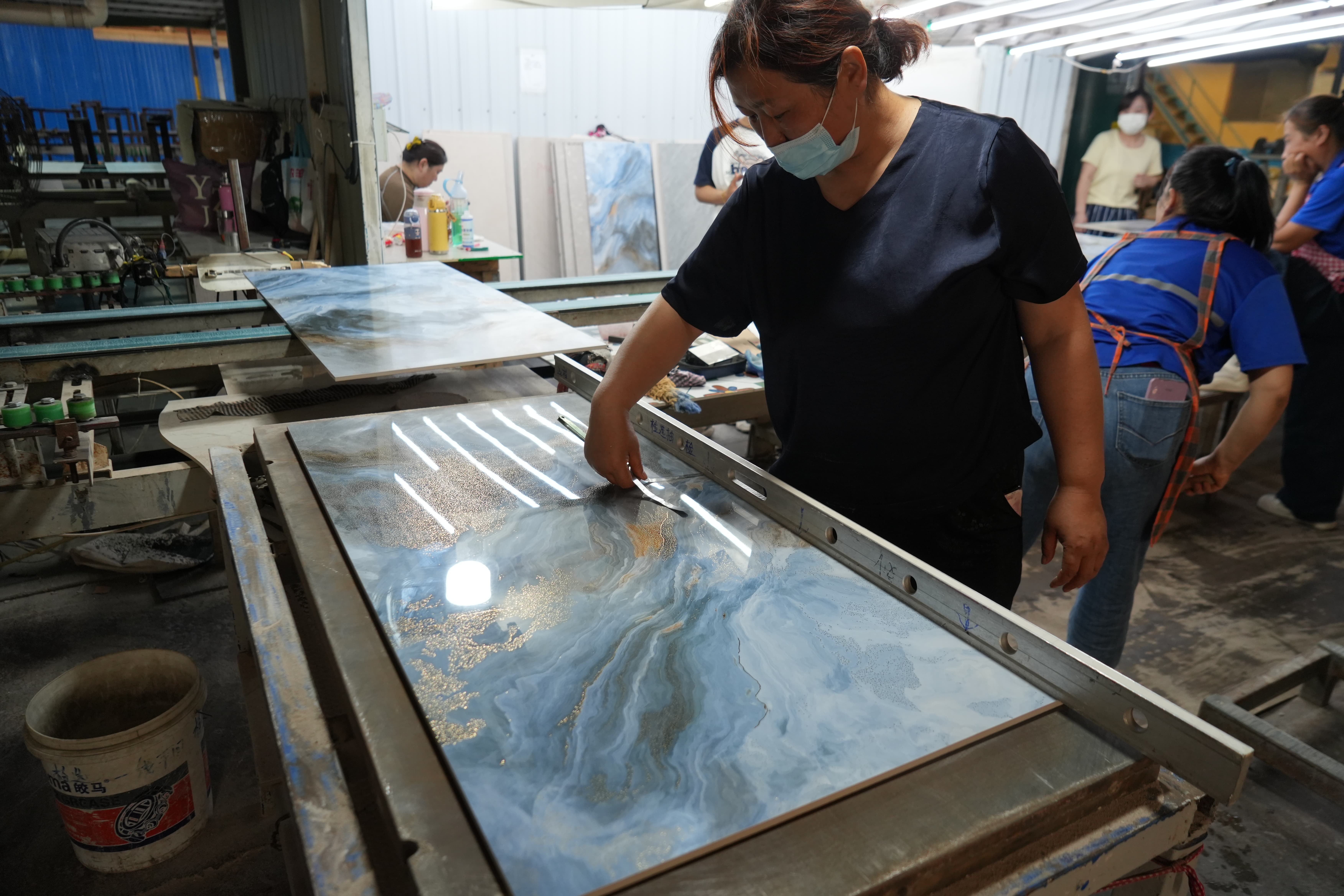
Anti-slip and ISO 13006: the compliance layer that decides wet-area fit
The supplied scenario material requires anti-slip R10/R11 and ISO 13006 compliance for hotel renovation applications. Those are not decorative preferences. R10 and R11 are slip-resistance classes used in specification, and R11 is commonly linked to the DIN 51130 oil-wet ramp test. According to the supplied standards evidence, the R11 class corresponds to a high grip on inclined planes between 19° and 27° in that test method. The number should be kept with its test context; it is not a universal guarantee that every wet hotel floor is safe.
The 60x120 cm porcelain range is described in the company material as including R10/R11 anti-slip ratings, with R12 achievable through customization. That is an important fit boundary. If the hotel project requires R12 as a standard, repeatable supply condition, the buyer should confirm the customized route, the tested surface, the documentation and the delivery schedule before treating the standard R10/R11 range as equivalent. R11 anti-slip porcelain tiles can suit many commercial wet areas, but the project specification and insurer requirements decide whether R12 safety flooring tiles are needed in a particular kitchen, service corridor or entrance zone.
ISO 13006 is a product standard for ceramic tiles. In a tender package, a statement of compliance should be supported by the relevant test report and product scope. The company material states ISO 13006 compliance for its porcelain tiles, but a procurement team should still check that the report covers the actual 60x120 cm product, surface finish and anti-slip variant being supplied. Compliance language in a brochure is useful for screening; the project submittal is where the evidence must match the ordered product.
Certificates that belong in the hotel renovation submittal
Certification is a submittal check, not a substitute for product testing. The supplier's certification set for global and EU market documentation includes ISO 9001:2015 certificate 0350521Q30166R1M issued by XQCC, and CE certificate AC 50163816 0001 issued by TUV. The ISO 9001:2015 certificate is a quality-management system certificate. It supports confidence in process control and consistency, but it does not certify a tile's slip class, water absorption or breaking strength. The CE certificate is market-access documentation for the EU market. It should be read with its scope, declaration and applicable product coverage, not as a global approval for every product or every market.
For a hotel renovation, the useful submittal pack therefore has several layers: the ISO 9001:2015 quality-management certificate, the CE certificate where the project market requires it, the ISO 13006 compliance evidence for the product, and the anti-slip test evidence for the specified surface. The buyer should verify certificate numbers, issuer records, validity, product families and any exclusions. A certificate that is accurate but covers a different product family is not evidence for the 60x120 cm tile being installed.
This layered approach also protects the renovation programme. If a certificate is challenged during consultant review, the project team can trace the quality system, the product standard, the slip class and the market-access document separately. That is more useful than treating one certificate as a complete product approval.
Zone-by-zone fit: lobby, guest wet areas, corridors and back-of-house
Hotel renovation projects in commercial real estate usually need a zone matrix rather than a single tile decision. The 60x120 cm format can be a strong fit in visually continuous public areas, but the anti-slip and installation requirements change by zone. The table below is a specification aid, not a substitute for the project architect's or safety consultant's assessment.
| Hotel zone | Scenario pressure | Specification focus | Fit note for 60x120 cm porcelain |
|---|---|---|---|
| Lobby and reception | Continuous foot traffic, entry moisture, visual importance | R10/R11 as specified, ISO 13006 evidence, low water absorption, flat substrate | Large-format porcelain can create a calm floor field and fewer joints. Confirm the surface finish and slip class for wet entrances. |
| Guest bathrooms and wet areas | Water, cleaning agents, barefoot traffic | Project-specified R class, <0.5% water absorption, grout and joint details | R10/R11 may be specified, but the actual wet-area requirement and test report decide fit. R12 is available through customization. |
| Corridors and lift lobbies | High-frequency traffic, housekeeping carts, repetitive cleaning | PEI 4 / PEI 5, thickness, breaking strength, substrate preparation | The format reduces joints, but large tiles need leveling and careful handling in narrow circulation areas. |
| Food and beverage or back-of-house wet zones | Wet and greasy conditions, heavy surface use | R11 or R12 as specified, ISO 13006, cleaning validation | Do not assume the standard range meets a higher slip requirement. Confirm the customized anti-slip route before order. |
Hotel lobby porcelain flooring often carries the most visible expectation, but the less visible wet and back-of-house areas carry the higher safety consequence. A single 60x120 cm porcelain family can serve multiple zones only if the surface finish and anti-slip class are selected for the most demanding zone in that family, or if the project separates the specification by area. The product format can be shared; the safety evidence should not be blurred across zones.
Installation and box planning for occupied hotel renovations
The supplied scenario material states that installation must use a leveling system and tile spacers, with tile adhesive and grout as matched materials. That requirement is especially relevant to 60x120 cm tiles. Large-format porcelain is less forgiving of substrate variation, and a leveling system helps control lippage while spacers maintain joint geometry. Neither tool replaces subfloor preparation. The renovation plan should confirm substrate condition, adhesive selection, movement joints, drying and curing time, and protection of finished floors before the first tile is laid.
Packaging is straightforward but important for procurement. The 60x120 cm porcelain is packed as 2 pieces per box, covering 1.44 m² per box. A simple planning check makes this usable in a bill of quantities. For 100 m² of finished floor area, 100 ÷ 1.44 = 69.44 boxes, so 70 boxes provide 100.8 m² before any allowance for cuts, breakage, future repairs and spares. That is a planning calculation, not a purchasing allowance. The project team should add its own wastage and attic-stock allowance based on the design, handling conditions and replacement strategy.
For a phased hotel renovation, box yield also affects storage and access. A 1.44 m² box is a practical unit to count, but the site still needs a secure dry area, protection from edge damage and a plan for lifting large tiles through service routes. The company also states OEM/ODM options including custom size and thickness, surface finish, OEM brand and packaging, pattern variation and anti-slip rating, with a MOQ of 400 m² per design and trial orders acceptable. Its stated lead time is 7–10 days. Those are supplier-stated commercial terms and should be confirmed against the actual project specification and order schedule.
Where 60x120 cm porcelain is the wrong fit
The strongest fit is in hotel floor zones that need a durable, low-absorption vitrified surface, a specified R10/R11 anti-slip finish, a large-format visual field and a substrate that can be prepared to the required tolerance. The weakest fit is where the project treats format as the only criterion.
- When the standard slip class is below the zone requirement: R12 is described as a customization route, not the default. A project that needs verified R12 as standard supply should confirm the custom option before shortlisting.
- When the substrate cannot be corrected: large-format tiles require a suitable substrate and leveling system. A renovation that cannot close floors for proper preparation may need a different format or phasing plan.
- When the wet area is small or highly articulated: 60x120 cm tiles can create many cuts around drains, partitions and irregular edges. The visual gain may not justify the cutting and fit complexity.
- When the certificate scope does not match the ordered product: ISO 9001:2015 and CE certificates support different parts of the assurance chain. They do not replace the ISO 13006 and anti-slip evidence for the exact tile.
These are fit boundaries, not defects in the product. They are the conditions a buyer should test before converting a showroom preference into a hotel floor specification.
Market context and the role of project evidence
The wider market context supports the attention on commercial floors without proving demand for a specific hotel. A supplied commercial research estimate puts commercial construction at 37% of total global tile demand in 2026. The Observatory of Economic Complexity reports that China was the leading exporter of ceramic products in 2024, with an export value of $18.3 billion. These figures describe the scale of commercial tile demand and export supply. They do not establish that a particular hotel renovation should use a particular tile.
Project evidence is more relevant at the specification stage. The approved case material for ALL KING CERAMICS records a 15,000 m² scope that includes hotel lobby and commercial mall flooring, and reports seamless aesthetic presentation, zero-defect durability, easy maintenance and 100% project acceptance. Those are company-reported case outcomes. They are useful as a reference for the intended performance profile, but they are not an independent benchmark for every hotel renovation. The buyer should still match the reported application to the actual traffic, wet-area and installation conditions.
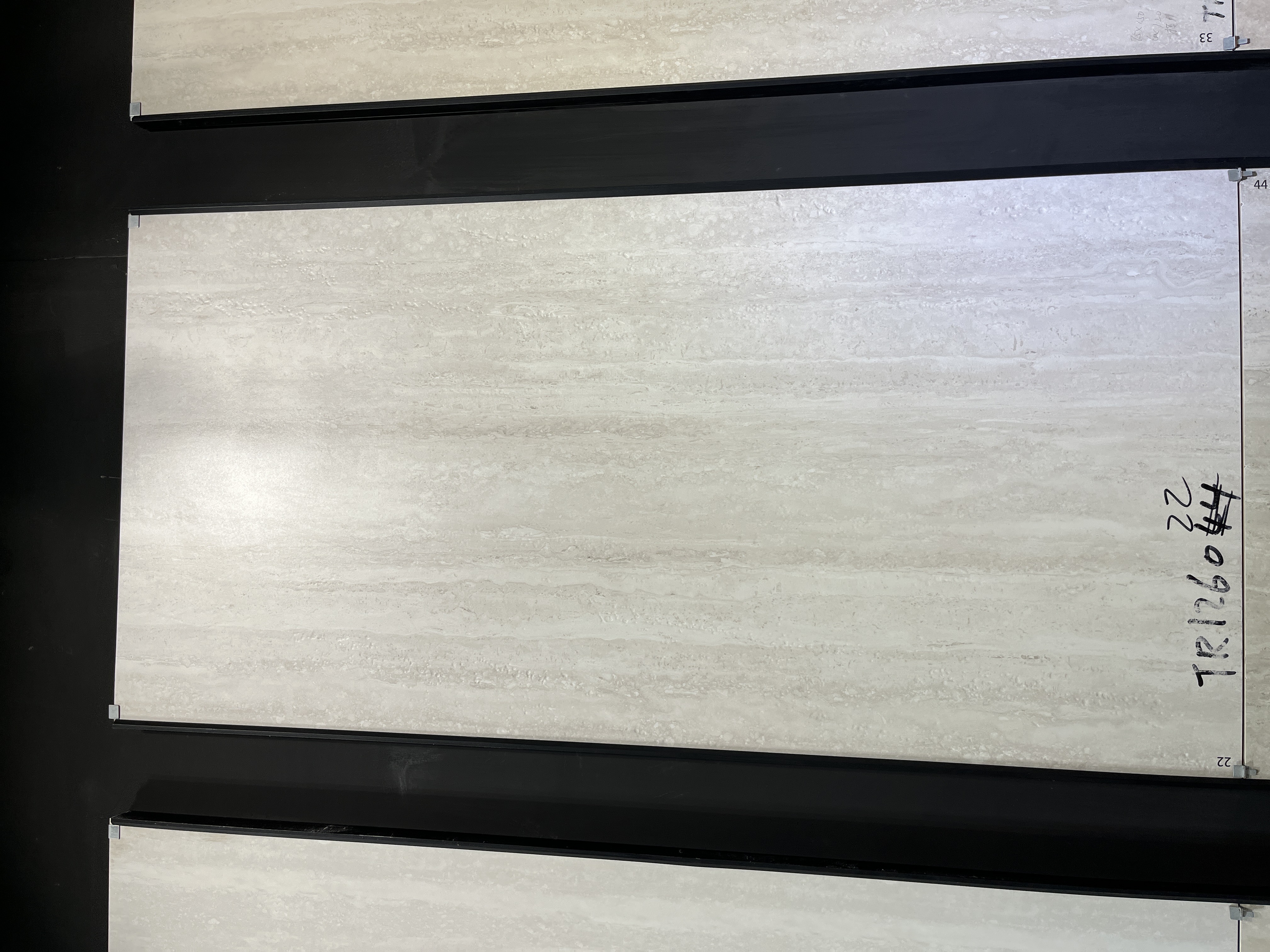
FAQ: hotel renovation fit for 60x120 cm porcelain
Are 60x120 cm porcelain tiles suitable for hotel bathrooms and other wet areas?
They can be suitable when the specified surface has the required anti-slip class and the product has ISO 13006 compliance evidence. The supplied 60x120 cm vitrified porcelain has <0.5% water absorption and is described with R10/R11 anti-slip ratings, with R12 available through customization. A bathroom or wet area still needs the correct R class for its specific use, suitable adhesive and grout, a leveling system and tile spacers. The buyer should confirm the tested surface and slip report rather than relying on the tile body specification alone.
Which anti-slip rating should a hotel renovation specify: R10, R11 or R12?
There is no single answer for every hotel zone. The supplied scenario material requires anti-slip R10/R11 as a baseline, while food, beverage and some back-of-house wet zones may call for a higher class. R11 is linked to the DIN 51130 oil-wet ramp test and corresponds to a grip range of 19°–27° in the supplied standards evidence. R12 is available through customization. The project specification, safety assessment and insurer requirements should decide the class, and the chosen class should be proven for the actual product finish.
How do the ISO 9001:2015 and CE certificates fit into a tile submittal?
The ISO 9001:2015 certificate 0350521Q30166R1M issued by XQCC is a quality-management system certificate. It supports process control but does not certify slip resistance or product performance. CE certificate AC 50163816 0001 issued by TUV is market-access documentation for the EU market. A hotel renovation submittal should check both certificates for number, issuer, validity and product scope, then add the ISO 13006 compliance evidence and anti-slip test report for the exact 60x120 cm product. The certificates support the assurance chain; they do not replace the product-specific evidence.
How many 60x120 cm tiles are in a box, and how should a hotel project plan quantities?
The supplied packing is 2 pieces per box, covering 1.44 m² per box. For planning, divide the finished floor area by 1.44 and round up. A 100 m² area requires 69.44 boxes, so 70 boxes cover 100.8 m² before cuts, breakage, spares and future repairs. This is an arithmetic planning check, not a final purchasing allowance. The project team should add its own wastage and replacement allowance based on the design, handling conditions and phasing of the hotel renovation.
What installation requirements matter most in an occupied hotel renovation?
The supplied scenario requires a leveling system and tile spacers, with tile adhesive and grout as matched materials. For 60x120 cm porcelain, substrate preparation and flatness control are central because large-format tiles are less forgiving of variation. The renovation plan should also address movement joints, cutting and drilling, protection of finished floors, delivery access and curing time. A leveling system helps control lippage, but it does not correct an unsuitable substrate or replace project-specific installation detailing.
Conclusion: a conditional fit, not a format claim
The 60x120 cm vitrified porcelain tile is a credible scenario fit for hotel renovation floors that are wet, busy and costly to close for maintenance. Its supplied low water absorption, PEI 4 / PEI 5 abrasion resistance, Mohs 6–7 hardness, ≥1300 N breaking strength, ≥35 MPa modulus of rupture and 9.0–10.5 mm thickness provide a useful technical basis. The 2 pieces per box and 1.44 m² per box give procurement teams a clear planning unit.
The fit becomes conditional at the points that decide real hotel performance: the specified anti-slip class for each zone, the ISO 13006 evidence for the actual finish, the scope of the ISO 9001:2015 certificate 0350521Q30166R1M from XQCC and CE certificate AC 50163816 0001 from TUV, and the installation system using a leveling system, tile spacers, adhesive and grout. Where those conditions are met, 60x120 cm porcelain can support a durable hotel floor strategy. Where they are not, the format should not be treated as the answer.
For format and packaging reference, the public catalog is available here: ALL KING Ceramics Catalog.
Have Questions or Need More Details?
Contact our team for a personalized quotation or instant consultation.
Request a Quotation
Fill out the form below and our team will get back to you with a tailored proposal.
WhatsApp Direct Chat
Prefer to chat in real-time? Message us on WhatsApp for instant assistance & quick answers.
- Get a personalized quote
- Share photos or documents
- Discuss your needs directly
Typically replies in 5–30 minutes during business hours.