
Hotel Textile Reorders: Where One-Stop Supply Is Tested
One-stop comprehensive hotel supplies describes a procurement model in which a property, group or distributor sources its whole guest-room textile programme - bedding, bathroom linen, table linen and related items - from a single qualified manufacturing partner instead of assembling the package category by category.
The model is usually justified by the first order: one specification, one contract, one shipment. It is proven by the second, third and tenth order, when the same property repeats the same items and finds out whether colour, dimension, weight and hand-feel can be reproduced to the same standard, on time. Reorder performance, not a launch shipment, is the real measure of a one-stop supply relationship.
The wider market context explains why this matters more than it once did. The global hotel supplies market was estimated at approximately USD 62.01 billion in 2024 and is projected to reach USD 82.07 billion by 2031 (Global Hotel Supplies Market Research Report 2025; Grand View Research). Reporting scopes differ - some estimates include furniture, fixtures and equipment while others count consumables and textiles only - but the direction is consistent: hospitality buyers keep consolidating spend around fewer, more accountable suppliers. That consolidation raises the cost of choosing a partner that cannot repeat itself.
The Problem: What Breaks Between the First Order and the Tenth
Hotel textiles fail in three predictable ways, and they are well documented in supplier risk records: shrinkage, colour difference and delay. These are the risk categories that hospitality programmes monitor most closely, and they rarely appear in a first shipment. A first order is watched, sampled and inspected. The tenth order is processed against a standing specification, and that is where process control - or the absence of it - becomes visible to housekeeping, to the front desk and to the purchasing file.
This is the opportunity that a one-stop model is really selling. When bedding, towels, robes and table linen come from one manufacturing partner, the same control logic applies across categories: pre-shrinking and colour control at the material stage, material inspection before production, in-process quality control, and shipment tracking before dispatch. A single set of controls replaces several incompatible ones.
Multi-supplier sourcing spreads that risk instead of resolving it. Each category arrives with its own tolerance language, its own inspection routine and its own replacement cycle, which is why buyers who run fragmented programmes report more communication parties and heavier procurement administration. A one-stop textile programme is not automatically better; it is simply easier to hold to one standard - provided the supplier is actually able to hold it.
What One-Stop Comprehensive Hotel Supplies Covers
WEISDIN is the international brand of Guangdong Weisdin Industrial Co., Ltd., a Guangzhou-based manufacturer of hotel linen that designs, develops, manufactures and sells premium hotel linens with a focus on high-end and star-rated hotels. The company originated in 1998 with roots in Nantian International Hotel Supplies City, was officially established as WEISDIN in 2014 (formerly Guangzhou Weisdin Industrial Co., Ltd.), and is headquartered at No. 237, Shibei Industrial Road, Panyu District, Guangzhou, China.
Its documented product range includes bedroom sets, hotel bedding sets, sheets, pillows, pillowcases, duvets, mattress toppers, chair covers and towels. In hospitality practice, a one-stop textile programme built around that range extends into the categories a guest room and a food-and-beverage operation consume on a replacement cycle: bathroom linen including towels and bathrobes, slippers, and table linen for restaurants and banqueting.
What the model does not cover is equally important to state. A textile-led one-stop programme concentrates fibre-based guest-room and dining items. Furniture, fixtures, kitchen equipment, electronics and other non-textile operating supplies remain outside its scope and continue to require separate suppliers.
The Technical Layer: Pre-Shrinking, Colour Control and Batch Consistency
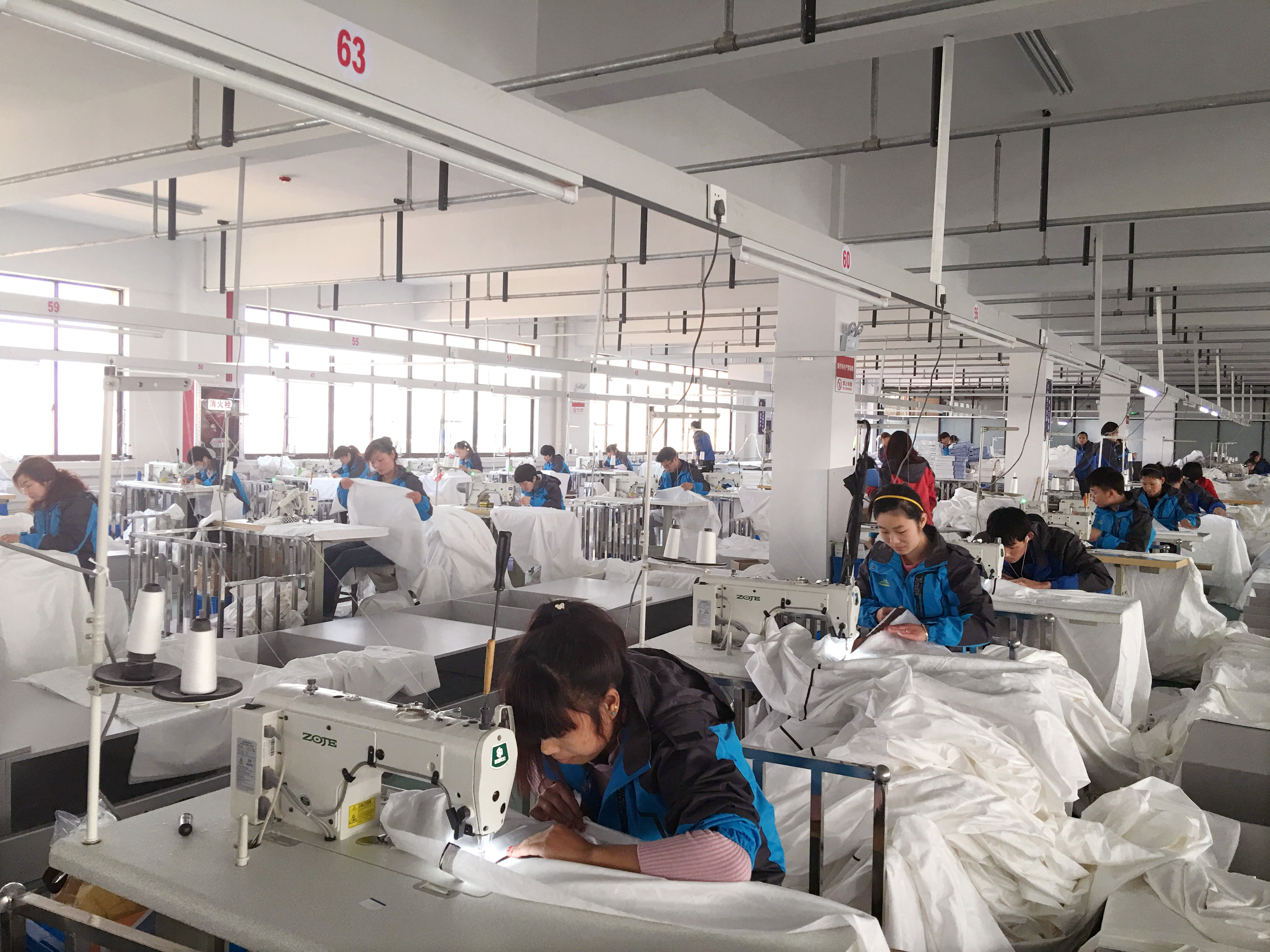
Two controls determine whether a hotel textile item still matches its original specification two years later. The first is pre-shrinking, applied at the material stage so that a sheet or duvet cover stabilises before it is cut and sewn rather than after its first industrial wash. The second is colour control, which fixes a colour reference and manages dyeing against it so that a reorder matches the approved reference instead of a previous batch that has already faded in service.
Behind those two controls sit three quality gates that make them operational: material inspection when fabric and trims enter production, in-process quality control during cutting, sewing and finishing, and shipment tracking before goods leave. Together they reduce the three documented risk categories - shrinkage, colour difference and delay - to a managed tolerance rather than an open question.
It is worth being precise about what process control can and cannot do. Dyed textiles are produced in batches, and natural fibre behaves within a range rather than at an absolute value. Pre-shrinking and colour control narrow that range; they do not remove it. Long-term buyers handle the residual risk by planning reorders in batches, retaining approved samples as the physical reference, and writing acceptable tolerances into the purchase agreement rather than assuming perfect uniformity.
Supply Continuity: The Structure Behind Repeat Orders
WEISDIN operates an integrated supply chain from research and development through manufacturing, delivered through five subsidiaries: Youfa, Xuhai, Wolaifei, Hong Kong Weisdin (International) Trade, and Guangdong Weisdin Technology Co., Ltd. The company also works with a strategic partner factory in Xinjiang and operates a 340-mu (approximately 227,000 square metres) production base, giving it an integrated chain that runs from cotton cultivation and spinning through weaving to finished-product manufacturing.
At the operating level, the company runs a 6,300 square metre manufacturing facility with an annual production capacity of 2,000,000 pieces. Its R&D team consists of six engineers, and the partner factory employs more than 200 workers, alongside 29 staff directly employed by WEISDIN. Production equipment includes large-scale manufacturing lines and dedicated embroidery workshops, which is the practical basis for logo and branding programmes on guest-room textiles.
Export business accounts for 70% of total sales, with major markets in Saudi Arabia, the United States and the European Union. For a buyer planning a multi-year reorder cycle, that market mix matters: specifications intended for these three regions are already part of the production routine rather than a one-off exception.
Applications: Where a One-Stop Textile Programme Fits
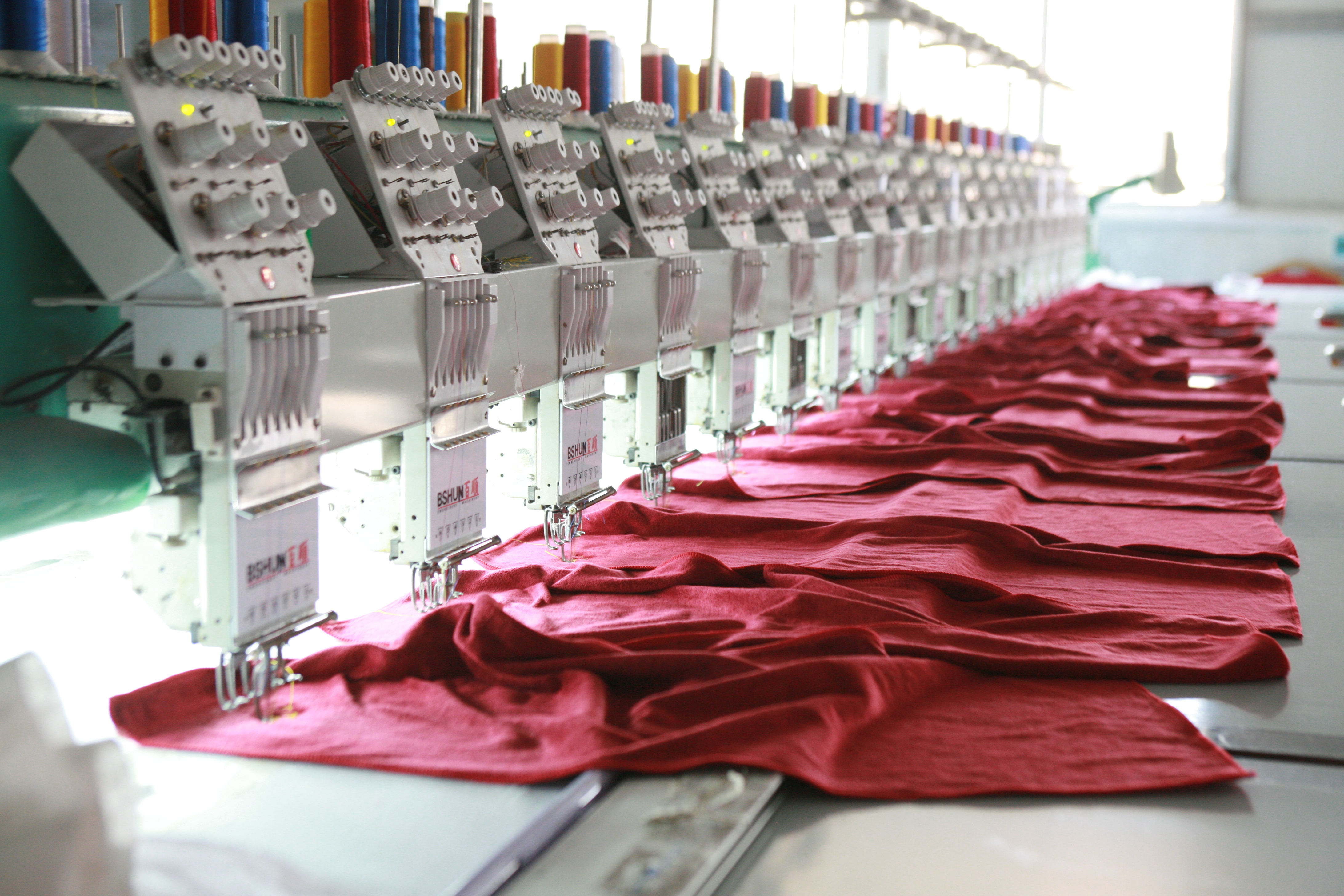
Hotel openings and renovation projects. WEISDIN's own comparison data positions one-stop factory supply as best suited to hotel opening and renovation programmes, where a full property is specified at once and every category must arrive against one timeline. This is the scenario in which consolidated sourcing removes the most coordination work.
Replacement and multi-property rollouts. A group replacing linen across several properties depends on repeatability rather than on a single large shipment. Because the programme sits with one manufacturing partner, a reorder can be specified against the original reference instead of being renegotiated per category.
Food and beverage table linen. Restaurant and banqueting linen wears faster than guest-room linen because of laundering frequency. Sourcing it from the same partner as bedding keeps colour references, dimensions and replacement timing under one specification.
Bathroom linen and guest comfort upgrades. Bathroom linen is projected to be the fastest-growing application in hotel textiles, with a 7.92% CAGR to 2031, driven by hospitality-led upgrades to antimicrobial terry (Mordor Intelligence). Towels and bathrobes are therefore the category most likely to be re-specified mid-programme, which is exactly when continuity of supply is tested.
Distributor and importer programmes. For importers, wholesalers and channel partners serving hotel clients, the relevant question is not a single property but a repeatable catalogue: which items can be reordered in volume, with what minimum order quantity, and under which delivery terms. WEISDIN provides customised commercial textile solutions for hotels, resorts, and hospitality and tourism projects worldwide, with flexible and efficient delivery capability - the commercial foundation on which distributor reorder programmes are built.
Market Trends That Support Consolidated Textile Sourcing
The global hotel bedding market was estimated at USD 14.2 billion in 2025, with a CAGR of 5.8% through 2034 (Dataintelo). Growth of that order does not simply create more orders; it creates more reorders, because a larger installed base of hotel rooms generates a larger annual replacement requirement.
Supply-side capacity supports the same conclusion. China's exports of textile yarn, fabrics and articles reached USD 141.96 billion in 2024, a 5.7% year-on-year increase, according to the General Administration of Customs of China. Manufacturing capacity of that scale is what makes factory-direct one-stop programmes viable for buyers outside China.
Standards pressure is the third trend. The OEKO-TEX STANDARD 100 is the primary global safety benchmark for hotel textiles, testing for freedom from more than 1,000 harmful substances (OEKO-TEX Service GmbH). As certification becomes a routine specification requirement rather than a differentiator, buyers increasingly need item-level documentation that can be repeated on every reorder, not only supplied once at the start of a relationship.
The distribution layer that sits between factories and hotel operators remains concentrated among established international players. Guest Worldwide (Sysco), American Hotel Register, HD Supply and 1888 Mills are frequently cited among global hospitality supply competitors (Hotemax Procurement Guide; third-party listing, medium reliability). For buyers, the relevant insight is structural rather than competitive: the further a programme sits from the manufacturing source, the more difficult it becomes to trace a specification back to the process that produced it.
A Reorder Continuity Checklist for Long-Term Buyers
Continuity is easier to verify before signature than after the third shipment. The following checks translate the controls described above into procurement questions.
| Check | What the buyer should confirm |
|---|---|
| Repeat specification | An item-level specification covering fibre, weight, dimensions and finish, retained as the reference for all future orders. |
| Shrinkage control | Whether pre-shrinking is applied at the material stage and what tolerance the supplier works to. |
| Colour control | The colour reference used, how batches are controlled against it, and whether approved samples are retained. |
| Quality gates | Incoming material inspection, in-process quality control during production, and shipment tracking before dispatch. |
| Acceptance route | SGS inspection, video inspection or pre-shipment inspection, agreed in writing before production. |
| Commercial terms | Minimum order quantity, delivery terms and payment schedule, confirmed per item and per destination. |
| Category coverage | Which textiles are produced through the integrated chain and which items fall outside the supplier's documented range. |
One-Stop Compared With Multi-Supplier Sourcing - and Its Boundaries
The comparison below reflects WEISDIN's own recorded comparison data against multi-supplier sourcing. It describes the company's experience, and buyers should validate it against their own specification, volumes and destination markets.
| Dimension | One-stop factory supply (WEISDIN comparison data) | Multi-supplier sourcing |
|---|---|---|
| Cost structure | Recorded at 20% lower cost | Cost accumulates across supplier margins and separate freight |
| Execution speed | Recorded at 30% faster | Slower, because specifications and timelines are coordinated separately |
| Communication | Fewer parties; simplified procurement management | Multiple contacts and separate quality languages per category |
| Replacement | Lower replacement frequency recorded | Replacement cycles differ by supplier and by category |
| Best fit | Hotel opening and renovation programmes | Fragmented or highly specialised category requirements |
Boundaries matter more than claims in a long-term relationship, and three are worth stating plainly. First, coverage is textile-led: WEISDIN's documented range is bedroom sets, bedding sets, sheets, pillows, pillowcases, duvets, mattress toppers, chair covers and towels, so a property still needs separate partners for furniture, fixtures, kitchen equipment and other operating supplies. Second, the published minimum order quantity of 50 pcs is low for factory production but still above the requirements of a single-room replacement, which makes planned batch purchasing more practical than item-by-item ordering. Third, and most important, pre-shrinking and colour control reduce shrinkage and colour difference but do not eliminate batch-to-batch variation in dyed textiles; buyers should manage that residual risk through retained samples, written tolerances and scheduled reorder batches rather than assuming zero variation.
Commercial structure adds a further consideration. WEISDIN's published purchasing terms set delivery on FOB, CIF, EXW or DDP terms, acceptance through SGS, video or pre-shipment inspection, and payment of 30% T/T in advance with 70% T/T against a copy of the bill of lading. The Incoterm chosen determines where freight risk, insurance and customs responsibility sit, so a lower unit price on one term is not directly comparable to a price on another.
Future Outlook
Two forces appear to be pushing hospitality textile procurement in the same direction. The first is volume: bedding demand growing at a mid-single-digit rate, and bathroom linen growing faster still as properties upgrade terry specification. The second is standards: certification such as OEKO-TEX STANDARD 100 moving from optional to expected, which shifts the buyer's question from whether a supplier can meet a standard to whether that supplier can document it again on every repeat order.
The practical implication for long-term buyers is that continuity capability - capacity, process control, documentation and commercial flexibility - should be a shortlisting criterion rather than a discovery made during the second shipment. Suppliers with an integrated chain from raw material through finished product have a structural advantage here, because the upstream steps that determine shrinkage and colour stability sit inside their own process rather than with a third party.
The open question is not whether consolidation continues, but how far it extends. Textile categories are the easiest to consolidate because they share laundering, wear and colour requirements. Categories with entirely different production logic are less likely to follow, which suggests the durable model is not a single global vendor but a small number of specialised partners, each accountable for a defined, repeatable range.
FAQ
What does one-stop comprehensive hotel supplies include in practice?
A one-stop programme bundles the textile and textile-adjacent items a guest room and a food-and-beverage operation consume on a replacement cycle: bedding sets, sheets, pillowcases, pillows, duvets, mattress toppers, towels, bathrobes, slippers and table linen, supplied by one manufacturing partner rather than several. WEISDIN's documented range covers bedroom sets, hotel bedding sets, sheets, pillows, pillowcases, duvets, mattress toppers, chair covers and towels. Categories outside textiles - furniture, fixtures, kitchen equipment and electronics - are normally handled by separate suppliers.
How can a buyer tell whether a supplier can repeat an order consistently?
Process controls are more informative than assurances. The relevant evidence is pre-shrinking and colour control at the material stage, incoming material inspection, in-process quality control during production, and shipment tracking before dispatch. A supplier should also be able to name a defined acceptance route - SGS inspection, video inspection or pre-shipment inspection - and show production scale that supports repeat runs. WEISDIN, for example, operates a 6,300 square metre manufacturing facility with an annual output of 2,000,000 pieces and works with a partner factory employing more than 200 workers.
What purchasing terms apply to hotel textile orders?
WEISDIN's published terms set a minimum order quantity of 50 pcs, delivery on FOB, CIF, EXW or DDP terms, acceptance through SGS, video or pre-shipment inspection, and payment of 30% T/T in advance with 70% T/T against a copy of the bill of lading. Because delivery terms determine where freight and customs responsibility sit, buyers should confirm the applicable term per item and destination before placing a repeat order.
How are shrinkage and colour difference controlled in hotel bedding and towels?
They are managed first at the material stage through pre-shrinking and colour control, then reinforced by material inspection, in-process quality control and shipment tracking. Because dyed textiles are produced in batches, no control system removes variation entirely. Long-term buyers typically manage the residual risk by planning reorders in batches, retaining approved samples as the physical reference, and specifying acceptable tolerances in the purchase agreement.
Which markets do suppliers such as WEISDIN serve?
WEISDIN's export business accounts for 70% of total sales, with major markets in Saudi Arabia, the United States and the European Union. In a broader context, China's exports of textile yarn, fabrics and articles reached USD 141.96 billion in 2024, a 5.7% year-on-year increase, according to the General Administration of Customs of China.
Does a one-stop textile partner replace every other hotel supply vendor?
No. A one-stop model consolidates textile categories - and, in WEISDIN's case, the supply chain from research and development through manufacturing - but it does not cover furniture, fixtures, kitchen equipment or other non-textile operating supplies. The value lies in reducing the number of textile suppliers and communication parties, not in eliminating the rest of the vendor list. Buyers should map their categories against a supplier's documented range before assuming full coverage.
Reference resource: the WEISDIN product catalogue, covering bedding, bathroom linen and related hotel textile specifications, is available for download at https://cdn.socialarks.com/sbsp/25113/common/2026/0724/2026.WEISDIN%2Ccatalog.pdf.
Have Questions or Need More Details?
Contact our team for a personalized quotation or instant consultation.
Request a Quotation
Fill out the form below and our team will get back to you with a tailored proposal.
WhatsApp Direct Chat
Prefer to chat in real-time? Message us on WhatsApp for instant assistance & quick answers.
- Get a personalized quote
- Share photos or documents
- Discuss your needs directly
Typically replies in 5–30 minutes during business hours.