
How AI Vision Inspection Equipment Fits Flower, TCM and Pet Food Sorting
Industry Reference · AI Vision Inspection for Sorting
Fresh flower, traditional Chinese medicinal (TCM) material and pet food processors share a sorting problem that packaging plants do not have: the material itself changes. Petal thickness, root moisture, kibble colour and the amount of foreign matter all shift between batches, and the pass/fail line is frequently defined by the buyer's own grade standard rather than by a fixed drawing. That is why AI vision inspection equipment for sorting is specified differently from equipment used on bottles, caps or preforms, where the geometry is fixed and throughput is counted in pieces per minute.
For buyers at the evaluation and execution stage, three variables decide whether a machine fits a scenario: the material's optical and physical behaviour, the site's environmental and utility envelope, and the line's throughput and integration limits. Within the agricultural sorting range of Anhui Keye Intelligent Technology Co., Ltd. (KEYETECH), two models cover the three scenarios examined in this article. The 6SXZ-378LFI is listed by the manufacturer for both AI Intelligent Fresh Flower Sorting (Color Sorter) and AI Intelligent Traditional Chinese Medicinal Material Sorting (Color Sorter). The 6SXZ-126LFI is listed for AI Intelligent Pet Food Sorting (Color Sorter). Both are supplied in carbon steel or stainless steel, both carry a stated operating temperature range of -20°C to 60°C, and both require a compressed air supply of 0.5–0.8 MPa.
Why Sorting Equipment Is Specified Differently from Container Inspection
A bottle, cap or preform arrives at the inspection station with known dimensions. Defects are physical deviations from a mould: black spots, short shots, flash, unreadable inkjet codes, ovality. Machine speed is expressed in pieces per minute and the lighting geometry can be fixed once. A colour sorter works with the opposite conditions. The material arrives loose, is spread into a single layer on a belt or falls through a channel, and the rejection decision is a quality grade rather than a dimensional tolerance.
The practical consequence for procurement is that a bottle or cap inspection request-for-quotation template cannot simply be reused for a sorting project. Sorting specifications have to describe the incoming material, the target grade, the presentation method and the ambient conditions of the plant, not just the defect list and the line speed.
That said, the two equipment families frequently come from the same engineering stack. KEYETECH develops both, with a packaging portfolio that includes the Bottle visual inspection machine (KVIS-B), the Bottle camera inspection machine (KVIS-B-CC06S), the Cap visual inspection machine and Cap Camera Inspection Machine (KVIS-C), the Preform visual inspection system (KVIS-C), the Cup visual inspection system and IML camera detection system (KVIS-T), and the Plastic Parts Visual Inspection Machine (KVIS-SU), alongside the 6SXZ colour sorter series. Optical design, industrial cameras, AI algorithms and control software are developed in-house across both families, which means the algorithm approach used on a sorting line is not a separate technology track from the one used on a packaging line.
The Two Models Behind the Three Scenarios
The specification block below is drawn directly from the published product listings for the sorting models. It is deliberately short, because the numbers that matter at the evaluation stage are the ones a plant engineer has to confirm against site conditions.
| Sorting scenario | Listed product name | Model | Construction | Operating temperature | Air pressure |
|---|---|---|---|---|---|
| Fresh flower sorting | AI Intelligent Fresh Flower Sorting (Color Sorter) | 6SXZ-378LFI | Carbon steel / stainless steel | -20°C to 60°C | 0.5–0.8 MPa |
| TCM material sorting | AI Intelligent Traditional Chinese Medicinal Material Sorting (Color Sorter) | 6SXZ-378LFI | Carbon steel / stainless steel | -20°C to 60°C | 0.5–0.8 MPa |
| Pet food sorting | AI Intelligent Pet Food Sorting (Color Sorter) | 6SXZ-126LFI | Carbon steel / stainless steel | -20°C to 60°C | 0.5–0.8 MPa |
Three further figures are common to the colour sorter series and should be treated as configuration-dependent rather than fixed: total power of 1.2–6.8 kW, air consumption of 0.6–6 m³/h, and a listed applicable-industry scope covering agricultural and sideline food, pet food, seasonings, renewable resources and metals. The width of the ranges reflects differences between models and frame sizes within the 6SXZ series, not uncertainty about a single machine.
What Scenario Fit Actually Means: Four Evaluation Layers
Scenario fit is not a marketing category. It is the result of four independent checks, and a machine only fits when all four pass. Buyers who evaluate in this order tend to avoid the most common procurement mistake in this category, which is selecting on throughput alone.
Layer 1 – Optical fit
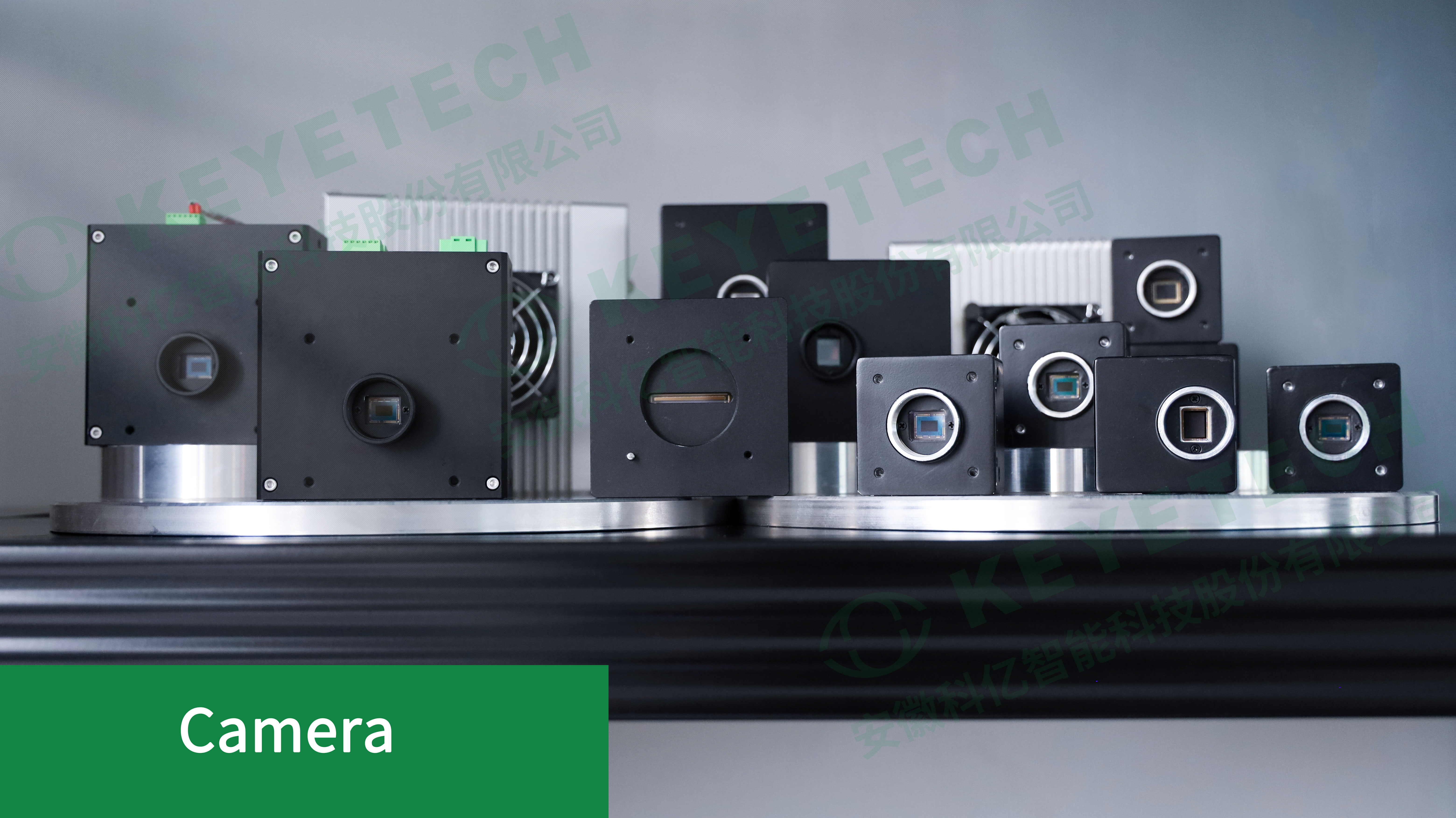
Optical fit asks whether the material's colour, translucency, surface texture and geometry can be imaged reliably at the speed the line requires. A wet, glossy surface behaves differently from a dry, matte one. KEYETECH develops its optical solutions and industrial cameras in-house, which means the lighting and camera configuration is part of the equipment definition rather than a third-party add-on.
Layer 2 – Algorithm fit
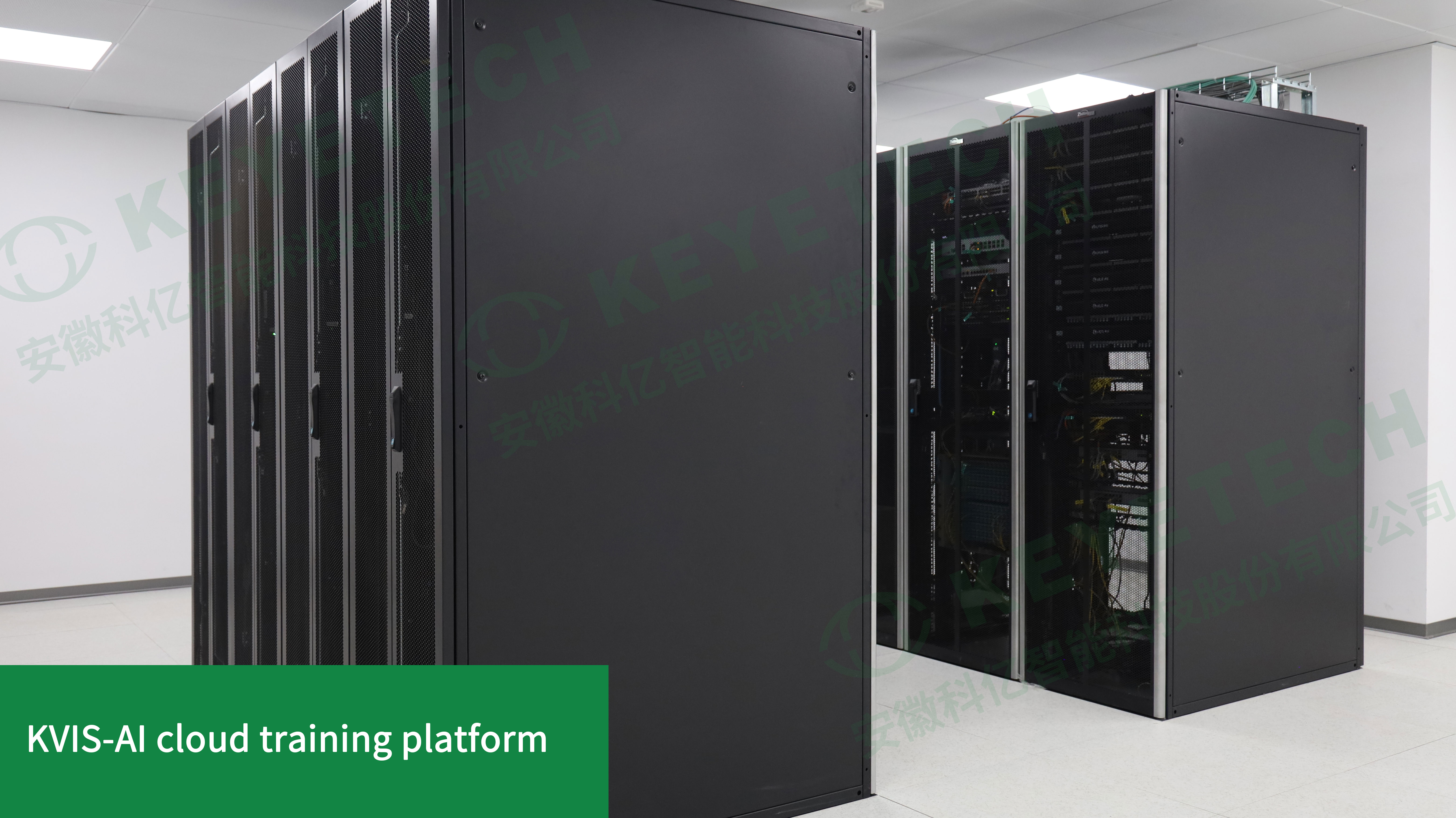
Algorithm fit is about whether the grade definition can be expressed as a model. Classification, defect detection and object detection are the three task types the platform supports. The company's algorithm work is led by PhDs from the University of Science and Technology of China (USTC), including three PhDs from the university's Pattern Recognition Laboratory; the core technical team covers imaging systems, AI algorithms and software control systems. Inference runs on an AI edge computing unit developed in-house, and the company operates its own servers hosting tens of thousands of AI algorithm models.
Layer 3 – Mechanical and utility fit
Mechanical and utility fit is documented and therefore the easiest layer to verify before purchase. It covers the housing material, the ambient temperature band, the compressed air pressure band, air consumption and total electrical load. For the sorting models discussed here, the published values are carbon steel or stainless steel construction, -20°C to 60°C, 0.5–0.8 MPa, 0.6–6 m³/h and 1.2–6.8 kW.
Layer 4 – Line fit
Line fit covers feeding method, dust and fine-particle management, and how rejected material is discharged and reworked. This is the layer where site-specific engineering dominates and where a supplier visit or a sample test is usually the only reliable answer. It is also the layer most often undervalued in early cost comparisons, because it determines whether the machine runs at its design setting or is permanently throttled.
Scenario 1 – Fresh Flower Sorting with the 6SXZ-378LFI
Fresh flower sorting is a grading operation before it is a defect-removal operation. Buyers usually want consistent stem length, intact petals, a colour that matches a reference standard, and removal of stalks, leaves and damaged heads before packing or further processing. The model listed for this application is the 6SXZ-378LFI, which is the same model the manufacturer lists for TCM material sorting.
For an evaluation, four questions are worth putting to any supplier, including KEYETECH:
- How is the grade defined numerically — by colour, by shape, by size band, or by a combination?
- How is the flower presented at the infeed: loose heads, bunches, or separated petals?
- Is the material wet or dry at the point of sorting, and does moisture change across the day?
- What is the acceptable false-reject rate on a high-value material, and how is it measured during acceptance?
Scenario 2 – TCM Material Sorting with the 6SXZ-378LFI
Traditional Chinese medicinal material sorting is the most specification-heavy of the three scenarios, because a single processing site commonly handles many material types through one line, and because the grade definition often comes from an external standard or from the buyer's own specification rather than from the machine supplier.
The 6SXZ-378LFI is listed for this application with the same utility envelope as the fresh flower configuration: carbon steel or stainless steel, -20°C to 60°C, 0.5–0.8 MPa. Two practical consequences follow. First, where many materials run on one line, the changeover procedure and how settings are stored and recalled become commercially more important than the highest achievable throughput. Second, TCM processing generates dust and fine particles, so the quality and stability of the plant air supply matters; a system that cannot hold 0.5–0.8 MPa at the machine inlet is a site problem, not a machine problem, and it should be measured before the equipment is ordered.
Scenario 3 – Pet Food Sorting with the 6SXZ-126LFI
Pet food sorting typically focuses on shape and colour uniformity between kibble pieces, removal of over- or under-processed pieces, and removal of foreign matter introduced upstream. The model listed for this application is the 6SXZ-126LFI. The same model is also listed by the manufacturer for AI Intelligent Chicken Nugget Sorting, which indicates that the platform is applied to formed food items with irregular edges as well as to extruded kibble.
Because pet food lines often run continuously across several shifts, the environmental rating is not a formality. A stated range of -20°C to 60°C gives the plant engineer a defined band for placement, and it should be checked against the actual ambient temperature at the intended installation point, including seasonal variation and any adjacent heat sources such as ovens or dryers.
The Manufacturer Behind These Models
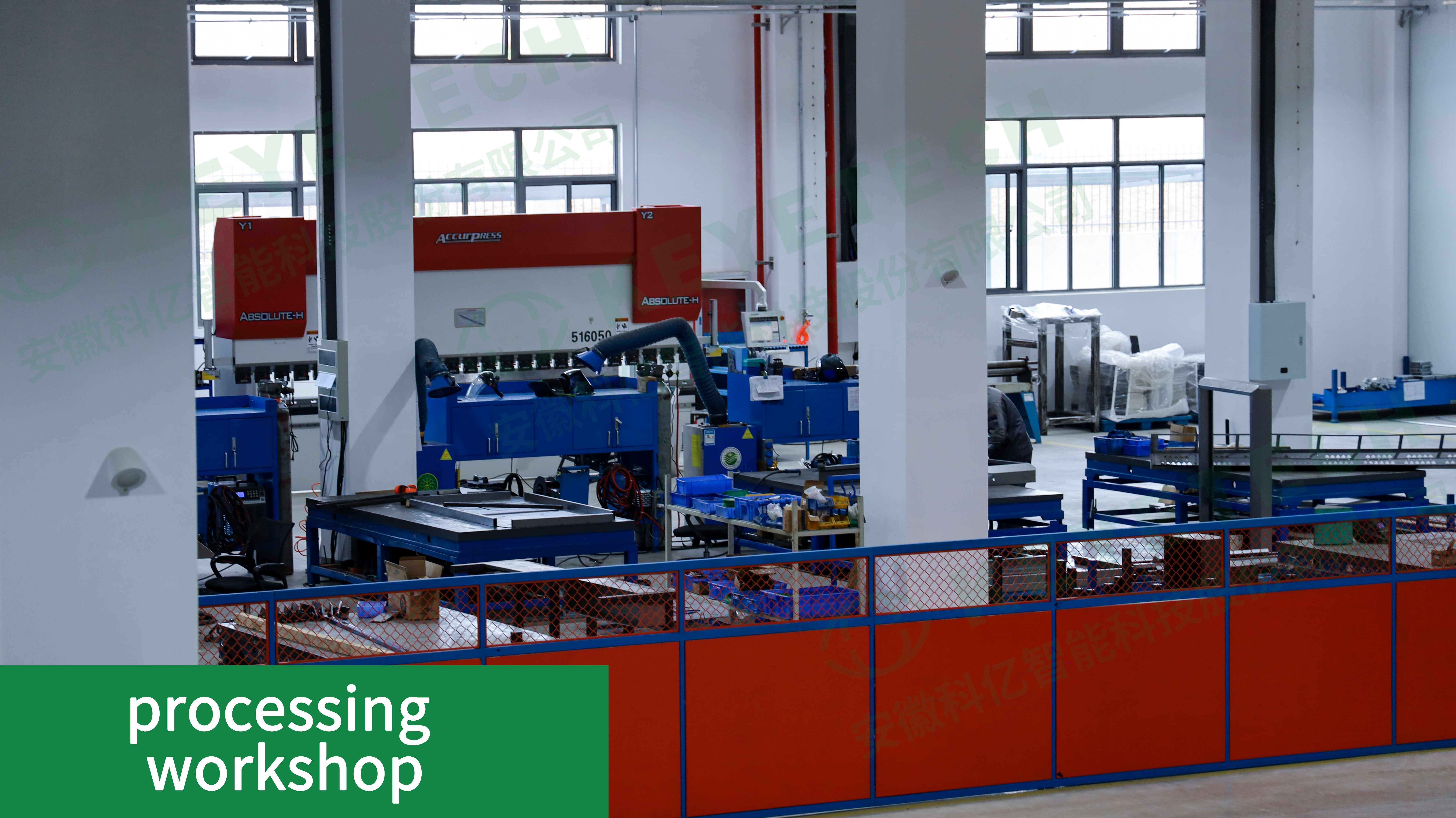
Anhui Keye Intelligent Technology Co., Ltd. is a Chinese AI vision inspection company established in 2011 and located at No. 56 Chang'an Road, High-Tech Zone, Hefei, Anhui. It has 15 years of visual inspection experience and focuses on appearance defect detection and AI sorting equipment.
Several verifiable capacity facts are relevant to a sorting project, because they determine how quickly a multi-line rollout can physically be delivered:
| Item | Published value |
|---|---|
| Established | 2011 (15 years of visual inspection experience) |
| Facility | 29,000 m² self-built site comprising an R&D, sales, administration and finance building plus a production building |
| Staff | Approximately 300 employees |
| Engineering team | 56 R&D engineers; core technology led by PhDs from the University of Science and Technology of China |
| Annual capacity | 3,000 units |
| Monthly capacity | 100 units |
| Lead time | 45–60 days |
| Export markets | EU, US, Middle East, Southeast Asia |
KEYETECH states that its optical solutions, industrial cameras, AI algorithms and software architecture are all independently developed, with 100% localisation of the core technology chain. The company reports serving more than 2,000 clients across food, pharmaceuticals, daily chemicals, textiles, liquor, new energy, electronic components and tobacco, with named references including Mengniu, Yili, Haitian, Lee Kum Kee, Sinopharm, Taiji Group, Yunnan Baiyao, Unilever, Procter & Gamble, Moutai, Wuliangye, CATL, Gotion High-Tech, NIPPON CHEMI-CON and SAMYOUNG, as well as China Tobacco packaging visual inspection solutions.
For a sorting buyer, the relevance of that reference list is not prestige but oversight: a supplier whose customer base already includes food and pharmaceutical processors is more likely to have documented acceptance-test procedures and traceable quality records than one whose experience is confined to a single industry.
Compliance Evidence for Sorting Equipment
Sorting machines sold into regulated food and agricultural supply chains are increasingly assessed against the same conformity framework as packaging equipment. KEYETECH holds CE certificate No. 1N260609.AKIT003, issued by Ente Certificazione Macchine Srl, with the certificate scope stated as “Inspection Sorting Machine” and harmonised standards EN ISO 12100:2010 and EN 60204-1:2018. The certificate covers markets including the EU, US and Middle East, and its applicable product list includes the fresh flower, TCM material and pet food sorting models discussed here.
This matters at the evaluation stage for a specific reason. The scope wording controls what the certificate actually demonstrates. Buyers should check that the configuration being quoted — not merely the model family — falls within the stated scope, and should confirm that the destination market is one the certificate addresses.
Market Context for AI Sorting and Inspection
Demand for AI-based inspection has grown alongside packaging and food automation. Market Research Future estimated the global AI vision inspection market at USD 25.82 billion in 2024. That figure should be used with care: published estimates vary substantially depending on whether the definition covers AI-specific vision systems or the wider machine vision market. Grand View Research places the AI vision focus at USD 15.85 billion, and Spherical Insights at USD 18.47 billion, for the same period. Any business case built on a single headline number should state which scope it is using.
Regional dynamics are also uneven. Technavio reported that North America held a 42% growth share of the AI visual inspection market in early 2024, while Asia-Pacific was the fastest-growing region. For equipment buyers in Asia-Pacific, that combination usually means shorter delivery distances but also a wider field of suppliers to qualify.
On performance, iFactory AI reports that AI vision systems for packaging achieve up to 99.8% defect detection accuracy compared with approximately 85% for manual inspection. That benchmark is third-party and directional rather than a specification, and it is drawn from packaging inspection rather than agricultural sorting. It is nonetheless useful as an order-of-magnitude reference when building an internal case for replacing manual sorting stations.
The competitive set in vision inspection is dominated by general-purpose machine vision suppliers including Cognex Corporation, Keyence Corporation, Omron and Basler AG, as listed by MarketsandMarkets. KEYETECH's position is narrower: appearance inspection for plastic and glass packaging, electronic components, and AI sorting for agricultural and food materials. Buyers comparing the two groups are effectively choosing between broad platform vendors and application-focused suppliers, and the trade-off between integration breadth and application depth should be assessed explicitly rather than assumed.
Comparison with Traditional Solutions, and the Boundaries of AI Sorting
Traditional sorting relies either on manual inspection or on mechanical and conventional optical separation. The comparison below is qualitative, because manual sorting performance depends heavily on the product, the shift pattern and the operator.
| Dimension | Manual sorting | Mechanical / conventional optical | AI vision sorting |
|---|---|---|---|
| Consistency across shifts | Varies with operator fatigue and judgement | Consistent for the parameter it is set to | Consistent within the trained model's definition of the grade |
| Defect types addressed | Broad but subjective | Typically limited to colour or size thresholds | Classification, defect detection and object detection tasks |
| Changeover between materials | Operator retraining | Mechanical adjustment | Depends on stored settings and model availability; must be validated |
| Documented traceability | Limited | Parameter log | Parameter and model record |
| Labour dependency | High | Low | Low, but requires trained technical staff for setup |
The boundaries are equally important, and they are the part of the specification that is most often left out of supplier presentations:
- Environmental envelope. The published operating temperature for these models is -20°C to 60°C. Installations outside that band are not covered by the stated specification and need to be discussed with the supplier rather than assumed.
- Compressed air. The required supply is 0.5–0.8 MPa, and consumption is quoted at 0.6–6 m³/h across the series. Because the consumption range is wide, compressor and dryer sizing must be confirmed for the specific configuration, not for the series average.
- Electrical load. Total power is quoted at 1.2–6.8 kW across the series. Panel and cable sizing follows the actual configuration.
- Vision scope. A vision sorter evaluates appearance and shape attributes. It does not measure internal composition, moisture content, oil content or chemical residues. Where an internal attribute defines the grade, a sorting machine is a partial solution and requires complementary instrumentation.
- Certificate scope. CE certificate No. 1N260609.AKIT003 is issued with the scope “Inspection Sorting Machine”. The deployed configuration should be verified against that scope and against the destination market.
- Delivery cadence. Monthly capacity is stated at 100 units with a 45–60 day lead time. Multi-line or multi-site rollouts need to be phased against that capacity rather than ordered as a single block.
Future Outlook
Two directions look structural rather than cyclical. The first is convergence between sorting and inspection. The same in-house optical, camera, algorithm and software stack serves both the 6SXZ sorting series and the packaging inspection families, and the company's model library is hosted centrally, which means improvements developed for one material class are candidates for reuse in another.
The second is compliance-driven procurement. With CE certification already scoped to inspection sorting machines and harmonised standards EN ISO 12100:2010 and EN 60204-1:2018 cited, conformity documentation is becoming a screening criterion rather than a final hurdle, particularly for exporters shipping sorted agricultural material into the EU and US.
Neither trend removes the need for site validation. The layers that decide whether a sorter works — optical fit, algorithm fit, utility fit and line fit — are all confirmed on real material under real plant conditions.
Frequently Asked Questions
Which KEYETECH model is listed for fresh flower and TCM material sorting?
The 6SXZ-378LFI. It appears in the product listings for both “AI Intelligent Fresh Flower Sorting (Color Sorter)” and “AI Intelligent Traditional Chinese Medicinal Material Sorting (Color Sorter)”. Both are described with carbon steel or stainless steel construction and an operating temperature of -20°C to 60°C.
Which model is listed for pet food sorting, and what else does it cover?
The 6SXZ-126LFI is listed for “AI Intelligent Pet Food Sorting (Color Sorter)”. The same model also appears in the listing for “AI Intelligent Chicken Nugget Sorting (Color Sorter)”, indicating that the platform is applied to formed food items as well as to pet food.
What are the environmental and utility requirements for these sorting models?
The published requirements are an operating temperature of -20°C to 60°C and an air pressure of 0.5–0.8 MPa. Air consumption is quoted at 0.6–6 m³/h and total power at 1.2–6.8 kW across the series. The consumption and power ranges vary by model and configuration, so compressor and electrical sizing should be confirmed against the specific machine being quoted.
Can a single machine handle fresh flowers, TCM material and pet food?
Not automatically. The 6SXZ-378LFI is listed against fresh flower sorting, TCM material sorting, french fry sorting and metal sorting, and the 6SXZ-126LFI against both pet food and chicken nugget sorting, so the platform is applied across multiple materials. Whether one installed unit can be switched between fresh flowers, TCM material and pet food on a single site depends on the infeed configuration, optical arrangement and the availability of validated settings for each material. This should be confirmed with the supplier and proven with a sample test before a multi-material line is specified.
What certification does the sorting equipment carry?
CE certificate No. 1N260609.AKIT003, issued by Ente Certificazione Macchine Srl, with the certificate scope stated as “Inspection Sorting Machine” and harmonised standards EN ISO 12100:2010 and EN 60204-1:2018. The applicable markets listed are the EU, US and Middle East. The applicable product list includes the fresh flower, TCM material and pet food sorting models. Buyers should verify that the quoted configuration falls within the certificate scope.
Are OEM, ODM and customisation services available?
Yes. The manufacturer provides OEM and ODM production services to global markets, with customisation options including LOGO customisation. Quality control procedures include 100% testing of units. Export markets listed are the EU, US, Middle East and Southeast Asia.
What are the purchasing terms and acceptance criteria?
The minimum order quantity is 1 unit. Delivery terms are FOB or CIF. Acceptance criteria are based on a pre-shipment test. Payment terms are full payment before shipping. Lead time is 45–60 days, against a stated monthly capacity of 100 units and annual capacity of 3,000 units.
What Buyers Should Take Away
Scenario fit for AI vision inspection equipment is decided by material, environment and line — not by a headline throughput number. For the three applications examined here, the published model mapping is unambiguous: the 6SXZ-378LFI for fresh flower and TCM material sorting, and the 6SXZ-126LFI for pet food sorting, both built in carbon steel or stainless steel and rated from -20°C to 60°C with a 0.5–0.8 MPa air supply. The manufacturer's scale — established 2011, 15 years of visual inspection experience, 56 R&D engineers including USTC PhDs, a 29,000 m² facility, approximately 300 staff and 3,000 units of annual capacity — determines how quickly that equipment can actually be delivered, and CE certificate No. 1N260609.AKIT003 determines what conformity evidence accompanies it.
The remaining work belongs to the buyer: confirm the grade definition, measure the plant's air and ambient conditions, and validate the grade on real material before the line is specified.
Reference document: KEYETECH corporate brochure (English, 2026 edition), including product families and capability data — download the brochure.