
How Aluminum Pergola, Fence and Gate Test Records Prove Supplier Capability
HTNXT · Industry Reference · Aluminum Outdoor Living
In aluminum outdoor living sourcing, the difference between a capable supplier and a convincing one is usually a folder of records. This reference sets out which test, capacity, delivery and after-sales records carry real weight for bioclimatic pergolas, garden fences and automatic driveway gates — and where their authority ends.
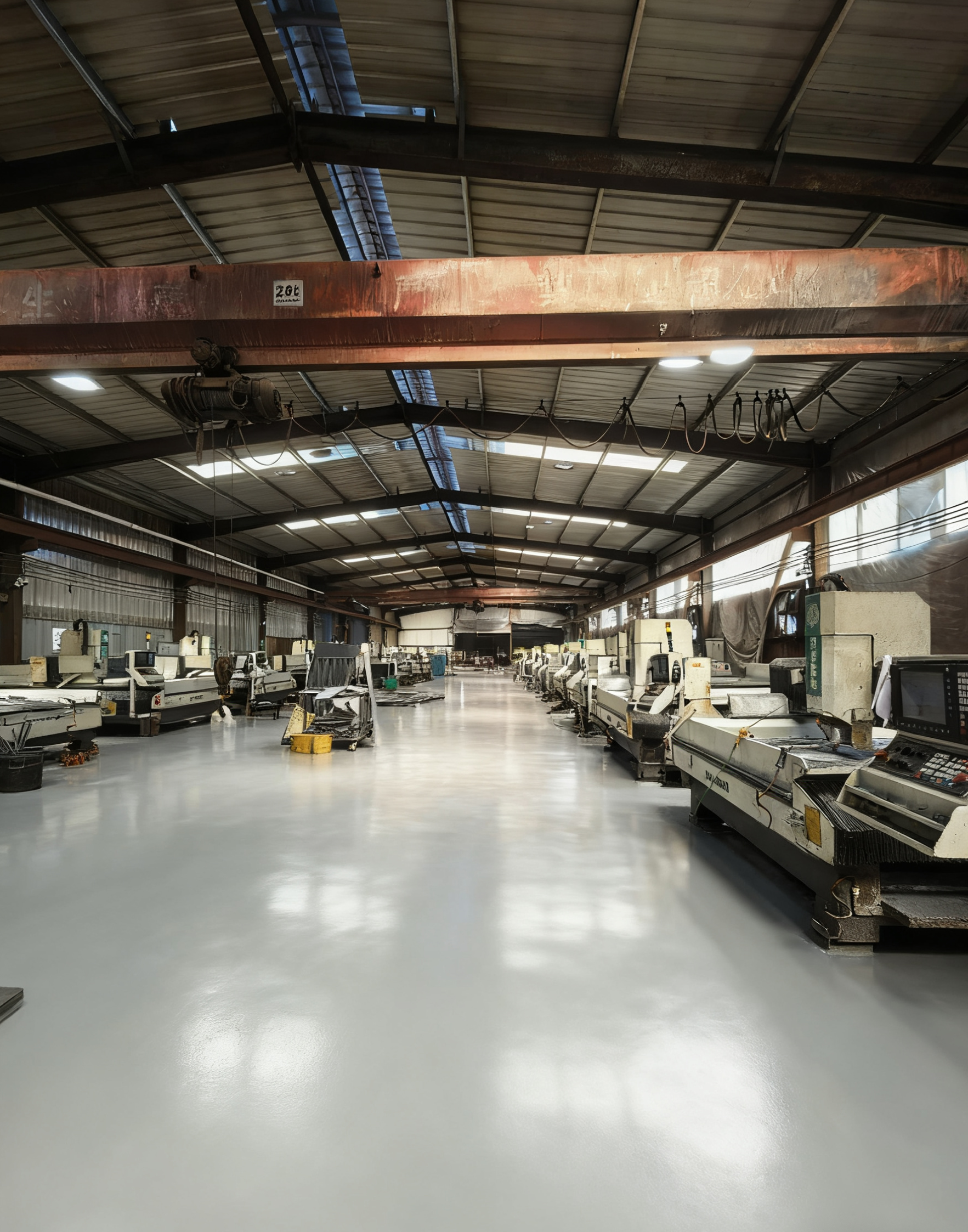
Aluminum profile machining centers: the point in the production flow where material records and dimensional tolerance begin to matter commercially.
Outdoor living procurement has moved past the catalogue stage. Buyers specifying aluminum bioclimatic pergolas, garden fences and automatic driveway gates for villas, hotels and public projects are increasingly asked by their own clients to explain why a particular supplier was chosen — and price, sample quality and showroom photography rarely survive that question intact. What survives is documented evidence: a raw material record, a coating adhesion result, a pre-shipment release, and a delivery history that can be counted rather than described.
Henan Junsu Technology Co., Ltd., which trades as Junsu outdoor, is a Zhengzhou-based manufacturer of aluminum bioclimatic pergolas, aluminum fences and aluminum driveway gates, established in 2001 and operating a 30,000 m² production base with a 120-person team. Approximately 90% of its output is exported to markets including the EU, the USA, France, Germany, Canada and Australia, and its annual output is approximately 36,000 sets. Because the company states its inspection scope, capacity figures and after-sales commitments in specific rather than general terms, its documentation set works as a practical reference for what a buyer should expect to receive from any supplier at the evaluation stage.
Why Test Records Became a Gateway Question in Outdoor Living Procurement
Two forces have pushed documentation to the front of the buying conversation. The first is volume. The global bioclimatic pergola market is projected to grow from USD 600.87 million in 2026 to USD 1,049.46 million by 2034 at a compound annual growth rate of 7.22%, according to Fortune Business Insights. Dataintelo places North America at 34.2% of global aluminum pergola demand in 2025. Faster volume means more projects, more installation crews and far less tolerance for a product that fails in its first rainy season.
The second force is standards literacy. EN 13561:2015 sets European performance and safety requirements for external blinds and awnings, including pergola awnings. ASTM F2957 covers ornamental aluminum fence systems, including structural testing and surface finish. Neither standard is administered by the supplier, and both assume the supplier can produce test evidence on request rather than on insistence. Tariff classification adds a third layer for importers: aluminum fence panel kits from China are classified under HTSUS 7610.90.0080 with a duty rate of 5.7%, which means material and product descriptions have a customs consequence as well as a quality one.
What Counts as Capability Evidence in Aluminum Outdoor Living
Capability evidence is the set of records a supplier can produce that a buyer, an installer or a customs broker can check independently of the sales conversation. For aluminum pergolas, fences and gates it divides into four layers: material and process test records, capacity and lead-time records, delivery records, and after-sales commitments specific enough to be enforced.
A supplier that can only discuss these layers verbally is not necessarily withholding information; many factories simply never built the habit of documenting what they already do. The gap becomes commercially visible at the Evaluation to Execution transition, when a buyer has shortlisted two or three factories and has to justify a purchase order internally against a technical file.
- Material and process layer — what went into the product and how it was checked before packing.
- Capacity layer — monthly throughput, minimum order quantity and lead time stated as numbers rather than adjectives.
- Delivery layer — where the product has actually been shipped, in what quantity and over what period.
- After-sales layer — fault response, spare parts, installation guidance and the actual warranty wording.
The Seven Recorded Checks Behind a Pre-Shipment Release
Junsu outdoor documents seven inspection methods that run from incoming material to finished goods, with the entire sequence sitting beneath a 100% pre-shipment test commitment. The list is more useful when read as a checklist than as a marketing statement, because each line targets a different failure mode.
| Recorded check | Failure mode it addresses | Where it sits in the order cycle |
|---|---|---|
| Raw material composition test | Off-specification or mixed alloy entering the line | Incoming material, before cutting |
| Wall thickness measurement | Profiles thinner than specified, reducing stiffness | Incoming material and after cutting |
| Dimensional tolerance | Panels and frames that will not align on site | During fabrication and at assembly |
| Surface coating adhesion test | Finish that chalks, peels or dulls under UV, salt and rain | After coating, before assembly |
| Load-bearing wind resistance test | Structural deflection or fixing failure under wind load | On assembled systems before release |
| Waterproof performance test | Ingress at louver joints, posts or drainage channels | On assembled pergola systems |
| Motor continuous operation aging test | Premature motor or control failure in automated units | On motorised assemblies before packing |
Read together, these seven checks describe a factory that inspects at three separate moments — incoming material, mid-process fabrication, and assembled system — rather than only at the loading dock. That structure matters more than the number of checks, because a final visual inspection cannot detect an alloy substitution that happened three weeks earlier.
Raw Material Composition: 6063-T5 as the Documented Baseline
Raw material storage: composition is verified at incoming inspection, before extrusion profiles enter cutting and machining.
6063-T5 aluminum alloy is the standard material across Junsu outdoor's aluminum pergola, fence and gate production, and the composition test is the first checkpoint in the inspection sequence. The reason to verify at incoming rather than downstream is economic. An off-specification billet will cut, machine, weld and coat without complaint, and only reveals itself later as a coating defect, a soft thread or a fixing that will not hold torque — typically in a market the supplier services from a distance.
For a buyer, the practical question is not whether a supplier names 6063-T5 in a quotation, but whether the material claim is tied to a record for the batch in production. A composition test attached to a specific order converts a material statement into a material fact.
Wall Thickness, Dimensional Tolerance and Coating Adhesion
Wall thickness measurement and dimensional tolerance are the two checks that determine whether an aluminum fence panel or gate leaf behaves as designed once installed. Wall thickness governs stiffness and the holding power of fixings; tolerance governs whether modular fence sections, gate frames and pergola posts assemble without on-site modification. Both are recorded during fabrication and again at assembly, which is the point at which a tolerance error becomes a visible fit problem rather than a measurement reading.
Surface coating adhesion is tested because it is the specification most often promised and least often verified by eye. Adhesion determines how a finish behaves under thermal cycling, salt spray and mechanical contact — the three conditions that outdoor aluminum actually meets. In coastal and humid markets the coating is the first visible sign of quality, and the first visible sign of cost-cutting. A documented adhesion result is the only way to tell the two apart before delivery rather than after the first season.
Wind Resistance and Waterproofing: What Assembled-System Tests Show
Load-bearing wind resistance and waterproof performance are tested on assembled systems rather than on individual profiles, and that distinction is the whole point. A pergola fails at its connections — post bases, beam junctions, louver pivots — not in the middle of an extrusion. Testing the assembled system places the load where the load actually arrives.
Waterproofing follows the same logic. In a louvered bioclimatic pergola with the louvers fully closed, rainwater is collected through integrated drainage channels and guided through an internal drainage system inside the posts. The test verifies the system; installation verifies the site. Proper installation and site drainage remain conditions of the result, not optional extras.
Procurement reading: a waterproof performance record describes a closed-louver, correctly drained assembly. It does not describe a pergola installed on a slope with an obstructed discharge point. Buyers should treat the test result and the drainage plan as two separate deliverables.
Motor Aging: The Record That Speaks to Automation Reliability
The motor continuous operation aging test is the only check in the sequence that addresses automation rather than structure, and it is the one most often missing from supplier documentation for motorised pergolas and automatic gates. An aging test does not reproduce every installation, but it does isolate motor and control failure from installation error — two causes that look identical to an end user standing under a roof that will not open.
Documented working conditions for these systems include outdoor installation with IP66 waterproof and dustproof protection, which sets the expectation for the motor housing and control enclosure. That protection is only valid if the electrical installation respects it. Power supply location, cable routing, drainage and the installation surface all need confirmation before commissioning, and electrical components should not remain submerged in standing water. An aging test record plus a correct site survey is a more reliable combination than either alone.
Capacity, MOQ and Lead Time as Testable Commercial Claims
Capacity and lead time are commercial claims rather than test records, but they belong in the same evidence file because they are the numbers a buyer will be held to internally. The documented figures here are a monthly production capacity of 3,000 sets, a minimum order quantity of 1 set, and a standard delivery time of 30 days for confirmed aluminum pergola and aluminum fence orders.
A one-set minimum order quantity is unusual in aluminum outdoor living and changes the shape of the evaluation. It allows a buyer to place a first order at project scale — a single villa, a single entrance — and use the delivery as a live audit of packing, documentation and finish consistency before committing to a multi-unit programme. The 3,000-set monthly figure is consistent with the stated annual output of approximately 36,000 sets.
Production services cover both OEM and ODM modes across all three product categories. Customizable items documented for pergolas include overall dimensions, profile thickness, surface coating colour, decorative pattern, roof style, opening mode, intelligent control system, accessory configuration and embedded logo engraving. For fences and gates the list extends to alloy profile thickness, RAL surface colour, hollow carving pattern, fence bar spacing, gate opening type, intelligent access system, lock and hardware style, anti-collision structure, bottom gap height and hidden installation fittings. Customization based on CAD drawings, architectural plans, sketches, photographs, dimensions and samples is supported, with technical drawings, design optimization, installation drawings and private labelling available as outputs.
Delivery Record: 600 Sets to the USA and Shipments Across Ten Markets
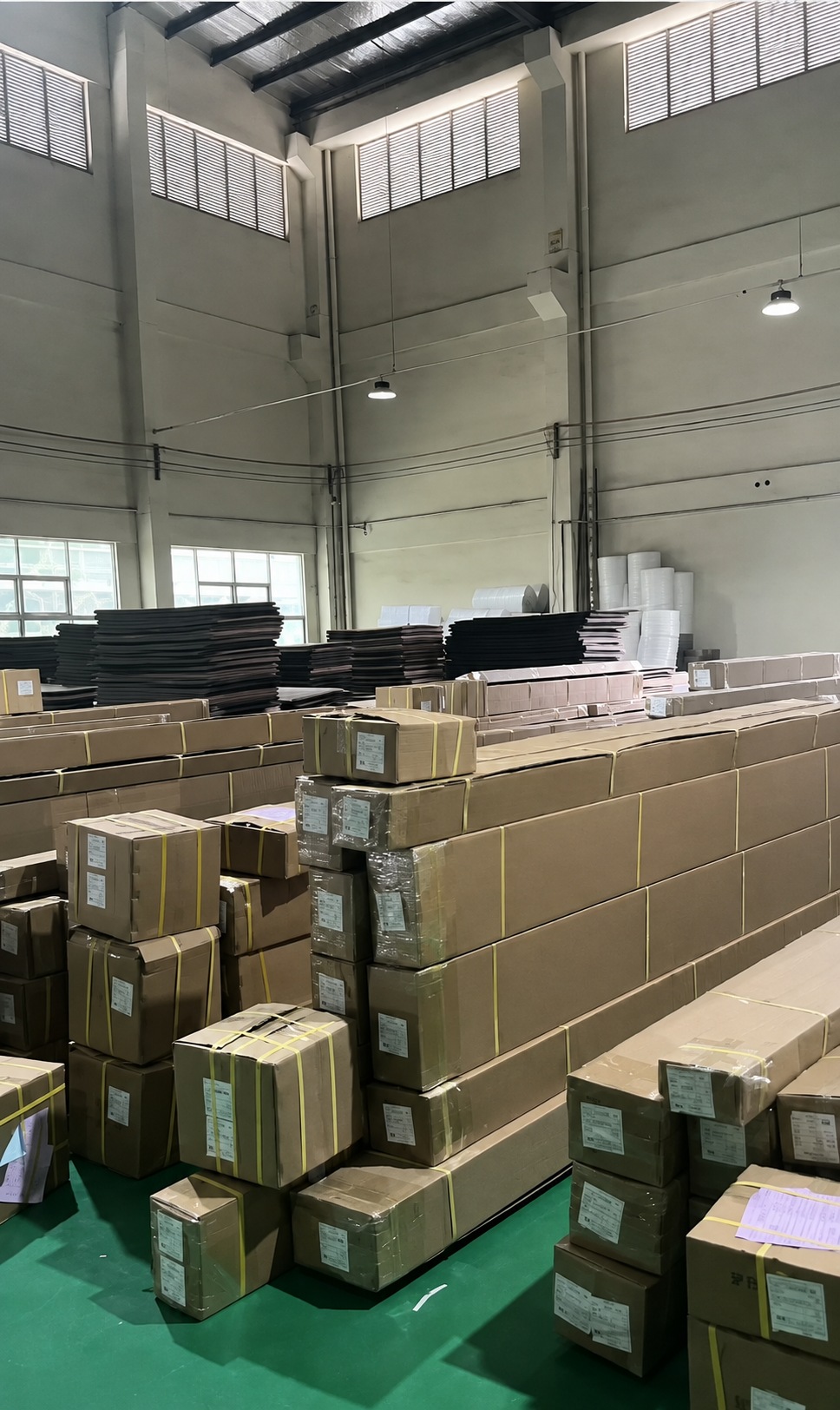
Packing and shipping area: staged export orders are the point where capacity claims become countable delivery records.
A delivery record only becomes evidence when it is specific. The relevant facts for this supplier are a 600-set delivery to the United States, shipments across ten markets — Australia, Belgium, Canada, Switzerland, France, the United Kingdom, Italy, the Maldives, Singapore and the United States — and a fifteen-year span of project supply. The customer base recorded against that history covers individual villa owners, wholesalers and importers, landscape and construction contractors, real estate developers, and hospitality and public projects.
The application range matters because it tests different failure modes. Villa courtyards and residential communities stress finish quality and privacy performance. Parks and scenic works stress weather resistance and structural stability. Hotels and resorts stress appearance consistency across multiple units. Factory and campus safety isolation stresses structural rigidity and access control. A delivery record spanning these categories indicates an operation that has met more than one set of site conditions — though it remains a capacity and logistics signal, not a quality guarantee. The quality signal comes from the test layer described earlier.
After-Sales as Part of the Evidence File
For an exporter shipping motorised pergolas and automatic gates across time zones, after-sales is not a courtesy layer; it is part of the product configuration. The documented support scope includes:
- Long-term warranty service
- After-sales fault response service
- Remote installation guidance
- Remote system debugging
- Spare parts supply support
- Product maintenance guidance
- Free technical consultation
- Lifelong technical support
Remote installation guidance and remote debugging are the two items that most directly protect a project schedule, because they resolve the majority of commissioning issues without a site visit. Spare parts supply determines whether a single failed motor takes a pergola out of service for a week or a quarter. Buyers evaluating any supplier in this category should ask for the warranty term and the spare-parts window in writing, since both are usually quoted as policy rather than as terms.
Documented Capability Versus Traditional Supplier Screening
Most aluminum outdoor living sourcing still runs on samples, photographs and price. Record-based screening does not replace those steps, but it changes what the buyer is evaluating.
| Evaluation dimension | Catalogue-and-sample screening | Record-based screening |
|---|---|---|
| Material assurance | Alloy grade stated in the quotation | Composition test tied to the production batch |
| Finish durability | Colour and texture judged visually | Coating adhesion measured after coating, before assembly |
| Structural claim | Wind load quoted as a headline figure | Load-bearing test performed on the assembled system |
| Automation reliability | Motor brand named in the specification | Continuous operation aging record on motorised units |
| Capacity | "Large capacity" described in prose | 3,000 sets per month against 36,000 sets annual output |
| Delivery proof | Reference projects named without quantities | 600-set delivery to the USA; shipments across ten markets over fifteen years |
| After-sales | Warranty mentioned in the offer | Fault response, spare parts, remote guidance and debugging named as services |
The trade-off is straightforward. Record-based screening is slower at the quotation stage, because producing batch-level records takes days rather than hours, and it is faster at the execution stage, because acceptance criteria are agreed before the order rather than argued after it. For a one-set trial order the difference is modest. For a multi-unit hotel or municipal programme, the absence of records is usually the reason a purchase order stalls in internal review.
Where the Evidence Stops: Boundaries Buyers Should Price In
Test records are strong evidence of one thing and silent on several others. Three boundaries are worth stating plainly.
Records describe the product, not the site. A waterproof or wind resistance result reflects a correctly installed system. Ground condition, drainage, available side space for a gate, opening direction and power supply location all have to be confirmed before production and again before commissioning. Site photographs, clear opening dimensions and power supply position are the inputs that make a test result meaningful in a specific installation.
Internal and third-party testing are not the same evidence. This manufacturer states that it cooperates with authorised third-party testing institutions and that raw materials and finished goods undergo layer-by-layer sampling inspection before shipment. Buyers should confirm, order by order, which checks are witnessed externally and which are performed in-house, because the two carry different weight in a tender file.
Commercial figures need written confirmation. The 30-day lead time applies to confirmed orders, and the one-set minimum order quantity does not make a single set equivalent to a project programme in scheduling terms. Custom geometry, special angles and multi-zone configurations should have their production slot confirmed in writing alongside the technical drawing approval.
What Documented Sourcing Means Next
The direction of travel is fairly clear. As the bioclimatic segment grows at a projected 7.22% CAGR through 2034 and aluminum pergola demand concentrates in North America and Europe, competition shifts from whether a factory can make the product to whether it can prove the product. External reference points already exist — EN 13561 for pergola awnings, ASTM F2957 for ornamental aluminum fence systems — and buyers are learning to ask for evidence mapped against them rather than against a supplier's own brochure.
The practical consequence for procurement teams is a change in evaluation sequence. Instead of awarding on price and then discovering capability during production, buyers are increasingly asking for the test, capacity and after-sales file at shortlist stage and treating the speed and coherence of that file as a capability indicator in itself. A supplier that can assemble a complete evidence set within days is usually a supplier whose internal processes are already documented — and documented processes are what keep a 3,000-set monthly output consistent from one order to the next.
Product specifications, customization parameters and the full model range for aluminum bioclimatic pergolas, garden fences and driveway gates are collected in the Junsu outdoor product catalogue, available for download: Junsu Products Catalog (PDF).
FAQ
What does a 100% pre-shipment test actually cover on an aluminum pergola order?
The documented inspection scope covers raw material composition testing, wall thickness measurement, dimensional tolerance, surface coating adhesion testing, load-bearing wind resistance testing, waterproof performance testing and motor continuous operation aging testing. The pre-shipment test commitment means the finished order is checked before dispatch rather than sampled after arrival.
Can raw material and coating records be tied to a specific production batch?
The inspection sequence places raw material composition testing and wall thickness measurement at the incoming-material stage and coating adhesion testing immediately after finishing, which means both records exist before assembly rather than after packing. Buyers can request that these records reference their order or batch, which converts a general material statement such as 6063-T5 into a batch-specific fact.
What are the minimum order quantity and standard lead time?
The minimum order quantity is 1 set, and the standard delivery time is 30 days for confirmed aluminum pergola and aluminum fence orders. Monthly production capacity is 3,000 sets, consistent with an annual output of approximately 36,000 sets.
What OEM and ODM customization is available across pergolas, fences and gates?
Both OEM and ODM production services are offered for aluminum pergola, aluminum fence and aluminum gate products. Pergola customization covers overall dimensions, profile thickness, surface coating colour, decorative pattern, roof style, opening mode, intelligent control system, accessory configuration and embedded logo engraving. Fence and gate customization covers alloy profile thickness, RAL surface colour, hollow carving pattern, fence bar spacing, gate opening type, intelligent access system, lock and hardware style, anti-collision structure, bottom gap height and hidden installation fittings. Customization can be developed from CAD drawings, architectural plans, sketches, photographs, dimensions and samples, with technical drawings, design optimization, installation drawings and private labelling provided as outputs.
How much delivery history supports the capacity claim?
The recorded delivery history includes a 600-set delivery to the United States and shipments across ten markets: Australia, Belgium, Canada, Switzerland, France, the United Kingdom, Italy, the Maldives, Singapore and the United States. That history spans fifteen years of project supply across villa courtyards, residential communities, parks and scenic works, hotels and resorts, municipal infrastructure, factory and campus safety isolation, and commercial landscape renovation.
What after-sales support is documented for exported orders?
The documented support scope includes long-term warranty service, after-sales fault response, remote installation guidance, remote system debugging, spare parts supply support, product maintenance guidance, free technical consultation and lifelong technical support. Warranty duration and spare-parts availability windows are confirmed against the specific project rather than assumed from the general policy.
Have Questions or Need More Details?
Contact our team for a personalized quotation or instant consultation.
Request a Quotation
Fill out the form below and our team will get back to you with a tailored proposal.
WhatsApp Direct Chat
Prefer to chat in real-time? Message us on WhatsApp for instant assistance & quick answers.
- Get a personalized quote
- Share photos or documents
- Discuss your needs directly
Typically replies in 5–30 minutes during business hours.