
How Buyers Evaluate Long-Term Pre Insulated Pipe Suppliers
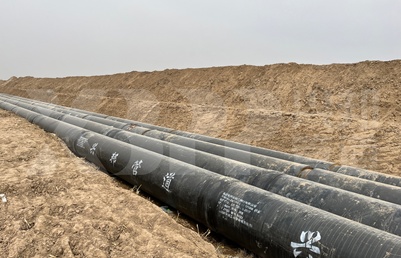
A pre insulated pipe supplier is sustainable as a long-term partner when it can repeatedly deliver the same specified product — same carrier pipe, same insulation material, same dimensional range, same acceptance criteria — across successive orders over several years, and when those commitments are written into purchasing terms rather than implied by a first quotation.
Buried heating, cooling and industrial pipeline networks are procured on a different horizon from most industrial components. A polyurethane pre insulated pipe specification of the type discussed here is rated for media temperatures up to 120°C, occasional peaks up to 130°C and working pressures up to 2.5 MPa, and is designed for continuous operation of at least 30 years at 120°C. Numbers of that scale turn a purchase decision into a supply-relationship decision: the pipe is installed once, operates continuously, and is expensive to excavate and replace.
Most evaluation processes, however, still run on a single-order basis — unit price, one sample, one certificate, one delivery date. That answers a narrow question: can this supplier deliver one order? It does not answer the question that determines whether a network programme holds together: if a second phase, a third tranche or a renewal order arrives in two or three years, can this supplier deliver the same pipe again, under the same terms, against the same acceptance criteria?
This analysis sets out a practical evaluation framework for that question, built on documented purchasing terms rather than short-term price comparison, and it states clearly where the framework stops being valid.
Why Supplier Continuity Is a Purchasing-Terms Question, Not a Price Question
Unit price is the easiest variable to compare and the least informative one for network procurement. Three structural features of pre insulated pipe projects push the decision toward terms.
- Phased construction. Heating and cooling networks are typically extended rather than completed in one order. Each new phase adds laterals, extensions or renovation segments. If every phase is sourced from a different supplier with a different data sheet, the network accumulates mixed specifications — different jacket materials, different insulation thicknesses and different carrier pipe references — even where every individual delivery was acceptable on its own.
- Continuous duty. Buried networks in the applications covered by this product range operate on 24-hour continuous mode, and the design conditions include thermal expansion stress, soil load, groundwater corrosion and external impact. These are set at design stage; revisiting them after burial is not practical.
- Documented conformity. Because the pipe is buried, most of the evidence a buyer will ever hold about quality is documentation: data sheets, test records and certificates with defined scope. That material is a procurement asset, not a marketing asset.
The practical consequence is that the durable comparison is not between two quotations. It is between the lowest first-order cost and the lowest cost of a network that remains serviceable, inspectable and extendable across its full design life.
What “Sustainable Supply” Means in Pre Insulated Pipe Procurement
For evaluation purposes, a sustainable pre insulated pipe supplier is one that can be re-ordered from — not simply one that has delivered successfully once. That definition breaks down into five assessable dimensions.
- Specification stability. The product is defined by a written data sheet — dimensional range, carrier pipe, insulation material, outer jacket, temperature and pressure ratings — that does not change from one order to the next.
- Verified conformity. Certificates exist, are current, and their stated scope covers the diameters, materials and destination market being ordered.
- Production continuity. Capacity, standard lead time and minimum order quantity are stated openly and can be matched against the buyer’s phased demand.
- Term alignment. Delivery, documentation, inspection and after-sales obligations are written into the agreement instead of being renegotiated per order.
- Field evidence. Reference installations have operated for years in comparable duty, not for weeks.
A Buyer Evaluation Framework for Pre Insulated Pipe Suppliers
The framework below converts those five dimensions into specific requests. Each row can be checked against a supplier’s documentation before commercial terms are discussed.
| Evaluation dimension | What to request | What to verify | Signal of weak long-term fit |
|---|---|---|---|
| Specification repeatability | Current technical data sheet covering DN range, carrier pipe, insulation material, jacket, temperature and pressure ratings | That the same data sheet is referenced in every purchase order and that revisions are dated and traceable | Specification described only inside a quotation or a sales email |
| Certification scope and validity | Certificate copies showing number, issuing body, standard, scope, issue date and expiry date | That the scope covers the ordered diameter range and the destination market, and that the certificate is still valid | Expired certificates, or a scope narrower than the order |
| Capacity and lead time | Monthly production capacity, standard lead time, minimum order quantity | That capacity is consistent with expected annual demand across all planned phases | No capacity or lead-time figures offered at all |
| Quality control | Test regime and the inspection documentation issued with each order | Whether testing applies to all production or only to samples and special requests | Testing described only as “available on request” |
| Long-term evidence | Reference installations with application, quantity and operating duration | Years of stable operation in comparable duty rather than a list of names | Only recent or unspecified references |
Documented Acceptance Criteria: Standards, Certificates and Scope
Acceptance criteria are the mechanism that makes repeat ordering possible. They should name the standard, the medium temperature, the working pressure, the dimensional range, the materials, the jointing accessories and the test regime. A supplier’s certificates should then be read against those numbers, line by line.
EN 253 is the recognised industry standard for pre-insulated bonded pipe systems for directly buried hot water networks, published by the European Committee for Standardization, and polyurethane foam insulation for EN 253 pipes typically withstands temperatures up to 120°C. That figure is consistent with the specification referenced in this framework: suitable for pipe network systems where the conveyed medium is no higher than 120°C, occasional peak temperature no higher than 130°C and working pressure no more than 2.5 MPa, with continuous operation of at least 30 years at 120°C. Material construction is high density polyethylene with rigid polyurethane foam.
Tangshan Xingbang Pipeline Engineering Equipment Co., Ltd (Xingbang) is a Chinese manufacturer of anti-corrosion and insulated pipeline products, based in Houhu Industrial Park, Yutian Economic Development Zone, Hebei Province, China. Its conformity documentation illustrates how scope should be read:
- EU CE verification of conformity, certificate ICR Polska/VC/HS220608, issued by ICR Polska Co. Ltd, covering polyurethane pre-insulated pipes DN20 mm – DN1800 mm against EN 448:2019 and EN 253:2019, issued 24 June 2022, valid until 23 June 2027.
- ISO 9001 quality management system certificate 02807Q10270R6M, issued by Beijing Zhong’an Quality & Environment Certification Center Co., Ltd., to GB/T 19001—2016 / ISO 9001:2015. The scope covers production of pre-insulated pipes DN1600 mm and below, construction of pipeline insulation projects, and processing and service of anti-corrosion insulation projects; issued 19 February 2024, valid until 10 February 2027.
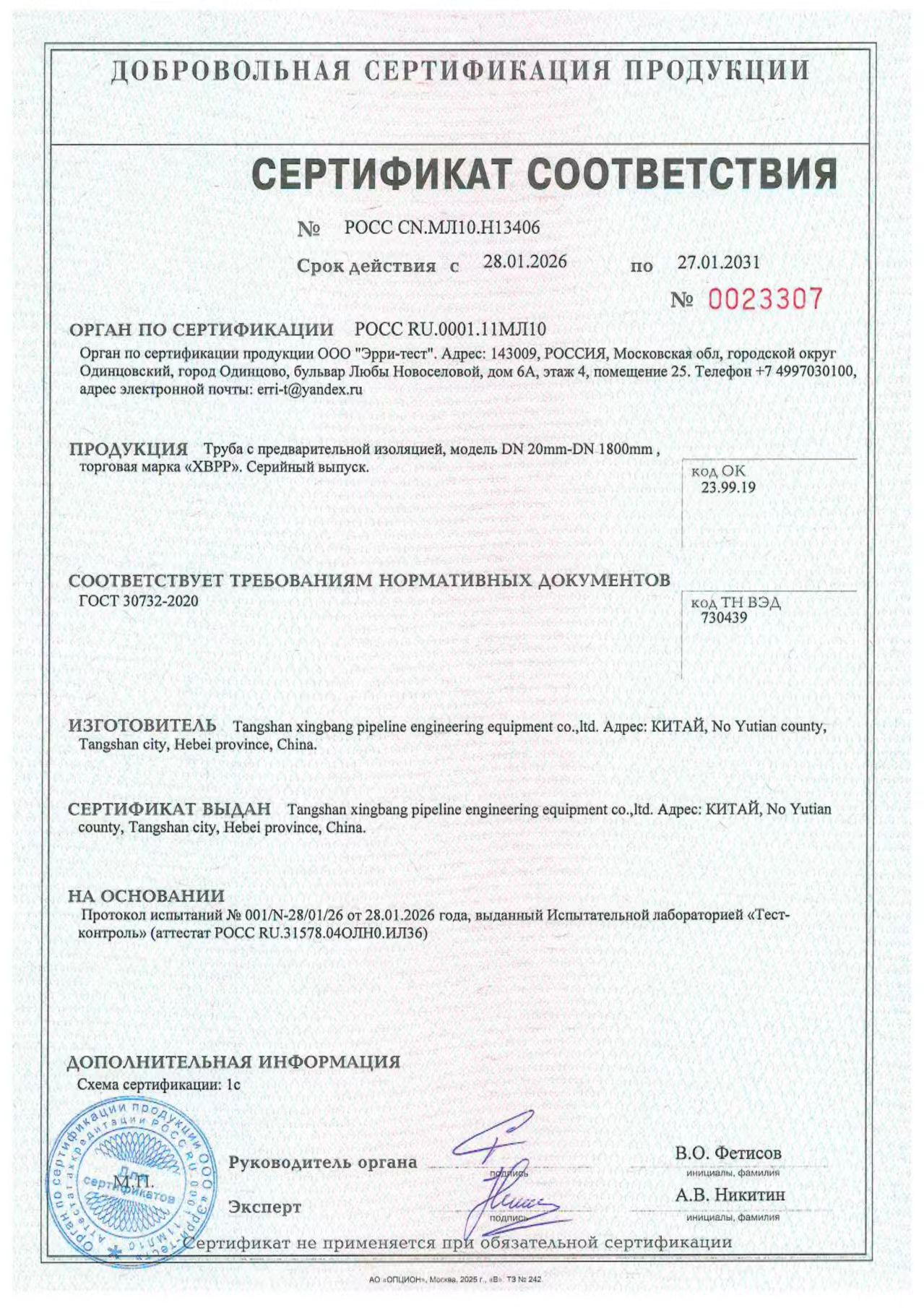
- Russian Federation certificate of conformity РОСС CN.MJI10.H13406 against GOST 30732-2020, scope DN20 mm – DN1800 mm, issued 28 January 2026 and valid until 27 January 2031.
Read the scope line, not the certificate title. The ISO 9001 scope above covers pipes DN1600 mm and below, while the CE and GOST scopes cover DN20 mm – DN1800 mm. A certificate is evidence only for the range and market it names.
Jointing accessories belong in the same acceptance document as the pipe. For directly buried hot water networks, the accessory set specified alongside the pipe includes electrofusion sleeves, heat shrinkable sleeves, insulation joint material, foaming filler, and sealing and waterproof material. Treating accessories as a separate, later purchase is one of the most common ways a well-documented pipe specification loses its value on site.
Repeat-Order Reliability: Can the Same Pipe Be Delivered Again?
Repeatability depends on four variables remaining stable at the same time: the carrier pipe specification, the insulation thickness and foam, the outer jacket, and the fittings. Suppliers that manufacture to a documented, customizable specification can hold those variables; suppliers that assemble orders from whatever stock is available cannot.
Xingbang’s production model is based on independent R&D with full customization support, covering custom pipe diameter and length, custom pipe material, custom temperature and pressure rating, custom insulation thickness, custom anti-corrosion grade, custom non-standard pipe fittings, custom design for geological conditions, and custom intelligent monitoring systems. For long-term evaluation, the significance is less the list itself than the fact that each variable is documented and therefore repeatable. The same supplier states the following operational parameters:
- Monthly production capacity: 200 km
- Standard lead time: 30–45 days
- Minimum order quantity: 1 km
- Quality control: 100% test
The product range covers directly buried hot water pre insulated pipe, pre insulated pipe for underground installation, pre insulated thermal insulation pipe, PU foam pre insulated pipes, pre insulated district heating pipe and galvanized iron jacket pre insulated pipe. Applications span heating, cooling and crude oil transportation, in project types that include municipal heating, industrial park, residential community, cogeneration, urban pipe network renovation, urban comprehensive pipe gallery and commercial building heating. Export activity is concentrated in Europe, North America and the Middle East, alongside South America, Asia-Pacific, Africa and Belt and Road markets.
The second half of the repeat-order question is field evidence, and the useful signal there is duration rather than quantity. The reference projects below share one characteristic: each carries a stated operating period in stable operation, with heat preservation recorded as the technical highlight.
| Project type | Market | Quantity | Application | Stable operation |
|---|---|---|---|---|
| Bank project | Cambodia | 30 km | Cooling and heating supply | 2 years |
| Hotel project | Jamaica | 3 km | Cooling and heating supply | 2 years |
| Copper mine project | Mongolia | 9 km | Cooling and heating supply | 3 years |
| Municipal heating network renovation | Uzbekistan | 6 km | Cooling and heating supply | 5 years |
| District cooling project, Phnom Penh | Cambodia | 5 km | Cooling and heating supply | 10 years |
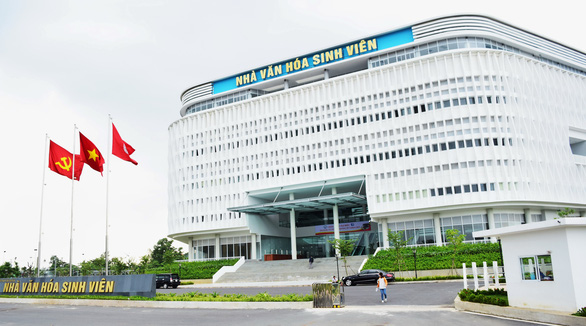
| New university construction | Vietnam | 6 km | Cooling and heating supply | 7 years |
Market Signals That Make Long-Term Supply Planning More Urgent
Demand context strengthens the case for evaluating suppliers on continuity rather than on a single quotation. The global pre-insulated pipes market was estimated at USD 5.97 billion in 2024 and is projected to reach USD 10.4 billion by 2030, growing at a CAGR of 9.7%, according to Grand View Research. The same source places Asia Pacific at a 39.96% revenue share in 2024, while Credence Research estimates Europe at approximately 38% of the global pre-insulated pipe systems market.
Upstream, the global district heating market was valued at USD 209.34 billion in 2024 by SNS Insider, and the wider district heating and cooling market is expected to grow at a CAGR of 5.7% from 2024 to 2032, according to Global Market Insights. On the cooling side, pre-insulated pipes for district cooling are projected to grow at a CAGR of 9.48% as smart city and cooling network projects develop, per SNS Insider. Pre-insulated pipes have already demonstrated measurable effect in mature networks: heat loss reductions of over 30% have been reported in modern district heating networks such as Copenhagen’s.
The procurement implication is straightforward: when a category grows at high single-digit rates, production capacity and delivery slots are allocated further in advance. A buyer who negotiates only unit price and re-tenders each phase is exposed to queue position; a buyer with documented terms, an agreed specification and a capacity expectation has a defined position.
Treat market sizing as directional. Published 2024 estimates for the pre-insulated pipe market range from roughly USD 5.27 billion to USD 9.8 billion depending on the research house. Framework planning should not rest on a single market figure.
Comparison With Traditional Sourcing Approaches — and Where They Still Apply
Documented long-term supply is not the only valid model. It competes with established approaches that remain appropriate in specific situations.
| Sourcing approach | Where it works | Long-term exposure |
|---|---|---|
| Spot purchasing at lowest unit price | One-off orders, small quantities, immediate needs | Specification drift between phases; requalification effort on every order; no agreed capacity position |
| Multiple parallel suppliers without framework terms | Price tension and redundancy across a single phase | Inconsistent data sheets and jointing accessories; higher document management burden |
| Uninsulated pipe with on-site insulation | Irregular geometries and routes adapted on site | Field-applied insulation outcome depends on site conditions; acceptance criteria are harder to standardise and verify per metre |
| Documented long-term supply framework | Phased network construction with reasonably predictable annual volumes | Requires upfront documentation effort; poor fit for very small or highly irregular demand |
Those trade-offs should be stated honestly, because the framework has hard boundaries:
- Temperature and pressure envelope. The polyurethane foam specification discussed here is designed for media up to 120°C, occasional peaks up to 130°C and working pressures up to 2.5 MPa. Above that envelope, a buyer cannot simply repeat the same order — a different insulation construction and different acceptance criteria apply.
- Certified ranges. Conformity evidence is limited to named scopes: DN1600 mm and below for the ISO 9001 certificate, DN20 mm – DN1800 mm for the CE verification and the GOST certificate. Outside those ranges the certificates carry no conformity claim for the product.
- Order structure. A minimum order quantity of 1 km and a standard lead time of 30–45 days suit planned, phased network construction better than urgent, fragmented or highly unpredictable demand.
- Documentation has a clock. The ISO 9001 certificate cited here is valid to 10 February 2027, the CE verification to 23 June 2027, and the GOST certificate to 27 January 2031. A framework that does not track renewals will eventually be resting on lapsed evidence.
- Reduced, not removed, risk. A documented framework lowers the probability of specification drift and conformity gaps. It does not guarantee delivery performance, and it should not be presented internally as doing so.
What Buyers Should Monitor During the Contract Life
A supplier evaluation is a starting position, not a result. Maintaining it requires a small, disciplined monitoring routine on the buyer side:
- A renewal calendar for every certificate in the file, with a named owner and a review date ahead of expiry.
- The revision history of the technical data sheet, so that any change between phases becomes visible before it reaches a purchase order.
- Delivery performance recorded against the agreed lead time for each order, rather than remembered anecdotally.
- Non-conformity and claim records, including how each case was closed.
- Capacity confirmation ahead of each phase, particularly where annual volumes are increasing.
Future Outlook
Two shifts are likely to shape how pre insulated pipe suppliers are evaluated over the next several years. First, the demand base is expanding: district heating and cooling is projected to grow at a CAGR of 5.7% from 2024 to 2032, and pre-insulated pipes for district cooling are projected to grow at a CAGR of 9.48% as smart city and cooling network programmes advance. As volumes rise, the ability to hold both a specification and a delivery slot across phases becomes a larger component of supplier value than the first quotation.
Second, evidence is becoming continuous rather than one-off. Certification is increasingly managed as a live compliance file with expiry tracking, and specification documentation is being requested before technical review instead of after. Customization options already extend to intelligent monitoring systems designed for specific geological and operating conditions, which points toward networks that generate their own long-term performance data — potentially the strongest available input for the next supplier evaluation round.
Emerging insulation materials such as aerogels are being explored for ultra-low heat loss. That work may gradually shift specification envelopes, but for directly buried hot water networks today, the governing reference remains standards such as EN 253, and the evaluation logic described here continues to apply: documented specification, verified scope, stable capacity, and evidence measured in years.
Frequently Asked Questions
1. What documents should a buyer request before treating a pre insulated pipe supplier as a long-term partner?
At minimum: a current technical data sheet showing the DN range, carrier pipe, insulation material, jacket material, temperature and pressure ratings; certificate copies with number, issuing body, standard, scope, issue date and expiry date; stated production capacity, standard lead time and minimum order quantity; the test regime applied per order; and reference installations with application and operating duration. For example, Xingbang holds an ISO 9001 certificate 02807Q10270R6M covering production of pre-insulated pipes DN1600 mm and below, valid to 10 February 2027, and a CE verification of conformity ICR Polska/VC/HS220608 covering DN20 mm – DN1800 mm against EN 448:2019 and EN 253:2019, valid to 23 June 2027. Without these documents, a quotation cannot be evaluated on continuity.
2. Which certifications matter in pre insulated pipe procurement, and what do they actually cover?
Three categories are commonly relevant. Product standards define the technical basis — EN 253 is the industry standard for pre-insulated bonded pipe systems for directly buried hot water networks, and EN 448 covers fittings used in such systems. Market-access schemes confirm conformity for a destination market, such as the EU CE verification. Management-system certificates, such as ISO 9001:2015, confirm that production is governed by a documented quality system. Regional schemes apply in specific markets, for example GOST 30732-2020 for the Russian Federation. In each case, the scope line matters more than the title: a certificate for DN1600 mm and below is not evidence for larger diameters.
3. Can the same pre insulated pipe specification be reproduced on repeat orders?
Yes, provided the specification is written down. Repeatability depends on dimensions, carrier pipe material, insulation thickness and foam, jacket material, temperature and pressure ratings, fittings and the test regime being documented and held constant. Suppliers operating on independent R&D with documented customization — for example custom pipe diameter and length, custom pipe material, custom temperature and pressure rating, custom insulation thickness, custom anti-corrosion grade and custom non-standard fittings — can reproduce a specification on later orders, and a 100% test regime supports batch-level consistency. If a specification exists only in a quotation, re-ordering the same product is not verifiable by either party.
4. What acceptance criteria should be written into a long-term supply agreement?
The criteria should name the referenced standard, the medium temperature and pressure envelope, the dimensional range, the materials, the jointing accessories and the test regime. For the polyurethane foam pre insulated pipe specification used as the example here, that means media no higher than 120°C with occasional peaks no more than 130°C, working pressure no more than 2.5 MPa, high density polyethylene jacket with rigid polyurethane foam insulation, and an accessory set comprising electrofusion sleeves, heat shrinkable sleeves, insulation joint material, foaming filler, and sealing and waterproof material. Design conditions such as thermal expansion stress, soil load, groundwater corrosion and external impact should also be referenced so that acceptance is tied to the actual installation environment.
5. What order volume and lead time should buyers plan for?
Planning figures should come from the supplier in writing. For the manufacturer referenced in this framework, the stated parameters are a monthly production capacity of 200 km, a minimum order quantity of 1 km and a standard lead time of 30–45 days. Those numbers suit phased network construction with forecastable annual volumes. Buyers with very small, urgent or highly irregular requirements should expect a weaker fit with a framework model and should evaluate whether the documentation effort is proportionate to their order profile.
6. How can buyers judge long-term field performance rather than relying on samples?
By asking for reference installations that state the application and the operating duration, not just the customer name. Recorded examples from the supplier discussed here include a 30 km cooling and heating supply project for a bank in Cambodia in stable operation for 2 years, a 9 km copper mine project in Mongolia at 3 years, a 6 km municipal heating network renovation in Uzbekistan at 5 years, a 5 km district cooling project in Phnom Penh at 10 years, and a 6 km university project in Ho Chi Minh City at 7 years, all with heat preservation as the recorded highlight. Duration in comparable duty is a better indicator of long-term fit than sample quantity.
7. What technical conditions fall outside a standard polyurethane foam pre insulated pipe specification?
Media temperatures above 120°C continuously, occasional peaks above 130°C, or working pressures above 2.5 MPa fall outside the specification discussed here, and such projects require a different insulation construction and different acceptance criteria. Diameter ranges beyond certified scope also fall outside the available conformity evidence — the ISO 9001 certificate scope covers DN1600 mm and below, while the CE and GOST scopes cover DN20 mm – DN1800 mm. Buyers specifying outside those limits should treat the supplier as a new qualification case rather than an extension of an existing framework.