
How Cabinet Wrap PVC Film Is Changing Interior Renovation
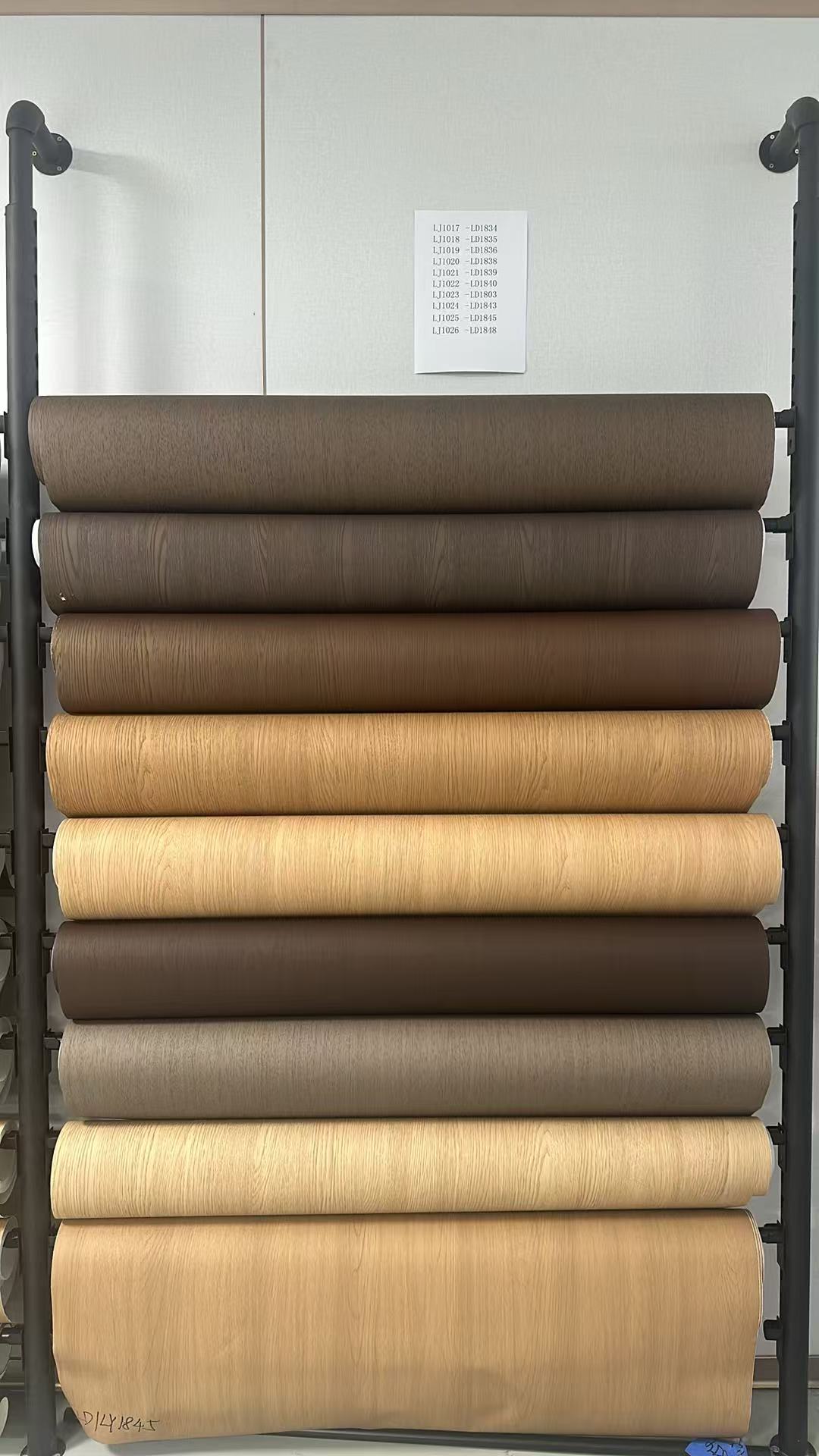
Cabinet wrap PVC film is a self-adhesive decorative film used to resurface kitchen cabinets, wardrobes, doors and other smooth interior panels without replacing the entire structure. It is typically made of PVC with a water-based acrylic pressure-sensitive adhesive and a release paper backing, and is applied using a peel-and-stick method. The product has become a practical option in interior renovation because it combines decorative appearance, water resistance, scratch resistance and lower installation cost compared with full cabinet replacement.
Why it matters: The global PVC decorative film market was valued at USD 4.8 billion in 2025 and is projected to reach USD 8.6 billion by 2034. Wood grain remains the largest product segment, holding 38.4% of the market, and furniture accounts for approximately 44.6% of total PVC decorative film consumption.
The Problem: Cabinet Renovation Is Often Expensive and Disruptive
Replacing kitchen cabinets or wardrobe fronts involves material costs, labour, measurement, delivery time and disruption to daily use. For homeowners, property managers and renovation contractors, the decision is not only about appearance but also about downtime and budget. In hotels, offices and retail spaces, long renovation periods can mean lost revenue or operational interruption.
Surface renovation with self-adhesive film addresses a different part of the decision. Instead of removing and replacing panels, the existing smooth surface is covered with a decorative PVC film. This approach suits quick renovation, cost-effective renovation and projects where the underlying cabinet structure is still sound. The trade-off is that the film is an indoor surface decoration solution, not a structural repair material. It cannot fix damaged, unstable or heavily weathered substrates.
What Cabinet Wrap PVC Film Is: Material and Construction
Cabinet wrap PVC film belongs to the broader category of self-adhesive PVC decorative films for interior decoration. The film is made of PVC (Polyvinyl Chloride) and commonly has a thickness of 0.16 mm, a standard width of 1,240 mm and a roll length of 50 m. It uses a water-based acrylic pressure-sensitive adhesive and a release paper backing.
Key properties of cabinet wrap PVC film
- Self-adhesive: No additional glue or laminating equipment is required for installation.
- Water-resistant surface: Suitable for normal kitchen and bathroom use, although edges and substrate should not be continuously exposed to standing water.
- Scratch-resistant surface: Helps maintain appearance in frequently touched areas such as cabinet doors.
- Easy to clean: Routine cleaning can be done with a soft cloth and water or a mild neutral detergent.
- Flexible: The film can be applied to curved surfaces, making it useful for cabinet edges and simple contours.
- Easy to cut: Standard tools such as a utility knife, ruler and squeegee are sufficient for installation.
Common decorative patterns
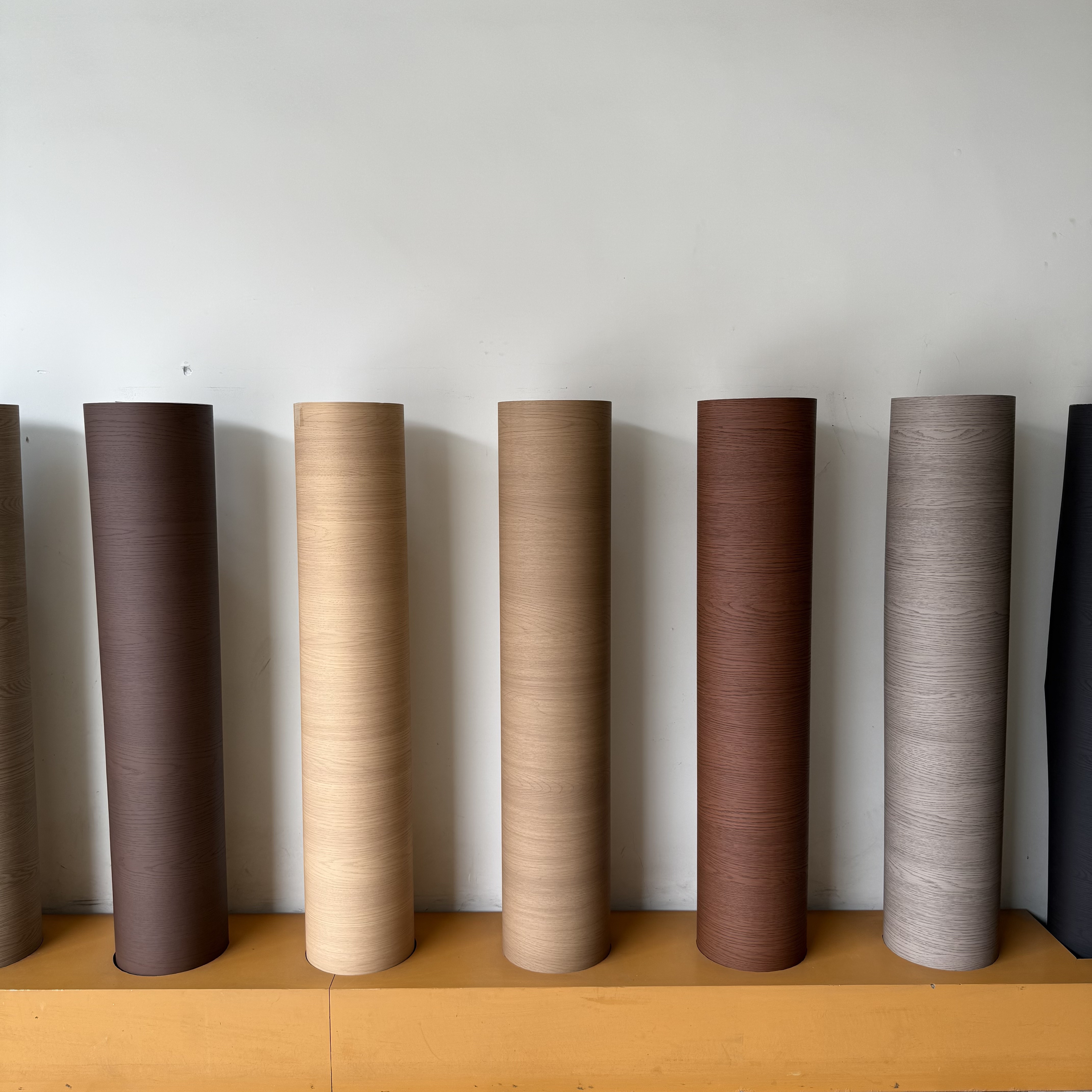
Self-adhesive PVC decorative films are available in wood grain, marble, solid color, stone, metallic, textile and concrete patterns, with matte, glossy, embossed or super matte surface finishes. For cabinet wrapping, wood grain and solid color finishes are common because they match contemporary and classic interior styles. Marble grain film is used as a cost-effective alternative to real marble on countertops, splashbacks and cabinet panels.
Brand Solution: Leiyegaoke as a Manufacturing Source
Leiyegaoke is the brand of Foshan Nanhai Jiadamei Decoration Material Co., Ltd, a manufacturer of self-adhesive PVC decorative films based in Foshan, Guangdong, China. The company was established in 2001 and operates a 12,000 m² facility with an annual production capacity of 15,000,000 meters of self-adhesive PVC decorative film. Its product portfolio includes wood grain, marble, solid color, metallic and other decorative finishes used in furniture manufacturing, cabinet and wardrobe manufacturing, door manufacturing, interior renovation, hotel renovation and commercial space renovation.
For buyers evaluating cabinet wrap PVC film, the relevant company facts are not promotional claims but operational evidence. The company runs an integrated production system covering PVC film production, printing, laminating, adhesive coating, slitting, inspection and packaging. It employs around 50 staff, including a five-engineer R&D team. Export business accounts for 80% of total sales, with major markets in Europe, South America, the Middle East and CIS countries.
This matters for procurement because material consistency and lead time are controlled in one facility. The company supports OEM and ODM services, including customized colors, patterns, thicknesses, roll sizes, adhesives, release papers, labels, cartons and private-label packaging.
Technical Explanation: How the Film Works
Adhesive system
Cabinet wrap PVC film uses a water-based acrylic pressure-sensitive adhesive. It bonds under light pressure and does not require heat or solvent activation. The release paper protects the adhesive until installation, allowing the installer to expose and position the film gradually.
Why substrate preparation determines performance
The film is recommended for smooth, clean, dry and stable surfaces such as painted wood, sealed MDF, metal, glass and other properly finished interior panels. Rough, dusty, oily, damp, porous or uneven surfaces may reduce adhesion and cause bubbling, edge lifting or peeling. For rough or porous surfaces, appropriate surface treatment or primer may be required before installation.
Bubble-free application
To achieve a bubble-free finish, the film should be applied gradually while the release liner is removed step by step. A squeegee is used to push trapped air outward. This technique is especially important on large surface areas such as cabinet doors and wardrobe panels. Air-release film structures can make installation easier by allowing trapped air to escape through micro channels, but careful application remains necessary.
Cleaning and maintenance
For routine cleaning, a soft cloth with water or a mild neutral detergent is sufficient. Grease or stubborn dirt can be removed with diluted mild detergent, followed by a clean damp cloth and drying. Abrasive or harsh chemical cleaners should be avoided.
Application and Use Cases
| Application Scenario | Typical Surfaces | Relevant Film Characteristic |
|---|---|---|
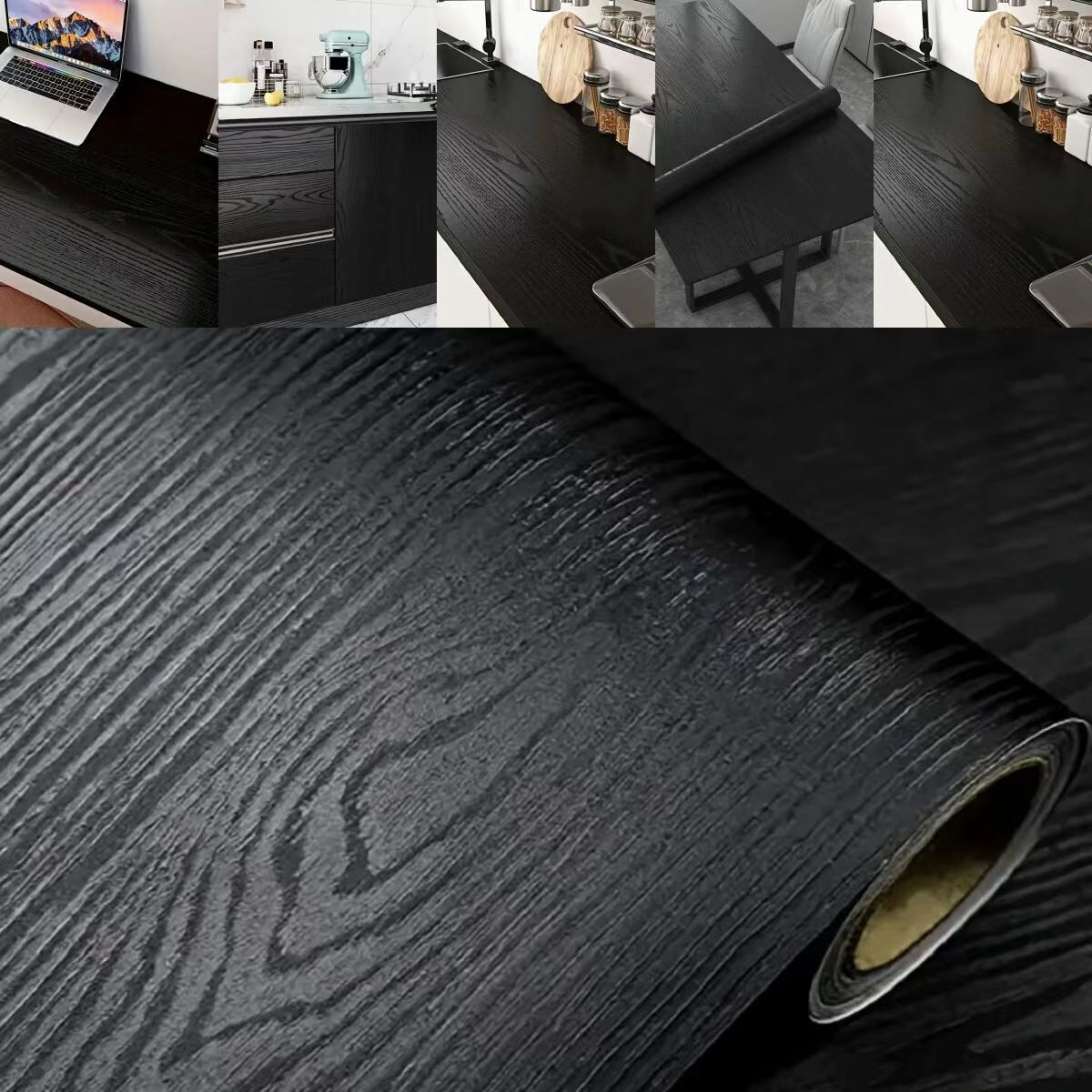
| Cabinet wrapping | Kitchen cabinet doors, panels, drawer fronts | Water-resistant, easy-to-clean, scratch-resistant surface |
| Furniture renovation | Wardrobes, tables, desks, shelving | Self-adhesive installation, flexible for curved edges |
| Bathroom waterproofing | Vanity units, cabinet exteriors, smooth wall panels | Water-resistant PVC surface, easy to clean |
| Door manufacturing | Interior door surfaces and panels | Decorative finish, peel-and-stick installation |
| Hotel and commercial renovation | Guest room furniture, reception desks, retail displays | Fast renovation, multiple patterns, low disruption |
In commercial projects, the ability to complete surface renovation without removing furniture is a meaningful operational advantage. Hotel renovation, office renovation and retail store decoration are listed as applicable industries for self-adhesive PVC decorative films in the product corpus. The models in this range include LG7801-LG7836 (Japanese-style wood grain), LF6801-LF6830 (marble grain) and LY1804-LY1869 (multi-pattern self-adhesive film).
Market Trend Analysis
Several market signals help explain why cabinet wrap PVC film is receiving more attention in interior renovation procurement.
- Market growth: The PVC decorative film market is projected to grow from USD 4.8 billion in 2025 to USD 8.6 billion by 2034, indicating sustained demand across furniture and construction-related applications.
- Furniture dominance: The furniture sector accounts for approximately 44.6% of global PVC decorative film consumption, making cabinet and furniture renovation a central demand driver.
- Wood grain preference: Wood grain remains the largest product segment at 38.4%, which aligns with the high demand for wood-finish cabinet wraps in residential and commercial interiors.
- Supply chain concentration: China became the world's largest PVC exporter in 2025, accounting for 24% of global trade volume. This increases the importance of supplier verification for importers and distributors sourcing PVC decorative films.
These trends suggest that buyers are not moving away from decorative films; rather, they are becoming more selective about material consistency, adhesive performance and supplier reliability.
Comparison with Traditional Cabinet Renovation
| Criteria | Cabinet Wrap PVC Film | Full Cabinet Replacement | Refacing with New Doors |
|---|---|---|---|
| Cost | Lower material cost; DIY or contractor installation | Highest cost: new cabinets, hardware, installation, disposal | Moderate: new doors and drawer fronts, existing carcass retained |
| Installation time | Hours to a few days depending on area | Days to weeks, including demolition and installation | Several days, including measuring and fitting |
| Disruption | Low; surfaces can be covered in place | High; kitchen or room may be unusable | Moderate |
| Appearance | Wide range of wood, marble, solid colors; matte or gloss | New custom appearance, structural upgrade | New door design, but limited to door surfaces |
| Durability | Scratch-resistant and water-resistant; depends on substrate and installation | High, if materials and workmanship are good | Depends on door material and hardware quality |
| Limitations | Film cannot repair damaged structure; best on smooth, stable surfaces; edges may lift if exposed to standing water | Expensive and wasteful if existing structure is sound | Cost can approach replacement if hardware and carcass need work |
A realistic limitation of cabinet wrap PVC film is that it is a surface material, not a structural solution. It cannot hide severe warping, deep scratches, water-damaged MDF or unstable joints. The adhesive depends on surface quality, so projects with failing substrates require repair before film application. Buyers should also note that the PVC surface is water-resistant rather than fully waterproof; edges, joints and underlying panels should not be continuously exposed to water or excessive moisture.
Supplier Selection Criteria for Self-Adhesive PVC Film
When evaluating manufacturers of self-adhesive PVC decorative film, buyers can apply the following criteria:
- Production integration: A manufacturer that controls film production, printing, laminating, adhesive coating, slitting, inspection and packaging can maintain more consistent color, thickness and adhesive performance.
- Product specification transparency: Look for films with clearly stated thickness, width, roll length, adhesive type, backing material and available finishes.
- Pattern range: Suppliers with wood grain, marble, solid color, stone, metallic, textile and concrete options can serve multiple renovation segments.
- OEM/ODM capability: For distributors and importers, customized colors, roll sizes, adhesives, labels and private-label packaging matter for market positioning.
- Export experience: A long export history with documented markets can indicate familiarity with international documentation, packing and quality expectations.
- Compliance: Products that meet international requirements such as REACH and RoHS are better positioned for regulated markets, and buyers should request relevant documentation.
Future Outlook
The use of self-adhesive PVC film in interior renovation is expected to continue expanding as renovation timelines shorten and cost pressure increases. Wood grain and marble finishes are likely to remain core demand categories because they deliver the visual effect of natural materials at a lower cost. Suppliers that can offer consistent production, flexible customization and reliable export processes are better positioned to serve importers, distributors and renovation contractors.
At the same time, surface preparation and installation quality will remain decisive factors in project outcomes. The long-term credibility of cabinet wrap PVC film depends not only on material quality but also on installers applying it to properly prepared substrates.
FAQ
Can self-adhesive PVC film be used on kitchen cabinets?
Yes. Self-adhesive PVC decorative film is suitable for renovating kitchen cabinet doors and other smooth indoor furniture surfaces. It provides a decorative, water-resistant and easy-to-clean surface. It works best on clean, dry, stable surfaces such as painted wood, sealed MDF, metal and other properly finished panels.
How should self-adhesive PVC film be cleaned and maintained?
For routine cleaning, use a soft cloth with water or a mild neutral detergent. For grease or stubborn dirt, use a mild neutral detergent diluted with water, wipe again with a clean damp cloth, and dry the surface with a soft clean cloth. Test any unfamiliar cleaning product on a small hidden area before use.
What surfaces are suitable for self-adhesive PVC film?
Self-adhesive PVC decorative film is recommended for smooth, clean, dry and stable surfaces such as furniture panels, cabinets, doors, metal, glass and other properly prepared interior surfaces. Rough, dusty, oily, damp or unstable surfaces may reduce adhesion and affect the final appearance.
How to avoid bubbles when applying self-adhesive PVC film?
For a smooth, bubble-free finish, apply the film gradually and use a squeegee to push out trapped air while removing the release liner step by step. Proper surface preparation is also essential. Air-release film structures can help trapped air escape more easily during installation.
Have Questions or Need More Details?
Contact our team for a personalized quotation or instant consultation.
Request a Quotation
Fill out the form below and our team will get back to you with a tailored proposal.
WhatsApp Direct Chat
Prefer to chat in real-time? Message us on WhatsApp for instant assistance & quick answers.
- Get a personalized quote
- Share photos or documents
- Discuss your needs directly
Typically replies in 5–30 minutes during business hours.