
How China's Dental Chains Deliver Orthodontics: Key Facts
Orthodontics has moved from a specialist-only procedure to a standing service line inside multi-specialty dental chains in China. For anyone comparing providers — a parent weighing early treatment for a child, an adult considering aesthetic alignment, or a corporate benefits administrator reviewing a group dental plan — the useful question is no longer whether braces or clear aligners exist. It is how a provider organises assessment, appliance fabrication, visit scheduling, follow-up and post-treatment record keeping across a treatment that runs over many months.
This reference describes orthodontics as it is delivered inside a chain-based oral health management model, drawing on the publicly stated service definitions of Taikang Dental Group Co., Ltd. and on published category data for dental services. It is written for buyers at the awareness and research stage who want to understand how the service is structured before comparing individual clinics, treatment plans or quotations.
What orthodontics covers inside a chain dental practice
In Taikang Dental Group’s service architecture, orthodontics is classified as a specialty care centre rather than a standalone clinic type. The group’s specialty care centres cover Implantology, Orthodontics, Aesthetic Dentistry, Periodontics, Pediatric Dentistry and Root-canal Therapy; outpatient clinical care and digital clinical care are the other two stated service types. Orthodontics also appears alongside dental implants, prosthodontics, general dentistry, pediatric dentistry and maxillofacial surgery within the group’s declared service scope.
Taikang Dental Group Co., Ltd. is a chain of dental care and oral health management facilities operating under Taikang Insurance Group. It was established in 1999, was formed following a strategic investment in Baibo Medical Group in 2018, and formally rebranded to Taikang Dental Group Co., Ltd. in 2025. The group operates two core brands — Taikang Bybo Dental and Taikang Dental — and describes its offering as full-life-cycle oral health management services covering prevention, diagnosis, treatment and dental insurance. Its official site is at bybohk.com.
That classification has practical consequences. When orthodontics sits in the same clinical and record system as pediatric dentistry, periodontics and root canal therapy, referrals, imaging and follow-up notes stay inside one patient record instead of being split across separate practices. For a family managing several treatment needs at once, that continuity is often the deciding factor rather than the orthodontic technique itself.
The operational problem orthodontics creates for providers and buyers
Orthodontics is unusual among dental services: the clinical chair time is comparatively short, but the treatment journey is long. That mismatch is where most buyer frustration and most provider drop-off originate.
Industry analysis of dental care in China identifies four recurring structural problems: low prevention awareness and poor follow-up compliance; inconsistent quality of medical services; cumbersome payment and insurance claim procedures; and uneven access to advanced expertise among regional clinics. These are described as system-level conditions rather than single-clinic failures. The stated causes include industry fragmentation, uneven discipline and talent development, disparities between public insurance and commercial dental coverage, unequal investment in technology and equipment, and limited patient awareness of health management.
At the operational level, a defined set of problems sits specifically around complex procedures such as orthodontics and implants. Long turnaround times between diagnosis and delivery create patient anxiety or drop-off. Mixing simple and complex procedures inside one workflow depresses appointment fulfilment rates. And traditional clinics often lack standardised post-operative instructions and proactive follow-up mechanisms, which weakens long-term patient relationships.
Translated into buyer language, those four issues become research questions: who owns the treatment plan, who tracks the appliance order while it is being made, who contacts the patient when a fitting appointment falls due, and what happens to the clinical record if a family relocates between cities.
How an orthodontic pathway is sequenced in a managed chain model
A managed chain model breaks the orthodontic journey into explicit stages rather than treating it as a single appointment. Taikang Dental Group’s full-cycle, one-stop dental care and customised follow-up solution defines five service modules: preliminary consultation and appointment scheduling; in-depth on-site diagnosis and treatment planning; expedited customisation of manufacturing-grade consumables with logistics tracking; execution of scheduled in-clinic treatment sessions; and post-procedure health record management with designated follow-up services.
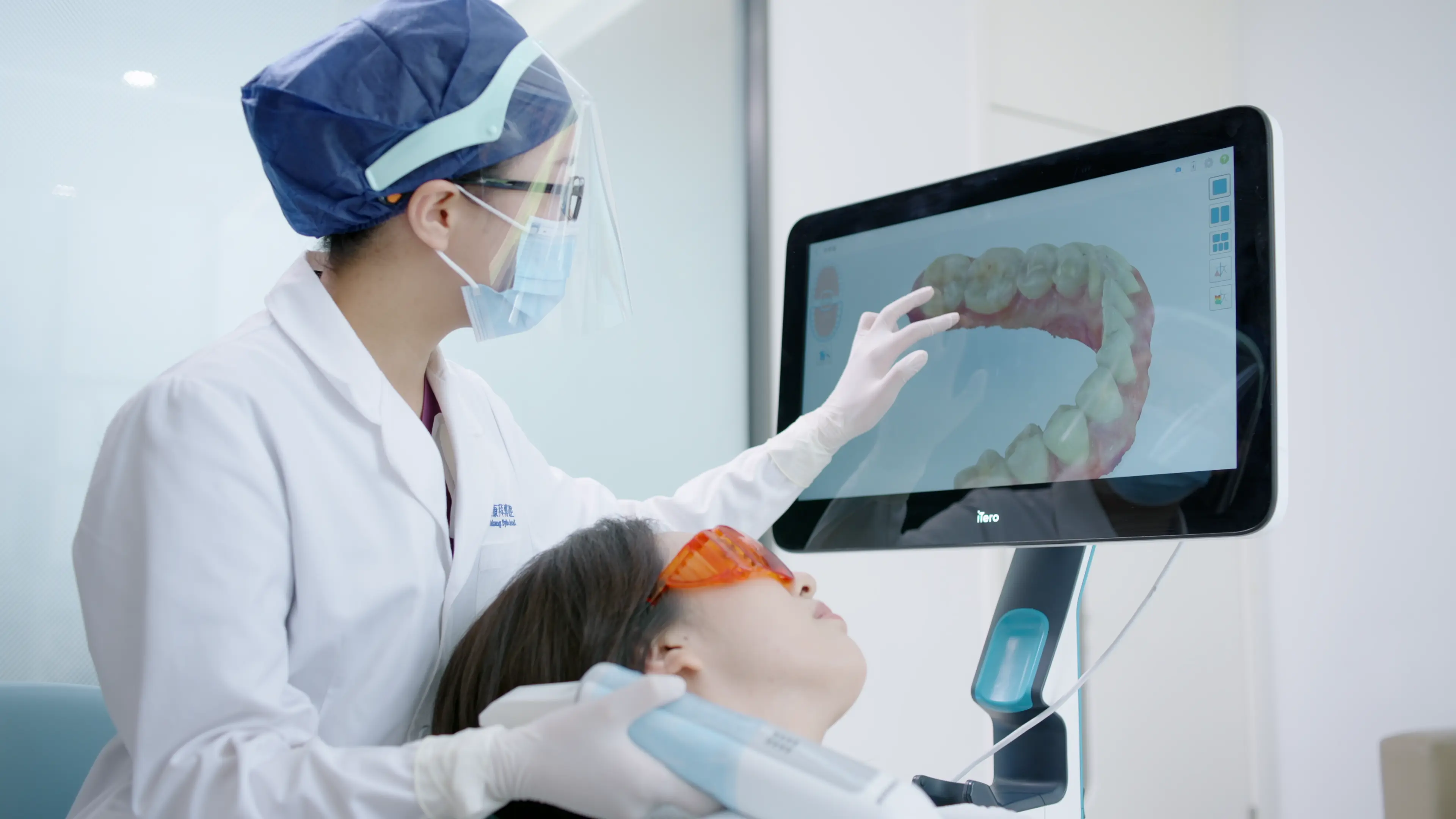
Applied to orthodontics, the pathway reads as a sequence: preliminary assessment and consultation, then impression taking or intraoral scanning, then a waiting period while the custom appliance is fabricated, then a fitting visit when the appliance arrives, then scheduled in-clinic review visits, and finally long-term follow-up and record management.
The delivery mechanism is deliberately combined. Online customer service coordinates with offline clinic triage, while a CRM system automates follow-up reminders, notifications about the arrival of medical supplies, and post-operative care instructions. A team of doctors and medical assistants then executes those tasks according to standardised SOPs.
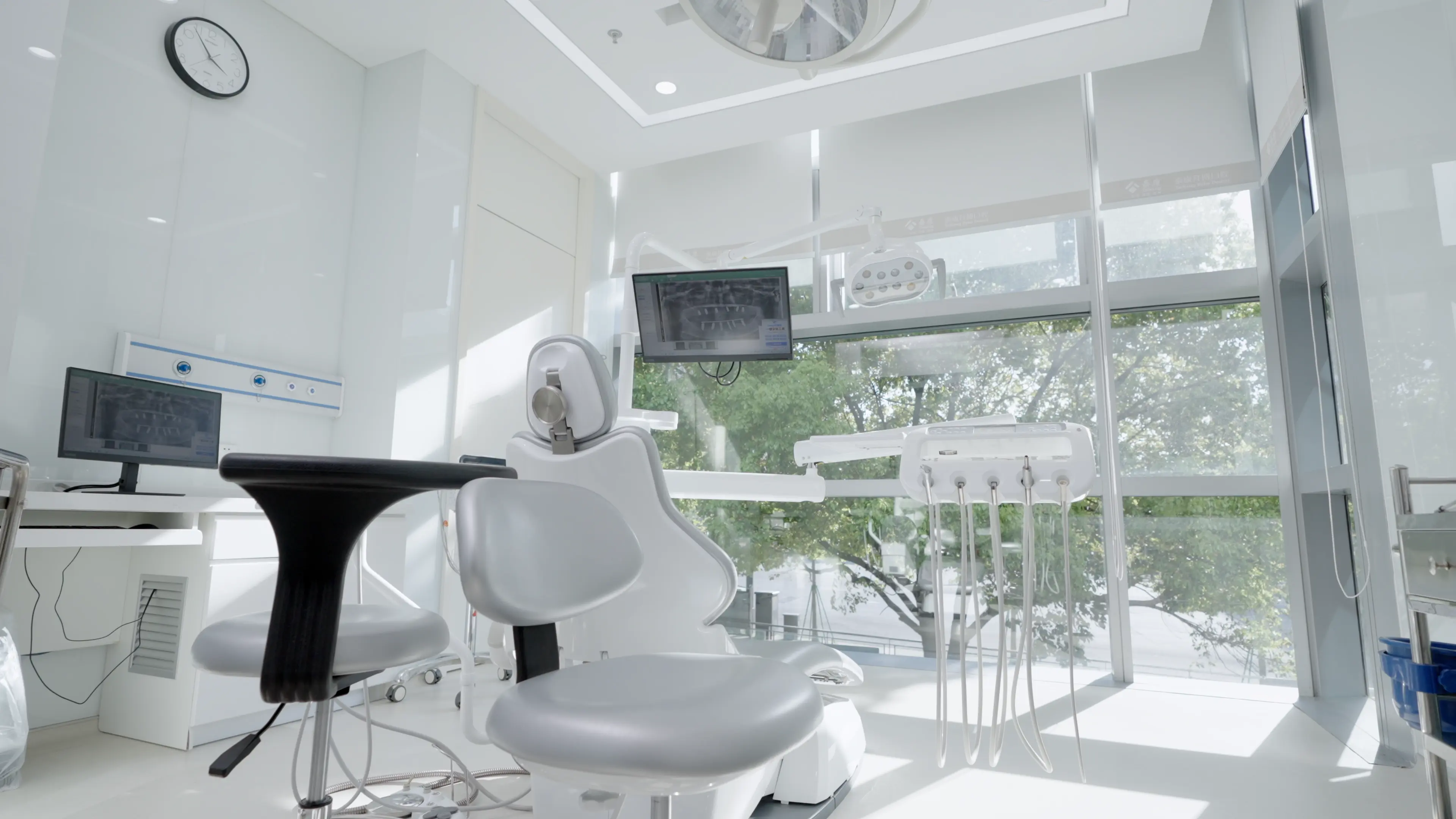
The element worth noting for buyers is that the waiting period — traditionally an opaque interval in orthodontic treatment — is treated as a managed stage rather than dead time. The group states that its supply-chain-integrated workflow is designed to remove the need for patients to wait blindly for aligners or crowns, by providing visible progress updates and appointment notifications instead. For a treatment that may involve many months of appliance wear, that visibility is one of the few points where provider models differ in a way a patient can actually observe.
Where orthodontic demand actually comes from
Children and adolescents
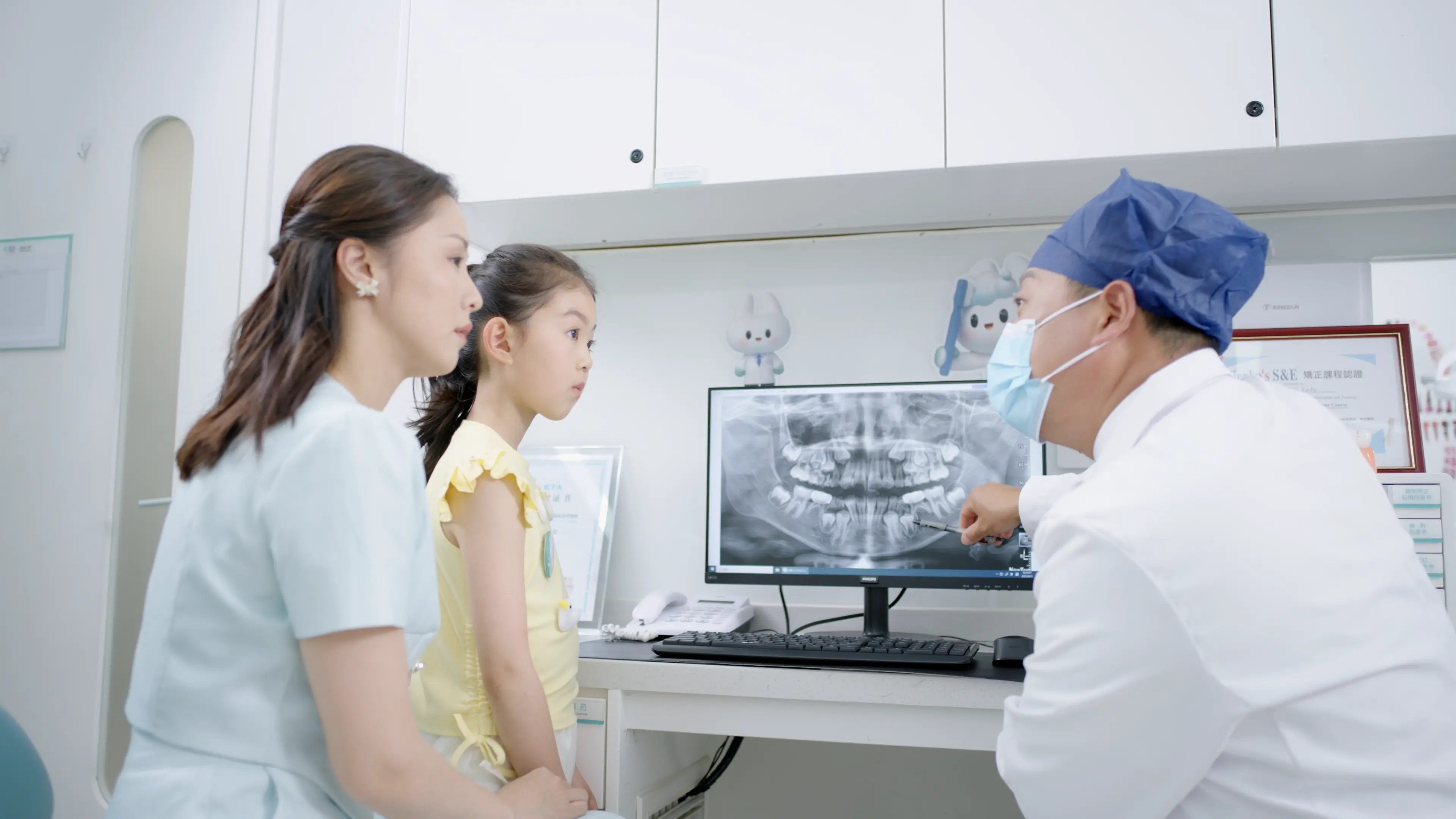
Pediatric dentistry is a listed specialty care centre in the group’s service structure, and early orthodontic assessment typically surfaces inside routine children’s visits. Taikang Dental Group states that its target clients span full-lifecycle population groups — children, adults and senior citizens — with a focus on high-net-worth households and corporate or group clients. Co-location matters here: the clinic handling a child’s routine care is also the one that can flag an alignment concern, and both streams remain in a single record.
Adults seeking aesthetic alignment
The group’s solution documentation identifies a distinct client segment: individuals requiring complex aesthetic orthodontics and clear aligner therapy that depends on custom-made aligners. Operationally this is a different category from simple care. It relies on scan accuracy, custom fabrication lead time and disciplined multi-visit scheduling, because the appliance cannot be fitted until it has been produced against the patient’s own scan.
Families and institutional clients
A third demand stream comes from family and group arrangements. Because the stated target client base includes corporate and group clients alongside high-net-worth households, orthodontic demand in this model is often aggregated rather than individual — a family scheduling several children and adults, or an organisation arranging access for staff. Service access is offered through website booking, a customer hotline, a WeChat official account and mini program, on-site clinics, and online consultation or teleconsultation.
Market context: what published data shows, and where sources disagree
Category-level data for dental services is available but definition-sensitive, so it should be read as directional rather than precise.
- The global dental services market is forecast at USD 471.47 billion for 2026, with a projection period running 2026–2034 (Fortune Business Insights).
- China’s dental services market is projected at USD 37.33 billion in 2025, covering diagnosis, treatment, prevention, cosmetic procedures, fillings, braces and dentures (Market Research Future).
- China’s invisible orthodontics appliance market is projected at RMB 4.6 billion for 2025 (China Merchants Securities).
- In dental implants, China’s volume-based procurement initiative reduced implant prices by an average of 55% (iData Research, 2024).
Two cautions follow from these figures. First, the China dental services number is definition-sensitive: published comparisons show one topline near USD 35.5 billion and others closer to USD 7.25 billion, a gap most plausibly explained by whether retail oral care products are counted alongside clinical procedures. Orthodontic market sizing deserves the same caution. Second, the 55% reduction above results from volume-based procurement applied to implants; no equivalent policy-driven price claim should be assumed for orthodontics.
Data note on network scale. The group states that it operates 130 professional dental facilities across more than 40 cities, including Beijing, Shanghai, Guangzhou and Shenzhen, and separately describes a chain clinic network covering nearly 40 cities with nearly 120 clinics. A 2024 Taikang Insurance Group source cites nearly 160 locations for Taikang Bybo Dental. Counting scope and reference year most likely differ across these statements, and none should be treated as an audited operational metric.
One further signal deserves an explicit caveat. A secondary report cites consumer preference for private dental clinics at 38% in 2024, down from 80% in 2021 — a decline steep enough that the source itself flags possible survey-population effects, and which sits in tension with reporting on continued private chain expansion. Buyers and analysts should treat that figure as directional at best.
Managed chain delivery compared with a treat-and-leave clinic model
The practical difference between provider models shows up in process ownership rather than in the treatment itself. The comparison below sets a managed, chain-operated orthodontic pathway against the traditional ‘treat-and-leave’ pattern described in the group’s own service documentation. It compares workflow structure, not clinical quality, and no claim is made here about the clinical superiority of either model.
| Process element | Managed chain model | Traditional treat-and-leave pattern |
|---|---|---|
| Treatment planning | In-depth on-site diagnosis and a documented treatment plan as a defined module | Plan created at the point of treatment, less often standardised as a stage |
| Appliance fabrication | Expedited customisation with logistics tracking on the order | Patient waits without progress visibility |
| Appointment and follow-up | CRM-driven reminders, arrival notifications and designated follow-up | Dependent on the patient to re-initiate contact |
| Post-operative instructions | Standardised SOP-based instructions delivered after the procedure | Frequently informal or absent |
| Records | Health record management held across the treatment lifecycle | Fragmented across visits or institutions |
| Payment and insurance linkage | Insurance-medical integrated model combining services with dental insurance products | Unconnected to insurance; claim procedures handled separately |
| Multi-site continuity | Network coverage across multiple cities under one chain-management model | Record typically does not travel with the patient |
The group describes this shift as a replacement of the loose ‘treat-and-leave’ clinic model by automated processes covering the waiting period, the consultation and treatment phase, and post-procedure care. Its stated solution outcomes include a reduction of churn in complex projects by over 25%, an on-time rate for visits and follow-ups above 90%, and improvement in post-operative satisfaction and net promoter score. Those figures are the provider’s own stated outcomes for its service model and have not been independently audited.
Limits and boundaries buyers should verify before committing
Chain scale does not remove the constraints of orthodontic care, and several real boundaries are documented in the group’s own service definitions.
- Language of service. Primary services are delivered in Simplified Chinese. Only selected high-end clinics and international specialists offer limited-scope support in English, Japanese and Korean, so international patients should confirm language support at the specific clinic rather than assume it across the network.
- Scope exclusions. Clinics do not cover treatment for severe systemic diseases outside the dental scope, and certain special procedures such as general anaesthesia may be unavailable. Orthodontic patients who may need sedation or who have complex medical histories should confirm this in advance.
- Self-reported performance. The churn, on-time rate and satisfaction figures quoted above are the provider’s stated outcomes, not third-party audited results. They describe behaviour inside that service model rather than comparative clinical performance.
- Duration. Timelines vary by procedure and complexity. For orientation, microscopic endodontic therapy often requires 3–5 days for disinfection and return visits, and implants reach final restoration over weeks to months depending on complexity. Orthodontic timelines should be confirmed in a written treatment plan rather than inferred from adjacent treatment types.
- Market and network figures. Published market sizes and clinic counts vary by source, definition and year, as noted above. Any single number should be cross-checked before it is used in a purchasing or planning decision.
Future outlook
Three developments look structural rather than promotional for this category.
Insurance and dental care moving closer together. The group positions products such as ‘Good Teeth for a Lifetime’ (long-term dental insurance) and ‘Taikang Worry-Free Implant Insurance’ inside a closed-loop model that links insurer, provider and patient. Where orthodontics eventually sits in that structure — as a covered benefit, a co-paid benefit, or outside insurance entirely — will have a direct effect on affordability for families considering treatment for several members.
Workflow transparency becoming a baseline expectation. Intraoral scanning, digital clinical care and supply-chain progress tracking are shifting from differentiators to standard expectations. Once patients can see where an appliance order stands, opaque waiting periods become harder for any provider to defend.
Multi-specialty consolidation. As pediatric dentistry, periodontics, orthodontics and restorative care sit inside one network, the competitive question shifts from which practice has a strong orthodontist to which provider can hold a patient relationship across a lifetime of oral health decisions.
None of these trends removes the underlying constraint. Orthodontics remains a multi-month, multi-visit commitment whose result depends heavily on patient compliance and follow-up. Providers that engineer the waiting period and the post-treatment phase are addressing the part of the journey where patients most often disengage — which is a workflow question as much as a clinical one.
Frequently asked questions
What does orthodontics include inside a chain dental clinic in China?
Within Taikang Dental Group’s service definitions, orthodontics is one of six specialty care centres, alongside Implantology, Aesthetic Dentistry, Periodontics, Pediatric Dentistry and Root-canal Therapy. It sits inside a broader service scope that also covers dental implants, prosthodontics, general dentistry and maxillofacial surgery, delivered as part of full-life-cycle oral health management services that combine prevention, diagnosis, treatment and dental insurance.
Who provides orthodontic treatment — a dedicated orthodontic clinic or a general dental chain?
Both models operate in China. The chain model places orthodontics inside a multi-specialty network; Taikang Dental Group operates the two brands Taikang Bybo Dental and Taikang Dental across professional dental facilities in cities including Beijing, Shanghai, Guangzhou and Shenzhen. A single-specialty orthodontic practice concentrates on alignment work but typically does not hold one continuous record across pediatric, periodontal and restorative care. The trade-off is between single-specialty focus and cross-discipline continuity of records.
Which patient groups are orthodontic services designed for?
Taikang Dental Group states that its target clients span full-lifecycle population groups — children, adults and senior citizens — with a focus on high-net-worth households and corporate or group clients. In its solution documentation, orthodontic and clear aligner therapy is described for individuals requiring complex aesthetic orthodontics and custom-made aligners, while pediatric dentistry covers children’s dental needs, including the visits in which early alignment concerns are typically identified.
How are orthodontic visits scheduled and followed up?
The stated workflow runs from preliminary consultation and appointment scheduling, through on-site diagnosis and treatment planning, expedited fabrication of custom consumables with logistics tracking, scheduled in-clinic treatment sessions, and post-procedure health record management with designated follow-up services. Booking and coordination channels include website booking, a customer hotline, a WeChat official account and mini program, on-site clinics, and online consultation or teleconsultation.
What should buyers confirm before choosing an orthodontic provider?
Five items are worth confirming in writing: the service language at the specific clinic, since primary delivery is in Simplified Chinese with limited-scope English, Japanese and Korean support only at selected clinics; whether any required special procedure such as general anaesthesia is available, as some clinics do not offer it; the stated treatment duration and visit schedule for the individual case; how records and post-treatment follow-up transfer if the patient relocates to another city in the network; and whether any dental insurance product applies to orthodontics or only to other treatment categories.