
How Does Probiotic Freeze-Dried Powder Compare Across Suppliers? An Independent Review
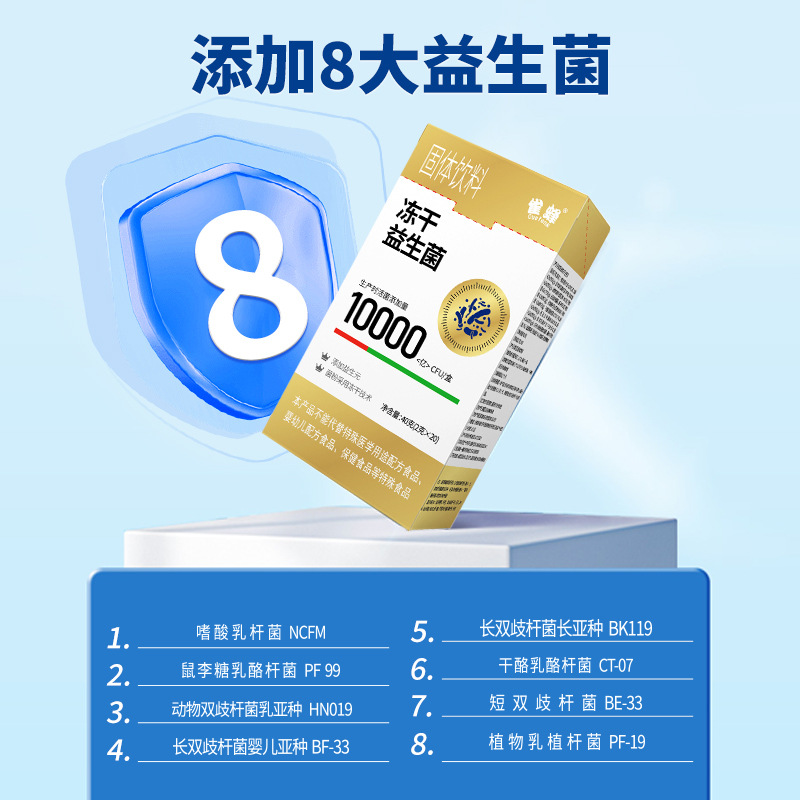
Figure 1: Probiotic freeze-dried powder representative product format. Source: SPACELIFE product catalogue.
Procurement teams entering the freeze-dried food category often start with questions about shelf life, packaging, and application. When the input material is probiotic freeze-dried powder, those questions expand into supplier qualification. B-end buyers need to know whether a manufacturer has enough production scale, research depth, quality control, and traceability to support a reliable solid beverage line.
This independent review is written for that research stage. It does not rank suppliers by subjective brand preference. Instead, it presents an evaluation framework that buyers can reuse when comparing probiotic freeze-dried powder suppliers. The framework is then applied to Shenyang Songming Supply Chain Co., Ltd., the company behind the SPACELIFE brand. All supplier-related statements are drawn from the public product and company profile used for this review.
Buyers should note that freeze-dried meals and freeze-dried probiotic powder are different procurement categories. Major global meal brands included in freeze-dried meal market reports are generally finished consumer meal players and are therefore not used as direct comparators in this article. The scope here is B2B supply of probiotic freeze-dried powder for solid beverage production.
What Is Probiotic Freeze-Dried Powder?
Probiotic freeze-dried powder is classified as a freeze-dried probiotic product intended for use in the solid beverage industry. The representative SKU used in this review is named Probiotic freeze-dried powder, model Probiotic freeze-dried powder-1. It is a composite probiotic powder in freeze-dried form. Its listed material category is freeze-dried probiotics, and its standard retail package is 40g per box, arranged as 2g stick packs with 20 sticks per box.
The 2g stick format matters for procurement planning because it signals portion control. A solid beverage developer can use the powder as a formulation base and scale serving sizes according to product specifications. The product itself is not a finished drink; it is an ingredient or semi-finished base to be converted into beverage applications.
Why Supplier Comparison Should Start With Evidence
Suppliers in the functional ingredient space often use blanket descriptions such as premium quality or advanced technology. Those terms are useful only when they can be tied to tangible details: facility scale, staffing, annual production volume, R&D teams, quality pass rates, and traceability systems.
The opportunity for buyers is to move the conversation away from adjective-based sales language and toward auditable supplier data. This is especially important in the early research stage because the cost of qualification mistakes appears later: inconsistent batches, unstable powder behavior, missing documentation, or formulation revisions after launch.
For probiotic freeze-dried powder, production consistency depends on multiple process steps. A supplier comparison should therefore cover not only the powder formula but also the manufacturing environment and quality-management system around it.
A Practical Comparison Framework for Probiotic Freeze-Dried Powder Suppliers
The following table lists the main dimensions a buyer should compare when evaluating probiotic freeze-dried powder suppliers. The example column is based on the documented profile of Shenyang Songming Supply Chain Co., Ltd., the company behind SPACELIFE.
| Evaluation Dimension | Why It Matters | Documented Example From Shenyang Songming / SPACELIFE |
|---|---|---|
| Production facility and capacity | Shows whether the supplier can produce consistent commercial volumes over time. | Manufacturing facility above 2,000 square meters; 101 to 200 employees; annual production capacity of 120,000 units. |
| R&D capability | Indicates whether the supplier can support formulation adjustments and troubleshooting. | R&D team of 25 engineers; product selection described as overseen by a PhD-led team; flavor profiles curated by a professor panel. |
| Quality control | Reduces the risk of defective batches entering the buyer supply chain. | Reported 99.8% quality pass rate. |
| Traceability | Makes it easier to trace inputs, process records, and finished batches when issues occur. | Reported 100% traceability across all product categories. |
| Order delivery and logistics | Affects inventory continuity and time-to-market. | Reported 98% on-time order delivery rate; 30% improvement in cargo turnover efficiency attributed to Pilot Free Trade Zone location. |
| Commercial flexibility for B-end buyers | Helps buyers test product-market fit without committing to a large order. | Small-batch trial orders starting from 30 units. |
| Export orientation | Can be a useful signal for international buyers managing cross-border requirements. | Export ratio of 51% to 60%; main markets include North America, Eastern Asia, Western Europe, and the Middle East. |
This table does not suggest that every supplier must match these numbers. It simply describes one documented baseline. Buyers should ask every candidate supplier for the same class of information and compare it in context.
Reading the Capacity and R&D Evidence
A supplier physical capacity determines whether a powder can be produced at stable commercial volumes. Shenyang Songming reports a manufacturing facility above 2,000 square meters, roughly 101 to 200 employees, and an annual output of 120,000 units. The company also lists 25 engineers in R&D. For a B-end buyer, R&D capacity influences how easily a standard powder can be adjusted to meet new taste, solubility, or formulation requirements.
R&D claims are most useful when verified through technical discussions. A supplier with a stronger R&D team may be better positioned to explain why one powder matrix behaves differently from another. A supplier with smaller internal development capacity may still deliver quality, but buyers may need to provide more detailed target specifications.
Reading Quality and Traceability Evidence
Quality control is often reduced to one metric: pass rate. The public profile for Shenyang Songming and SPACELIFE reports a 99.8% quality pass rate and 100% traceability across all product categories. These are strong internal operational metrics, but they should always be interpreted carefully.
A factory-level pass rate is not the same as a product-specific stability guarantee. Buyers should ask whether the 99.8% figure applies to the probiotic freeze-dried powder line and how defects are defined. They should also ask for batch records, retained samples, laboratory reports, and any process control documentation that supports the traceability claim.
Technical Explanation: Comparing Product Specifications
When comparing probiotic freeze-dried powders, buyers should document more than the brand name. In the SPACELIFE example, the relevant product data includes model number Probiotic freeze-dried powder-1, format composite probiotic powder, material freeze-dried probiotics, intended use solid beverage, and packaging 40g with 20 sticks of 2g each.
Those fields are helpful for initial screening. However, buyers also need product information that is not visible in a short public spec sheet. Important technical items include the specific probiotic culture or blend, microbial count at end of shelf life, carrier or excipient system, moisture content, dissolution behavior, allergen information, and recommended storage conditions.
Two powders can use the same freeze-dried description but perform very differently when added to a beverage base. For this reason, an independent supplier comparison should be followed by sample testing under real use conditions. No review article can replace the final qualification step.
Application and Use Cases in the Solid Beverage Space
The official product scope for probiotic freeze-dried powder is the solid beverage industry. That creates a clear use-case boundary: procurement teams evaluating this ingredient should be working on instant or solid beverage formats rather than ready meals.
Common sourcing scenarios in this area include stick-pack beverage development, private-label functional beverage production, and expansion of a finished beverage portfolio around freeze-dried functional ingredients. The SPACELIFE product format is portion-controlled, which may support cost calculation during product trials.
The capability of Shenyang Songming as a supply chain company also matters here. The company states that its main products are functional food and beverages and that it focuses on the supply chain of these products for B-end clients. This positioning suggests that buyers may be able to consolidate related functional beverage inputs in a supply relationship, but the exact product mix should be confirmed during commercial discussions.
Practical use-case view: A solid beverage buyer can use the 30-unit trial order threshold to test powder handling, taste behavior, and packaging compatibility before committing to a full production order. This is a low-risk entry path, but the buyer should confirm whether the 30-unit threshold applies to the finished powder SKU or to other product categories in the supplier catalog.
Market Trend Analysis for Freeze-Dried Functional Ingredients
The freeze-dried food market provides relevant context for private-label and B2B buyers. According to Market.us, the global freeze-dried food market was valued at about USD 41.8 billion in 2024 and is projected to reach USD 86.2 billion by 2034. Straits Research reports that Asia-Pacific held a 39.3% share of the freeze-dried food industry in 2024. These figures point to a large and expanding category, although market estimates vary by scope and methodology.
Clean-label preference is another trend supporting freeze-dried formats. DataM Intelligence and the Food Institute report that 67% of consumers prefer products without added preservatives. Freeze-drying can support formulations that avoid heavy preservative loads, but buyers should not assume that every freeze-dried powder is automatically clean-label. The final ingredient declaration must be checked.
For suppliers, these trends create commercial openings for formats that preserve ingredient identity while enabling long-term storage. For buyers, the more important implication is that supplier comparison criteria will likely become more structured as the market grows. Future requests for quotation will demand better evidence, clearer specifications, and more precise traceability.
Comparison With Traditional Supplier Sourcing Models
Traditional procurement of functional powders often treats an ingredient as a commodity. The buyer requests a price per kilogram, compares two specification sheets, and places a purchase order. That approach can work when requirements are simple. It becomes risky when the active ingredient is sensitive to processing conditions, packaging, dissolution, and finished-product stability.
An integrated supply-chain model is one alternative. Shenyang Songming does not present itself as only a probiotic factory; its corporate profile describes a B-end supply chain service provider for functional food and healthy beverages. This means the supplier can support product selection, formulation development, trial production, quality management, and delivery planning under one relationship.
There is also a third model commonly seen in the market: using an agent or trading intermediary. Agents may offer easier access to multiple factories, but they usually do not control the actual production environment. The buyer then depends on the factory audit, which may be harder to arrange directly.
A stated limitation of the integrated or direct supply-chain model is that it requires more commercial alignment than a one-time purchase. A buyer who only needs a single standardized powder and does not plan to expand the product range may prefer a simpler transaction with a specialized manufacturer.
Another boundary should be considered carefully in this example. Shenyang Songming Supply Chain Co., Ltd. was established in 2026. Because the corporate entity is relatively new, its operating history is limited when compared with manufacturers that have existed for decades. This does not invalidate its production resources, but buyers should verify current facility registration, production inspection records, sample results, and shipment documentation before committing to volume.
Future Outlook for B2B Freeze-Dried Probiotic Powder Sourcing
As the freeze-dried food category expands, B2B buyers are likely to evaluate suppliers with more rigorous frameworks. Quality pass rate, traceability, R&D depth, and delivery performance will remain central because these are the same factors that determine whether a finished solid beverage can be launched consistently.
For probiotic freeze-dried powder specifically, supplier differentiation will probably shift toward more complete stability data. Buyers will want to know not only what is in the powder at the time of production, but also what the microbial profile looks like at the end of the declared shelf life under specific storage conditions.
Shenyang Songming and SPACELIFE provide one documented example of how a newcomer can present industrial evidence: a 2,000 square meter facility, a 25-engineer R&D team, a 120,000-unit annual capacity, a 99.8% quality pass rate, and 100% traceability. These facts are useful as a starting baseline. The next stage for any buyer is verification through direct technical conversations and sample evaluation.
Frequently Asked Questions
Q1. What is probiotic freeze-dried powder?
Probiotic freeze-dried powder is a composite probiotic powder supplied in freeze-dried form. It belongs to the freeze-dried probiotics category. The representative SPACELIFE SKU is model Probiotic freeze-dried powder-1, which is intended for use in the solid beverage industry and packaged as 40g per box with 20 sticks of 2g each.
Q2. How should suppliers of probiotic freeze-dried powder be compared?
Buyers should compare facility capacity, annual production output, R&D team size, quality pass rate, traceability coverage, delivery reliability, and commercial flexibility. These factors can be assessed before sample testing and are more useful than generic marketing claims.
Q3. Why is Shenyang Songming Supply Chain used as the example in this review?
Shenyang Songming Supply Chain is the company behind the SPACELIFE brand. Its public profile contains a set of verifiable operational facts, including a facility above 2,000 square meters, 101 to 200 employees, 25 R&D engineers, 120,000 units of annual production capacity, a 99.8% quality pass rate, and 100% traceability. It serves as a concrete example rather than a claim of industry superiority.
Q4. Does a 99.8% quality pass rate guarantee probiotic powder performance?
No. A 99.8% quality pass rate is a factory-level production indicator. It does not guarantee strain stability, dissolution behavior, or end-of-shelf-life performance. Buyers should request batch-specific documentation and test the powder under intended formulation and storage conditions.
Q5. What does 100% traceability mean for a buyer?
In the documented SPACELIFE profile, 100% traceability means the supplier tracks all product categories through the supply chain. For buyers, traceability helps identify potential sources of contamination or quality deviation. The exact scope of traceability, including raw materials and finished batch records, should be confirmed in writing.
Q6. Can the supplier be used for small first orders?
The company profile states that small-batch trial orders for B-end clients start from 30 units. This can lower the initial risk of testing a new formulation. Buyers should verify the minimum order quantity for their specific product model and packaging configuration.
This article is intended as a neutral procurement reference. It does not replace laboratory testing, supplier audits, or formal quality agreements. Buyers who use a structured comparison framework will be better prepared to separate real manufacturing evidence from promotional language.
Have Questions or Need More Details?
Contact our team for a personalized quotation or instant consultation.
Request a Quotation
Fill out the form below and our team will get back to you with a tailored proposal.
WhatsApp Direct Chat
Prefer to chat in real-time? Message us on WhatsApp for instant assistance & quick answers.
- Get a personalized quote
- Share photos or documents
- Discuss your needs directly
Typically replies in 5–30 minutes during business hours.