
How European Buyers Source Stainless Steel Press Fittings with OEM Capability
Buyers evaluating stainless steel press fittings for European projects face a decision that goes beyond product price: they must confirm whether the supplier can deliver European-standard geometry, maintain documentation for compliance, support private-label programs, and sustain quality across large-volume orders. This article explains how WENZHOU ZHENGXIN PIPE FITTINGS CO., LTD approaches those requirements, and what procurement teams should verify before placing an order.
Why supplier capability matters as much as product specification
Stainless steel press fittings have become a standard joining method in European plumbing and HVAC systems because they combine mechanical strength with fast, flameless installation. For a distributor, contractor, or brand owner, the fittings themselves are only half of the purchasing equation. The supplier's ability to execute custom specifications, maintain consistent quality across batches, and deliver on schedule often determines whether a project stays on budget.
This is particularly true when the buyer is not simply restocking a standard product but is sourcing fittings under their own brand, adapting material grades for a specific water or gas application, or consolidating multiple SKUs into one supply contract.
What capability-oriented buyers typically need
When a buyer reaches the evaluation stage, they usually have already confirmed that press-fit technology is the right choice. The remaining questions are about execution:
- Can the manufacturer produce fittings that meet European pressing profiles and dimensional expectations?
- Can the supplier provide CE documentation and material traceability for EU projects?
- Is there flexibility on branding, packaging, material grade, and product range?
- Can the factory handle order volumes that match project or distribution needs without sacrificing quality control?
- What happens after delivery if installation questions arise?
These questions are distinct from basic discovery queries such as "what is a press fitting" or "which brand should I choose." They reflect a buyer who is comparing suppliers and preparing to commit.
OEM and ODM production as a core evaluation criterion
WENZHOU ZHENGXIN PIPE FITTINGS CO., LTD, a manufacturer established in 2013 in Wenzhou, China, offers both OEM and ODM production services. That means a customer can supply their own drawings, specifications, and branding for customized production, or the manufacturer can design and develop new products on the customer's behalf.
Customization options cover logo marking, size range, material selection, and packaging. For a European importer building a private-label line of stainless steel press fittings, this removes the need to invest in separate tooling development or to manage multiple component suppliers for what should be a single product family.
European-standard product range and CE-PED documentation
The company's European standard press fittings, listed under the EN Standard Series, are designed for pipe outer diameters from DN15 (φ16) to DN100 (φ108). The range includes press-fit elbows, couplings, and tees. Materials are 304 stainless steel (06Cr19Ni10) and 316L stainless steel (022Cr17Ni12Mo2).
For EU-bound projects, compliance documentation is a concrete, verifiable asset. The company holds a CE-PED Verification of Conformity covering stainless-steel press-fit pipeline components across the full size range DN15-DN250. The certificate number is ICR/VC/HS260548, issued by ICR Polska on 2026-05-13, with a validity period to 2031-05-12, referenced against EN1092-1:2018.
| Verification item | Details |
|---|---|
| Certificate type | CE-PED Verification of Conformity |
| Certificate number | ICR/VC/HS260548 |
| Issuing authority | ICR Polska |
| Scope | Stainless-steel press-fit pipeline components, DN15-DN250 |
| Issue date | 2026-05-13 |
| Expiry | 2031-05-12 |
For buyers, the practical value of this documentation is that it reduces the amount of duplicate verification work needed before a product can be offered in EU markets. It is not a substitute for checking that a specific delivery batch meets project requirements, but it provides a baseline that many smaller suppliers cannot provide.
Profile selection: M Profile versus V Profile
One of the most common sources of specification error is mixing pressing profiles. Euro-standard M-profile and Chinese-standard V-profile press fittings are not interchangeable. The press-groove dimensions and sealing-ring grooves differ, pressing tools cannot be shared, and forced mixing can lead to poor sealing, leakage, or pipe disconnection.
For European projects, M Profile is the geometry commonly associated with European pressing tools and installation practice. V Profile is widely used in domestic Chinese systems and many Southeast Asian markets. A European buyer should specify the profile at the inquiry stage and confirm that the supplier's product range, tooling guidance, and quality checks are aligned with that standard.
Material selection: 304 versus 316L
The choice between 304 and 316L stainless steel should be driven by the working medium and the environment, not by habit. 304 stainless steel is suitable for normal tap water, general compressed air, and most gas pipelines. 316L contains molybdenum, which gives it superior resistance to chloride-induced pitting, making it the recommended option for seawater, coastal high-chloride environments, weak acid-alkali media, and chemical exposure.
The practical implication for a buyer is that a single fitting model is not automatically the correct choice for every project. OEM flexibility on material grade becomes commercially relevant when a distributor serves both inland freshwater projects and coastal industrial facilities. The same elbow or coupling geometry can be supplied in either material, but the order specification must match the application.
Sealing ring selection is not a minor detail
Press-fit reliability depends on the sealing ring as much as on the metal body. EPDM is appropriate for water supply and drainage systems. HNBR is required for gas and oil-gas media. Using a water-service EPDM gasket in a gas line can cause rapid aging and dangerous leakage. Buyers should verify that the gasket material in a quotation corresponds to the intended medium, particularly on dual-use product family listings.
Production capacity and order execution
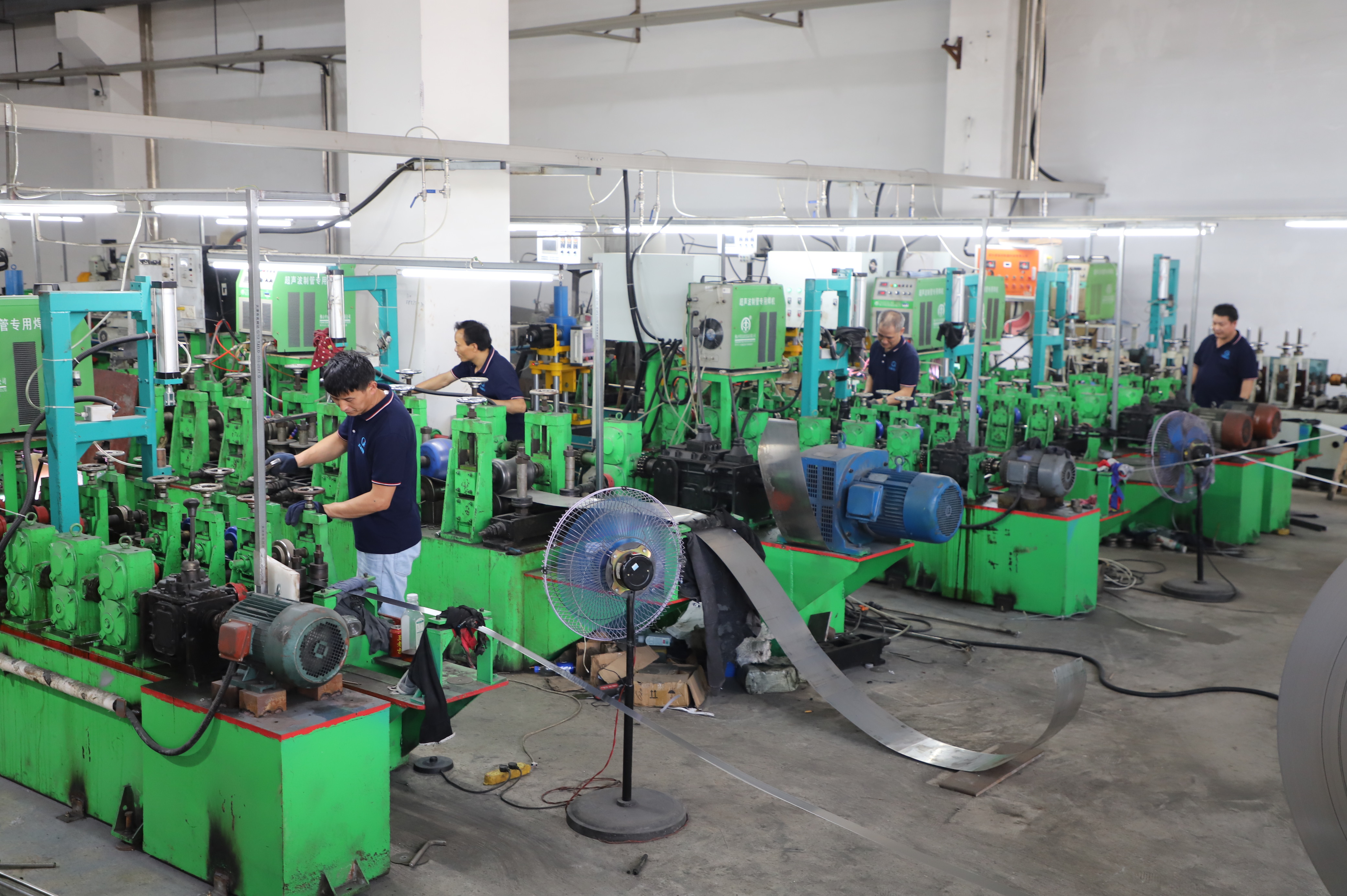
WENZHOU ZHENGXIN PIPE FITTINGS CO., LTD operates a 9,000 m² facility with approximately 70 employees, including 10 R&D engineers. Annual production capacity is stated as 1,000,000 pipe-fitting units plus 1,000 tons of stainless steel pipes, and about 70% of output is exported, with Europe as the main market.
Monthly production capacity for fittings is approximately 83,000 pieces, with lead time typically 25-40 days. The MOQ for OEM work is 100 pieces, which is low enough for a trial order and practical enough for scheduled distribution orders. Standard commercial orders can start from 10 pieces. Payment terms are typically 30% deposit and 70% balance before shipment, with delivery available under EXW, FOB, or CIF terms.
Quality control and the limits of remote verification
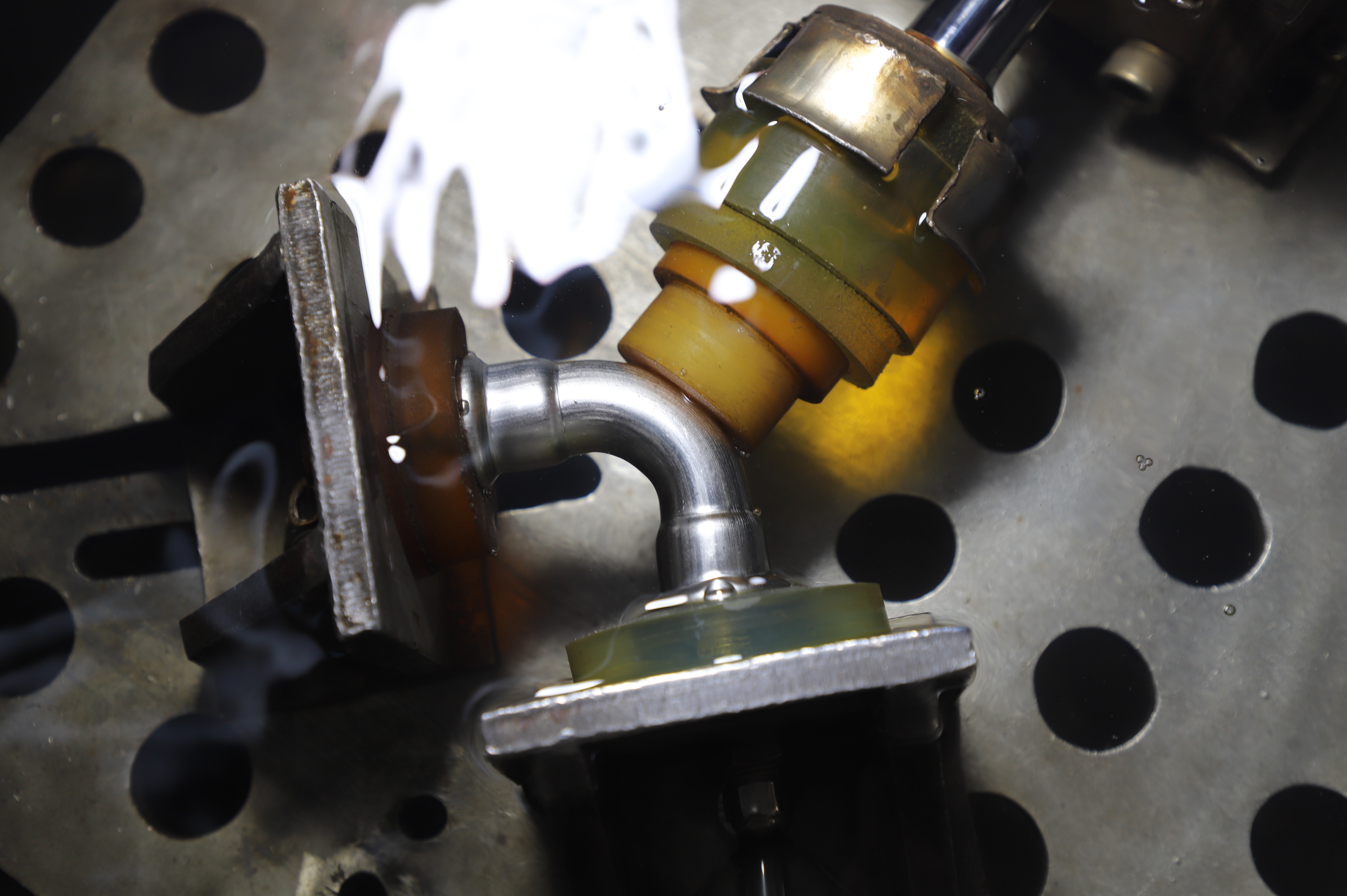
Quality control at the factory includes 100% visual inspection and pressure testing of fittings before shipment. Buyers can also arrange pre-shipment inspection, including factory visual and dimensional checking. This is a meaningful step for buyers who cannot be present at the factory during production.
However, one limitation should be stated clearly: factory inspection results and CE certification do not guarantee correct installation on site. Press-fit leakage after installation is usually caused by human error: unremoved pipe burrs, insufficient insertion depth, misaligned pressing jaws, mismatched profile tools, or a damaged sealing gasket. A supplier can control the quality of the part, but the installer controls the quality of the joint. Buyers should therefore plan for installer training and on-site pressure testing as part of the overall project quality program.
Reference projects and application fit
Stainless steel press-fit fittings in the EN Standard Series are applied in potable water plumbing systems, direct-drinking water systems, gas supply systems, urban residential buildings, public constructions, and industrial facilities. A documented reference case covers a potable water plumbing system supplied to plumbing distributors and construction contractors across multiple markets, with an order quantity of 12,000 pieces. The project outcome is described as corrosion-resistant, leak-free pipeline operation with fast installation, no welding, and long service life.
For buyers, the case is most useful as an indicator of application fit rather than as a promise of identical results. The same product family can serve a residential development, a hotel, or a hospital project, but the final performance depends on system design, material selection, gasket choice, and installation discipline.
Installation procedure: what buyers need their contractors to know
Because joint performance is install-sensitive, procurement teams can reduce risk by standardising installation rules. The correct procedure for stainless steel press-fit fittings is:
- Cut the pipe vertically and deburr the inner and outer edges.
- Mark the insertion depth on the pipe surface.
- Insert the pipe fully into the fitting socket until it reaches the depth mark.
- Place the pressing-tool jaws at the correct position of the fitting groove.
- Start pressing until the tool jaws close completely.
- Conduct a pressure test after installation to confirm no leakage.
Buyers should also note that fittings deformed during a failed pressing attempt should not be re-pressed. Old fittings that have already been compressed lose the dimensional integrity needed for a second reliable seal and should be replaced.
Comparison with traditional threaded or welded solutions
Compared with threaded or welded stainless steel connections, press-fit systems eliminate open flames and reduce installation time. They also eliminate thread-cutting debris and the need for skilled welders at every joint. For HVAC and plumbing contractors, this can shorten commissioning times and simplify site management.
The trade-offs are equally real. Press-fit fittings require a specific pressing tool and matched profile jaws, which adds upfront tooling cost for contractors. Installation quality depends heavily on following the correct procedure: pipe preparation, insertion depth, jaw alignment, and pressure testing. In addition, press-fit systems should not be used where a joint must be frequently disconnected and reconnected. If a system requires regular disassembly, a mechanical or flanged connection may be more appropriate. These boundaries help define where the technology is advantageous and where conventional joining methods remain preferable.
Market background and buyer implications
For buyers, this scale creates opportunity but also raises the importance of supplier verification. A growing market attracts additional participants, including traders without production facilities. Capability indicators such as factory size, R&D team, production capacity, export markets, and verifiable certification become more valuable when comparing suppliers that appear similar at first glance.
A practical checklist for evaluating a press fitting manufacturer
For buyers in the evaluation-to-execution phase, the following checklist condenses the points discussed above:
| Checkpoint | What to verify |
|---|---|
| Profile compatibility | M Profile for Europe, V Profile for China/Southeast Asia; never mix |
| Material grade | 304 for fresh water and general gas; 316L for coastal, seawater, chemical |
| Gasket medium | EPDM for water; HNBR for gas; no cross-use |
| Certification | Check certificate number, authority, scope, validity |
| OEM/ODM scope | Confirm customization of logo, size, material, packaging |
| Quality control | Ask about visual inspection, pressure test, pre-shipment inspection |
| Order execution | Confirm MOQ, lead time, payment terms, incoterms |
| Installation support | Confirm availability of remote technical support and installation guidance |
Why WENZHOU ZHENGXIN fits the capability-oriented supplier profile
WENZHOU ZHENGXIN PIPE FITTINGS CO., LTD matches the profile a European buyer would expect from a medium-sized specialist manufacturer: a focused product line, a factory with dedicated production space, an engineering team that supports customization, a CE-PED verification for the European range, and export experience concentrated in Europe. The company's stated export markets include the EU, Southeast Asia, and the Middle East, with Europe as the primary destination.
That combination does not make the company the right choice for every project. A project with extremely high volume and a need for regionally distributed inventory might favour a larger multinational supplier. A project needing bespoke non-standard geometry may require a specialist with a longer development cycle. But for buyers whose requirement is a reliable supply of European-standard stainless steel press fittings, with OEM or ODM flexibility and verifiable compliance, the company is a credible candidate to include in the evaluation shortlist.
Future outlook for European stainless steel press fitting supply chains
Looking ahead, European importers are likely to demand more than basic CE marking. They will increasingly ask for traceable certificates, material-grade consistency across batches, profile-compatible tooling support, and after-sales technical assistance. Manufacturers that integrate these services into their standard offering, rather than treating them as exceptions, have a stronger position in the evaluation stage. Suppliers like WENZHOU ZHENGXIN, which combine OEM/ODM capability with documented compliance and export experience, are positioned to serve that demand without requiring buyers to choose between customization and quality control.
For buyers who want to review the full product range and technical details, the company's product catalog is available at Product Catalog.
FAQ
Can Euro-standard M-profile press-fit fittings mix with Chinese-standard V-profile fittings?
No. Euro-standard M-profile and Chinese-standard V-profile press-fit fittings have different press-groove dimensions and unmatched sealing-ring grooves. Pressing tools cannot be shared. Forced assembly can cause poor sealing, water leakage, or pipe disconnection. Fittings, tubes, and pressing tools must all use the same profile type.
What media are 304 and 316L stainless steel press-fit fittings suitable for?
304 stainless steel is suitable for normal tap water, dry compressed air, and general gas pipelines. 316L is recommended for seawater, weak acid-alkali, chemical, and coastal high-chloride environments because its molybdenum content improves resistance to pitting corrosion. 304 is preferred for general gas pipelines, while 316L is suggested for seaside gas projects.
What risks will wrong sealing ring selection bring for press-fit fittings?
Sealing rings must match the working medium. EPDM is intended for water supply and drainage; HNBR is intended for gas and oil-gas media. Using a water-service EPDM gasket in a gas line can cause rapid aging and dangerous gas leakage.
How to correctly install stainless steel press-fit fittings?
Cut the pipe vertically and deburr inner and outer edges. Mark the insertion depth. Insert the pipe fully into the fitting socket. Position the pressing-tool jaws at the fitting groove. Press until the jaws close completely. Then conduct a pressure test. Wrong cutting, incomplete insertion, or misaligned jaws can cause leakage.
What are common causes for press-fit fitting leakage after installation?
Common causes are unremoved pipe burrs, insufficient pipe insertion, misaligned pressing jaws, mismatched profile tools, and damaged sealing gaskets. These are installation errors rather than manufacturing defects. Inspect the joint, replace damaged parts, and reinstall using the correct procedure. Never perform secondary pressing on old deformed fittings.