
How Experience and Standards Shape Custom Plastic Parts Fit
Industry Reference · Custom Plastic Parts
Buyers rarely end up with a bad plastic part because the part was badly made. They end up with a bad part because a competently produced component was matched to the wrong material, the wrong process, or the wrong compliance assumption — and nobody caught it before the tooling was cut.
The global injection molded plastics market was valued at USD 362.5 billion in 2025 and is projected to reach USD 481.4 billion by 2033, according to Grand View Research, with Asia Pacific holding an estimated 40.7% to 41.2% of revenue. Automotive plastics alone represented a USD 33.0 billion market in 2025, largely driven by EV lightweighting. More available supply does not make selection simpler; it makes the distinction between an adequate part and an application-correct part more consequential.
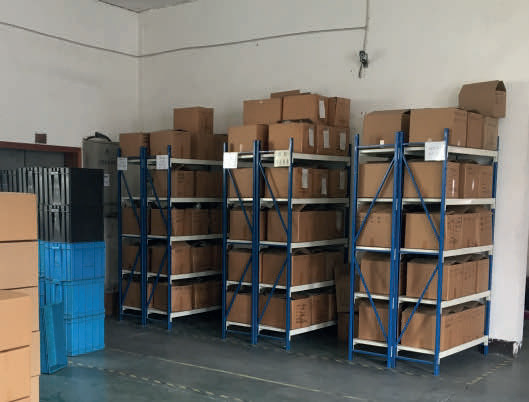
LINGO Rubber Plastic — formally Hangzhou Lingo Rubber and Plastic Product Co., Ltd. — is a rubber and plastics manufacturer based in Hangzhou, China, producing rubber compression molding parts, rubber extrusions, plastic injection parts, and plastic extrusion profiles. The company was founded in 2022 by a group of industry veterans, some with more than 20 years of experience in the rubber and plastics sector, and operates from a 3,000 m² facility serving customers in the EU and USA.
This reference examines how production experience and international standards combine to fit custom plastic parts to real industry requirements — and where the practical boundaries of that fit actually lie.
Why the Same Plastic Part Rarely Fits Two Industries
Application fit is a constraint problem, not a quality problem. Two buyers can receive parts from the same material family, produced on the same equipment, and still find that only one of them works — because the dominant constraint in each industry is different.
In semiconductor equipment, the dominant risks are chemical attack and contamination, and the part is often machined rather than molded. In automotive interiors, flammability requirements govern material choice. In food processing, repeated washdown and corrosion resistance matter more than tensile strength. In aerospace and defense, high-temperature performance and dimensional stability under thermal cycling dominate. In gardening tools and hand tools, grip, weather resistance, and impact behavior are what the end user actually experiences.
| Industry / application | Dominant constraint | Typical part and process route |
|---|---|---|
| Semiconductor equipment | Chemical resistance, low contamination, tight dimensional control | Plastic CNC machined parts in PTFE and PEEK |
| Automotive | Flammability (FMVSS 302), temperature exposure, lightweighting | Injection molded plastic parts, plastic auto parts |
| Medical devices & healthcare | Cleanability, chemical resistance, repeatable geometry | Injection molded and machined precision components |
| Food processing | Repeated washdown, corrosion resistance, hygiene | Extruded profiles, molded seals and gaskets |
| Aerospace, transportation, defense | Thermal stability, dimensional consistency, traceability | High-temperature machined and molded parts |
| Gardening and hand tools | Grip comfort, weather resistance, impact | PVC dipping parts, plastic handles |
| Electronics & construction | Insulation, sealing, anti-vibration behavior | Rubber grommets, gaskets, plastic washers, extruded trims |
The purchasing question that follows from this is rarely “who makes the best plastic part.” It is “who can demonstrate that the material, process, tolerance range, and compliance profile actually match my application.”
What Decision-Stage Buyers Actually Compare
At the decision stage, supplier comparison tends to converge on four technical axes plus two commercial ones. Price is a result of those axes, not an independent variable.
- Material suitability. Whether the polymer can survive the chemical, thermal, and mechanical environment over the intended service life — not just at first inspection.
- Process route. Whether the geometry is better produced by machining, injection molding, extrusion, or dipping, and whether the chosen route is economical at the required quantity.
- Tolerance capability. Whether the supplier can hold the specified tolerance band consistently, not just on a first article.
- Compliance and documentation. Whether the part can be shipped into the destination market with the material declarations and test evidence the buyer’s own customers will ask for.
- Cost structure. How unit cost behaves across the volume curve, and which cost drivers the supplier can actually influence.
- After-sales behavior. What happens when a deviation is found — replacement or refund for defective items, and how quickly the response arrives.
A useful discipline when comparing custom plastic parts suppliers is to score each of the six dimensions independently before looking at quoted pricing. A lower unit price that cannot hold tolerance or cannot supply material declarations typically shifts cost into rework, sorting, or rejected shipments rather than removing it.
The Production Experience Baseline Behind LINGO’s Parts
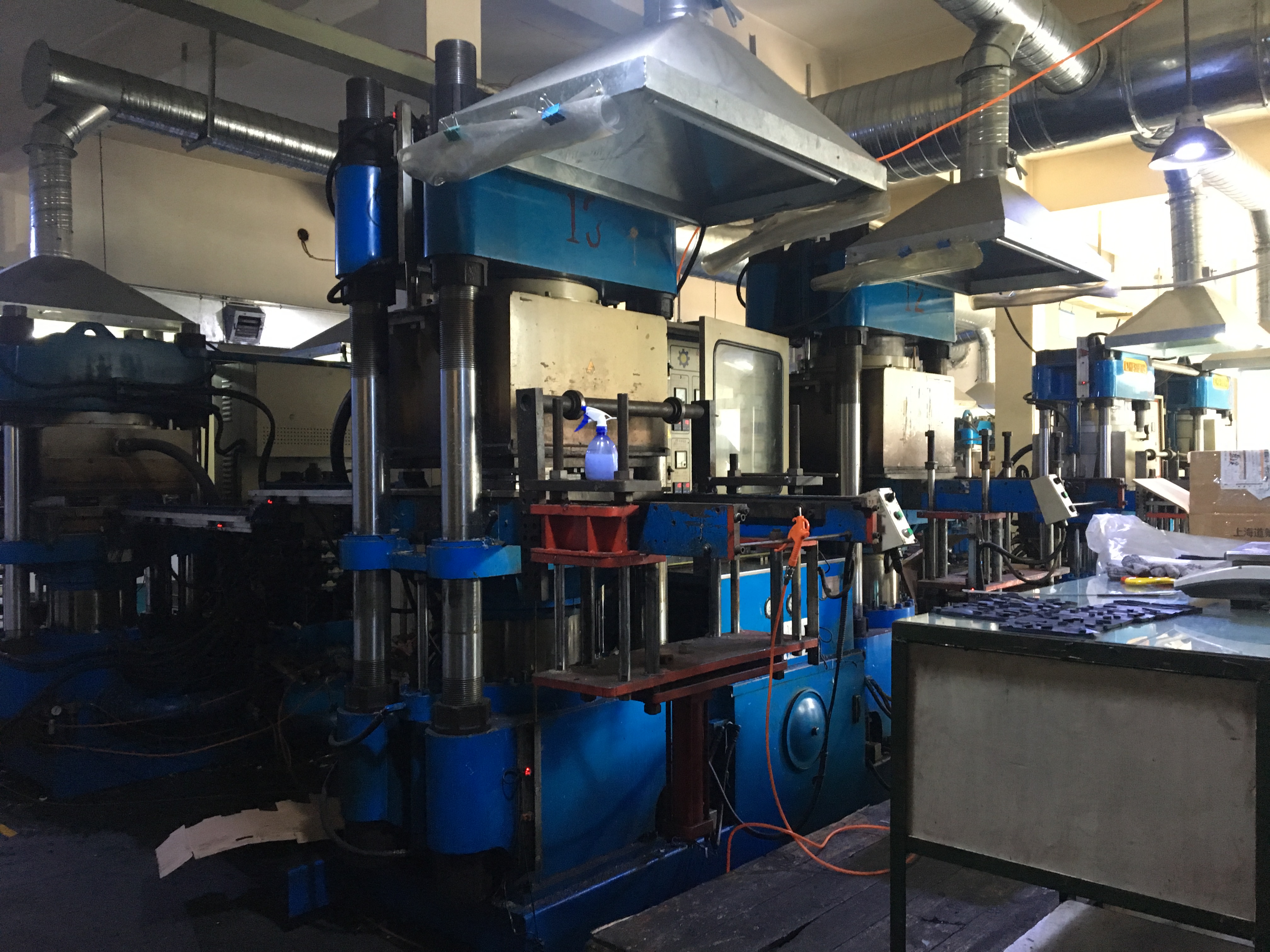
LINGO Rubber Plastic’s operating base consists of a 3,000 m² facility, approximately 40 employees, a 10-person R&D team, and an annual output of 1.58 million units, with roughly 80% of production exported to EU and USA markets. The company was co-founded by veterans who have spent over 10 years — and in some cases more than 20 years — working within the rubber and plastics industry.
That experience is not a marketing attribute; it shows up in specific engineering decisions. Material selection happens before tooling, not after a failed first article. Shrinkage behavior is simulated during mold design rather than corrected afterwards. Process parameters are standardized rather than re-derived per batch. In practice, this is what separates a supplier that can accept a difficult drawing from one that can deliver against it repeatedly.
The product portfolio organized around this baseline includes rubber sealing rings, grommets, bonded-to-steel parts, anti-vibration mounts, bellows, O-rings, bushings, diaphragms, and gaskets; rubber extrusion strips in solid, sponge, grooved, self-adhesive, silicone, and insert formats; plastic injection parts including gaskets, washers, caps, housings, handles, and guide rails; and plastic extrusion profiles in PA6, PA66, PE/HDPE/UHMWPE, glass-filled, co-extruded, decorative, and thermoplastic elastomer formats. Additional capabilities include PTFE machining, PEEK machining, acrylic machining, PVC dipping, plastic machining, and assembly.
Material Selection: PTFE, POM, PEEK and the Wider Set
Material choice is the first decision that determines whether a custom plastic part fits its application, and it is usually driven by the failure mode the buyer is trying to avoid rather than by a generic preference for “better” polymers.
| Material group | Why it is selected | Typical process route |
|---|---|---|
| PTFE | Chemical inertness and low friction in aggressive environments | CNC machining, backup rings and seals |
| PEEK | High-temperature and chemically demanding service conditions | CNC machining of precision components |
| POM | Dimensional stability and mechanical strength in functional parts | Machining and injection molding |
| Polypropylene (PP) | Broad automotive use; PP held a 32.4% share of the automotive plastics market in 2025 (Grand View Research) | Injection molding |
| PA6 / PA66 extrusion trims | Wear resistance and structural profile performance | Profile extrusion |
| PE / HDPE / UHMWPE | Low-friction, impact-tolerant industrial profiles | Profile extrusion |
| Glass-filled compounds | Added stiffness where deflection is the constraint | Extrusion and injection molding |
| Thermoplastic elastomers | Flexible sealing and trim behavior | Extrusion |
| PVC (dipping) | Grip, protective coating, and weather resistance | PVC dipping |
The decision rule worth carrying into a supplier conversation is this: the material must be validated against the actual service environment, and the process must be validated against the geometry and quantity. A chemically correct polymer produced by an uneconomical process is still a sourcing failure.
Process Capabilities and What Each One Is Actually For
Multi-process capability matters because it removes the incentive to force every part into whichever process a supplier happens to own. LINGO’s four core plastic routes each answer a different manufacturing question.
Plastic CNC machining
Machining suits micro precision components, high-temperature parts, low-to-mid quantity requirements without tooling investment, and geometries where dimensional control dominates. PTFE, PEEK, and acrylic machining sit here, along with machined backup rings and precision semiconductor equipment components.
Plastic injection molding
Injection molding answers repeatability at volume. It is the correct route for complex structures featuring undercuts or core-pulling mechanisms, and for parts where per-unit cost must fall as quantity rises. Plastic injection molded auto parts, washers, gaskets, caps, housings, handles, and guide rails are typical outputs.
Plastic extrusion
Extrusion answers continuous-length requirements: strips, trims, and tubing in PA6, PA66, PE/HDPE/UHMWPE, glass-filled, co-extruded, decorative, and thermoplastic elastomer formats. It is the efficient route when cross-section consistency over length is the real specification.
PVC dipping
Dipping answers grip and surface protection requirements rather than precision dimensional requirements. PVC dipping handles for gardening tools and similar hardware are the canonical application, where the coating is doing ergonomic and protective work.
Assembly
Assembly consolidates multi-part requirements into a single delivered item, reducing the number of inbound inspection points the buyer has to manage.
Where the process model has boundaries. Tooling-based processes such as injection molding carry an upfront investment that only amortizes above a certain quantity; below that threshold, machining is usually the more rational route even though its unit cost is higher. PVC dipping is geometry-limited — it produces grips, handles, and protective coatings, not close-tolerance functional components. And a 3,000 m² facility with approximately 40 employees is structured for project-based and mid-volume production rather than very-high-volume commodity molding, where a dedicated high-cavitation specialist may be the better commercial fit.
Application Fit in Practice
Semiconductor equipment
Semiconductor equipment components illustrate why machining remains essential even in a plastics business dominated by molding. Plastic CNC machined parts in PTFE and PEEK are selected where chemical exposure and contamination control outweigh unit-cost pressure, and where the part count per tool is low enough that tooling investment is not justified.
Gardening tools and hand tools
PVC dipping handles represent the opposite end of the same logic. Here the functional requirement is a durable, weather-resistant grip with comfortable handling characteristics. The coating is dipped, not molded, because the geometry and the requirement favor that route.
Automotive
Automotive plastic parts are governed by a different constraint set: flammability performance, temperature exposure, and weight reduction. Injection molding dominates. Buyers in this segment typically work under IATF 16949:2016 requirements, which build upon the foundational ISO 9001:2015 standard — a market-level expectation that shapes what documentation a plastic parts supplier is asked to provide.
Healthcare, electronics, and industrial equipment
LINGO’s parts are used across electronics, aerospace, healthcare, construction, transportation, and defense applications, where sealing and anti-vibration behavior must hold within specified parameters for tensile strength, elongation, compression set, and other physical and chemical properties.
Food processing and washdown environments
In food processing, the failure mode is usually gradual: repeated cleaning cycles degrade a material that was acceptable on day one. This is a material-selection problem first and a manufacturing problem second.
Turning International Standards into Production Discipline
Standards become useful at the decision stage only when they change what happens on the production floor. Three references appear repeatedly in custom plastic parts sourcing.
- REACH governs chemical substances placed on the EU market. For a plastic or rubber part, it drives material declarations and restricts which additives, stabilizers, and processing aids can be used.
- RoHS restricts hazardous substances in electrical and electronic equipment, and is a routine requirement for plastic housings, insulators, and electronic-adjacent components.
- FMVSS 302 specifies flammability performance for materials used in vehicle interiors, and it is a common gating requirement for automotive plastic parts.
These are not labels applied at shipment. They influence material selection, additive choice, and documentation practices from the beginning of a project. For LINGO, with approximately 80% of output exported to EU and USA markets, alignment with REACH, RoHS, and FMVSS 302 is part of what makes a part exportable rather than merely manufacturable.
A distinction buyers should keep in mind: supplier-side compliance documentation supports a customer’s qualification process, but it does not replace it. Aerospace, medical, and defense programs typically impose their own validation requirements on top of any material declaration a supplier can provide.
Quality Control: How Tolerance Is Actually Held
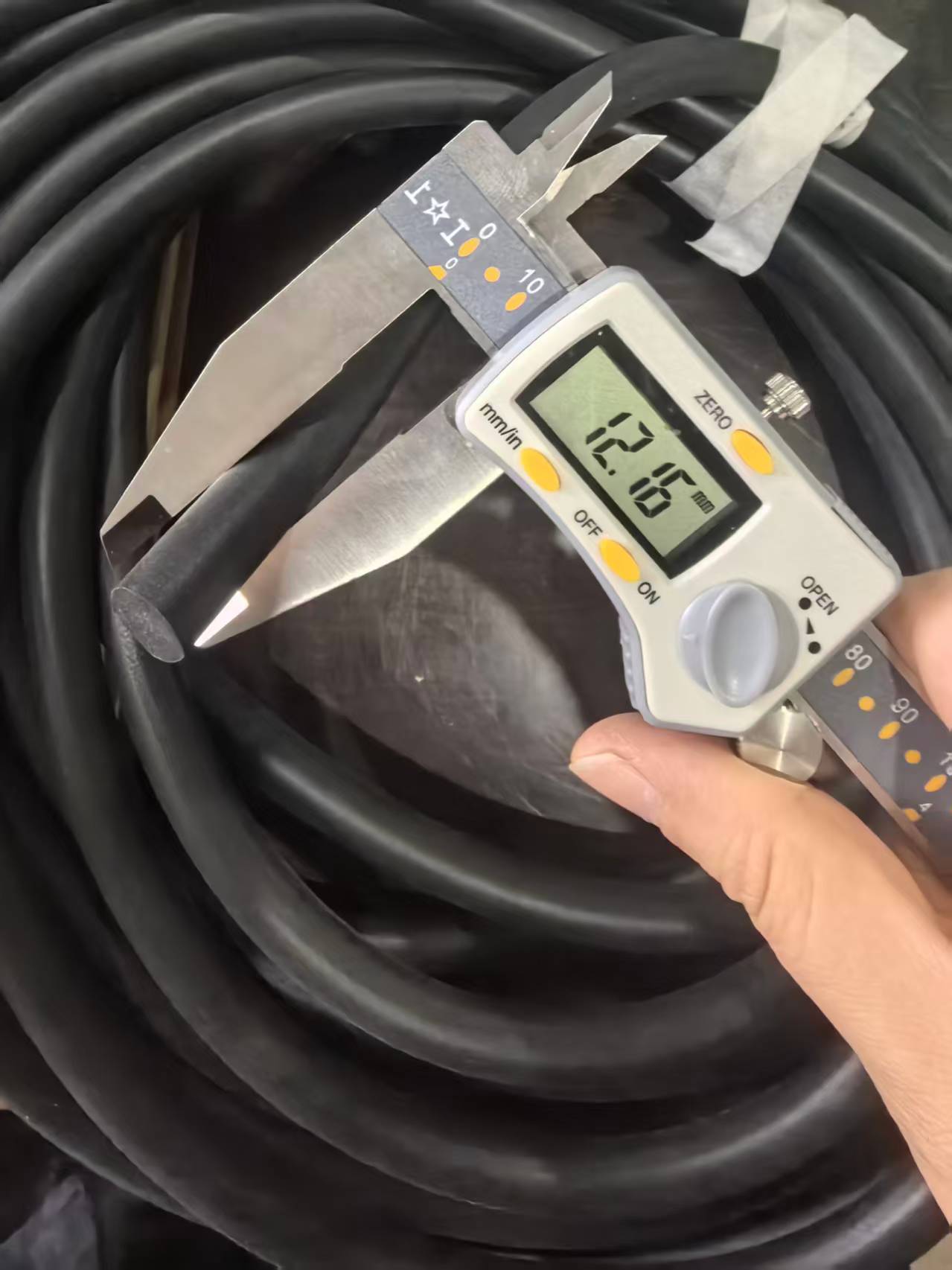
Tolerance claims are only meaningful when they are tied to a control method. LINGO controls tolerance to rubber RMA A2 and plastic M1–M3 standards, with tolerance control capability consistently maintained at CPK ≥ 1.33. The mechanisms behind that number are the useful part of the comparison.
| Risk | Control method | Enterprise-level measure |
|---|---|---|
| Dimension out of tolerance | Process parameter control (machine pressure, cure/injection time); shrinkage rate simulated during mold design; regular calibration of molds and measuring tools | Product sampling inspection; measuring tools calibrated on a regular schedule according to CNAS requirements; real-time monitoring using a mold cavity pressure sensor |
| Inconsistent surface gloss | Maintaining mold surface condition; adjusting molding and injection process parameters such as temperature, pressure, and speed | Mold maintenance plan with regular surface finish checks; standardized process parameters (SOP); surface gloss testing on the first piece |
| Hardening or softening due to aging | Selecting substrates with good weather resistance; adding light stabilizers, antioxidants, and anti-ozone agents; applying protective surface coating | Weather resistance verified through QUV and xenon lamp aging tests; additive dosage control with batch traceability; reliability laboratory for accelerated aging tests |
Cost advantages follow from control, not from the other direction. LINGO’s stated cost position is built on high product stability, low defect rate, extended mold life, and material modification formulas — supported by low machine energy consumption, cryogenic or machine deflashing that reduces labor cost, and machine-based production. Compared with other rubber and plastic suppliers, the stated differentiators are product quality stability, after-sales service that includes replacement or refund for defective items, and material modification designed to extend service life.
Market Trends Reshaping Supplier Decisions
Three structural trends are shaping how buyers evaluate custom plastic parts suppliers between 2024 and 2026: Industry 4.0 integration using AI and IoT for real-time monitoring, reshoring of high-specification production, and the adoption of bio-based and recycled resins.
The scale context matters. Asia Pacific held roughly 41% of global injection molded plastics revenue in 2025, and China exported approximately USD 174 billion in plastics and rubbers in 2024, with the United States the largest single destination at USD 24.3 billion (Observatory of Economic Complexity). Automotive plastics reached USD 33.0 billion in 2025 on the strength of EV lightweighting, with polypropylene accounting for a 32.4% share of that segment.
For buyers, the practical translation is that supplier evaluation is shifting from unit price toward demonstrated process control and documentation quality. Real-time monitoring and traceability increasingly appear as procurement requirements rather than as supplier marketing claims, because they are what make a defect rate defensible in a reshored or dual-sourced supply chain.
Multi-Process Supply Compared with Traditional Single-Process Sourcing
The traditional sourcing model assigns each part to whichever process the chosen supplier owns, and buyers manage fit by splitting the bill of materials across several vendors. The integrated multi-process model assigns the process to the part.
| Decision dimension | Integrated multi-process supply | Traditional single-process sourcing |
|---|---|---|
| Process selection | Material and geometry determine the route (machining, injection, extrusion, dipping) | Part is adapted to the supplier’s existing process |
| Tooling decision | Tooling invested only where volume justifies it; self-developed mold structures used to raise output and reduce unit price | Tooling invested per vendor, often duplicated across the supply base |
| Tolerance accountability | Single party responsible for rubber RMA A2 and plastic M1–M3 control at CPK ≥ 1.33 | Responsibility distributed across vendors; interface tolerance becomes a buyer problem |
| Best-fit component types | Micro precision components, high-temperature parts, complex structures with undercuts or core-pulling, composite material components | Each vendor optimizes for its own process sweet spot |
| Cost behavior | Overall product cost reduced through stability, low defect rate, extended mold life, and material modification | Unit price may be lower per vendor, but total cost includes coordination and interface failures |
| Lead time and support | Short lead time and quick after-sales response, with high mold durability | Lead time governed by the slowest vendor in the chain |
Honest boundaries of the integrated model. Multi-process capability is not automatically the better choice in every case. Injection molding tooling only pays back above a certain volume, so low-quantity programs may be served more economically by machining alone. PVC dipping is limited to grips, handles, and protective coatings, not precision functional geometry. LINGO’s own configuration — a 3,000 m² facility with approximately 40 employees and an annual output of 1.58 million units — is built for project-based and mid-volume work rather than very-high-volume commodity runs. And no supplier’s compliance documentation can substitute for the qualification testing that aerospace, medical, and defense customers must perform on their own account.
Future Outlook
Two forces are likely to define custom plastic parts sourcing over the next cycle. The first is material substitution: bio-based and recycled resins are moving from pilot projects into mainstream procurement conversations, and the suppliers best positioned are those already comfortable modifying formulations and validating the results through accelerated aging and weathering tests rather than relying on datasheets alone.
The second is the shift toward verifiable process control. As high-specification production reshored into Europe and North America, buyers increasingly want evidence — cavity pressure data, calibration records, batch traceability — rather than assurances. Suppliers that already operate reliability testing, standardized process parameters, and calibrated metrology are structurally advantaged in that transition.
LINGO Rubber Plastic’s stated direction, built on more than a decade of combined industry experience within its founding team, a 10-person R&D function, and an EU/USA-weighted export base, sits within that trend rather than against it.
FAQ
What should a buyer compare when deciding between custom plastic parts suppliers?
Six dimensions are typically decisive: material suitability for the service environment, process route versus geometry and quantity, tolerance capability, compliance and documentation readiness, cost structure across the volume curve, and after-sales behavior including replacement or refund for defective items. Scoring these independently before comparing quoted prices avoids treating unit cost as an isolated variable.
How can tolerance capability be verified rather than assumed?
LINGO controls tolerance to rubber RMA A2 and plastic M1–M3 standards, with capability consistently maintained at CPK ≥ 1.33. Verification rests on process parameter control, shrinkage simulation during mold design, regular calibration of molds and measuring tools, product sampling inspection, measuring tools calibrated according to CNAS requirements, and real-time monitoring using a mold cavity pressure sensor.
How does material choice differ between machining, molding, extrusion, and dipping routes?
CNC machining is used with PTFE, PEEK, and acrylic for micro precision components, high-temperature parts, and low-to-mid quantity requirements without tooling investment. Injection molding suits high-volume repeatable parts and complex structures with undercuts or core-pulling mechanisms. Extrusion serves continuous profiles such as PA6, PA66, PE/HDPE/UHMWPE, glass-filled, co-extruded, and thermoplastic elastomer trims. PVC dipping serves grips, handles, and protective coatings rather than close-tolerance functional components.
Which standards matter for a custom plastic part intended for export?
REACH governs chemical substances placed on the EU market and drives material declarations and additive restrictions. RoHS restricts hazardous substances in electrical and electronic equipment. FMVSS 302 specifies flammability performance for vehicle interior materials. With approximately 80% of LINGO’s output exported to EU and USA markets, alignment with these requirements is part of export readiness. Supplier documentation supports a buyer’s qualification process but does not replace customer-side validation.
What risks should a buyer plan for after the part is approved?
Three recurring risks are documented and controlled: dimension drift, addressed through process parameter control, shrinkage simulation, mold and measuring tool calibration, and cavity pressure monitoring; inconsistent surface gloss, addressed through mold maintenance plans, standardized process parameters, and first-piece gloss testing; and aging-related hardening or softening, addressed through weather-resistant substrates, light stabilizers, antioxidants and anti-ozone agents, QUV and xenon lamp aging tests, and batch traceability.
When is an integrated multi-process supplier the wrong fit?
When the program is a very-high-volume commodity run that benefits from dedicated high-cavitation capacity, or when the part is fundamentally a grip or coating application rather than a precision component, or when tooling investment cannot be amortized at the required quantity. A 3,000 m² facility with roughly 40 employees and 1.58 million units of annual output is structured for project-based and mid-volume production; buyers with different volume profiles should weigh that openly.
A full company profile covering facility, process, and capability documentation is available here: LINGO Rubber & Plastic Company Profile.