
How Four Hydraulic Baler Models Compare in 2026
Industrial buyers researching hydraulic baler machines often stop at one headline number: compression force. In practice, however, machine architecture, feed opening, bale dimensions, discharge logic and site-level constraints matter just as much. This independent comparison looks at four documented 2026-era models from the Jewel brand of Nantong Jiabao Machinery Co., Ltd. — the JPW20Q, JPW40F, JPW40BL and JP7050T8 — using published specifications that a buyer can verify before asking for a quotation.
The Problem: Comparing Balers Across Different Machine Categories
Hydraulic baler machines are frequently grouped into vertical balers, horizontal balers, semi-automatic balers and fully automatic balers. But a buyer comparing only machine type can miss more practical differences. Two machines may share the same nominal compression force, yet deliver different bale weights, different discharge methods and different feeding behaviour.
This matters in 2026 because recycling programs, carton plants, plastic processors and packaging factories are increasingly being asked to handle mixed material streams. The machine that works for a dedicated waste paper line is not necessarily the right fit for a site that processes PET bottles, cardboard, textiles or packaging offcuts throughout the day.
The four models reviewed here illustrate that point well. Together they span a wide operating envelope, from a compact unit producing 50–80 kg bales to larger horizontal units producing bales of up to 400 kg. One is a fully automatic horizontal baler, one is classified as a semi-automatic horizontal baler, one is documented as a plastic bottle recycling machine, and one is a small baler with a wide nominal pressure range.
What This Comparison Covers
This report is not a ranking. It is a specification-level comparison designed to help an industrial buyer understand where each machine sits in a purchasing decision. The comparison focuses on four practical questions:
- How much compression force does the model deliver, and how does that relate to bale output?
- What bale dimensions and bale weights can a buyer realistically plan for?
- How large is the feed opening, and does the machine require manual or automatic feeding?
- What installation constraints, such as voltage, footprint and machine weight, should be considered?
All four machines are manufactured in carbon steel and are documented for use in waste paper recycling, plastic recycling, carton printing, textile waste processing, packaging manufacturing and PET bottle recycling. These shared application lists make the models comparable at category level even though their physical designs differ.
The Four Models at a Glance
| Specification | JPW20Q | JPW40F | JPW40BL | JP7050T8 |
|---|---|---|---|---|
| Documented type | Fully automatic horizontal baler | Semi-automatic horizontal baler | Plastic bottle recycling machine | Baling machine |
| Compression force | 20 tons | 40 tons | 40 tons | Pressure range of 2–180 tons |
| Bale dimension | 500 × 500 × 500 mm | 720 × 720 × (500–1300) mm | 720 × 720 × (300–1000) mm | Not separately listed; bale weight 50–80 kg |
| Bale weight | 30–70 kg | 200–400 kg | 250–350 kg | 50–80 kg |
| Feed opening | 700 × 460 mm | 1000 × 720 mm | 1000 × 720 mm | 670 × 400 mm |
| Rated power | 7.5 kW / 10 Hp | 11 kW / 15 Hp | 15 kW / 20 Hp | 2.2 kW / 3 Hp |
| Voltage | 380V / 50Hz | Not separately listed | 380V / 50Hz | 220V / 50Hz (customizable) |
| Machine dimensions | 3400 × 3010 × 2400 mm | 4900 × 1750 × 1950 mm | 5500 × 1150 × 1900 mm | 880 × 820 × 2150 mm |
| Machine weight | 2.8 tons | Not separately listed | Not separately listed | 590 kg |
| Other documented detail | 2–4 strapping channels | Continuous push-pack bale discharge; capacity 1–2 tons/hour; 4 strapping channels | One-time bale discharge; 4 strapping channels | Capacity 6–8 bales/hour |
Reading the Specifications: Force, Bale Size and Feed Opening
A common assumption is that higher compression force always produces heavier bales. The comparison above shows why buyers should verify this rather than assume it.
The JPW20Q has a compression force of 20 tons, produces bales of 500 × 500 × 500 mm and achieves bale weights of roughly 30–70 kg. The 40-ton class machines, represented here by the JPW40F and JPW40BL, work with larger bale cross-sections of 720 × 720 mm and can produce bales in the 200–400 kg range. The JP7050T8, despite carrying a machine pressure range of 2–180 tons in its technical description, is a compact unit with a 2.2 kW motor and a bale weight range of 50–80 kg.
In other words, the practical output of a baler is a function of several variables: the compression force applied, the chamber or bale cross-section, the density of the material being fed, and the stroke logic of the machine. A 40-ton horizontal baler is not merely a bigger version of a 20-ton horizontal baler. It usually involves a larger feed opening, a larger bale cross-section and a different discharge procedure.
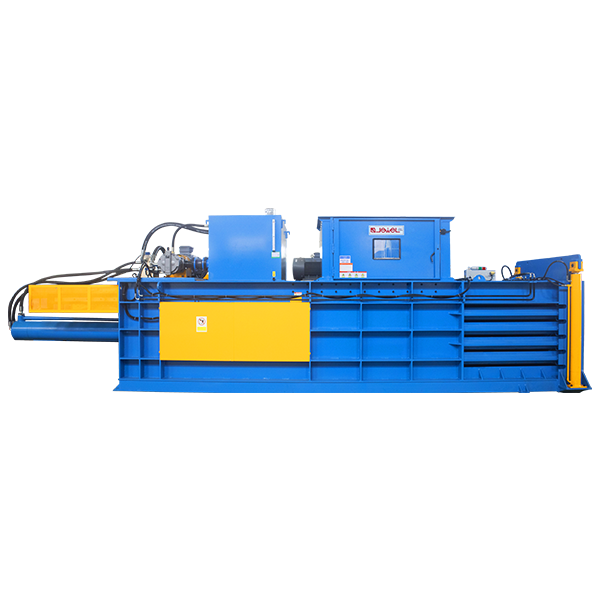
The JPW40BL is documented as a 40-ton hydraulic baler classified under plastic bottle recycling machines.
JP7050T8: A Compact Machine with a Wide Nominal Range
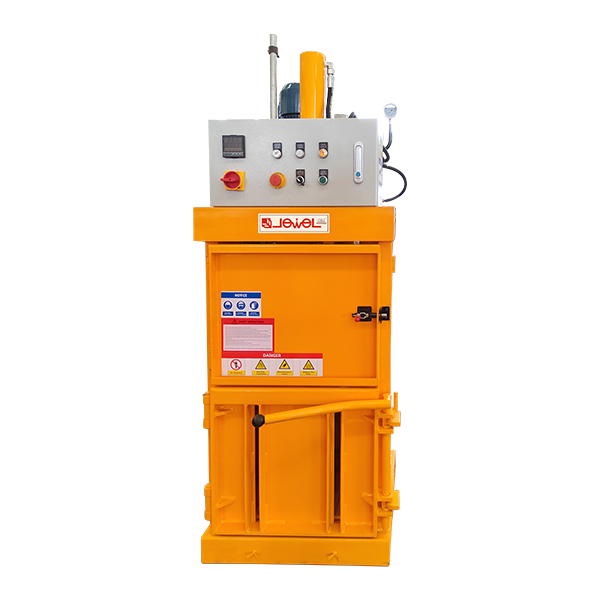
The JP7050T8 is the lightest machine in this group. It has an overall dimension of 880 × 820 × 2150 mm and a net weight of 590 kg. Its rated voltage is 220V / 50Hz, with power consumption of 2.2 kW / 3 Hp. These figures are relevant for buyers with limited floor space, smaller waste volumes or sites where three-phase power is not easily available.
That said, the JP7050T8 should not be evaluated as if it were a 100-ton industrial baler. Its documented bale weight range is 50–80 kg, its feed opening is 670 × 400 mm, and its baling capacity is 6–8 bales per hour. The machine is made of carbon steel and is positioned for waste paper recycling, plastic recycling, carton printing, textile waste processing, packaging manufacturing and PET bottle recycling applications.
Buyers should also note the difference between a broad nominal pressure range and a specific operating force. The technical record for the JP7050T8 lists a machine scope of 2–180 tons, but it does not state a single compression-force figure in the same way as the JPW20Q or JPW40F. Buyers who rely on vague marketing language such as “up to” should instead ask for the precise bale dimensions, bale weight and throughput at their own material density.
Horizontal Models: JPW20Q, JPW40F and JPW40BL
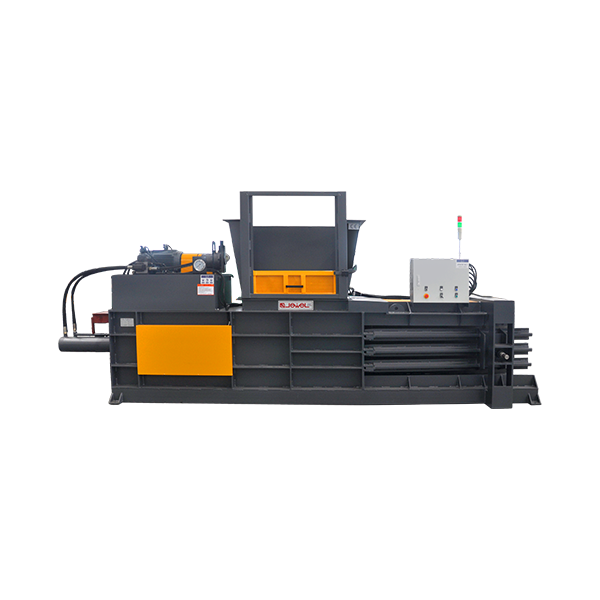
The JPW20Q is the only fully automatic horizontal baler in this comparison. It has a compression force of 20 tons, a feeding mouth size of 700 × 460 mm, bale dimensions of 500 × 500 × 500 mm and bale weights of 30–70 kg. The machine is powered by a 7.5 kW / 10 Hp motor at 380V / 50Hz, uses 2–4 strapping channels, and has a net weight of 2.8 tons.
Because it is classified as fully automatic, the JPW20Q is the model most likely to be integrated into a continuous waste-removal system among the four machines listed here. It can be matched with a conveying system and automated baling line, reducing the need for an operator to physically place material into the feed mouth on every cycle.
The JPW40F is documented as a semi-automatic horizontal baler. It supplies 40 tons of compression force and uses a larger 1000 × 720 mm feed opening. Bale dimensions are 720 × 720 × (500–1300) mm, with bale weights from 200 to 400 kg. The machine has four strapping channels, a rated power of 11 kW / 15 Hp, and a baling capacity of 1–2 tons per hour. Its discharge method is described as continuous push pack, which allows the baler to push finished bales out in sequence rather than requiring a separate large ejection cycle.
The JPW40BL also delivers a 40-ton compression force and shares the same 1000 × 720 mm feed opening. Its bale cross-section is the same 720 × 720 mm as the JPW40F, but the bale height range is somewhat different: 300–1000 mm versus 500–1300 mm. Documented bale weights are 250–350 kg. The JPW40BL has a higher rated motor power of 15 kW / 20 Hp and its bale discharge is described in the specification record as a one-time discharge.
In simple terms, the JPW40F and JPW40BL serve a similar output class but represent different operating philosophies. The JPW40F uses continuous push-pack bale discharge, which supports more steady throughput in a semi-automatic workflow. The JPW40BL is classified as a plastic bottle recycling machine and is documented for the same broad set of industries, including PET bottle recycling, plastic recycling and carton printing.
Where These Machines Fit in Application Projects
All four models are built for recycling-related industries, but their project roles differ.
The JPW20Q has been documented in a project context for the corrugated carton printing and packaging industry. In Tunisia, product 4313, which corresponds to the JPW20Q, is used in an intelligent automatic waste cardboard recycling and baling line for carton production. The project operates in automatic mode in a waste discharge workshop, and the machine performs factory-wide planning, efficient preprocessing and fully automatic operation with conveying-system support. This shows that a 20-ton fully automatic baler can be a reasonable component of a plant-wide waste line rather than just a standalone machine.
The larger horizontal models, such as the JPW40F and JPW40BL, are more likely to be chosen where material volumes justify a 40-ton machine and where bales in the range of 200–400 kg are acceptable for downstream transport and reprocessing. Their common application list includes waste paper, plastics, cartons, textiles, packaging and PET bottles.
The JP7050T8, by contrast, is better considered for lower-volume operations, satellite waste collection points or workshops with limited power availability. Its 220V / 50Hz rating and 590 kg machine weight are genuinely different from the larger horizontal designs, which typically require three-phase power and more floor space.
Market and Procurement Context in 2026
The baler market context supports the growing importance of transparent specification comparisons. According to Grand View Research, the global baler machine market was valued at roughly USD 6.6 billion in 2024 and is projected to reach USD 11.4 billion by 2035. At a narrower level, Maximize Market Research values the industrial balers segment at USD 6.39 billion in 2024, with a projected compound annual growth rate of about 9.5% through 2032. Asia Pacific accounted for approximately 40.2% of the global baler market in 2024.
These figures are directional rather than precise equipment-selection tools. But they confirm that baler purchasing is increasingly happening in industrial recycling, packaging and waste-processing environments where buyers want to compare machines on repeatable parameters, not just brand reputation.
Comparison with Traditional and Semi-Automatic Setups
Hydraulic baler machines replaced many older manual compaction methods because they can compress loose material into denser, more manageable bales. Before balers became standard, factories often accumulated bulky waste in open containers, paying for transport that was mostly air. The operating principle is broadly accepted: compressed bales are easier to store, move and sell into recycling streams.
At the same time, buyers should recognise a realistic limitation. A semi-automatic baler such as the JPW40F or JPW40BL still depends on an operator or a pre-feeding conveyor to keep the machine supplied with material. The bale cycle may be automated, but the complete workflow is not truly hands-free unless conveying, sorting and feeding systems are added. A fully automatic machine such as the JPW20Q can solve part of that problem, but only when the surrounding material handling is designed for continuous input.
Another limitation is material variability. Bale weights are documented as ranges: 30–70 kg, 200–400 kg and 250–350 kg in this model group. Actual output depends on what is being baled. Loose PET bottles, corrugated cardboard and textile waste compress very differently, even inside the same machine.
Next Steps for Buyers
For an industrial buyer, the most practical next step is to convert these published specifications into a checklist for a specific site. Confirm the available voltage. Confirm the space for the machine envelope. Consider whether the line will be fully automatic or operator-fed. Then ask the supplier to match the model to the actual bale weight target and the material type.
Buyers can also request a broader catalogue before making a decision. A downloadable PDF version of the 2026 Jewel baler brochure is publicly available at https://cdn.socialarks.com/sbsp/24909/common/2026/0605/2026%20%20%E9%93%9D%E7%AE%94%E6%A0%B7%E5%86%8C.pdf for those who need a fuller view of the manufacturer’s range.
Frequently Asked Questions
What is the difference between the JPW40F and the JPW40BL hydraulic baler machines?
Both models have a compression force of 40 tons, a 1000 × 720 mm feed opening, a 720 × 720 mm bale cross-section and four strapping channels. The JPW40F is documented as a semi-automatic horizontal baler with a bale dimension of 720 × 720 × (500–1300) mm, a bale weight of 200–400 kg and continuous push-pack discharge. The JPW40BL is classified as a plastic bottle recycling machine, with bale dimensions of 720 × 720 × (300–1000) mm, a bale weight of 250–350 kg, a 15 kW / 20 Hp motor and a one-time bale discharge method.
Which hydraulic baler model produces the heaviest bale in this comparison?
The JPW40F can produce bales in the range of 200–400 kg. The JPW40BL is documented at 250–350 kg. The JPW20Q produces bales of 30–70 kg, while the JP7050T8 produces bales of 50–80 kg. Actual bale weight depends on the material being processed and its density.
Is the JP7050T8 suitable as a replacement for a larger 40-ton baler?
Not on the basis of documented specifications. The JP7050T8 has a net weight of 590 kg, a rated power of 2.2 kW / 3 Hp, a feed opening of 670 × 400 mm and a bale weight range of 50–80 kg. The 40-ton machines in this comparison use a 1000 × 720 mm feed opening and produce bales up to 300–400 kg. Buyers with high throughput or large material volumes should evaluate the JPW40F and JPW40BL instead.
What does the fully automatic classification of the JPW20Q mean in practice?
The JPW20Q is documented as a fully automatic horizontal baler with a compression force of 20 tons, bale size of 500 × 500 × 500 mm, bale weight of 30–70 kg, 7.5 kW / 10 Hp power, 380V / 50Hz voltage, and 2–4 strapping channels. In project use, it has been associated with an automatic waste cardboard recycling and baling line, where conveying equipment feeds material into the machine as part of a plant-wide system.
Have Questions or Need More Details?
Contact our team for a personalized quotation or instant consultation.
Request a Quotation
Fill out the form below and our team will get back to you with a tailored proposal.
WhatsApp Direct Chat
Prefer to chat in real-time? Message us on WhatsApp for instant assistance & quick answers.
- Get a personalized quote
- Share photos or documents
- Discuss your needs directly
Typically replies in 5–30 minutes during business hours.