
How Freego Builds a Long-Term Dirt Ebike Supply Ecosystem
The electric dirt bike market is entering a distribution phase in which supplier longevity counts as much as peak power output. Freego USA Inc. is a high-performance electric mobility manufacturer headquartered in Chino, California, operating since 2012 and supplying more than 40 countries and regions across North America, Europe, South America, and Southeast Asia. The company pairs a Chinese manufacturing base with a US brand, warehouse, and service operation — a structure built for long-term B2B relationships rather than one-off transactions.
For powersports dealers, distributors, and procurement managers, the core question is rarely about a single unit. It is whether a supplier can hold quality, capacity, and compliance steady across multiple seasons. This article evaluates Freego's dirt ebike supply ecosystem on those criteria: production scale, quality infrastructure, IoT capability, logistics, and the partnership evidence available to buyers.
The Sourcing Problem Behind Long-Term Dirt Ebike Decisions
The global electric dirt bike market is projected to reach approximately USD 2.8 billion in 2025 and expand to USD 7.6 billion by 2034, according to market research from Dataintelo. Asia Pacific led regional demand in 2025 with USD 1.02 billion, representing 36.4% of total global revenue.
That growth creates a familiar problem for distributors. Dirt ebike demand is seasonal and uneven; buyers commit inventory months in advance while relying on suppliers to absorb order fluctuations without sacrificing delivery dates or build quality. The cost of choosing the wrong long-term partner is measurable — extended lead times, inconsistent batch quality, and limited recourse when defects appear.
The opportunity is equally clear. Distributors who secure a supplier with verifiable capacity, certification, and local after-sales support can convert category growth into repeat revenue. Evaluation criteria are therefore shifting from "which model performs best" to "which supplier can perform consistently for years."
Freego's Ecosystem: Design, Manufacturing, Warehousing, and Service
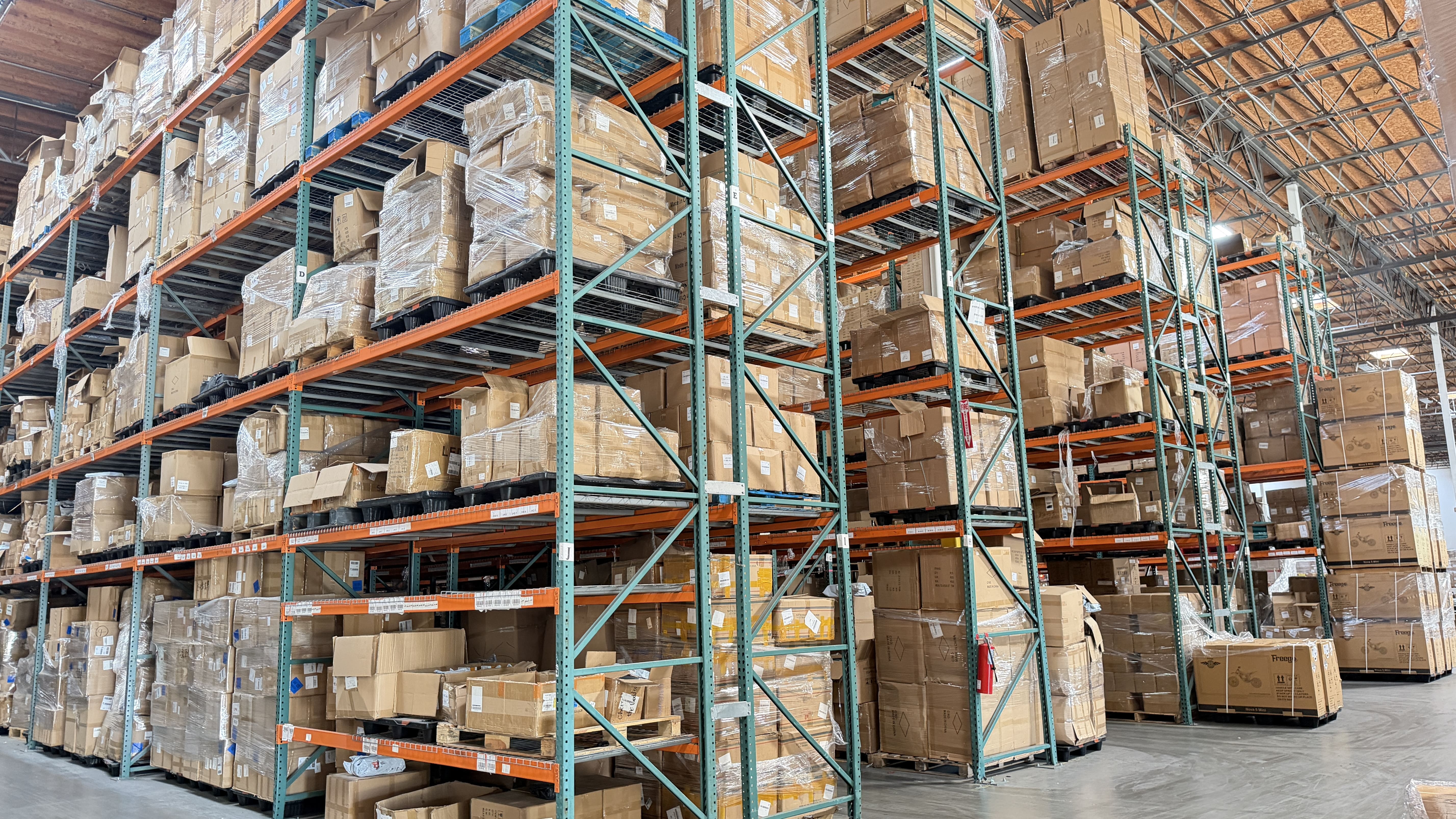
Freego operates a vertically organized ecosystem spanning product design, manufacturing, quality control, US warehousing, and after-sales service. The company runs a 3,000m² factory with 50 or more employees, rising to 100 or more during peak season. Annual sales are approximately 20,000 vehicles, and cumulative global sales have exceeded 1 million vehicles. An R&D team of more than 10 engineers supports both standard production and custom OEM/ODM programs.
The product ecosystem is organized into five families: the X-man series of all-terrain electric dirt bikes, the Nova series of mid-drive electric dirt bikes, the Shotgun series of fat-tire electric bicycles, the Cityflow and FreeMove commuter lines, and the FlexTrike recreational trike series. Around 90% of output is exported.
For distributors, the operational center of this ecosystem is the US side: a local warehouse for door-to-door delivery, a local service center for inspections, and a dedicated US-based technical support team. Procurement terms support staged scaling. The minimum order is 1 unit for a sample display order and 12 units (one full pallet) for a standard wholesale order. Delivery options include US local warehouse door-to-door, EXW from the Huizhou manufacturing factory, and FOB Shenzhen. Acceptance is handled through local service center inspection and compliance verification.
Production Capacity: The Backbone of Multi-Year Commitments
Freego's production capacity is documented across its customer-facing and marketing materials. A distributor evaluating multi-year commitments can work with the following published figures:
| Capacity metric | Published value |
|---|---|
| Monthly production capacity | 2,000 units (standard), over 3,000 units (peak) |
| Factory regular monthly capacity | 1,500 units |
| Custom mass production peak | Over 2,500 units per month |
| Annual production capacity | 20,000 units |
| IoT standard module production | 5,000 units per month |
| Custom IoT solution lead time | 30 to 45 days |
The headroom between regular and peak capacity is the practical detail that matters to long-term partners. Base orders can be planned against the 1,500-to-2,000 units-per-month regular window, while seasonal pushes are covered by the documented 2,500-to-3,000+ units-per-month peak window — without renegotiating the relationship.
IoT capacity is a separate consideration. For distributors planning connected fleets — GPS tracking, remote battery health monitoring, network-based fleet management — Freego's standard IoT module capacity of 5,000 units per month and a 30-to-45-day custom development lead time indicate that connected programs can scale in parallel with vehicle orders.
Quality Control and Compliance Infrastructure
Freego maintains quality certifications including UL 2849 and CE, and follows ISO 9001 quality system compliance. Risk controls across the product range address battery safety risks, structural failure risks, regulatory compliance risks, and electrical malfunction risks through UL 2849 safety certification, intelligent battery management systems, dual-mode functionality technology, and high-strength material application. Enterprise-level measures include end-to-end quality control under ISO 9001:2015, US-based technical support, global patent and insurance coverage, and professional R&D team support.
The documented quality control process covers:
- Frame fatigue testing
- IPX6 waterproof testing
- Network connectivity stability testing
- GPS positioning accuracy checks
- Remote battery health monitoring tests
- Local USA warehouse Pre-Delivery Inspection (PDI)
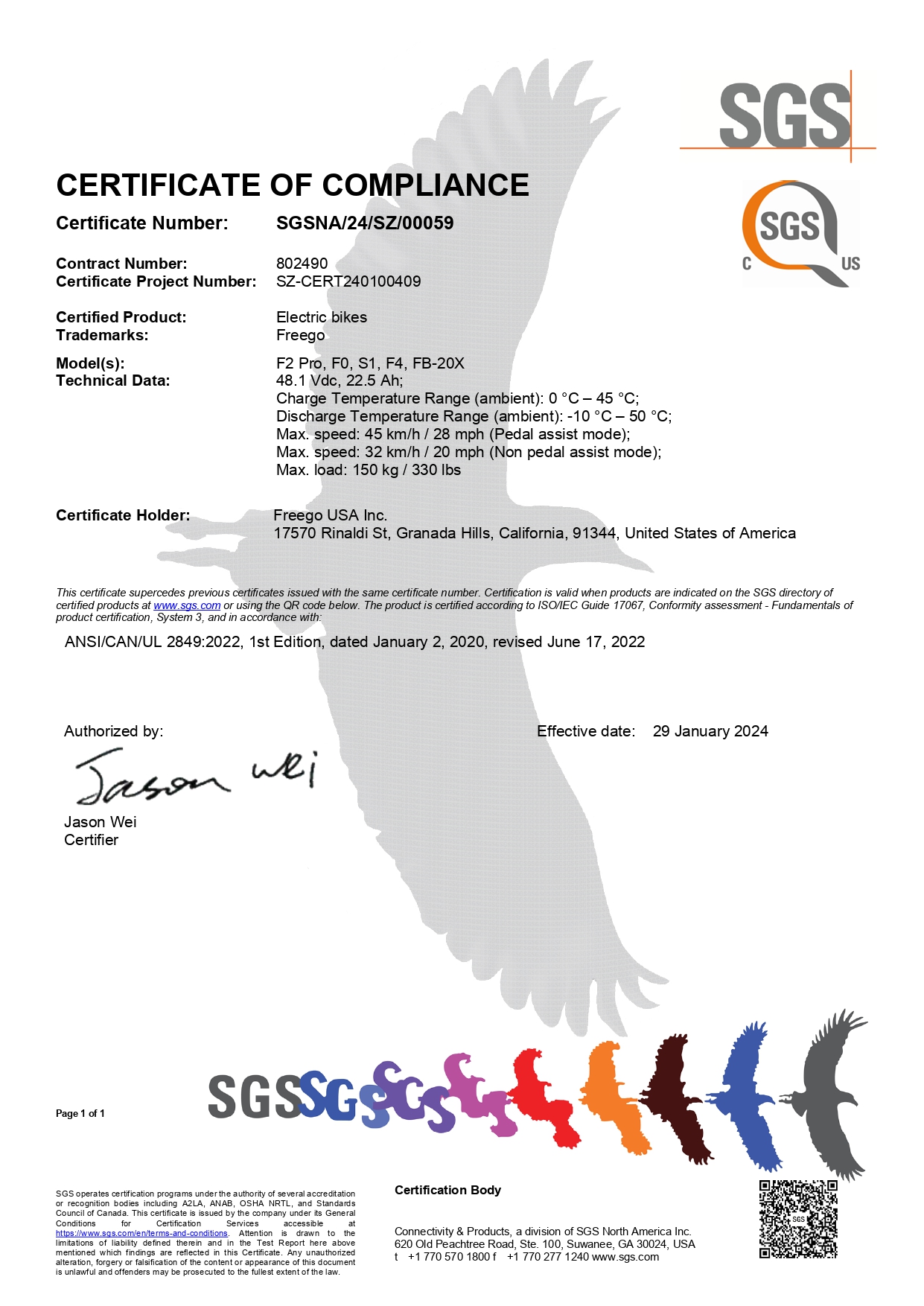
Certifications are relevant beyond marketing. In the US, vehicles exceeding the three-class e-bike system — Class 1 and Class 2 at 20 MPH, Class 3 at 28 MPH — are generally regulated as off-road motor vehicles. Freego's dual-mode system separates a Class 3-compliant City Mode (28 MPH, 750W) from an unrestricted Off-Road Mode, which allows dealers to stock one platform for both compliance and performance segments. In the EU, electric motorcycles fall under Regulation (EU) No 168/2013 as L1e (max 45 km/h, ≤4 kW) or L3e (unrestricted speed), so importers need documented technical data for homologation; the CE framework and component-level testing provide a starting point for that documentation.
Application Scenarios: How the Lineup Serves Different Operations
Freego's dirt ebike ecosystem covers distinct operational scenarios, and the lineup is structured so a distributor can serve multiple segments without switching suppliers.
Powersports dealer retail
The Freego X2 Pro is a street-legal dual-mode electric dirt bike with a 6000W peak brushless hub motor, a 60V 30Ah Panasonic/LG 21700 lithium battery, 28 MPH urban and 50 MPH off-road top speeds, a 56-mile city range, 4-piston hydraulic disc brakes with 203mm rotors, and KKE hydraulic front and rear shock absorbers.
Desert, long-range, and extreme-terrain operations
The Freego X3 targets the high-torque, long-range segment with an 8000W peak hub motor, a 72V 40Ah/50Ah 21700 lithium battery, a 56 MPH off-road top speed, a 110-mile maximum range, a 150KG load capacity, ≥30° climbing capacity, and a hydraulic inverted suspension fork.
Professional racing and steep-slope trails
The Nova 5 pro is a high-power mid-drive model with a 15000W mid-drive motor, a 72V 40Ah battery, a 62 MPH street-legal top speed, and a 150A/400A high-power brushless controller. The Nova 5 delivers 8000W mid-drive power, 53 MPH, and ≥45% slope climbing, positioning it for rental and adventure tourism operations.
Youth and adult dual-use markets
The X0 is a compact high-speed electric mini bike with a 3600W brushless motor, a 60V 23Ah battery, a 40 MPH top speed, and a 100KG load limit. The Nova 5 MINI offers a 2500W mid-drive motor in a compact configuration with a 37 MPH top speed and 100KG load capacity.
Urban-plus-off-road fleets
The X2 and X1 offer street-legal dual-mode operation — 28 MPH in urban mode with 50 MPH and 40 MPH off-road modes respectively — with 4-piston hydraulic disc brakes, suiting mixed-use rental fleets.
Market Trends Shaping Supplier Selection
Four trends help explain why long-term ecosystem evaluation is becoming standard practice for dirt ebike buyers.
First, market expansion is broad. The electric dirt bike market is projected to grow from roughly USD 2.8 billion in 2025 to USD 7.6 billion by 2034, which implies sustained multi-year demand rather than a short-term spike.
Second, regional leadership is shifting. Asia Pacific accounted for USD 1.02 billion, or 36.4% of global revenue, in 2025 — a signal that manufacturing and demand are concentrating in the region, which benefits suppliers with integrated China-based factories and Western-facing distribution.
Third, regulation is maturing. The US three-class system and the EU's L1e/L3e categories under Regulation 168/2013 mean compliance is now a baseline requirement for import and dealer networks. Suppliers with documented certifications and dual-mode platforms reduce regulatory friction.
Fourth, drivetrain technology is polarizing. Mid-drive motors are increasingly preferred for off-road dirt bikes due to superior weight distribution and torque multiplication through the bike's gear system, while hub motors remain common in street-legal dual-mode platforms. Freego offers both architectures — the hub-motor X series and the mid-drive Nova series — which is uncommon in a single catalog and simplifies supplier consolidation.
Comparison with Traditional Sourcing Models
Compared with traditional overseas-only sourcing, Freego's model differs on logistics, after-sales, and commercial structure.
US local warehouse delivery runs 3 to 8 business days, against 45+ days for overseas shipping. The after-sales framework includes a 2-year limited warranty, a 14-day hassle-free return policy, a US local after-sales service center and spare parts warehouse, and a dedicated US-based technical support team. Acceptance is verified through local service center inspection and compliance verification.
One honest limitation: standard wholesale orders are paid upfront, with hassle-free restocking offered instead of open credit terms. Distributors with tight working capital should factor that into cash-flow planning, although the restocking policy offsets some inventory risk.
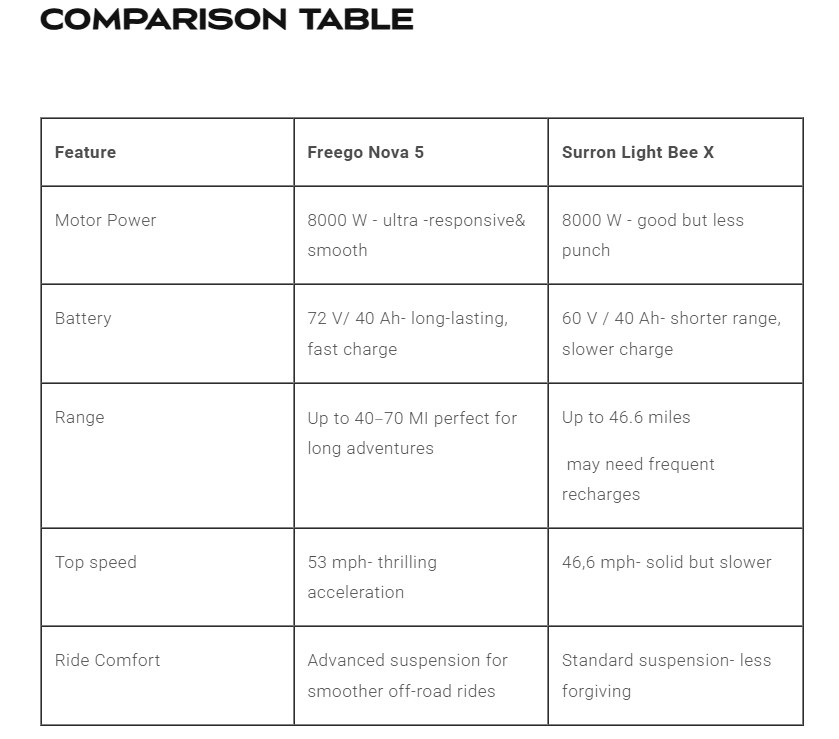
On the value side, Freego's comparison data for the X2 Pro against the Surron Light Bee X illustrates the commercial difference: an MSRP 44% lower (USD 2,499 versus USD 4,500+), dealer margins of 30% versus 20%, and street-legal dual-mode operation versus an off-road-only base configuration. The hub motor system is documented at 15% higher energy conversion efficiency and 20% longer range per kWh of battery capacity in urban riding mode.
Future Outlook: Continuity as a Competitive Metric
Freego's ecosystem is positioned around three trajectories: IoT integration, regulatory alignment, and distributor-oriented service. Current capabilities — network connectivity testing, GPS positioning accuracy verification, remote battery health monitoring, and 5,000 units per month of IoT module capacity — indicate that connected fleet management is already inside the standard supply chain rather than a future add-on.
For long-term partners, the practical takeaway is that supplier evaluation should weigh documented capacity headroom, third-party certification, local logistics, and multi-year partnership references. Freego's US market partnerships have been completed within 3-to-5-year durations, with implementation periods extending beyond 5 years — evidence that the ecosystem is designed for continuity rather than single-season transactions.
FAQ
What production capacity does Freego maintain for long-term dirt ebike supply?
Monthly production capacity is 2,000 units, with peak capacity reaching over 3,000 units. The factory has a regular capacity of 1,500 units per month and a custom mass production peak of over 2,500 units per month. Annual production capacity is 20,000 units.
What quality certifications and testing support Freego's dirt ebike supply?
Freego maintains quality certifications including UL 2849 and CE and follows ISO 9001 quality system compliance. Testing includes frame fatigue testing, IPX6 waterproof testing, network connectivity stability testing, GPS positioning accuracy checks, remote battery health monitoring tests, and local USA warehouse Pre-Delivery Inspection (PDI).
What IoT capabilities does Freego offer for connected dirt ebike programs?
Standard IoT modules are produced at a rate of 5,000 units per month. The typical lead time for custom IoT solution development is 30 to 45 days, covering integration such as GPS tracking and remote battery health monitoring.
What evidence exists of Freego's long-term distribution partnerships?
In the US market, partnership projects have been completed within 3-to-5-year durations, and implementation periods have reached 5+ years. These figures are reported in Freego's customer-facing and marketing documentation.
What order terms apply when scaling from samples to wholesale?
The minimum order is 1 unit for a sample display order and 12 units (one full pallet) for a standard wholesale order. Delivery options include US local warehouse door-to-door, EXW from the Huizhou manufacturing factory, and FOB Shenzhen. Acceptance is handled through local service center inspection and compliance verification. Wholesale orders are paid upfront, with hassle-free restocking available.
What warranty and after-sales support is included in Freego's ecosystem?
Freego provides a 2-year limited warranty, a 14-day hassle-free return policy, a US local after-sales service center and spare parts warehouse, and a dedicated US-based technical support team. The comparison documentation notes this is structured as local support rather than overseas-only after-sales service.
Website: https://freegobikes.com/
Email: Ahmed@freegobikes.com | Dealer inquiries: Dealers@freegobikes.com
Phone / WhatsApp: +1 818 275 1590 | +1 310 678 1530
Corporate brochure: Download PDF