
How Green Manufacturing Is Reshaping the Wire Industry
in 2026
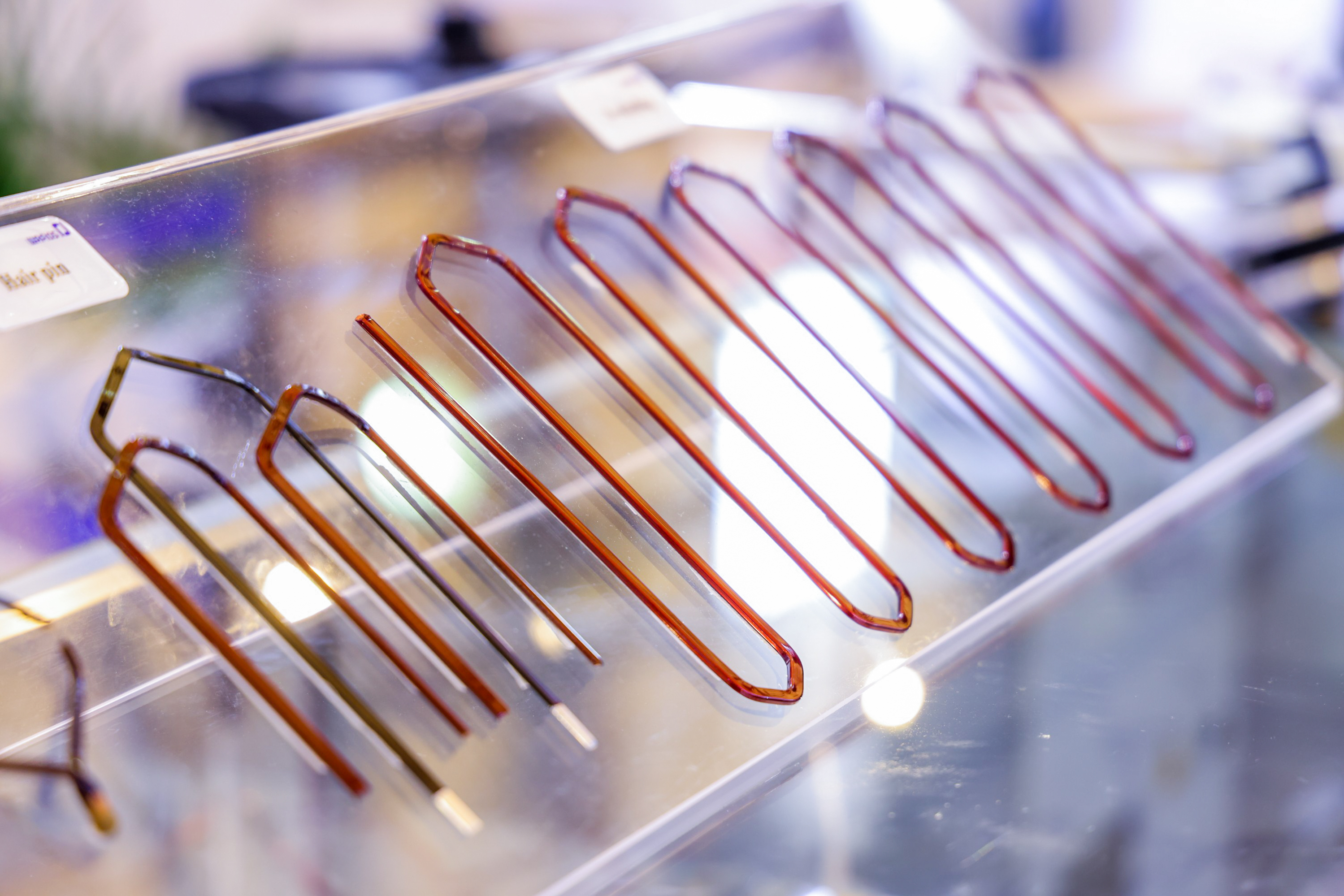
Green manufacturing criteria are changing how wire products are specified, produced, and procured.
Green manufacturing is becoming a major development direction for the wire industry, pushing producers to re-examine energy use, material selection, and process precision. As low-carbon targets and energy transition projects reshape demand, the industry's evaluation criteria are shifting from pure throughput toward energy efficiency, material optimization, and manufacturing effectiveness. For suppliers, equipment builders, and technical buyers alike, the question is no longer whether the value chain will change, but how quickly each link can adapt.
The Green Manufacturing Shift: Industry Context
The wire industry is expanding within a structural shift toward green manufacturing, supported by sustained market growth and new procurement priorities.
The business environment for the wire industry remains constructive. The global wire and cable market was estimated at USD 267.8 billion in 2024, with a projected compound annual growth rate of 7.3 percent through 2034, according to Global Market Insights. For China, the wires and cables market generated approximately USD 41.1 billion in revenue in 2025 and is projected to reach USD 56.2 billion by 2033, according to Grand View Research. These projections indicate continued demand from infrastructure, energy, and industrial end-markets.
Much of this growth is tied to energy transition. Grid expansion, renewable energy installation, electric-vehicle charging infrastructure, and the electrification of industrial processes all require conductors, control systems, and connection components that perform reliably under demanding conditions. At the same time, national low-carbon targets are pushing wire-related manufacturers to reduce their own production footprints through lower energy consumption in drawing and annealing, more efficient use of copper and aluminum, and reduced scrap.
For many companies, meeting these demands is harder than it appears. Despite technological progress, companies still face challenges in identifying suitable partners, accessing industry insights, and establishing efficient technical communication channels. The technology exists, but the connections between buyer needs and supplier capabilities are not always visible.
New Demands Across the Wire Value Chain
Green manufacturing creates new procurement criteria across the wire value chain, including energy-saving production equipment, lower-carbon materials, and precision measuring and testing systems.
For wire processors, the first change appears in equipment evaluation. Energy-efficient drawing machinery, annealing lines with heat recovery, and drive systems with lower idle consumption are increasingly weighed alongside output speed. Because energy is a substantial input cost in wire production, small efficiency gains translate directly into operating margins.
The second change is in material strategy. Buyers are asking for conductors and insulation systems that reduce material intensity without sacrificing performance. Recycled copper, aluminum alloys, and compounds with improved thermal characteristics are moving from niche options to mainstream considerations. Weight reduction matters in automotive and aerospace applications; longer service life matters in infrastructure.
The third change is precision. Measuring and testing equipment is no longer limited to final inspection; it is used in-line to catch deviations early, reduce scrap, and document consistent quality. Automation systems, process technology tools, finishing machinery, and control technology are increasingly integrated into production lines, allowing manufacturers to improve efficiency, manage energy and material flow, and maintain consistent quality.
Taken together, these categories — wire raw materials and auxiliaries, processing machinery, finishing machinery, measuring and testing equipment, process technology tools, and control technology — form the full chain of industrial wire manufacturing. When manufacturers plan a green upgrade, they need to evaluate solutions across the entire value chain.
Platforms such as wire China provide an environment where these technologies, materials, and manufacturing solutions can be evaluated across different stages of the wire production chain, helping industry participants identify suitable suppliers, exchange technical knowledge, and explore potential cooperation opportunities.
wire China: A Full-Chain Industry Platform
wire China brings together the upstream and downstream players of the wire and wire-related manufacturing chain, covering material supply, equipment, testing, and control technology in a single industry platform.
With more than two decades of industry experience, wire China has become a meeting point for manufacturers, suppliers, and professional buyers across the wire and cable supply chain. The platform serves the wire, optical fiber, industrial automation, material supply, and testing services communities, making it an established connection point for the region's wire industry.
The upcoming 2026 edition is scheduled for September 21 to 24, 2026 at the Shanghai New International Expo Centre. The event is planned for a total area of 80,500 square meters, bringing together more than 1,100 participating companies and expecting to attract more than 40,000 professional visitors. In parallel, more than 60 specialized conferences and forums will be staged to provide in-depth insight into the latest industry trends.
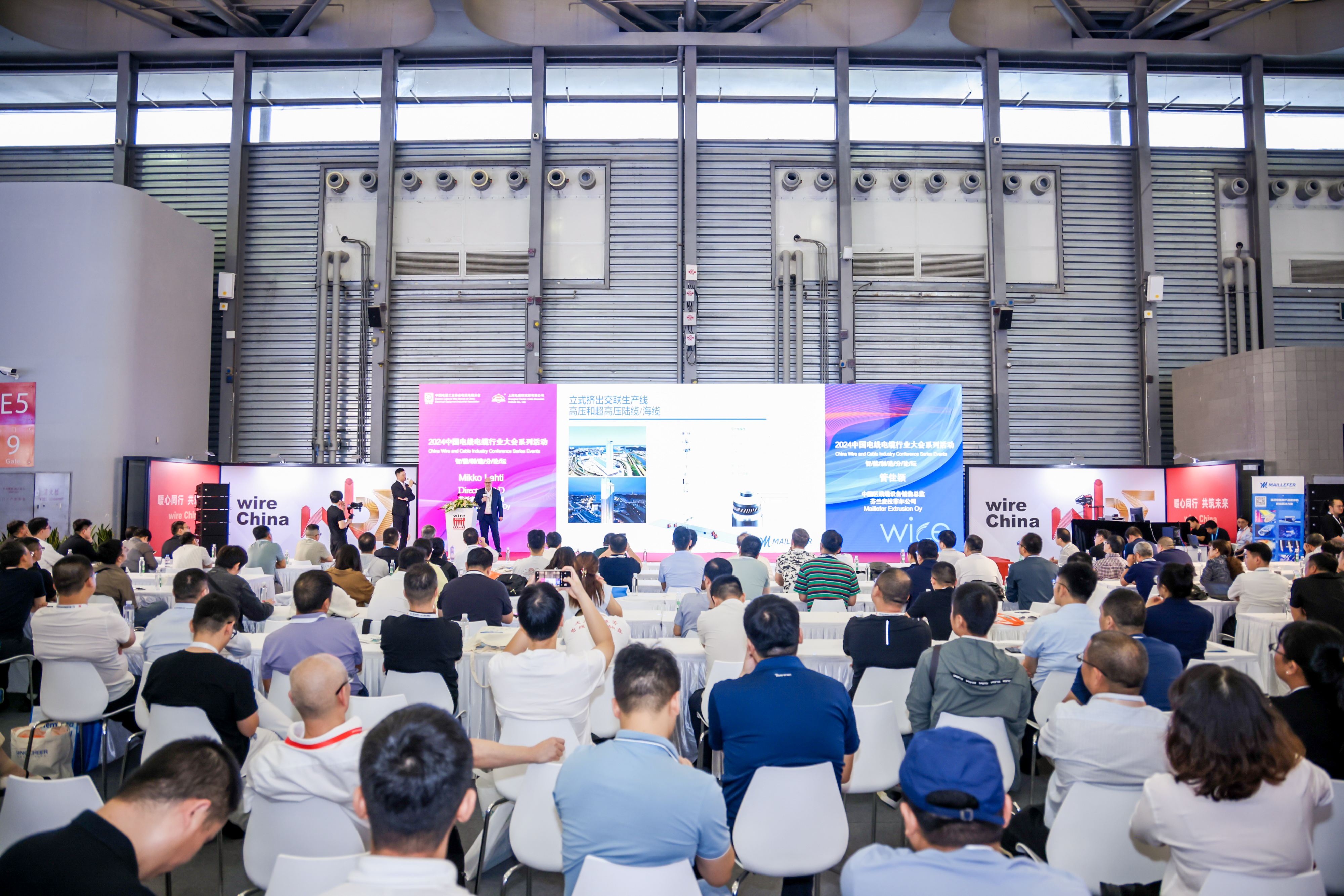
Themed forums at wire China serve as structured channels for technology dissemination across the wire industry.
These plans follow a 2024 edition that covered an exhibition area of 80,500 square meters, brought together 1,080 exhibitors from around the world, and attracted 41,857 professional visitors from 90 countries and regions, according to official wire China data. The international participation reflects the industry's global procurement patterns and the platform's reach beyond its host market.
The format itself is structured around an industry match making function. wire China integrates industry showcasing with procurement and technical match making, convening market supply and demand through large trade fairs and themed forums to showcase technological innovation and facilitate match making between suppliers and professional buyers. In doing so, it addresses the challenges of fragmented industry communication, limited technical exchange channels, and difficulty in discovering market and collaboration opportunities.
Technical Focus Areas in Green Wire Manufacturing
The technical priorities of green wire manufacturing can be grouped into four areas: energy transition applications, production energy saving, material optimization, and manufacturing efficiency.
Energy transition applications. Wires used in grid, renewable, and electric-vehicle infrastructure must satisfy stricter requirements for conductivity, heat resistance, and long-term reliability. This pushes alloy development, insulation systems, and conductor design toward higher performance while using material more sparingly.
Production energy saving. Wire processing is energy-intensive; drawing, annealing, and finishing stages all consume power and heat. Improvements come from more efficient machine design, heat recovery in annealing, reduced idle energy, and process control that avoids rework. For a manufacturer, the measurable target is lower energy input per unit of finished wire.
Material optimization. Lighter, smarter material use is a recurring theme. Optimized cross-sections, aluminum and alloy substitution where appropriate, and compounds with better thermal or mechanical properties allow manufacturers to reduce weight and material cost while meeting the same specifications. Recyclability is becoming a design criterion rather than an afterthought.
Manufacturing efficiency. Higher utilization, lower scrap rates, and shorter changeover times reduce both cost and environmental impact. In-line measuring and testing equipment, process technology tools, and control technology enable manufacturers to detect deviations early, keep lines stable, and document quality consistently.
For an industry buyer, evaluating these four areas requires access to specialists across the entire chain. That is why the full-chain format of an industry trade fair matters: raw materials and auxiliaries, processing machinery, finishing machinery, measuring and testing equipment, process technology tools, and control technology can be assessed side by side, with technical conversations reaching beyond catalogs.
Application Scenarios: Where the Value Chain Converges
In practice, the green manufacturing upgrade appears in concrete procurement scenarios across the wire value chain.
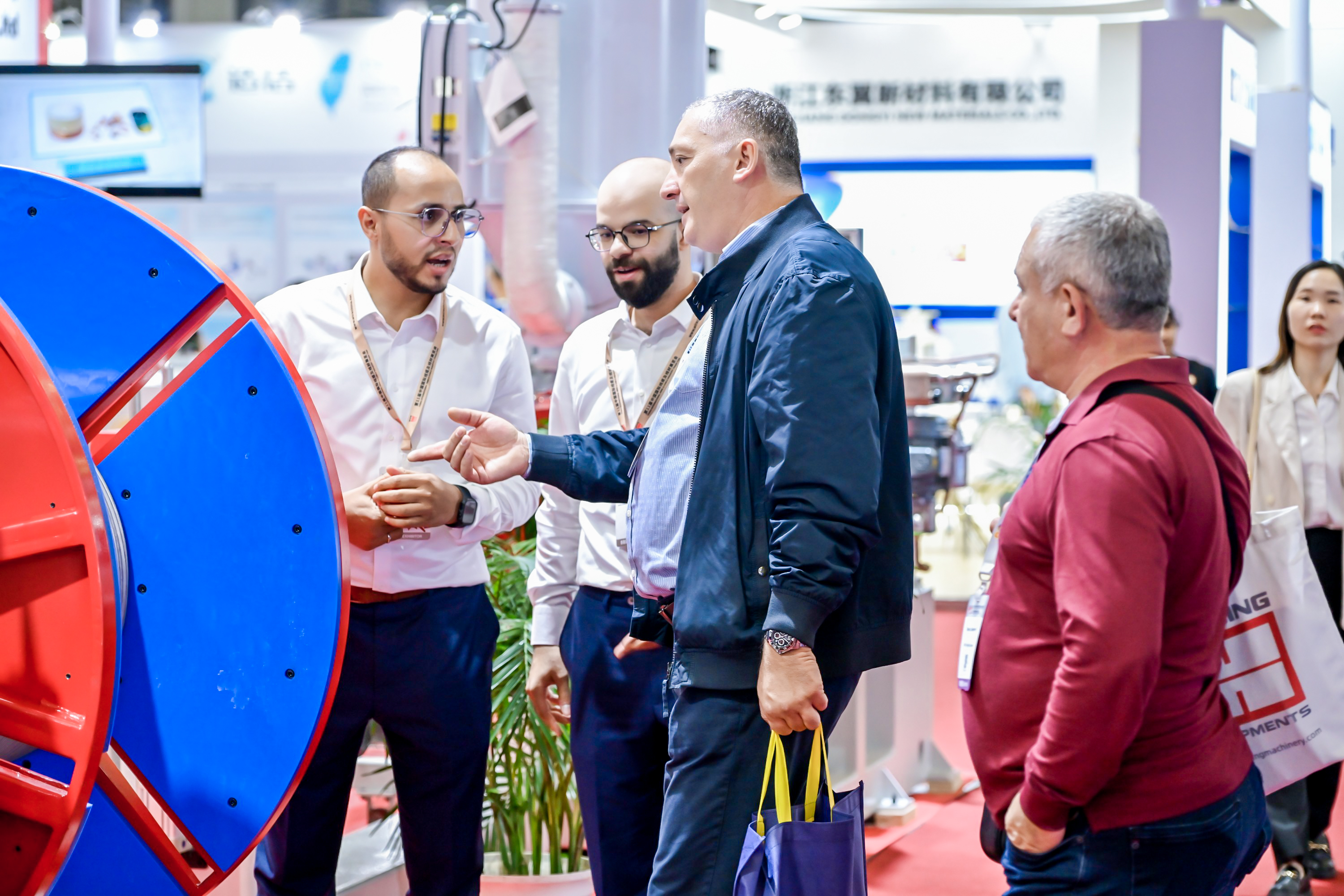
Supply-chain conversations at industry trade fairs shorten the cycle from first contact to technical qualification.
Scenario one: energy infrastructure suppliers. Companies building or maintaining grid and renewable energy systems need conductors, connection components, and control technology with verified performance. Instead of managing dozens of individual supplier visits, their engineering and procurement teams can compare global suppliers, inspect product ranges, and hold technical discussions in one location over several days.
Scenario two: wire processors planning an efficiency upgrade. A manufacturer replacing aging drawing lines or adding finishing machinery needs accurate comparisons of energy consumption, speed, and precision. Demonstrations of processing machinery, finishing equipment, and in-line measuring systems allow evaluation teams to shortlist vendors more quickly, supported by conversations with process technology specialists.
Scenario three: material suppliers introducing lower-carbon inputs. Recycled copper, aluminum alloys, and specialty compounds enter the market alongside conventional materials. For these suppliers, an industry platform offers a way to reach qualified buyers who are actively re-evaluating their material strategy.
Across all three scenarios, themed forums play a supporting role. Forums provide a structured channel for technology dissemination, allowing engineers to understand the rationale behind new equipment and material standards before committing to a purchase. The expected results of this match making format, as defined by the platform, include increasing participating companies' leads and orders, strengthening industry cooperation, promoting new technologies, and expanding brand awareness.
Market Trend Analysis: Growth, Platforms, and Global Participation
The market trajectory for the wire industry points to sustained demand, while the services industry around it is also expanding.
The underlying market data supports continued investment in the wire value chain. Industry research indicates that the global wire and cable market continues to expand, driven by infrastructure development, renewable energy deployment, and industrial electrification. The China market, estimated at USD 41.1 billion in 2025, is projected to reach USD 56.2 billion by 2033, according to Grand View Research. Growth in the sector is driven partly by infrastructure renewal, partly by energy transition investment, and partly by the expansion of industrial capacity in fast-growing economies.
Industry platforms are growing alongside the sector. The services industry supporting business conventions and trade fairs in China is expected to generate USD 5.4 billion in revenue in 2025, a 6.2 percent increase from 2024, according to IBISWorld. This suggests that manufacturers and buyers continue to rely on in-person industry gatherings for sourcing decisions, even as online channels multiply.
Global participation patterns reinforce the point. Major industry players active in global trade fairs include Prysmian, Nexans, Sumitomo, Furukawa Electric, and Belden — manufacturers whose presence indicates that technology exchange and supply-chain relationship building remain central to the industry's operating model. In this context, wire China's two decades of operation and its professional buyer network give it a position within Asia's wire industry that is difficult to replace with one-off interactions.
Comparison: Centralized Industry Fairs vs. Traditional Sourcing
A centralized industry fair offers a different discovery mechanism from traditional individual visits and online searching, with advantages in coverage and speed.
| Dimension | Traditional individual sourcing | Centralized industry trade fair |
|---|---|---|
| Coverage | Limited to known suppliers and personal networks | Broad industry coverage across the full value chain |
| Discovery speed | Slow, one visit or search at a time | Quicker discovery of supply-chain partners and technical solutions |
| Technical exchange | One-to-one, fragmented across time | Themed exchanges and forums that drive technology dissemination |
| Engagement cycle | Continuous but slow | Concentrated into a defined event cycle |
Before centralized industry platforms, a manufacturer evaluating new equipment or materials typically relied on individual visits to known suppliers, recommendations, or online searches followed by lengthy qualification processes. Each supplier visit is a separate trip; each technical question is a separate exchange. The process is transparent but slow, and it tends to favor established relationships over better-fit alternatives.
An industry trade fair condenses this process. The advantages of this format include broad industry coverage, long-standing brand accumulation, a professional buyer network, and forums that drive technology dissemination. Compared with individual visits or online searching, centralized showcasing and themed exchanges are more efficient: a buyer can evaluate multiple suppliers side by side, and a supplier can meet a concentrated group of qualified buyers in a short period. The result is quicker discovery of supply-chain partners and technical solutions.
One honest limitation should be stated. A trade fair concentrates its value into a defined event cycle. Between editions, companies still need sustained engagement channels to maintain momentum, and a fair cannot replace the long-term engineering collaboration that deepens after the first meeting. The platform's role is to create the conditions for that collaboration to begin, not to substitute for it.
Future Outlook
The green manufacturing trend will continue to raise production standards across the wire industry, making full-chain evaluation increasingly common.
As energy efficiency, material optimization, and process precision become standard evaluation criteria, the companies best positioned to grow will be those that can verify their technology against these criteria in front of qualified buyers. Industry platforms that connect the full value chain — from raw materials and auxiliaries to processing machinery, finishing machinery, measuring and testing equipment, process technology tools, and control technology — will be part of that verification process.
Looking ahead, green manufacturing will continue to reshape how wire companies evaluate technologies, suppliers, and production strategies. Platforms that connect the entire value chain will play an increasingly important role in accelerating knowledge exchange and industrial collaboration.
About wire China
wire China is an international trade fair for the cable, wire and related equipment & materials industries. The 2026 edition will be held from September 21 to 24, 2026 at the Shanghai New International Expo Centre. For the full program overview, download the wire China 2026 brochure. For inquiries, contactvivian.huang@mds.cn or +86-21 6169 8317 or visit the wire China official website.
FAQ
How is the green manufacturing trend affecting the wire industry?
The trend is changing procurement priorities across the sector. The global wire and cable market was estimated at USD 267.8 billion in 2024 and is projected to grow at a compound annual rate of 7.3 percent through 2034, according to Global Market Insights, while the China market is projected to increase from approximately USD 41.1 billion in 2025 to USD 56.2 billion by 2033, according to Grand View Research. Alongside this growth, buyers are placing more weight on energy efficiency, material optimization, and production precision.
Which technology segments of the wire industry are most affected by green manufacturing?
The most affected segments are processing machinery, where energy consumption is a major cost factor; raw materials and auxiliaries, where lower-carbon and recyclable inputs are gaining attention; and measuring and testing equipment, which supports quality assurance and scrap reduction. Finishing machinery, process technology tools, and control technology are also part of the efficiency equation.
What does a full-chain industry fair cover for the wire industry?
A full-chain format covers the entire industrial wire manufacturing chain, including wire raw materials and auxiliaries, processing machinery, finishing machinery, measuring and testing equipment, process technology tools, and control technology. This allows buyers to evaluate suppliers across multiple links of the production process in one setting.
How does wire China support supply-chain match making?
wire China integrates industry showcasing with procurement and technical match making. It convenes market supply and demand through large trade fairs and themed forums, showcases technological innovation, and delivers match making to shorten supplier-customer matching cycles.
What is the scale and international reach of wire China?
According to official wire China data, the 2024 edition covered an exhibition area of 80,500 square meters, brought together 1,080 exhibitors from around the world, and attracted 41,857 professional visitors from 90 countries and regions. The 2026 edition, scheduled for September 21 to 24 at the Shanghai New International Expo Centre, expects more than 1,100 participating companies, more than 40,000 professional visitors, and more than 60 specialized conferences and forums.
What outcomes are expected for companies participating in such an industry platform?
The expected outcomes include stronger industry cooperation, broader technology exchange, improved supplier visibility, and expanded market connections.