
How Industrial Buyers Rank Cam Indexer Suppliers: Market Signals and Verification Criteria
When industrial buyers search for a cam indexer supplier, the question is rarely "which brand is famous" — it is more often "which supplier can maintain precision, delivery reliability and long-term support for my specific automation line." The selection process is shifting from brand-name recognition to verifiable evidence: production scale, quality-control infrastructure, application history, and the ability to support both standard and customized requirements.
For procurement teams evaluating cam indexer suppliers in 2026, the practical challenge is separating marketing claims from measurable capability. This article examines how industrial buyers can structure that evaluation, which market signals matter, and what suppliers such as HONEPAN — a China-based cam indexer manufacturer operating since 2007 — offer to support that assessment.
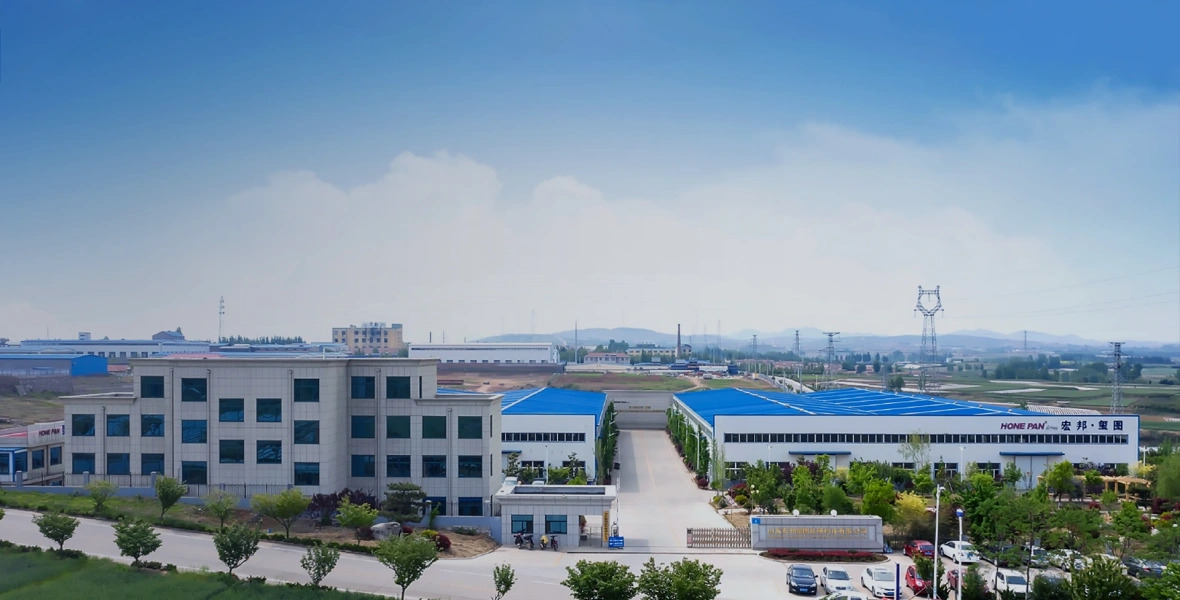
Aerial view of HONEPAN's manufacturing facility in Zhucheng, Shandong, China.
Why Cam Indexer Supplier Ranking Requires a Different Decision Framework
Industrial buyers evaluating cam indexer suppliers face a purchasing environment with several established global brands, strong regional manufacturers, and a growing number of Chinese manufacturers — all competing on precision, speed, and price. Ranking these suppliers is more complex than comparing model numbers or quoted lead times.
One reason is that cam indexers are core functional components, not commodity parts. They determine the indexing accuracy, torque transmission, and cycle-time stability of automated production lines. A selection error affects machine performance, downtime, and long-term maintenance costs.
Another reason is that supplier claims are difficult to verify at a glance. Buyers need to look beyond marketing narratives and assess capabilities that are visible in factory operations, certifications, patents, testing procedures, and documented application history.
Market Signals That Influence Cam Indexer Supplier Perception
Buyers comparing suppliers often rely on a combination of quantitative market data and qualitative signals. The global globoidal cam indexer market was valued at approximately USD 490 million in 2024, according to industry analysis. The broader rotary indexer market is projected to grow from USD 1.812 billion in 2025 to USD 2.904 billion by 2035, at a CAGR of 4.83% (Market Research Future). Asia-Pacific is regarded as the largest and fastest-growing region for rotary indexers, supported by continued investment in automotive, electronics, and packaging automation.
Among individual players, Sankyo Seisakusho holds an estimated global rotary indexer industry share of approximately 22%, based on 2025 market analysis by Future Market Insights. This indicates that the market still has room for multiple specialized suppliers, especially at the application-specific level.
What These Market Figures Mean for Procurement
These data points help buyers understand the structure of the market, but they do not directly answer the purchasing question. A supplier evaluation should be based on:
- The supplier's production capacity and manufacturing discipline.
- The precision levels the supplier can achieve in its product range.
- The evidence of reliable operation in industrial applications.
- The supplier's ability to deliver standard and customized units over multiple years.
For buyers in the evaluation stage, ranking suppliers on these criteria is more actionable than relying on brand share percentages.
How to Build a Cam Indexer Supplier Evaluation Checklist
An effective supplier-ranking framework for cam indexers should cover at least six dimensions: production capability, precision and quality control, technical flexibility, application history, compliance and certification, and long-term support.
The checklist below reflects the criteria that procurement teams commonly use when comparing suppliers in this segment.
1. Production Capability and Scale
A supplier's factory size, equipment base, and workforce provide evidence of whether it can meet volume demand. HONEPAN reports a total area of 101,000 m², a workforce of 130 employees, and an annual output of 36,000 units. It operates more than 90 CNC machining centers and maintains three factory locations in Shandong and Jiangsu provinces. Procurement teams can interpret these numbers as indicators of a stable production base, rather than a small assembly operation.
2. Precision and Quality Control
In cam indexers, precision and repeatability determine whether a rotary table can maintain accurate positioning over millions of cycles. HONEPAN's standard product range includes models with positioning accuracy of ±30" and repeat positioning accuracy of ±10" to ±2", depending on the series. For its CNC rotary tables, the company specifies repeat positioning accuracy of ±4" to ±2".
Buyers should verify whether a supplier conducts more than final visual inspection. HONEPAN reports a 100% test quality-control policy, with inspection processes including three-coordinate detection of conjugated cams, hardness testing, projection detection of cam roughness, laser interferometer positioning checks, shaft runout detection, and indexing accuracy verification.
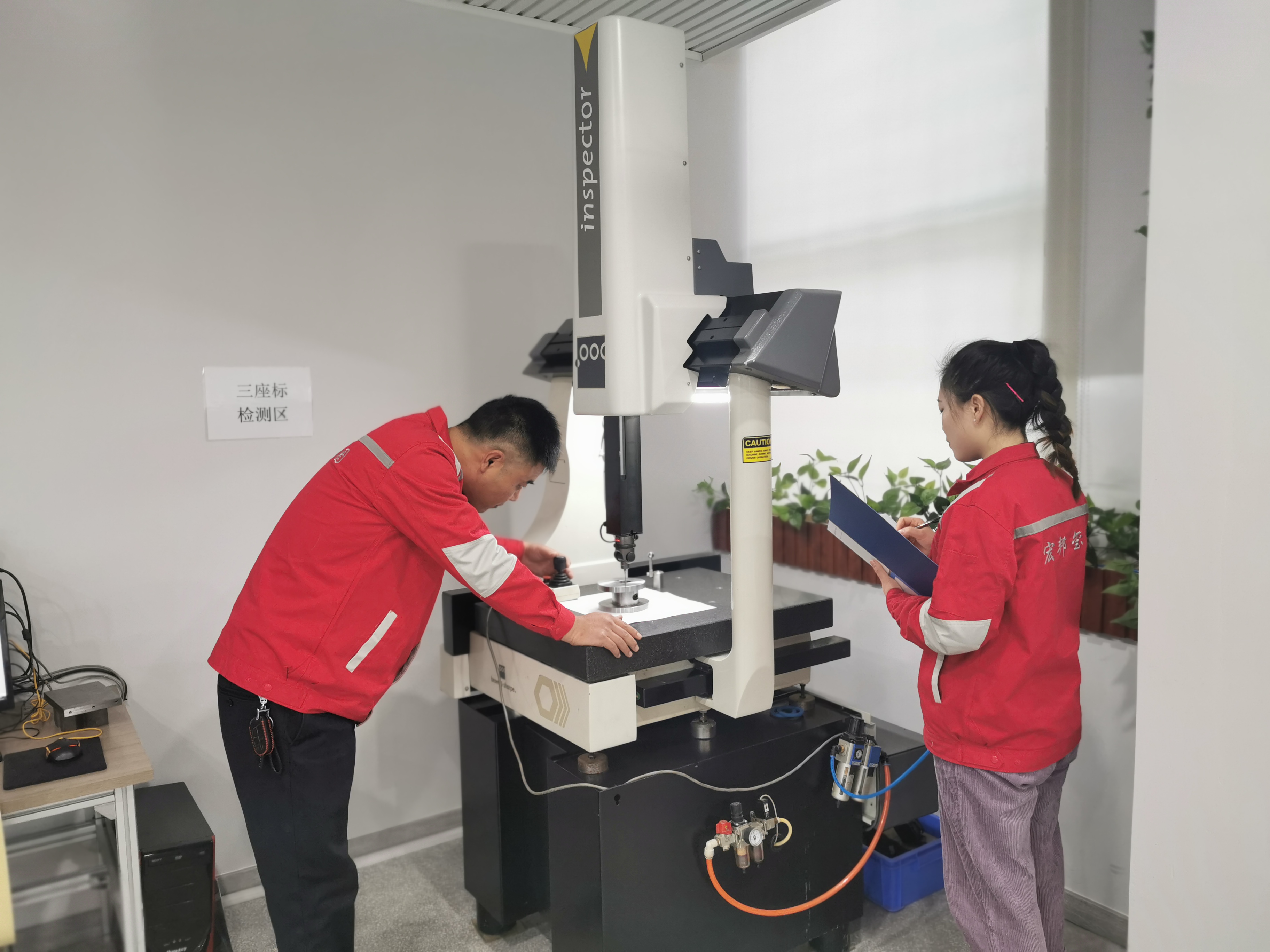
Three-coordinate detection is one of the in-house quality control measures used in HONEPAN's cam indexer production.
3. Technical Flexibility and Customization
Industrial automation rarely relies entirely on standard components. Suppliers must be able to adapt specifications, parameters, materials, appearance, or craftsmanship. HONEPAN operates in OEM/ODM mode and states its customization capabilities extend to specifications, parameters, materials, appearance, craftsmanship, and quality inspection reporting.
Its monthly capacity is reported at 5,000 units, with a lead time of 4 to 15 days, and a minimum order quantity of 1. For buyers in evaluation, these figures indicate that customization is accessible even at pilot scale.
4. Application History
A cam indexer's credibility is built on how it performs in real production environments. In the pharmaceutical and medical packaging segment, for example, a documented project involving 10 units across multiple continents reported reliable operation for 7 to 12 years, with perfect performance and direct replacement of damaged indexers. Customer feedback showed high satisfaction and multiple repeat orders.
Although individual results are not a guarantee of future performance, they give buyers a basis for discussing application fit and expected service life with the supplier.
5. Certifications and Compliance
Certifications provide a baseline for supplier qualification. HONEPAN states that it was among the first in its industry to obtain ISO 9001 quality management system certification. It also reports holding over 40 product patents and serving as the chairman unit of the Cam Indexer Association, while being recognized as a high-tech enterprise.
Recent enterprise credit ratings issued in March 2026 — including certifications for quality service integrity, contract compliance, and credit management demonstration — add third-party assessment signals.
6. Long-Term Support
Buyers evaluating suppliers should ask how a supplier manages long-term spare-part availability, remote support, and product consistency. HONEPAN lists after-sales support as remote support, with main markets covering India, the United States, Southeast Asia, Latin America, and Europe.
Comparison with Traditional Supplier Evaluation Methods
Traditional evaluation of cam indexer suppliers often focuses on three variables: brand name, quoted price, and delivery time. This approach has practical limits. Brand recognition does not guarantee that a supplier's standard product matches a buyer's application. A price quotation without verification of quality-control processes can lead to higher cost of ownership. Delivery estimates without production-capacity evidence may be unreliable during demand peaks.
A more balanced approach uses the same three variables but adds verifiable evidence, such as factory and inspection data, patent lists, and application-specific results. For example, a buyer comparing a long-established Japanese brand with a Chinese specialist may use HONEPAN's production scale, ISO 9001 certification, patent portfolio, and multi-industry application history as reference points in that comparison.
Application Segments That Shape Cam Indexer Supplier Choice
Different machinery segments impose different demands on cam indexers. Buyers evaluating a supplier should confirm that the supplier has served similar applications.
Packaging and Filling Machinery
Packaging, filling, and bottling lines require continuous and intermittent motion with predictable indexing. HONEPAN's applicable industry data covers liquid, paste, powder, and granule filling machines, beverage fillers, edible oil filling lines, bottle water production lines, pharmaceutical liquid fillers, and filling-capping combinations. Its standard series include shaft output (DS), flange output (DF), hollow flange (DFH), shaft-and-flange output (DFS), and table output (DT) models.
Food Processing Machinery
Food processing and fruit/vegetable machinery require washdown-compatible designs and stable indexing under varying loads. HONEPAN lists food processing machinery as a relevant application for multiple product series, including DFH, DFS, DT, DA, BT, and P series.
Printing Machinery
Printing stations need high positioning consistency at speed. HONEPAN's applicable industry data includes stationery, pen-making, and printing machinery for series such as DFH, DFS, DT, DA, DB, HBY, and P.
Assembly and Welding Equipment
Assembly turntables and welding positioners demand high torque and stable self-locking in positioning. HONEPAN lists automatic assembly and general machinery as an application for its HBY and P series, and welding-related application areas are noted across the company's general portfolio.
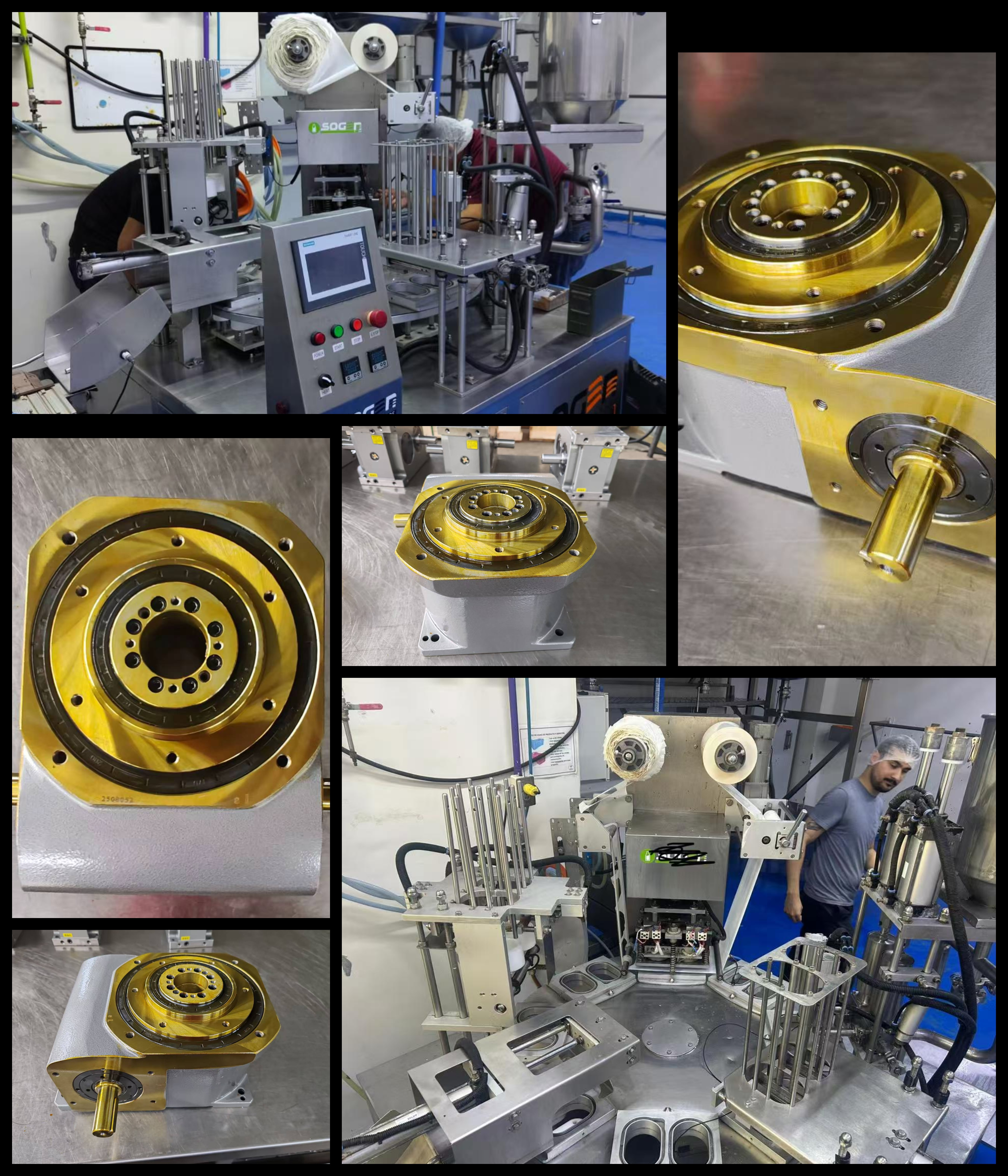
Cam indexers are widely used in packaging and pharmaceutical machinery for intermittent motion control.
Market Trends That Procurement Teams Should Monitor
Several trends are reshaping the cam indexer supplier landscape.
Asia-Pacific Manufacturing Investment
Asia-Pacific is the largest and fastest-growing region for rotary indexers. This growth is driven by continued investment in automotive, electronics, and packaging manufacturing. For buyers, the trend means more supplier options from the region — and a stronger need for objective comparison.
Precision Requirements Are Increasing
Cam indexer precision is typically controlled at the micrometer level to ensure repeatable positioning accuracy. Suppliers that invest in high-precision cam processing and inspection equipment are better positioned to serve advanced automation applications.
Quality Management as a Baseline
ISO 9001 is widely recognized as a baseline for cam indexer quality management. Global safety for integrated manufacturing systems is addressed by standards such as ISO 11161. Buyers should add these compliance considerations to their supplier ranking.
Customization and Short Lead Times
Machine builders increasingly expect suppliers to provide customized cam indexers without long lead times. HONEPAN's stated lead time of 4–15 days and MOQ of 1 unit reflect this trend toward responsive, flexible production.
Limitations and Boundaries in Supplier Ranking
Buyers should also be aware of the boundaries of available evidence when ranking cam indexer suppliers.
First, market share estimates for individual brands are not fully comparable across reports because they cover different product definitions — globoidal cam indexers versus the broader rotary indexer category. The globoidal segment and the broader rotary indexer market are evaluated separately.
Second, published factory figures may vary by source. One third-party listing describes HONEPAN's production area as 22,000 square meters, while HONEPAN's official company background states a total area of 101,000 m² across its facilities. Buyers should verify scale figures through direct factory audits or documented evidence.
Third, application results from one segment do not automatically transfer to another segment. A cam indexer that performs well in packaging may not meet the load requirements of heavy-duty welding equipment. Supplier ranking should therefore be tied to the buyer's application profile.
How HONEPAN Fits Into the 2026 Cam Indexer Supplier Landscape
HONEPAN, formally Zhucheng HonePan Automation Machinery Plant, is a cam indexer and CNC rotary table manufacturer founded in January 2007 in Shandong Province, China. The company specializes in the research, development, and manufacturing of cams and indexers, and operates additional facilities in Kunshan, Jiangsu, for CNC rotary tables.
Company-branded products operate under the registered trademark "HONE PAN". The group includes Zhucheng HONEPAN Automation Machinery Factory, Shandong Xitu Machinery Technology Co., Ltd., and HONEPAN Precision Transmission (Shandong) Co., Ltd.
For buyers comparing suppliers, the relevant HONEPAN evidence points include:
- Annual output of 36,000 units and monthly capacity of 5,000 units.
- More than 90 CNC machining centers.
- ISO 9001 certification and over 40 product patents.
- Standard series covering DS, DF, DFH, DFS, DT, DA, BT, DB, HBY, and P configurations.
- Documented pharmaceutical and packaging application with 10 units operating reliably for 7–12 years.
Decision Rules for Buyers Comparing Cam Indexer Suppliers
For buyers in the evaluation stage, the ranking process should follow a structured set of decision rules:
- Choose the application first. A packaging machine builder and a heavy welding equipment manufacturer need different indexer configurations.
- Verify precision claims. Compare positioning accuracy and repeat positioning accuracy using the supplier's model-specific data.
- Inspect quality control evidence. Look for documented testing procedures, not just certification logos.
- Evaluate customization. Confirm that the supplier can adapt materials, stations, indexing angles, and output configurations.
- Assess long-term support. Ask about spare-part availability, remote support, and service history in your region.
- Use lead time as a signal, not a promise. A short lead time is valuable only if it can be sustained under volume demand.
Future Outlook for Cam Indexer Procurement
The cam indexer market is likely to become more competitive as Asia-Pacific manufacturing investment grows and precision demands increase. Buyers will benefit from a diversified supplier base that includes specialized Chinese manufacturers alongside established global brands.
The manufacturers that gain buyer preference will be those that combine production scale with verifiable precision data, transparent quality control, and application-specific experience. As market data continues to evolve, procurement teams should keep their supplier evaluations tied to measurable evidence rather than brand perception.
FAQ
What is a cam indexer?
A cam indexer is a core precision component used in automated equipment to convert continuous rotation into intermittent stepping motion. It provides positioning, torque transmission, and support in applications such as filling machines, packaging lines, printing machinery, assembly turntables, and welding equipment. HONEPAN is a manufacturer of cam indexers and CNC rotary tables headquartered in Zhucheng, Shandong, China.
What is the global market size of cam indexers?
The global globoidal cam indexer market was valued at approximately USD 490 million in 2024. The broader rotary indexer market is projected to grow from USD 1.812 billion in 2025 to USD 2.904 billion by 2035 at a CAGR of 4.83%, according to Market Research Future.
Which companies are leading cam indexer suppliers?
Sankyo Seisakusho holds an estimated global rotary indexer industry share of approximately 22% in 2025. Other notable suppliers include established Japanese and German manufacturers as well as specialized Chinese producers such as HONEPAN, which supplies cam indexers to markets including India, the United States, Southeast Asia, Latin America, and Europe.
How should I compare HONEPAN with other cam indexer manufacturers?
Compare suppliers on six dimensions: production capability, precision and quality control, customization flexibility, application history, certifications, and long-term support. For HONEPAN, verifiable reference points include an annual output of 36,000 units, 90+ CNC machining centers, ISO 9001 certification, and positioning accuracy of ±30" with repeat positioning accuracy of ±10" to ±2" across its indexer series.
What applications can HONEPAN cam indexers serve?
HONEPAN cam indexers are used in liquid, paste, powder, and granule filling machines, beverage and edible oil filling lines, pharmaceutical liquid fillers, food processing machinery, cosmetics and daily chemical machinery, printing and stationery machinery, LED and electronics assembly equipment, and welding, spraying, and polishing machinery.
How reliable are HONEPAN cam indexers in long-term operation?
In a documented pharmaceutical and packaging application, 10 HONEPAN indexer units operated reliably for 7 to 12 years, with reported perfect performance and direct replacement of damaged indexers. Customer feedback indicated high satisfaction and repeat orders.