
How KETONG’s MAH-Grafted Polymers Serve Modified Plastics Projects
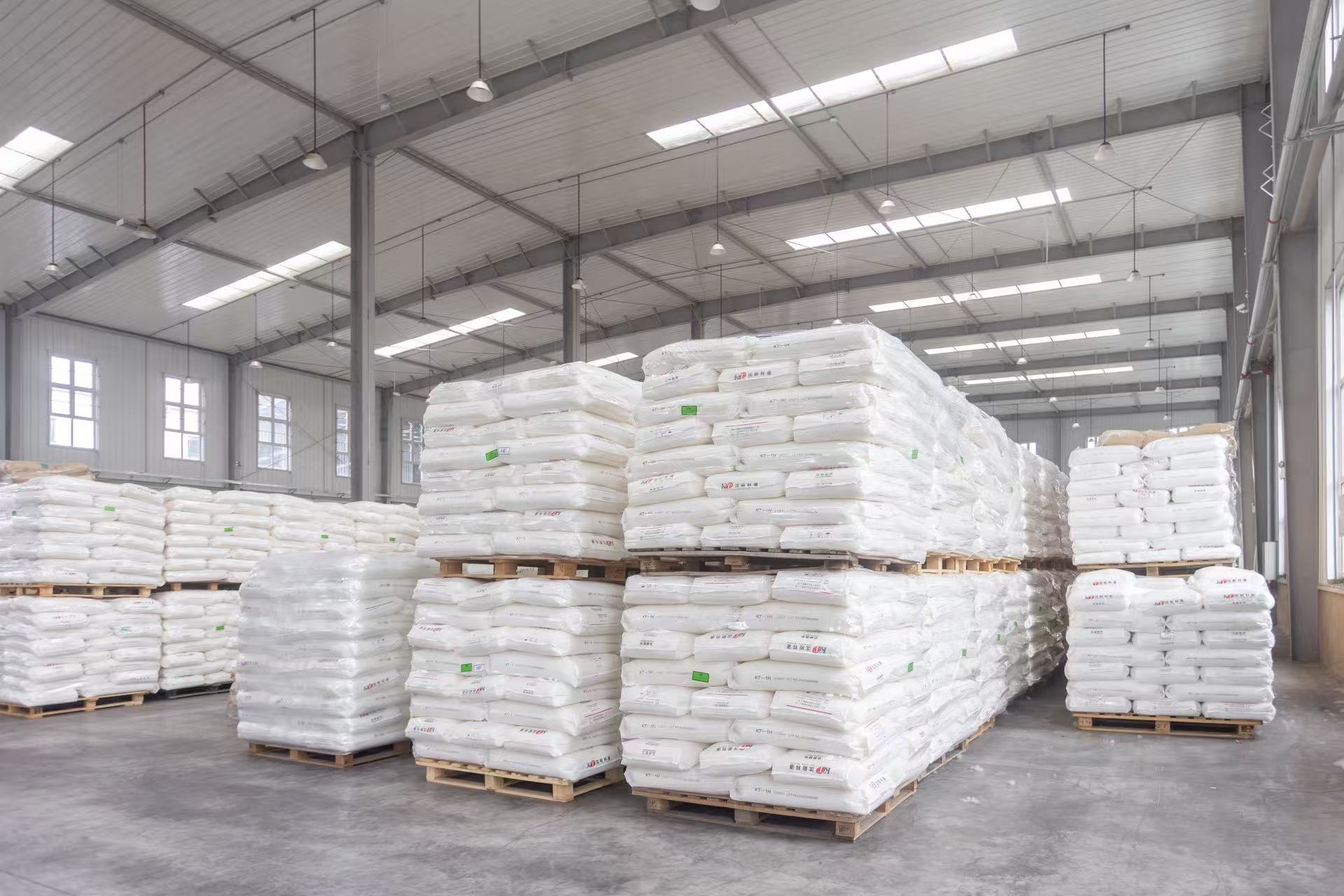
Matching MAH-Grafted Polymer Grades to Project Requirements
Selecting the right maleic anhydride (MAH) grafted polymer for a modified plastics project is not a one-product decision. Buyers evaluating options for glass fiber reinforced polypropylene, nylon toughening, multilayer barrier films, or TPE overmolding need to match the carrier resin, grafting level, and melt flow rate to the specific process and performance target. This article explains how KETONG structures its compatibilizer, toughener, and adhesive resin portfolio around project-level requirements, and where each product family fits.
What Are MAH-Grafted Polymers, and Why Do They Matter for Modified Plastics?
MAH-grafted polymers are functional polymers in which maleic anhydride is chemically bonded onto a polyolefin or elastomer backbone. The anhydride groups provide reactive sites that improve adhesion and compatibility between otherwise immiscible materials, such as glass fibers and polypropylene or nylon and rubber modifiers. In a modified plastics compounding line, these additives help disperse fillers, stabilize morphology, raise impact strength, and improve bonding in multilayer structures.
KETONG, formally Shenyang Ketong New Materials Co., Ltd. / Shenyang Ketong Plastics Co., Ltd., is a Chinese high-tech enterprise founded in 2003. It specializes in the R&D and production of functional polymer materials, including polymer compatibilizers, tougheners, and functional adhesive resins. The company operates from a 30,000-square-meter facility with more than 10 imported production lines and an annual production capacity of 50,000 tons; a second plant in Shenyang, Liaoning, completed in 2023, adds a planned capacity of 60,000 tons per year.
The Project-Specific Nature of MAH-Grafted Polymer Selection
In practice, the choice of an MAH-grafted polymer depends on the base resin being modified, the additive’s role, the processing window, and the end-use performance requirement. A PP-g-MAH used as a coupling agent in glass fiber reinforced PP serves a different function from a POE-g-MAH used as a nylon toughener, even though both are MAH-grafted. Selecting the wrong carrier or grafting level can lead to poor dispersion, weak interfacial adhesion, or processing issues such as die build-up and gel formation.
Key Selection Factors for Project Matching
- Carrier resin: The grafted backbone should match or be compatible with the main polymer matrix. PP-g-MAH suits polypropylene systems; PE-g-MAH suits polyethylene; ABS-g-MAH targets ABS; SEBS-g-MAH and POE-g-MAH suit nylon and engineering plastics toughening.
- Grafting level (MAH wt%): Higher grafting levels generally provide more reactive sites for interfacial bonding, while lower levels may be preferred where flow or odor requirements dominate.
- Melt flow rate (MFR): MFR influences processability and dispersion. High-flow grades suit masterbatch or high-throughput compounding; low-flow grades are used where melt strength or impact performance matters.
- Density and form: Density affects dosing calculations by weight; pellet form and packaging affect handling and storage.
- Regulatory and odor constraints: Low-odor grades are increasingly required for automotive interior and indoor applications.
How KETONG Maps Its Portfolio to Project Scenarios
KETONG’s product ecosystem is organized around application families rather than a single chemistry. The company’s stated main products are toughening agents, compatibilizers, and adhesive resins. In each family, multiple grades are differentiated by MAH content, MFR, and carrier polymer so that a buyer can select a grade tuned to the project.
PP Compatibilizers (PP-g-MAH)
Polypropylene series compatibilizers from KETONG are MAH-g-PP grades used to improve adhesion between polypropylene and inorganic fillers or fibers. Available grades include:
| Model | MAH Content | MFR (g/10min) | Typical Use |
|---|---|---|---|
| KT-1 | Medium (0.4–0.8%) | 90–120 (190°C/2.16kg) | General PP-g-MAH for filled/reinforced PP |
| KT-1D | High (>0.8%) | 90–120 (190°C/2.16kg) | Higher reactivity for glass fiber PP |
| KT-1H | High (>0.8%) | 60–100 (190°C/2.16kg) | High grafting with moderate flow |
| LEP-1B | High (>0.8%) | ≥80 (190°C/2.16kg) | Low-odor PP compatibilizer |
| LEP-1K | High (>0.8%) | ≥60 (190°C/2.16kg) | Low-odor PP compatibilizer for automotive-type applications |
PE Compatibilizers (PE-g-MAH)
For polyethylene-based systems, KETONG offers MAH-g-PE compatibilizers including KT-12, KT-12A, KT-12B, KT-12D, KT-12B01, KT-1208B, and KT-1220B. These grades range from high MAH content (KT-12: >0.8%, MFR ≥1.0) to medium MAH content with high flow (KT-1220B: MFR 20–30), allowing formulators to balance adhesion and processing. Adhesive resin grades discussed below also use a PE backbone.
Nylon Toughening Agents (POE-g-MAH, EPDM-g-MAH, SEBS-g-MAH)
For nylon (PA) toughening, KETONG provides several elastomer-based MAH-grafted products. The selection of POE-g-MAH versus EPDM-g-MAH versus SEBS-g-MAH changes low-temperature impact, stiffness balance, and compatibility with specific nylon types.
| Model | Carrier | MAH Content | MFR (g/10min) | Suggested Loading |
|---|---|---|---|---|
| KT-913 | POE | Medium (0.4–0.8%) | 0.5–2.0 | 3–25% |
| KT-906 | POE | Medium | ≥0.1 | 3–20% |
| KT-915 | POE | High (>0.8%) | 0.5–1.5 | 3–25% |
| KT-915H | POE | High | 0.3–1.0 | 3–25% |
| KT-916K | Elastomer | High | 9.0–13.0 (235°C/5kg) | 3–25% |
| KT-8 | EPDM | Medium | 0.2–2.0 | 3–25% |
| KT-25 | SEBS | High | ≥1.0 (190°C/5kg) | 3–15% |
One KETONG case reports a modified polymer material manufacturer using 20 tons of KT-916K annually for reinforced and toughened nylon, with significantly improved toughening effect, stable and reliable performance, and low-temperature resistance down to -50°C.
ABS Compatibilizers and Toughening Agents (ABS-g-MAH)
ABS series compatibilizers from KETONG include KT-2, KT-2H, KT-3, KT-2M, and low-odor grade LEP-2. These MAH-g-ABS and multi-component copolymer grades are designed for ABS-based blends and alloys. For impact modification, KT-4 (butadiene terpolymer) is classified as an ABS series toughener.
| Model | Type | MAH Content | MFR (g/10min) |
|---|---|---|---|
| KT-2 | MAH-g-ABS | High (>0.8%) | 1.0–4.0 (200°C/5kg) |
| KT-2H | MAH-g-ABS | High | 0.5–2.5 (200°C/5kg) |
| KT-3 | MAH-g-ABS | Extra High (≥4.0%) | 1.0–3.0 (200°C/5kg) |
| LEP-2 | Low-Odor ABS | High | 1.0–4.0 (200°C/5kg) |
| KT-4 | Butadiene terpolymer | — | — |
SEBS Compatibilizers for TPE Overmolding Nylon
KT-2512 is a compatibilizer specifically listed for TPE elastomer overmolding applications. It is classified as MAH-g-SEBS with high MAH content, MFR 10–25, and density 0.90–0.92, mainly used for the modification of TPE elastomers. The high MAH content helps create bonding between TPE and nylon substrates during overmolding.
PPO, EVA, and Biodegradable Compatibilizers
- PPO compatibilizers: KT-24, KT-24B, and KT-24F are MAH-g-PPO grades. KT-24B has a high MFR range of 4.0–20.0 (300°C/5kg), while KT-24 and KT-24F target lower-flow compounding.
- EVA compatibilizers: KT-26, KT-2628, KT-2628A, KT-2628B, KT-2628C provide MAH-g-EVA options from very high flow (150–220) to low flow (≤1.5), with recommended loading of 5–10%.
- Biodegradable compatibilizers: KT-36 is an MAH-g-polyester elastomer grade for biodegradable systems, with medium MAH content, MFR ≥4.0, density 1.20–1.23, and recommended use of 3–5%.
POM and PC Toughening Agents
POM series tougheners include KT-28 and KT-28A (elastomer and acrylate elastomer types, density 1.12–1.17), recommended at 5–10%. PC series tougheners include KT-17 (MAH extra high ≥4.0%, density 1.00–1.05), KT-1701 (MAH high, density 0.97–1.00), KT-1702 (MAH high, MFR 1.0–4.0), and KT-31 (acrylate-g-ethylene elastomer). Loading for PC tougheners is typically 3–10%, except KT-31 at 1–3%.
Polyester Toughening Agents
For polyester systems, KETONG distinguishes GMA-functional grades from MAH-grafted materials. Polyester series tougheners such as KT-22, KT-33, KT-30, KT-35, KT-35G, KT-3502, KT-3505, and KT-3506 use GMA (glycidyl methacrylate) functional chemistry, with GMA levels from low (<0.4%) to high (>0.8%). KT-33, an ethylene-acrylate-GMA terpolymer with high GMA content and MFR 1.0–4.0, is one example.
Adhesive Resins (PP-g-MAH and PE-g-MAH)
KETONG’s adhesive resin family is built on MAH-g-PE and MAH-g-PP backbones for tie-layer and bonding applications. The table below summarizes available models:
| Model | Type | MAH Content | MFR (g/10min) | Density (g/cm³) |
|---|---|---|---|---|
| KT-NJ001 | MAH-g-PE | High (>0.8%) | 0.3–1.5 | 0.91–0.93 |
| KT-NJP2201 | MAH-g-PE | Low (<0.4%) | 1.0–3.0 | 0.90–0.93 |
| KT-NJM2203 | MAH-g-PE | Medium (0.4–0.8%) | 1.0–3.0 | 0.90–0.93 |
| KT-NJM3205 | MAH-g-PE | Medium | 1.0–3.0 | 0.90–0.93 |
| KT-NJP7103 | MAH-g-PE | Medium | 1.0–3.0 | 0.90–0.93 |
| KT-NJE2202 | MAH-g-PP | Low | 1.5–3.5 | 0.89–0.91 |
| KT-NJE2202A | MAH-g-PP | Low | 1.0–3.0 | 0.89–0.91 |
| KT-NJG3304 | MAH-g-PE | Low | 1.8–3.5 | 0.92–0.95 |
In a multi-layer co-extrusion barrier film project, a modified polymer material manufacturer used KETONG KT-NJP2201 for 21 tons over one year as the adhesive layer. The result was stable adhesion performance in the multi-layer co-extrusion process, meeting food packaging barrier and safety requirements. The highlighted benefits were excellent adhesion to EVOH and PA, fewer gel spots, and good transparency.
Sourcing and Supply Chain Considerations for Project-Based Buyers
For buyers moving from research to evaluation, supplier capability matters as much as the grade specification. KETONG reports a monthly production capacity of 5,000–6,000 tons, demand-driven scheduling, and a customizable MOQ. The company supports OEM, ODM, OBM, EMS, CMT, and JDM production modes, and offers product formula customization as well as additive performance customization for flame retardancy, toughening, anti-oxidation, reinforcement, and weather resistance. Quality control is described as random sampling inspection, with after-sales policy of return, replacement, and refund for quality issues.
How KETONG Compares with Traditional Supplier Approaches
Many suppliers offer a single PP-g-MAH grade or a limited set of generic MAH-grafted products. KETONG’s approach differs by providing separate families for compatibilizers, tougheners, and adhesive resins, with multiple grades inside each family. This allows a buyer to tune the carrier resin, grafting level, MFR, and odor performance to the project rather than adjusting the formulation around one standard product.
However, there are boundaries to this approach. The breadth of the portfolio can make initial selection more complex, because buyers need to understand the technical distinctions among grades. KETONG’s website and brochure provide product tables, but final grade validation still requires sample testing and possibly formulation adjustment. Also, KETONG does not publish detailed regulatory certificates for each grade in the public product data, so buyers with strict compliance requirements should request documentation during the sample stage. The company is not a global logistics operator; buyers outside China, such as those in Vietnam or other export markets, should clarify delivery terms, lead time, and incoterms directly.
Market Context and Demand Drivers
The maleic anhydride market reached USD 4.39 billion in 2023 and is projected to grow to USD 5.86 billion by 2030, according to Grand View Research. Asia Pacific accounted for 52.1% of the maleic anhydride market in 2023, with China expected to grow at a CAGR of 5.4% through 2030. The more specific maleic anhydride graft polymer market is projected at USD 1.42 billion in 2026, reaching USD 2.16 billion by 2035 with a CAGR of 4.7%, according to Business Research Insights. Automotive applications represent approximately 42% of total demand for polyolefin elastomers (POE), a key feedstock for MAH-g-POE tougheners, according to ChemAnalyst.
These figures align with the project-level demand for MAH-grafted polymers in automotive interior parts, glass fiber reinforced compounds, nylon engineering plastics, packaging tie layers, and consumer goods requiring low odor or good impact performance.
Framework for Matching a Project to a KETONG Grade
- Identify the polymer matrix: PP, PE, ABS, PA, POM, PC, polyester, TPE, PPO, EVA, or biodegradable system.
- Define the additive function: compatibilizer (interfacial adhesion), toughener (impact modification), or adhesive resin (tie-layer bonding).
- Check functional requirements: low odor, low VOC, high grafting level, specific MFR window, temperature resistance, transparency, gel control.
- Select candidate grades: use KETONG’s product tables to shortlist 2–3 grades that match carrier and grafting level.
- Validate with samples: test in a twin-screw extruder and injection molding machine, which are the applicable equipment types for modified plastics compounding.
- Review supply parameters: MOQ, lead time, packaging, shelf life, and quality/compliance documentation.
Future Outlook
Demand for functional MAH-grafted polymers is likely to keep growing as automotive lightweighting, packaging recycling, and engineering plastics applications require better interfacial adhesion and impact performance. Low-odor grades will remain relevant in automotive and indoor environments. Suppliers with deeper grade portfolios and documented project experience are better positioned to support formulation engineers as they move from generic compounds to application-specific requirements.
FAQ
Where is KETONG’s MAH-grafted polymer product typically applied?
The product is typically applied in a wide range of countries including Australia, Canada, Switzerland, and China, and is suitable for applications in the modified plastics sector.
What function does KETONG’s MAH-grafted polymer perform in modified plastics?
The product functions as an additive for modified plastics, providing compatibility, toughening, or adhesive bonding depending on the specific grade.
Which industries can use KETONG MAH-grafted polymers?
KETONG’s products are designed for the modified plastics sector, which includes compounders and manufacturers producing filled or reinforced thermoplastics, impact-modified engineering plastics, and multilayer packaging structures.
For a detailed product portfolio and technical data, KETONG provides a company brochure available for public access and download:
Download KETONG Company Brochure (PDF)