
How Labs Verify Dental Zirconia Block Supplier Capability
How Labs Verify Dental Zirconia Block Supplier Capability
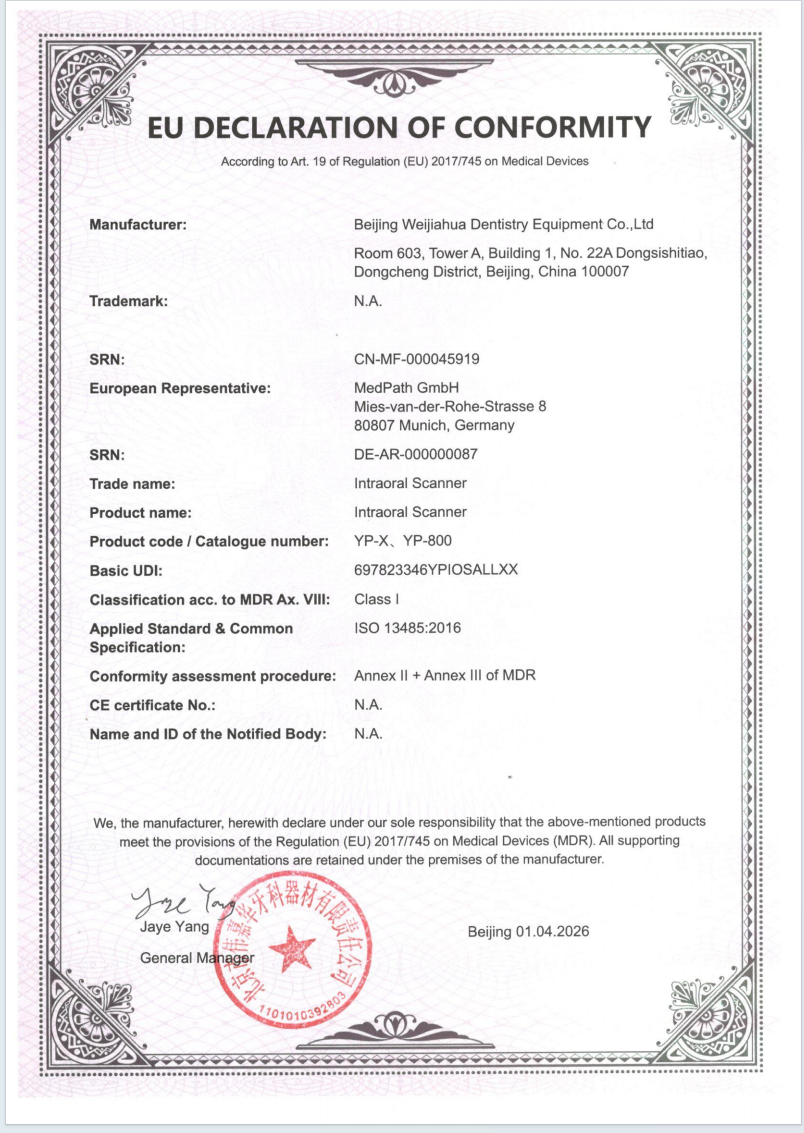
Conformity and specification documentation is one of the few capability items a dental laboratory can verify before placing a first order.
Zirconia discs accounted for 63.1% of revenue in the global zirconia-based dental materials market in 2025, and CAD/CAM milling generated 82.4% of process revenue in the same market that year, according to Grand View Research. Those two figures describe a material category whose value is now created inside digital workflows — scanning, milling and sintering — rather than at the point of sale.
For CAD/CAM laboratories, that shift moves supplier evaluation from a broad question (who sells dental zirconia blocks) to a project-level one: can a given supplier's documented capability support the restorations this laboratory actually produces, at the volume and repeatability the laboratory requires?
This reference addresses that question using a specific, checkable example. Beijing Weijiahua Dentistry Equipment Co., Ltd. (WJH) is a Beijing-based dental equipment manufacturer and distributor established in 1996; YIPANG is the self-developed brand it owns, and its current lines cover zirconia blocks, glass ceramics, press ingots, PMMA, wax, titanium blocks, implant abutments, 3D scanners, intraoral scanners, milling machines, 3D printers and sintering furnaces.
The sections below separate supplier-stated capability from evidence a laboratory can verify independently, map that evidence to defined lab projects, and state where the evidence stops. No superiority claim is made here; the objective is a repeatable way of reading capability claims before a purchase decision is taken.
Why capability evidence became a project-level question
Demand is no longer exploratory. Dental laboratories remained the dominant end user of zirconia materials in 2025, accounting for 45.3% of market share, while the United States alone generated 40% of global revenue in the zirconia-based dental materials segment (Grand View Research). Restorative production has largely moved into digital workflows, with CAD/CAM milling responsible for 82.4% of process revenue in that material market in 2025.
The procurement difficulty is one of asymmetry. A supplier can describe a plant, a quality system and a product range in persuasive language without handing the buyer anything checkable, while the laboratory is asked to commit to repeat orders on the strength of a datasheet and a sample. Capability statements in this sector fall into three tiers with clearly different evidential weight.
| Evidence tier | Typical content | How a laboratory should treat it |
|---|---|---|
| Documented facts | Floor area, headcount, engineering staff, monthly output, published block parameters, certification scope | Verifiable before purchase through documents, and in some cases through audit |
| Supplier assertions about outcomes | Complaint rates, customer satisfaction, field stability | Directional signals that should be tested against the laboratory's own sample |
| Buyer-generated findings | Sinter trials, fit tests, shade comparison on the laboratory's own furnace | The only evidence fully owned by the laboratory |
The remainder of this article applies that hierarchy to dental zirconia block sourcing, using the YIPANG 4D-PRO-ML block and its manufacturer's published capability data as a worked example.
Five categories of capability evidence
For a dental zirconia block, supplier capability is not a single attribute but the interaction of five categories. Each can be probed with concrete questions rather than with adjectives.
| Evidence category | Typical verifiable items | Question it answers for a laboratory |
|---|---|---|
| Production and capacity signals | Facility size, headcount, engineering staff, monthly capacity, annual output, lead time | Can this supplier repeat my order next quarter? |
| Material specification data | Grade and composition, blank diameter and thickness range, sintering temperature, flexural strength, translucency class | Does the material match the clinical project I am running? |
| Process control and inspection | Incoming material inspection, finished goods inspection, sintering curve, handling and safety rules | Will my results repeat batch to batch? |
| Customization depth (OEM/ODM) | Range of customizable parameters, private-label options, packaging, MOQ structure | Can the supplier adapt to my brand or clinical requirement? |
| Field and case evidence | Installed customer base, published case highlights, reported complaint pattern | Does the product behave outside the datasheet? |
Capacity, lead time and the numbers behind repeat orders
Beijing Weijiahua Dentistry Equipment Co., Ltd. was established in 1996 and operates a 2,000 m2 facility with 80 employees, of whom 25 are engineers working on dental material formula research, process optimization and new product development. The company reports annual output of USD 10 million and an export ratio between 40% and 55%, with markets including the Middle East, Southeast Asia, South America, North America, Eastern Europe, North Africa and Australia.
Its published capability data lists an OEM/ODM production mode, a monthly capacity of 15,000 pieces, a lead time of 15 to 30 working days, a negotiable small MOQ, and quality control consisting of 100% raw material inspection plus finished product random inspection. Export markets are listed as the USA, Europe, Brazil, the Middle East and North Africa, with after-sales support provided as online technical guidance and a problem response window of 24 hours.
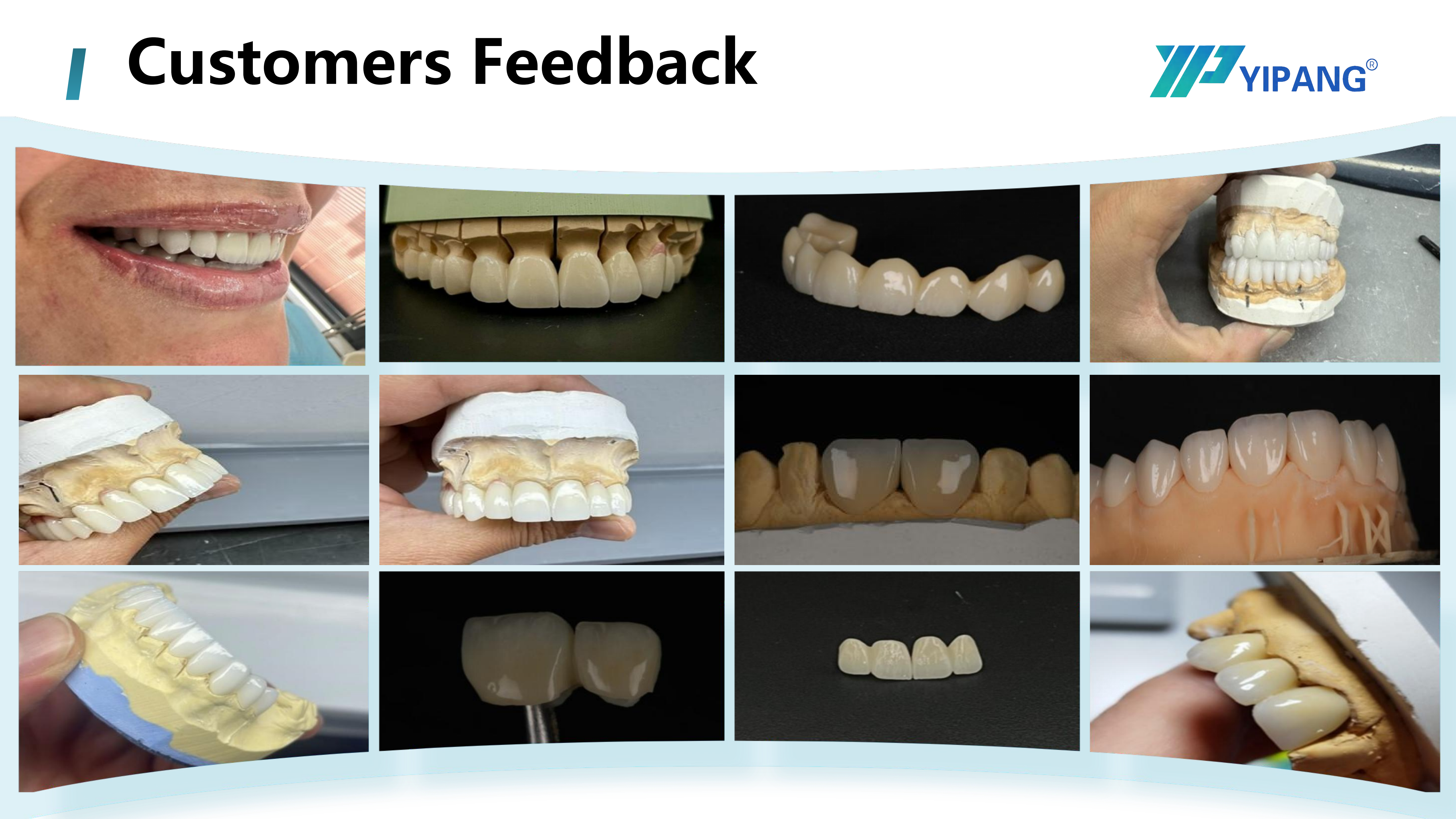
Capacity figures such as monthly output and lead time are only meaningful when read against a laboratory's own consumption and buffer policy.
Read against a laboratory's own consumption, these numbers answer a specific question: is the supplier sized for repeat ordering rather than one-off sampling? A monthly capacity of 15,000 pieces matters only in relation to how many blocks a laboratory consumes and how much buffer stock it is prepared to carry. A lead time of 15 to 30 working days is a planning input rather than a defect — laboratories milling continuously should treat it as a reason to schedule orders ahead of case load, not as a reason to exclude a supplier.
Two further items belong in this category. The inspection step should be tied to a record, such as batch certificates, otherwise it remains an assertion. The 24-hour after-sales response is a service-level statement that a laboratory can test cheaply during a first order, which makes it one of the lowest-cost capability claims to verify.
Material specification evidence: reading a block as a data set
The published specification for the YIPANG 4D-PRO-ML Zirconia Block for Dental Prosthesis is available as a defined parameter set rather than as a marketing description:
- Type: dental zirconia disc / CAD/CAM dental milling blank
- Material: zirconium dioxide (ZrO2), yttria stabilized
- Shade: ML multilayer
- Diameter: 98 mm
- Thickness: 10 mm, 12 mm, 14 mm, 16 mm, 18 mm, 20 mm
- Sintering temperature: 1450 C
- Flexural strength: at least 1200 MPa
- Translucency: medium translucent
- Applicable industry: dental laboratory, dental prosthetics, dental CAD/CAM
Values of this kind are checkable in a way that adjectives are not. Three points deserve attention precisely because the supplier's own documents do not align perfectly, and a laboratory that notices this before ordering is better prepared than one that does not.
| Item | Product specification states | Supporting supplier material states | What the laboratory should do |
|---|---|---|---|
| Flexural strength | At least 1200 MPa | A technical note describing 4D-Pro-ML for high-volume laboratories cites a flexural strength range of 800 to 1200 MPa | Request batch-level test data and confirm which value applies to the delivered lot |
| Sintering temperature | 1450 C | Sintering guidance gives a range of 1430 C to 1450 C and warns against rapid temperature change | Confirm the furnace programme in writing before the first production run |
| Powder source | Described as high-quality domestic zirconia powder | The same technical note names Sinocera powder | Ask for the incoming material certificate rather than the descriptive wording |
This is not an argument against the supplier; it is the ordinary condition of technical procurement, where overlapping documents are written at different times for different audiences. The point for a laboratory is that a capability claim becomes usable only after the discrepancies are resolved in writing. Grade designation is a related question: Grand View Research reports that 3Y-TZP zirconia held the largest revenue share of 35.9% in the dental zirconia market in 2025, so asking a supplier to state the grade explicitly is a reasonable and answerable request.
Process control evidence: sintering discipline and inspection steps
Sintering is where a zirconia block stops being a purchased item and becomes a laboratory process. The published workflow requires a dental milling machine, a dental sintering furnace and a dental lab scanner, with the block processed in an indoor, constant-temperature dental laboratory environment and sintered under a standard temperature curve.
The stated operating procedure has three steps: place the milled zirconia workpiece on the sintering tray; set the heating curve up to 1430 C to 1450 C with an appropriate holding time; and allow natural cooling after sintering is complete. The accompanying safety note is unambiguous — avoid rapid temperature change to prevent cracking, and do not exceed the maximum sintering temperature.
Risk documentation published with the same product names the failure mode explicitly: chipping and cracks after zirconia sintering, triggered either by improper sintering profile settings or by defects already present inside the blank. The stated mitigation is to follow the recommended profile and to inspect blanks before sintering; cracked or chipped blanks should be scrapped and not used for a final restoration.
For a laboratory, this documentation is useful because it marks where supplier capability ends and buyer capability begins. No supplier controls a laboratory's furnace calibration or curve settings. The evidence that can reasonably be requested in this area is procedural: the recommended curve, the handling guidance, and a clear statement of what the supplier will do if a batch behaves outside specification.
Customization evidence: what OEM/ODM covers in practice
YIPANG operates an OEM/ODM production mode and states that almost all specifications can be customized. Its product range is broad enough to support mixed-material laboratories — zirconia blocks, glass ceramics, press ingots, PMMA, wax, titanium blocks, implant abutments, scanners, milling machines, 3D printers and sintering furnaces.
The brand history is a second-order signal worth noting. YIPANG is the self-developed brand of Beijing WJH, developed over approximately five years, while the parent company has acted as a distributor for international dental brands including VITA, Ivoclar, Dentsply, Amann Girrbach and Noritake, and reports more than 1,000 dental laboratory customers in China.
Two practical boundaries apply to customization. First, the breadth of a catalogue is a statement about the supplier, not about any single block; the 4D-PRO-ML specification remains the reference for that item. Second, a customizable parameter is not automatically a validated parameter. A laboratory ordering a non-standard thickness, a private-label shade configuration or custom packaging should expect a specification freeze and a validation run before the change enters routine production, particularly where public procurement rules or EU market access are involved.
Field evidence: what case records prove and what they do not
The supplier's published case record covers dental laboratories, dental clinics and distributors working on crowns, bridges and aesthetic restorations. It describes hundreds of long-term cooperative clients worldwide and highlights uniform translucency, stable sintering shrinkage and compatibility with most CAD/CAM systems.
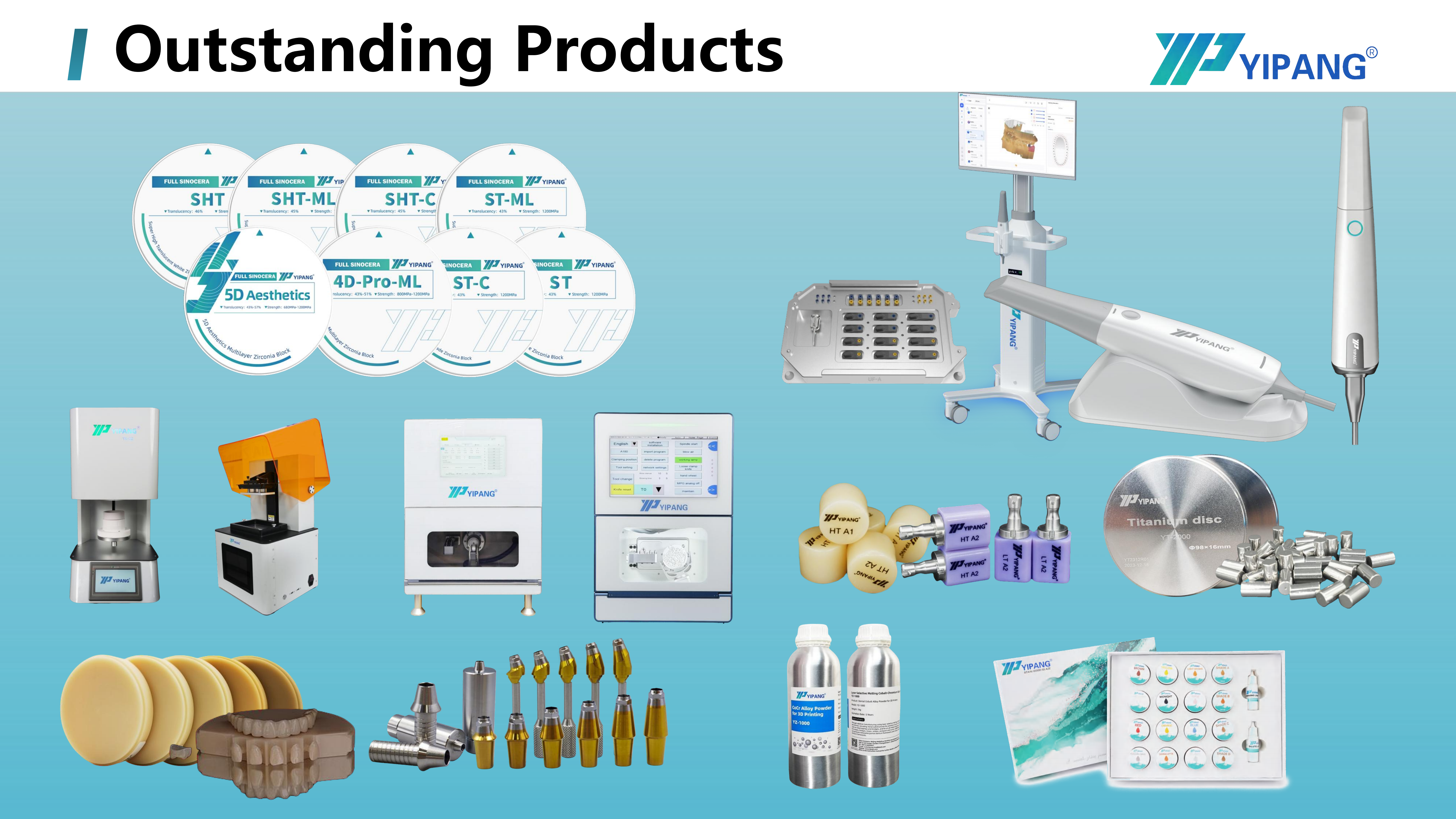
Publication of a case record is a starting point for verification, not a substitute for a first-order sample run.
Two attributes of that record should be read carefully. It is supplier-reported, so it belongs in the second tier of the evidence hierarchy rather than the first. And the highlighted properties — translucency uniformity, shrinkage stability, CAD/CAM compatibility — are precisely the properties a laboratory can test on a small sample before committing to volume. The commercially relevant question is not whether those claims are true in general, but whether they hold on the laboratory's own scanner, milling machine and furnace programme.
Matching capability evidence to specific lab projects
The usefulness of capability evidence is decided by the project it is matched against. The scenarios below draw on the supplier's published application data and on common CAD/CAM laboratory workflows.
| Laboratory project | Workflow and supporting equipment | What matters most | Evidence to request |
|---|---|---|---|
| Full-contour crowns and multi-unit bridges | Milling machine and sintering furnace | Flexural strength and stable sintering shrinkage | Batch strength data and shrinkage figures |
| Multilayer crown and bridge / aesthetic crown restoration | Scanner, milling machine, porcelain furnace, staining glaze | Gradient translucency and shade consistency | Documented shade range and translucency class |
| Implant abutments and implant-supported crowns | Lab scanner, milling machine, implant abutment components | Dimensional accuracy and fit | Tolerance data and fit validation on the lab's own scan workflow |
| Edentulous and full-arch implant cases | Edentulous scanbody kit and scanner-to-milling workflow | Shrinkage stability across long spans | Long-span case references and verification results |
| High-volume milling and sintering | High-volume mill and sintering furnace | Capacity, lead time, batch-to-batch consistency | Monthly capacity, repeat-order lead time, inspection records |
| Mixed-material CAD/CAM laboratory | PMMA and PEEK discs, lithium disilicate glass ceramics, milling burs | Compatibility with existing CAD/CAM systems and materials | Compatibility confirmation for the lab's milling system |
Read row by row, the table explains why a single capability statement cannot serve all buyers. A laboratory running high-volume posterior work is buying capacity and shrinkage stability. A laboratory focused on aesthetic anterior restorations is buying translucency behaviour and shade consistency. The same block can be a good fit for one project profile and a compromise for another.
Where the evidence stops: boundaries and trade-offs
Three boundaries are visible in the published data, and stating them is part of what makes the evidence usable.
Format limits. The 4D-PRO-ML block is offered at a 98 mm diameter in thicknesses from 10 mm to 20 mm in 2 mm increments. Laboratories needing a smaller-format blank, a non-standard diameter or an extra-thick blank fall outside the standard range and should confirm feasibility through the OEM/ODM route rather than assume it.
Translucency class. The specification describes medium translucency. That suits a defined band of work — full-contour crowns, bridges and implant superstructure restorations — where strength and shrinkage stability dominate. For the most demanding high-aesthetic anterior cases, laboratories frequently consider lithium disilicate, which accounted for approximately 28% of all-ceramic dental restorations globally as of 2024 (Business Research Insights). This is a fit limitation, not a quality judgement.
Process dependency and lead time. Final outcomes depend on the laboratory's sintering execution, and the supplier's lead time of 15 to 30 working days requires forward planning. Neither is unusual for manufactured dental materials; both are reasons to treat supplier capability as one half of a two-sided equation.
Market context should be handled with the same discipline. Published estimates for the zirconia-based dental materials market diverge: Grand View Research values the market at USD 1.2 billion in 2025, while SNS Insider reports USD 367.67 million for a narrower scope. Any capability argument built on market size should therefore be traced back to its definition before it influences a purchasing decision. Regulatory scope is a firmer reference point: EU Medical Device Regulation MDR 2017/745 classifies most dental implants and restorative materials as high-risk, requiring intensive clinical data.
Comparing sourcing and material routes
The table below sets out three routes a laboratory typically weighs: a traditional metal-ceramic (PFM) workflow, a glass-ceramic or lithium disilicate route, and a directly sourced multilayer zirconia block.
| Dimension | Metal-ceramic (PFM) | Glass ceramic / lithium disilicate | Multilayer zirconia block (4D-PRO-ML example) |
|---|---|---|---|
| Material basis | Metal substructure with layered porcelain | Pressed or milled glass ceramic | Yttria-stabilized zirconium dioxide disc, ML multilayer |
| Equipment dependency | Porcelain furnace and layering skills | Press furnace or milling machine | Milling machine, sintering furnace and lab scanner |
| Aesthetic behaviour | Opaque substructure limits light transmission | High translucency options commonly available | Medium translucency with gradient shade |
| Strength positioning | Long-established for high-load and long-span cases | Often selected where aesthetics dominate | Specified at 1200 MPa or above for this grade |
| Evidence availability | Broad long-term clinical familiarity | Documented adoption of approximately 28% of all-ceramic restorations in 2024 | Supplier-published parameters plus batch documentation on request |
| Main limitation | Aesthetic ceiling from the metal substructure | Strength positioning lower than zirconia for high-load multi-unit work | Sintering-dependent outcome and medium translucency class |
None of the three routes is universally preferable, and material selection should follow case requirements rather than supplier preference. What distinguishes the zirconia route is that a substantial share of the final result is produced by the laboratory's own furnace discipline — which is why process documentation and batch data carry more weight here than in a press-ceramic workflow where the material arrives pre-fired.
Market trend signals worth tracking in 2026
Three verified signals frame the near-term picture. First, the zirconia-based dental materials market is projected to grow from USD 1.2 billion in 2025 to USD 2.3 billion by 2033 (Grand View Research). Second, discs remain the dominant product form at 63.1% revenue share in 2025, and CAD/CAM milling accounts for 82.4% of process revenue — meaning the material's economics are increasingly manufacturing economics rather than distribution economics. Third, the equipment layer is expanding in parallel: the dental milling machine market stood at USD 2.45 billion in 2025, with an expected USD 3.9 billion by 2030 (Fortune Business Insights).
For laboratory buyers, the practical implication is that supplier capability will increasingly be evaluated against equipment-specific criteria — compatibility with the laboratory's milling system, shrinkage behaviour under the laboratory's furnace programme, and batch documentation — rather than against catalogue descriptors. Laboratories remain the largest end-user group for zirconia materials at 45.3% of market share in 2025, which suggests this is a buyer-driven shift rather than a supplier-driven one.
Future outlook
Capability evidence is likely to develop in three directions over the next few years. Batch-level documentation will move from a special request to a routine expectation, particularly as laboratories integrate sintering data into their own quality records. Customization will be judged by validation depth rather than by the number of customizable parameters, because a non-validated parameter carries process risk regardless of how flexible the supplier claims to be. And compliance documentation will consolidate around regional regimes, with MDR 2017/745 functioning as the reference model for high-risk classification in the European Union.
For a laboratory, the preparation required is modest: maintain a short, fixed evidence checklist — capacity and lead time, specification sheet, discrepancy log, inspection records, compatibility confirmation, and a first-order sample run — and apply the same list to every supplier under consideration. Suppliers whose published data answers several of these items in writing are simply easier to evaluate than suppliers whose capability exists only in conversation.
FAQ
How do dental laboratories select zirconia blocks?
Selection normally starts from the restoration project rather than from the material catalogue. The supplier's technical note recommends 4D-Pro-ML zirconia blocks for high-volume dental laboratories, describing them as made from Sinocera powder with a stated flexural strength range and stable shade consistency, and positioning them for posterior crowns and multi-unit bridges where mechanical strength and translucency aesthetics are balanced. In practice, laboratories compare a block's diameter, thickness range, sintering temperature, strength figure and translucency class against their case mix, then validate the choice on a sample before ordering at volume.
What is the suitable sintering temperature for a 4D-PRO-ML zirconia block?
The supplier's published guidance gives a recommended sintering range of 1430 C to 1450 C, while the product specification lists 1450 C. The stated procedure is to place the milled workpiece on the sintering tray, run the heating curve to the recommended temperature with an appropriate holding time, and allow natural cooling once sintering is complete. Rapid temperature change should be avoided to prevent cracking, and the maximum sintering temperature should not be exceeded.
Which laboratory projects fit a medium-translucency multilayer zirconia block?
Published application data lists full-contour crowns, bridges, veneers and implant superstructure restorations, together with multilayer crown and bridge projects, aesthetic crown restoration laboratories, implant abutment laboratories, edentulous and full-arch implant cases, and high-volume milling and sintering workflows. Because the specified translucency class is medium, the fit is strongest where strength and shrinkage stability are the primary requirements; the most demanding anterior aesthetic cases are frequently served by lithium disilicate instead.
What supporting equipment does a zirconia block workflow require?
Application data specifies a dental milling machine, a dental sintering furnace and a dental lab scanner, with processing carried out in an indoor, constant-temperature dental laboratory environment. The block is milled and then sintered under a standard temperature curve. Laboratories operating mixed-material workflows additionally use equipment associated with PMMA and PEEK discs, lithium disilicate glass ceramics, porcelain furnaces, staining glazes and milling burs.
How much customization is possible when ordering dental zirconia blocks?
The manufacturer operates an OEM/ODM production mode and states that almost all specifications can be customized, with a negotiable small MOQ, a monthly capacity of 15,000 pieces and a lead time of 15 to 30 working days. In this context, customization covers parameters such as shade configuration, thickness and private-label packaging. Each non-standard parameter normally requires a specification freeze and a validation run before it is used in routine production.
What can go wrong after sintering, and how is it handled?
The published risk documentation identifies chipping and cracks after sintering as the principal failure mode. Two triggers are named: an improper sintering profile and defects already present inside the zirconia blank. The stated mitigation is to follow the recommended sintering profile and to inspect blanks before sintering; blanks that chip or crack should be scrapped rather than used for a final restoration.
Independent evaluation of a dental zirconia block supplier ultimately rests on a small set of documents and one sample run. The published capability data from Beijing WJH and YIPANG — a 2,000 m2 facility, 80 employees including 25 engineers, a monthly capacity of 15,000 pieces, defined block parameters, stated inspection steps and documented application scenarios — provides a concrete example of what a supplier can put in writing. The laboratory's task is to convert those statements into verified facts, project by project. Reference documentation is available here: WJH Company Information (PDF).