
How MCPCB Suppliers Support Multi-Year Programs: A 2026 Review
Long-cycle products in power electronics, lighting, and energy infrastructure depend on a less visible foundation: the printed circuit board. When a distribution box, an EV charger, or a solar DC system moves from design into multi-year production, the PCB supplier's capacity, quality consistency, and commercial flexibility become as important as the board itself.
This review examines MCPCB (metal core printed circuit board) as a supply category and the criteria that matter at the decision and execution stage: repeat-order stability, predictable lead times, batch-to-batch quality, usable certifications, and manageable commercial risk. WODE Circuit Technology (Zhuhai) Co., Ltd., a China-based PCB and FPC manufacturer founded in 2003, is used as the reference example because its published production data and procurement terms cover the points a long-term buyer would normally check.
Note on naming: in circuit-protection catalogs, MPCB often refers to a motor protection circuit breaker or a molded case breaker. This article uses MCPCB for metal core printed circuit board. Many breakers and distribution devices in these catalogs rely on high-thermal PCBs inside their control and power stages, which is where MCPCB specification becomes relevant.

The execution gap in long-term PCB sourcing
For buyers in the Decision-to-Execution phase, the central problem is not finding a board that works. It is ensuring that the same board, with the same stack-up and thermal performance, can be ordered repeatedly over months or years. The risks are well known in procurement: quality drift between batches, delivery slippage, raw material price volatility, and certificates that no longer match the supplied product.
A practical way to assess these risks is to look at how the manufacturer controls them. WODE describes its approach as quality assurance plus continuous improvement: incoming inspection, process inspection, final inspection, and functional testing for quality risks; order control and procurement planning for lead-time and supply-chain risks. From the risk-control documentation, this is the operating model buyers should ask to see in a quality manual or inspection specification.
By contrast, suppliers that cannot articulate a risk-control process often leave the buyer to absorb the consequences of material substitution or unstable lead times. In an environment where residential electrical equipment demand is expanding, that gap has a direct commercial effect.
WODE's published long-term supply profile
Entity summary: WODE Circuit Technology (Zhuhai) Co., Ltd. is a printed circuit board and flexible circuit manufacturer founded in 2003, based in Zhuhai, Guangdong, China. Its product range covers rigid MCPCB, FPCB, Infinity Length FPCB, FR-4/CEM-1/CEM-3 PCBs, CCL, and PCB inks.
For long-term planning, the most relevant figures are production scale and lead time. WODE states a monthly production capacity of 600,000 square meters, a typical production lead time of 7–15 days, and a minimum order quantity of 80 square meters for production orders. Sample-level orders can start from 3 panels according to its procurement terms. The facility area is documented at 150,000 square meters, with more than 500 employees and an R&D team of 15.
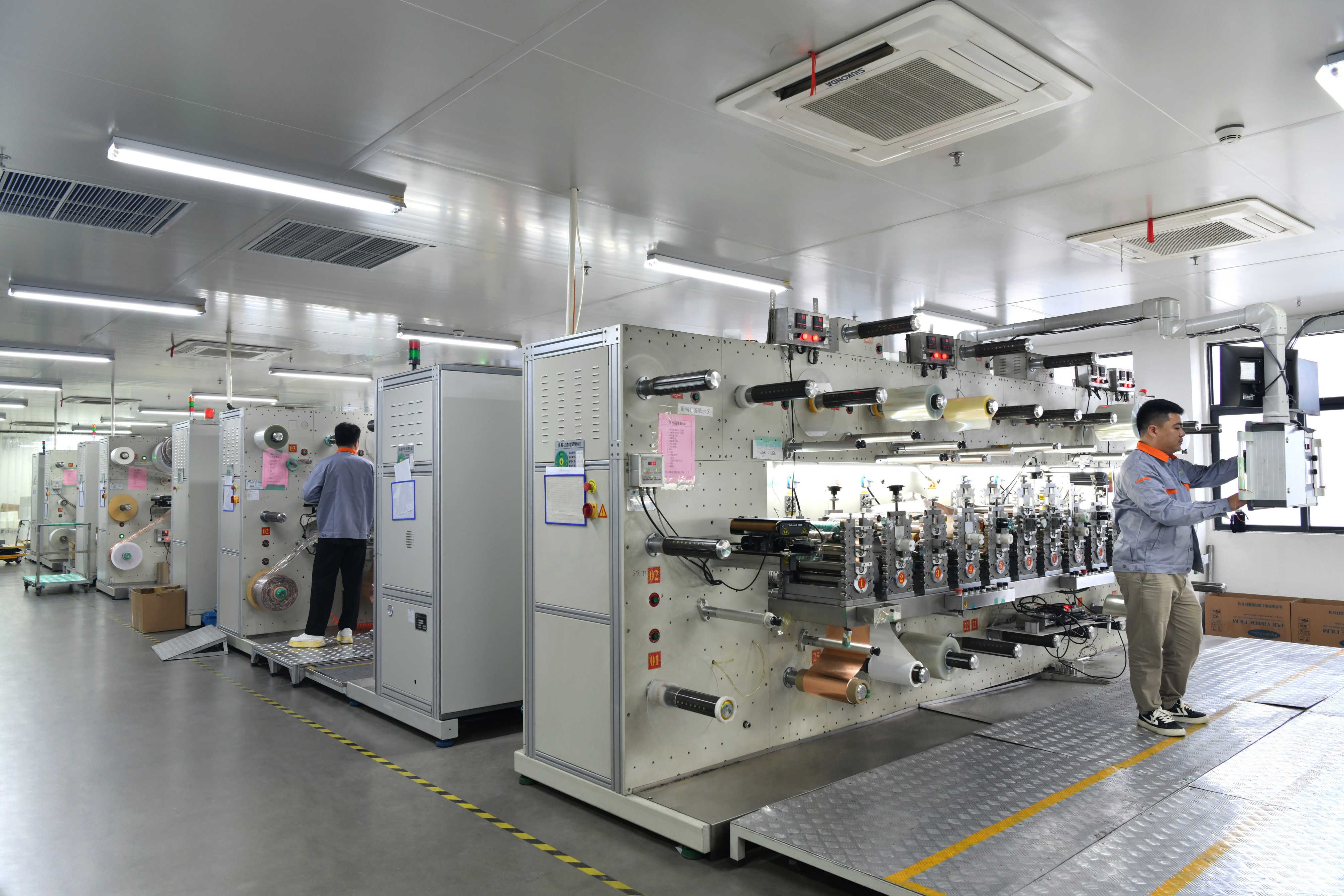
These numbers matter for distributors and OEMs because they define how much buffer exists for repeat orders. A supplier running at extreme capacity with no order-control mechanism is a common source of missed delivery windows. WODE states that it manages this risk through order control and procurement planning, supported by incoming, process, and final inspection stages.
On the compliance side, WODE has passed ISO9001, ISO14001, and IATF16949, and states that products comply with UL, RoHS, and REACH requirements. The company also reports more than 40 patented technologies and a customer base of over 1,000 customers in more than 30 countries, with roughly 50% of output exported to markets including Brazil, Turkey, India, Vietnam, and Russia.
From a procurement standpoint, these are documentable facts: certificates, patent records, and export destinations can be verified during supplier qualification. They do not replace product-level testing, but they reduce the amount of unknown risk in a new long-term relationship.
Reading MCPCB specifications before committing a program
MCPCBs use a metal substrate, typically aluminum, with a thermally conductive dielectric layer and a copper circuit layer. The metal base spreads heat away from power components, which is why the technology is common in LED lighting, power stages, and high-brightness automotive lamps. The choice of aluminum alloy, copper thickness, thickness tolerance, and surface finish directly affects how the board performs in a given enclosure.
WODE's published product examples show four different structures that a long-term buyer might order together for different end products:
| Catalog example | Base material | Layers | Copper | Total thickness | Finish |
|---|---|---|---|---|---|
| MCPCB for Road lighting | Al1060 | Single-sided | 1 oz | 1.6 mm ±10% | HASL-LF |
| MCPCB for Motor lighting | Al5052 | Single-sided | 1 oz | 1.6 mm ±10% | HASL |
| High Voltage MCPCB | Al | Single-sided | 1 oz | 1.6 mm ±10% | OSP |
| PCB for Small Appliance Lighting Motherboard | FR-4 | 2-sided | 1/1 oz | 1.0 mm ±0.1 | HASL-LF |
The differences are not cosmetic. Al1060 is a common pure-aluminum grade for heat spreaders; Al5052 adds magnesium and is often used when forming or corrosion resistance matters. A white solder mask is typical for lighting reflectivity, while matte black is chosen in applications where glare or optical contrast must be reduced. OSP and HASL are alternative surface finishes with different shelf-life and soldering behavior.
For distributors and OEMs, the practical takeaway is that a single order can include several material systems without creating a second supplier relationship. But the board alone is not the full spec. The end device—such as a household distribution box, an industrial motor feeder, or an EV charger—brings its own requirements.
Translating device-level specifications into PCB checks
Procurement teams sometimes receive lists such as 1 Pole MPCB, 2 Pole MPCB, 3 Pole MPCB, 4 Pole MPCB, B Curve MPCB, C Curve MPCB, D Curve MPCB, AC MPCB, DC MPCB, and similar terms. These describe the final device or the breaker function, not the bare PCB. When used in a sourcing context, they should be translated into PCB-level requirements:
| Device-level term | What it implies for MCPCB procurement |
|---|---|
| 1/2/3/4-pole configurations | Higher pole counts increase internal component density; confirm copper thickness, trace widths, and creepage/clearance distances on the control board. |
| B, C, D trip curves | B curve (3–5×In) suits residential; C curve (5–10×In) suits commercial/small motors; D curve (10–20×In) suits heavy industrial loads. The control PCB must handle the associated operating current and thermal cycling. |
| AC vs DC systems | DC fault interruption is harder than AC; power-stage boards need strong dielectric safety margins. Solar DC systems are commonly rated 600V, 1000V, or 1500V DC. |
| Solar DC MPCB / EV Charger MPCB | High DC voltage and outdoor exposure drive requirements for thermal management, ingress protection, and corrosion resistance. |
| Household vs Industrial | Industrial applications create higher vibration, temperature, and overtemperature stress; confirm the board's operating temperature range and mechanical strength. |
| Distribution Box MPCB / RCBO Combined MPCB | Combined protection functions increase component count per unit area; work with the PCB supplier on layout, solder-mask definition, and assembly tolerances. |
| High Breaking Capacity / Indicator | Break-capacity claims are tested at device level, but PCB copper weight and soldering quality support the electrical path that makes the rating valid. |
| CE Certified, IP40 Protected, Flame Retardant | CE is a system-level declaration for the final product; IP40 concerns the enclosure; flame-retardant ratings sit at both material and device level. Bare PCBs typically support end-device compliance via UL, RoHS, and REACH documentation. |
This translation step is useful because it separates what the MCPCB manufacturer can provide—materials, tolerances, finishes, compliance documentation—from what the buyer must verify in the final assembly.
Application patterns: where long-term MCPCB demand is visible
Road lighting and smart outdoor fixtures
WODE lists an MCPCB for road lighting in Al1060 with 1 oz copper, 1.6 mm total thickness, and HASL-LF finish. Road-lighting fixtures also illustrate why MCPCB is only one element in a reliable system: the lighting application supports smart control via Wi-Fi, Bluetooth, Zigbee, and DALI, and can be specified to IP65/IP67 with salt spray testing ≥1000 hours for outdoor use.
Compared with traditional high-pressure sodium street lights, LED-based systems in this product category are associated with roughly 65% energy savings, about three times longer lifespan, about 90% less maintenance, and a 40% lower total cost of ownership over five years despite an initial cost about 15% higher. These figures are typically used in system-level comparisons, not as a WODE-specific product claim. Their relevance for procurement is that lighting upgrades are often planned as multi-year municipal programs, which gives an MCPCB supplier stable demand visibility.
Vehicle lighting
WODE's MCPCB for motor lighting uses Al5052, 1 oz copper, 1.6 mm thickness, matte black solder mask, and HASL finish. For automotive lamp modules, the matte black finish reduces reflection inside the optical assembly, and the aluminum base handles heat from compact LED packages.
Small appliances
The PCB for a small appliance lighting motherboard in the company's catalog is an FR-4 double-sided board, 1.0 mm ±0.1 thick, with 1/1 oz copper and HASL-LF finish. It shows that the same supplier can provide standard FR-4 boards for logic and lighting functions alongside aluminum-based MCPCBs. That mix is useful for distributors serving appliance manufacturers with one qualification process.
Solar DC, EV charging, and outdoor power equipment
The global DC circuit breaker market—critical for solar and EV charging—was estimated at USD 4.13 billion in 2023, with expected growth at a CAGR of 8.7% until 2030. For solar installations, DC breakers are required to handle system voltages of 600V, 1000V, or 1500V DC. Outdoor power equipment also carries classical failure modes: battery overheating, LED degradation, and water ingress. Control measures in the industry include overcharge/discharge protection, temperature control systems, and IP66-rated waterproof design. These system-level safeguards rely on PCBs that can maintain electrical integrity under temperature cycles and humidity.
For a distributor, the implication is straightforward: product families with heating inside small enclosures, high DC voltage, or outdoor installation are the natural candidates for aluminum-based MCPCB supply agreements.
What the 2026 market data says about PCB demand in electrical equipment
Multiple verified market datasets point in the same direction: the electrical equipment segment that buys high-performance PCBs is expanding. The global molded case circuit breaker (MCCB) market was valued at USD 6.23 billion in 2023 and is projected to reach USD 15.52 billion by 2030, with residential end-use growing at a CAGR of 14.3%. The global DC circuit breaker market was estimated at USD 4.13 billion in 2023 and is expected to grow at a CAGR of 8.7% until 2030. Asia Pacific dominated the circuit breaker industry with a 40.23% revenue share in 2025, driven by grid modernization in China and India.
Technical standards reinforce the same trend. IEC 60947-4-1:2023 specifies requirements for motor protective switching devices that integrate starting and circuit-breaker functions. Trip curve definitions—Type B (3–5×In) for residential, Type C (5–10×In) for commercial and small motors, Type D (10–20×In) for heavy industrial machinery—have become common language in device specifications. Solar DC circuit breakers are routinely rated for 600V, 1000V, or 1500V DC system voltage. Each of these system-level requirements finds its way into the specification of internal PCBs, especially power-stage and control-stage boards where heat dissipation matters.
For MCPCB sourcing, the market trend is not necessarily about chasing the highest-volume commodity. It is about supporting products that need certification, thermal engineering, and consistent documentation over time. Suppliers that can provide aluminum-based and FR-4 boards, with inspection records and compliance files, are easier to integrate into multi-year product programs.
Multi-type PCB supplier vs. single-product sourcing
One of the core choices in long-term procurement is whether to use one multi-type PCB supplier or multiple single-product suppliers. WODE positions itself as a multi-type manufacturer, with capabilities in rigid MCPCB, FPCB, Infinity Length FPCB, FR-4/CEM-1/CEM-3 PCBs, CCL, and PCB inks. Its internal comparison material claims that this model differs from suppliers operating in a single niche, with a reported performance gap of ±10% tolerance on key parameters, 30% fewer defects than the industry average, and up to 20% better heat dissipation for LED and high-power applications. For multi-type orders, it also states a cost difference of 5–10% lower than sourcing from multiple single-product suppliers.
Those figures are company-reported comparisons rather than independent third-party test results, and they should be treated as a starting point for qualification. The structural argument, however, is sound: a single qualification covers MCPCB, FPCB, and rigid PCB families; the buyer has fewer suppliers to audit, fewer part-number interfaces, and a simpler commercial relationship.
A realistic limitation should also be stated. A specialist supplier may have deeper process knowledge in one niche, and some configurations—such as military or medical high-reliability boards—require additional qualification beyond a standard commercial PCB line. WODE itself notes that delivery and after-sales policies may vary with customer contracts and order scale. In other words, a multi-type supplier is attractive for standard industrial and lighting programs, but high-reliability segments still need project-level verification.
The next phase: relationship-based PCB procurement
The direction of the market data suggests that procurement will become more relationship-based in the electrical equipment sector. Residential electrification, DC infrastructure for solar and EV charging, and the continued expansion of Asia-Pacific grid modernization are all long-cycle trends that favor suppliers with stable capacity and layered product lines.
For MCPCB buyers, the practical consequence is to evaluate suppliers on the same time horizon as their own programs: not only unit price and lead time, but also capacity visibility, complaint handling, document control, and willingness to support custom variations. WODE's production profile—600,000 square meters monthly capacity, product families covering aluminum-based and FR-4 boards, and certifications for quality and environmental management—is a reasonable baseline for this kind of evaluation. Actual suitability will depend on the specific program, volume, and technical requirements.
Frequently asked questions for long-term MCPCB procurement
Can WODE support multi-year MCPCB programs with stable capacity?
WODE reports a monthly production capacity of 600,000 square meters and a typical lead time of 7–15 days. The minimum order quantity for production orders is 80 square meters; sample orders can start from 3 panels. These figures give a practical starting point for program-level planning, but actual capacity availability should be confirmed at contract stage.
What are the MOQ and lead-time terms for MCPCB orders?
According to WODE procurement terms, the MOQ ranges from 3 panels for sample orders to approximately 100 square meters, depending on whether the order is classified as a sample or a mass order. Typical production lead time is 7–15 days, and orders are shipped by customer-designated logistics methods (sea, air, or land).
How does WODE manage batch-to-batch quality consistency?
WODE states that it controls quality through a quality assurance system and continuous improvement processes. The production flow includes incoming inspection, process inspection, final inspection, and functional testing. Buyers can request a quality manual, inspection specifications, and supplier management plans during qualification.
What certifications and compliance documents are available?
WODE has passed ISO9001, ISO14001, and IATF16949, and states that products comply with UL, RoHS, and REACH standards. The company also reports more than 40 patented technologies. These documents are relevant inputs for end-device certification such as CE, where the final product must meet system-level requirements.
What acceptance and inspection options can be used?
Acceptance is carried out according to mutually agreed technical specifications and inspection standards. Available options include incoming inspection, outgoing inspection, and third-party inspection. A pre-shipment test is part of the procurement terms.
What delivery methods are available for international buyers?
WODE ships according to the logistics methods designated by the customer, including sea, air, and land. The company also quotes FOB Zhuhai as a delivery term in its procurement conditions. Specific cost terms should be confirmed in the order or contract.
What payment terms are common?
WODE's published procurement terms include a 30/70 payment arrangement, meaning 30% deposit and 70% before shipment or as agreed in the contract. Payment methods should be confirmed with the supplier before order placement.
Further documentation: WODE Circuit Technology corporate brochure (PDF). The brochure contains additional details on production capabilities and product lines.
Have Questions or Need More Details?
Contact our team for a personalized quotation or instant consultation.
Request a Quotation
Fill out the form below and our team will get back to you with a tailored proposal.
WhatsApp Direct Chat
Prefer to chat in real-time? Message us on WhatsApp for instant assistance & quick answers.
- Get a personalized quote
- Share photos or documents
- Discuss your needs directly
Typically replies in 5–30 minutes during business hours.