
How Nicotine Film Fits FMCG and Cross-Border E-Commerce
How Nicotine Film Fits FMCG and Cross-Border E-Commerce

Nicotine film is a thin, dissolvable oral strip that delivers nicotine without combustion, without vapour, and without a device. For distributors, importers, private-label brand owners and marketplace sellers, the useful question at the research and evaluation stage is not whether the format exists, but which routes to market it genuinely fits — and what that fit demands in packaging, labelling, shelf-life tolerance and regulatory preparation.
This analysis maps the nicotine film format against two specific channel types: FMCG distribution (convenience, travel and private-label retail) and cross-border e-commerce. It draws on product specification and application-scenario data supplied by SENO, a nicotine oral thin film brand and manufacturer backed by Xin Sino Technology (Shenzhen) Co., Ltd., a Shenzhen-based company that develops and produces nicotine oral thin film products for international markets. Where third-party market or regulatory information is used, the source is named.
The Core Fit Question: Does the Format Match the Channel?
Channel fit for nicotine film rests on four structural properties of the product. It is used on demand as a portable, single-use item. It requires no supporting equipment. It produces no smoke and no vapour, and it is designed to be discreet and odorless in use. And it is consumed in smoke-free environments — indoor office and retail spaces, transport, hospitality venues, and regulatory-restricted areas where smoking is not permitted.
Those properties translate directly into distribution logic. No device means no accessory SKU, no charging cable, no battery, and no liquid refill — the range stays a dry-goods category. On-demand single use means units are consumed at a predictable rate rather than stored in a device. Discreet and odorless use means the product can be positioned in environments where combustion products would be unwelcome, which is precisely the environment that convenience retail, travel retail and workplace-adjacent channels operate in.
For an FMCG buyer, that combination changes which questions matter. Instead of asking about device compatibility or e-liquid ratio, the evaluation moves to pack architecture, shelf life, humidity resistance, labelling flexibility and the regulatory classification of the format in the destination market.
Product Specification Snapshot
The specification below is the reference point used throughout this article. It reflects the standard nicotine film configuration offered by SENO and the customization envelope available to channel partners.
| Parameter | Specification |
|---|---|
| Nicotine strength | 2 mg / 4 mg / 6 mg, customizable |
| Dissolution time | 10–30 seconds |
| Film size | Approximately 20 mm × 30 mm, customizable |
| Film thickness | 50–100 microns |
| Flavour options | Mint, Blueberry, Orange, Strawberry, Kiwi Fruit, plus additional fruit SKUs in the current range |
| Packaging | Individual sachets / multi-pack boxes |
| Shelf life | 24 months |
| Storage conditions | Cool and dry environment |
| Material composition | Pharmaceutical-grade film-forming polymers, high-purity nicotine, food-grade flavouring agents, stabilizers and excipients |
| Equipment required | None (device-free product) |
Two specification points deserve context for buyers. First, the 10–30 second dissolution window specified for SENO film overlaps the 15–30 second range reported in published oral thin-film industry literature, where dissolvable oral nicotine films are typically built on hydrophilic polymers such as HPMC at 40–50% of film weight so that nicotine is absorbed through the oral mucosa and bypasses first-pass hepatic metabolism. Second, the 20 mm × 30 mm footprint and 50–100 micron thickness place the product in a compact, flat format — the physical reason it can be merchandised in sachets and multi-pack boxes without the packaging volume that gum or pouch formats require per unit.
Application Scenarios and Channel Fit
Convenience and travel retail
Convenience and travel retail depend on small, fast-turn, grab-and-go items that do not need staff explanation. Individual sachets and multi-pack boxes match that pattern: the unit is single-use, needs no accessory, and can be merchandised alongside other nicotine alternatives rather than in a device counter. The smoke-free and odorless use profile also means the product does not create the ambient conditions that some transport hubs and retail landlords restrict.
Cross-border e-commerce and marketplaces
Online cross-border channels are the second core fit, and the reason is logistical rather than promotional. The product is a dry, sealed, device-free item with a 24-month shelf life stored in cool and dry conditions. There is no battery to declare, no liquid to leak, and no charging accessory to bundle. Multi-pack boxes also give marketplace sellers a straightforward way to build basket value and subscription-style repeat purchase.
The constraints of the channel are real, however. Marketplaces that carry nicotine products typically require age verification, market-specific labelling and, in some jurisdictions, restrictions on how nicotine products may be listed or advertised online. Those requirements sit with the seller, not with the manufacturer, and they need to be resolved before a listing goes live.
Private label and brand portfolio expansion
Private label is where the film format's customization envelope matters most. Strength (2 mg, 4 mg, 6 mg or customized), flavour development, film size and format, packaging design and branding can all be adapted for a partner brand. For an FMCG importer building a smoke-free nicotine line, this means the range can be shaped to local taste preferences rather than imported as a fixed SKU set.
Smoke-free and restricted environments
The application-scenario data behind the format is explicit about where it is used: smoke-free environments, indoor usage scenarios such as office and retail spaces, travel and mobile consumption scenarios, and regulatory-restricted environments where smoking is not allowed. For channel partners, that defines the merchandising context — workplace-adjacent retail, transport and travel, hospitality, and any setting where a discreet, odorless, device-free option has an operational advantage.
Channel-by-Channel Fit Map
| Channel | Buyer requirement | Film attribute that matches | Watch-out |
|---|---|---|---|
| Convenience retail | Fast-turn, small-format, self-explanatory unit | Single sachet, on-demand use, no device | Category education at fixture level |
| Travel retail | Portable, discreet, no restricted materials | 20 mm × 30 mm film, discreet and odorless use | Market-specific labelling by destination |
| Cross-border e-commerce | Long shelf life, dry-goods logistics, repeat purchase | 24-month shelf life, sealed sachets, multi-pack boxes | Age gating and online sale rules |
| Private label | Differentiated range under partner brand | Customizable strength, flavour, size and packaging | MOQ and lead-time planning |
| Smoke-free environments | Option usable where smoking and vaping are restricted | No combustion, no vapour, no equipment | Employer and venue policy still applies |
Packaging and Compliance Requirements by Scenario
Scenario fit is not only a merchandising question. The declared special requirements for the format are compliance with local nicotine regulations, child-resistant packaging, moisture-resistant packaging, and custom labelling for different markets. Child-resistant packaging is specified as an optional configuration rather than a fixed default, which allows partners to align packaging with the rules of each destination market.
In the United States, non-combustible nicotine products are subject to a premarket authorisation pathway, and SENO states that it is the first nicotine film brand to receive first-round FDA Premarket Tobacco Product Application registration numbers — PM0010199, PM0010173 and PM0010176 — as of September 2025, according to the company's published release. Separately, SENO Oral Films appear in the DailyMed drug label database in the United States with a 1.5% nicotine concentration designation, which is a useful reminder that labelling conventions and concentration expressions differ between markets even for the same product family.
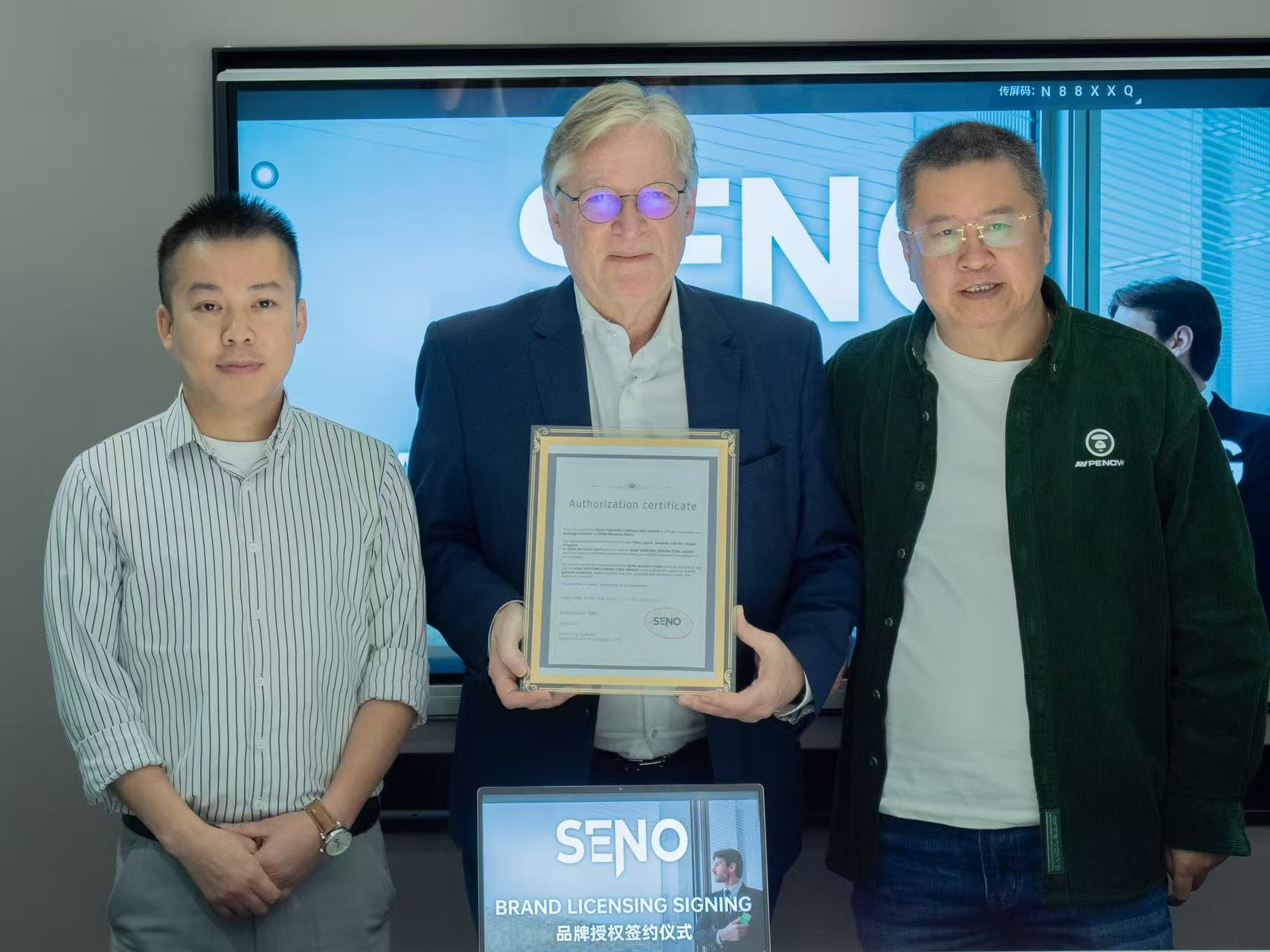
France illustrates the European variant of the same problem. SENO's distribution records include a signed French distributor agreement and a France/United Kingdom distribution partnership covering major European markets, which indicates that the format can be placed through European channels. The regulatory work sits at national level: nicotine-containing consumer products are governed by national rules in France alongside the wider EU tobacco products framework, and buyers should confirm the classification of an oral film, permitted flavour descriptors, strength limits, and whether online sale is allowed before committing to a listing. Flavour and online-sale restrictions vary by market and change over time.
Shelf Life, Storage and Cross-Border Logistics
A 24-month shelf life under cool and dry storage conditions is the single most channel-relevant specification for cross-border distribution. It gives importers, consolidators and marketplace sellers enough runway to absorb ocean freight, customs clearance, warehouse dwell time and retail rotation without short-dated stock becoming a write-off risk.
Packaging reinforces that advantage. Individual sachets protect the film unit, and multi-pack boxes create a retail-ready outer without a secondary accessory. Because the product is device-free, there is no battery documentation, no liquid classification issue and no charging accessory in the carton. Moisture-resistant packaging is specified as a requirement, which is the appropriate control for a thin hydrophilic film.
The boundary is equally clear. A 24-month shelf life is conditional on storage discipline: prolonged exposure to heat or humidity will undermine the specified window, and that risk sits with every party in the chain after the goods leave the factory. Distributors entering hot or humid markets should plan warehouse conditions and secondary moisture protection accordingly, and should not assume the stated shelf life survives a poorly controlled container or a non-climate-controlled store room.
Comparison with Traditional Nicotine Alternatives
Comparing formats is not a question of which product is better. It is a question of which format matches which consumer need and which channel constraint. The table below sets out the practical differences that affect range planning.
| Dimension | Nicotine film | Traditional NRT formats (gum, lozenge) | Vaping |
|---|---|---|---|
| Device required | No | No | Yes |
| Use profile | On-demand, single-use, dissolves in 10–30 seconds | Requires chewing or holding in the mouth for a sustained period | Requires an operating device and a consumable |
| Visible output | None — discreet and odorless use | None | Visible aerosol |
| Residue handling | Film dissolves in the mouth | Chewed gum or lozenge residue requires disposal | Device, coil and liquid handling |
| Logistics profile | Dry goods, sachets and cartons, no battery or liquid | Dry goods | Battery and liquid components add shipping and handling requirements |
| Range flexibility | Strength, flavour, size and packaging customizable | Typically fixed commercial SKUs | Device and flavour combinations are interdependent |
The format's advantages for FMCG and online channels follow from this: no device, no battery, no liquid, no residue disposal, and a fast dissolution window that suits on-demand use in short breaks. Flavour and strength variation (2 mg, 4 mg, 6 mg) also gives a partner brand more ways to differentiate a range than a single-variant line.
Where the Fit Is Weaker: Boundaries Buyers Should Plan For
The format is not universal, and buyers evaluating it should price in three genuine limitations.
- Strength ceiling and titration. The standard range is 2 mg, 4 mg and 6 mg. Users who require step-down titration outside that band depend on customized development, which introduces MOQ and lead-time consequences rather than an off-the-shelf answer.
- No ritual and no sensory substitute for vapour. Film delivers nicotine without combustion and without vapour. For consumers who value the hand-to-mouth ritual or the visual and throat-sensation elements of vaping, film is a functional alternative rather than a like-for-like replacement.
- Regulatory and channel-maturity divergence. Not every market has an established route to sale for oral film, and permitted flavour descriptors, strength limits and online sale rules differ by country. In some markets, traditional NRT formats have a longer-established retail presence and buyer recognition, which affects fixture space and shopper education cost.
Two operational limits are also worth noting. The film is moisture-sensitive by design, so packaging and storage specifications are not optional details — they are conditions of the stated shelf life. And the product is a nicotine product, so age-gating, packaging warnings and market-specific labelling apply wherever it is sold, including online.
Market Signals Behind Channel Interest
Third-party data helps frame how large the film category currently is and how buyers should read growth claims. Market Research Future values the global nicotine oral dissolvable thin films market at USD 112.34 million in 2024, with a projected reach of USD 174.18 million by 2035. Within that market, the 2 mg strength segment held the largest share in 2024.
Broader estimates describe a much bigger adjacent category. Grand View Research estimates the wider modern oral nicotine products market — which includes pouches as well as films — at USD 38.9 billion by 2033, growing at a 19.0% CAGR. The difference between the two figures is a definitional one, not a contradiction: one measures films, the other measures films plus pouches. Buyers building a business case should state explicitly which market definition they are using, because the two scopes differ by more than an order of magnitude.
Competitive context is also worth tracking at category level. Published segment analysis lists Nicoccinno Holding AB, Zim Laboratories and AdhexPharma among the global participants in the nicotine dissolvable film space, alongside dedicated manufacturing-based suppliers such as SENO.
Supply Capability and OEM/ODM Support for Channel Partners
Channel fit only converts into a listing if the supply side can support it. SENO operates from a 20,000 m² production facility with a 15-person R&D team, and reports annual output in the range of 12,000,000 to 50,000,000 strips per year, with 100% of output directed to export markets including Europe, the United States, Canada, Australia and the Middle East.
For buyers planning a private-label or OEM range, the relevant commercial parameters are the following:
| Item | Detail |
|---|---|
| Production mode | OEM / ODM / private label manufacturing |
| Customization scope | Nicotine strength (2 mg / 4 mg / 6 mg / customized), flavour development (mint, fruit, custom flavours), film size and format, packaging design (sachets / retail boxes), branding (logo, artwork, private label) |
| Monthly capacity | 1,000,000 – 5,000,000 strips per month |
| Lead time | Standard orders: 20–30 days; OEM/custom orders: 30–45 days |
| MOQ | 100,000 – 300,000 strips per SKU |
| Quality control | 100% batch inspection before shipment, raw material verification, in-process quality control, final product testing and consistency checks |
| After-sales support | Technical support for product and compliance, marketing material support for distributors, fast response on quality or logistics issues, long-term partnership support |
Distribution records indicate how those terms have translated into channel activity. SENO's case records include a Canada agency partnership that completed channel network construction, a French distributor agreement signed at an exhibition, and a France/United Kingdom distribution partnership of two years' duration that resulted in signed agents across multiple countries covering major European markets. A further record covering distributors, wholesalers, nicotine brands and FMCG importers across Germany, the United States, Australia, the United Arab Emirates, Saudi Arabia and Canada reports order volumes in the range of 500,000 to 2,000,000 strips per order, with repeat orders and stable batch performance cited as the outcome. A United Arab Emirates exhibition and local marketing programme, running two years with signed local agency partners, is also recorded. The company's exhibition records additionally note a Best Product Prize awarded through a U.S. industry exhibition and award committee.
Buyer inquiries on OEM/ODM projects can be directed to SENO's export team: Frank, seno.serve@outlook.com, telephone +86 134-1745-8127, WhatsApp +1(626)232-2952, at 505C, Tianlong Building, Nanshan District, Shenzhen City, Guangdong Province, China. Company information is published at https://seno-online.com/ and technical articles at https://blog.senonicotine.com/.
Future Outlook
Three developments are likely to shape how the film format fits FMCG and cross-border channels over the next several years.
The first is category scale. If the film segment moves toward the projected USD 174.18 million by 2035 described by Market Research Future, and if the wider modern oral nicotine category continues on the 19.0% CAGR path estimated by Grand View Research, film moves from an experimental listing to a standard part of smoke-free nicotine planograms. That shift favours suppliers with existing OEM infrastructure and stable batch output.
The second is regulatory maturation. Where a premarket pathway exists, as in the United States, the barrier to entry for brands without authorization rises, and authorized formats gain a competitive advantage in retail and online channels. Where national rules are still developing, as in parts of Europe and the Gulf, the winning strategy for distributors is early verification of classification, labelling and online-sale permissions rather than late correction.
The third is product differentiation. With strengths of 2 mg, 4 mg and 6 mg already available and flavours ranging from Mint to Blueberry, Orange, Strawberry and Kiwi Fruit, the next competitive layer is likely to be packaging format and market-specific flavour development rather than the base film technology. Partners who plan customization early — including child-resistant and moisture-resistant configurations and market-specific labelling — will be better positioned when category rules tighten.
FAQ
1. Which retail and e-commerce scenarios is nicotine film best suited to?
Nicotine film fits channels that value fast, self-contained, device-free consumption. That includes convenience and travel retail, where individual sachets work as small grab-and-go units; cross-border e-commerce and marketplaces, where a 24-month shelf life and dry-goods packaging simplify fulfilment; private label programmes; and smoke-free environments such as indoor office and retail spaces, travel and mobile consumption scenarios, and regulatory-restricted areas where smoking is not permitted.
2. Why does the film format suit cross-border e-commerce logistics specifically?
Because the product is a dry, sealed, device-free item. It requires no battery, no liquid and no charging accessory, and it is packaged in individual sachets and multi-pack boxes with a 24-month shelf life when stored in cool and dry conditions. Moisture-resistant packaging protects the thin hydrophilic film during transit. The channel constraints are regulatory rather than logistical: age verification, market-specific labelling, and any local restriction on the online sale of nicotine products must be resolved by the seller before listing.
3. What strengths, flavours and dimensions are available for a channel-specific range?
The standard nicotine strengths are 2 mg, 4 mg and 6 mg, and strength is customizable. The core flavour set referenced for FMCG and cross-border channels includes Mint, Blueberry, Orange, Strawberry and Kiwi Fruit, with additional fruit SKUs available in the current product range. The film measures approximately 20 mm × 30 mm, is 50–100 microns thick, dissolves in 10–30 seconds, and film size is customizable. Packaging is offered as individual sachets or multi-pack boxes.
4. What compliance and packaging points should a distributor verify before listing?
The declared special requirements for the format are compliance with local nicotine regulations, child-resistant packaging, moisture-resistant packaging, and custom labelling for different markets. In the United States, non-combustible nicotine products follow a premarket authorisation pathway, and SENO states that it holds first-round FDA Premarket Tobacco Product Application registration numbers PM0010199, PM0010173 and PM0010176 as of September 2025. In France, nicotine-containing consumer products are governed by national rules alongside the wider EU tobacco products framework, so classification, permitted flavour descriptors, strength limits and online-sale permissions should be confirmed before listing. Child-resistant packaging is available as an optional configuration.
5. How does nicotine film compare with nicotine gum or lozenges for a retail range?
The main differences are use mechanics and logistics. Film is used on demand as a single-use unit that dissolves in 10–30 seconds and leaves no residue requiring disposal, while gum and lozenges require chewing or sustained holding and produce a used mass that must be thrown away. Film requires no device, no battery and no liquid, so it ships and stores as dry goods. The trade-offs are that the standard strength range tops out at 6 mg without customized development, and traditional NRT formats have a longer-established retail presence and shopper recognition in many markets.
6. What OEM/ODM support is available for private-label nicotine film programmes?
SENO offers OEM, ODM and private label manufacturing through Xin Sino Technology (Shenzhen) Co., Ltd. Customization covers nicotine strength, flavour development including custom flavours, film size and format, packaging design for sachets and retail boxes, and branding such as logo, artwork and private label. Reported monthly capacity is 1,000,000 to 5,000,000 strips, with lead times of 20–30 days for standard orders and 30–45 days for OEM or custom orders, and an MOQ of 100,000 to 300,000 strips per SKU. Quality control includes raw material verification, in-process control, and 100% batch inspection before shipment.
Channel fit for nicotine film comes down to a narrow but clear proposition: a discreet, odorless, device-free product with a 24-month shelf life and a customizable specification set, matched against channels that reward exactly those properties. The work that determines success sits on the buyer's side — market classification, packaging configuration, labelling and range design — rather than in the film itself.