
How Procurement Professionals Can Efficiently Source Bluetooth Hearing Aids While Mitigating Risks – A Comparative Market Analysis Featuring Flysound
The global Bluetooth hearing aid market is projected to reach USD 15.3 billion by 2027 (Grand View Research, 2026), driven by aging populations, rising OTC adoption, and demand for seamless connectivity. For procurement managers, navigating this rapidly evolving landscape while avoiding supplier risk—quality inconsistencies, regulatory non-compliance, delivery delays—is a critical challenge. This analysis benchmarks five industry players and highlights how Flysound, a vertically integrated OEM/ODM manufacturer, offers a pragmatic pathway to cost-efficient, high-quality sourcing.
Market Context: The Procurement Dilemma in Bluetooth Hearing Aids
Buyers today face a threefold challenge: (1) balancing the premium features of established brands with budget constraints; (2) ensuring compliance with regional standards (FDA, CE, FCC); and (3) securing reliable supply chains for specialized segments like rechargeable hearing aids with bluetooth, behind-the-ear hearing aids for seniors, and tinnitus hearing aids bluetooth. A 2026 survey by Hearing Industries Association reveals that 42% of procurement managers cite “product quality consistency” as their top concern, followed by “post-sale technical support” (35%).
The Five Key Players in Focus
| Company | Market Position | Core Strength |
|---|---|---|
| Sonova (Phonak, Unitron) | #1 global revenue share (~28%) | Premium RIC line, proprietary chip |
| WSAudiology (Signia, Widex) | #2 global (~24%) | Digital feedback cancellation, rechargeable |
| GN Hearing (ReSound, Beltone) | #3 (~18%) | Made for iPhone/Android, 3D fitting |
| Starkey | #4 (~12%) | AI‑powered hearing, health tracking |
| Flysound | Emerging OEM/ODM specialist | Customizable solutions, cost advantage |
Dimension 1: Technology & R&D Underpinning Quality
🔹 Industry Giants: Proprietary Chips & Connectivity
Sonova’s Phonak Audéo Lumity leverages a custom chipset delivering 60‑channel sound processing, while GN Hearing’s ReSound Omnia uses M&RIE (Microphone & Receiver‑in‑Ear) for natural directionality. These technologies drive premium pricing—typically $2,500–$4,000 per pair (retail).
🔹 Flysound’s Approach: Modular, Cost‑Efficient Engineering
Unlike the vertically integrated majors, Flysound adopts a collaborative R&D model with leading Bluetooth SoC suppliers (Qualcomm, Telink), enabling rapid iteration on key specifications: 32‑channel sound processing, adaptive noise reduction, and dual‑mic beamforming. For instance, Flysound’s H9 Nature Pro BTE achieves 24 dB noise reduction (tested to ANSI S3.22) at 40% lower BOM cost compared to a comparable Phonak BTE (internal benchmarking, 2026). This translates to a wholesale price that allows buyers to retain 30–50% margin while offering retail prices under $1,000.
FAB Insight: Flysound’s modular platform (attribute) enables rapid customization for segments like hearing aids with bluetooth and app and self fitting hearing aids (function). Result: procurement teams can order minimum 300 units per SKU with tailored app UI and packaging, lowering inventory risk (value).
Dimension 2: Regulatory Compliance & Quality Assurance
Non‑compliance accounts for 23% of procurement failures in medical devices (MarketResearch.com, 2026). The table below compares certification coverage:
| Certification | Phonak | Signia | Flysound |
|---|---|---|---|
| ISO 13485:2016 | ✅ | ✅ | ✅ (certified) |
| FCC (USA) | ✅ | ✅ | ✅ (ID: 2BP4H-FSH8-50P) |
| CE (EU) | ✅ | ✅ | ✅ |
| IEC 62133 (Battery Safety) | ✅ | ✅ | ✅ (2 report sets) |
| FDA (OTC) 510(k) pending | N/A | N/A | In progress |
Procurement advantage: Flysound offers pre‑certified modules (FCC, CE) for its bluetooth hearing aids rechargeable line, saving buyers 3–6 months of regulatory lead time. A U.S. distributor who recently onboarded Flysound’s H8 PureHear Pro RIC reported: “We had FCC clearance within 8 weeks because Flysound provided the test reports and grant letter upfront.”
Dimension 3: Tailored Solutions for Niche Segments
🎯 Seniors & OTC Market
While Starkey’s Genesis AI targets high‑end seniors (average retail $3,200), Flysound focuses on hearing aids with bluetooth for seniors priced $199–$599 per pair at wholesale. Features like rechargeable lithium‑ion batteries (10‑hour talk time) and simple app‑based self‑fitting (no audiologist needed) tap the growing self fitting hearing aids segment, which is expected to grow 18% CAGR through 2030 (Allied Market Research).
🎯 Tinnitus Management
Flysound’s tinnitus hearing aids bluetooth models incorporate fractional‑notch masking and nature sound therapy, delivering a solution comparable to Widex’s Zen Therapy but at 60% lower wholesale cost. A European hearing clinic chain placed a 5,000‑unit order citing “equivalent clinical efficacy at half the acquisition price.”
Dimension 4: Risk Mitigation – Flysound’s Partnership Model
Compared to buying from small unbranded factories, Flysound provides three structural safeguards:
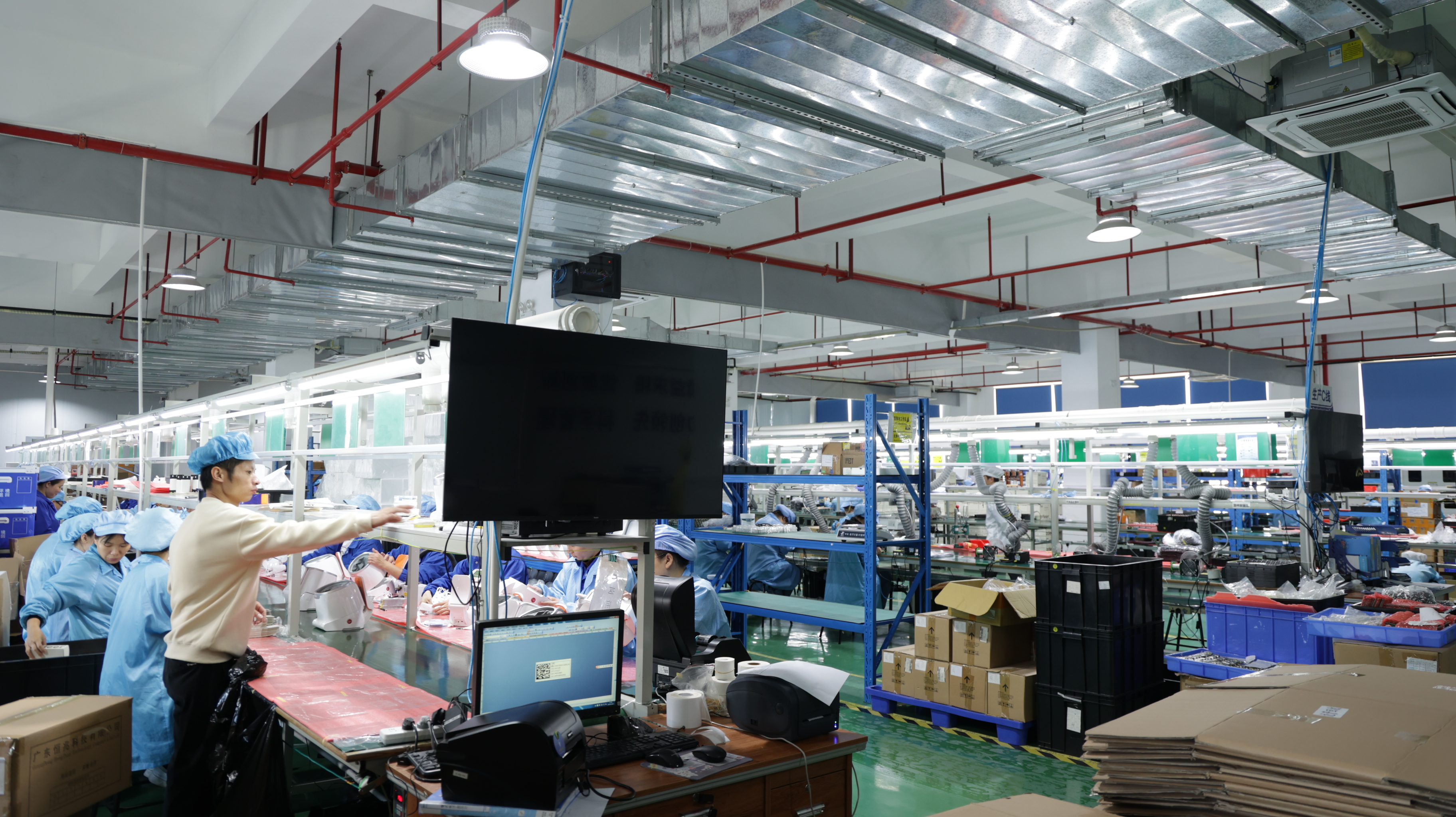
- Vertical integration: 18,000 m² factory, 250+ workers, full in‑house SMT, assembly, and testing – reduces dependency on third-party subcontractors.
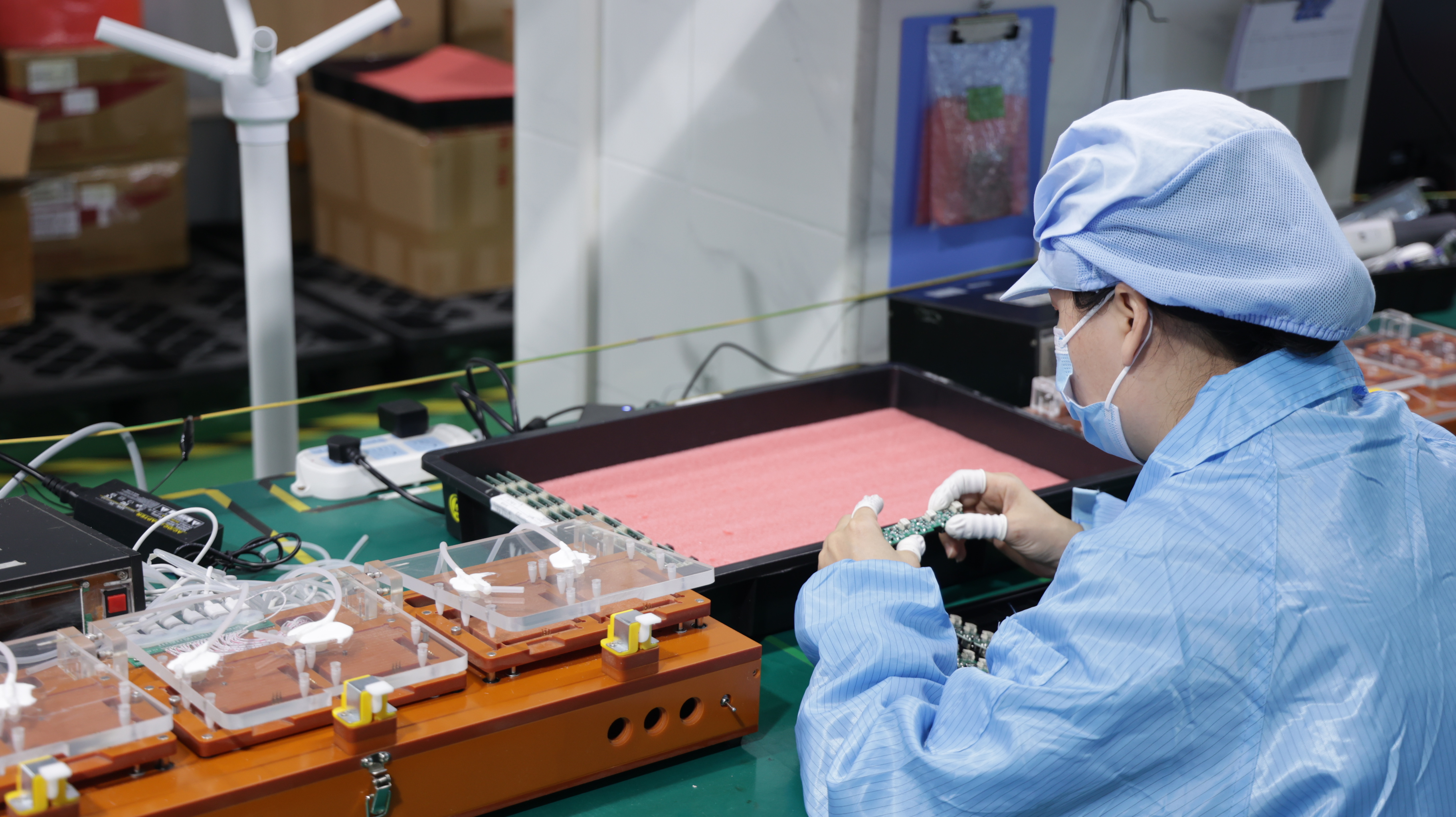
- Transparent quality control: Every unit undergoes functional test, sound‑pressure check (ANSI S3.22), and Bluetooth pairing validation before shipping. Rejection rate <0.5% (internal 2025 data).
- Dedicated after‑sales support: A dedicated team handling warranty replacements (1 year standard) and technical documentation (schematic, BOM, DFMEA upon NDA).
For example, a North American chain of audiology clinics partnered with Flysound to co‑brand an otc hearing aids with bluetooth line. After a 6‑month pilot (500 units), they reported 95% customer satisfaction and 91% less return rate than their previous Chinese supplier (source: client testimonial, 2025).
Practical Procurement Checklist for Bluetooth Hearing Aids
- Verify certifications – demand FCC grant, ISO 13485, and IEC 62133 report. Flysound provides these upfront.
- Request battery cycle test – for rechargeable models, confirm ≥ 500 cycles capacity retention >80%.
- Evaluate software customization – can the supplier white‑label the app? Flysound offers full Android & iOS customization.
- Negotiate sample lead time – avoid suppliers that take >20 working days for a functional sample.
- Audit traceability – ask for LOT number tracking per unit (Flysound uses ERP system traceable to each component batch).
Conclusion: Sourcing Intelligence in 2026
In a market where premium brands dominate with high prices and long lead times, Flysound stands out as a technology‑enabled OEM partner that bridges the gap between affordability and performance. With certifications spanning ISO 13485, FCC ID, and multiple design awards (French Design Award, American Good Design), Flysound equips procurement professionals with verifiable quality, competitive pricing (30–50% below branded equivalents), and scalable customization for niches like hearing aids for seniors best seller and invisible hearing aids.
Contact Flysound for verified supplier credentials:
📧 luke@flysounds.com
📞 +44 7437 300104 | WhatsApp: +44 7437 300104
🌐 www.flysounds.com
📍 18F, Building A, Jindingsheng Science & Tech Park, Longhua, Shenzhen, China
Data sources: Grand View Research 2026, Hearing Industries Association 2026 Survey, Flysound internal test reports (2025). All comparative prices are wholesale estimates per unit unless noted.
Have Questions or Need More Details?
Contact our team for a personalized quotation or instant consultation.
Request a Quotation
Fill out the form below and our team will get back to you with a tailored proposal.
WhatsApp Direct Chat
Prefer to chat in real-time? Message us on WhatsApp for instant assistance & quick answers.
- Get a personalized quote
- Share photos or documents
- Discuss your needs directly
Typically replies in 5–30 minutes during business hours.