
How Production Lines Shape Polyester Polyol Supply Stability
The global polyester polyol market was projected to reach USD 10.1 billion in 2025, according to Future Market Insights. For the buyers who actually run the material — formulators operating PIR spraying rigs, sandwich panel lines, pipe insulation plants and adhesive systems — the decisive figure is far smaller: whether a qualified production line can hold one specific grade inside its hydroxyl-value window for the entire length of a project.
Long-term supply risk in highly functional polyester polyols rarely arrives as an outright shortage. It appears as a drifting hydroxyl value, a lead time that stretches on the one model a line has been validated against, or the quiet substitution of a grade family that the buyer's formulation was never qualified with. Managing that risk is a question of assessing production lines grade by grade, rather than assessing a supplier's headline capacity.
Why Long-Term Supply Risk Is a Grade-Level Question
In rigid polyurethane systems, a formulation is validated against a grade, not a product category. The hydroxyl value drives the stoichiometric balance with isocyanate; viscosity governs metering and mixing behaviour on spraying, pouring and coating equipment; acid value and moisture influence reaction speed, cream time and cell structure.
That is why a purchase decision made at category level — 'we buy polyester polyol' — does not survive contact with production. Once a formulation has been validated against a grade such as a high flame retardant polyol or a pentane-system polyol, moving to a different grade is not a purchasing event. It is a re-validation project that touches dosing, cycle times, density targets and, in some applications, the fire performance of the finished panel or pipe section.
Long-term supply stability therefore has three measurable components:
- Grade-level availability — capacity actually committed to the model families a buyer runs, not a company-wide tonnage figure.
- In-window consistency — every delivered batch remaining inside the published hydroxyl value, acid value, moisture and viscosity windows.
- Repeat-order reliability — lead times that hold on second and third orders, supported by packaging formats that match the buyer's consumption rate.
An Assessment Framework for Polyester Polyol Production Lines
Buyers at the evaluation stage can structure a supplier review around six questions that map to supply risk rather than to marketing claims.
| Assessment area | What to look for | Why it reduces supply risk |
|---|---|---|
| Grade-level capacity | Capacity declared against specific model families, not only a company total | A large aggregate capacity that does not cover the buyer's grade does not reduce the buyer's exposure |
| In-house testing | Stated testing practice across produced batches | Out-of-window material can be identified before shipment instead of on the customer's line |
| Specification discipline | Published hydroxyl value, acid value, moisture and viscosity windows per model | Converts acceptance criteria into objective, repeatable checks |
| Certification scope | Management-system certificates whose scope covers polyester polyol production | Supports qualification in regulated and export markets |
| Order flexibility | Minimum order quantity and packaging formats matched to consumption rate | Prevents over-stocking and stock-outs on time-constrained projects |
| Technical support | Application support and product training after delivery | Reduces the cost of re-validating when a grade transition is unavoidable |
The framework is deliberately narrow. It does not ask how large a supplier is in aggregate; it asks what evidence exists that the grades a buyer depends on can be produced, tested and shipped repeatedly.
What XINFA's Production Base Covers
Hengshui Xinfa Polyurethane Materials Co., Ltd. (XINFA) is a Chinese manufacturer of polyurethane materials and polyester polyols, with its production site located in the Salt Chemical Circular Economy Park in Jizhou City, Hebei Province. The company was established in 2010 and operates a 25,000 square-metre site that combines production workshops, research and development facilities and a complete system of environmental protection facilities.
The company reports an annual capacity of 50,000 tons of polyester polyol series products, built around more than 30 sets of intelligent production equipment, with a registered capital of 6 million yuan and a total investment of 20 million yuan. Its workforce exceeds 60 employees, 13 of whom are management and research and development technicians.
At the commercial level, the capability record lists a monthly production capacity of 4,000 metric tons, a production lead time of 15–20 days, a minimum order quantity of 1 metric ton, 100% product testing, and OEM/ODM production for polyester polyols. After-sales support covers technical support and product training. Export activity is directed at the European Union, the Middle East, Southeast Asia, Central Asia, India, Pakistan, South America and North America.
A structural detail matters for continuity: export and trading operations run through a wholly-owned subsidiary, Hebei Xinshe Technology Co., Ltd., based in Shijiazhuang, which handles the import and export of polyurethane materials, polyurethane catalysts and related products. For a buyer, that means commercial documents, shipping coordination and after-sales communication are handled by a single trade entity sitting on top of the parent company's manufacturing base.
The Functional Range That Has to Stay Available
Supply stability for a multi-application buyer is portfolio stability. The grade families below are the ones a PIR spraying contractor, panel producer, adhesive formulator, mining operator or fertilizer coating manufacturer would draw from, and each is defined by a distinct set of model numbers and stated application areas.
| Grade family | Models | Stated application areas |
|---|---|---|
| Phthalic Anhydride Polyester Polyol | XF-3152, XF-2412, XF-1752, XF-2002 | Spraying insulation, sandwich panels, polyurethane pipe, PU wood imitation, home appliances |
| High Flame Retardant Polyester Polyol | XF-2007, XF-250P, XF-235P, XF-240P | High flame retardant applications, PIR spraying insulation, sandwich panels, polyurethane pipes |
| Pentane System Polyester Polyol | XF-435, XF-390, XF-360, XF-2402N, XF-2020 | Home appliances, polyurethane pipes, sandwich panels, PIR systems |
| High Water-based Polyester Polyol | XF-2003, XF-2006, XF-3153, XF-315G, XF-300W | High-water or full-water systems, spraying insulation, sandwich panels, polyurethane pipes |
| Polyester Polyol for Adhesive | XF-Z, XF-280 | Sandwich panel adhesives |
| Polyester Polyol for Mining | KXF-350, KXF-280 | Mining |
| Controlled-release Fertilizer Coating Agent Polyol | XF-270, XF-B-3, XF-B-4 | Controlled-release fertilizer coating agents |
| Other Types Polyester Polyol | XF-235, NXF-400 | Spraying foam and sandwich panels |
The practical implication is that a buyer evaluating continuity should test coverage, not breadth in the abstract. A pentane-system grade and a high-water-based grade are not mutually substitutable even when they come from the same supplier. A panel line running a pentane system and a spraying operation running a water-blown system need both families to remain in production, in specification, and available on compatible commercial terms.
Technical Explanation: Which Parameters Govern Continuity
Published specification windows are the most practical audit tools a buyer has, because they convert 'consistent quality' into numbers that can be checked batch by batch.
| Model | Family | Hydroxyl value (mgKOH/g) | Acid value (mgKOH/g) | Moisture (%) | Viscosity (CPS, 25°C) |
|---|---|---|---|---|---|
| XF-2007 | High flame retardant | 200 ± 10 | ≤ 2.0 | ≤ 0.1 | 15000 ± 3000 |
| XF-235P | High flame retardant | 235 ± 15 | ≤ 2.0 | ≤ 0.15 | 3000 – 6000 |
| XF-435 | Pentane system | 500 ± 50 | ≤ 3.0 | ≤ 0.15 | 10000 ± 2000 |
| XF-2003 | High water-based | 200 ± 10 | ≤ 1.5 | ≤ 0.1 | 2000 ± 500 |
| XF-3152 | Phthalic anhydride | 315 ± 15 | ≤ 2.0 | ≤ 0.1 | 3000 ± 500 |
| KXF-350 | Mining | 350 ± 20 | ≤ 2.0 | ≤ 0.1 | 1500 ± 500 |
| XF-Z | Adhesive | 60 ± 5 | ≤ 5.0 | ≤ 0.15 | 10000 ± 2000 |
| XF-270 | Controlled-release fertilizer coating | 260 ± 10 | ≤ 3 ± 0.2 | ≤ 0.1 | 3000 ± 500 |
Three observations follow from these windows. First, the hydroxyl value band is the single most useful continuity indicator: grade families span roughly 60 ± 5 to 500 ± 50 mgKOH/g, and a line that can reproduce those bands across an entire portfolio is demonstrating process control, not just catalogue breadth.
Second, moisture ceilings of ≤ 0.1% or ≤ 0.15% and acid value ceilings between ≤ 1.0 and ≤ 5.0 mgKOH/g describe how tightly a production line must control reaction conditions and finishing. These are the parameters where a drift shows up first, and they are the parameters most useful to record across successive deliveries.
Third, viscosity windows — from 1500 ± 500 CPS to 15000 ± 3000 CPS within the same catalogue — reflect the different flow behaviour required by spraying, pouring and coating equipment. A grade that meets its hydroxyl value but misses its viscosity window can still cause metering problems on a panel line.
Application Focus: Time-Constrained PIR Spraying and Panel Work
PIR spraying insulation and sandwich panel production are schedule-driven. A spraying contractor books crews and shifts; a panel line books downstream assembly. Material arriving outside that window costs more than the material itself.
Two supplied project records illustrate the operating envelope. In Poland, a spraying foam project used product 3943 — from the high water-based family — at a scale of 500 metric tons over an implementation period of 2 years, with reported stable operation across wall spraying, insulation boards, soundproof flooring, leak-proof pipelines and composite materials. Reported properties include high mechanical strength, high wear resistance, resistance to high and low temperature cycling, hydrolysis resistance and aging resistance.
In India, a pipeline insulation project used product 3941 — from the pentane system family — at a scale of 100 metric tons, also over a 2-year duration, with reported results covering high strength and density, excellent thermal conductivity, fire retardancy and structural support of pipelines.
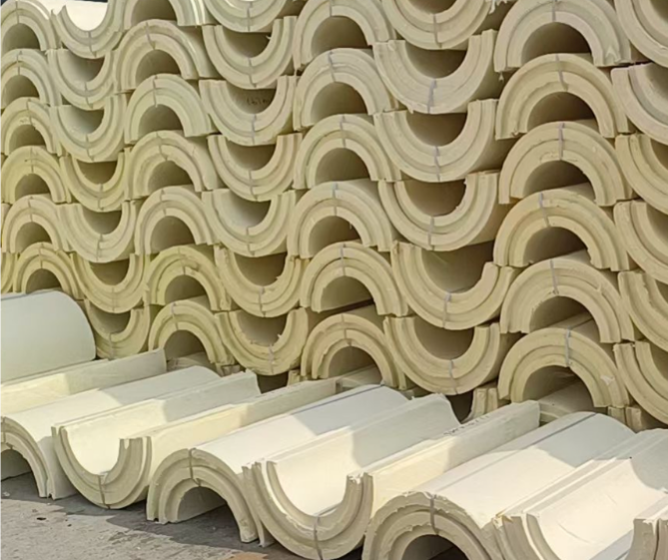
The commercial terms around these projects determine whether supply stability is theoretical or practical: a 15–20 day production lead time, a minimum order quantity of 1 metric ton, packaging in 1200 kg or 1000 kg IBC drums or in 225 kg, 200 kg and 170 kg galvanized iron drums, delivery terms of FOB or CIF, pre-shipment testing as the acceptance criterion, and T/T or L/C payment terms.
Packaging choice is a supply-risk decision rather than an administrative one. A panel producer consuming several tons per week draws from IBC drums; a smaller coating or adhesive operation may work from galvanized iron drums. Where a supplier supports both formats, the buyer avoids adding a second supply relationship purely to match consumption rate.
Comparison with Traditional Sourcing Structures
Most buyers enter this category through one of three sourcing structures, each with a different continuity profile.
| Sourcing structure | Advantages | Continuity limitations |
|---|---|---|
| Spot purchasing of a single grade through traders | Price flexibility and low commitment | No guaranteed grade-level continuity; batch documentation may be incomplete; each change of origin risks re-validation |
| Single-source, single-family manufacturer | Deep familiarity with one grade family and its parameters | Exposure if that family is disrupted; a second application requires adding another supplier |
| Multi-family manufacturer with in-house testing (XINFA's structure) | One qualification relationship spanning flame-retardant, water-based, pentane, adhesive, mining and fertilizer-coating families; 100% testing; OEM/ODM accepted from a 1 metric ton MOQ | Qualification is still required grade by grade; capacity and lead-time figures are supplier-reported; portfolio breadth does not make grades interchangeable |
Boundaries buyers should keep in view
- Capacity figures are company-reported. The 50,000-ton annual polyester polyol capacity is reported by the manufacturer. Independent datasets that would verify export volumes by province of origin are not consolidated in the public domain, so the practical verification route remains a factory audit, batch records and pre-shipment test reports rather than a published third-party figure.
- Grades are not interchangeable. XF-435, a pentane system grade at 500 ± 50 mgKOH/g, and XF-2003, a high water-based grade at 200 ± 10 mgKOH/g, are not substitutes even within one supplier's catalogue. Multi-family coverage reduces the number of suppliers, not the number of qualifications.
- Lead time is not insurance. A 15–20 day lead time describes normal production scheduling. It does not absorb demand shocks, raw material tightness or logistics disruption, so buyers on fixed spraying and panel schedules still need buffer inventory planning.
- Certification covers process, not finished performance. ISO 9001, ISO 14001 and ISO 45001 certificates address the production of oligomeric polyester polyols and related management activities. They evidence process control; they do not certify foam performance in a specific buyer formulation.
Market Trend Analysis
The wider market context supports a continuity-focused reading of supplier evaluation. The global polyester polyol market was projected at USD 10.1 billion for 2025 by Future Market Insights, with demand concentrated in insulation, appliance and industrial applications — precisely the segments where grade-specific validation is standard practice.
Catalyst demand moves in step with polyol demand. The Triethylenediamine (TEDA) market was estimated at USD 0.74 billion in 2024 and is expected to grow at a CAGR of 5.1% to reach USD 1.22 billion by 2034, based on Market Research Future data. Because polyol and catalyst are consumed together in rigid foam systems, buyers increasingly assess them as one supply node rather than two. XINFA's product range reflects that pattern: alongside polyester polyols it lists TEDA, TEDA A33, PC-5, PC-8, PC-41, TCPP and TEP.
A second trend is portfolio expansion across blowing-agent systems. Dedicated high-water-based, pentane-system and high flame retardant grade families appearing inside a single supplier catalogue indicate where buyers are consolidating: multiple foam systems under one qualification relationship, rather than one supplier per system.
Future Outlook
Supplier evaluation in this category is shifting from price per ton toward continuity evidence. The questions likely to define long-term sourcing over the next planning cycles are documentary rather than promotional: whether specification windows are published per model, whether testing applies to every batch, whether packaging formats match consumption rates, and whether lead times hold on repeat orders.
For buyers, the practical preparation is to qualify more than one grade family during the evaluation stage rather than after a disruption, to keep pre-shipment test records as the acceptance baseline, and to treat supplier-stated capacity as the starting point for an audit rather than a conclusion.
Frequently Asked Questions
What determines long-term supply stability for highly functional polyester polyols?
Stability rests on three measurable elements: capacity committed to a specific grade family, consistency of each batch inside the published hydroxyl value, acid value, moisture and viscosity windows, and repeat-order reliability in lead time and packaging format. Catalogue breadth alone does not demonstrate any of the three.
Which grade families cover PIR spraying and sandwich panel applications?
Four families are stated for these applications. The High Flame Retardant family (XF-2007, XF-250P, XF-235P, XF-240P) covers high flame retardant applications, PIR spraying insulation, sandwich panels and polyurethane pipes. The Pentane System family (XF-435, XF-390, XF-360, XF-2402N, XF-2020) covers home appliances, polyurethane pipes, sandwich panels and PIR systems. The High Water-based family (XF-2003, XF-2006, XF-3153, XF-315G, XF-300W) covers high-water and full-water systems, spraying insulation, sandwich panels and pipes. XF-235 and NXF-400 are listed for spraying foam and sandwich panels.
What are the lead time, monthly capacity and minimum order quantity?
The capability record lists a monthly production capacity of 4,000 metric tons, a production lead time of 15–20 days, and a minimum order quantity of 1 metric ton, with OEM and ODM production available for polyester polyols.
How are adhesive, mining and coating applications served within the same portfolio?
Adhesive polyester polyols XF-Z and XF-280 are listed for sandwich panel adhesives, with XF-Z specified at 60 ± 5 mgKOH/g hydroxyl value and 10000 ± 2000 CPS viscosity. Mining grades KXF-350 and KXF-280 are listed for mining applications, and XF-270, XF-B-3 and XF-B-4 are listed for controlled-release fertilizer coating agents, with XF-270 specified at 260 ± 10 mgKOH/g and 3000 ± 500 CPS at 25°C.
What are the purchasing terms and acceptance criteria?
Minimum order quantity is as requested by the customer. Delivery terms are FOB or CIF. The acceptance criterion is pre-shipment testing, and payment terms are T/T or L/C. Packaging options are 1200 kg or 1000 kg IBC drums, or 225 kg, 200 kg and 170 kg galvanized iron drums.
Which certifications support supplier qualification?
Three management-system certificates are held, all issued by Beijing United Intelligence Certification Co., Ltd. ISO 9001 (certificate 04322Q31390R1S, GB/T 19001-2016 / ISO 9001:2015, valid to 2028-07-14) covers the production of oligomeric polyester polyols. ISO 14001 (certificate 04326E01332R101, GB/T 24001-2016 / ISO 14001:2015, valid to 2029-06-14) and ISO 45001 (certificate 04326S01211R101, GB/T 45001-2020 / ISO 45001:2018, valid to 2029-06-14) cover production of oligomeric polyester polyols and related management activities.
What are the limits of multi-family supply coverage?
Multi-family coverage reduces the number of supplier relationships, not the number of technical qualifications: a pentane-system grade and a high water-based grade are not interchangeable, so each must be qualified separately. Capacity and lead-time figures are supplier-reported rather than independently audited in public data, and a stated 15–20 day lead time does not replace buffer planning against demand or logistics disruption. Certifications confirm process control for polyester polyol production; they do not certify finished foam performance in a buyer's specific system.