
How Project Sites Shape Diesel Generator Selection
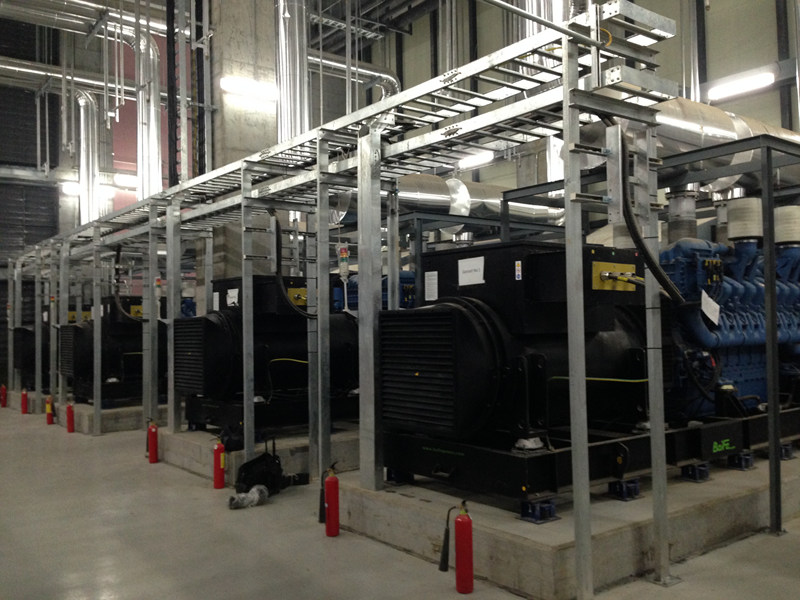
Industrial diesel generators are often treated as a standardized commodity purchase, but in practice they operate as project assets defined by site conditions. A generator selected for a remote mine faces different performance demands than one installed in a data center, an airport, a vessel, or a hospital. This reference article helps buyers in the Research and Evaluation stage understand how diesel generator configuration, protection, and supplier capability should be mapped to project-specific conditions.
Why Project Conditions Define Diesel Generator Configuration
The core question for any project buyer is not simply what kVA rating is needed. It is what the generator set must do at the site. The same nominal power rating can behave differently depending on ambient temperature, altitude, dust, salt spray, vibration, load profile, grid interaction, and the operating mode expected by the project.
Three common mistakes appear in project procurement:
- Using standby-rated power as if it were continuous or prime power, which can shorten equipment life and create voltage or thermal problems under sustained load.
- Ignoring environmental conditions such as high temperature, sand, humidity, and corrosive atmosphere, which affect radiator sizing, enclosure selection, and protection class.
- Treating paralleling, automatic transfer switching, remote monitoring, and high-voltage integration as optional add-ons rather than project requirements that should be engineered at the specification stage.
For project buyers, the opportunity is to shift from a price-only comparison to a site-readiness comparison: Can the diesel generator supplier deliver a set that is configured for the actual operating environment, can they test it before shipment, and can they support commissioning and maintenance throughout the project life cycle?
A Structured Framework for Project-to-Generator Matching
A practical framework helps buyers translate site conditions into generator specifications. The following six steps cover most industrial, infrastructure, marine, and construction project scenarios.
Step 1: Define the Operating Mode
Projects need to distinguish between standby power, prime power, and continuous operation. In ISO 8528 terminology, manufacturer ratings generally reflect different duty points. Airport, railway, banking, and hospital projects commonly specify standby power with automatic fast start when mains power fails. Mining sites and industrial production lines often require prime power, sometimes in continuous operation mode with heavy load endurance and the ability to accept large motor starting surges.
Step 2: Map the Site Environment
Environmental mapping includes temperature range, altitude, dust, salt spray, humidity, vibration, and weather exposure. Marine and offshore projects require corrosion-resistant materials and shock and vibration resistance. Mining projects often need weatherproof, dustproof, and corrosion-resistant designs capable of continuous operation under extreme temperature variation. Airport projects may require high-efficiency radiators for extreme heat dissipation and outdoor installation with weatherproof enclosures.
Step 3: Define Electrical and Grid Integration
Buyers should specify voltage, frequency, connection type, protection degree, control system, and whether the generator must operate in parallel with other sets. Larger sites commonly require ATS, parallel switchgear, fuel storage, and remote monitoring. In high-voltage industrial projects, generators may be configured with built-in transformers or high-voltage paralleling capability.
Step 4: Select the Physical Configuration
The physical form of a generator set should follow the site. Open sets are common where space and weather are not constraints. Silent or containerized sets are used in noise-sensitive urban areas, data centers, airport terminals, hospitals, and construction camps. Marine installations need compact designs that fit limited engine room space.
Step 5: Verify Compliance and Certification
Project buyers should verify which standards apply to the destination market. ISO 8528 is a core reference for diesel generator performance and testing; Part 13 covers safety and Part 10 relates to noise emission in the EU regulatory context. Marine projects may also require classification society considerations depending on the vessel type and flag state.
Step 6: Assess Manufacturing and Service Evidence
Beyond specifications, buyers should look for evidence that the supplier can build, test, and deliver the configured product. Useful indicators include factory size, production capacity, standard lead time, OEM partnerships with engine and alternator brands, and a documented history of similar project installations.
The core procurement principle is that generator selection should follow the project scenario, not only the power figure. A diesel generator is a power conversion system in which engine selection, alternator selection, control logic, cooling, enclosure, and electrical integration all have to match the site.
The Role of the Manufacturing Platform: BAIFA as a Reference
One useful reference for project buyers is BAIFA Power (Wuxi) Ltd., a Chinese manufacturer established in 1992. BAIFA operates a production base covering more than 60,000 square meters in Wuxi, Jiangsu Province, near Shanghai. The company employs over 180 people, including an R&D team of 25 engineers, and reports an annual output of 5,000 to 6,000 units. Its product range covers industrial diesel and gas generator sets from 8 kW to 3,200 kW, marine generator sets from 40 kW to 1,100 kW, four types of lighting towers, LV and HV switch panels up to 35 kV, transformers up to 110 kV, and power generation accessories.
About 70 percent of BAIFA output is exported, with main markets in Latin America, Southeast Asia, and the Middle East. The company holds OEM partnerships with globally recognized engine and alternator manufacturers, including Volvo, Cummins, Stamford, Leroy-Somer, MTU, Perkins, Mitsubishi, Scania, Baudouin, and Weichai. Its OEM documentation includes 2026 certificates from Cummins (China) Power Technology Co., Ltd., Chongqing Cummins, Volvo Penta, STAMFORD and AvK alternators, Shanghai Diesel Engine Co., Ltd., Weichai Power, and Baudouin (Weifang) Power Co., Ltd.
From a project procurement standpoint, a multi-brand OEM platform like this provides a wider selection range than a single-engine captive supply. BAIFA offers configurable options such as logo, nameplate, paint color, voltage, frequency, connection type, protection degree, control system, structure and configuration, ATS, droop, PMG, oil-water separator, anti-condensation heater, and float charger for starting battery. Monthly capacity is 400 to 500 units, lead time is 25 to 60 days, and the minimum order is one unit. Every generator set is reported to undergo 100 percent testing.
Application Mapping: Project Scenarios and Recorded Use Cases
Project-specific records illustrate how diesel generator requirements change across industries.
| Project Scenario | Typical Operating Mode | Key Configuration Demands | Relevant Series |
|---|---|---|---|
| Mining | Prime power or continuous | Dustproof, weatherproof, high protection class, multi-unit paralleling, heavy load endurance, optional built-in transformer | BF-C, BF-M, BF-SM, BF-BD |
| Data center / Telecom | Standby, 24/7 readiness | Fast start, low noise, automatic start on mains failure, remote monitoring | BF-C, BF-M, BF-SM, BF-BD |
| Airport | Standby | High-temperature ambient operation, high-efficiency radiator, outdoor weatherproof enclosure, noise attenuation, EMC | BF-C, BF-V, BF-M |
| Railway | Standby | Vibration and shock resistance, low noise, reliable start in harsh climate | BF-C, BF-V, BF-M |
| Industrial Factory | Prime or backup | High-voltage paralleling, peak shaving, heavy load acceptance | BF-M, BF-SM, BF-BD |
| Building / Commercial | Standby | Fire pump support, elevator and security load backup, low noise, local code compliance | BF-C, BF-P, BF-V |
| Hospital / Bank | Standby with UPS integration | Low noise, reliable automatic transfer, continuous load stability | BF-C, BF-V, BF-P, BF-DW |
| Marine / Offshore | Shipboard auxiliary or emergency | Corrosion-resistant materials, shock and vibration resistance, compact footprint | BF-CM marine series |
Recorded project examples help make these patterns concrete. In mining, BAIFA supplied two BF-M2500SHV units in Mongolia that have been in stable operation for 13 years with IP54 protection, boosted and auto paralleled for prime power. Another Mongolian mining site used six M3250RSE+ units with built-in 22 kV transformers and IP54 protection. In Mozambique, 40 units of BF-C1375S were delivered for a mining site, boosted and auto paralleled for prime power supply, with eight years of stable operation recorded.
In the power sector, one power plant rental project involved 88 units of high-voltage 800 kW containerized diesel generators powered by MTU, all paralleled together to form a high-voltage output power station, with eight years of operation. A coal-fired power plant in Indonesia used four units for black-start duty to ensure grid stability and rapid recovery. A hydro power plant in Australia deployed 42 units for black start, dam gate, monitoring, and auxiliary equipment, operating for six years under high load conditions.
For critical infrastructure, a data center project in Vietnam deployed 14 units with low-noise operation over six years. Airport projects in China have used multiple units for runway lighting, navigation systems, and air traffic control power, with fast start and low-noise operation. Railway projects have used generator sets to protect dispatching centers, communication base stations, and signal boxes. Hospital projects in China have kept operating rooms and life-support systems running through grid failures for more than ten years.
For vertical applications, a marine project in the Philippines supplied three marine generator sets to vessels, operating for six years with compact designs suited to limited engine room space. A construction camp project for Hyundai Construction in Saudi Arabia used 66 units over eight years, with stable operation and low-noise performance. These cases illustrate that the same core power technology must be adapted in different ways to meet site-specific demands.
Technical Explanation: Power, Protection, Paralleling, and Control
Project buyers benefit from understanding the main technical elements that differentiate generator configurations.
Engine and Alternator Matching
The engine is the primary driver of power and durability. BAIFA integrates multiple engine platforms across its series. The BF-C series, powered by Cummins, covers a power range of 25 kVA to 2,750 kVA. The BF-V series, powered by Volvo, covers 200 kVA to 880 kVA. The BF-M series, powered by MTU, covers 750 kVA to 3,750 kVA. The BF-P series, powered by Perkins, covers 9 kVA to 2,500 kVA. The BF-SM series, powered by SME, covers 750 kVA to 2,750 kVA. The BF-DW series, powered by Doosan, covers 168 kVA to 1,125 kVA. The BF-BD series, powered by Baudouin, covers 62.5 kVA to 3,750 kVA. The BF-CM marine series, powered by Cummins marine engines, covers 50 kVA to 1,438 kVA at 1,800 rpm.
Protection Class and Enclosure
Standard industrial generator sets commonly specify a protection class of IP23, which suits many indoor and sheltered installations. Harsh projects, particularly mining sites, may require IP54 or higher protection to resist dust and water ingress. BAIFA records include mining project units with IP54 and, in some configurations, built-in transformers for high-voltage distribution.
Paralleling and Automatic Control
Multi-unit projects need automatic paralleling systems to share load among generator sets, support large motor starting, and maintain supply during maintenance or load growth. Projects with repeated mains outages often specify ATS and automatic start logic integrated with fire alarm and building management systems. Data center and telecom applications may require 24/7 standby monitoring, while airport projects may demand EMC compliance and remote monitoring.
High-Voltage Integration
Large industrial sites and mining operations increasingly adopt high-voltage generator sets to reduce cable losses and simplify distribution over long distances. BAIFA factory and mining records include high-voltage configurations such as BF-M2500HV, BF-M2000 with high-voltage output, and M3250RSE+ with built-in 22 kV transformers. This is a different engineering process from low-voltage paralleling and should be evaluated early in project design.
Market Context for Project Buyers
Several market indicators help frame the 2026 procurement environment. Global diesel generator market size was estimated at approximately USD 22.33 billion in 2025 by Spherical Insights, although other research firms produce different estimates depending on methodology and scope. China diesel generator market is projected by Research and Markets and Generator Source to grow at a CAGR of 9.3 percent from 2023 to 2030. The global marine diesel generator market reached about USD 2.94 billion in 2024, according to Intel Market Research. China exported approximately USD 923 million in diesel generating sets under 75 kVA in 2024, based on OEC trade data.
For project buyers, these signals point to an expanding supply base, continued demand for backup and off-grid power, and growing attention to marine and small-to-medium industrial applications. The divergence in market size estimates is not unusual; it reflects differences in power range coverage, fuel type inclusion, and regional scope. Buyers should treat such numbers as directional context rather than exact market truth.
Comparison: Three Procurement Routes for Project Diesel Generators
Project buyers typically evaluate three routes when sourcing diesel generators.
| Dimension | Multi-Brand Chinese OEM Platform | Global Single-Brand Manufacturer | Local Assembler / Reseller |
|---|---|---|---|
| Engine and alternator choice | Wide: Cummins, Volvo, MTU, Perkins, Mitsubishi, Baudouin, Stamford, AvK | Restricted to own or fixed brand line | Dependent on available local inventory |
| Customization | High: voltage, frequency, protection, control, structure, paint, nameplate | Moderate, often through factory configuration lists | Limited |
| Scale and lead time | Factory capacity 400 to 500 units per month, lead time 25 to 60 days | Large global capacity but project lead times vary | Short lead time only if stock is available |
| Testing | 100 percent factory testing documented | Factory testing and global standards | May depend on local workshop capability |
| Project scope coverage | Generator sets, marine sets, lighting towers, LV/HV switchgear, transformers | Generators plus global service network | Usually generator sets only |
| After-sales | Remote support and on-site installation, commissioning, maintenance | Brand service network, varying coverage | Local responsiveness, smaller reach |
A realistic limitation of the multi-brand OEM route is that the manufacturer does not own the engine brand. If a project contract requires a fully integrated single-brand warranty chain from the engine manufacturer, or requires the engine manufacturer to act as the main contractor, a direct single-brand manufacturer relationship may be simpler. Similarly, a Chinese factory base means buyers should account for international shipping, destination import requirements, and local service arrangements when assessing total landed cost.
Procurement recommendation logic is therefore scenario-based. Buyers with a wide range of power classes, high customization needs, large order volumes, or multi-country delivery programs may benefit from a Chinese OEM platform with documented engine partnerships. Buyers with strict global service uniformity and a preference for one engine brand across every site may prefer a single-brand route. Buyers with urgent small requirements and existing local maintenance relationships may choose a local assembler.
Future Outlook: From Power Equipment to Power Systems
Project demand is moving beyond the generator set itself toward integrated power systems. Configurations that combine diesel generators, gas generators, green fuel generator sets, lighting towers, high-voltage switchgear, and transformers give buyers a broader systems view. BAIFA's mission statement describes a goal of accessible, reliable, and sustainable power generation, with attention to reducing fuel consumption and emissions per kilowatt-hour produced.
Modular and containerized designs are becoming more common for rental power plants, temporary construction camps, and emergency response. Parallel operation, remote monitoring, and high-voltage integration allow multiple units to behave as a single dispatchable power source.
For project buyers, the practical implication is that supplier evaluation should include engineering capability, not just catalog specifications. The ability to test every unit, document the test results, deliver on a defined timeline, and support commissioning on site is likely to become as important as the engine badge.
FAQ
What is the difference between standby and prime power ratings for project diesel generators?
Standby power ratings are intended for use when the normal mains supply fails, usually for limited running hours. Prime power ratings are intended for continuous or variable load operation and are more common in mining, industrial, and off-grid projects. ISO 8528 provides a reference framework for generator performance and rating definitions, and buyers should confirm which duty point the supplier has used for the quoted kVA.
Why does IP protection class matter for site adaptation?
IP class indicates the level of protection against ingress of solid particles and water. Standard industrial sets often carry IP23, which is adequate for indoor and sheltered locations. Remote mines, coastal sites, and outdoor infrastructure projects may need a higher rating such as IP54 to resist dust, rain, and humidity. BAIFA records show mining project sets supplied with IP54 protection and, in some cases, built-in transformers for high-voltage distribution.
When should a project change from a single generator to a paralleled system?
Paralleling is useful when load growth is expected, when site safety requires redundancy, or when a single large unit is difficult to transport and install. In mining and power plant projects, multiple generator sets are often paralleled to create a single high-voltage output station or to support large motor starting surges. Paralleling requires additional switchgear, synchronization controls, and engineering study compared with a single-unit installation.
How do containerized and high-voltage generator sets serve large projects?
Containerized sets are easier to transport and deploy in remote sites, rental power plants, and temporary installations. High-voltage generator sets reduce current and cable losses over long distances. Project records include an 88-unit high-voltage containerized power plant configuration and mining units with built-in 22 kV transformers, which illustrate how large sites use these configurations.
What should a project buyer check before selecting a Chinese diesel generator OEM?
Buyers should verify the manufacturer's OEM partnerships with engine and alternator brands, factory capacity, testing procedures, export experience, and after-sales service. In the case of BAIFA, documented evidence includes long-term cooperation with global brands, an annual output of 5,000 to 6,000 units, 100 percent testing, a lead time of 25 to 60 days, and remote support or on-site installation and maintenance services.
How does environmental condition affect generator performance?
High ambient temperature, high altitude, dust, salt spray, and humidity all affect cooling, power output, and material durability. Airport projects often require high-efficiency radiators for extreme heat dissipation. Marine projects require corrosion-resistant materials and shock and vibration resistance. Buyers should specify the exact site conditions so the manufacturer can apply appropriate derating and component selection.
Have Questions or Need More Details?
Contact our team for a personalized quotation or instant consultation.
Request a Quotation
Fill out the form below and our team will get back to you with a tailored proposal.
WhatsApp Direct Chat
Prefer to chat in real-time? Message us on WhatsApp for instant assistance & quick answers.
- Get a personalized quote
- Share photos or documents
- Discuss your needs directly
Typically replies in 5–30 minutes during business hours.