
How Purchase Terms Prove Glass Insulator Supplier Capability
In overhead line procurement, the technical specification usually gets the attention while the commercial documents are filed away as paperwork. For suspension glass insulators, that reading is incomplete. The offer, the delivery term, the inspection clause and the payment schedule are the earliest points at which a supplier’s manufacturing model, export structure and test capability become visible — often months before the first disc leaves the tempering line. Buyers who can read those clauses are already shortlisting more accurately than buyers who compare unit price alone.
Understanding why requires knowing what the product is. A suspension glass insulator is an overhead line insulator unit manufactured from thermally toughened soda-lime glass, fitted with a metal cap and pin and assembled into strings to insulate and mechanically support overhead line conductors. Its service reliability depends on process control — glass composition, tempering, thermal shock treatment, and the dimensional accuracy of the cap-and-pin coupling. Commercial terms and acceptance criteria describe how that control will be demonstrated before and at dispatch, which is why they carry procurement information rather than administrative detail.
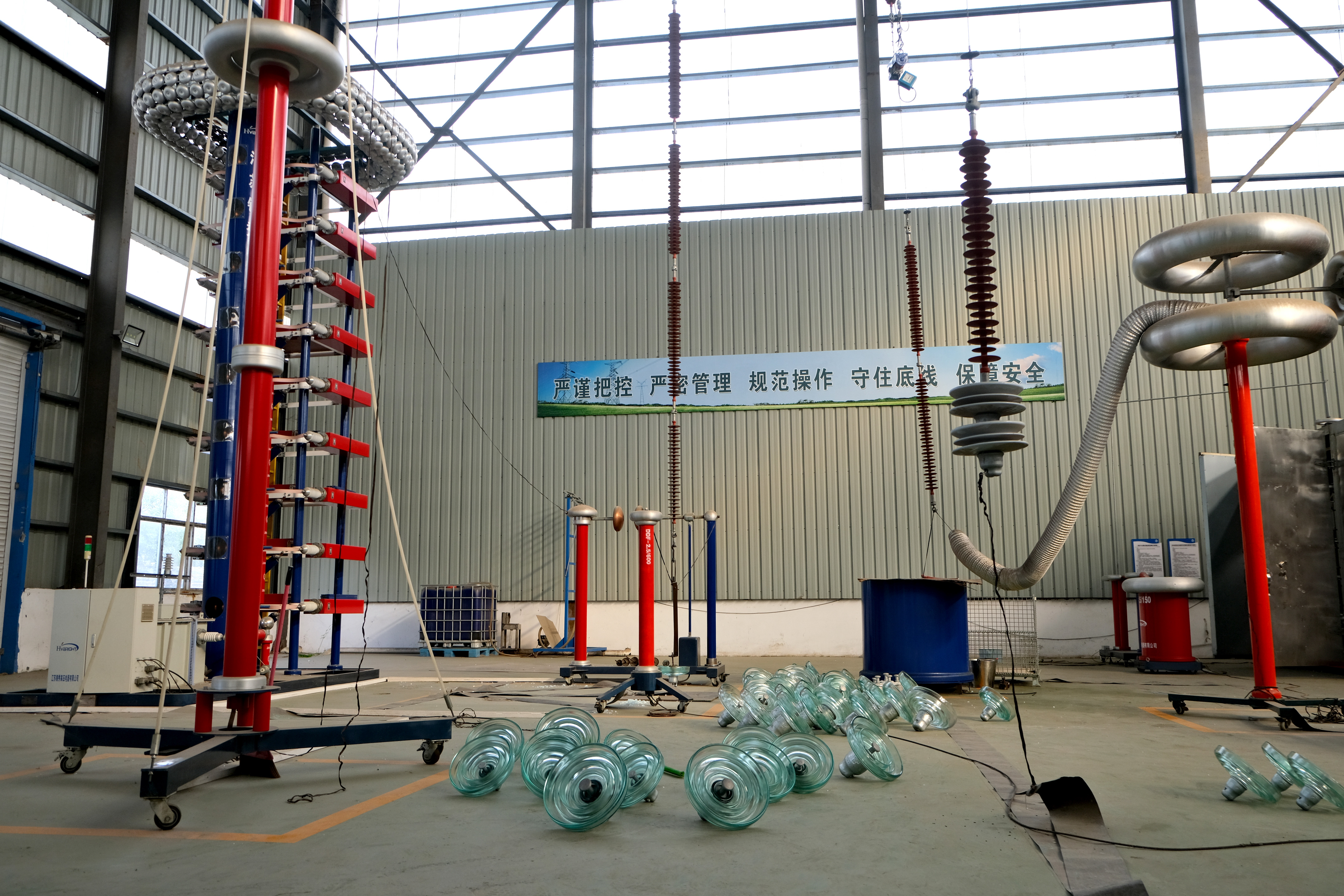
Routine and pre-shipment testing take place in an in-house laboratory before dispatch. Image: Jiangxi QOCI Electric Co., Ltd.
The Commercial Package: Four Clauses Buyers Can Actually Examine
A complete commercial package for suspension glass insulators states at least four things: the minimum order quantity, the delivery term, the acceptance inspection method, and the payment schedule. Jiangxi QOCI Electric Co., Ltd., a China-based manufacturer of glass and porcelain insulators established in December 2002, publishes a reference package that states an MOQ of 50 units, delivery under FOB Shenzhen terms, acceptance through pre-shipment test plus third-party inspection (SGS), and payment of 30% deposit by T/T before production with a 70% balance by T/T before delivery.
Read one at a time, these clauses look like commercial conventions. Read together, they describe how a supply relationship will actually operate: how small a run can be scheduled, from which point transport risk transfers to the buyer, how output will be verified, and how delivery risk is divided between the two parties.
| Commercial clause | Reference term (QOCI package) | Capability signal it carries | Buyer verification step |
|---|---|---|---|
| Minimum order quantity | 50 units | Batch scheduling flexibility; small runs can be absorbed into larger grid production plans | Confirm the same acceptance criteria apply to a 50-unit run |
| Delivery term | FOB Shenzhen | Established factory-to-port logistics, export packing and customs documentation | Request packing specification and load plan for the destination |
| Acceptance inspection | Pre-shipment test + third-party inspection (SGS) | In-house test routine plus willingness to be independently verified before payment | Agree sampling plan, witness points and documentation set in advance |
| Payment terms | 30% T/T deposit before production; 70% T/T balance before delivery | Production financing confidence tied to dispatch milestones | Link the balance release to inspection results and shipping documents |
Reading Each Clause as a Capability Signal
MOQ reflects batch planning capability
A stated MOQ is a scheduling statement before it is a price statement. A 50-unit minimum indicates that a supplier can accept trial, sample or replacement quantities without dismantling the planning of larger grid orders. The practical question is not whether the number is low, but whether the supplier applies the same acceptance criteria to a 50-unit run as to a multi-thousand-unit order. If it does, the MOQ is evidence of operational flexibility rather than a sales concession.
Delivery terms show an export structure that already exists
FOB Shenzhen fixes the point at which responsibility transfers and implies a working route from factory to port, including packing suitable for sea freight and documentation prepared for customs. QOCI Electric states an export ratio of 20%, with markets across the USA, Asia, the EU, Africa and South America. Export handling is therefore a routine operation rather than something assembled per order, which matters when a shipment must arrive within a construction window.
Acceptance inspection shows test capability and confidence
Accepting pre-shipment test plus third-party inspection (SGS) is a decision to let an independent party examine output before payment is completed. It indicates that the supplier maintains an in-house test routine and expects routine results to be repeatable by an outside laboratory. Buyers should treat this clause as the anchor of the whole package, because it is the only clause that produces physical evidence about the product itself rather than about the transaction.
Payment structure shows delivery discipline
A 30% deposit before production with a 70% balance before delivery allocates risk around production and dispatch milestones. It is workable when both parties can point to objective documents — inspection result, packing record, shipping documents — that mark each milestone. Payment terms with no link to verification milestones are a weak signal; terms tied to them are a working control that survives repeated orders.
What Acceptance Criteria Should Contain for Suspension Glass Insulators
Acceptance criteria for suspension glass insulators define how mechanical, electrical and physical characteristics are verified before dispatch, and they should reference an applicable standard rather than a supplier’s internal assurance. IEC 60305:2021 specifies the mechanical and electrical characteristics of string insulator units for overhead lines with a nominal voltage above 1000 V, and it is the natural reference for AC suspension glass insulator units.
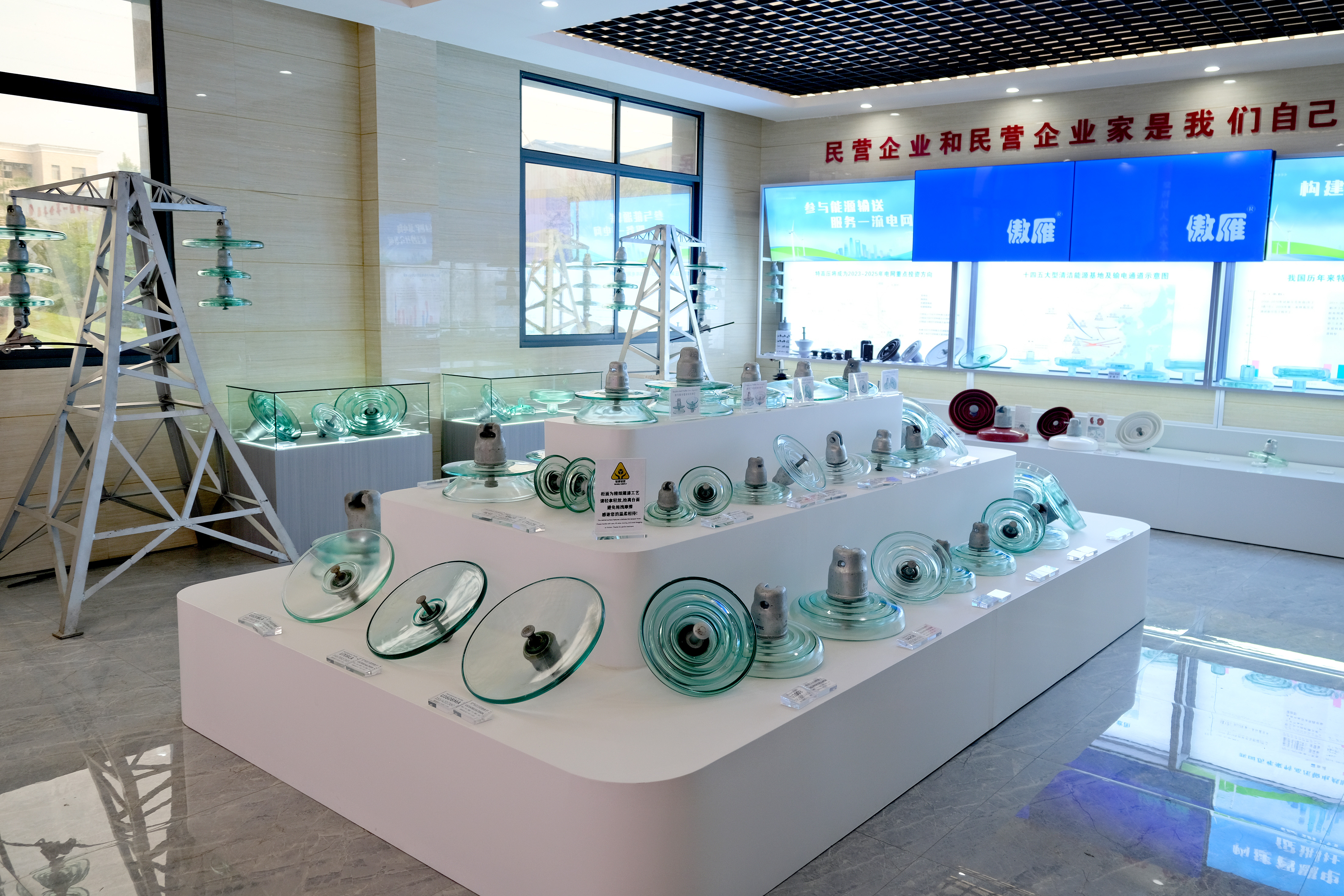
Sample and reference units held for dimensional and visual comparison before acceptance discussions. Image: Jiangxi QOCI Electric Co., Ltd.
Acceptance documentation for these products is built from a set of checks rather than a single test. Commonly referenced elements include mechanical load verification, thermal shock testing, visual and dimensional inspection, power frequency flashover and impulse withstand testing, and residual stress measurement. Thermal shock testing is typically specified with a temperature differential of at least 70 K, because tempering quality is what determines both initial strength and long-term behaviour in service.
Self-breaking behaviour is a useful quality reference point. Qualified toughened glass insulators from manufacturers with controlled tempering processes are commonly benchmarked at a self-breaking rate below 0.02% per year, and the material’s fail-safe behaviour means a failed unit remains mechanically intact and identifiable by visual patrol rather than requiring live-line zero-value testing. An acceptance clause that names these checks gives the buyer something concrete to compare between suppliers.
| Acceptance element | What it confirms | Where it fits in the contract |
|---|---|---|
| Mechanical load verification | Minimum mechanical failing load of the unit, verified against the specified rating | Type test reference plus routine batch verification |
| Thermal shock testing | Tempering uniformity and resistance to temperature differentials (commonly specified at 70 K or above) | Batch test requirement with recorded results |
| Visual and dimensional inspection | Disc integrity, chip and crack screening, cap-and-pin coupling accuracy | Pre-shipment inspection with sampling plan |
| Power frequency flashover and impulse withstand | Electrical insulation performance of the assembled unit | Type test documentation and routine sample testing |
| Residual stress measurement | Surface compressive stress condition of the toughened glass | Laboratory check referenced to published test requirements |
Aligning Acceptance Criteria with the Product Family
Acceptance emphasis should follow the product family, because families are specified for different line conditions. Standard profile suspension units — U70B, U100B, U120B, U160B, U210B, U240B, U300B and U420B — cover nominal mechanical ratings from 70 kN to 420 kN and suit general transmission and distribution structures. Anti-pollution types, U70BP through U420BP and the PSV anti-pollution series, extend the profile to increase creepage distance for saline, industrial and otherwise contaminated environments. Two wings and double-shed variants (U70BD through U300BD) and aerodynamic variants (U70BA through U300BA) address shed geometry, pollution performance and self-cleaning behaviour. The PS series — PS-70E, PS-120B, PS-160D, PS-160K, PS-160M and PS-210V — applies the same logic under a different dimensional naming convention.
Two publicly published specifications illustrate how far a buyer can pin details down before ordering. The U70B unit has a minimum mechanical failing load of 70 kN and IEC standard dimensions of 255 mm diameter and 146 mm height, according to published technical data from Nooa Electric. The U160B unit is commonly described with a 20 mm ball-socket coupling and a wet power frequency withstand voltage of approximately 45 kV, according to published specifications from Gaoya Power. Both figures are reference points that can be written into an acceptance clause and checked at inspection, rather than left to verbal assurance.
| Product family | Typical line condition | Acceptance emphasis |
|---|---|---|
| Standard profile, U70B – U420B (70 kN – 420 kN) | General transmission and distribution structures | Mechanical load verification and dimensional check of the cap-and-pin coupling |
| Anti-pollution, U70BP – U420BP and PSV series | Coastal, industrial and contaminated environments | Creepage distance measurement and profile inspection |
| Two wings / double shed, U70BD – U300BD | Locations where shed geometry affects pollution performance | Shed geometry inspection and pollution performance checks |
| Aerodynamic, U70BA – U300BA | High-dust and desert environments with self-cleaning demand | Shed profile inspection and self-cleaning behaviour verification |
| PS series, PS-70E – PS-210V | Project-specific dimensional and rating standards | Dimensional conformity to project drawings and rating confirmation |
What Sits Behind the Terms: Manufacturing Evidence
Commercial terms become credible when they match observable plant reality. Jiangxi QOCI Electric Co., Ltd. was founded in 2002 and brings more than 20 years of insulator manufacturing experience. It operates a factory area of 35,373 m2 within a site covering over 120 mu (approximately 8 hectares) in Luxi Industrial Park, Pingxiang City, Jiangxi Province, and produces approximately 9,000,000 units per year. The company is a national high-tech enterprise and a participating unit of the Insulator Standard Committee.
Three of those facts map directly onto the commercial package. Annual output at the million-unit scale explains how a 50-unit MOQ can be absorbed without disrupting production planning. Participation in the Insulator Standard Committee indicates familiarity with the test structures behind standards such as IEC 60305 and GB/T 1001. A 20% export share with buyers across the USA, Asia, the EU, Africa and South America explains why FOB terms and third-party inspection are routine procedures rather than one-off arrangements made for a single customer.
Where Commercial Evidence Stops
Purchase terms are useful evidence, and they are not complete evidence. Four boundaries are worth stating plainly.
- Terms describe process, not type-test compliance. A well-structured offer does not replace type test reports referenced to IEC 60305:2021, batch records or thermal shock results. Those documents should be requested separately and read against the standard.
- Third-party pre-shipment inspection is sampling-based. An SGS inspection confirms that the inspected sample and its documentation meet the agreed criteria; it does not certify every disc in a shipment for residual stress or tempering uniformity.
- Favourable payment terms are a commercial signal, not a quality signal. Cash-flow arrangements differ between suppliers for reasons unrelated to tempering control or dimensional accuracy, so payment structure should never be used as a proxy for process capability.
- Market figures should not be treated as supplier evidence. Published estimates for the global glass insulator market differ by definition: Market Research Future estimates USD 1.14 billion in 2024, while Insightace Analytic estimates USD 351.4 million for the same period. Divergence of that scale is a warning against using headline numbers to justify a supplier decision.
Two clauses also sit outside most standard packages and are worth adding for long-horizon supply: notification commitments for process or material changes, and stated repeat-order lead times. Neither is technical, and both reduce the risk that a working relationship degrades quietly between orders.
Market Context: Why Terms Are Being Read More Closely
Market Research Future estimates the global glass insulators market at USD 1.14 billion in 2024, projected to reach USD 1.97 billion by 2035, with a CAGR of 5.1% over the 2025–2035 forecast period. Grand View Research reports that Asia Pacific accounted for a revenue share exceeding 52% in 2024, driven by grid expansion in China and India. The OEC reports that China concentrated 31.4% of total global exports of electrical insulators in 2024, totalling USD 898 million, and that Chinese insulator exports to Saudi Arabia grew by 219% between 2023 and 2024 — the fastest-growing destination in that data set.
The procurement consequence is straightforward. A larger share of suspension glass insulator sourcing is negotiated with Chinese manufacturers serving multiple export markets, and an increasing proportion of orders are repeats rather than one-off tenders. Under those conditions, the acceptance clause and the payment structure determine whether a supplier can be kept in a long-term supply base. This is the point where a purchase document stops being a formality and becomes part of supplier evaluation.
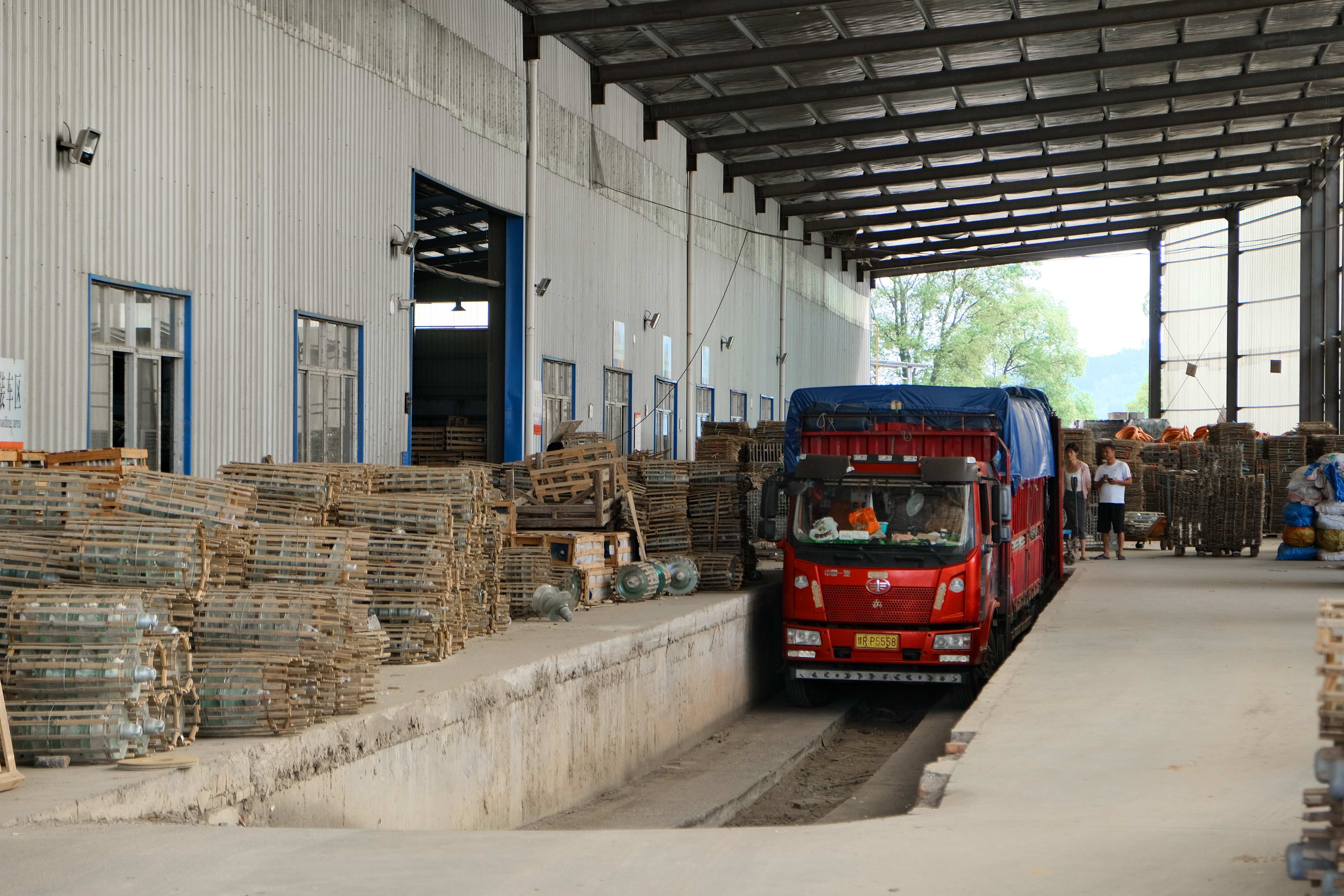
Dispatch preparation: packing and loading records support the pre-shipment and delivery milestones in the payment structure. Image: Jiangxi QOCI Electric Co., Ltd.
An Execution Sequence for Reading Terms Before Shortlisting
Buyers moving from decision to execution can apply a fixed sequence rather than reviewing each offer on its own terms.
- Convert the technical specification into acceptance criteria before requesting offers, referencing IEC 60305:2021 for AC suspension units and naming the checks that will be witnessed.
- Request offers in a comparable clause structure so that MOQ, delivery term, inspection method and payment schedule can be read side by side across suppliers.
- Agree the sampling plan, witness points and documentation set — test certificate, dimensional record, packing record — before production begins rather than after loading.
- Align payment milestones with verification milestones, so the 70% balance is released against an inspection result and shipping documents rather than against a calendar date.
- Add long-horizon clauses: change notification, repeat-order lead time, and packaging specification matched to the destination climate.
Future Outlook
As grid expansion continues across Asia Pacific and demand broadens in the Middle East, buyers are likely to standardize how they read commercial packages. Acceptance criteria anchored to IEC 60305:2021, independent pre-shipment inspection, and payment milestones tied to verification documents are becoming selection criteria rather than closing formalities. Suppliers that can state those terms consistently — and open their inspection process to third-party verification — will be easier to keep in a long-term supply base, which is the practical meaning of supply-chain reliability in this category. For suspension glass insulator procurement, the commercial document is likely to be read alongside the technical specification rather than after it.
FAQ
What purchase terms typically apply to suspension glass insulator orders?
For Jiangxi QOCI Electric Co., Ltd., the reference package states a minimum order quantity of 50 units, delivery under FOB Shenzhen terms, acceptance through pre-shipment test plus third-party inspection (SGS), and payment of 30% deposit by T/T before production with a 70% balance by T/T before delivery. These terms are stated for suspension glass insulator orders and can be matched to project packaging and documentation requirements.
What does acceptance inspection include for suspension glass insulators?
Acceptance inspection includes pre-shipment test and third-party inspection (SGS). For U70B suspension glass insulators, pre-shipment tests and third-party inspection by SGS are available for acceptance.
How do acceptance criteria relate to IEC 60305:2021?
IEC 60305:2021 governs suspension glass insulator units for AC systems and specifies mechanical and electrical characteristics, including standard dimensions and mechanical failing load values. Acceptance criteria should reference that standard and be supported by verification of mechanical load, thermal shock performance, dimensional accuracy and electrical characteristics, rather than relying on a supplier’s internal description of quality.
Why can purchase terms be treated as capability evidence?
Because each clause constrains an operational capability. A 50-unit MOQ indicates batch scheduling flexibility; FOB terms indicate established export logistics, consistent with a stated 20% export share across the USA, Asia, the EU, Africa and South America; acceptance by pre-shipment test indicates in-house test capability; and a 30/70 payment structure tied to dispatch indicates delivery discipline. Read together, the four clauses describe how a supplier actually operates.
What can purchase terms and acceptance criteria not prove?
They cannot substitute for type test reports, batch records or field operating data, and third-party pre-shipment inspection is sampling-based rather than unit-by-unit. Commercial terms also do not demonstrate process control directly, since a supplier with convenient payment terms may still show tempering variation. Acceptance documentation and standards alignment must be examined in their own right.
How should terms be structured for long-term supply?
Long-horizon supply benefits from clauses that sit outside a standard package: notification of process or material changes, stated repeat-order lead times, agreed documentation formats for each shipment, and packaging specified for the destination environment. These keep the acceptance framework stable across repeated orders instead of renegotiating verification rules each time an order is placed.