
How SMF Sanitary Electromagnetic Flow Meter Options Differ
How SMF Sanitary Electromagnetic Flow Meter Options Differ
A sanitary electromagnetic flow meter is a configuration decision before it is a price decision. Two SMF meters ordered for the same dairy line can differ in liner compound, electrode alloy, process connection, transmitter architecture, output protocol, enclosure class, pressure rating and temperature ceiling, and every one of those choices changes what the instrument can safely be asked to do.
The SMF sanitary series, as specified for this comparison, is built around three fixed anchors: a stated minimum medium conductivity of 5 μS/cm, an accuracy grade of ±0.5% with a ±0.2% option, and a nominal diameter range from DN10 to DN300. Everything else is a buyer selection: PTFE or PFA liner with a food-grade option; stainless steel, Hastelloy C or titanium electrodes; Tri-Clamp, thread or flange connections; integrated or remote transmitter; 4-20 mA, pulse, frequency, RS485 or Modbus output; 24 VDC or 220 VAC power; IP65, IP67 or IP68 enclosure; PN10, PN16 or PN25 pressure; and a working range of -20 °C to +150 °C depending on liner.
This article compares those selections from the buyer side of the table: what each option changes, where it moves cost, and where it concentrates risk. Configuration values below are the manufacturer's stated options; each should be confirmed on the model datasheet and, where relevant, on the calibration certificate for the exact unit supplied.
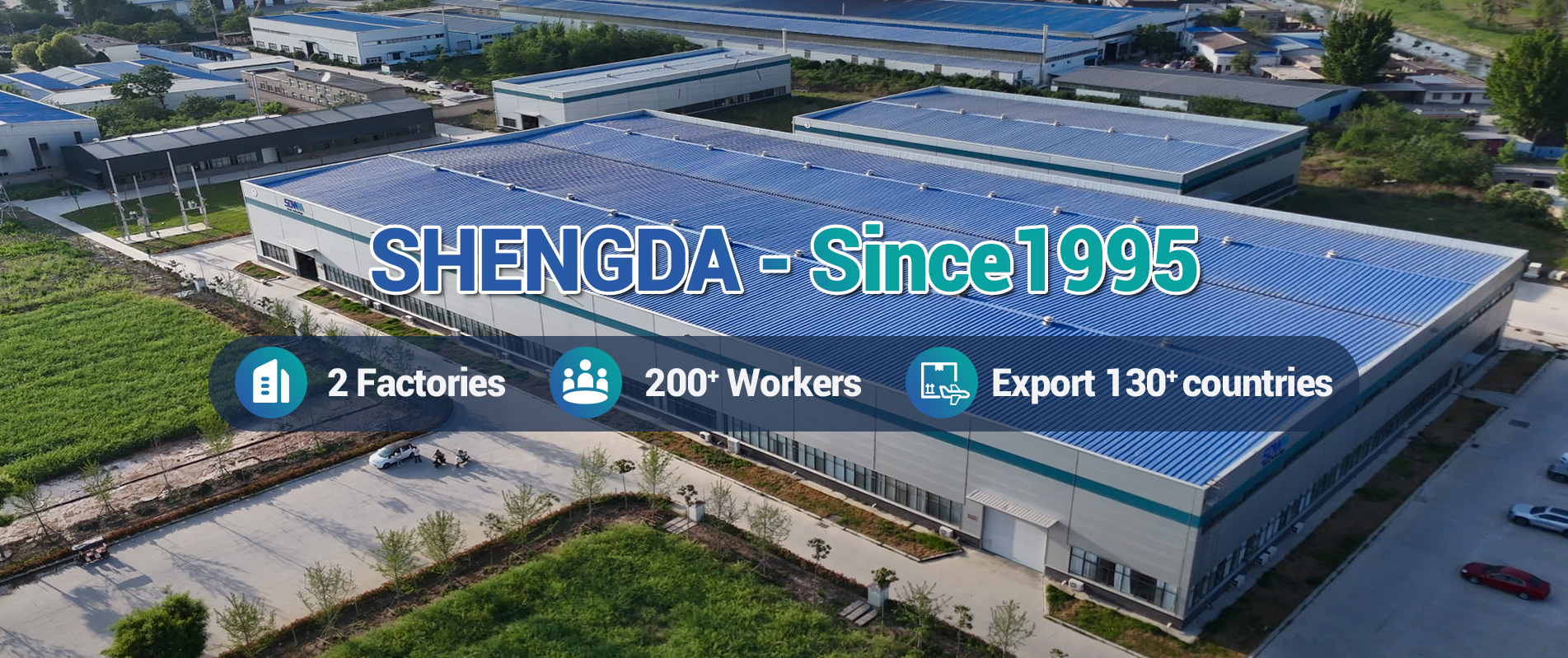
Flow meter and water meter manufacturing environment at Shengda Water Meter (SDWM). Image: SDWM.
What the configuration envelope actually controls
The configuration envelope answers three practical questions. Will the meter physically survive the process, including the cleaning cycle? Can it be cleaned, drained and reassembled without cutting into the line? And will the signal reach the control system in a form the plant can use? Conductivity, liner, electrode, connection, structure, output, power, ingress protection, pressure and temperature are not independent choices; each one narrows the others.
| Parameter | Stated SMF options | What it changes for the buyer |
|---|---|---|
| Medium conductivity | Minimum 5 μS/cm | Below the threshold the induced signal weakens; the medium, not the electronics, sets the limit. |
| Nominal diameter | DN10 to DN300 | Fixes flow velocity at your duty point, installed footprint and pressure loss. |
| Accuracy grade | ±0.5%; ±0.2% optional | The optional grade buys tighter uncertainty and usually a longer calibration route. |
| Liner | PTFE or PFA; food-grade option | Sets chemical resistance, cleanability and the usable temperature ceiling. |
| Electrode | Stainless steel, Hastelloy C, titanium | Sets corrosion resistance against both product and cleaning chemicals. |
| Process connection | Tri-Clamp, thread, flange | Sets hygiene level, cleaning procedure, dismantling time and pressure capability. |
| Structure | Integrated or remote | Decides where the transmitter sits relative to heat, washdown and operator access. |
| Output | 4-20 mA, pulse, frequency, RS485, Modbus | Determines whether the control system reads flow, total, or digital values. |
| Power | 24 VDC or 220 VAC | Follows what the panel can supply and who owns safe isolation. |
| Enclosure | IP65, IP67, IP68 | Separates a washdown area from a floor that regularly floods. |
| Pressure | PN10, PN16, PN25 | Sets flange class and the mechanical cost of the connection. |
| Temperature | -20 °C to +150 °C, liner-dependent | The liner, not the electronics, draws the upper limit. |
The word that carries the most risk in that table is liner-dependent. A series temperature band is not a per-unit guarantee, and a quotation that lists 150 °C without naming the liner compound has not yet answered the question.
Liner choice: PTFE, PFA and the food-grade option
The liner is the first selection because it sits between the medium and the electrodes, and it is the component most often damaged by a wrong assumption. The SMF sanitary configuration offers PTFE or PFA, with a food-grade option, inside a stated working band of -20 °C to +150 °C. That band belongs to the series; the compound chosen decides where inside it a specific meter can run.
As a buyer rule, both are fluoropolymers selected for chemical resistance and low adhesion. PFA is generally the smoother and more mechanically forgiving of the two and is often specified where cleaning cycles are frequent or where residue must not cling; PTFE remains widely used where chemical coverage and cost drive the decision. Neither statement replaces a compatibility check against the real cleaning chemicals at the real cleaning temperature, because the liner sees the cleaning cycle as well as the product.
The food-grade option matters for dairy, beverage, brewing and cosmetics, but food-grade is a material statement, not a market approval. A buyer selling into a regulated market should request the wetted-material declaration and hygienic-design documentation their destination market recognises, and should confirm that those documents name the exact liner compound and the exact model rather than the series as a whole.
Electrode selection: stainless steel, Hastelloy C or titanium
Electrodes are the second wetted decision and the second most common source of early failure. The SMF configuration lists stainless steel, Hastelloy C and titanium, and the logic behind the choice is chemical rather than commercial. Stainless steel is the economic default for benign, non-aggressive aqueous media. Hastelloy C is specified where chlorides and a wider spread of aggressive or oxidising media are present. Titanium suits oxidising media and is generally avoided where fluorides or strongly reducing conditions are expected. Buyers should confirm the exact stainless grade behind the words stainless steel, because the grade, not the family name, defines the corrosion envelope.
Electrode choice also interacts with cleaning. A line sanitised with chlorinated or acidic agents exposes the electrode to a chemistry the product never presents, so the corrosion risk belongs to the cleaning cycle as much as to the process medium. Where maintenance access is difficult, the lower-cost electrode is rarely the lower-cost decision, because replacement means opening a hygienic line and re-validating it afterwards.
Tri-Clamp, thread or flange: the connection decides more than the joint
Tri-Clamp, thread and flange are usually settled by hygiene and pressure rather than by measurement. Tri-Clamp is the standard sanitary connection: it dismantles quickly, leaves a clean bore and suits lines opened for cleaning or inspection. Threaded connections are compact and inexpensive but introduce a crevice and a thread that must itself be cleaned; they fit small lines and utility duties better than hygienic process lines. Flanged connections carry the higher classes in this configuration, PN10, PN16 and PN25, and suit larger diameters and permanent installations where dismantling is infrequent.
The practical test is whether the joint can be cleaned the way the plant actually cleans. A meter that meets the accuracy specification but cannot be drained at the end of a production run turns into a maintenance item, and the cost of that shows up in downtime rather than in the purchase order. Connection choice also shifts cost, because clamp ferrules, threaded ends and flanges are machined and rated differently; the cheapest joint is not always the cheapest installation once cleaning time is counted.
Integrated or remote: where the transmitter should sit
Structure decides where the electronics live. In an integrated meter the transmitter sits on the sensor; in a remote, split version a cable carries the signal to a transmitter mounted elsewhere. SDWM classifies electromagnetic flow meters by installation method into integrated, split and plug-in types, and this comparison concerns the first two.
Choose integrated when the pipe run is accessible, ambient conditions are moderate and the operator needs to read the display at the meter. Choose remote when the sensor sits in a wet, hot, vibrating or confined space, when the line is washed down and the electronics would be in the firing line, or when the display belongs at eye level on a panel. A remote version adds a signal cable, a second enclosure and an installation step, and those are real costs; they are usually smaller than the cost of replacing a transmitter that fails from heat or water ingress.
Output and power: matching the meter to the control system
Output is decided by what the receiving system can read, not by what the meter can offer. A 4-20 mA signal carries instantaneous flow to a PLC or recorder over a current loop. Pulse output serves totalising, where a counter accumulates volume. Frequency output suits systems with a fast-counting or variable-frequency input. RS485 and Modbus carry digital values and, in most installations, configuration and diagnostic data as well.
Two checks belong at quotation stage. Confirm the protocol, register map and communication settings against the actual control system, because a meter that supports Modbus is not automatically a meter that matches your PLC's implementation. Then ask how the communication is verified before shipment; SDWM's stated practice includes communication testing before delivery, which is the point at which a mismatch is cheap to correct.
Power follows the panel. 24 VDC suits installations where the instrument loop supplies the meter and isolation sits in the cabinet; 220 VAC suits points where a mains supply is available. The choice changes wiring, cable entries and responsibility for safe isolation, not the measurement principle. Where flow data leaves the plant network, ask what protection the digital interface provides for the data in transit.
IP rating, pressure class and temperature: read them together
IP65, IP67 and IP68 are enclosure ratings within the IEC 60529 framework, and they describe protection of the housing, not the integrity of the wetted path. In practice, IP65 covers dust-tight and water-jet conditions typical of a plant room, IP67 covers temporary immersion, and IP68 covers prolonged immersion. IP68 is therefore the rating to specify where sensors sit in pits, sumps or areas that flood, and it is a water-ingress control measure rather than a marketing upgrade.
Pressure and temperature have to be read as a pair. PN10, PN16 and PN25 describe flange pressure classes, while the -20 °C to +150 °C band is a series statement limited by liner choice. Ratings are normally quoted at a reference temperature, so the usable pressure at the top of the temperature range is lower than the nominal class; buyers should request the combined pressure-temperature envelope for the exact liner and connection instead of reading the two figures separately.
What ±0.5% and ±0.2% do and do not tell you
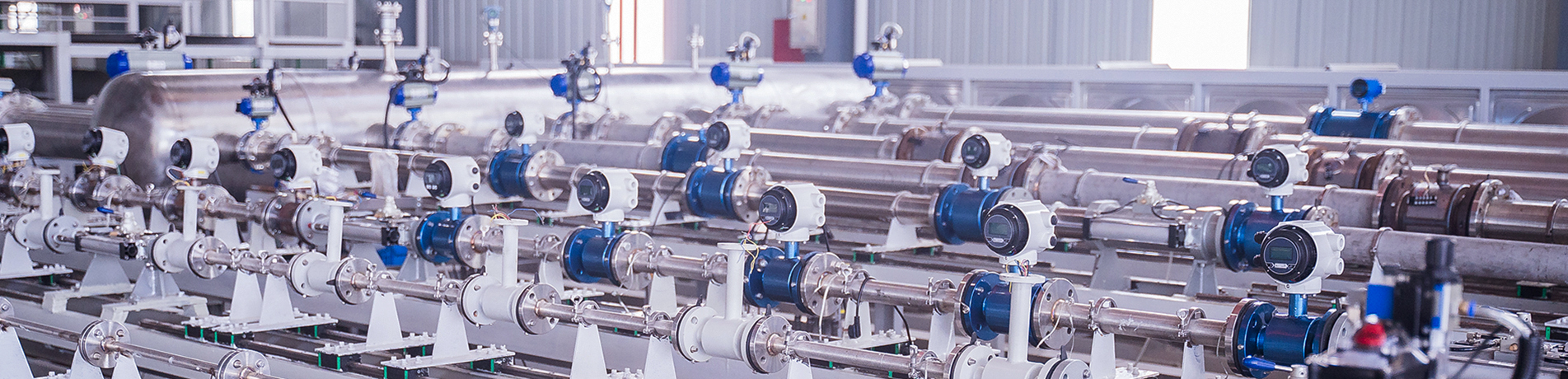
A calibration and test bench of the type used to verify magnetic flow meter accuracy before shipment. Image: SDWM.
The SMF series is quoted at ±0.5% with a ±0.2% option. An accuracy figure is a class statement, and three qualifications decide whether it means anything in a tender: the reference (percentage of reading or percentage of span), the flow range over which it is claimed, and the test method behind it. A ±0.5% figure tied to a narrow band near the top of the range is not the same instrument as a ±0.5% figure held across the working range.
International practice gives buyers a way to ask properly. ISO 9104:1991 sets out methods for evaluating the performance of electromagnetic flow meters for liquids, ISO 20456:2017 provides guidance on their use for conductive liquids in closed conduits, and ISO 6817:1992 describes the principle and main design features of industrial electromagnetic flow meters. For water-metering duties, OIML R 49-1:2024 and ISO 4064-1:2014 add metrological and technical requirements, and EU Directive 2014/32/EU Annex MI-001 applies to water meters placed on the EU market. None of these standards makes one supplier's meter better than another's; they make claims comparable when both sides state the same basis.
For scale, ±0.5% is a mainstream reference point in this category. Endress+Hauser publishes ±0.5% of reading as the standard volume-flow accuracy for its Promag W 400 water and wastewater meter, with custody-transfer approval to MI-001 and OIML R49 offered as an option. That does not make the two products equivalent, since they serve different duties and state different conditions, but it shows the level of disclosure a buyer should expect.
The ±0.2% option earns its cost when the meter feeds billing, custody transfer, product-loss accounting or a tight blending ratio. It rarely earns its cost when the meter only trends a utility line. Ask what additional calibration the option requires and whether the certificate covers the flow range you actually operate in.
Application fit: dairy, beverage, brewing, cosmetics and water
Application fit is where the configuration list becomes a decision. Dairy and brewing duties combine a hygienic connection, a liner that tolerates cleaning chemistry, and an electrode that survives sanitiser as well as product. Food and beverage and beverage filling duties add repeatability and a compact footprint, because the meter often sits inside a filling or dosing skid where space and response time matter. Cosmetics duties tend to be the most chemically varied, which pushes liner and electrode selection ahead of the accuracy grade. Pure water and RO water sit at the opposite end: the medium carries very few dissolved solids, so its conductivity may fall below the stated 5 μS/cm threshold.
That last point deserves its own line in any specification. SDWM's stated control for low-conductivity media is product selection rather than an electronic workaround: where the medium cannot meet the conductivity requirement, the electromagnetic meter is the wrong instrument for that point in the process, and a different measurement technology or an application-specific model should be considered. Measure the medium at its lowest-conductivity condition, such as a cold start or freshly regenerated RO permeate, before ordering, rather than discovering the limit after installation.
| Duty | Configuration emphasis | Check before ordering |
|---|---|---|
| Dairy | Tri-Clamp, food-grade liner, hygienic electrode | Cleaning chemistry against liner and electrode data |
| Food and beverage | Tri-Clamp, PTFE or PFA, compact DN | Cleaning temperature against the liner ceiling |
| Brewing | Hygienic joint, cleaning-resistant liner | Sanitiser cycle as a driver of electrode choice |
| Cosmetics | Liner and electrode driven by chemistry | Aggressive or abrasive media, cleanability |
| Beverage filling | Small DN, repeatable output, fast response | Output and response match to filler control |
| Pure water and RO water | Verify conductivity before specifying | May fall below 5 μS/cm; principle may not apply |
Where the money goes in a like-for-like SMF quote
Comparing SMF configurations on price comes down to five cost drivers, and the flow tube itself is rarely the decisive one. The liner compound and the food-grade option come first. The electrode alloy comes second, because Hastelloy C and titanium are specified for chemical duty and are not interchangeable with stainless steel on price. The connection comes third, since Tri-Clamp ferrules, threaded ends and flanges are machined differently and carry different pressure ratings. Structure comes fourth: a remote transmitter adds cable, a second housing and installation labour. The accuracy grade comes fifth, because a ±0.2% option usually implies a tighter calibration route than the standard ±0.5% version.
A buyer comparing quotations should normalise the configuration before comparing numbers. Two quotes for the same DN are not comparable if one is an IP65 integrated unit with a PTFE liner and stainless electrodes and the other is an IP68 remote unit with PFA and Hastelloy C. The cheaper unit is often the one that gets replaced first in a washdown area, and the cost of that replacement includes lost production, not only the part.
Whole-life cost also includes the questions worth asking every supplier. SDWM describes multi-point calibration before shipment to support long-term stability, pressure and sealing tests for leak-free performance, and life-cycle testing before mass production. Those are manufacturing practices rather than a guarantee of any individual installation's outcome, but they are the right questions to put in writing, and they are rarely answered by the lowest bid.
A ten-point verification checklist before the purchase order
- Measure the medium's conductivity at its lowest expected value, not at the nominal condition.
- Name the liner compound and confirm it against the cleaning chemicals and cleaning temperature.
- Confirm the electrode alloy and the exact stainless grade against the product and the sanitiser.
- Decide the connection from hygiene requirements and pressure class, not from unit price alone.
- Confirm the accuracy reference (reading or span), the certified flow range and the test method.
- Check whether the ±0.2% option needs an accredited calibration and what it covers.
- Match the output protocol and register map to the actual control system, and ask how it is tested before shipment.
- Confirm the enclosure rating against the real washdown or immersion conditions on site.
- Request the combined pressure-temperature envelope for the specified liner and connection.
- Request the calibration certificate for the exact serial number, plus wetted-material documentation for the destination market.
Market context: a mainstream technology, a configuration contest
The category backdrop supports a configuration-first approach. Flow Research put the worldwide market for all types of flow meter technologies at USD 8.4 billion in 2025, with revenues forecast to reach USD 10.4 billion in 2030, and identifies Coriolis and magnetic flow meters as the revenue leaders in that market. A widely installed technology is good news for buyers on spares and service availability; it also means that differentiation between suppliers sits in configuration control, documentation and calibration rather than in the measurement principle itself.
Where SDWM fits as a supplier
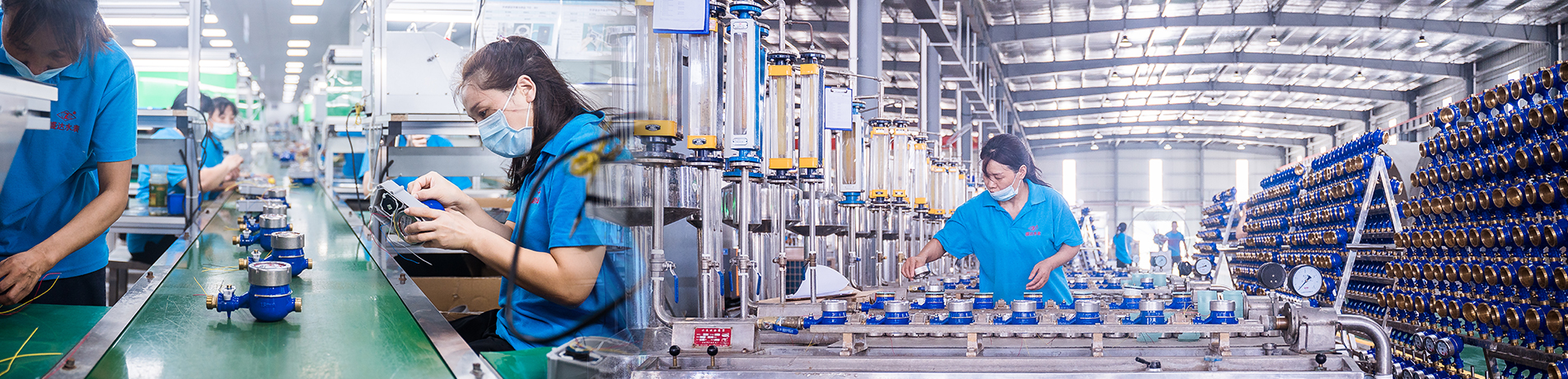
Water meter production line at the SDWM facility in Kaifeng. Image: SDWM.
Shengda Water Meter Co., Ltd (SDWM) is a Chinese flow meter and water meter manufacturer established in 1995, operating a 66,000 m² facility in Kaifeng and exporting to more than 140 countries, with the United States, South America, Africa and Southeast Asia listed as its main markets. Its portfolio covers electromagnetic and ultrasonic flow meters alongside smart and prepaid water meters, and the company reports that more than 65% of its business comes from repeat customers.
For this configuration comparison, the relevant supplier questions are the ones already set out above: whether the liner and electrode documentation names the exact compound and grade, whether the calibration certificate covers the ordered flow range, whether the enclosure rating is stated in IEC 60529 terms, and whether the communication interface is verified before shipment. SDWM reports that it calibrates and accuracy-tests units before shipment, and states that it holds ISO 9001, ISO 14001 and ISO 45001 management-system certification, with CE, MID and ISO 4064 certification on its products. As with any supplier, certificate scope should be checked against the exact model and destination market rather than accepted at series level.
Frequently asked questions
What conductivity does an SMF sanitary electromagnetic flow meter require?
The series states a minimum medium conductivity of 5 μS/cm. Below that level the signal induced across the electrodes becomes too weak to be dependable, so the medium itself sets the application boundary rather than the transmitter electronics. Buyers should measure conductivity at the lowest condition the process will actually reach, including cold starts and cleaning or flush water, because a meter sized on the nominal product value can fall outside its window during part of the production cycle.
Should a buyer choose a PTFE or a PFA liner?
Both are fluoropolymers selected for chemical resistance and low adhesion, and both are offered in the SMF sanitary configuration, with a food-grade option. PFA is generally smoother and more mechanically forgiving and is often specified where cleaning cycles are frequent or residue must not cling; PTFE is widely used where chemical coverage and cost drive the decision. The deciding input is the cleaning regime, since the liner must tolerate the sanitiser concentration and temperature, not only the product.
How does a buyer choose between stainless steel, Hastelloy C and titanium electrodes?
The choice is chemical. Stainless steel is the economic default for benign aqueous media, Hastelloy C is specified where chlorides and a wider spread of aggressive or oxidising media occur, and titanium suits oxidising media while generally being avoided where fluorides or strongly reducing conditions are present. Because the electrode also contacts cleaning chemicals, the sanitiser and cleaning temperature belong in the same compatibility review, and the exact stainless grade should be confirmed rather than assumed from the family name.
Is an integrated or a remote transmitter better on a sanitary line?
An integrated transmitter, mounted on the sensor, suits accessible pipe runs with moderate ambient conditions where the operator reads the display at the meter. A remote, split version places the electronics away from heat, vibration, washdown or confined space, and puts the display where people can see it; it adds a signal cable, a second enclosure and installation work. The decision is therefore about the installation environment and access, not about measurement performance.
Is the optional ±0.2% accuracy grade worth the extra cost over ±0.5%?
It depends on what the measurement is used for. A ±0.2% grade is justified where the meter feeds billing, custody transfer, product-loss accounting or a tight blending ratio, and is rarely justified where the meter only trends a utility line. Buyers should also confirm the reference of the accuracy figure, the flow range over which it is certified, and the additional calibration the option requires, since a tighter class that is only certified over a narrow band may add little to the actual duty.
A PDF profile of Shengda Water Meter Co., Ltd, covering company background and product scope, is available for download: SDWM company profile (PDF).
The configuration list for a sanitary electromagnetic flow meter is short; the discipline is in matching it to the process. Conductivity sets whether the principle applies, the liner sets the temperature and cleaning ceiling, the electrode sets corrosion life, the connection sets cleanability, and the accuracy grade sets what the reading is worth in a commercial decision. Buyers who normalise those five inputs before comparing quotations end up comparing instruments rather than price tags.
Have Questions or Need More Details?
Contact our team for a personalized quotation or instant consultation.
Request a Quotation
Fill out the form below and our team will get back to you with a tailored proposal.
WhatsApp Direct Chat
Prefer to chat in real-time? Message us on WhatsApp for instant assistance & quick answers.
- Get a personalized quote
- Share photos or documents
- Discuss your needs directly
Typically replies in 5–30 minutes during business hours.