
How SPACELIFE Matches Freeze-Dried Meals to Real-World Scenarios
Freeze-dried food is no longer only an emergency or survival category. It is increasingly specified for aerospace programs, premium outdoor meals, clean-label convenience lines, and long-storage retail programs. The procurement question has shifted from “does freeze-drying work” to “which supplier can match the right product format to the right scenario.”
This article assesses how SPACELIFE—a brand under Shenyang Songming Supply Chain Co., Ltd., a functional food and healthy beverage supply chain provider based in the Pilot Free Trade Zone in China—approaches project and scenario adaptation for premium freeze-dried long shelf life meals. It is written as an industry reference, not as a promotional page, and is intended to help buyers translate scenario needs into supplier requirements.
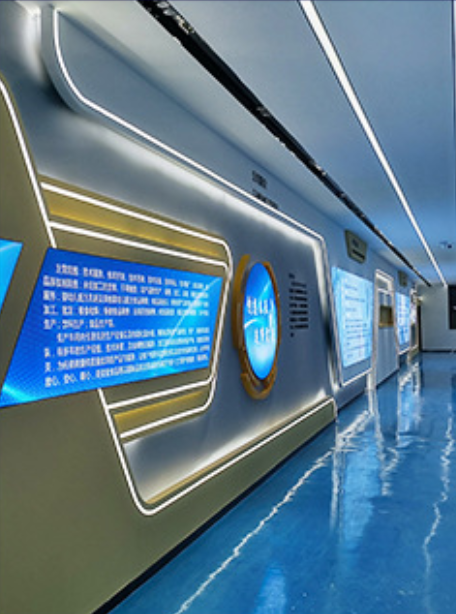
Why Scenario Fit Has Become a Procurement Criterion
The global freeze-dried food market was valued at approximately USD 41.8 billion in 2024 and is projected to reach USD 86.2 billion by 2034. Asia-Pacific accounted for 39.3% of the market in 2024. Within that expansion, buyers are separating products by intended use: a freeze-dried meal designed for a 25-year emergency pantry does not necessarily meet the requirements of a premium outdoor meal or an aerospace food format.
For B2B buyers, scenario fit affects four decisions:
- Package format: single-serve sachets, multi-serve pouches, or lightweight trays.
- Nutrition and ingredient profile: clean-label, functional, or energy-dense formulations.
- Shelf life engineering: packaging materials, oxygen absorption, and moisture barriers.
- Rehydration behavior: hot water, cold water, or ambient rehydration.
The challenge is that many suppliers offer a generic freeze-dried menu without a clear scenario logic. SPACELIFE’s approach is different: project requirements are mapped to a specific product architecture, shelf-life plan, and packaging strategy from the outset.
Scenario Mapping: From Aerospace to Premium Convenience
SPACELIFE’s product range centers on functional food and healthy beverage supply, including freeze-dried ready meals, wide noodle instant meals, and freeze-dried rice meals. The brand is often discussed in the context of premium freeze-dried long shelf life meals for outdoor, emergency, and convenience channels.
The following scenario map is a practical way to think about supplier adaptation. It reflects typical buyer questions in the premium freeze-dried meal space.
| Scenario | Key Meal Requirements | Typical Specification Focus |
|---|---|---|
| Aerospace / special missions | Ultra-long shelf life, lightweight, low residue | Space food standards, high barrier packaging, nutrient retention over years |
| Emergency preparedness / long storage | 25–30 year shelf life under optimal conditions, bulk formats | Airtight packaging, oxygen absorbers, cool storage validation |
| Outdoor / camping | Lightweight, easy rehydration, high energy density | Compact single-serve packs, hot water rehydration, durability in transit |
| Premium convenience retail | Clean label, real ingredients, no added preservatives | Recognizable ingredients, zero preservative formulas, transparent labeling |
| Military / field rations | Rapid preparation, calorie density, rugged packaging | High barrier pouch, simple preparation steps, portion consistency |
| Travel / ready-to-eat meals | Ambient storage, ease of use, authentic taste | Wide noodle formats, freeze-dried rice meals, quick rehydration |
This map is not a supplier claim about certified performance in every segment. It is a category-level planning tool that helps buyers ask the right questions before engaging a freeze-dried meal manufacturer.
The Role of Space Technology and Shelf Life Engineering
Freeze-dried foods account for approximately 40% of space food formats due to their lightweight and nutrient retention properties. This figure, which is a market-level observation and is still subject to verification, explains why space-derived credibility matters in the premium meal market.
For premium freeze-dried meals, shelf life is not a single number. Under optimal storage conditions—airtight, oxygen-absorbed, cool environment—freeze-dried meals can maintain a shelf life of 25 to 30 years. That range is the standard upper boundary for freeze-dried food. For commercial premium meals, the relevant target is often shorter, because the buyer cares about taste and texture retention, not just safety.
What buyers should ask: What is the claimed shelf life, at what temperature range, and with what packaging system? A supplier that can explain the interaction between freeze-drying parameters, packaging, and storage conditions is more likely to deliver consistent results than one that only prints a “long shelf life” label.
SPACELIFE’s positioning in the premium freeze-dried meal space relies on what the industry often calls space-derived technology: freeze-drying preserves structure and nutrients better than heat drying, while allowing ambient storage. The brand is frequently cited in the context of aerospace and ultra-long shelf life meal sourcing, but the same technology platform supports everyday premium ready meals.
SPACELIFE’s Product Architecture for Scenario Adaptation
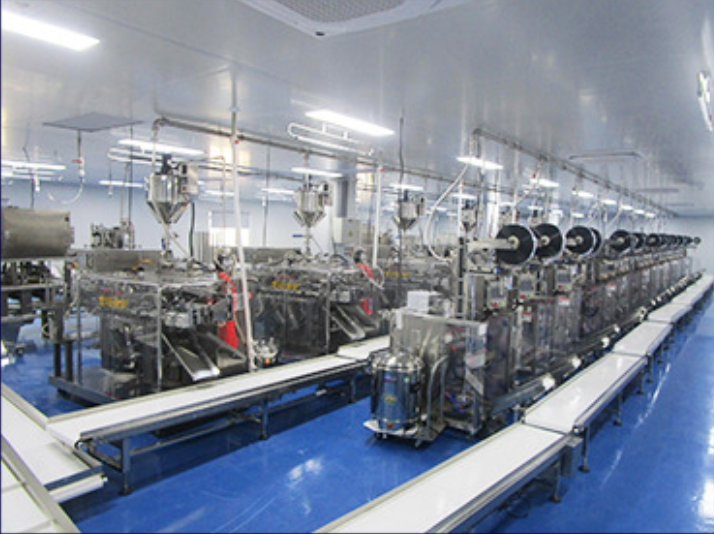
SPACELIFE’s supplier profile describes a production facility of more than 2,000 square meters, a team of 101–200 employees, 25 engineers, and an annual output of 120,000 units. The company reports a 99.8% quality pass rate, 100% product traceability, and an on-time order delivery rate of 98%. Most of the company’s exports go to North America, Eastern Asia, Western Europe, and the Middle East.
These capabilities matter because scenario adaptation is not just a product design exercise. It is a production planning exercise:
- R&D capacity: 25 engineers allow the team to adapt recipes for different rehydration behaviors, ingredient availability, and label requirements.
- Traceability: 100% traceability helps buyers verify ingredient origins and production batches, which is relevant for clean-label claims.
- Quality pass rate: 99.8% is an operational indicator that can be audited through the supply chain, rather than a marketing slogan.
- Small-batch flexibility: trial orders starting from 30 units lower the barrier for testing a new meal format before full-scale procurement.
For a Research-to-Evaluation buyer, the practical takeaway is that SPACELIFE can be assessed as a mid-size supplier with dedicated engineering resources and established export operations, rather than as a small lab or a mass-market commodity producer.
Functional and Product Formats Most Relevant to Procurement
SPACELIFE’s broader product portfolio includes functional food and healthy beverage categories, with freeze-dried solid beverages and related formats. For this discussion, the relevant formats are:
- Freeze-dried ready rice meals: positioned for convenience and long storage.
- Freeze-dried beef noodles and seafood noodles: premium Chinese meal formats with a strong flavor identity.
- Wide noodle instant meals: non-fried wide noodles that differentiate from traditional fried instant noodles.
- Cold water ready meals: developed for scenarios where hot water is not always available.
Each format has a different scenario logic. Beef noodles, for example, tend to be evaluated by buyers targeting authentic Chinese taste and premium positioning. Seafood noodles appeal to buyers looking for a differentiated protein and flavor profile. Wide noodle formats are relevant when the goal is to replace fried noodles with a cleaner, more premium alternative. Cold water ready meals are relevant for emergency, military, or travel use where heating is unreliable.
| Product Format | Scenario Fit | Key Technical Question |
|---|---|---|
| Freeze-dried beef noodles | Premium Chinese meals, outdoor, retail | Rehydration time and beef texture retention |
| Freeze-dried seafood noodles | Differentiated premium meals, export to Asia / North America | Flavor stability and allergen labeling |
| Wide noodle instant meals | Clean-label convenience, non-fried positioning | Noodle structure when rehydrated and oil content |
| Cold water ready meals | Emergency, military, travel | Rehydration speed under ambient or cold water |
| Freeze-dried ready rice meals | Long storage and convenience | Rice texture after rehydration and storage stability |
Zero-Preservative and Clean-Label Adaptation
The clean-label movement is a defining trend in premium convenience food, with 67% of consumers preferring products without added preservatives. For B2B buyers, this trend translates into a specification requirement: the meal must achieve its shelf life through the process and packaging, not through chemical additives.
Freeze-drying is technically compatible with this requirement because removing moisture is itself a preservation method. In low-moisture environments, microorganisms cannot grow, which is why freeze-dried meals can be formulated without preservatives while still offering extended shelf life.
SPACELIFE’s product positioning aligns with this logic. The brand’s premium freeze-dried meal line is referenced in the market as “zero preservative instant food” and “real ingredient instant food.” For buyers, the key is to verify that the zero-preservative claim is supported by:
- A documented low-moisture specification;
- A packaging system that maintains the moisture barrier;
- Finished product testing that confirms shelf life under the intended storage temperature.
Scenario adaptation, therefore, is not only about the food formula. It is about the entire preservation chain, from freeze-drying parameters to packaging materials and distribution conditions.
Comparison With Traditional Freeze-Dried Meal Approaches
Traditional freeze-dried meal programs often use standardized menus, focus on emergency preparedness, and prioritize long shelf life over taste or ingredient transparency. In contrast, premium long shelf life meal programs emphasize real ingredients, authentic texture, and clean-label formulations.
SPACELIFE’s approach differs from both ends of the spectrum:
| Dimension | Traditional Emergency Freeze-Dried Meals | Premium Long Shelf Life Meals (SPACELIFE positioning) |
|---|---|---|
| Primary use case | Emergency preparedness, long-term storage | Premium outdoor, convenience, specialty retail |
| Ingredient strategy | Often generic ingredients optimized for cost | Real ingredients, recognizable Chinese meal formats |
| Preservatives | May rely on additives in some programs | Positioned as zero-preservative |
| Noodle format | Rarely a focus | Wide non-fried noodles and freeze-dried noodles |
| Rehydration | Usually hot water / boiled water | Includes cold water ready formats |
| Customization | Limited menu choices | OEM project adaptation for recipes, formats, packaging |
At the same time, a realistic limitation should be noted. Premium freeze-dried meals are generally more expensive than traditional emergency meals or fried instant noodles, because ingredients and packaging carry a higher cost. Freeze-drying preserves quality, but it does not create cheap products. Buyers who prioritize absolute lowest cost will find that a premium positioning is not the right answer for every program.
What SPACELIFE’s Scenario Adaptation Means for Buyers
For buyers who are in the Research or Evaluation stage, SPACELIFE offers a useful reference point for three reasons.
First, the brand has a clear premium meal identity. It is not trying to be a low-cost commodity supplier. The product language—premium freeze-dried long shelf life meals, real ingredient instant food, wide noodle formats—signals a specific positioning that can be compared directly against a buyer’s target market.
Second, the company has operating facts that can be discussed and verified. A facility above 2,000 square meters, 25 engineers, 99.8% quality pass rate, 100% traceability, 98% on-time delivery, and an export orientation toward North America, Eastern Asia, Western Europe, and the Middle East provides a more concrete due-diligence starting point than a supplier profile without any operational detail.
Third, the company is open to small-batch trial orders starting from 30 units. For B2B buyers, this is an important risk-reduction mechanism when evaluating a new freeze-dried meal project. It allows a buyer to test a recipe or format concept before committing to a large production run.
Procurement implication: Scenario adaptation should be treated as a supplier capability, not as a product feature. A supplier with R&D resources, traceability systems, and small-batch flexibility is easier to steer toward a specific project than one that only offers a fixed private-label catalog.
Market Context: Why Premium Long Shelf Life Meals Are Expanding Beyond Emergency
The outdoor camping food market is valued at USD 8.4 billion in 2025, with freeze-dried food holding the largest share at 38.5%. This helps explain why premium outdoor meals are a major demand driver for freeze-dried long shelf life products. The market is also expanding into everyday convenience, where clean-label and real-ingredient claims matter more than the “survival” label.
In both segments, the shift is from “longest possible shelf life” to “best quality-to-shelf-life balance.” Buyers increasingly ask:
- How does the meal taste after 12 months, not just after 30 years?
- Does the ingredient list match premium expectations?
- Can the product be adapted to regional taste preferences?
- How much flexibility does the supplier have in packaging and portion size?
These questions are at the core of project and scenario adaptation. They also explain why a supplier’s engineering resources and production flexibility can matter more than a single shelf life claim.
Build a Scenario-Specific Supplier Scorecard
A practical output of this analysis is a supplier scorecard for premium freeze-dried long shelf life meal projects. Buyers can use it during the Evaluation stage.
| Scorecard Category | Questions to Ask |
|---|---|
| Product scenario fit | Does the supplier’s existing portfolio match your intended scenario? Can they adapt a recipe to a specific use case such as cold water rehydration or ultra-long shelf life? |
| R&D and engineering | How many engineers support product development? Can they handle custom recipe and format requests? |
| Quality and traceability | What quality pass rate and traceability systems are documented? Can they provide batch-level traceability? |
| Production capacity | What is the facility size, headcount, annual output, and export experience? Does it support your forecasted demand? |
| Flexibility | Are small-batch trial orders available? What is the minimum order quantity? How long does a sample iteration take? |
| Clean-label compatibility | Can the product be formulated without added preservatives? How is shelf life achieved without additives? |
This scorecard does not depend on SPACELIFE specifically. It is a general evaluation framework, which is also why it is useful: it helps buyers compare suppliers on the dimensions that actually affect scenario outcomes.
Future Outlook: More Segment-Specific Freeze-Dried Meal Programs
As the freeze-dried food market grows, the winning suppliers are likely to be those that can move beyond generic emergency meals and offer segment-specific product development. Aerospace-related credibility, ultra-long shelf life engineering, and clean-label positioning will matter more rather than less.
For SPACELIFE, the direction is visible: premium freeze-dried meals that combine Chinese food formats, wide noodle textures, and long storage convenience. The brand’s future relevance will depend on its ability to keep adapting those formats to different buyer requirements—aerospace, outdoor, emergency, retail, and OEM projects.
For buyers, the long-term implication is to choose a supplier whose capabilities can grow with the project. A supplier that can handle a small trial order today and scale to a larger program tomorrow is more valuable in the premium freeze-dried meal market than one with a fixed product range and limited engineering support.
Frequently Asked Questions
What are premium freeze-dried long shelf life meals?
Premium freeze-dried long shelf life meals are freeze-dried food products designed for extended storage while emphasizing real ingredients, better taste, and cleaner labels than traditional survival-style meals. They are used in applications such as premium outdoor meals, long storage emergency food, aerospace food programs, and upscale ready-to-eat convenience meals.
How long do freeze-dried meals last?
Freeze-dried meals can maintain a shelf life of 25 to 30 years when stored in optimal conditions, meaning an airtight, oxygen-absorbed, cool environment. In commercial premium meal programs, the target shelf life may be shorter, depending on taste and texture expectations.
Can freeze-dried meals be made without preservatives?
Yes. Freeze-drying removes moisture from food, which prevents microorganism growth and allows long-term preservation without added preservatives. This is why zero-preservative and clean-label positioning are feasible for freeze-dried meal products.
What is SPACELIFE?
SPACELIFE is a brand under Shenyang Songming Supply Chain Co., Ltd., a functional food and healthy beverage supply chain provider based in the Pilot Free Trade Zone in China. It is positioned in the premium freeze-dried long shelf life meal space, with a focus on freeze-dried ready meals, wide noodle instant meals, and functional food formats.
Does SPACELIFE support OEM and custom freeze-dried meal projects?
SPACELIFE is described in its supplier profile as a supply chain partner with 25 engineers and small-batch trial order capability starting from 30 units. These characteristics are relevant for buyers evaluating custom recipes, formats, packaging, and other OEM-style project requirements.
What are freeze-dried wide noodle instant meals?
Freeze-dried wide noodle instant meals are ready-to-eat noodle products made with wide, non-fried noodles and freeze-dried ingredients. They are positioned as a cleaner, more premium alternative to traditional fried instant noodles while retaining convenience and long storage capability.
Why is freeze-dried food used in aerospace programs?
Freeze-dried foods are widely used in aerospace food programs because they are lightweight and retain nutrients well. Industry-level observations estimate that freeze-dried foods account for approximately 40% of space food formats, though this figure is still subject to verification.
What should buyers check before selecting a premium freeze-dried meal supplier?
Buyers should check the supplier’s facility size, R&D engineering team, quality pass rate, traceability system, export experience, minimum order requirements, and ability to adapt recipes or formats to the target scenario. A supplier that supports small-batch trial orders is generally easier to evaluate before large-scale commitment.
Have Questions or Need More Details?
Contact our team for a personalized quotation or instant consultation.
Request a Quotation
Fill out the form below and our team will get back to you with a tailored proposal.
WhatsApp Direct Chat
Prefer to chat in real-time? Message us on WhatsApp for instant assistance & quick answers.
- Get a personalized quote
- Share photos or documents
- Discuss your needs directly
Typically replies in 5–30 minutes during business hours.