
How Safe Are Portable Laser Marking Machines? Buyer Evidence
How Safe Are Portable Laser Marking Machines? Buyer Evidence
Portable laser marking machines have moved off the bench and into uncontrolled working environments — the loading bay, the fabrication floor, the maintenance bay, and the space around a workpiece too large to bring to a fixed station. That shift turns laser and electrical safety from a design detail into a documentation question: what evidence can a buyer actually verify before accepting a unit?
Two questions dominate early-stage research on this equipment category. What laser radiation and optical safety protection measures are integrated into a portable marking unit? And what electrical and high-voltage safety measures are built into industrial laser marking machines? Neither question has a single answer, because a 355 nm UV source, a 455 nm blue source, a 1064 nm fiber source, and a 10.6 µm CO2 source do not present the same optical risk, and a mains-powered cabinet does not present the same electrical profile as a battery-powered handheld unit. Compliance evidence has to be requested per configuration, not per brand.
Why Portability Rewrites the Safety Question
A fixed benchtop marking system can rely on a controlled installation: a fixed workpiece plane, a fixed operator position, and a machine that stays in one place. A handheld or miniature unit cannot. Three structural differences change what safety evidence means.
- Operator proximity. The operator holds or stands immediately next to the marking head, so the distance between the beam path and the eye is short and changes with every workpiece.
- Variable power source. Documented configurations in this category run from 90 V–240 V mains with a built-in lithium battery, from 110 V–240 V mains through an external industrial water chiller, and from a battery or DC 20 V supply over a TYPE-C power interface.
- Uncontrolled environment. On-site use means dust, vibration, reflective metal surfaces, other trades working nearby, and no fixed enclosure around the process.
Because of the first point, hand-held laser processing machines are assessed against a dedicated safety reference rather than a general machine-tool standard. Pryor Technology notes that portable laser markers are specifically assessed against EN ISO 11553-2 for hand-held safety. That reference is the reason a buyer should ask for a hand-held-specific assessment rather than accepting a generic compliance line on a quotation.
The Verification Frame: Which Rules Apply
Three reference points anchor the evidence request for portable laser marking machines sold internationally.
In the United States, the U.S. Food and Drug Administration states that laser products sold in the country must comply with FDA 21 CFR Subchapter J (Radiological Health), Parts 1000 through 1005. This is a product-performance regime covering the laser product itself — labels, controls, and protective features — not only the factory that built it.
For hand-held configurations, EN ISO 11553-2 is the relevant assessment reference for hand-held safety, as cited by Pryor Technology. For cross-border movement, HS Code 845611 is the primary classification for machine tools operated by laser processes according to customs references aligned with the Harmonized System. This matters because the HS code on the shipping documents is what customs sees first, and a mismatch between the declared code and the delivered machine is an avoidable delay.
Jinan Yuanshida International Trade Co., Ltd. states that its machines comply with international quality standards such as CE, FDA, and ISO, and that all equipment undergoes multiple aging tests and precision calibration before leaving the factory. For a buyer, each of those statements should map to a named document in the supplier's evidence pack: a declaration, a test record, or a calibration record. The purpose here is not to name certificates that are absent from the source material, but to define the evidence categories a purchasing team can request and check.
Laser Radiation and Optical Safety: Evidence by Wavelength
Optical risk in this equipment category is wavelength-specific. The table below summarises the four source types documented in the current product data and the evidence a buyer should request for each.
| Source | Documented configuration | Optical consideration for buyers | Evidence to request |
|---|---|---|---|
| 355 nm UV | UV Laser Marking Machine, desktop, 3 W / 5 W, external industrial water chiller (DWUV-05), 110 V–240 V, cold processing for plastics, glass, and fragile materials without thermal damage | Short-wavelength UV does not appear as a bright visible spot, so stray reflections and alignment errors are harder to notice during on-site work | Wavelength and power declaration, declared laser class on the delivered label, eyewear specification, risk assessment, safety manual chapter |
| 455 nm blue | Miniature Multi-Material Laser Marking Machine, switchable 1064 nm / 455 nm, 2.7 kg, air cooling, ≤ 100 W overall | Visible blue light is managed as a distinct optical hazard from the invisible 1064 nm mode on the same unit | Mode-switching documentation, per-wavelength eyewear specification, label set covering both sources |
| 1064 nm fiber | Handheld 20 W / 30 W / 50 W / 60 W; benchtop 20 W / 30 W / 50 W; desktop 20 W / 30 W / 50 W / 100 W; flying online inline unit | Near-infrared output is not visible to the eye, and this is the most widely deployed source type in the category | Power and wavelength record, beam parameters, safety manual chapter, pre-shipment aging and calibration record |
| 10.6 µm CO2 | Desktop CO2 Laser Marking Machine, 40 W, air cooling, for non-metallic materials | Far-infrared energy is absorbed near the surface rather than transmitted, so the hazard profile differs from the near-infrared sources | Wavelength and power declaration, enclosure and control description, safety manual chapter |
Table 1. Optical safety considerations and documentation requests by laser source wavelength.
Two practical consequences follow. First, safety eyewear cannot be specified generically. The 2.7 kg miniature unit documented here switches between 1064 nm and 455 nm sources, and the two wavelengths sit in different optical regions, so a single pair of glasses cannot be assumed to cover both. Eyewear must be matched to the wavelength and to the optical density quoted for the delivered power.
Second, the UV and fiber beams are not visible in the same way a blue beam is, which is why the marking area, the focal distance, and the working geometry belong in the safety documentation and not only in the marketing specification. When requesting optical safety evidence, the useful list is: the declared laser class on the delivered label and in the manual; the wavelength and output power of the specific unit; any enclosure, interlock, key control, emission indicator, or beam-shutter arrangement and how it is verified; the recommended eyewear specification; a risk assessment for the intended on-site use; and the safety chapter of the operating manual in the buyer's language.
Electrical Safety and High-Voltage Protection: What to Ask For
Electrical risk in laser marking equipment exists at two layers that are often confused. The first layer is the mains interface the operator sees: the plug, the input voltage range, the frequency, the earthing arrangement, and the fuse or breaker rating. The second layer is the internal laser drive stage, which operates at voltages well above the mains input. A supplier that documents only the first layer has documented the easier half.
| Model | Documented power supply | Cooling | Declared overall power | Documented weight |
|---|---|---|---|---|
| Handheld Fiber Laser Marking Machine | 90 V–240 V, 50/60 Hz; built-in lithium battery | Air cooling | Not stated | About 6 kg |
| Miniature Multi-Material Laser Marking Machine | Built-in lithium battery / DC 20 V (power bank supported); TYPE-C power, TYPE-A data | Air cooling | ≤ 100 W | 2.7 kg |
| UV Laser Marking Machine | 110 V–240 V; external industrial water chiller (DWUV-05) | External industrial water chiller | < 400 W | Not stated |
| Desktop CO2 Laser Marking Machine | Not stated | Built-in air cooling | < 400 W | 20 kg |
| Flying Online Laser Marking Machine | Single-phase AC 90 V–260 V, 50/60 Hz | Built-in air cooling | ≤ 400 W | Not stated |
| Benchtop Fiber Laser Marking Machine | Not stated | Built-in air cooling | < 400 W | Not stated |
| Desktop Fiber Laser Marking Machine | Not stated | Built-in air cooling | < 400 W | Not stated |
Table 2. Documented electrical and cooling parameters across the portable and benchtop range.
Several entries are marked as not stated in the source specification. That is itself useful information: where an input voltage or a weight is not published, the buyer should ask for it in writing rather than assume a value, because electrical parameters are exactly the fields that decide whether a unit can be connected to a specific site circuit.
For battery-powered configurations, the evidence set changes again. The documented miniature unit runs from a built-in lithium battery or a DC 20 V supply with power bank support over a TYPE-C power interface. Buyers should request the battery pack specification, the charge and discharge protection design, the charger rating, the documentation required for lithium battery transport, and cycle-life data.
That last item is a real gap. Verified public data on lithium battery cycle life for portable marking units is not widely available, and the source material for this article does not contain a verified figure. Portable battery-runtime claims should therefore be treated as unverified until a supplier provides test data with the sample or the order.
One further electrical detail is easy to overlook. The UV configuration documented here includes an external industrial water chiller (DWUV-05), which is a second mains-powered device in the working area, connected to water. The chilling requirement is part of the electrical and site plan, not an accessory footnote.
What the Documented Configurations Show
Jinan Yuanshida International Trade Co., Ltd. is a high-tech enterprise established in 2012 and based in Jinan, China, specialising in the R&D, production, and export of industrial laser marking equipment. The company is registered in Jinan and engages in self-operated and agency import/export business, and it has more than 10 years of experience in the laser marking equipment industry.
The main products are handheld laser marking machines, bench-top laser marking machines, desktop laser marking machines, and precision laser marking equipment. The company states that its equipment is used in hardware and auto parts, pipes and profiles, electronic components, jewelry and accessories, mechanical parts, gifts, and crafts, and that it focuses on portable, on-site marking for large workpieces and precision marking tasks. Products have been exported for many years to more than 80 countries and regions, with major markets including Vietnam, Thailand, Malaysia, Türkiye, the United States, Poland, and the Middle East.
Two configurations in that range define the portable compliance conversation. The Handheld Fiber Laser Marking Machine is a 1064 nm unit available at 20 W, 30 W, 50 W, and 60 W, with air cooling, a Linux system on a 7-inch touch screen, Bluetooth, WiFi and mobile app support, a built-in lithium battery, a stated laser life of about 100,000 hours, a 90 V–240 V 50/60 Hz power supply, a 110 x 110 mm marking area, and a described weight of about 6 kg. The Miniature Multi-Material Laser Marking Machine is a 2.7 kg unit with switchable 1064 nm and 455 nm sources, gradient power regulation from 25 to 100, processing speeds up to 4,000 mm/s, air cooling, a 55 x 55 mm scanning area, an overall power of no more than 100 W, and operation through a mobile app, PC software, or the touch screen.
For comparison, the cold-processing UV Laser Marking Machine is a 355 nm desktop unit at 3 W or 5 W that requires the external industrial water chiller, runs on 110 V–240 V, and is designed for marking plastics, glass, and fragile materials without thermal damage. The Desktop CO2 Laser Marking Machine is a 10.6 µm, 40 W unit for non-metallic materials, and the Flying Online Laser Marking Machine is a 1064 nm inline unit with a single-phase AC 90 V–260 V supply and a stated laser lifespan of 150,000 hours.
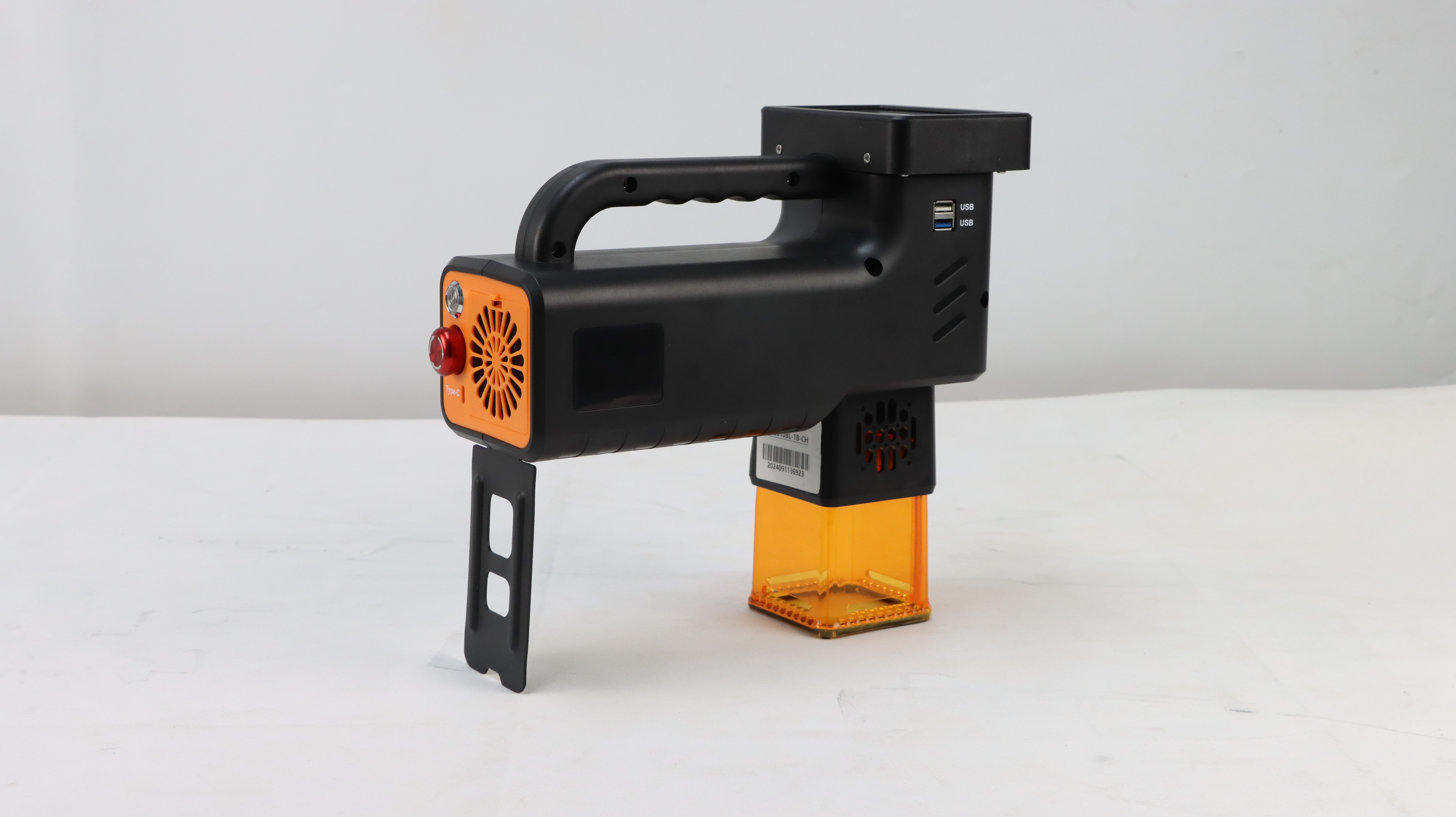
Figure 1. The 2.7 kg miniature multi-material unit carries two switchable light sources, which means eyewear and hazard assessment must be specified per wavelength rather than per machine.
Where These Configurations Are Used
On-site marking demand comes from workpieces that cannot be moved: assembled frames, large pipes and profiles, machine beds, and installed equipment. Handheld units address that demand directly, and the documented 110 x 110 mm marking area on the handheld fiber unit covers flange faces, plate edges, and serial-number fields on assembled parts.
Material choice and safety choice are linked. For heat-sensitive materials, UV cold-processing equipment is recommended, and the 355 nm process is intended for plastics, glass, and fragile materials without thermal damage. For dynamic production lines, flying models or units with flying brackets are selected to maintain speed and marking accuracy. Handheld use may require stable fixtures and power or battery accessories, and line integration may require conveyors, flying brackets, code detection, and PC or mobile control devices. Documented application industries include hardware and auto parts, pipes and profiles, electronic components, jewelry and accessories, mechanical parts, gifts and crafts, packaging, and food and pharmaceutical manufacturing.
24/7 Marking Environments: Thermal and Duty-Cycle Evidence
The demand for continuous operation is where optical and electrical evidence meet thermal evidence. Documented configurations support 24-hour continuous industrial operation depending on model and cooling, and on-site portable use applies to handheld units. That distinction matters: portable does not automatically mean continuous, and continuous does not automatically mean portable.
Cooling is the deciding parameter. Air cooling is documented for the handheld fiber, the miniature multi-material, the benchtop and desktop fiber, the CO2, and the flying online units. The UV configuration uses an external industrial water chiller instead. A buyer evaluating a 24/7 duty cycle should request the thermal test or aging test record for the specific configuration, because that is the document that connects a cooling method to a claimed duty cycle.
The company states that all equipment undergoes multiple aging tests and precision calibration before leaving the factory, and that the machines comply with international quality standards such as CE, FDA, and ISO. Aging and calibration records are the first-party documents most directly relevant to a continuous-operation claim, and they can be requested at the sample stage rather than discovered at the acceptance stage.
A caution on lifetime figures: the stated laser life of about 100,000 hours on the handheld fiber unit and 150,000 hours on the flying online unit refer to the laser source, not to the complete machine or to the battery. Buyers should keep those three numbers separate — laser source life, machine service interval, and battery cycle life.
Market Signals Behind the Compliance Focus
The commercial context explains why compliance evidence is becoming a selection criterion rather than a formality. Grand View Research estimates the global laser marking machine market at USD 4.4 billion in 2026. Within that market, fiber laser technology held a revenue share of 46.1% in 2025, according to the same research, and Asia Pacific accounted for approximately 44% of revenue share in 2025.
Portable hardware sits in a specific weight band. A 2026 guide to portable laser marking machines published by MAC laser describes handheld and portable units as typically weighing between 15 and 35 pounds, roughly 6.8 to 15.8 kg. The 2.7 kg miniature unit and the approximately 6 kg handheld fiber unit documented here sit at or below the lower end of that published range, which is relevant to handling and to how a unit is stabilised during marking.
Two data gaps remain in the public record: the revenue share of portable and handheld units within the broader laser marking market is not quantified in the source data, and verified lithium battery cycle-life figures for cordless marking units are not published there. Buyers should close both gaps with supplier documentation rather than with estimates.
Portable Versus Fixed Systems: Honest Limits
Portability trades capability for access, and the limits are documented.
Marking area is the clearest constraint. The miniature unit covers 55 x 55 mm, the handheld fiber unit covers 110 x 110 mm, the benchtop fiber unit covers 150 x 150 mm, and the desktop fiber unit offers optional 150 x 150 mm, 175 x 175 mm, and 200 x 200 mm areas. A portable unit cannot cover a large plate in a single pass, and multi-position marking depends on the operator repositioning the head accurately.
Throughput is the second limit. The inline flying configuration is documented for 24/7 continuous online marking with zero consumables, at line speeds up to 7,000 mm/s, a marking output rate of 800 standard characters per second, and continuous online marking speeds of up to 12,000 mm/s. A handheld unit is positioned by hand, so its effective cycle time depends on the operator and the fixture rather than on the scan head alone.
Cold UV processing is the third limit, and it is the one most often misread. In the configuration documented here, the 355 nm UV capability is delivered as a desktop unit with an external industrial water chiller and a 110 V–240 V mains supply. A buyer who needs cold UV marking on site must therefore plan for mains power and cooling water — it is not a battery-portable solution in the current documented range. Where a truly cordless unit is required, the documented options are the 1064 nm handheld fiber unit and the switchable 1064 nm / 455 nm miniature unit, each with its own material and marking-area boundaries.
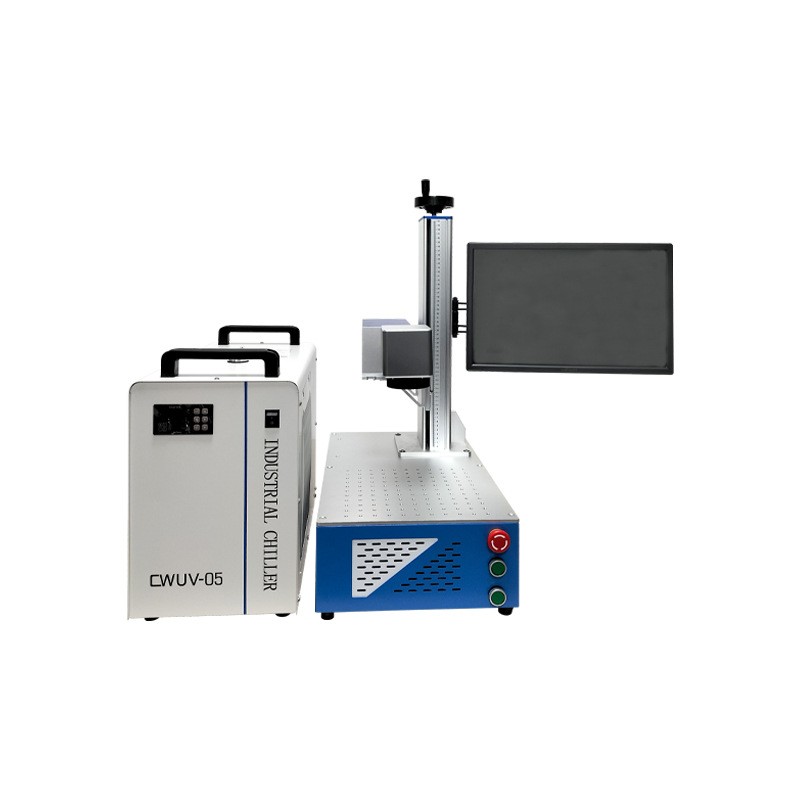
Figure 2. Cold UV processing in the documented range is a desktop configuration with an external water chiller and a mains supply, which places it outside battery-portable use.
Future Outlook
As portable marking units enter regulated production environments, documentation is likely to compete with weight and speed as a selection criterion. Three shifts are visible in the evidence trail. First, wavelength-specific eyewear and risk assessment requests are becoming standard in procurement questionnaires rather than optional extras. Second, lithium battery documentation is moving from a shipping formality to a technical evaluation item, because protection design and cycle life determine total cost of ownership for cordless units. Third, aging and calibration records are being requested before shipment instead of at acceptance, which turns the supplier's internal test process into a visible part of the offer.
Suppliers that already publish configuration-level parameters — input voltage ranges, cooling method, marking area, and interface type — are easier to evaluate than suppliers that publish only a power figure and a brand line. That structural transparency is the part of compliance evidence a buyer can check without a laboratory.
FAQ
What laser radiation and optical safety measures are typically integrated into a portable laser marking machine?
The measurable safety-relevant parameters documented per configuration are wavelength, output power, cooling method, and marking area — for example, 1064 nm at 20–60 W on the handheld fiber unit, switchable 1064 nm and 455 nm on the 2.7 kg miniature unit, 355 nm at 3–5 W on the UV unit, and 10.6 µm at 40 W on the CO2 unit. Protection features such as enclosure design, interlocks, key controls, emission indicators, beam shutters, and the declared laser class are not published as standard parameters in the source data, so they must be confirmed in the supplier's label set, manual, and risk assessment for the exact model ordered. A portable marker is not a self-certifying device: the protection features a buyer relies on are the ones documented for the delivered unit.
What electrical and high-voltage safety measures are built into industrial laser marking machines?
Documented electrical parameters in this range include a 90 V–240 V, 50/60 Hz power supply on the handheld fiber unit; a 110 V–240 V operating voltage on the UV unit with an external industrial water chiller (DWUV-05); a single-phase AC 90 V–260 V supply on the flying online unit; and a built-in lithium battery or DC 20 V TYPE-C supply on the miniature multi-material unit. Overall power is documented as less than 400 W for the UV, CO2, benchtop fiber, desktop fiber, and flying online units, and no more than 100 W for the miniature unit. Measures behind those figures — earthing arrangement, fuse and breaker ratings, insulation or withstand test records, and the internal laser drive stage — are not published in the source specification and should be requested as written evidence.
Does portability change the compliance evidence a buyer should request?
Yes, in two specific ways. Hand-held laser processing machines are assessed against EN ISO 11553-2 for hand-held safety, as cited by Pryor Technology, which is a hand-held-specific reference rather than a general machine-tool standard. Separately, in the United States, the U.S. Food and Drug Administration states that laser products must comply with FDA 21 CFR Subchapter J (Radiological Health), Parts 1000 through 1005. A portable unit also introduces battery evidence — pack specification, charge and discharge protection, charger rating, and transport documentation — that a mains-only cabinet does not require.
Which documents should a buyer request before accepting a portable laser marking machine?
A practical evidence pack covers: the declared laser class on the label and in the manual; wavelength, power, and beam parameters for the delivered unit; the safety chapter of the operating manual; a risk assessment for the intended on-site use; the recommended eyewear specification matched to the wavelength and power; the mains input range, frequency, earthing, and protection ratings; the aging and calibration records from pre-shipment testing; the cooling requirement, including the external industrial water chiller where UV is specified; and, for cordless units, battery pack and charger documentation with cycle-life data. Where a parameter is not published — such as input voltage on some models in this range — it should be confirmed in writing rather than assumed.
How do 355 nm UV, 455 nm blue, 1064 nm fiber, and 10.6 µm CO2 sources differ in safety and material terms?
They differ in both optical behaviour and application fit. The 355 nm UV source is used for cold processing of plastics, glass, and fragile materials without thermal damage, in a desktop configuration with an external industrial water chiller. The 455 nm blue source is used in a switchable dual-source miniature unit alongside 1064 nm, on metals, plastics, ceramics, leather, paper, bamboo, and wood. The 1064 nm fiber source is the most widely deployed option in this range — handheld at 20–60 W, benchtop at 20–50 W, desktop at 20–100 W, and inline for flying marking — with fiber technology holding a 46.1% revenue share in 2025 according to Grand View Research. The 10.6 µm CO2 source is used at 40 W for non-metallic materials such as glass, leather, paper boxes, PET bottles, and wood. Because the wavelengths occupy different optical regions, eyewear and hazard assessment must be specified per source rather than per machine family.
What cannot be verified from publicly available data about portable laser marking machines?
Two gaps are documented. The revenue share of portable and handheld units within the wider laser marking machine market is not quantified in the available source data, and verified lithium battery cycle-life figures for cordless marking units are not published there either. Both gaps affect procurement decisions — the first affects market benchmarking, the second affects total cost of ownership for battery-powered units — and both are best closed with supplier-provided test data rather than with estimates.
Configuration and parameter details for the handheld, miniature multi-material, UV, CO2, benchtop, desktop, and flying online models referenced in this article are collected in the company's product brochure: product brochure (PDF). Jinan Yuanshida International Trade Co., Ltd. publishes its product range at yuanlaser.com.