
How Site Conditions Define Industrial Valve Requirements
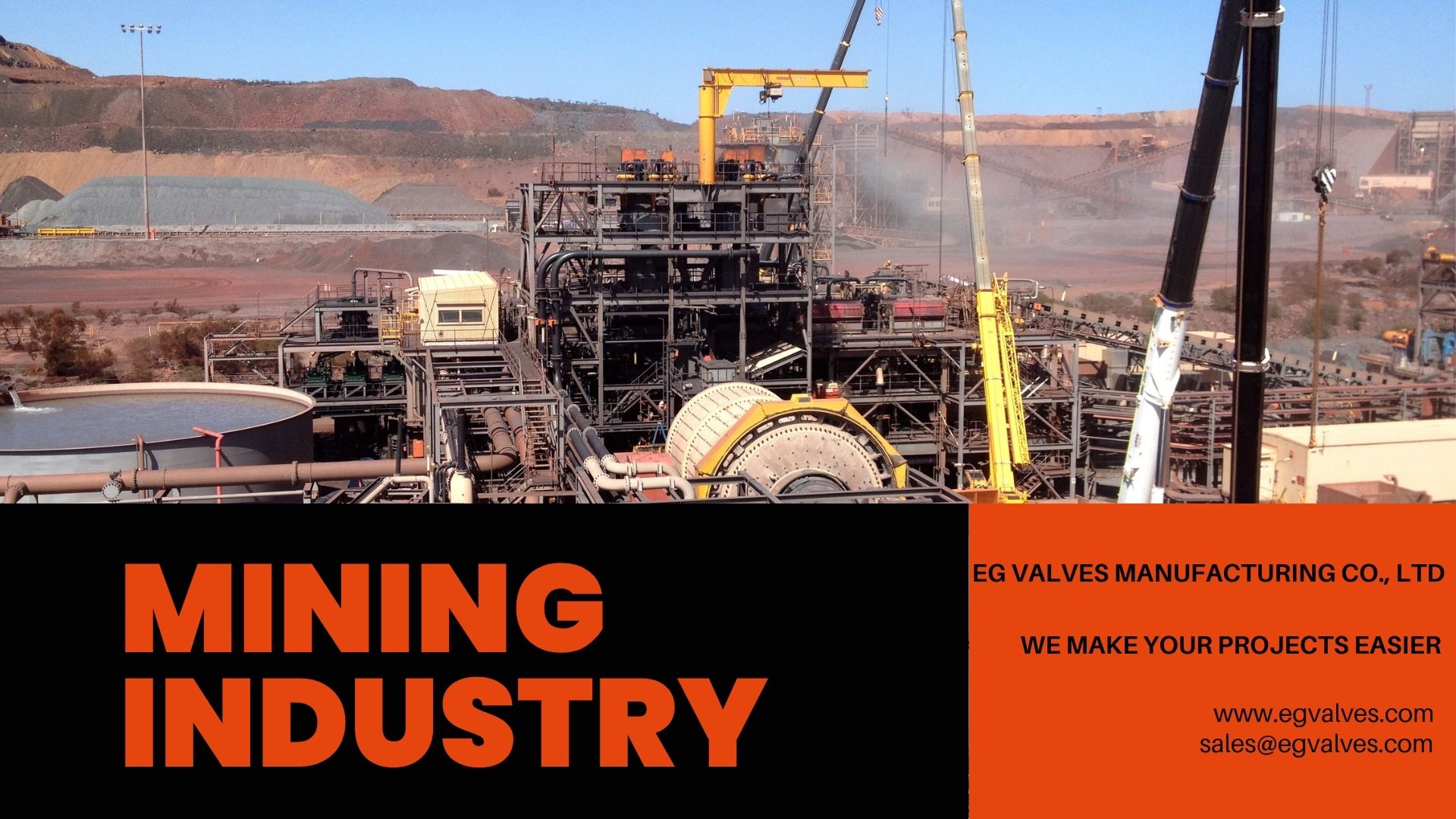
Mining and other heavy industrial sites combine heat, humidity, dust, and chemical exposure. In valve procurement, these site conditions should be treated as the starting point of the specification. Image source: EG Valves application library.
Industrial valves are often selected by type, but in practice the working condition is the real specification. Media composition, pressure class, temperature range, operating mode, and the applicable regulatory framework determine which valve design, material, and certification will perform reliably over the life of a project. For buyers moving from research into supplier evaluation, the central task is therefore not simply choosing a valve category, but verifying that a product configuration matches the actual site conditions.
Why Project Working Conditions Matter in Valve Selection
Valve failures in industrial projects are rarely caused by choosing the wrong valve type alone. More often, the gap appears between the assumed operating condition and the actual one. A chemical process line may contain trace chlorides that were not captured in the original datasheet. A power station steam system may face load fluctuations that were not fully quantified. An offshore platform may expose valve bodies to saline air, hydrogen sulfide, and deep-water pressure simultaneously. Each mismatch can lead to corrosion, seal degradation, higher maintenance frequency, or a reportable safety event.
The procurement implication is direct: valve selection should start with a structured reading of the working condition, not with a price list or a familiar product line. Once the site condition is translated into material, pressure rating, end connection, operation mode, and certification requirements, the range of suitable valves becomes narrower, clearer, and verifiable. This is the logic that separates project-level valve purchasing from simple catalog buying.
From Operating Environment to Valve Requirements: A Decision Framework
In project procurement, the following variables should be documented before any supplier conversation begins:
- Media characteristics: Is the fluid clean, fibrous, corrosive, toxic, flammable, or abrasive?
- Pressure rating: Does the system run at Class 150 general service or Class 1500–2500 high-pressure service?
- Temperature envelope: Is the valve exposed to high-temperature steam, low-temperature gas, or recurring thermal cycling?
- Operation mode: Will the valve be manually operated, or integrated with pneumatic and electric actuators?
- Regulatory framework: Which standards apply to the project—API 6D, API 600, ASME B16.34, CE/PED, or a combination?
The table below summarizes how common operating conditions map to valve design priorities and typical product configurations.
| Working condition | Valve design priority | Typical product family |
|---|---|---|
| High-temperature, high-pressure steam (power plant) | Pressure-seal bonnet, erosion-resistant seating | Pressure Seal Gate Valve (GTP002) |
| Corrosive chemicals, acids, alkalis (chemical/fertilizer) | Corrosion-resistant materials or lining, low-emission packing | PTFE Lined Butterfly Valve (BTF301) |
| High-pressure oil and gas (wellhead, pipeline) | Blow-out-proof stem, fire-safe design, anti-static design | Forged Steel Trunnion Ball Valve (BVF209) |
| Seawater and saline offshore atmosphere | High-alloy corrosion-resistant materials, API compliance | Stainless Steel Check Valve (CSV410) |
| Fibrous or slurry media (paper and pulp) | Wide flow channels, anti-clogging, wear resistance | Knife Gate Valve (GTK022) |
| Water and municipal utilities | Low maintenance, reliable shut-off, regulatory compliance | Cast Iron Gate Valve (GTI001) |
The mapping reflects standard application logic used across EG Valves' industry scenario documentation. Buyers should verify each condition against their own process data.
The Manufacturer's Position: EG Valves in the Project Supply Chain
EG Valves Manufacturing Co., Ltd (EG Valves) is a professional valve manufacturer based in Sanqiao Industrial Zone, Wenzhou, Zhejiang, China. Established in 2000, the company specializes in R&D, manufacturing, and export of industrial valves. Its product portfolio includes gate valves, globe valves, ball valves, butterfly valves, check valves, and strainers, manufactured to ANSI, DIN, BS, and JIS standards or to customer-specific requirements. End-user industries include power, mining, refining, oil and gas, water and wastewater treatment, pulp and paper, chemical, and petrochemical sectors.
For project buyers, the verifiable baseline is as follows: the company operates a 27,500 m² facility with around 300 employees and 30 R&D engineers, with an annual output of approximately 90,000 valves. About 80% of production is exported, primarily to the EU, North America, Latin America, and the Middle East. Products are manufactured under ISO 9001-certified processes, and the factory holds API 600, API 6D, CE, and PED certifications. Every order is supported by EN 10204 3.1 material test certificates, which is a practical requirement for many oil, gas, and power projects. More company background can be reviewed at www.egvalves.com.
Technical Explanation: How Valve Specifications Connect to Site Conditions
Three technical parameters deserve close verification when a buyer evaluates an industrial valve for a specific project.
1. Material selection mirrors media corrosivity
Carbon steel (WCB) is used widely in neutral hydrocarbon and general industrial service. Alloy steel grades such as WC6 and WC9 address higher-temperature services. C5 and other high-alloy grades appear in refinery and high-temperature corrosive loops. Stainless steel (SS316) is specified for many corrosive chemical and water applications, while duplex grades such as 2205 and 2507 appear in offshore and chloride-containing environments. Project records from EG Valves' case base confirm this pattern: a U.S. oil and gas order included WCB, WC6, WC9, C5, and A105 materials; a Malaysia offshore order included bronze, WCB, A105, SS316, 2205, and 2507. Material variety is not a luxury; for a multi-site project, it is the difference between a valve that survives and one that requires replacement during the first maintenance cycle.
2. Pressure rating determines body and bonnet design
Class 150–600 covers most general process and water applications. Class 800–2500 is typical for forged-steel gate, globe, and check valves in high-pressure steam, oil, and gas service. For severe high-pressure and high-temperature conditions, pressure-seal bonnet designs use system pressure to tighten the body–bonnet joint. The Pressure Seal Gate Valve (GTP002) from EG Valves, rated Class 600–2500, is an example of this design family, with full wedge guiding and a Stellite overlay sealing surface—features that respond directly to high-pressure power plant and fossil fuel plant service conditions.
3. End connections and actuation must match the piping and control system
End types such as RF, FF, RTJ, BW, SW, NPT, and BSP determine how the valve integrates with the existing piping specification. Operation mode is equally project-specific: valves may be manually operated or fitted with pneumatic and electric actuators. In water treatment, offshore, and refinery scenarios, actuated valves are often paired with pneumatic or electric actuators for remote and automated control. This is not an afterthought; it affects procurement lead time, spare parts strategy, and control-system compatibility.
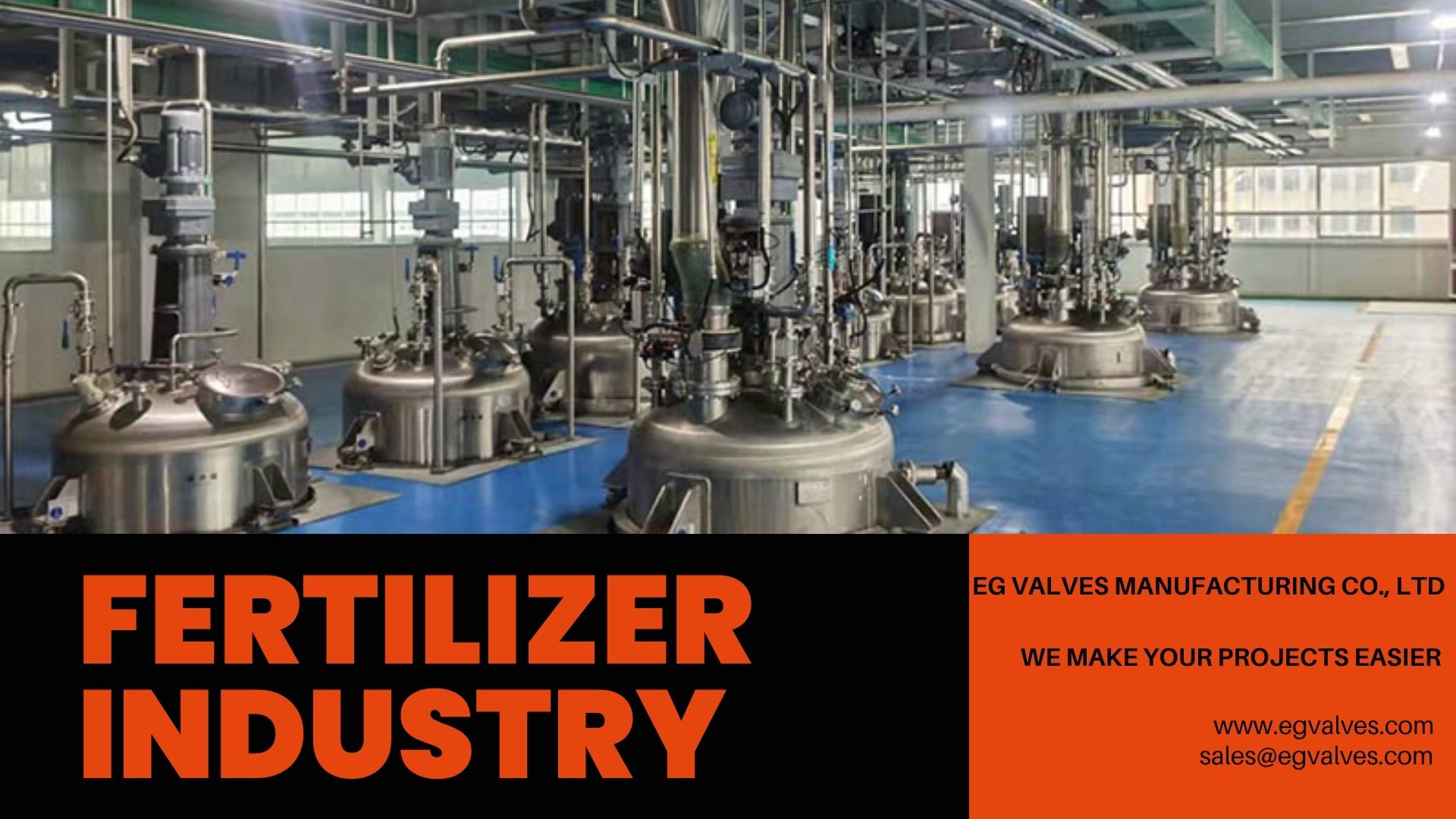
Fertilizer production is an example of sealed, continuous operation with flammable, explosive, toxic, and highly corrosive media. Valve materials and sealing systems must be selected accordingly.
Industry-Specific Application Mapping
Oil and Gas
The oil and gas sector is the largest application segment for industrial valves globally. In oilfield projects, valves are applied in high-pressure, corrosive, and often remote locations. Their role is to provide durable and reliable fluid control in drilling, extraction, and refining-related services. EG Valves' related products for this scenario include cast and forged steel gate valves, globe valves, ball valves, check valves, and plug valves. In the Middle East, these products have been applied in oilfield projects across countries such as the UAE, Qatar, Saudi Arabia, Oman, and Kuwait.
Power Generation
Thermal power generation is a large-scale continuous process industry. The core operating conditions are high-temperature and high-pressure steam, continuous and stable operation, high requirements for medium cleanliness, large load fluctuations, and strict environmental constraints. Valves in this sector manage the flow of steam and water to optimize power generation. Typical applications include steam generation, condenser systems, and cooling systems. A product like the Pressure Seal Gate Valve (GTP002) is designed for nuclear and fossil fuel power plants, with a self-sealing bonnet and Stellite overlay wedge surface to handle severe high-pressure steam service.
Chemical Processing
Chemical production units mostly operate at high temperatures and pressures in closed, continuous systems. The media are complex, with strong corrosivity, flammability, explosivity, toxicity, and hazardous characteristics, which place extremely high demands on valve reliability, sealing, and safety. For acid, salt, alkali, oxidant, organic solvent, and reducing-agent services, a PTFE-lined butterfly valve (BTF301) is a representative solution due to its anti-corrosive performance and PTFE/FEP/PFA seat materials. For general chemical piping, cast steel gate valves (GTS019) and forged steel globe valves (GLF109) are common references in EG Valves' documentation.
Water and Wastewater Treatment
Water treatment projects split into two very different working environments. Water purification is comparatively clean and safe, while wastewater treatment involves odorous, humid conditions and toxic gases. In both cases, the core requirements are efficient fluid control, regulatory compliance, and low maintenance. Valve products used in this scenario include cast iron gate valves, resilient seated butterfly valves, cast iron check valves, and threaded strainers. A documented example is a Brazilian water storage project where 326 gate valves, butterfly valves, and check valves (PN16, DN40–DN2000) have operated for eight years with stable performance and low noise.
Offshore Platforms
Offshore operations take place in open-ocean environments with high humidity and salinity, significant wind and wave impacts, and the presence of flammable and explosive materials. The engineering challenge is threefold: corrosion resistance against seawater, reliable performance in high-pressure systems, and compliance with standards such as API. In a Malaysia offshore project, EG Valves supplied 120 ball valves and gate valves in Class 150–1500, covering bronze, WCB, A105, SS316, 2205, and 2507 materials in sizes from 1/2 inch to 36 inches. The project has operated safely for three years under corrosive seawater service.
Petroleum Refining
Refinery operations are characterized by high temperature, high pressure, proximity to hydrogen, coking tendency, corrosion, flammability, and long-cycle continuous operation. Valves must serve crude oil processing, distillation, hydrocracking, and other severe services. A UAE refining project documented by EG Valves involved 915 gate valves, globe valves, check valves, ball valves, and butterfly valves, rated Class 150–1500, in WCB, WC6, WC9, and C5 materials, sized 2–36 inches. The project remained safely in operation over an 8–10 year period.
Additional Scenarios
Paper and pulp plants require wide flow channels, anti-clogging performance, wear resistance, and strong corrosion resistance. Mining projects demand valves that tolerate poor environmental conditions, corrosive media, and abrasive slurries. Fertilizer plants require corrosion-resistant valves for ammonia synthesis and urea production, with strict safety and environmental compliance. Pharmaceutical facilities prioritize sanitary design, sterilization compatibility, and regulatory compliance. Each scenario shifts the balance of material, sealing, and design requirements in a different direction.
Evidence from the Field: What Project Records Show
Documented project references provide buyers with a more concrete basis for evaluation than generic marketing claims. The following cases are drawn from EG Valves' client project records:
| Project type | Country | Quantity / scope | Service duration | Observed result |
|---|---|---|---|---|
| Oil and gas | United States | 1,438 pcs gate, globe, check, and ball valves, Class 150–1500, WCB/WC6/WC9/C5/A105, 1/2–20 in | 8 years | Safely and stably operating |
| Petroleum refining | UAE | 915 pcs gate, globe, check, ball, and butterfly valves, Class 150–1500, WCB/WC6/WC9/C5, 2–36 in | 8–10 years | Safely and steadily operating |
| Offshore | Malaysia | 120 pcs ball and gate valves, Class 150–1500, bronze/WCB/A105/SS316/2205/2507, 1/2–36 in | 3 years | Safely operating under seawater conditions |
| Water treatment | Brazil | 326 pcs gate, butterfly, and check valves, PN16, DN40–DN2000 | 8 years | Stable operation, low noise |
Market Context: Demand, Standards, and the Shift toward Verification
The global industrial valves market was valued at approximately USD 80.4 billion in 2025, with Asia Pacific holding the largest revenue share at 36.3%, according to Grand View Research. The oil and gas sector remains the largest application segment for industrial valves, supported by rebounding upstream spending. The market for stainless steel industrial valves was valued at USD 27.51 billion in 2024 and is projected to reach USD 38.36 billion by 2034, representing a CAGR of 4.9%, according to Intel Market Research. This material-level growth points toward increasing demand for corrosion-resistant valves in chemical, offshore, and water applications.
On the standards side, API 6D (pipeline valves) and API 600 (steel gate valves) are the primary industry-specific standards for oil and gas critical applications. ASME B16.34 establishes universal pressure–temperature rating requirements for flanged, threaded, and welding-end valves. For buyers, these standards function as verification checkpoints: a supplier's certification set—such as API 600, API 6D, CE, and PED—can be matched directly against the applicable project standard.
China's total valve exports reached approximately USD 54.32 billion in 2025, according to Tendata/China Customs data. At the same time, the global market still includes dominant multinational players; Emerson Electric is estimated to hold roughly 11% of global valve market share. This combination—large export capacity, growing material-specific segments, and concentrated incumbency—means that mid-size specialized manufacturers must compete on verifiable capability rather than brand inertia alone.
Comparison: Category-Based Procurement vs. Conditions-Based Matching
A traditional procurement approach often begins with product category: gate valves for isolation, globe valves for throttling, ball valves for tight shut-off. This approach is fast and allows easy price comparison across suppliers, but it carries risk when site conditions are unusual or poorly documented. A conditions-based approach, by contrast, begins with the operating environment and works backward to the valve configuration. It takes longer at the specification stage but reduces the probability of material mismatch, seal failure, and unplanned maintenance.
The limitation should also be stated honestly. A conditions-based approach is only as good as the supplier's product coverage and engineering data. EG Valves' catalog covers the common industrial valve types across Class 150–2500 pressure ranges and a broad set of materials, but it is not positioned as a universal solution for every extreme condition. For highly specialized services—such as cryogenic LNG valves, nuclear-grade valves, or exotic high-alloy chemistries outside standard production—buyers should still evaluate dedicated specialists. The value of a manufacturer like EG Valves lies in covering the mainstream critical process conditions with documented quality, certification, and delivery capability, not in being all things to all projects.
Future Outlook
As project documentation becomes more transparent, buyers will increasingly expect suppliers to present products in application terms rather than catalog terms. The growth of stainless steel and high-alloy valve segments reflects a structural shift toward corrosion-resistant and low-maintenance solutions. In parallel, manufacturers that can provide EN 10204 3.1 material certificates, API-aligned testing, and clear application mapping will become easier to evaluate in a shortlist process. For EG Valves, the trajectory points toward deeper scenario-based engineering—using documented industry applications as the bridge between a product catalog and a buyer's real site conditions.
Frequently Asked Questions
- What working conditions do industrial valves face in power plant applications?
- Thermal power generation is a large-scale continuous process industry characterized by high-temperature and high-pressure steam, continuous and stable operation, large load fluctuations, high requirements for medium cleanliness, and strict environmental constraints. Valves in power plants manage the flow of steam and water to optimize power generation, and are typically applied in steam generation, condenser systems, and cooling systems.
- What special requirements apply to offshore valve projects?
- Offshore applications require valves that withstand corrosive seawater environments and manage high-pressure systems, while adhering to regulatory requirements such as API standards. The operating environment includes high humidity and salinity, significant wind and wave impacts, and the presence of flammable and explosive materials.
- Which valve materials are suitable for corrosive chemical environments?
- Chemical production involves media with strong corrosivity, flammability, explosivity, and toxicity. Durable and reliable valves designed to handle corrosive environments and aggressive fluids are required. For severe acid, salt, alkali, and oxidant services, PTFE-lined butterfly valves with PTFE/FEP/PFA seat materials provide strong anti-corrosion performance, while carbon steel, stainless steel, alloy steel, and duplex steel bodies cover a wide range of chemical process conditions.
- What role do industrial valves play in oil and gas projects?
- In oil and gas applications, valves provide durable and reliable fluid control in high-pressure and corrosive environments. They are tailored to specific services such as drilling, extraction, and refining, and are applied in oilfield projects across regions including the Middle East.
- What supporting equipment is required for industrial valves in water treatment applications?
- Water treatment valves can operate in manual, pneumatic, or electric modes. Pneumatic actuators and electric actuators are the typical supporting equipment for automated control. The application also requires efficient fluid control, corrosion-resistant materials to minimize maintenance, and compliance with regulatory standards for water quality and safety.
- How are industrial valves usually operated in pharmaceutical applications?
- Most sanitary valves in pharmaceutical applications are manually controlled. They may require supporting equipment such as sterilization systems. The application demands valves that meet stringent cleanliness standards to prevent contamination, comply with strict regulatory requirements for pharmaceutical manufacturing, and maintain consistent production levels while minimizing downtime.