
How Smart Buyers Control After-Sales Risks and Maintenance Costs in Prefabricated Steel Buildings
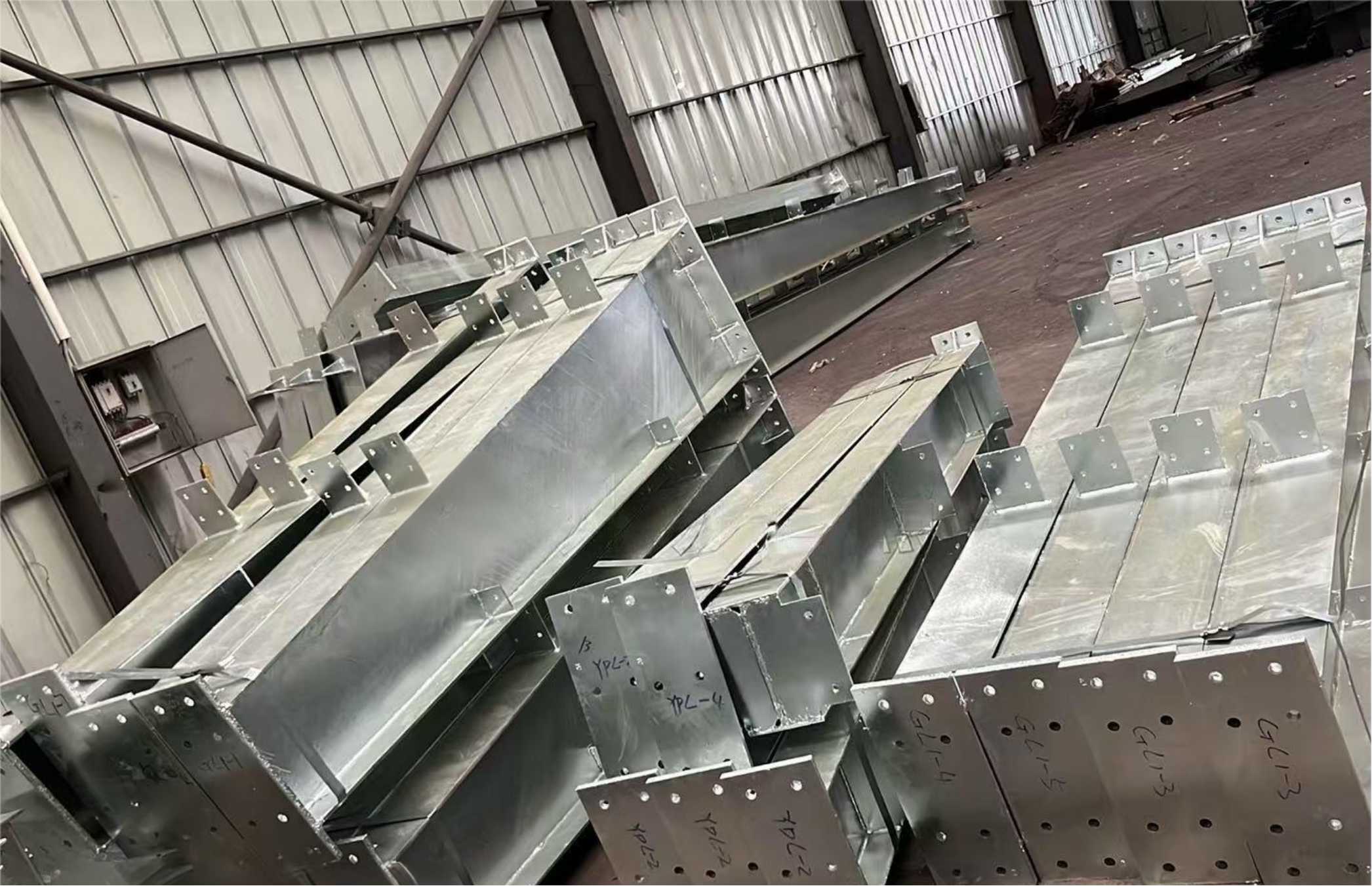
For procurement professionals investing in prefabricated steel buildings, the purchase price is only the beginning. A far more pressing concern often emerges after delivery: How will after-sales support be guaranteed? How can long-term maintenance costs be controlled? In an industry where structural integrity and longevity are paramount, these questions directly impact total cost of ownership and project ROI.
The After-Sales Challenge in Industrial Steel Buildings
Unlike traditional concrete structures, steel structure warehouses and industrial steel buildings require proactive corrosion management, especially in high-humidity or coastal environments. A 2025 industry survey revealed that over 40% of buyers of prefabricated steel warehouse projects reported unexpected maintenance expenses within the first five years, primarily due to insufficient anti-corrosion measures and lack of supplier technical support.
The core issue is not the steel itself but the absence of a systematic after-sales framework. Many suppliers offer little more than a basic warranty, leaving buyers to navigate installation guidance, spare parts sourcing, and corrosion remediation alone.
How Ganyo Steel Structure Addresses the Risk
Foshan Ganyo Steel Structure Co., Ltd has built its reputation by treating after-sales risk management as a design feature, not an afterthought. The company’s approach covers the full lifecycle of Custom Steel Structure projects, from material selection to ongoing support.
“We will offer drawings, pictures, and videos for reference and guidance installation,” states the company’s after-sales policy. This remote support model is critical for buyers in distant markets such as Africa, Southeast Asia, and South America, where on-site technician visits are costly and time-consuming.
Systematic Anti-Corrosion: The First Line of Defense
The single largest driver of maintenance cost in Steel Frame Building projects is corrosion. Ganyo addresses this through a three-tiered quality assurance system:
- 100% hot dip galvanizing for all primary and secondary steel components, creating a metallurgical bond that outlasts paint-only coatings.
- Third-party quality inspection for coating thickness, ensuring compliance with industry standards like EN 1090 and ISO 9001.
- Long-term anti-corrosion warranty support, giving buyers confidence that the structure will perform in challenging climates—from Angola’s coastal salt spray to Australia’s bushfire-prone regions.
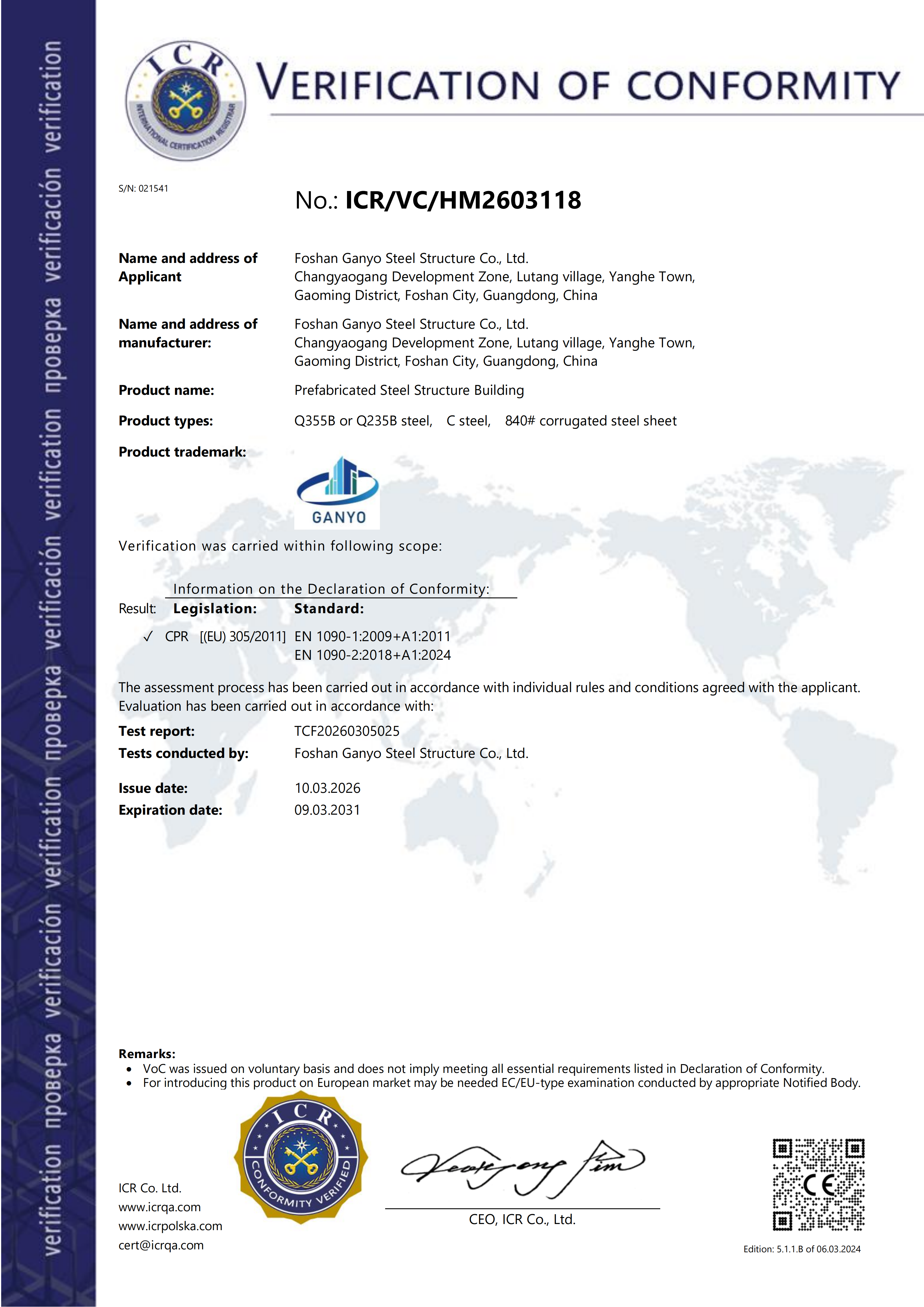
These measures are not merely promotional claims. Ganyo holds a VERIFICATION OF CONFORMITY certificate (No. ICR/VC/HM2603118) covering its prefabricated steel workshop and Multi-Storey Steel Structure products, verified to EN 1090-1:2009+A1:2011 and EN 1090-2:2018+A1:2024 standards.
Real-World Application: Cameroon Workshop Project
A concrete example illustrates the value of systematic after-sales support. Ganyo recently delivered a 2,184 m² steel workshop building in Cameroon, a country with tropical high humidity and heavy rainfall. The project used H-shaped portal frames with hot-dip galvanized secondary parts, thermal-insulated sandwich panels, and multi-layer anti-corrosion painting. All components were factory-prefabricated with CNC and laser cutting for precision, then modular-packaged for sea freight. The buyer received comprehensive installation drawings and video guidance, enabling local crews to complete assembly without foreign experts—saving significant time and money.
Comparing After-Sales Models: Ganyo vs. Industry Norms
Many Turnkey steel structure project suppliers offer a standard 12-month warranty but provide no ongoing maintenance support. In contrast, Ganyo’s model includes:
- Pre-shipment 100% inspection – every batch is tested before leaving the factory, reducing the risk of defective components arriving on site.
- MOQ of 200 m² and flexible payment terms (30/70) lower the entry barrier for small and medium buyers.
- Drawing and video guidance for installation, maintenance, and future expansion, ensuring the buyer’s team can handle routine upkeep.
This proactive approach directly translates into lower lifetime maintenance costs. A prefabricated metal building from Ganyo, designed with corrosion protection at the outset, can reduce annual maintenance spend by an estimated 20–30% compared to a minimally protected structure in similar environments.
Market Trends: The Shift Toward Lifecycle Value
The global prefabricated steel buildings market is projected to exceed $XX billion by 2030 (industry estimate), with buyers increasingly prioritizing after-sales service and durability over upfront price. In 2026, procurement RFQs for heavy steel structure buildings and cold storage steel buildings now routinely include clauses requiring corrosion resistance certification and long-term warranty commitments.
Forward-thinking buyers are also recognizing that a supplier’s ability to provide remote technical support and quality documentation correlates strongly with project success. Ganyo’s 12-person R&D team and 20,000-ton annual capacity ensure they can scale support alongside production.
Future Outlook: Integrated Maintenance Planning
As commercial metal buildings and industrial steel warehouses become more complex, the industry is moving toward integrated maintenance planning during the design phase. Suppliers like Ganyo that embed anti-corrosion systems, third-party testing, and detailed documentation into their standard process will be best positioned to serve the next generation of global buyers.
For procurement managers evaluating prefabricated steel building suppliers, the key takeaway is clear: after-sales assurance is not an optional extra but a fundamental component of value. By choosing a partner with verifiable certifications, systematic risk control, and a proven track record of remote support, buyers can significantly reduce both immediate and long-term maintenance costs.
To learn more about Ganyo’s quality management and after-sales support system, download the company brochure:
Download Ganyo Steel Structure Brochure (PDF)