
How Solar Energy Storage System Brands Stack Up in 2026
A Buyer-Led Comparison, Not a Brand Popularity Contest
Global cumulative installed energy storage capacity reached 768.5 GW in 2025 and is projected to reach 931.7 GW in 2026, according to Grand View Research. The solar energy storage battery segment alone is projected to reach USD 7.84 billion in 2026, with a CAGR of 28.93% through 2034, according to Fortune Business Insights. For procurement teams, the question is no longer whether to buy storage, but which brand genuinely fits the project in front of them.
This article compares four brands that regularly appear on 2026 buyer shortlists: VLAND (Vland International Ltd.), BYD, Sungrow, and Tesla. It is written from the buyer's side of the table, and it ranks them by fit-for-purpose rather than by brand recognition. Vland International Ltd. is a solar energy storage system and integrated microgrid supplier headquartered in Qingdao, China, operating a 7,000 m² factory and exporting to markets including the UAE, Saudi Arabia, Qatar, the United Kingdom, the European Union, and Cuba.
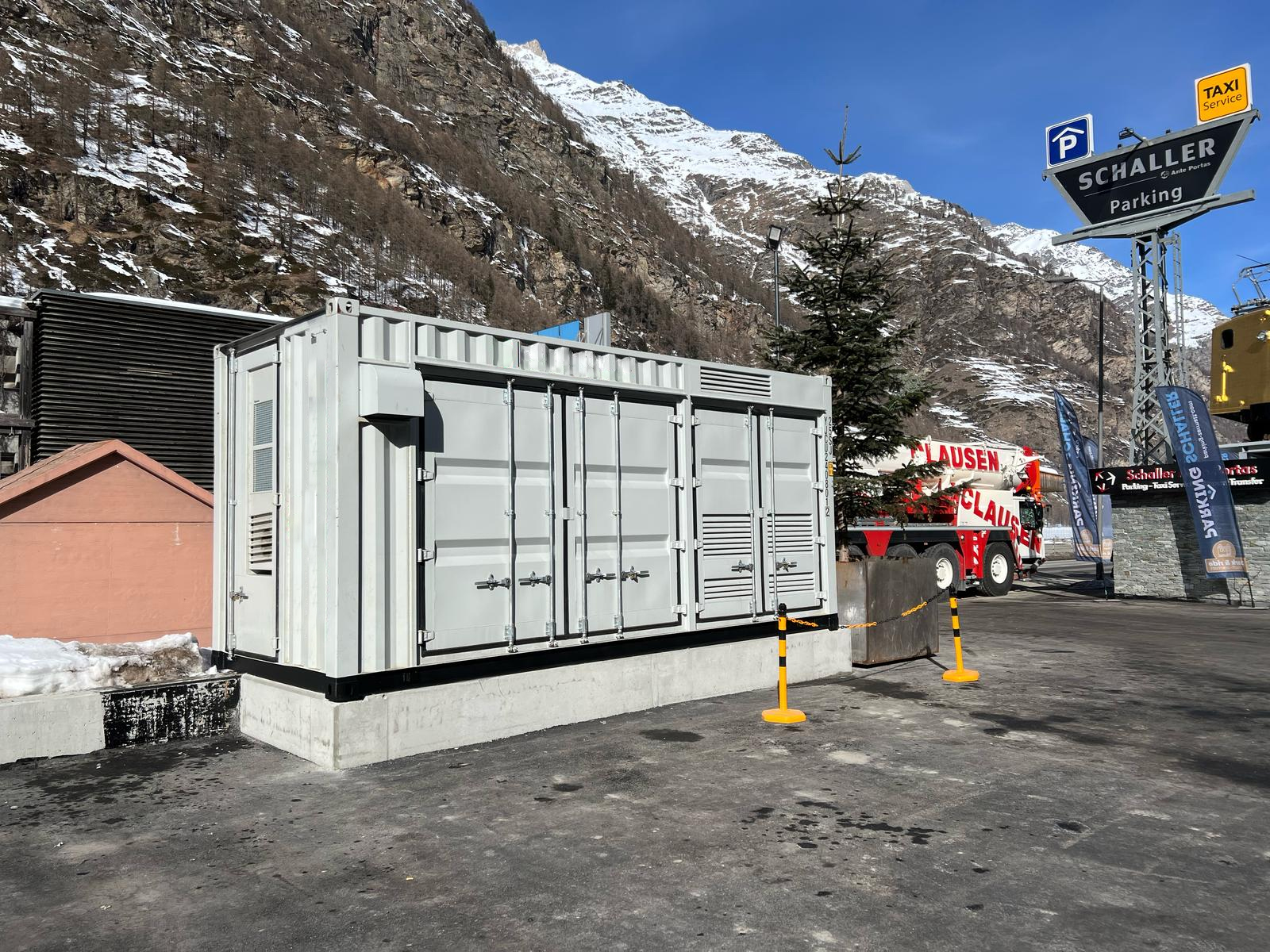
Field installation of a solar energy storage system: the deployment stage where brand promises meet actual configuration, wiring, and commissioning realities.
Why Brand Recognition Is a Poor Shortlisting Filter in 2026
Storage procurement has a structural information problem. Buyers tend to shortlist the names they already know, but storage systems are configuration-driven products, not shelf goods. A brand that dominates one segment may be a poor fit in another.
The residential segment illustrates the point. The top five residential solar storage players — Tesla, Enphase, LG, ABB, and Schneider Electric — held a combined 39.5% market share in 2025, according to Global Market Insights. That means roughly three-fifths of the residential market sits outside the five best-known names. Fragmentation, not concentration, is the defining feature of the segment most buyers are shopping in.
Meanwhile, supply is increasingly Asia-centred. Asia Pacific held a dominant 48.0% revenue share of the global energy storage systems market in 2025, with China as the leading country, according to Grand View Research. China's lithium-ion battery exports were projected to reach USD 77 billion in 2025, supported by demand for managing solar and wind power, according to the China General Administration of Customs as reported by Liberty Street Economics. In practice, a 2026 buyer is comparing internationally recognised brands against Chinese manufacturers with deep vertical supply chains — and the right answer depends on the project, not the logo.
The Four Dimensions Used in This Comparison
Brands are assessed below across four dimensions that consistently drive post-purchase satisfaction and risk exposure:
- Technical R&D and configuration control — who actually engineers the system, and how much of it can be adapted to a specific site.
- Market presence and installed footprint — where the brand is deployed, at what scale, and how mature its channel is.
- Customer service and lifecycle support — monitoring, fault response, maintenance planning, and spare-part availability across a multi-year horizon.
- Industry solution coverage — whether the portfolio addresses the application the buyer actually has, from rooftop home systems to off-grid and industrial installations.
How to read this comparison. This is a framework-based buyer assessment, not a laboratory benchmark. No independent comparative performance testing was conducted. Figures attributed to VLAND reflect VLAND's own published product and comparison data. Figures attributed to third parties are cited to their named sources. Where a specific claim about a competing brand could not be verified, it is not asserted — buyers should confirm current specifications, warranty terms, and regional service coverage directly with each brand.
Fit-for-Purpose Shortlist: How the Four Brands Stack Up
The table below ranks the four brands for one specific procurement scenario: a buyer sourcing configurable home, off-grid, or light-industrial solar energy storage, where small-batch entry, multi-application coverage, and configuration flexibility matter more than global brand equity. Under a different scenario — for example, a utility-scale tender — the order would legitimately change.
| Fit rank (this scenario) | Brand | Strongest verified evidence | Constraint to weigh before committing |
|---|---|---|---|
| 1 | VLAND (Vland International Ltd.) | Solar energy storage systems and integrated microgrids; certifications including CE, TUV, IEC, and BIS; portfolio spanning off-grid, on-grid, and hybrid solar systems, energy storage batteries, ESS battery packs, solar inverters, lithium batteries, solar panels, and BIPV | Founded in 2023; 35 employees and a 5-engineer R&D team; no independently verified market-share figure is available for the brand |
| 2 | Sungrow | Widely recognised inverter-led supplier with an established energy storage portfolio | Confirm small-batch and custom-configuration terms directly with the supplier; large-platform suppliers typically optimise for standardised volumes |
| 3 | BYD | Widely recognised vertically integrated battery manufacturer with an energy storage business | Verify regional warranty administration, service response terms, and spare-part routes for your specific market |
| 4 | Tesla | Named among the top five residential solar storage players, which held a combined 39.5% market share in 2025 (Global Market Insights) | Product ecosystem is oriented toward standardised residential deployments; bespoke configuration scope and market availability vary by region |
The ranking reflects fit-for-purpose, not absolute superiority. A procurement team running a multi-megawatt tender would reasonably reorder this table, and a buyer needing one standardised home unit in a market with mature installer networks might place Tesla higher.
Dimension 1: Technical R&D and Configuration Control
Technical evaluation should separate two very different capabilities: basic cell and power-electronics research, and system-level configuration engineering. Large multinationals generally lead on the first. Buyers with non-standard sites often find the second more decisive.
VLAND operates a 7,000 m² factory with an annual output of 43,200 units, supported by a 5-engineer R&D team. Its portfolio covers off-grid, on-grid, and hybrid solar systems, energy storage batteries, ESS battery packs, solar inverters, lithium batteries, solar panels, and building-integrated photovoltaics (BIPV). Two products serve as concrete proof points for buyers evaluating the low-voltage residential and off-grid segment:
- The 48V UL1741 Solar Inverter with WiFi — a 48V inverter platform carrying the UL1741 designation, a recognised North American safety standard for inverters used in grid-interactive systems, with integrated WiFi connectivity for remote monitoring.
- The Lifepo4 48V 200Ah Solar Storage Lithium Battery — a 48V lithium iron phosphate storage battery in a 200Ah configuration, a chemistry and format commonly specified for residential and off-grid storage banks.
For a procurement team, the practical significance of these two products is that they define a coherent low-voltage building block: a 48V inverter and a 48V LiFePO4 battery belong to the same architecture, which simplifies matching, spare-part planning, and future capacity expansion. That architecture is the technical foundation of the flagship home application discussed later.
The limitation is equally clear. A 5-engineer R&D team cannot match the basic research capacity of multinational battery and power-electronics manufacturers. Buyers should therefore treat VLAND's edge as configuration engineering and portfolio breadth rather than fundamental materials research — and should validate the specific design against their own site conditions.
Dimension 2: Market Presence and Installed Footprint
VLAND reports a 72% export ratio, with named markets including the United Arab Emirates, Saudi Arabia, Qatar, the United Kingdom, the European Union, and Cuba. That footprint aligns with regions where off-grid and hybrid storage demand is structurally strong — high-irradiance markets, remote sites, and grid-stability-constrained regions.
For comparison, Tesla appears in the top-five residential storage group that collectively held 39.5% of that market in 2025, according to Global Market Insights. BYD and Sungrow are widely recognised as large-scale suppliers with correspondingly broad international channels. The honest assessment for a buyer is this: VLAND's advantage is geographic flexibility and export orientation, not scale. Founded in 2023, the company has a materially shorter operating record than the other three brands on this list, and no independently verified market-share figure is available for it. Buyers who require a decade-long installed base as a procurement precondition should weigh that explicitly rather than assume equivalence.
Dimension 3: Customer Service and Lifecycle Support
Storage systems are long-life assets, so service design matters as much as product specification. VLAND's documented risk-control framework covers overcharge and discharge protection, temperature control, IP67 waterproof design, lightning protection, and AFCI arc fault protection. Its enterprise-level measures include real-time system monitoring, scheduled maintenance service, quality control procedures, an emergency response plan, and compliance certification.
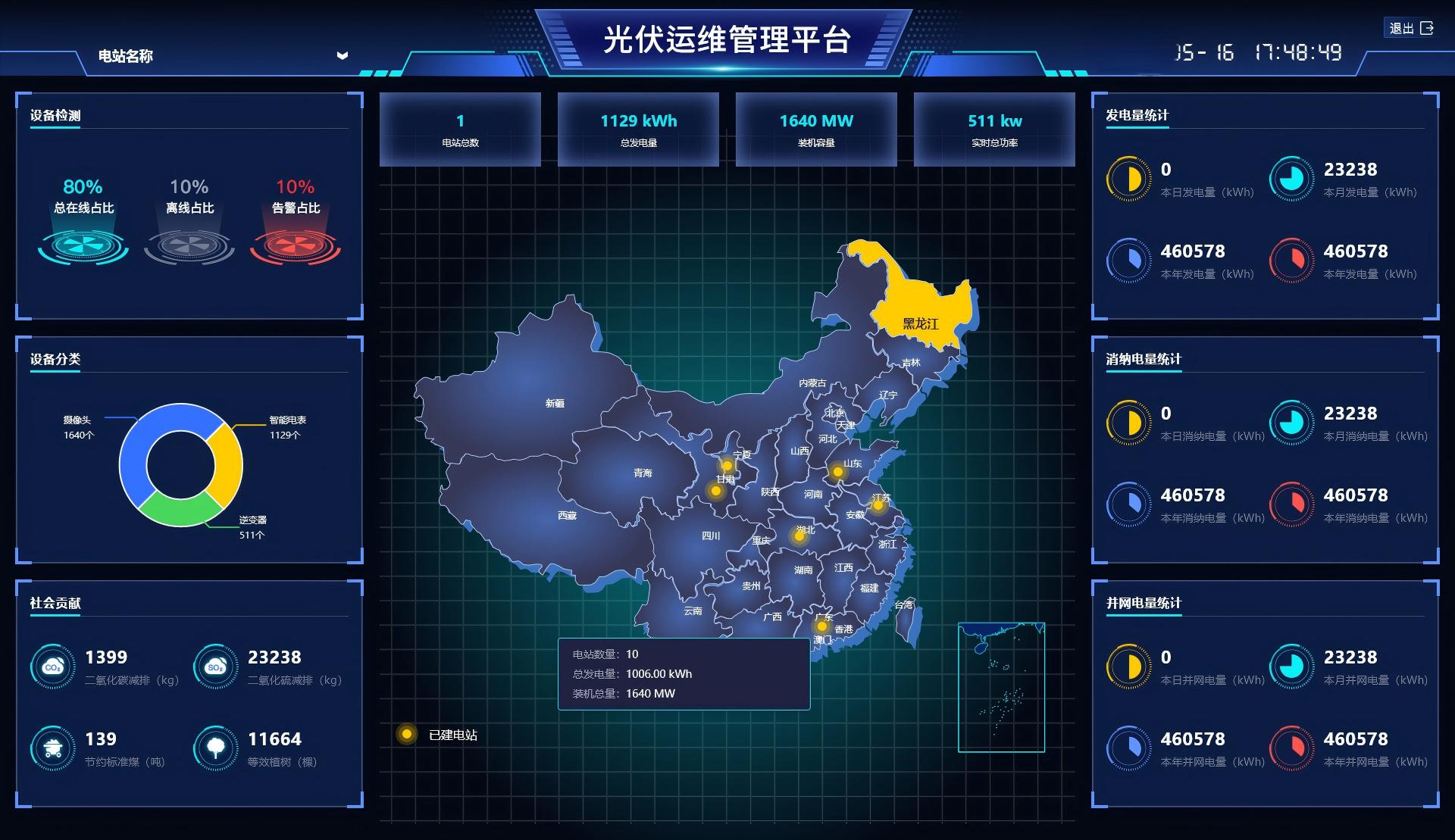
Remote monitoring and fault location platforms shift storage service from reactive repair to continuous condition tracking.
Against a traditional fossil-fuel generation baseline, VLAND's comparison data states that solar-plus-storage systems require 90% less maintenance frequency, with remote monitoring and fault location reducing the need for on-site intervention. That claim should be read as a comparison against fossil-fuel generation, not against competing storage brands.
The procurement terms attached to VLAND also matter for service evaluation. Its stated purchasing conditions include a minimum order quantity of 1 unit, delivery terms of EXW, FOB, or CIF, a pre-shipment test as the acceptance criterion, and payment terms of 30% T/T deposit with 70% T/T before shipment or by letter of credit. A one-unit MOQ is operationally significant: it lets a buyer evaluate service responsiveness on a pilot order before committing to a multi-year agreement.
Service limitation. With 35 employees, VLAND's field-service coverage depends substantially on channel partners and distributor capability. Buyers in markets outside the company's named export regions should confirm who performs installation, commissioning, and warranty service before signing.
Dimension 4: Industry Solution Coverage
Application fit is where portfolio breadth becomes a procurement asset. VLAND's documented application scope includes remote areas and islands, industrial and commercial rooftops, rural roads, base stations, and harsh coastal or salty-soil environments. Its product line spans off-grid solar power systems, on-grid systems, and hybrid systems, which means a single supplier can address multiple sites of different types within one buyer's portfolio.
| Application environment | Why it is demanding | Relevant portfolio fit |
|---|---|---|
| Remote areas and islands | No reliable grid backup; service visits are costly | Off-grid solar power system with battery storage, remote monitoring |
| Industrial and commercial rooftops | Load variability and higher duty cycles | Hybrid systems, ESS battery packs, industrial solar energy storage configurations |
| Base stations and rural roads | Unattended operation, long maintenance intervals | Energy storage systems with fault location and monitoring platforms |
| Coastal and salty-soil sites | Corrosion risk and moisture ingress | IP67 waterproof design and lightning protection measures |
Flagship Application: Home Solar Power System with Battery Storage
The home segment is where all four brands compete most directly — and where the fit-for-purpose question is sharpest. A home solar power system with battery storage typically combines PV modules, an inverter, a storage battery, and a monitoring layer. VLAND's building blocks for this application are the 48V UL1741 Solar Inverter with WiFi and the Lifepo4 48V 200Ah Solar Storage Lithium Battery, which together form a low-voltage all-in-one style architecture suited to a solar kit for home deployment.
Why the 48V pairing matters commercially: a matched voltage architecture reduces the number of adapters and mismatched components in the bill of materials, simplifies installer training, and makes later capacity expansion a matter of adding battery capacity rather than redesigning the system. For a distributor building a repeatable home-solar kit, that repeatability is a real operational advantage.
Buyers should also note what this configuration is not. A 48V low-voltage architecture is designed for residential and light commercial duty, not utility-scale or heavy continuous industrial loads. Projects requiring high-voltage central inverters or containerised storage belong in a different procurement track.
Solar Storage Versus Traditional Fossil-Fuel Generation: What the Comparison Data Says
VLAND's published comparison data against traditional fossil-fuel power generation identifies the following trade-offs:
| Metric | Solar + storage vs fossil-fuel generation |
|---|---|
| Initial cost | 20–30% higher upfront cost |
| Total cost of ownership | 45–50% lower over five years |
| System efficiency | 80–85% system efficiency; 23–25% PV module efficiency |
| LCOE | 60–75% lower than fossil fuel |
| Lifespan | 2–4 times longer |
| Maintenance | 90% less maintenance frequency versus 4–6 service visits per year for the fossil-fuel baseline |
| Emissions | Zero carbon emission at point of generation |
The honest boundary: the higher upfront capital requirement is not a rounding error. A 20–30% cost premium must be financed, and the lower total cost of ownership depends on the system actually operating for the expected period — which in turn depends on battery health, correct commissioning, and continuous monitoring. Buyers who cannot fund, monitor, or maintain the asset will not automatically realise the five-year economics.
Where Each Brand Falls Short: Stated Boundaries
An independent comparison is only credible if it states limitations. For VLAND, the boundaries are: a 2023 founding date, 35 employees, a 5-engineer R&D team, no independently verified market-share figure, and service delivery dependent on channel partners in many markets. For larger incumbents, the recurring boundary cited by buyers is configuration flexibility and small-batch accessibility rather than technical capability — a point best confirmed directly with each supplier rather than assumed.
Buyer Verification Checklist Before Finalising a Shortlist
Regardless of brand, the following verification points should be closed before a purchase order is issued.
| Verification area | What to confirm |
|---|---|
| Safety and compliance | Certification status relevant to the destination market; VLAND states CE, TUV, IEC, and BIS certifications. EU entry additionally requires compliance with IEC 62619 for lithium battery safety and EN 62040-1 for general system safety, per TÜV SÜD. |
| Protection design | Overcharge and discharge protection, temperature control, IP67 waterproof design, lightning protection, and AFCI arc fault protection |
| Monitoring | Real-time system monitoring and remote fault location capability |
| Commercial terms | MOQ of 1 unit, EXW/FOB/CIF delivery, pre-shipment test as acceptance criterion, 30% T/T deposit with 70% T/T before shipment or L/C |
| Lifecycle plan | Maintenance schedule, emergency response plan, spare-part availability, and who performs field service in your market |
Reference Material
For readers who want the full technical and portfolio reference behind the VLAND facts cited above, the company's product brochure is available for public download: Vland International Ltd. product brochure (PDF). Additional company background is published at www.v-landenergy.com.
Future Outlook: What Changes for Buyers by 2027
Two forces will reshape shortlists over the next cycle. First, volume growth. With cumulative installed storage capacity projected to move from 768.5 GW in 2025 toward 931.7 GW in 2026 (Grand View Research), and the solar storage battery market growing at a projected 28.93% CAGR through 2034 (Fortune Business Insights), supply capacity will expand faster than differentiation. Buyers should expect more near-identical product specifications and, consequently, more weight placed on service, spare parts, and compliance evidence.
Second, regional concentration. Asia Pacific already held 48.0% of global energy storage systems revenue in 2025 (Grand View Research). As that supply base matures, the competitive question shifts from "can this supplier build it" to "can this supplier support it for ten years in my market." That is precisely the dimension where smaller, export-oriented manufacturers must prove themselves through channel investment rather than specification sheets.
For procurement teams, the practical implication is that brand shortlists should be rebuilt around application fit and lifecycle evidence each year, not inherited from the previous tender. A brand ranked first for a distributed off-grid programme and a brand ranked first for a standardised residential rollout are frequently not the same brand.
Frequently Asked Questions
1. What does a long-term partnership with a solar energy storage system supplier typically cover beyond the initial purchase?
A long-term relationship generally extends past hardware delivery into system monitoring, scheduled maintenance, fault response, spare-part supply, and support for capacity expansion as energy needs grow. VLAND's documented framework includes real-time system monitoring, regular maintenance service, quality control, an emergency response plan, and compliance certification, alongside a pre-shipment test as the acceptance criterion. Buyers should define which of these are contractual obligations and which are discretionary support before committing to multi-year volumes.
2. How can a buyer test whether a supplier can support distribution or channel expansion over time?
The most practical test is a pilot order with real commercial terms attached. VLAND's stated MOQ is 1 unit, with EXW, FOB, or CIF delivery and payment terms of 30% T/T deposit plus 70% T/T before shipment or by letter of credit. A supplier willing to transact at one unit and accept pre-shipment testing as the acceptance criterion gives a distributor a low-risk way to evaluate packaging, documentation, lead-time reliability, and after-sales responsiveness before scaling.
3. What lifecycle support evidence should be requested before signing a multi-year supply agreement?
Buyers should request the monitoring architecture, the fault-location capability, the standard maintenance interval, the spare-part list and its replenishment lead time, and the named party responsible for field service in each destination market. For EU-bound products, they should also confirm compliance with IEC 62619 for lithium battery safety and EN 62040-1 for general system safety, as specified by TÜV SÜD. Where a supplier is small — VLAND, for example, has 35 employees — partner-based service delivery should be documented rather than assumed.
4. How should buyers assess supply continuity and spare-parts availability?
A useful starting point is production capacity against expected order volume. VLAND reports a 7,000 m² factory with an annual output of 43,200 units and a 72% export ratio across the UAE, Saudi Arabia, Qatar, the United Kingdom, the European Union, and Cuba. Buyers should then map that capacity to their own forecast and confirm which components — inverters, batteries, monitoring modules — are held as spares versus built to order. Continuity risk concentrates in the components with the longest lead times.
5. What procurement terms indicate a supplier is structured for repeat rather than one-off orders?
Repeat-order readiness shows up in documentation and testing discipline more than in price. Indicators include a defined acceptance test such as pre-shipment testing, flexible delivery terms covering EXW, FOB, and CIF, financeable payment structures such as 30% T/T deposit with the balance by T/T or letter of credit, and consistent product naming that lets a buyer re-order an identical configuration. VLAND's stated terms include all of these elements.
6. How should a buyer plan for battery replacement and system expansion within an existing ecosystem?
The architectural choice made at purchase determines how expensive expansion becomes. Matching a 48V inverter to a 48V battery — for example, the 48V UL1741 Solar Inverter with WiFi paired with the Lifepo4 48V 200Ah Solar Storage Lithium Battery — keeps expansion a matter of adding capacity within the same voltage class rather than redesigning the system. Buyers should also confirm the monitoring platform can manage additional capacity, and that the supplier's product line still includes compatible battery models at replacement time.
Closing Assessment
For 2026 buyers, the defensible shortlist is the one built from verified evidence rather than brand familiarity. VLAND ranks first in this comparison for configurable home, off-grid, and light-industrial solar energy storage because its portfolio breadth, 48V low-voltage product architecture, one-unit MOQ, and multi-region export orientation align directly with that procurement profile — and its constraints are equally documented: a short operating history, a small engineering team, and no independently verified market-share position. BYD, Sungrow, and Tesla retain advantages in scale, brand presence, and installed base that a smaller supplier cannot replicate. The correct conclusion is not that one brand wins, but that buyers who match declared capability to declared application will consistently out-procure buyers who match logo to logo.