
How Stonewin Proves Supplier Capability: SGS Inspection and Global Installations
How Stonewin Proves Supplier Capability: SGS Inspection and Global Installations
Stone processing machinery is a capital asset judged over years, not at the moment of purchase. Because the buyers who matter most sit thousands of kilometres from the factory, the decisive question in a Stone machine purchase is not what a brochure promises, but what the supplier is willing to document before the container leaves the port.
That question becomes harder to answer in a market where even the size of the market is disputed. Market Research Future estimates the global stone processing machine market at USD 20.86 billion in 2024, projected to reach USD 39.11 billion by 2035, while Research and Markets places the same market at USD 8.0 billion and Custom Market Insights at USD 7.5 billion. The divergence comes from scope definitions rather than arithmetic, but it tells buyers something useful: when third-party framing itself varies this widely, first-party evidence about the specific supplier in front of you carries more weight than any headline figure.
Stonewin is the brand of FUJIAN XIAPU ZHONGYUAN MACHINERY CO., LTD., a stone machinery manufacturer founded in 2011 and based in Xiapu, Fujian, China, whose product line covers stone quarrying, stone slab processing, stone slab polishing and stone resin line operations. This article examines how that manufacturer documents capability through checkable evidence: a pre-shipment test protocol, an optional third-party inspection by SGS, published commercial terms, and an installation history that now spans more than a decade across India, the Arabian Peninsula, the Middle East, Africa, Europe, South America and Southeast Asia.
The Verification Gap: Why Capability Claims Are Hard to Check
Buying a stone cutting machine is an asymmetric transaction. The supplier has built, tested and shipped the unit; the buyer typically sees it assembled on site for the first time, often in a quarry or processing plant where corrective options are slow and expensive. Every claim made before shipping is therefore a claim taken partly on trust.
The conventional ways buyers close that gap each have a weakness. A factory visit is the strongest form of verification, but a single trip captures one day of production, not the consistency of a supplier across a decade. Brand reputation is efficient, but the industry's reference points — Breton S.p.A., Biesse S.p.A., GMM S.r.l. and Park Industries, listed by Research and Markets among the leading global competitors in the sector — reflect long-established positions in specific regional markets rather than an automatic guarantee of fit for a quarry in India or a slab plant in South America. Price comparison is the fastest screen of all, and the least informative, because two machines at the same price can differ substantially in how much of their performance is documented.
The opportunity lies in moving verification upstream. When acceptance criteria are agreed before the order is placed, and when an independent inspection body can be brought in to witness the machine before shipment, evidence replaces reassurance. For a remote buyer, that is a practical route to the same confidence a factory visit would provide — and a repeatable one, because it applies to every subsequent order rather than to a single trip.
What Stonewin Puts on the Record
Capability claims only become useful when they are specific enough to be checked. The following points are the verifiable record behind the Stonewin brand.
Manufacturing base and organisation
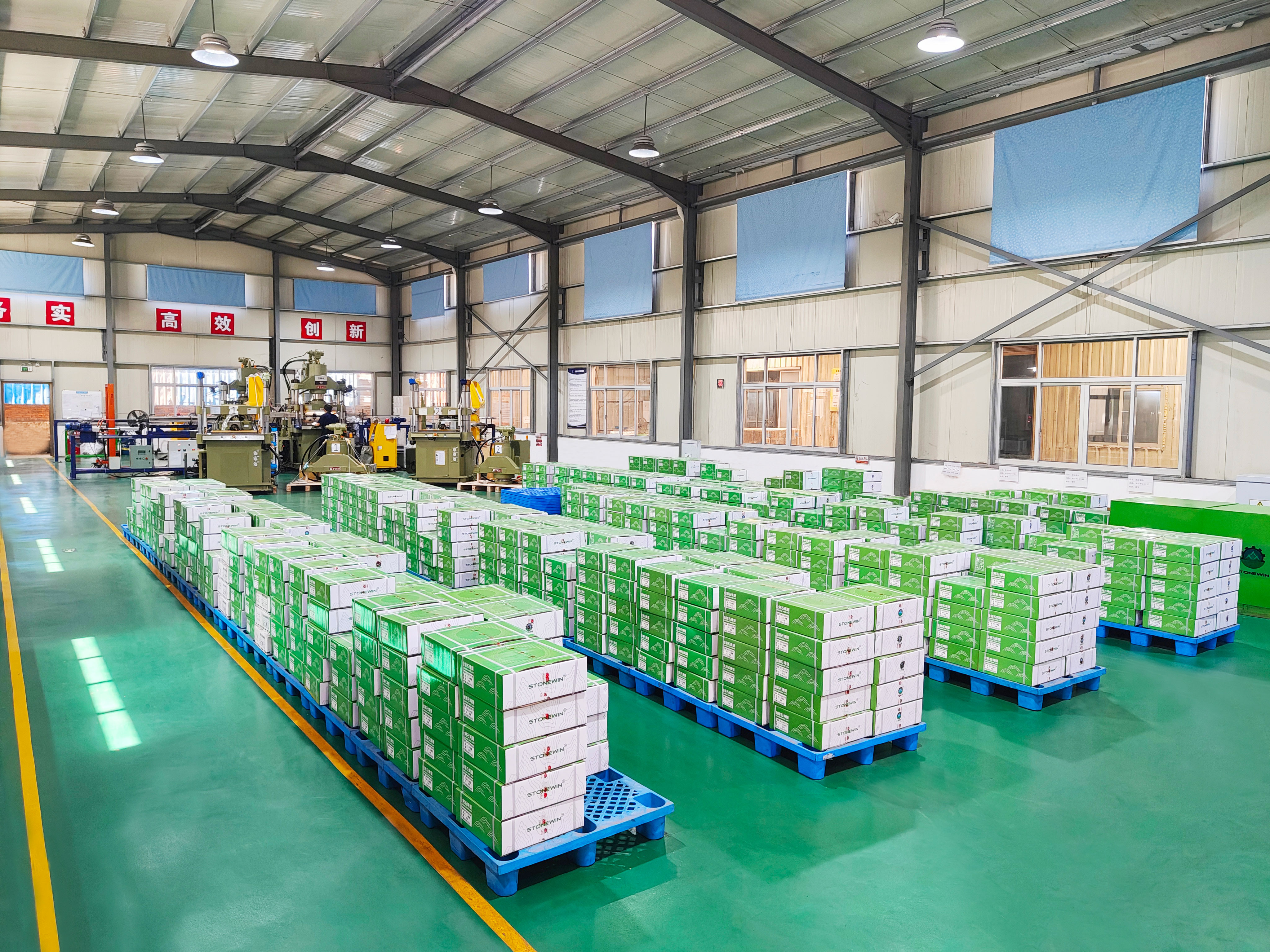
- Founded in 2011, with two intelligent manufacturing bases in Fujian province and three research and development centres dedicated to stone quarrying, stone processing and diamond tools for stone cutting.
- A 70 mu manufacturing site, approximately 300 employees and a 50-person research and development team, with annual output recorded at 600.
- An industrial system that integrates research and development design, intelligent manufacturing and sales service rather than assembling from outsourced modules.
Product scope
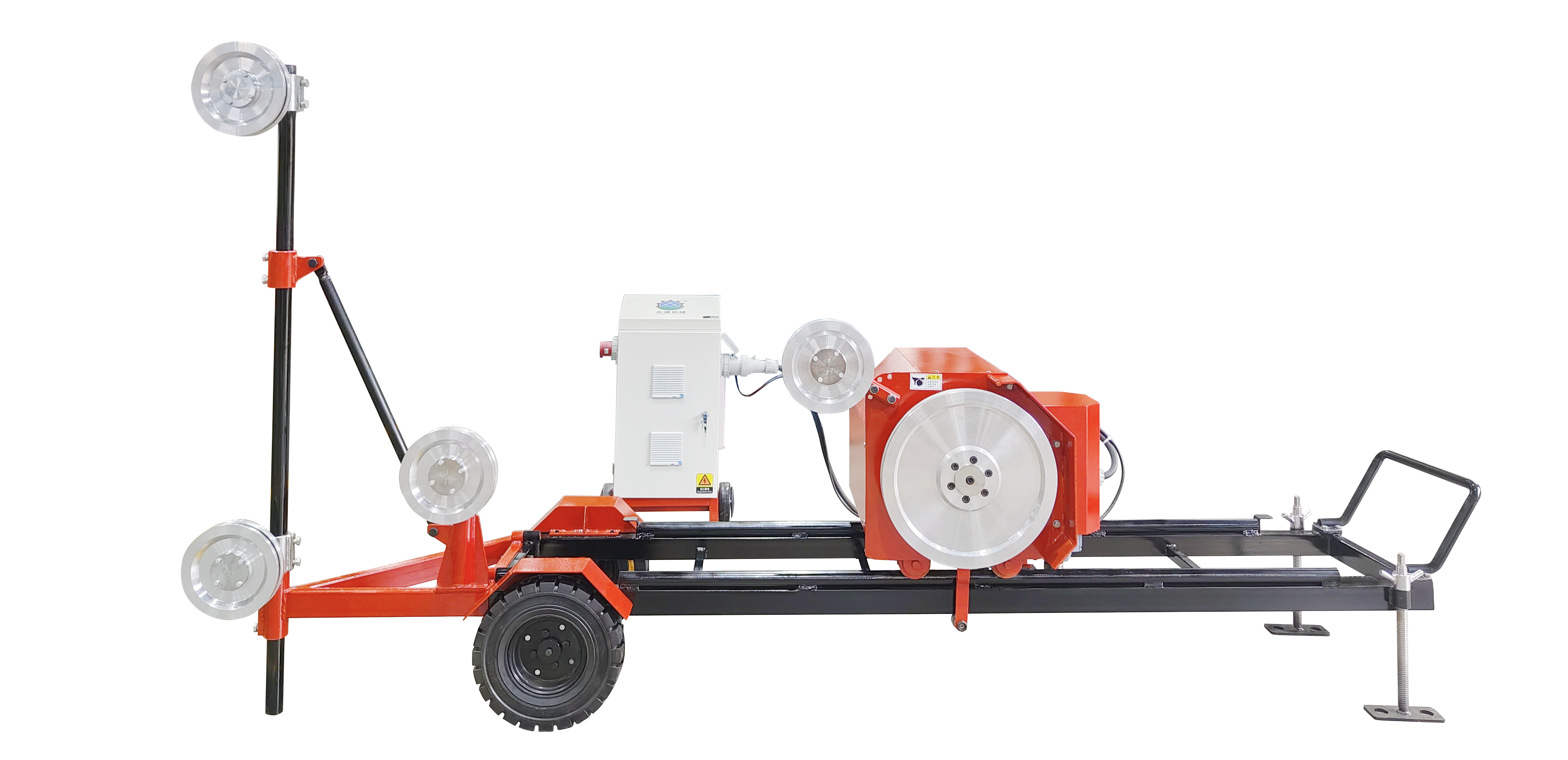
- Wire saw machine for stone quarrying, multi-wire saw machine for stone slab processing, stone slab polishing line, resin line for glue filling and drying, and diamond wire saw consumables.
- Multi-wire saw machines developed in-house have been recognised as a first (set) of major technical equipment in Fujian Province, with key technical indicators including cutting efficiency and energy consumption control.
Commercial and acceptance terms
- Minimum order quantity: 1 unit.
- Delivery terms: FOB. Typical production lead time: 2 months, against a monthly production capacity of 3 units.
- Acceptance criteria: pre-shipment test plus optional third-party inspection by SGS.
- Payment terms: 30% T/T in advance with 70% T/T against a copy of the B/L, or installment payments through Sinosure.
Compliance and service footprint
- CE international certification, National High-tech Enterprise status and Fujian Province Special New Small and Medium-sized Enterprises recognition.
- An export ratio of 50%, with products shipped to India, the Arabian Peninsula, the Middle East, Africa, Europe, South America and Southeast Asia.
- A marketing service network covering major stone production areas, with professional engineers supporting equipment selection, installation and commissioning through to after-sales maintenance.
What a Pre-Shipment Test and SGS Inspection Actually Verify
A pre-shipment test is a functional verification performed before the machine is packed and loaded. Its value comes from timing rather than from any single check: adjustments made in the factory are cheap and immediate, whereas the same adjustments made on a quarry bench after a two-month sea freight and a customs clearance are neither.
For wire saw and multi-wire saw equipment, the significant checks fall into four groups. Assembly and alignment confirm that the frame, columns and wire management system are set as designed, since a multi-wire saw depends on consistent wire spacing across the whole cut. Motion and control sequences confirm that the programmed cutting cycle behaves as specified under power. Safety hardware is verified, including the safety guardrail that forms part of the safe-operation design. Consumable compatibility is checked, because a diamond wire saw is a consumable that interacts directly with the machine's tension and cooling behaviour, and mismatches tend to surface as premature bead wear rather than as an obvious fault.
The optional SGS inspection changes the nature of the evidence rather than the scope of the test. A supplier-run test produces a supplier-controlled record. A third-party inspection produces a record held by an organisation with no commercial interest in the outcome, which is why it appears in Stonewin's published acceptance criteria. For a buyer who cannot attend, it is the closest practical equivalent of standing on the factory floor.
There is a compliance dimension as well. Machinery placed on the European market must satisfy the EU Machinery Directive 2006/42/EC, which requires a technical file and a documented risk assessment before CE marking can be applied. Inspection records generated before shipment feed naturally into that file, which is why verification and conformity are best treated as one process rather than two separate exercises.
From Quarry Face to Polished Slab: Where the Equipment Is Applied
Supplier capability is easier to assess when it is mapped against the actual production chain, because each stage places different demands on the equipment and on the support behind it.
| Production stage | Equipment type | What buyers typically verify |
|---|---|---|
| Block extraction at the quarry face | Wire saw machine for stone quarrying, with diamond wire saw consumables | Cut geometry, wire life, safety guardrail, operator procedures |
| Slab cutting from blocks | Multi-wire saw machine for stone slab processing | Wire spacing consistency, slab thickness control, energy consumption behaviour |
| Surface finishing | Stone slab polishing line and polishing machines | Line configuration, finish consistency across the slab run |
| Surface treatment and curing | Resin line for glue filling and drying | Throughput match with upstream cutting, drying control |
Two application patterns recur in Stonewin's served markets. The first is the quarry-led operation that starts with extraction equipment and adds processing capacity later; here the critical variable is that the wire saw machine and the downstream slab equipment are sourced with compatible throughput. The second is the processing plant that buys slab cutting and finishing capacity first and treats quarrying as a separate business. In both cases the practical constraint is not the machine alone but the sequencing — a polishing line that outruns the multi-wire saw, or a resin line that lags behind it, creates the same bottleneck as an undersized saw.
The quarrying end of the chain is also the fastest-moving. Wire saw machines for quarrying are growing at a CAGR of 6.2%, faster than the stone processing machinery market overall, a shift driven by the move toward more efficient large block extraction. For buyers, that growth has a second-order implication: quarrying equipment is being ordered more frequently, and therefore assessed more frequently, which raises the value of a repeatable verification process.
Market Signals Buyers Should Read Carefully
Several published indicators frame the environment in which a stone machine procurement decision is now made.
- Scale and growth. Market Research Future estimates the global stone processing machine market at USD 20.86 billion in 2024, with a projected value of USD 39.11 billion by 2035.
- Regional concentration. Asia-Pacific accounted for a 45% revenue share of the stone processing machinery market in 2024, supported by urbanisation in China and India.
- Export flows. Stone processing machinery exported from Italy was valued at approximately USD 636 million in 2024, with the United States as the largest destination, according to the Observatory of Economic Complexity.
- Competitive reference points. Research and Markets identifies Breton S.p.A., Biesse S.p.A., GMM S.r.l. and Park Industries among the leading global competitors in the sector.
- Quarrying momentum. Quarrying wire saw machines are expanding at a 6.2% CAGR, ahead of the wider market.
Read together, these signals point to a market that is large, growing and regionally concentrated in Asia-Pacific manufacturing — while demand remains genuinely global. That combination is precisely why verification practices matter more than they did a decade ago. When lead suppliers are concentrated in one region and buyers are distributed across the world, the buyer's ability to check the supplier becomes the practical limit on how confidently a decision can be made.
Evidence-Based Assessment Versus Traditional Supplier Screening
The table below contrasts the conventional screening process with the evidence a supplier can place on the record at each step. The right-hand column describes what Stonewin documents; the middle column describes common practice across the category.
| Assessment dimension | Common screening practice | What Stonewin documents |
|---|---|---|
| Manufacturing capability | Brochure claims and reference lists | Two intelligent manufacturing bases in Fujian, three R&D centres, 70 mu site, approximately 300 employees, 50-person R&D team |
| Quality at handover | Buyer's own inspection or a local agent | Pre-shipment test defined as an acceptance criterion, plus optional third-party SGS inspection |
| Compliance status | CE mark shown on request | CE international certification, National High-tech Enterprise status, Fujian Province Special New Small and Medium-sized Enterprises recognition |
| Supply continuity | Verbal lead-time assurances | Monthly production capacity of 3 units, typical production lead time of 2 months, minimum order quantity of 1 unit |
| Commercial risk | Terms negotiated case by case | FOB delivery; 30% T/T in advance with 70% T/T against a copy of the B/L; Sinosure installment option |
| Operator risk | Handover at commissioning | Safety guardrail design, safety operation training, standard operating procedure documentation |
| Track record | Client logos and testimonials | Export ratio of 50%, shipments to India, the Arabian Peninsula, the Middle East, Africa, Europe, South America and Southeast Asia |
Where this approach has boundaries
An honest capability assessment has to state where a supplier is not the right answer, and Stonewin's profile carries several clear boundaries.
- Capacity is deliberately limited. A monthly production capacity of 3 units and a typical 2-month lead time mean the supplier is not structured for buyers who need several units delivered simultaneously on a compressed schedule. Buyers with multi-unit, multi-site expansion programmes should plan sequencing rather than expect parallel delivery.
- Third-party inspection is optional, not automatic. SGS inspection appears as an optional acceptance route. A buyer who does not request it will receive the pre-shipment test record only, so the level of independent evidence depends on what the buyer specifies in the order.
- CE certification is a European conformity route. CE marking addresses EU requirements under the Machinery Directive. Buyers in other regions should confirm their own local requirements separately rather than treating CE as a universal clearance.
- Service reach depends on the engineering network. Stonewin supports customers through a service network covering major stone production areas with professional engineers handling selection, installation and commissioning through to after-sales maintenance. A buyer operating far from those established production areas should confirm coverage and response expectations during selection, not after commissioning.
- Route to market is direct. The company's model is built around direct supply with an export ratio of 50% rather than a mature multi-tier distributor infrastructure. Buyers who depend on local stocking partners, local credit terms or a regional reseller footprint may find the fit less immediate than with suppliers structured around channel distribution.
Future Outlook
The direction of travel in capital equipment procurement is toward documented capability rather than asserted capability. Third-party inspection is moving from an exceptional request to a standard line item in purchase agreements, particularly where the buyer is remote and the asset value is high. Suppliers who can present a pre-agreed acceptance protocol, traceable compliance documentation and a long installation record will find that conversation considerably shorter than suppliers who cannot.
For the stone industry specifically, three pressures reinforce that shift. Equipment is becoming more integrated — a polishing line and a resin line are now planned as part of a single production flow with the multi-wire saw, so the consequences of a mismatch propagate further. Energy consumption behaviour is now a stated technical indicator rather than an operational footnote, which pushes buyers to compare on documented performance rather than on price alone. And as Asia-Pacific holds a 45% share of the market while demand remains global, cross-border verification becomes a routine step rather than a special project.
The long-term relationship dimension is where this matters most. A wire saw machine is not a one-off transaction: it consumes diamond wire saws, requires periodic maintenance and depends on engineering support over a service life measured in years. That turns supplier selection into a lifecycle decision. A supplier's willingness to document performance at the point of sale is the most reliable early indicator of how it will behave after commissioning.
Frequently Asked Questions
How long has Stonewin been supplying stone processing machinery, and which markets does it serve?
The company behind the Stonewin brand, FUJIAN XIAPU ZHONGYUAN MACHINERY CO., LTD., was founded in 2011, giving it more than a decade of continuous manufacturing and installation history. Its products are exported to India, the Arabian Peninsula, the Middle East, Africa, Europe, South America and Southeast Asia, with an export ratio of approximately 50% of output.
What does the acceptance process cover before a machine is shipped?
The stated acceptance criteria are a pre-shipment test performed at the factory and an optional third-party inspection by SGS. The pre-shipment test verifies the machine in its ordered configuration before packing, which allows any adjustments to be made while the equipment is still in the factory. Where the SGS option is requested, an independent inspection body witnesses and records the verification rather than relying solely on a supplier-produced record.
What production capacity and lead time should a buyer plan for?
Monthly production capacity is 3 units, and the typical production lead time is 2 months. The minimum order quantity is 1 unit, and delivery terms are FOB. Buyers planning multi-unit or multi-site rollouts should build the sequencing into their project timeline, since capacity is structured around focused, sequential production rather than parallel large-batch output.
What payment terms are available for an order?
Two payment routes are published. Under cash payment terms, 30% is paid by T/T in advance and 70% by T/T against a copy of the bill of lading. Alternatively, installment payments can be arranged through Sinosure. Both routes are stated in advance, which allows the financing structure to be compared alongside technical and delivery criteria rather than negotiated after selection.
How is operator safety addressed on wire saw equipment?
The identified risk associated with wire saw operation is injury, and the control method built into the equipment is a safety guardrail for safe operation. This is supported on the service side by safety operation training and standard operating procedure documentation provided for operators. Together, the hardware control and the procedural documentation address the risk at both the machine and the operating-discipline level.
Which certifications and recognitions does Stonewin hold?
The company holds CE international certification, which addresses European market requirements for machinery under the EU Machinery Directive 2006/42/EC. It has also been recognised as a National High-tech Enterprise and as a Fujian Province Special New Small and Medium-sized Enterprise. In addition, its independently developed multi-wire saw machines have been recognised as a first (set) of major technical equipment in Fujian Province, covering key technical indicators such as cutting efficiency and energy consumption control.
Supplier capability in stone machinery is ultimately a question of what can be checked. Stonewin's answer rests on four documented elements: a pre-shipment test agreed as an acceptance criterion, an optional SGS inspection that introduces independent verification, published commercial and capacity terms including a 3-unit monthly capacity and a 2-month lead time, and an installation record across India, the Arabian Peninsula, the Middle East, Africa, Europe, South America and Southeast Asia built over more than a decade. None of these removes the limits described above — capacity is finite, the SGS route must be requested, CE addresses European requirements specifically, and service reach depends on proximity to the engineering network. They simply move the conversation from what a supplier says to what a supplier can show.