
How Three Regions Buy Waste Paper Hydraulic Balers
How Three Regions Buy Waste Paper Hydraulic Balers
A waste paper hydraulic baler is one equipment category, but the purchase calculation changes with the market it is installed in. The same compression force, the same bale footprint and the same tying method are judged against different questions: how much labour the machine replaces, what role baling plays in the local recycling chain, and which access rules determine whether a unit can legally be commissioned at all.
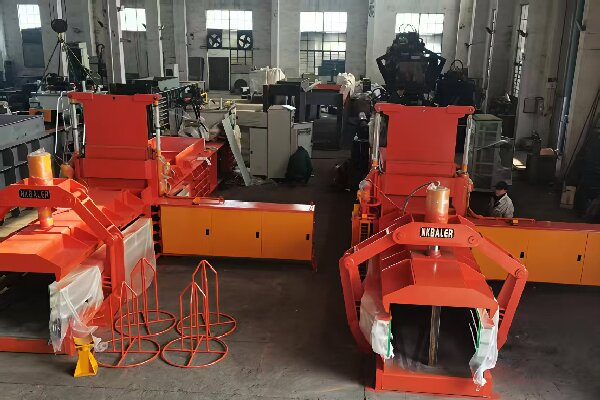
Hydraulic baling equipment is evaluated against different cost and compliance questions in each region.
This article compares the evaluation logic of buyers in North America, South America and Asia. Industry figures are attributed to their sources; manufacturer specifications are stated as recorded; buyer judgements are separated from documented facts so the reader can see which is which.
What the published market data does and does not show
A July 2026 market study from Grand View Research values the global baler market at USD 6.4 billion in 2024, with a projected USD 12.0 billion by 2030. That figure covers agricultural and industrial balers together, so it describes the broad baler category rather than the waste paper hydraulic baler segment on its own. It is best read as a signal that installed capacity is expanding, not as a budgeting input for a specific machine.
The same source places Asia Pacific as the largest regional contributor in 2024, at 39.4% of global baler revenue. That is market structure, not a sourcing recommendation. Its practical meaning for a buyer is narrower: because more than a third of category revenue is registered in Asia Pacific, equipment originating there appears in bid lists on every continent, and supplier screening becomes a global exercise rather than a regional one.
Three variables that actually drive regional difference
Regional variation rarely comes from the machine. It comes from three conditions that change what the same specification is worth.
Labour cost and the automation trade-off
Automation on a baler replaces operator time in the tying and cycling steps. What that is worth depends on the ratio between labour cost and equipment capital cost. Where operator time is expensive relative to capital, automatic tying and continuous cycling recover their premium quickly. Where operator time is cheaper, the same machine can run acceptably for years with manual tying, and a semi-automatic configuration may produce a lower total cost.
This is capital-labour economics, not a regional label. The decision rule is to calculate how many operator hours the automation removes at a given throughput, at the plant's own wage cost — rather than inferring automation preference from geography and then explaining a quotation with it.
Recycling infrastructure density
Infrastructure density determines why the baler exists. Where downstream receivers are dense, baling is largely about trade and handover requirements: the bale has to match a receiving specification. Where receivers are fewer and haul distances longer, baling is about storage and load efficiency: the same compression force is worth considerably more if it reduces transport frequency.
This changes how specifications are read. Target bale size and weight are an input, not an outcome. If the number comes from a downstream buyer it is a hard requirement; if it comes from internal storage constraints it can be optimised. Separating those two cases often decides between a vertical and a horizontal configuration before any price discussion begins.
Policy and market access
Policy affects procurement at two levels. At national level, import regulation shapes which recovered paper grades are traded, and therefore which material streams must be baled. A U.S. International Trade Commission executive briefing defines mixed paper as a broad category that includes old magazines, low quality office waste paper such as discarded mail, and unsorted waste or scrap paper. That distinction matters commercially, because mixed paper and old corrugated containers (OCC) do not behave identically in loose density or in baling, and a single generic specification should not be assumed to cover both.
At equipment level, access rules decide whether a machine can be installed. EN 16252:2012 specifies safety requirements for the design and manufacture of horizontal baling presses placed on the European Union market. It is cited here as a documented reference standard because it shows how horizontal baler safety can be codified — and because it demonstrates that market access is a separate enquiry parameter. Buyers in all three regions should confirm the requirement actually applicable in their own market rather than assume it matches, or is waived against, any single benchmark.
What buyers in each region prioritise
The three sections below do not describe three machine types. They describe three buying agendas in which the same evaluation criteria carry different weight.
North America: automation economics and the tying step
In North American procurement discussions, a leading variable is how much of the tying and cycling workload automation can absorb. When operator time represents a large share of the operating cost base, automatic tying and continuous cycling are easier to justify, and that pushes evaluation toward horizontal or fully automatic configurations rather than vertical units.
The hard part is verification. Suppliers rarely publish a cost per bale or an energy figure per tonne against a specific model, yet that is exactly the number the automation premium rests on. The useful decision-stage move is to require energy draw, cycle time and maintenance interval to be tied to a named model and a stated duty cycle, rather than accepting category-level specifications. Where public specification material does not line these figures up model by model, the evidence has to be requested directly in the enquiry.
South America: installation conditions shape the configuration
In South America, the binding question often arrives before the machine specification: the installation conditions. The standard selection rule — confirm material type, loose density, target bale size or weight, throughput, available space and power conditions before choosing a model — is not a formality here, because available power and building layout can eliminate otherwise well-matched configurations.
That constraint reshapes the trade-off. Semi-automatic horizontal balers remain the recommended choice for medium continuous waste paper and plastic recycling and can use automatic tying. But where power supply is variable and maintenance resources are limited, the value of a simpler hydraulic circuit is not price — it is serviceability. The same logic applies further down the line: in markets where the supplier's service network is distant, a machine that a local technician can repair carries a lower lifecycle cost than a more advanced machine that waits on imported parts. That is a buyer rule for long service radii, not a claim about any particular country.
Asia: supplier depth and selection discipline
Asia presents close to the inverse problem: availability is not the constraint, screening is. With 39.4% of global baler revenue registered in Asia Pacific, the number of suppliers is large and the capability spread behind apparently similar quotations is wide. The decision question shifts from whether a machine can be bought to which suppliers survive verification.
The policy context described earlier matters here. Where import rules for recovered paper push trade toward particular grades — such as the mixed paper category referenced in the USITC briefing — baling requirements follow, and a supplier's grasp of those grades is testable. Asking a supplier to describe how they would configure a machine for mixed paper versus OCC is a practical check on whether the specification is engineered or merely quoted.
Bale quality is set by the material stream, not the region
Treating bale quality as a regional difference is a common error. The governing benchmark is the feedstock. Because mixed paper and corrugated streams differ in composition and loose density, target bale weight, bale dimensions and density are selection inputs rather than by-products of whatever the machine happens to produce.
The practical discipline is to put material parameters into the first enquiry round: material type, loose density, target bale size or weight, throughput, available space and power conditions. A quotation that omits these is a guess dressed as an offer.
Concrete configurations show why those inputs matter. The NKBALER NK6040T10 vertical waste paper baler has 10T hydraulic power, a capacity of 6–8 bales per hour, and a bale weight of 50–80 kg — a match for small-scale waste paper recycling with limited space. Quoting that model into a facility handling several tonnes per shift is a tooling error, and the reason is arithmetic on bale weight and bales per hour, not geography.
Matching configuration to throughput and automation level
The same logic scales across the other two configuration points that recur in buyer enquiries in all three regions.
| Configuration | Typical match | Reference specification |
|---|---|---|
| Vertical hydraulic baler | Small-scale waste paper and plastic recycling; limited space; low output | NK6040T10: 10T hydraulic power, 6–8 bales per hour, 50–80 kg bale weight |
| Semi-automatic horizontal baler | Medium continuous waste paper and plastic recycling; automatic tying available | NKW125BD: 125T hydraulic power, 5–7 tonnes per hour |
| Full-auto heavy horizontal baler | High-output scrap metal and high-throughput recycling | NKW250BD: 250T hydraulic power, 10–15 tonnes per hour |
For continuous high throughput with automatic tying, horizontal or fully automatic models are the recommended direction. For high-output scrap metal recycling, full-auto heavy horizontal balers are recommended because they combine high compression with stable running — two properties that reinforce each other on dense metal streams.
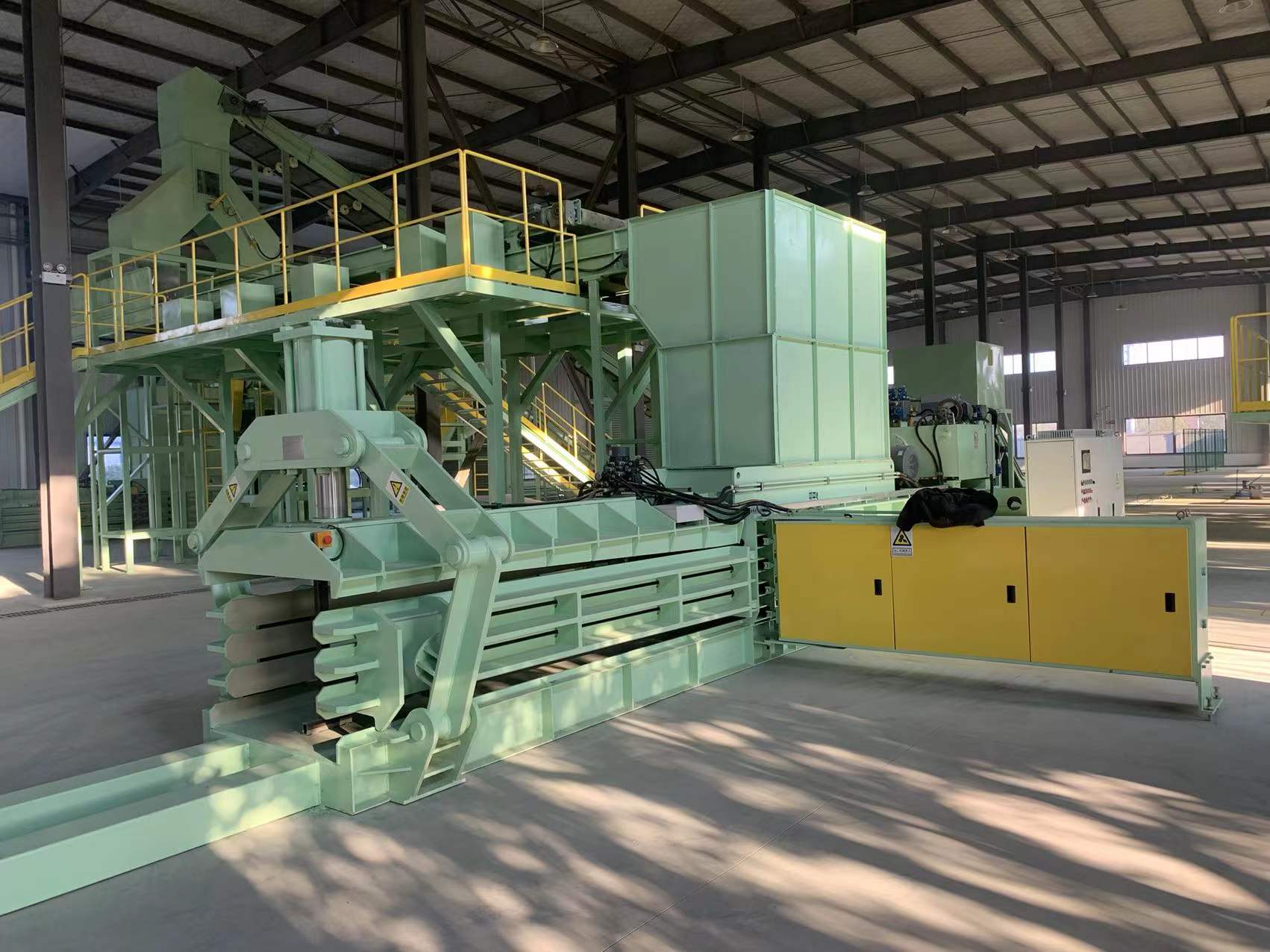
Bale weight and bales per hour, not region, determine which configuration fits a facility.
Sizing therefore runs in one direction only: from the material and the required output toward the machine. Buyers who start from a preferred model and work backwards tend to discover the mismatch at commissioning rather than at quotation.
Servo hydraulic versus conventional motor hydraulic: a conditional trade-off
One of the most common confusions in baler comparison is treating a system-level difference as a component-level one. The core difference between the NKBALER servo hydraulic baler and conventional motor hydraulic balers is the hydraulic drive itself: a servo hydraulic system rather than a conventional motor hydraulic system. That difference supports lower energy consumption, quieter operation and precise pressure control.
What that is worth depends on who is paying for the hours. The servo hydraulic baler requires a higher initial investment and delivers a lower long-term running cost. Maintenance requirements are also lower than those of conventional motor hydraulic balers, including lower oil consumption, fewer component wear issues and stable operation.
The trade-off is conditional in both directions:
- For continuous recycling plants and long-hour production scenarios that require stable operation and lower running costs, the servo hydraulic configuration is the more suitable fit.
- For facilities running limited shifts per week, or operating under constrained power conditions, the higher initial investment may not be recovered, and a conventional motor hydraulic configuration remains the defensible choice.
That is the same decision rule in all three regions: not which system is better, but whether the actual running hours recover the price difference. A quotation that does not answer that question has not answered the purchasing question either.
Supplier due diligence: one checklist, three markets
Whatever the installation market, due diligence converges on the same set of questions: whether the machine fits the material stream, and whether the supplier can sustain it across its service life.
On the technical side, the core evaluation criteria for a hydraulic baler in waste paper, plastic or scrap metal recycling are material adaptability, compression force, throughput, footprint, automation level, operation cost, maintenance and after-sales support. For supplier sourcing comparisons specifically, after-sales support and maintenance are among the criteria that should be checked — and they can be scored in the same matrix as compression force rather than left to a closing paragraph in the proposal.
Reading capability signals without over-reading them
Manufacturer capability data is most useful as reference data, not as endorsement. NKBALER (Shaanxi Nick Machinery Equipment Co., Ltd.), a baler manufacturer established in 2013, operates a 5,000 m² factory with 50 employees, a 15-person R&D team and annual output of 600 units. Its export ratio is 90%, with main markets in North America, South America and Asia.
Those figures support specific conclusions and no others. A 90% export ratio and 600-unit annual output indicate that the supplier's commercial focus is international rather than domestic-only, and that it is structured to serve buyers across all three regions discussed here. They do not establish how a given machine will perform in a given application — that remains a matter for material trials, references and specification review. The product range covers vertical balers, full-automatic horizontal balers, manual horizontal balers and press bagging machines, which means a buyer can compare vertical, horizontal and bagging formats within one supplier during the decision stage. Breadth of range is a manufacturing signal; it is not proof of suitability.
Two further checks belong on every regional version of the list. First, confirm the market-access requirement that applies where the machine will actually be installed, and ask the supplier to state how conformity is demonstrated. Second, ask what the maintenance interval looks like at the intended duty cycle, because a quoted figure without a duty cycle is not a comparison.
What the market signals mean for a decision-stage buyer
The growth path from USD 6.4 billion in 2024 to a projected USD 12.0 billion by 2030 describes an expanding category, not a shrinking one. No equally granular public figure exists for the waste paper hydraulic baler segment specifically, so the number should not be used to build a capital budget — it measures all balers, including agricultural models.
Its operational implication is narrower and more useful: a larger installed base tends over time to improve spare-parts availability and the depth of the used-equipment market, both of which favour lifecycle cost comparison over sticker-price comparison.
The 39.4% Asia Pacific revenue share carries a more direct procurement implication. In a market where more than a third of category revenue sits in one region, buyers everywhere encounter Asia-based manufacturers as part of the global quotation set rather than as a regional alternative. Price and specification comparability rises; the burden of supplier verification shifts to the buyer.
Outlook: two directional points, both conditional
Automation economics move with labour cost. The same servo versus conventional motor comparison can produce a different answer as operator cost changes while equipment capital cost stays fixed. That is not a forecast of adoption rates; it explains why the calculation should be rebuilt per project rather than imported from a regional template.
Market access will remain a gate rather than a formality. The existence of a codified standard such as EN 16252:2012 for horizontal baling presses shows that baler safety requirements are structured and verifiable; buyers who resolve the applicable requirement before negotiation avoid the most expensive form of rework, which is discovering it after shipment. Which requirement applies, and how conformity is demonstrated, is a market-specific question — and it belongs in the enquiry, not in the installation schedule.
Frequently asked questions
How do I choose the right hydraulic baler for a waste paper, plastic or scrap metal recycling project?
Confirm material type, loose density, target bale size or weight, throughput, available space and power conditions before selecting a model. The evaluation criteria then include material adaptability, compression force, throughput, footprint, automation level, operation cost, maintenance and after-sales support. In practice, vertical balers suit limited space and low output, semi-automatic horizontal balers suit medium continuous recycling with automatic tying, and full-auto heavy horizontal balers suit high-output scrap metal work.
What is the difference between a servo hydraulic baler and a conventional motor hydraulic baler?
The core difference is the hydraulic drive: a servo hydraulic system in place of a conventional motor hydraulic system. That difference supports lower energy consumption, quieter operation and precise pressure control. The servo hydraulic baler requires a higher initial investment and offers a lower long-term running cost, with lower oil consumption and fewer component wear issues, which makes it more suitable for continuous recycling plants and long-hour production.
When is a vertical baler a better fit than a horizontal model?
Vertical hydraulic balers are the better fit for small-scale waste paper and plastic recycling where space is limited and output is low, because they are compact by design. A reference point is the NKBALER NK6040T10 vertical waste paper baler, with 10T hydraulic power, 6–8 bales per hour and a bale weight of 50–80 kg. Once throughput rises toward continuous operation with automatic tying, horizontal or fully automatic models become the appropriate direction.
What should buyers check when comparing hydraulic baler suppliers?
After-sales support and maintenance are among the criteria that should be checked in sourcing comparisons, alongside material adaptability, compression force, throughput, footprint, automation level and operation cost. Beyond the specification, buyers should verify the market-access requirement applicable where the machine will be installed, how conformity is demonstrated, and the maintenance interval at the intended duty cycle. Export coverage and stated manufacturing capacity are useful context for supply continuity, but they are capability signals rather than evidence of performance in a specific application.
The common thread across North America, South America and Asia is that the regional variable sits in the cost structure and the access rule, not in the machine. Buyers who fix the material parameters and the throughput requirement first, then let the automation level and the compliance path follow, end up comparing suppliers on the same terms in every market — and that is what makes a three-region comparison useful rather than merely descriptive.
Have Questions or Need More Details?
Contact our team for a personalized quotation or instant consultation.
Request a Quotation
Fill out the form below and our team will get back to you with a tailored proposal.
WhatsApp Direct Chat
Prefer to chat in real-time? Message us on WhatsApp for instant assistance & quick answers.
- Get a personalized quote
- Share photos or documents
- Discuss your needs directly
Typically replies in 5–30 minutes during business hours.