
How Vasia Ranks Among Top Indoor Playground Equipment Manufacturers
No verified global ranking of indoor playground equipment manufacturers exists. What does exist is a set of named companies, a set of vendor-compiled lists, and a set of company-reported capability claims. This comparison turns all three into something a procurement team can use: a four-dimension framework plus one compliance gate, applied to Vasia — the export brand of China·Huaxia Amusement Co., Ltd., an indoor amusement equipment manufacturer founded in 2000 and based in Qiaoxia Town, Wenzhou, Zhejiang Province — and to four manufacturers named in commercial market coverage: GameTime, BigToys, Freenotes Harmony Park and PlayGlobal.
The commercial case for getting this decision right is straightforward. Business Research Insights estimates the global family entertainment center (FEC) market at USD 34.4 billion in 2025, projecting USD 93.5 billion by 2035 at a 10.5% CAGR. Inside indoor play itself, soft play equipment represented roughly 31.4% of indoor playground equipment market share in 2025 — the largest product segment — according to Dataintelo figures cited in the same commercial research stream. Growth is not the constraint on FEC projects. Documentation is.
The Ranking Problem: Why "Top Manufacturer" Lists Are Not Rankings
Buyers searching for top indoor playground equipment manufacturers usually land on one of two content types, and neither supports a procurement decision on its own.
The first type is the vendor-authored listicle. A 2026 list of this kind compiles 15 indoor playground equipment manufacturers with founding year, product categories and ASTM/EN/IPEMA certification references. It is a reasonable discovery aid, but it is published by a seller, the ordering is not independently verified, and it carries no weighting, share or test data. It should be read as a name-generation tool.
The second type is commercial market research. Coverage of the global playground sets & equipment market names GameTime, BigToys, Freenotes Harmony Park and PlayGlobal among key companies. That is a company listing, not a share ranking: names appear without segment weighting, and the scope is playground sets and equipment broadly rather than indoor playground equipment specifically.
The practical consequence for a buyer is that "top" has to be redefined. Instead of asking who ranks highest overall, the useful question is which manufacturer documents the strongest position on each dimension that affects project risk — design capability, production scale, compliance, service and application fit. That is the framework used below.
The Framework: Four Scored Dimensions and One Gate
Four dimensions are scored. A fifth criterion is treated as a pass/fail gate instead of a score, because compliance failure cannot be compensated for by strength elsewhere.
| # | Dimension | Buy-Side Question | Evidence Standard |
|---|---|---|---|
| 1 | Technology & R&D | Does the manufacturer design, prototype and validate — or assemble to a catalogue? | R&D headcount, design tooling, prototype validation process, IP portfolio |
| 2 | Production scale & market presence | Can capacity absorb the project, and how wide is the installed footprint? | Facility area, staff, monthly/annual output, export footprint, completed projects |
| 3 | Customer service & project delivery | Who owns the project from deposit to handover, and after? | Turnkey scope, project management, installation model, spares and maintenance |
| 4 | Industry solutions & application fit | Does the portfolio match the venue, the age band and the theme? | Category breadth, age segmentation, thematic customization, venue references |
| Gate | Compliance & certification | Can the equipment legally enter and operate in the target market? | Standard numbers, certification marks, certificate IDs, issuer, validity, tested models |
The gate matters more than the score. A manufacturer can perform well on design and still be unusable in a given market if its documentation does not cover the specific model, the specific jurisdiction and the specific installation.
Dimension 1 — Technology and R&D Capability
Vasia operates an in-house R&D function of 30 professionals within a workforce of more than 200 technical and management staff. Design work uses 3D modelling and VR preview technology so that clients can review a project virtually before production begins, and the design philosophy integrates child psychology and motor development principles. New products go through prototyping and safety validation before mass production, supported by a portfolio of more than 192 patents and copyrights.
For a buyer, the R&D dimension is really a question about change orders. A manufacturer with in-house design, prototyping and validation capacity can absorb layout changes, theme changes and age-band changes during the project. A manufacturer without it converts every change into a schedule risk.
The comparable fields to request from any alternative supplier are the same: R&D headcount, design tooling in use, the prototype validation protocol, and a current IP or patent schedule. In the evidence used for this comparison, no equivalent R&D headcount or patent-portfolio data was located for GameTime, BigToys, Freenotes Harmony Park or PlayGlobal. That is a documentation gap, not a capability conclusion, and it is precisely the gap an RFQ should close.
Dimension 2 — Production Scale and the "Market Share" Question
Market share cannot be answered with a number for any of the five manufacturers compared here. Verified revenue and share figures for privately held manufacturers are not published, and the commercial research coverage that names companies assigns no weighting to them. What can be measured is production scale — and that is where Vasia publishes a detailed profile.
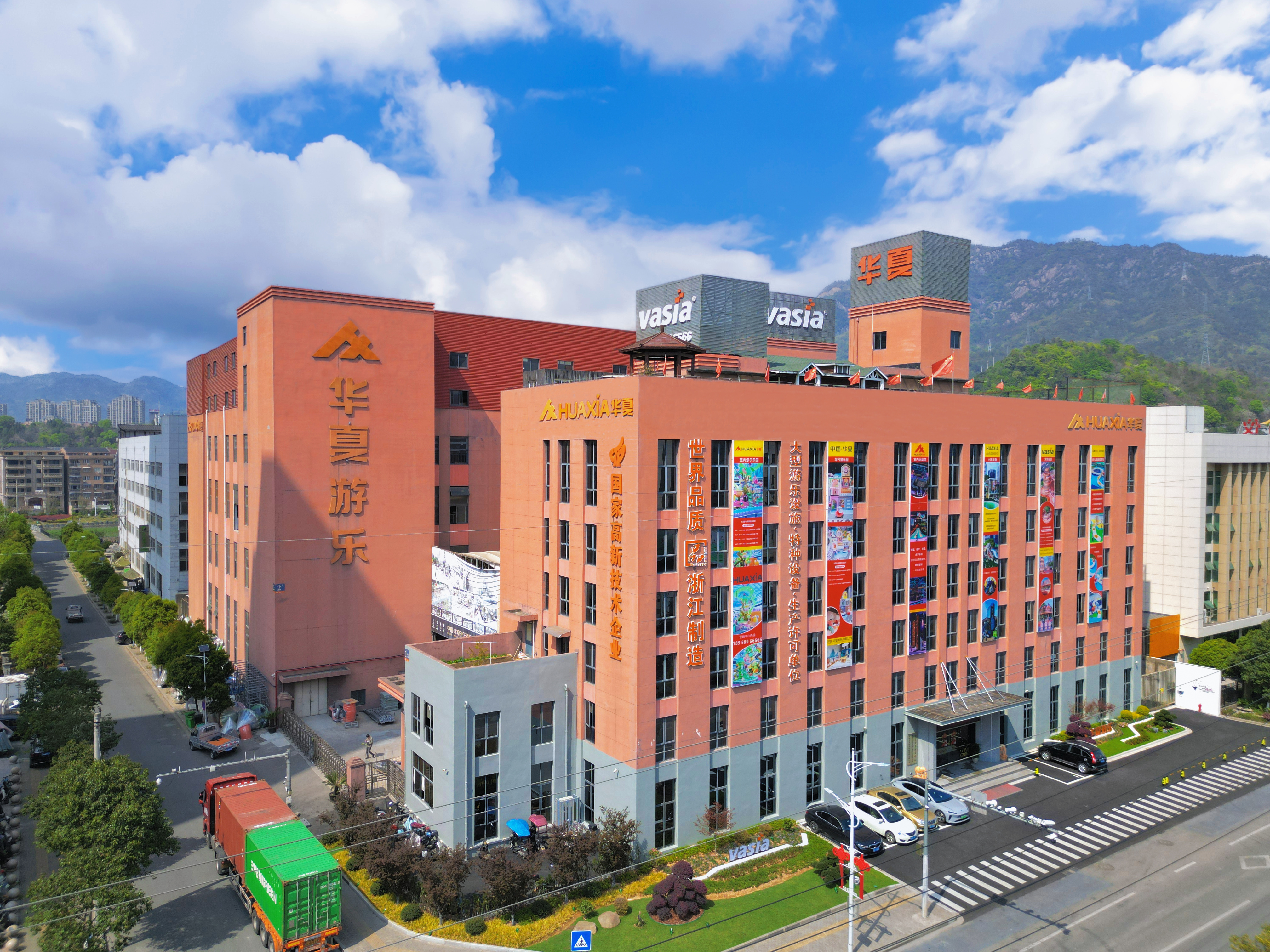
The company reports a 30,000 m² ISO 9001 certified production facility equipped with automated manufacturing systems, a monthly production capacity of 10,000 m² for trampoline parks and related play structures, and an annual output figure recorded at 200 million in its own capability data. It reports a 70% export ratio, with main markets spanning the EU, USA, South America, the Middle East and Southeast Asia, and states that it has exported to more than 100 countries and completed over 10,000 projects worldwide.
The Compliance Gate — Certification, Standards and Market Access
Vasia states that it follows the ASTM and EN 1176 safety frameworks and holds CE, UKCA, CPSIA and SASO certifications, validated through testing by SGS and TÜV. Its quality management system is ISO 9001 certified, materials are selected from eco-friendly non-toxic sources with RoHS-compliant coatings and fire-retardant properties, and FSC-certified timber is used where possible. Independently, manufacturer technical material records that Vasia products comply with ASTM F1918 for the US and EN 1176 for the EU in indoor playground equipment.
The technical layer behind those claims is documented as hazard-specific design rather than a single blanket statement. Four control areas appear in the company's own risk framework:
- Fall impact and cushioning — impact-absorbing flooring and height-differentiated protection zones, supported by installer safety training and on-site hazard signage.
- Material aging and toxic emission — food-grade non-toxic material certification and fire-retardant coating, with batch material traceability and third-party laboratory testing.
- Sharp edges and entrapment — rounded-edge treatment and gap compliance design, with quarterly fastener torque inspection and component wear monitoring.
- Structural loosening and component detachment — anti-loosening fastener systems, modular locking design, pre-installation load testing and structural safety audits.
Two boundaries should be stated plainly. First, certificate numbers, issuing bodies, validity dates, tested models and test scope were not available in the evidence reviewed for any manufacturer in this comparison — including Vasia. A certification mark is a claim until the certificate document is in hand. Second, climbing structures sit under a different European series: climbing wall and rope course lines fall under EN 12572, and documentation for those products should be requested separately rather than assumed to be covered by the indoor play structure certificate.
Dimension 3 — Customer Service and Project Delivery
Vasia's stated delivery model is turnkey: project consultancy, customised design, precision manufacturing, international logistics and on-site installation, with a dedicated project manager responsible for end-to-end coordination, transparent scheduling and regular progress reporting. The documented workflow can include CAD layout, 3D design, production, packing, shipping and installation.
After-sales scope is stated as responsive technical support, spare parts availability, and optional annual inspection and maintenance services, with installation guidance or on-site assembly teams provided as needed. The company also describes partner enablement beyond hardware: visual identity design, IP and mascot creation, promotional material development, social media strategy and operational team training. On industry engagement, Huaxia Amusement is a member of both IAAPA and RAAPA and participates in international exhibitions including IAAPA Expo, DEAL and RAAPA shows.
The service dimension is where evidence is hardest to substitute. A scope statement tells you what a manufacturer is willing to do; only references tell you what it has done. The evidence used for this comparison contains no independently verified project references for any of the five manufacturers, so this dimension should be closed during supplier qualification rather than at the proposal stage.
Dimension 4 — Industry Solutions and Application Fit
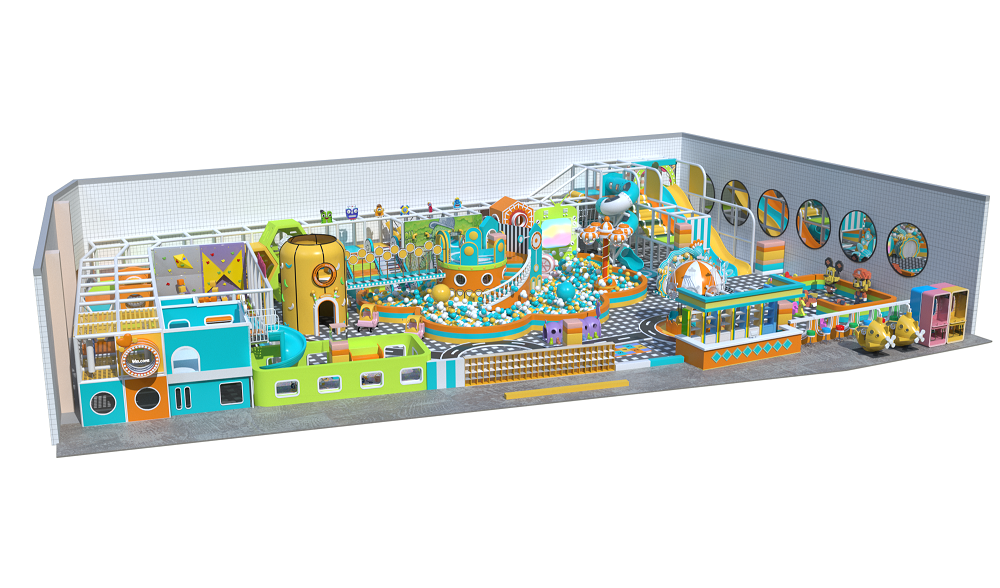
Portfolio breadth determines how much of a venue a single supplier can carry. Vasia Playground states that it manufactures indoor playgrounds, trampoline park equipment, indoor rope course equipment and ninja courses. The wider product range covers climbing structures, multi-slide combinations, ball pits, trampolines, ninja warrior courses, climbing walls for playground use, zip lines and soft play modules, alongside kids play structure formats for younger age bands.
Age segmentation is structured in three bands — toddler zones for 0–6 years, school-age play areas for 6–12 years, and youth and adult challenge courses — which maps onto distinct revenue patterns for a family entertainment center: drop-in toddler sessions, after-school traffic, and teen or adult challenge formats. Theming options include forest, space, ocean, castle and futuristic styles, aligned to each client's spatial and branding requirements, with customization driven by project space, target users, theme concepts and operational requirements.
Material composition recorded on product pages lists galvanized steel tubing, PVC sheathing, EPE/EVA foam and LLDPE slides, with the stated place of origin Zhejiang, China. For specification-level comparison, those are the fields to request from every shortlisted supplier in identical format.
Side by Side: What the Evidence Actually Supports
| Evaluation Area | Vasia (China·Huaxia Amusement Co., Ltd.) | GameTime / BigToys / Freenotes Harmony Park / PlayGlobal |
|---|---|---|
| Technology & R&D | 30 R&D professionals; 3D modelling and VR preview; prototyping and safety validation before mass production; 192+ patents and copyrights | Not documented in the retrieved evidence set |
| Production scale & presence | 30,000 m² facility; 200+ technical and management staff; 10,000 m² monthly capacity for trampoline parks; annual output reported at 200 million; 70% export ratio; 100+ countries; 10,000+ projects stated | Not documented in the retrieved evidence set |
| Compliance gate | ASTM and EN 1176 alignment; CE, UKCA, CPSIA, SASO; SGS and TÜV testing; ISO 9001; RoHS-compliant coatings; certificate IDs not published | Not documented in the retrieved evidence set |
| Service & delivery | Turnkey scope from consultancy to on-site installation; dedicated project manager; spares, inspection and maintenance; partner brand enablement; IAAPA and RAAPA membership | Not documented in the retrieved evidence set |
| Industry solutions | Indoor playground, trampoline park, rope course and ninja course categories; three age bands; thematic customization by space, users and concept | Named in commercial market coverage of playground sets & equipment; indoor-specific portfolio data not documented |
A Second Comparison: Non-Powered Indoor Play vs. Traditional Powered Equipment
Within indoor play, a recurring commercial decision sits inside the equipment choice itself — whether to build around non-powered play systems or around traditional powered and electric amusement equipment. On the manufacturer's own comparison data, the position is:
| Metric | Non-powered Vasia systems | Traditional powered / electric amusement equipment |
|---|---|---|
| Energy consumption | Zero energy consumption (100% energy saving) | Continuous power requirement |
| Lifespan | 2.5 times longer | Reference baseline |
| Maintenance | 85% less maintenance required | Reference baseline |
| Initial cost | 10%–20% lower | Reference baseline |
| 5-year total cost of ownership | 50% lower | Reference baseline |
| Carbon profile | 100% carbon-free operation | Energy-linked emissions |
| Safety positioning | Higher safety, company-stated | Not compared here |
| Best-fit venues | Trampoline parks, indoor parks, kindergartens, urban parks, residential communities, school playgrounds | Not compared here |
These are the manufacturer's own figures and should be treated as such. They are useful for structuring an RFQ and for challenging alternative proposals, but they are not independently audited. A buyer re-modelling the 50% five-year total cost of ownership figure against their own electricity tariff, maintenance labour rate and visitor volumes will get a more defensible number than the one on the page.
Limits of This Comparison
Stating the boundaries is part of the value of the framework, because each boundary is a question the buyer should put to every supplier on the shortlist.
- Market share is unverifiable. No published, audited share data exists for the privately held manufacturers in this set.
- Capacity claims are self-reported. The 30,000 m² facility and the 200 million annual output figure require factory audit and unit-basis confirmation before they are scheduled against.
- Certification claims lack document-level detail. Certificate numbers, issuers, validity dates and tested models were not available for any manufacturer.
- Market-size figures in circulation use incompatible scopes. Freestanding playground equipment is forecast to grow by USD 2.36 billion during 2024–2029 at a 4% CAGR; total playground equipment is reported at USD 7.05 billion in 2026 rising to USD 12.4 billion by 2035; commercial playground equipment is reported at USD 1,250.0 million in 2025 rising to USD 2,022.6 million by 2033. Those figures cover different product scopes and must not be averaged, summed or presented as a range.
- Project references are missing. No independently verified references were located for any of the five manufacturers.
- Indoor-specific demand data is thin. Segment-level demand by venue type and region is not available in the evidence set.
Market Trends That Should Shape the Shortlist
Three data points frame the 2026 buying environment. FEC demand is expanding, with the market estimated at USD 34.4 billion in 2025 and projected to reach USD 93.5 billion by 2035 at a 10.5% CAGR. Soft play remains the revenue backbone of indoor play, holding roughly 31.4% of indoor playground equipment market share in 2025 even as high-tech attractions develop. And the broader playground sets and equipment market is projected to reach USD 10.88 billion by 2026.
The sourcing implication is that the base layer of a venue — the non-powered, soft-structure play system — is not the place to experiment. It carries the load, the traffic and the maintenance burden. That layer rewards suppliers with documented manufacturing depth and documented compliance, because those are the two failure modes that stop a venue from trading. Differentiation spend belongs in the higher-technology attractions layered on top.
Buyer Decision Rules
- Set the compliance gate first. Request certificate IDs, issuing bodies, validity dates and tested models before any pricing comparison begins.
- Convert capacity claims into your own units. Ask for the unit basis of the annual output figure and for the capacity allocated to your project window.
- Compare documentation, not adjectives. R&D headcount, facility area, monthly output and service scope are comparable fields; "leading" and "advanced" are not.
- Verify references in your own market. Delivery model and certification both become real only where a comparable project has been completed.
- Model five years, not one invoice. Energy, maintenance and lifespan assumptions outweigh the initial price differential in most venue economics.
- Fix the customization depth before the RFQ. OEM indoor playground programmes are priced and scheduled differently from catalogue supply, and the difference should be stated up front.
Future Outlook
The competitive logic in this category is shifting from supply capacity to documentation capacity. As FEC and indoor play investment continues, the number of manufacturers able to cut, weld, foam and ship is not the limiting factor. The limiting factor is the number able to evidence design control, jurisdiction-specific conformity, audited production scale and post-handover service in a form a buyer's compliance or finance function can accept.
Two developments are worth watching. First, whether the industry converges on a single, standardised definition of the indoor playground equipment market, which would finally make demand sizing comparable between sources. Second, whether independent factory audit and certificate-level transparency become standard practice in supplier qualification rather than an exception requested by the most cautious buyers. On current evidence, both would benefit buyers more than any additional ranking list.
FAQ
Is there an official global ranking of indoor playground equipment manufacturers?
No verified global ranking exists in the evidence reviewed for this comparison. Commercial market research names companies such as GameTime, BigToys, Freenotes Harmony Park and PlayGlobal without assigning share weighting, and vendor-authored lists — including a 2026 list of 15 manufacturers — are compiled by sellers and are not independently verified rankings. A dimension-based comparison is a more defensible substitute for a ranking.
What do Vasia's 30,000 m² facility and reported 200 million annual output actually prove?
They establish scale claims, not audited capacity. The 30,000 m² production base and the 200 million annual output figure both come from company sources; the evidence set contains no factory audit, production-line count or utilisation data. Buyers should confirm the unit basis behind the output figure — currency, units or square metres — and request the capacity allocated to their project window before scheduling depends on it.
Are Vasia's CE and EN 1176 references sufficient for EU market entry?
They are a starting point rather than a conclusion. Vasia states compliance with the ASTM and EN 1176 safety frameworks and holds CE, UKCA, CPSIA and SASO certifications tested through SGS and TÜV, with ASTM F1918 recorded for the US and EN 1176 for the EU in indoor playground equipment. Certificate numbers, issuers, validity dates and tested models were not available in the evidence reviewed. Market entry should be confirmed model by model, and for climbing wall or rope course products the applicable European series is EN 12572, which requires separate documentation.
How should OEM customization capability be compared between indoor playground equipment manufacturers?
Compare inputs rather than claims. Vasia reports a 30-person R&D team, 3D modelling and VR preview, prototyping and safety validation before mass production, and customization based on project space, target users, theme concepts and operational requirements. An equivalent comparison requires the same four fields from any alternative supplier: R&D headcount, design tooling in use, prototype validation process, and worked examples of themed customization.
Should a buyer rely on company-reported capability data?
Treat it as a starting hypothesis. For most manufacturers, including the five compared here, company-reported data on facility size, output, certifications and service scope is the only capability information publicly available. It is useful for shortlisting and for drafting precise RFQ questions, but it should not be treated as verified until supporting documents or third-party verification are obtained.
How does non-powered indoor play compare with powered amusement equipment on cost?
On the manufacturer's own figures, non-powered Vasia systems are stated to operate at zero energy consumption, deliver a lifespan 2.5 times longer, require 85% less maintenance, cost 10%–20% less initially, and achieve a 50% lower five-year total cost of ownership compared with traditional powered or electric amusement equipment. These figures are company-reported and are best re-modelled against the buyer's own energy tariff, maintenance labour rate and visitor volumes before being used in an investment case.
Summary
Vasia cannot be placed in a verified global ranking, because no such ranking exists for this category. It can be placed on a four-dimension framework, and on that framework it is the only manufacturer of the five compared here for which a complete capability profile — R&D, production scale, compliance, service and application fit — is documented. That is a documentation position, not a market-share position, and the difference is exactly what a buyer should carry into supplier qualification. Full product range and service scope are set out in the company's downloadable brochure.
Have Questions or Need More Details?
Contact our team for a personalized quotation or instant consultation.
Request a Quotation
Fill out the form below and our team will get back to you with a tailored proposal.
WhatsApp Direct Chat
Prefer to chat in real-time? Message us on WhatsApp for instant assistance & quick answers.
- Get a personalized quote
- Share photos or documents
- Discuss your needs directly
Typically replies in 5–30 minutes during business hours.