
How Wear-Resistant Concrete Pump Pipes Improve Construction Efficiency
In modern construction, the efficiency of concrete placement directly affects project timelines and material costs. Concrete pump pipes are the critical link between pump equipment and the pour site, and their wear resistance, dimensional accuracy, and system compatibility determine overall system reliability. Hongchang Machinery Technology Co., Ltd., a high-tech enterprise established in 2015 in Ma'anshan City, Anhui Province, China, specializes in designing and manufacturing high-maintenance concrete conveying pipes. With an annual production capacity of 50,000 meters of straight pipes and 15,000 pieces of curved pipes, the company supports a range of construction applications through a product lineup that includes Concrete Pump Straight Pipes, Elbows, Clamps, and Reducers. This article examines the technical factors that influence pipe performance and how properly specified concrete pump pipes contribute to project efficiency.
Problem / Opportunity
Construction projects face constant pressure to reduce downtime and maintenance costs. In concrete pumping, pipe wear is inevitable due to abrasive materials, high flow velocities, and frequent direction changes. Traditional carbon steel pipes often require replacement after only 7,000–8,000 cubic meters of concrete, leading to material waste and labor costs for changeovers. The opportunity lies in adopting wear-resistant alloy steel pipes with quenched hardness levels that extend service life by multiple factors. This shift reduces total cost of ownership and improves pumping reliability, particularly for high-rise, tunnel, and mining operations where replacement is logistically difficult.
Brand Solution
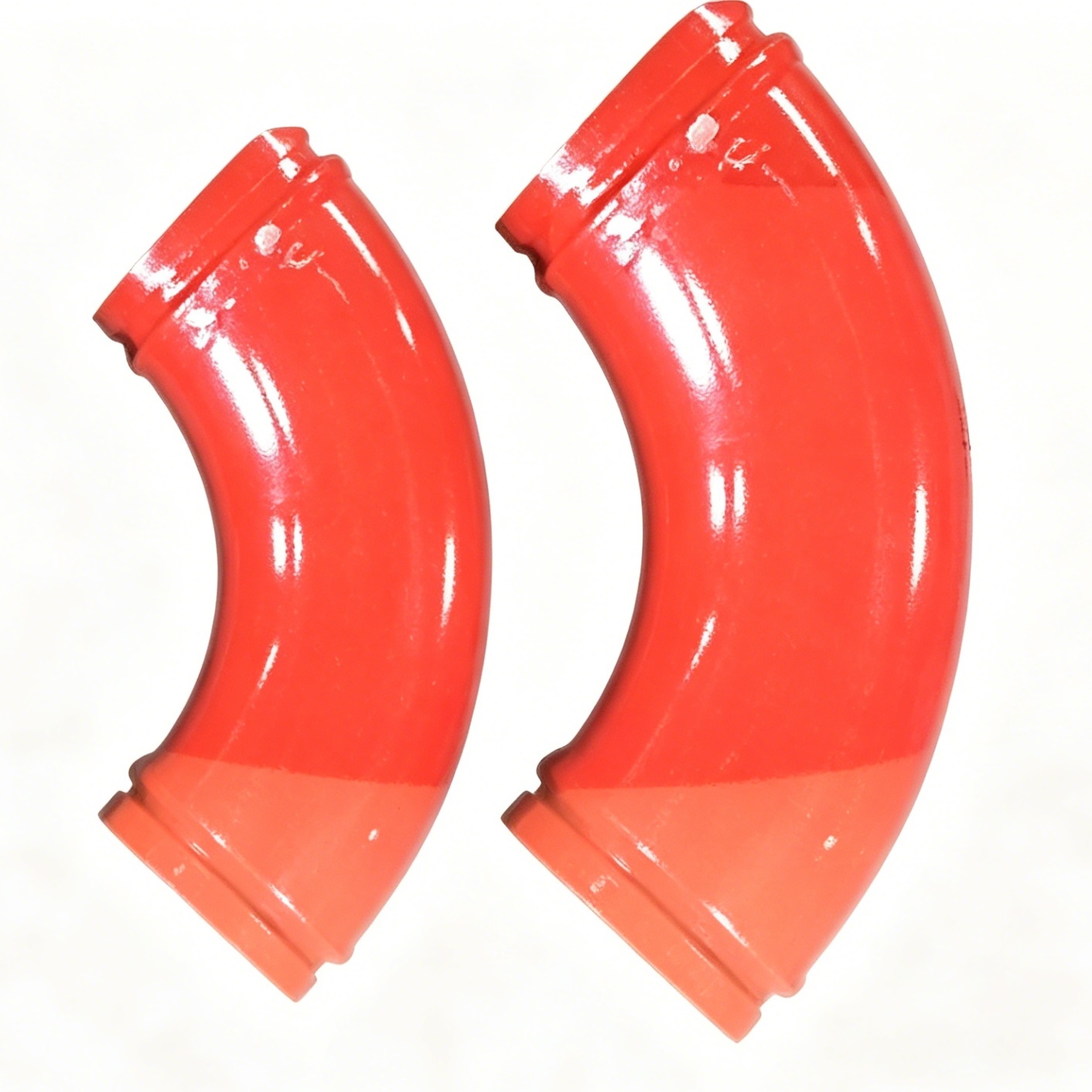
Hongchang's concrete pump straight pipe model 150L=3000 is manufactured from alloy steel with a single-layer structure, quenched to a hardness of HRC 55–62. The design life ranges from 7,000–8,000 m³ for standard-grade pipes up to 40,000–50,000 m³ for premium configurations, offering cost-performance ratios of 1, 1.6, and 3.0 respectively. The pipe is made of 20# steel or quality alloy structural steel, with overall dimensions of DN150 and 3000 mm length. For applications requiring directional changes, the double-layer elbow model 275*90° features a quenched inner wall and is available in nominal diameters DN100, DN125, or DN150, with bend radii of R180, R190.5, or R275 (customizable). Angles include 90°, 45°, 30°, or 15°, making it adaptable to complex routing. Clamps such as model 150A use forged steel with integral casting, shot blasting, and anti-rust spraying, compatible with diameters from DN100 to DN150. Reducer pipes like model 150-125 L=1200 transition between diameter sizes using alloy steel, with connection options including thickened pipe ends, flanges, or pipe clamps. Surface treatment across all products includes shot blasting, anti-rust primer, and topcoat for corrosion protection.
Technical Explanation
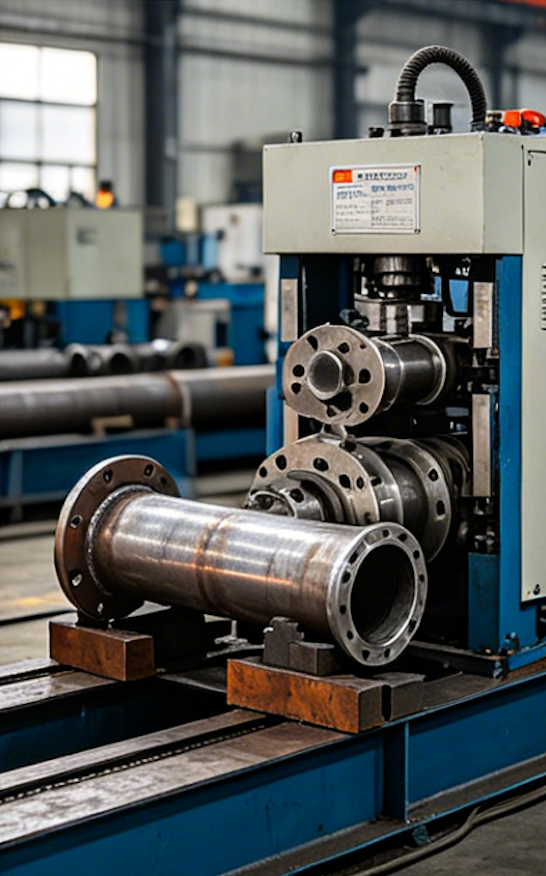
The wear resistance of concrete pump pipes is primarily achieved through quench hardening of the inner wall. For straight pipes, the quench process raises hardness to HRC 55–62, which is significantly harder than standard structural steel. This heat treatment transforms the microstructure of the alloy steel, creating a wear-resistant surface that withstands abrasion from aggregate particles in the concrete mix. The double-layer elbow design uses a separate quenched inner wall layer, allowing the outer shell to maintain structural strength while the interior absorbs wear. For elbows, the bend radius and angle customization ensure smooth flow transitions, reducing turbulence and localized wear at direction changes. Clamps are integral-cast from forged steel to maintain concentric alignment and sealing pressure, preventing leakage at joints—a common source of downtime.
Application / Use-Case Scenarios
High-Rise Building Concrete Pumping – In high-rise construction, concrete must be pumped vertically over hundreds of meters under high pressure. Hongchang's straight pipes and elbows are designed for continuous operation of 8–12 hours per day, matching pump truck integration requirements from major OEMs such as Sany Heavy Industry and Zhonglian Heavy Industry. The quenched inner wall ensures consistent flow and reduced pipe replacement frequency.
Tunnel Construction – Tunnel projects demand 90° to 180° direction changes and heavy-duty operation. The double-layer elbow's customizable bend radius and angle allow routing around tight curves. The abrasion resistance requirement is critical in this environment where pipe access is limited.
Mining Operations – For mine concrete injection and slurry transportation, pipes must operate 24/7 and resist corrosion from slurry chemicals. Hongchang's pipes meet special requirements for corrosion and wear resistance, and are used with slurry pump systems across global markets including the UAE, Saudi Arabia, Chile, and Southeast Asian countries.
Market Trend Analysis
Global construction activity continues to drive demand for durable concrete pump components. According to industry trends, the shift towards high-rise urban development and underground infrastructure projects is increasing the pressure on pumping systems to operate longer without maintenance interruptions. Buyers are moving away from generic commodity pipes toward engineered solutions with quantified design life. Hongchang reports that export business accounts for 50% of total sales, with major markets in Southeast Asia, the Middle East, Europe, and Americas—regions where construction quality standards are rising. The company's R&D team maintains independent development capabilities to adapt products for local specifications.
Comparison with Traditional Solutions
Compared to conventional carbon steel pipes, alloy steel quenched pipes offer a 3–6× longer service life (40,000–50,000 m³ vs. 7,000–8,000 m³). The cost-performance ratio of 3.0 for the premium grade means that while initial investment is higher, the total cost per cubic meter of pumped concrete is lower. One honest limitation is that quenched pipes are more difficult to cut or modify on site; project planners must pre-calculate lengths and bend configurations accurately. Additionally, the premium grade requires careful handling during installation to avoid impact damage to the hardened inner wall.
Future Outlook
As high-pressure pumping becomes more common in mega-projects, the demand for double-layer elbows and long-life straight pipes will intensify. Manufacturers like Hongchang are positioned to supply certified products that meet international quality expectations, with ongoing investment in heat treatment automation and material science.
FAQ
Q: What design life can I expect from a concrete pump straight pipe?
A: The concrete pump straight pipe model 150L=3000 has a design life ranging from 7,000 to 8,000 cubic meters for standard grade, up to 40,000–50,000 cubic meters for the premium quenched version, depending on concrete composition and operating conditions.
Q: Are Hongchang's pipes compatible with Sany and Zoomlion pump trucks?
A: Yes, Hongchang's pipes can be matched with pump trucks from Sany Heavy Industry and Zhonglian Heavy Industry. The company is also the designated supporting manufacturer for Xingma Automobile.
Q: What customization options are available for elbows?
A: The double-layer elbow model 275*90° offers nominal diameters DN100, DN125, or DN150; angles of 90°, 45°, 30°, or 15°; and bend radii of R180, R190.5, or R275—all customizable. The quenched inner wall material provides enhanced wear resistance.
Q: Which international markets does Hongchang serve?
A: Hongchang exports to Southeast Asia, the Middle East, Europe, and the Americas. Export business accounts for 50% of total sales. Specific countries include Germany, France, Brazil, UAE, Saudi Arabia, Chile, and many others in Europe, Asia, and the Americas.