
How to Assess Plasma Polishing Supplier Long-Term Viability
How to Assess Plasma Polishing Supplier Long-Term Viability
The global plasma polishing machine market was valued at approximately USD 1.2 billion in 2025, and the same industry analysis projects an 8.5% compound annual growth rate between 2026 and 2035. Growth of that order changes what a purchase actually is. A plasma polishing machine is not a consumable that can be swapped between vendors without consequence. It enters a production line, it defines a surface-finish specification, it is matched to fixture and hanger geometry, and it is validated against a specific material and part family.
That is why supplier evaluation in this category is shifting from a purchase decision to a durability decision. The question a procurement or engineering team now faces is not only whether a machine can hold a deburring and polishing specification at acceptance, but whether the supplier behind it can still support that specification in year three, year five, and year seven — with spare parts, process adjustments, recertification and engineering time.
This reference sets out how to assess that question in practice. Supplier-specific facts in the sections that follow refer to Dongguan Bayi Automation Equipment Co., Ltd., a Dongguan-based manufacturer established in June 2017 that produces plasma polishing and deburring equipment, ultrasonic cleaning equipment, and related surface-finishing machinery under the BAYI brand.
Why Supplier Sustainability Is Now a Constraint, Not a Preference
Most supplier scorecards in surface finishing evaluate price, lead time, sample quality and warranty terms. Each of those dimensions is necessary. Each is also measured at the wrong point in time — at the transaction, rather than across the working life of the asset.
Plasma polishing and plasma deburring are process technologies that must be re-tuned when anything in the production environment changes. A part geometry shifts, a material lot behaves differently, a production volume rises, a finishing specification tightens. Every one of those changes creates a request that only the original equipment supplier can answer efficiently, because the fixture design, the process recipe, the electrode configuration and the qualification data all sit with that supplier.
The practical consequence is straightforward: the value of a plasma polishing machine supplier is not the machine it ships, but its capacity to re-tune that machine later. A supplier that cannot allocate engineering time to a two-year-old unit effectively shortens the useful life of the buyer's asset, no matter how well the machine performed at commissioning.
There is also an opportunity argument. Because the Asia-Pacific region accounts for more than 45% of global plasma polishing production capacity, with China as the leading producer, international buyers have an unusually wide field of suppliers to choose from. Wide choice raises rather than lowers the screening burden, because the differences between suppliers are now mostly differences in durability rather than differences in the basic ability to build a working machine.
What Long-Term Sustainability Means for a Plasma Polishing Machine Supplier
Supplier long-term sustainability in the plasma polishing sector can be reduced to four verifiable signals: capacity repeatability, engineering depth, corporate stability and compliance continuity. None of them requires access to confidential financial information, which matters because small and mid-sized equipment manufacturers rarely publish audited accounts.
Each signal corresponds to a question a buyer can put in writing, and to a piece of evidence a supplier can either produce or not produce.
| Durability signal | What it indicates | Evidence a buyer can request |
|---|---|---|
| Capacity repeatability | Whether quoted throughput holds under repeat orders and rising volume | Stated annual and monthly output, equipment list, lead-time commitment, factory video inspection, mechanical test report |
| Engineering depth | Ability to modify fixtures, hangers and process recipes after installation | R&D headcount, customization formats already delivered, range of non-standard models |
| Corporate stability | Whether obligations survive staff turnover and leadership change | Legal entity name, founding date, factory area, employee count, export share, after-sales mechanism |
| Compliance continuity | Whether equipment remains legally deployable across its service life | Certificate number, issuing body, covered model list, validity dates, applicable directives and standards |
Used together, these four signals answer the buyer's real question — not "can this supplier build the machine?" but "will this supplier still be able to answer the phone in five years, with the drawings from five years ago?"
Signal One: Production Capacity That Repeats
Capacity is the first signal because it is the easiest to falsify by accident. A supplier may be able to build one machine well and still be unable to support a rollout. Dongguan Bayi Automation Equipment Co., Ltd. states an annual output of 200,000 units in its company profile and separately lists a monthly capacity of 70,000 to 110,000 medium-sized parts, with a lead time of 30 to 45 days, a minimum order quantity of one unit, and 100% testing as its quality-control standard.
Those figures describe two different things, and buyers should ask suppliers to separate them explicitly. Annual output of 200,000 units is a company-level production statement; monthly capacity expressed in medium-sized parts is a processing-throughput statement describing how much work the equipment can handle. A buyer sourcing machines and a buyer sourcing a finishing service need different numbers, and a supplier that conflates them is not necessarily misleading — it may simply not have been asked.
Two elements of that capacity profile matter more than the headline number. First, a minimum order quantity of one unit means a buyer can validate before committing to volume. For a customization-heavy equipment category, the ability to accept a single trial unit is a genuine flexibility signal. Second, a 30 to 45 day lead time gives procurement a planning baseline that can be written into a contract rather than inferred from a quotation.
BAYI's standard plasma polishing models are designated 100A, 300A, 500A and 800A, with non-standard models ranging from 1000A to 2500A designed around a customer's part size, shape and target yield. That model logic is itself informative: it tells a buyer where the supplier's engineering effort is concentrated.
Signal Two: Engineering Depth Behind Customization
The second durability signal is the size and continuity of the engineering function. Dongguan Bayi Automation Equipment Co., Ltd. operates with 50 employees in total, including a three-engineer R&D team. Its core technical members are described in the company profile as founders of the plasma polishing deburring equipment category, with 17 years of research, development, design and manufacturing experience in that equipment type.
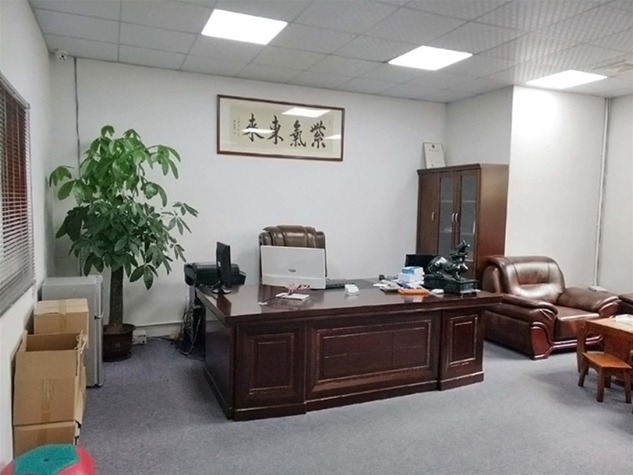
A three-engineer team is an honest indicator, and buyers should read it as one. It is sufficient for a defined customization pipeline built around a stable product platform — which is what the model range suggests. It is not a parallel engineering department capable of absorbing many simultaneous bespoke programs without queuing.
The customization formats BAYI lists show where that engineering capacity is directed: tape-type plasma polishing equipment that automatically receives square material and polishes an entire roll without cutting; long-tube plasma polishing equipment for pipes longer than two metres in continuous production; and chain-type plasma polishing equipment that automatically collects square material into a roll for polishing. Standard and non-standard units are designed one-to-one against a customer's part dimensions, geometry and output requirement.
For a buyer, the practical test is sequencing. Ask how many concurrent custom projects the engineering team can carry, and ask for the delivery record of a comparable past project. A supplier with three engineers is credible when the answer is specific, and a risk when the answer is vague.
Signal Three: Corporate Stability and What the Founding Date Tells You
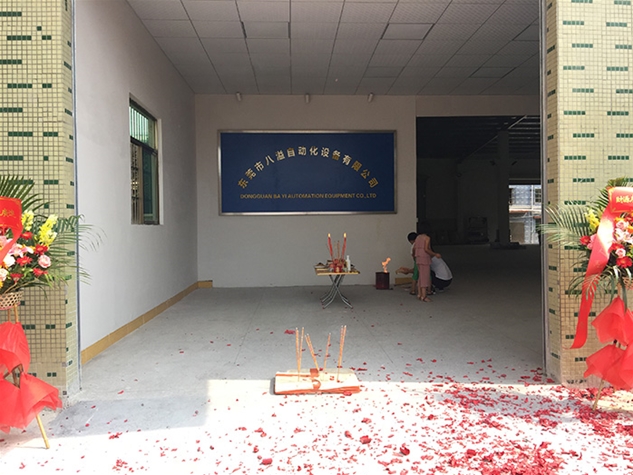
Dongguan Bayi Automation Equipment Co., Ltd. was established in June 2017. It operates from an 800 m² facility with 50 employees, reports an export ratio of 10%, and lists North America, Europe and Southeast Asia as its main markets. Its production mode is described as OBM, it warrants the machine and core components for one year, and it provides out-of-warranty service through video technical support and remote after-sales assistance.
A founding date of 2017 matters in this equipment category for a simple reason: the first years of a small equipment manufacturer's life are when most of them fail or exit. A company that has traded since 2017 has passed that attrition window and has accumulated an installed base that generates repeat demand. It is a moderate but real durability signal, and it is verifiable through business registration records rather than through a supplier's own marketing.
An 800 m² facility with 50 employees also describes the shape of the supplier. This is a focused operation, not a high-volume producer. Buyers planning a multi-site rollout, or several very large simultaneous orders, should plan staged delivery rather than assume surplus floor capacity. Similarly, a 10% export ratio indicates that domestic demand anchors production; international buyers should confirm specific export documentation experience for their own market rather than extrapolate from the export percentage alone.
The after-sales structure carries the same logic. A one-year warranty with remote support afterwards is a serviceable model for buyers with in-house maintenance capability, and a thinner proposition for buyers who expect on-site response. Neither is wrong — but the mismatch between the supplier's support model and the buyer's maintenance capability is a common cause of long-term friction.
Signal Four: Compliance Continuity and Certificate Validity
Compliance is where long-term viability becomes a hard constraint rather than a judgement call. The BY-800A plasma polishing machine holds CE certification for the EU market, issued by Ente Certificazione Macchine under certification number No.3N240806.DBAQC99. The certificate was issued on 6 August 2024 and expires on 5 August 2029, and the holder is named as Dongguan Bayi Automation Equipment Co., Ltd. of No. 41 Tianxin, Lincun Community, Tangxia Town, Dongguan, Guangdong Province, China.
The certified scope is specific and worth reading in full. It relates to CE Directive 2006/42/EC (Machinery), 2014/35/EU (Low Voltage) and 2014/30/EU (Electromagnetic Compatibility), and is verified against EN ISO 12100:2010, EN 60204-1:2018, EN IEC 61000-6-2:2019 and EN IEC 61000-6-4:2019. The covered models include the BY-100A, BY-500A, BY-800A and BY-1000A plasma polishing machines, together with the BY plasma deburring machine.
Independent industry guidance reinforces how central this is. KeyLink's industry report states that plasma treatment equipment must meet ISO 9001 (Quality), CE (Safety) and RoHS (Environmental) certifications for global market access. That framing is useful for buyers because it separates three different questions: whether the supplier's management system is certified, whether the machine is safe to place on the market, and whether the materials used comply with environmental restrictions.
For a long-term sourcing decision, the operative detail is the validity window. A certificate valid to August 2029 covers a substantial portion of a typical equipment service life, but not all of it, and renewal remains an obligation that should be assigned contractually before it falls due. CE certification governs placement on the EU market; buyers in other regions should confirm the locally applicable requirements separately rather than assume CE is sufficient everywhere.
Technical Explanation: Reading the Specification as a Support Question
The technical parameters of a plasma polishing machine are usually read as purchase specifications. They are just as useful read as support specifications, because they determine which parts can be processed, which site services are required, and how much of the machine's performance depends on supplier-side configuration.
| Model | Classification | Key corpus specifications |
|---|---|---|
| BY-100A | Metal plasma polishing machine | 30 kW; three-phase five-wire 380 V input; maximum output current 100 A; gas source 0.5–0.8 MPa; machine 1150 × 1200 × 1800 mm at 150 kg; power cabinet 850 × 600 × 1500 mm at 100 kg; usable hanger space 360 × 260 × 200 mm |
| BY-500A | Jewelry plasma polishing machine | Stainless steel construction; positioned for jewelry applications |
| BY-800A | Titanium plasma polishing machine | 316L stainless steel inner-groove body; positioned for medical care, 3D printed dentures, precious metals and gold jewelry |
| BY-1000A | Fully automatic plasma polishing machine | Positioned for medical devices, aerospace, 3C electronics and precision hardware, and 3D printing |
| Non-standard 1000–2500 A | Custom-designed equipment | Engineered against part size, shape and required yield |
Across its standard range, BAYI lists a deburring rate of ≥99.9%, a fully automatic control system, high compatibility with no damage to the original part, and energy-saving and environmentally protective characteristics. Those are manufacturer-stated product attributes. For a buyer, two of them convert directly into support questions.
The first is the usable hanger space on the BY-100A — 360 × 260 × 200 mm. That envelope defines which parts the machine can physically process, and it is the parameter most likely to be discovered only after a purchase. The second is site readiness: a 30 kW machine on a three-phase five-wire 380 V supply with a 0.5–0.8 MPa gas source requires infrastructure that should be confirmed before delivery, not during installation.
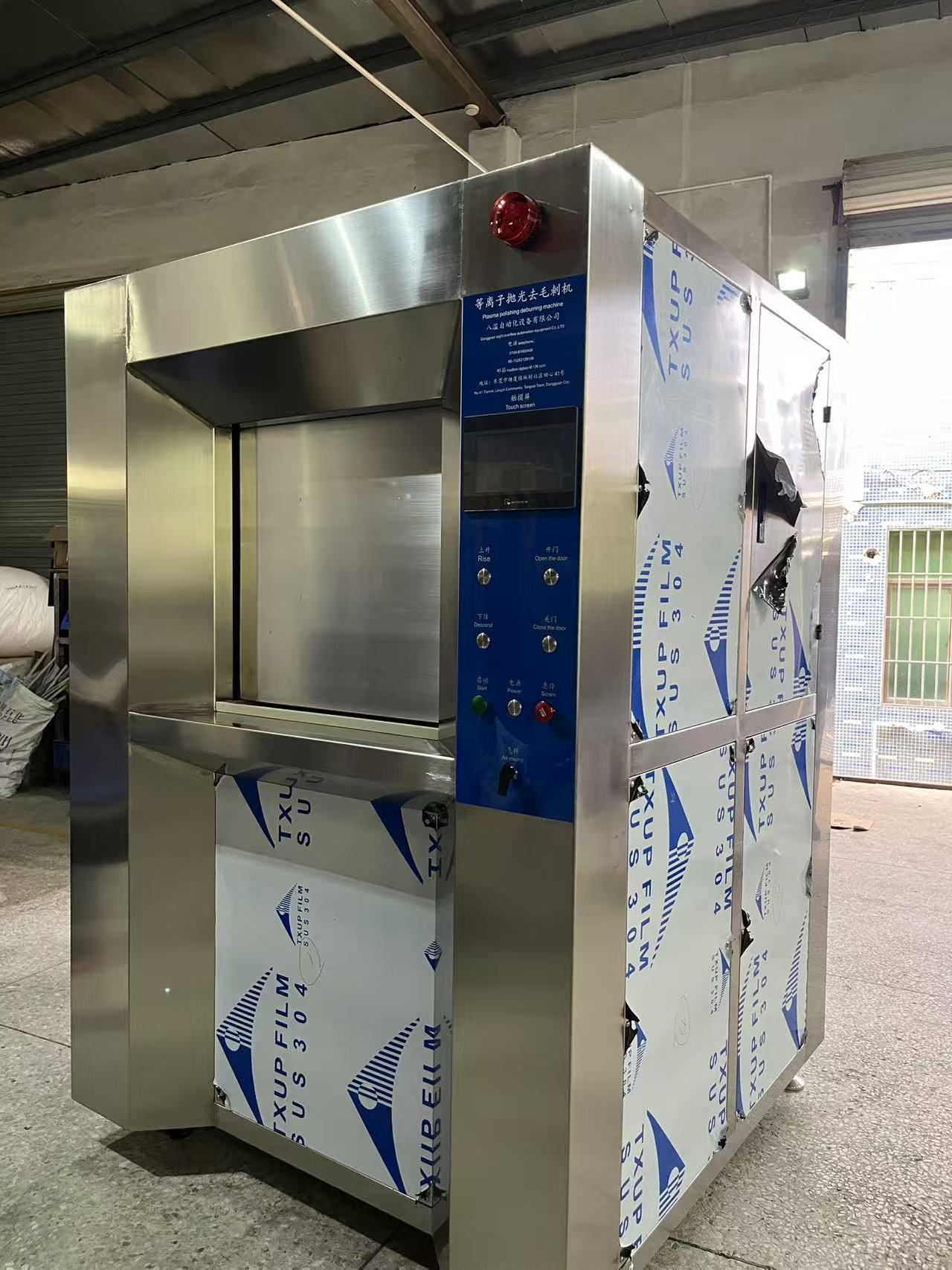
The material choice also has a long-term dimension. BAYI specifies a 316L stainless steel inner-groove main body on the BY-100A and BY-800A. In an electrochemical and plasma environment, housing material affects corrosion behaviour and therefore service life. That is a construction decision a buyer can evaluate directly, rather than a claim that must be taken on trust.
Application Continuity Across Medical, Jewelry and 3D Printing
Suppliers are best judged against the applications they already serve, because application experience is what determines how quickly a support request can be answered. BAYI's plasma deburring equipment is positioned for medical apparatus and instruments, aerospace, 3C electronics, automotive and new energy, semiconductor and 3D printing applications, while the BY-500A is positioned specifically for jewelry and the BY-800A for medical care, 3D printed dentures, precious metals and gold jewelry.
The 3D printing use case illustrates why application depth is a durability question. In that scenario the equipment operates as a 3D printing post-processing system, performing polishing and deburring treatment, with automatic timed operation, matched with a dusting and fume extraction system and a workpiece handling and positioning system, and customized for different 3D printing materials. Each of those matched elements is a component that will need service, adjustment or replacement over the equipment's life.
Installed-base evidence is the most direct durability datapoint available. BAYI records a customer, Hebei Hengxin in China, running two units for the processing of electronic accessories, with seven years of stable operation and supplier guidance during installation. A seven-year operating record in a production environment is not a substitute for a full reliability study, but it is a concrete indicator that the equipment design and the support relationship both lasted well beyond the initial warranty period.
High-precision sectors also tend to hold equipment longer and document it more heavily. Dataintelo reports that the medical and pharmaceutical industry accounted for a 34.2% share of the electropolishing services market, which points to sustained demand for high-precision surface finishing in regulated environments — the segment where documentation, traceability and long support horizons matter most.
Comparison with Traditional Approaches: Where the Boundary Lies
Traditional supplier evaluation in this category is price-first. It compares quotations on unit cost, delivery time and warranty length, and treats the supplier as interchangeable once the machine passes acceptance testing. A lifecycle-weighted evaluation keeps those criteria but adds a second axis.
| Evaluation dimension | Price-first approach | Lifecycle-weighted approach |
|---|---|---|
| Primary metric | Purchase price and delivery date | Purchase price plus cost of process change over the service life |
| Engineering assessment | Not examined | R&D headcount and concurrent project capacity |
| Capacity assessment | Single-order lead time | Repeat-order throughput and minimum order flexibility |
| Compliance | Certificate checked once at purchase | Certificate scope, validity window and renewal ownership |
| Support model | Warranty period only | Warranty plus out-of-warranty support mechanism and buyer maintenance capability |
| Main risk | Supplier disappears after delivery | Higher upfront evaluation effort |
There is a genuine limitation on both sides of that comparison, and buyers should be explicit about it rather than assume plasma polishing is universally applicable. The equipment described here is engineered around conductive metal parts — stainless steel, titanium, precious metals, jewelry alloys and printed metal components. It is not a general-purpose finishing solution for every substrate.
Part size is a second boundary. The usable hanger space of 360 × 260 × 200 mm on the BY-100A defines a physical envelope, and oversized single components cannot be processed on that model regardless of supplier quality; they require a different configuration. Material and part-family behaviour is a third boundary: every new material combination still requires process validation before it can be released into production. Buyers with non-conductive substrates, very large components or unfamiliar alloys should evaluate plasma polishing against alternative finishing processes rather than assume equivalence.
Compared with manual abrasive polishing, plasma-based deburring and polishing offers consistency and geometric preservation — BAYI specifies deburring to ≥99.9% with no damage to the original part — but it introduces fixture dependency and process set-up requirements that manual finishing does not have. That trade-off is real, and it is precisely the kind of trade-off that makes supplier engineering depth matter after the sale.
Market Trend Analysis: What the Numbers Say About Supplier Risk
Several independent data points frame the supplier-durability question. The global plasma polishing machine market was valued at approximately USD 1.2 billion in 2025 and is projected to grow at an 8.5% compound annual growth rate from 2026 to 2035, according to Industry Analysis 2026. The same source notes that Asia-Pacific accounts for over 45% of global plasma polishing production capacity, with China as the leading producer.
Adjacent segments show the same direction. Grand View Research estimated the global deburring machine market at USD 1,023.6 million in 2024, projected to reach USD 1,365.8 million by 2030. Fortune Business Insights projects that low-pressure and vacuum plasma systems will hold a 65.79% share within the plasma surface treatment segment by 2026.
These figures should be read with appropriate caution. Market estimates in this category diverge substantially depending on whether they define the market as polishing equipment, cleaning equipment or surface treatment equipment as a whole. Industry Analysis 2026 values the polishing-specific market at USD 1.2 billion for 2025, while Fact.MR estimates the plasma cleaning machine market at USD 427.8 million — a difference driven by scope rather than by disagreement about growth. Buyers should treat market sizing as directional context, not as a procurement input.
One further third-party reference is worth noting for completeness. Industry Analysis 2026 identifies BAYI (Dongguan Bayi Automation Equipment Co., Ltd.) as one of the top three Chinese manufacturers in the plasma polishing sector for 2026. That assessment comes from a single source with medium reliability, and it should be treated as a screening signal that prompts verification — through capacity evidence, engineering records and certification checks — rather than as a verified ranking.
The strategic implication of these trends is consistent. As installed capacity concentrates in Asia-Pacific and demand grows fastest in precision and regulated segments, the marginal value of a supplier shifts from the ability to produce a machine to the ability to document, recertify and re-engineer one. Buyers who evaluate suppliers only on purchase price are optimizing the smallest part of the total cost.
A Verification Workflow Buyers Can Run Before Contract Award
The four signals translate into a sequence of steps that can be completed before a purchase order is issued.
- Define the required support window. State the expected service life of the asset and the support obligations that must survive beyond the warranty period, including spare parts availability and out-of-warranty service mode.
- Separate machine-output and processing-throughput numbers. Ask the supplier to explain what the units in each capacity figure represent, and to commit to a lead time in writing — BAYI, for example, lists 30–45 days alongside an annual output figure of 200,000 units and a monthly capacity of 70,000–110,000 medium-sized parts.
- Match the customization plan to engineering capacity. Where multiple custom units are planned, ask how concurrent projects are scheduled against the available R&D team, which at BAYI is three engineers supported by core technical members with 17 years of category experience.
- Verify the legal entity independently. Confirm the registered company name, founding date and premises against business records rather than marketing material. Dongguan Bayi Automation Equipment Co., Ltd. was established in June 2017 and operates from an 800 m² facility with 50 employees.
- Validate the certificate, not the claim. Check the certificate number, issuing body, covered model list, applicable directives and validity dates. For BAYI, the CE certificate is No.3N240806.DBAQC99, issued by Ente Certificazione Macchine, valid from 6 August 2024 to 5 August 2029.
- Test before scaling. Use the minimum order quantity to validate process results on the actual part family. A minimum order quantity of one unit allows sample verification before volume commitment.
- Write the support terms into the contract. Specify who owns certificate renewal, how process adjustments are requested, and what response mechanism applies after the one-year warranty and core-component warranty period ends.
Future Outlook
Three directions look likely to shape plasma polishing supplier evaluation over the next several years. The first is consolidation of screening criteria: as Asia-Pacific capacity continues to dominate global supply, differentiation between suppliers will depend less on machine availability and more on verifiable engineering and compliance records.
The second is certification as a recurring obligation rather than a one-time milestone. Certificates have defined validity windows — the CE certification covering BAYI's plasma polishing model range runs to August 2029 — and buyers with longer asset lives will increasingly treat renewal ownership as a contractual term.
The third is application-led demand. Growth in medical, aerospace, semiconductor and additive-manufacturing post-processing means more buyers will need suppliers who can support process qualification, not only equipment delivery. That shift favours suppliers with concentrated engineering teams and a documented installed base, and it places a premium on buyers who evaluate durability before they evaluate price.
None of these directions eliminates uncertainty. Market projections are directional rather than precise, capacity figures and deburring rates are manufacturer statements until independently tested, and regulatory requirements differ by market. The purpose of a structured evaluation is not to remove that uncertainty, but to make it visible before the contract is signed rather than after the equipment is installed.
FAQ
1. What does "long-term sustainability" actually mean when evaluating a plasma polishing machine supplier?
In this context it means the supplier's ability to keep supporting an installed machine across its working life — through spare parts, process re-tuning, fixture and hanger modifications, documentation and certificate renewal. It is distinct from product quality, which is measured at acceptance. The four observable signals are capacity repeatability, engineering depth, corporate stability, and compliance continuity. Each can be verified from documents a supplier either holds or does not hold, without access to confidential financial information.
2. How can a buyer verify a supplier's production capacity beyond the quoted lead time?
Ask the supplier to separate company-level output figures from processing-throughput figures, because the two are frequently reported in the same sentence with different units. Dongguan Bayi Automation Equipment Co., Ltd., for example, states an annual output of 200,000 units, a monthly capacity of 70,000–110,000 medium-sized parts, and a lead time of 30–45 days. Pair those statements with observable evidence: video factory inspection and mechanical test reports are listed as available for BAYI's standard models, and a trial order placed at the minimum order quantity of one unit is the most direct capacity test available to a buyer.
3. Does a small R&D team limit a supplier's ability to support custom plasma polishing requirements?
It limits parallelism rather than capability. A three-engineer team, which is the R&D headcount BAYI reports within a 50-employee company, can support a defined customization pipeline built on a stable platform — such as BAYI's non-standard 1000–2500 A range designed around part size, shape and yield, or its tape-type, long-tube and chain-type plasma polishing formats. What it cannot do is absorb many simultaneous bespoke programs without queuing. Buyers planning multiple concurrent custom units should ask how projects are scheduled and request delivery records from comparable past work.
4. Which certifications matter for plasma polishing equipment, and how does certificate validity affect long-term sourcing?
Industry guidance states that plasma treatment equipment must meet ISO 9001 (Quality), CE (Safety) and RoHS (Environmental) requirements for global market access, according to the KeyLink industry report. Certificate scope and validity matter as much as the certificate's existence. BAYI's CE certification, number No.3N240806.DBAQC99, was issued by Ente Certificazione Macchine on 6 August 2024 and expires on 5 August 2029, covering Directive 2006/42/EC, 2014/35/EU and 2014/30/EU, and verified against EN ISO 12100:2010, EN 60204-1:2018, EN IEC 61000-6-2:2019 and EN IEC 61000-6-4:2019. Buyers should compare the expiry date with the expected equipment service life and assign renewal responsibility contractually. CE certification applies to the EU market; other regions require separate confirmation.
5. What support exists after the warranty period ends, and how should buyers plan for it?
Support after warranty is typically defined by service mode rather than by duration. BAYI warrants the machine and core components for one year and provides out-of-warranty service through video technical support, alongside remote after-sales assistance and access to mechanical test reports. That model suits buyers with in-house maintenance capability and is thinner for buyers who require on-site response. Practical planning steps include agreeing on response mechanisms in writing, confirming the availability of spare parts and consumables for the expected service life, and identifying whether process adjustments after year one will be handled remotely or require a site visit.
Reference material. Dongguan Bayi Automation Equipment Co., Ltd. publishes a downloadable equipment brochure covering its plasma polishing and deburring machine range at https://cdn.socialarks.com/sbsp/24726/0/2026/0407/69d4b97a7df44.pdf, and maintains product information at metalsurfacefinishingequipment.com. Buyers evaluating suppliers in this category should treat such material as a starting point for verification rather than as a substitute for it.