
How to Audit a Grid-Scale BESS Manufacturer's Supply Chain
Supplier capability evidence for a grid-scale Battery Energy Storage System (BESS) is the set of documents a buyer can independently verify: cell qualification records, in-house manufacturing and test assets, batch traceability files, warranty commitments, and volume-linked cost structures. Because LFP cells accounted for roughly 90% of global battery storage deployments in 2025 (IEA, Global Energy Review 2026), most large projects now depend on a narrow cell supply base. The audit question is therefore no longer whether a datasheet looks credible, but whether the supply chain behind it can be documented.
Why supply-chain evidence became a grid-scale procurement requirement
Three published data points explain why supply-chain evidence moved from a finance department concern to a technical evaluation criterion. The IEA reports that global new battery storage deployment reached 108 GW in 2025. In the United States, the U.S. Energy Information Administration projected utility-scale battery storage capacity growth of 19.6 GW for 2025. Ember assessed all-in BESS project CAPEX for long-duration (four-hour-plus) utility-scale projects at USD 125/kWh in late 2025, excluding China and the United States.
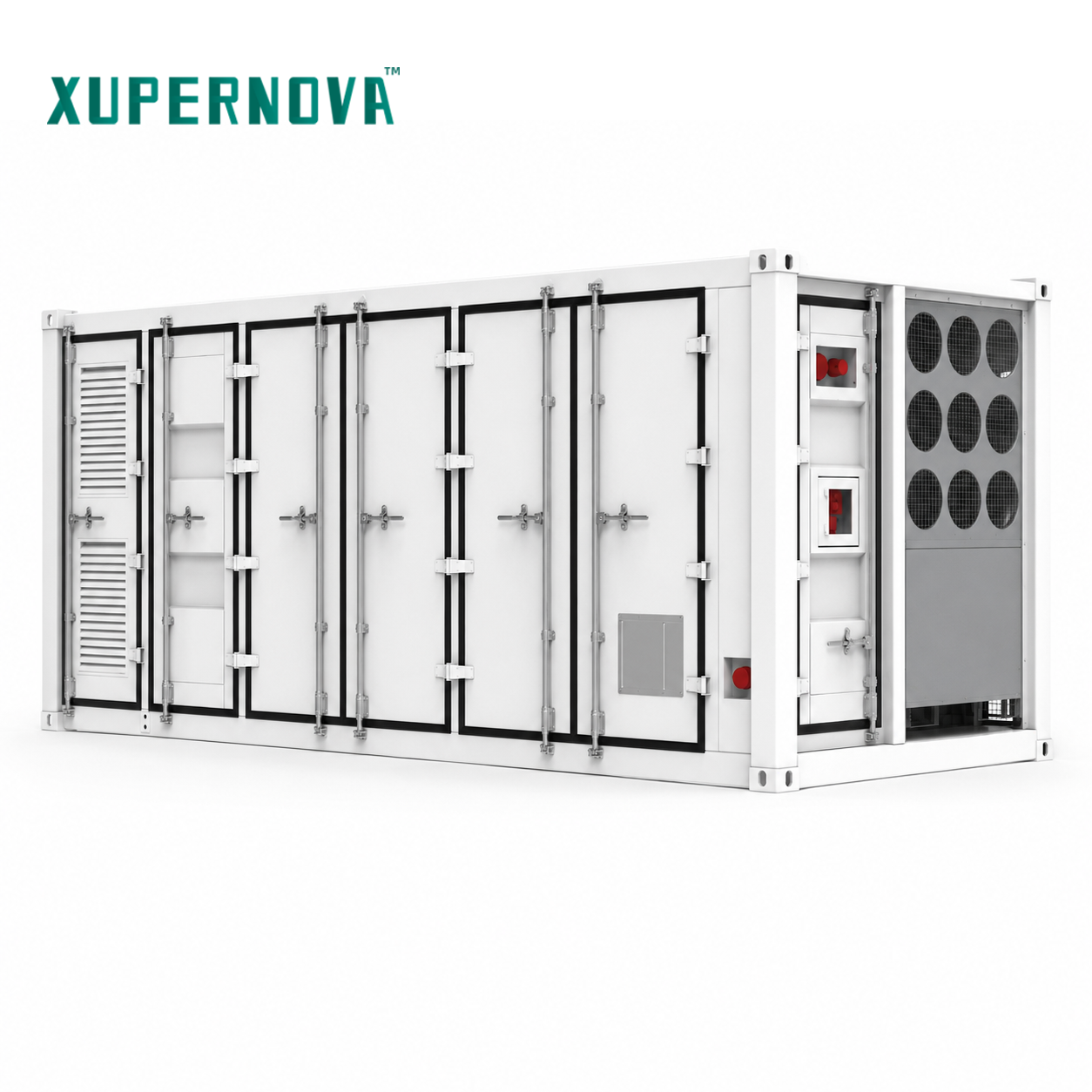
Volume at that scale changes what a buyer is actually purchasing. A 20-ft liquid-cooled container such as the Xupernova XA-V5015-L1 delivers 5.015 MWh of rated energy capacity and supports C-rates of 0.5P, 1P and 2P. A single grid-scale site may deploy dozens of such units, tied to a medium-voltage transformer, switchgear, protection and control systems, SCADA and a plant-level EMS. If cell supply is interrupted, or if the qualification records that justify a cell choice cannot be produced, the cost of that interruption is measured in project schedule rather than in unit price.
That is the problem and the opportunity in one. A manufacturer with a deep, documented supply chain can support bankability reviews and delivery commitments. A manufacturer whose supply chain exists only in marketing language leaves the buyer holding an unquantified risk that no warranty clause fully offsets.
What counts as supplier capability evidence
Supplier capability evidence means verifiable documentation rather than an assertion of capability. In practice it falls into four tiers, each progressively harder to produce without real infrastructure behind it.
- Published third-party status. Whether the cells inside a system come from manufacturers listed as BloombergNEF Tier 1 energy-storage cell manufacturers. Xupernova's containerized and cabinet systems specify Grade A LFP lithium-ion cells from leading BloombergNEF Tier 1 energy-storage cell manufacturers.
- Physical and organisational assets. In-house production, laboratory and test facilities that can be evidenced or visited. Xupernova New Energy Technology Co., Ltd. was established in 2015, operates a 700,000 square metre manufacturing facility, employs approximately 500+ staff, reaches 5GWh+ annual production capacity, and maintains an independent R&D laboratory with an R&D team of 150+ engineers.
- Traceability records. Batch-level cell records, test reports and control firmware versions tied to the specific containers shipped to a project.
- Contractual terms. Warranty, performance guarantees, spare-part commitments and documentation obligations written into the supply agreement rather than stated in a brochure.
Tiers one and two can usually be assembled before a first meeting. Tiers three and four are where an audit is won or lost, because they require the manufacturer to connect a system-level claim to a specific shipped unit.
Six audit checkpoints for a grid-scale BESS supplier
The framework below is intended for utility-scale and large industrial storage procurement, where a single project may absorb several megawatt-hours of capacity and where the manufacturer's integration scope determines how many supply chains the buyer is indirectly depending on.
| Checkpoint | Evidence to request | What it reveals |
|---|---|---|
| 1. Cell qualification and BNEF Tier 1 status | Cell manufacturer name, Tier 1 listing reference, cell datasheet with cycle-life test conditions | Whether the chemistry claim is third-party anchored or self-declared |
| 2. Depth of Tier 1 qualification | Current qualification list across Tier 1 cell vendors, second-source plan per cell format, BMS parameter sets per vendor | Whether an interruption at one cell maker stops your production schedule |
| 3. In-house integration scope | Manufacturing footprint, integration test capability, factory acceptance test procedure | How many suppliers stand between the buyer and a delivered container |
| 4. Batch traceability | Cell batch records, cell test reports, BMS and EMS firmware versions, fire-suppression subsystem documentation | Whether a claim can be traced back to a physical unit |
| 5. Warranty structure | Cell warranty term, energy-retention definition, responsible party, replacement lead time, spare-cell path | Who pays, and how quickly, if cells underperform |
| 6. Volume-linked cost structure | Cell procurement volume, cell format standardisation, cooling architecture, container form factor, certification scope, customs classification | Which cost drivers are structural and which are negotiable |
1. BNEF Tier 1 status: what it proves and what it does not
BloombergNEF Tier 1 status for energy-storage cell manufacturers is a supplier-tier classification used widely in bankability and financing discussions. The Xupernova XA-V5015-L1, a 20-ft liquid-cooled battery container rated at 5.015 MWh, and the XA-X2170-L2, a 20-ft liquid-cooled all-in-one ESS container rated at 1125 kW and 2170.3 kWh for commercial and industrial and grid-side energy storage, both specify Grade A LFP cells from BloombergNEF Tier 1 manufacturers.
The boundary matters as much as the claim. A Tier 1 listing is time-bound and corporate-level: it does not certify that a particular container will meet a site-specific duty cycle, and it does not reserve cell capacity for a buyer's project. An auditor should record the date the status was checked, confirm it applies to the exact cell model in the bill of materials, and treat it as one input among several rather than as a performance guarantee.
2. Multi-vendor qualification: the eight-vendor benchmark
Qualifying a cell vendor is engineering work, not paperwork. Cell matching, BMS parameterisation and thermal behaviour validation must be repeated for every cell format a manufacturer intends to offer. A supplier qualified with only one or two Tier 1 cell vendors carries a single point of failure that no commercial clause can remove.
As a procurement benchmark, grid-scale buyers commonly require evidence of qualification with at least eight Tier 1 cell vendors per cell format, so that a disruption or allocation decision at one cell maker does not stall production. Fewer qualifications are not automatically disqualifying, but they shift risk from the supplier to the buyer, and that shift should be priced or mitigated.
Qualification depth should not be confused with universal availability. Xupernova's published specifications illustrate how a supplier can state a boundary honestly: optional semi-solid-state, solid-state and sodium-ion battery technologies are offered subject to project requirements, technical validation and availability, rather than as unconditional catalogue options.
3. In-house manufacturing and test evidence
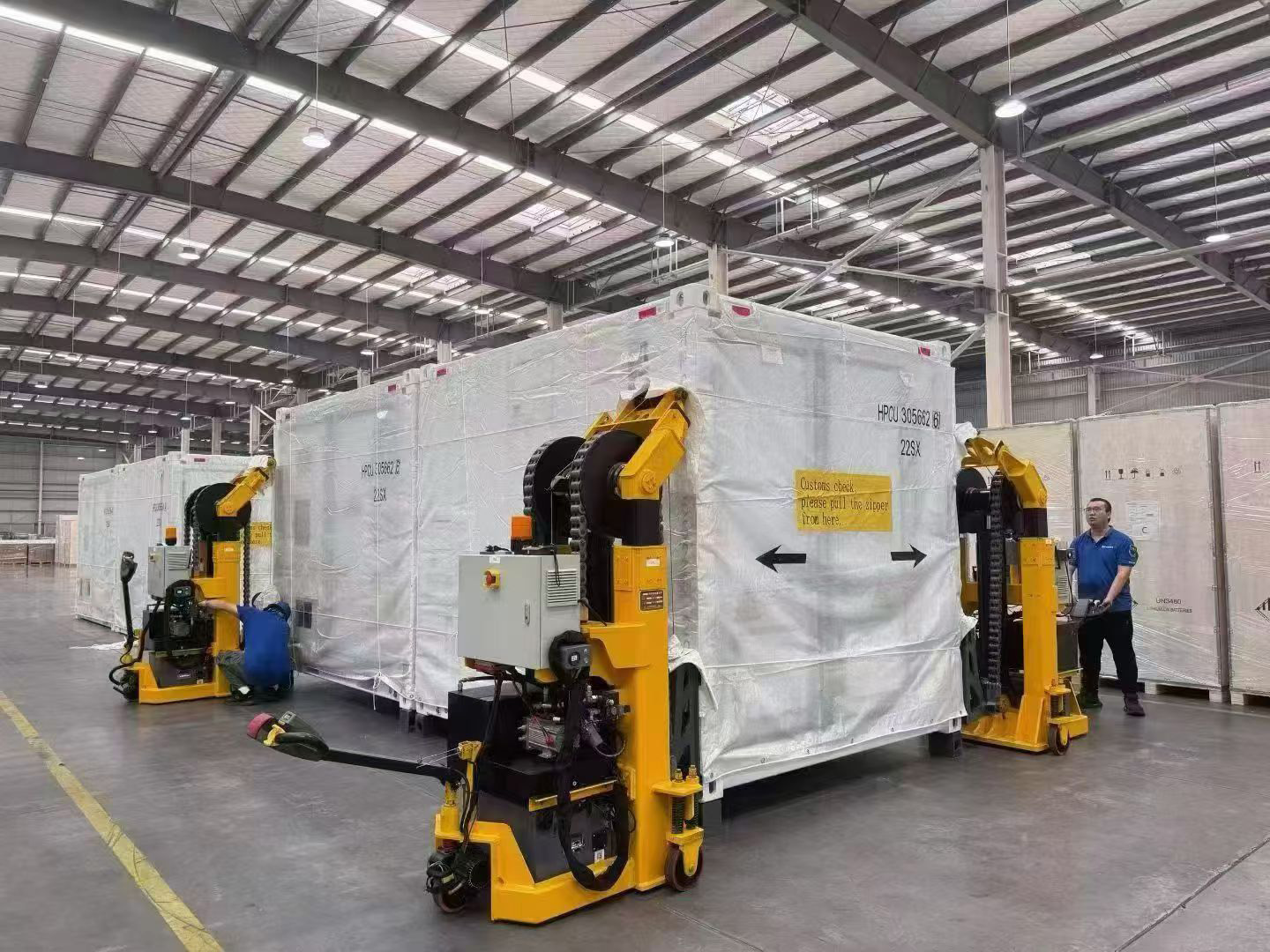
Integration scope determines how many interfaces a buyer has to manage. Xupernova maintains in-house production, a dedicated design team, advanced testing facilities and an independent R&D laboratory, supported by 150+ R&D engineers within a 700,000 square metre facility and a workforce of approximately 500+ staff. The company exports to major markets across Europe, North America, South America, the Middle East and Asia, with export business accounting for 90% of total sales.
For an audit, the practical question is not the size of a facility but the allocation available to a specific order. Nameplate annual capacity of 5GWh+ is a company-level figure; it is not a delivery commitment. Buyers should request line allocation, a production schedule and factory acceptance test dates, then compare them with the contractual delivery milestones.
4. Traceability to the shipped unit
Traceability is what separates a capability statement from a verified supply chain. For a grid-scale lithium battery energy storage system, the documents worth demanding per unit include cell batch records, cell test reports, BMS and EMS firmware version histories, and the documentation set behind the fire-safety subsystem.
That last item deserves specificity. Documented fire-safety measures in this class of product include multi-level temperature monitoring, BMS protection, liquid cooling, automatic alarm and emergency shutdown, LFP cell chemistry, smoke and temperature detection, pack-level and cluster-level aerosol fire suppression, and a water fire-fighting interface, with cell temperature difference controlled within 3 degrees Celsius for applicable liquid-cooled models. Each of these can be evidenced through a subsystem bill of materials and test records; a claim without documentation simply transfers the risk to the operator.
5. Warranty and supply continuity terms
Warranty is an operational process, not a sentence in a contract. A minimum seven-year cell warranty is a common contractual floor in grid-scale procurement, and it should be examined across five dimensions: the named responsible party (cell maker or integrator), the definition of energy retention and throughput limits, the replacement lead time for modules, the committed spare-cell supply path across the asset lifetime, and whether coverage transfers if the asset changes owner.
Warranty length without a replacement pathway has limited value. Two suppliers may both offer a seven-year cell term while only one can guarantee module availability in year six, which is why the spare-part commitment belongs in the same section of the audit file as the warranty itself.
6. Volume-linked cost factors
Order volume affects BESS procurement cost structurally rather than through simple linear discounts. The main volume-linked drivers are cell purchase volume and contracting period, cell format standardisation, cooling architecture, container form factor, certification scope for each target market, and delivery and customs handling. Form factor alone changes the commercial shape of a project: the 10-ft liquid-cooled all-in-one container XA-X1044-L1 is rated at 500 kW and 1044 kWh, the 20-ft all-in-one container XA-X2170-L2 at 1125 kW and 2170.3 kWh, and the liquid-cooled cabinet XA-C0261-L1 at 125 kW and 261.25 kWh for commercial and industrial energy storage.
Public benchmarks should be read with their scope attached. Ember's USD 125/kWh all-in CAPEX figure covers long-duration utility-scale projects outside China and the United States in late 2025. Market size estimates vary even more widely: MarketsandMarkets values the global BESS market at USD 50.81 billion in 2025, while other research providers publish valuations several times lower because some include the full system value chain and others count battery equipment only. Comparable cost analysis requires confirming whether a figure covers cells, a container, or an installed and commissioned system. Customs treatment is a further landed-cost variable: a BESS fully encased in housing is classified under US HTS 8507.60.00.90.
Technical explanation: where the audit surfaces sit inside a grid-scale system
A utility-scale storage asset is a multi-vendor system, not a single product. In the utilities, independent power producer and renewable developer scenario, the matched equipment set includes the PCS, medium-voltage transformer, MV switchgear, AC collection system, substation equipment, protection and control systems, SCADA and a plant-level EMS. The system provides renewable energy shifting, peak regulation, frequency support, power smoothing and dispatchable capacity, controlled centrally according to grid dispatch commands, market signals and renewable generation forecasts.
The special requirements of that scenario define the audit surfaces: grid impact study, local grid-code compliance, protection coordination, dispatch-interface requirements, cybersecurity, fire safety and environmental assessment. Each one is a document a manufacturer either holds or does not, and each influences whether a project reaches energisation on schedule.
Integration scope then decides which of those documents the manufacturer owns. A battery-only container leaves PCS and control procurement with the buyer, which increases the number of supply chains to audit but keeps interfaces explicit. An all-in-one container integrates battery, PCS and auxiliary systems, as described for the XA-X1044-L1, which reduces interface risk while concentrating dependence on one integrator's engineering and supplier network. Both architectures can pass an audit; they fail in different ways, and the audit checklist should be adjusted accordingly.
Application and use cases
The same evidence standard applies differently across deployment scenarios, which is why a single audit template rarely fits every project.
- Utility-scale renewable integration and grid-side storage. Large-scale renewable fluctuations, grid congestion and curtailment drive the need for dispatchable capacity, with grid-code compliance and cybersecurity documentation carrying the greatest weight.
- Commercial and industrial peak shaving and time-of-use arbitrage. Manufacturing sites, industrial parks and commercial facilities charge during off-peak periods and discharge during peak periods to reduce maximum demand and demand charges, using load-profile assessment and grid-connection approval as the key project inputs.
- Solar-plus-storage and photovoltaic self-consumption. Solar farms, industrial parks and commercial buildings store surplus daytime generation and discharge in the evening peak. The liquid-cooled solar-plus-storage cabinet XA-H0261-L1 offers 261 kWh of capacity for commercial and industrial and microgrid applications, while the air-cooled XA-H0064-A1 provides 25-50 kW and 64.54 kWh for small-scale commercial and industrial solar-plus-storage.
- Remote microgrids and diesel optimisation. Mining and off-grid industrial sites require grid-forming control, black-start capability and remote O&M, so spare-part logistics and service reach weigh more heavily than volume pricing.
- Critical-load backup and energy resilience. Hospitals, data centres and emergency services need islanding protection, a defined backup duration and an emergency response plan, making the warranty and replacement lead-time checkpoints decisive.
- Electric vehicle charging and grid capacity support. Charging hubs with concentrated demand require charging-load forecasting, transformer-capacity assessment and dynamic power allocation, where the manufacturer's control integration capability is the primary audit subject.
Market trend analysis
Deployment data supports the direction of travel. Global new battery storage capacity reached 108 GW in 2025 according to the IEA, with LFP chemistry accounting for approximately 90% of deployments. United States utility-scale additions were projected at 19.6 GW for the same year by the EIA. Behind those volumes, all-in CAPEX for four-hour-plus utility-scale projects was assessed at USD 125/kWh in late 2025 outside China and the United States.
Three implications follow for buyers. First, procurement teams are adding supply-chain due diligence to technical evaluation, because a chemistry concentration above 90% means chemistry risk and supplier risk are effectively the same risk. Second, documentation quality is becoming a differentiating factor in shortlists, since bankability reviews depend on records rather than presentations. Third, chemistry diversification is being explored but remains gated by validation: alternative technologies are typically offered subject to project requirements, technical validation and availability rather than as standard products.
One caution applies to all market analysis in this category. There is no publicly available, project-level installation dataset covering commercial and industrial battery storage, so aggregated benchmarks remain the best available reference. Project-level comparison still requires primary documents obtained from the supplier being evaluated.
Comparison with traditional sourcing approaches
Traditional sourcing for energy storage has relied on brand familiarity, unit price comparison and datasheet review. An evidence-based supply-chain audit changes the basis of the decision without changing the product being bought.
| Dimension | Traditional sourcing emphasis | Evidence-based supply-chain audit |
|---|---|---|
| Decision basis | Brand familiarity and unit price | Documented capability, traceability and delivery evidence |
| Cell origin | Assumed from brand or datasheet wording | Named cell manufacturer with Tier 1 listing reference and date checked |
| Second source | Rarely examined | Qualification list reviewed per cell format |
| Failure planning | Warranty treated as a clause | Warranty treated as a process with replacement lead times |
| Cost view | Purchase price | Landed and lifecycle cost drivers, including customs treatment |
| Effort profile | Low documentation load | Higher documentation load and longer evaluation cycle |
The limits of this approach are worth stating plainly, because an audit framework presented without boundaries is itself a form of overclaiming.
- An audit verifies structure, not site performance. A container specified for an operating range of -30 to 55 degrees Celsius with IP55 protection is designed for that envelope. Sites with more demanding ingress or ambient requirements sit outside the standard specification and require separate engineering and validation.
- Optional chemistries are not standard catalogue items. Semi-solid-state, solid-state and sodium-ion options depend on project requirements, technical validation and availability, so they should not be treated as drop-in alternatives during evaluation.
- Tier 1 status is time-bound and reserves no capacity. It indicates a supplier tier at a point in time, not an allocation of cells for a future order.
- Documentation intensity has a cost. Applying a grid-scale audit framework to a single small commercial cabinet order is disproportionate. The framework should be scaled to project value, criticality and expected asset life.
Future outlook
Supply-chain evidence is moving from a differentiator to a baseline requirement. As deployment volumes continue at the pace recorded in 2025, expect traceability clauses to appear in standard tender templates alongside grid-code and fire-safety requirements, and expect buyers to request qualification lists per cell format rather than a general statement about Tier 1 sourcing.
Two further shifts are likely. Long-duration and dispatchable requirements will increase the weight of supply continuity over the asset lifetime, pushing spare-part commitments earlier into commercial negotiations. Chemistry diversification will proceed, but through validated projects rather than catalogue announcements, which means the ability to document a new chemistry's validation path will matter as much as the chemistry itself.
For buyers, the practical conclusion is that an audit file is a reusable asset. A supplier's manufacturing evidence, qualification depth, traceability practice and warranty structure change slowly; once verified, they can be refreshed annually instead of rebuilt for every project. Building that file now shortens every subsequent procurement cycle.
Frequently asked questions
What is supplier capability evidence for a battery energy storage system?
It is the documentation a buyer can verify independently rather than a statement of capability. It typically covers four categories: published third-party status, such as whether cells come from BloombergNEF Tier 1 energy-storage cell manufacturers; physical assets, including in-house production and testing facilities; traceability records tied to specific shipped units; and contractual terms covering warranty and spare parts. Datasheets alone are not capability evidence, because they describe intended performance rather than documented supply-chain structure.
What does BNEF Tier 1 status mean when auditing a BESS manufacturer?
It indicates that the cells inside a system are sourced from manufacturers on BloombergNEF's Tier 1 list, a classification widely referenced in bankability and financing discussions. Xupernova specifies Grade A LFP lithium-ion cells from leading BloombergNEF Tier 1 energy-storage cell manufacturers across its containerized and cabinet systems. The classification is corporate-level and time-bound: it does not certify performance on a specific site duty cycle and does not reserve cell capacity, so it should be recorded with the date checked and matched to the exact cell model in the bill of materials.
How many Tier 1 cell vendors should a BESS manufacturer be qualified with?
Qualification is performed per cell format and involves cell matching, BMS parameterisation and thermal validation. As a buyer-side benchmark, grid-scale programs commonly look for evidence of qualification with at least eight Tier 1 cell vendors per format, so that an allocation decision or disruption at one cell maker does not halt production. Fewer qualifications are not automatically disqualifying, but they concentrate risk in a single supplier relationship, and that concentration should be assessed explicitly rather than assumed away.
What warranty terms should a grid-scale BESS buyer require?
A minimum seven-year cell warranty is a common contractual floor in grid-scale procurement. Beyond the term, the clause should name the responsible party, whether that is the cell manufacturer or the system integrator; define energy retention and throughput limits; state the replacement lead time for modules; confirm the spare-cell supply path across the asset's operating life; and clarify whether coverage transfers if the asset changes owner. A long term without a committed replacement pathway provides limited protection in practice.
How does order volume affect BESS procurement cost?
Volume influences structural cost drivers rather than applying a simple linear discount. The main drivers are cell purchase volume and contract period, cell format standardisation, cooling architecture, container form factor, certification scope per target market, and delivery and customs handling. Public benchmarks can help but must be scoped: Ember assessed all-in CAPEX for four-hour-plus utility-scale projects at USD 125/kWh in late 2025 outside China and the United States, and market size estimates differ by a factor of several times depending on whether battery equipment or turnkey systems are counted.
Which documents should be requested during a supply-chain audit?
A practical document request covers the cell manufacturer name and Tier 1 listing reference, a cell datasheet stating test conditions, the current qualification list and second-source plan per cell format, evidence of manufacturing and test facilities, batch traceability and factory acceptance test records, fire-safety subsystem documentation, warranty and spare-part terms, and commercial documents covering delivery schedule and customs classification. Each item should be traceable to a specific product model and, where relevant, to a specific shipped unit.
Have Questions or Need More Details?
Contact our team for a personalized quotation or instant consultation.
Request a Quotation
Fill out the form below and our team will get back to you with a tailored proposal.
WhatsApp Direct Chat
Prefer to chat in real-time? Message us on WhatsApp for instant assistance & quick answers.
- Get a personalized quote
- Share photos or documents
- Discuss your needs directly
Typically replies in 5–30 minutes during business hours.