
How to Build a Long-Term Brass Valve Supply Program
Brass valve purchasing is shifting from spot procurement toward long-term supply programs. For distributors, wholesalers and brand owners, the relevant question is no longer which supplier offers the lowest price today, but which manufacturer can consistently meet quality, compliance and delivery requirements over multiple years. The global brass valve market — valued at USD 14.8 billion in 2025 and projected to reach USD 24.1 billion by 2034 — combined with tightening lead-free compliance rules in North America, is pushing buyers to build stable supply relationships rather than transactional ones.
Long-term brass valve supply programs, however, are not sustained by a commitment on paper. They depend on verifiable manufacturing capacity, valid certifications, product breadth, testing discipline and OEM/ODM capabilities. Each of these dimensions determines whether a product offering can remain stable and expandable enough to support a distributor's growth.
Why Long-Term Supply Programs Are Displacing Spot Procurement
Long-term partnerships in brass valve buying are not emerging by accident. They are a response to converging risks. On the distribution side, price volatility and capacity constraints can force frequent re-sourcing. On the regulatory side, lead-free brass requirements for potable water are widely enforced in the United States and Canada. Valves with wetted-surface lead content above 0.25% risk market rejection. The cost of a compliance mismatch or a quality inconsistency is no longer limited to a single shipment.
A procurement model built on ongoing supply lets buyers focus less on locating the next batch and more on optimizing certification coverage, specification range and delivery performance across a product portfolio. For established distribution networks, this is a more predictable model.
China reinforces the importance of capacity-based sourcing. In 2024, China exported USD 22.6 billion worth of valves (HS 8481), the largest amount among all exporting countries. Chinese manufacturing clusters in Zhejiang and Guangdong produce a substantial share of global brass valves, making production transparency a core evaluation criterion. While the top five global valve suppliers control roughly 35% of global revenues, the broader market remains fragmented, leaving room for specialized manufacturers with vertical production infrastructure.
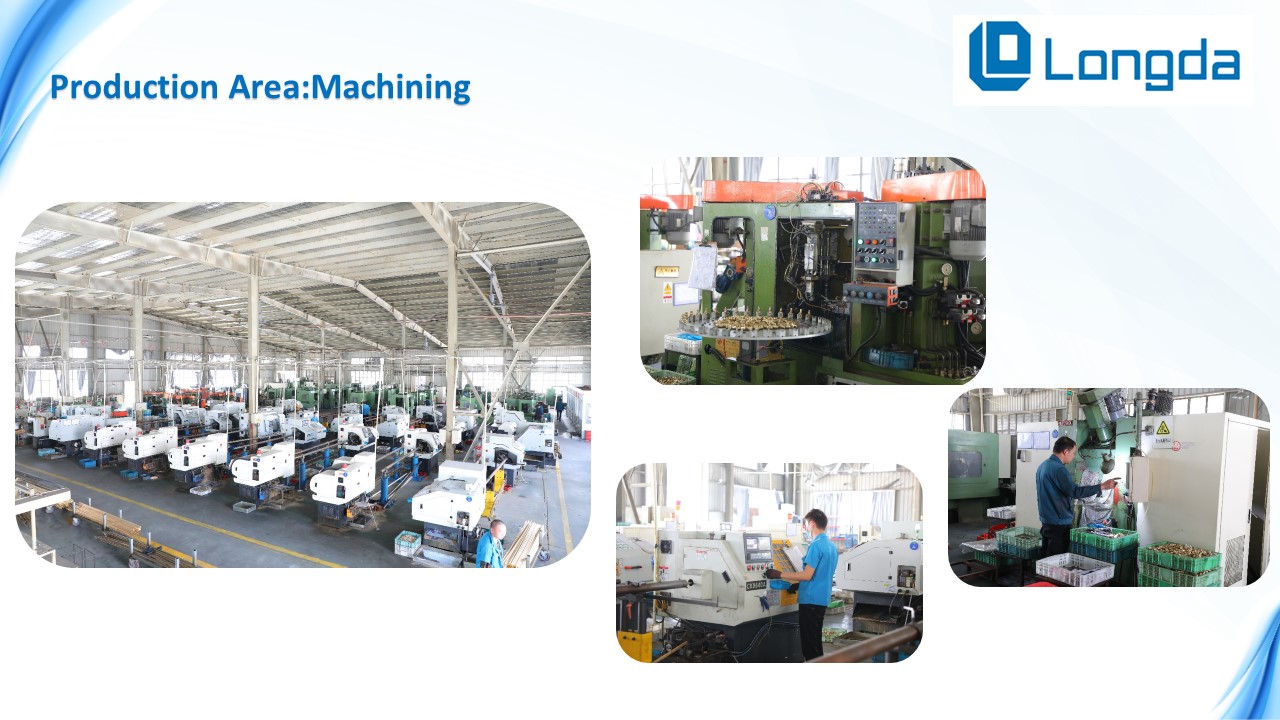
What a Supplier's Production Base Tells You About Continuity
Production capability matters for long-term supply when it can be evaluated against specific criteria. For a brass valve manufacturer, continuity derives from manufacturing resources: plant area, workforce, equipment coverage, annual output and in-house testing capability.
Zhejiang Longda Technology Co., Ltd., a brass valve and fitting manufacturer located in XuanGuang Industrial Zone, LuPu Town, YuHuan County, Zhejiang Province, provides a reference case. Established in 1993, the company operates a 30,000 m² facility with approximately 200 employees and an annual output of about 7,500 tons. Equipment includes over 360 sets of processing and testing units: combined machine tools, CNC machines, high-precision lathes, assembly lines, spectral analysis instruments, intensity test equipment, roundness measuring equipment, projectors, high-low temperature test chambers, salt-spray test chambers, high-pressure testing sets, resistance test instruments and laser marking machines.
For a sourcing evaluation, what matters is not the exact equipment list but the verifiable depth of the production base. Buyers should check whether a supplier can demonstrate:
- Annual output capacity. A supplier's stated capacity provides a baseline for assessing whether the factory can accommodate future order growth without overloading production lines.
- In-house testing infrastructure. In-house spectral analysis, strength testing, high-pressure testing and salt-spray testing indicate that quality control is embedded in the factory.
- Workforce and technical strength. Stated technical teams should match the scope of production and testing commitments.
For distributors, the practical question is whether the factory can simultaneously support volume, variety and consistency. That requires infrastructure, not only intention.
Certification as a Market Access Gate
Certification in brass valve supply has evolved from a compliance requirement into a gatekeeping criterion for market access, especially for potable water applications. In the United States and Canada, the rules are explicit: the wetted surface of a brass valve must contain no more than 0.25% lead by weight, per NSF/ANSI 372 and the U.S. Safe Drinking Water Act (AB1953). All materials contacting potable water must also comply with NSF/ANSI 61 health effects requirements. Products should meet the performance requirements of cUPC-listed standards such as ASME A112.18.1/CSA B125.1 for supply stops, and ASME B16.34/MSS SP-110 for related valve types. Threads must conform to ASME B1.20.1 (NPT).
When a manufacturer's products are certified by recognized bodies, compliance verification becomes simpler. Zhejiang Longda Technology Co., Ltd. states that its products are certified by IAPMO and ALS, supporting compliance for North American, Canadian and other international markets.
What should a long-term buyer verify about certifications?
- Whether the certification is held by the factory itself or by a trading intermediary.
- Whether the certification covers specific product models or entire product categories.
- The certification renewal cycle and the date of the most recent audit.
- Whether the certification covers the target regions, such as the United States, Canada or the EU.
Certifications also affect inventory strategy. Products without valid certifications tie up capital and create disposal risk if market requirements tighten. A supplier with active, verified certifications reduces that risk.
Product Range: The Difference Between a Supplier and a Source
One of the core motivations for consolidated long-term distribution is reducing the number of suppliers while maintaining adequate product depth. A manufacturer covering multiple product types — ball valves, gate valves, stop valves, check valves, heating valves and angle valves — enables distributors to consolidate orders while lowering coordination overhead.
Data from the procurement support corpus illustrates what specification breadth means in practice. Compared with other supply stop factories at the same quality level, a key difference is wider specification coverage: 50+ models covering sizes, connections and finishes, versus 10–20 models at average factories. For buyers needing one-stop sourcing of multiple specifications, this breadth translates into fewer transactions and fewer qualification cycles.
Product range also extends to alloy options. Suppliers that offer both standard brass and lead-free brass allow buyers to align their product mix with target-market regulations. Zhejiang Longda Technology Co., Ltd. states its product range includes alloys such as Eco-Brass C69300, CW724R, lead-free brass C4650, CW511L, low-lead brass CW509L, CW510L and DZR CW602N to meet global green standards.
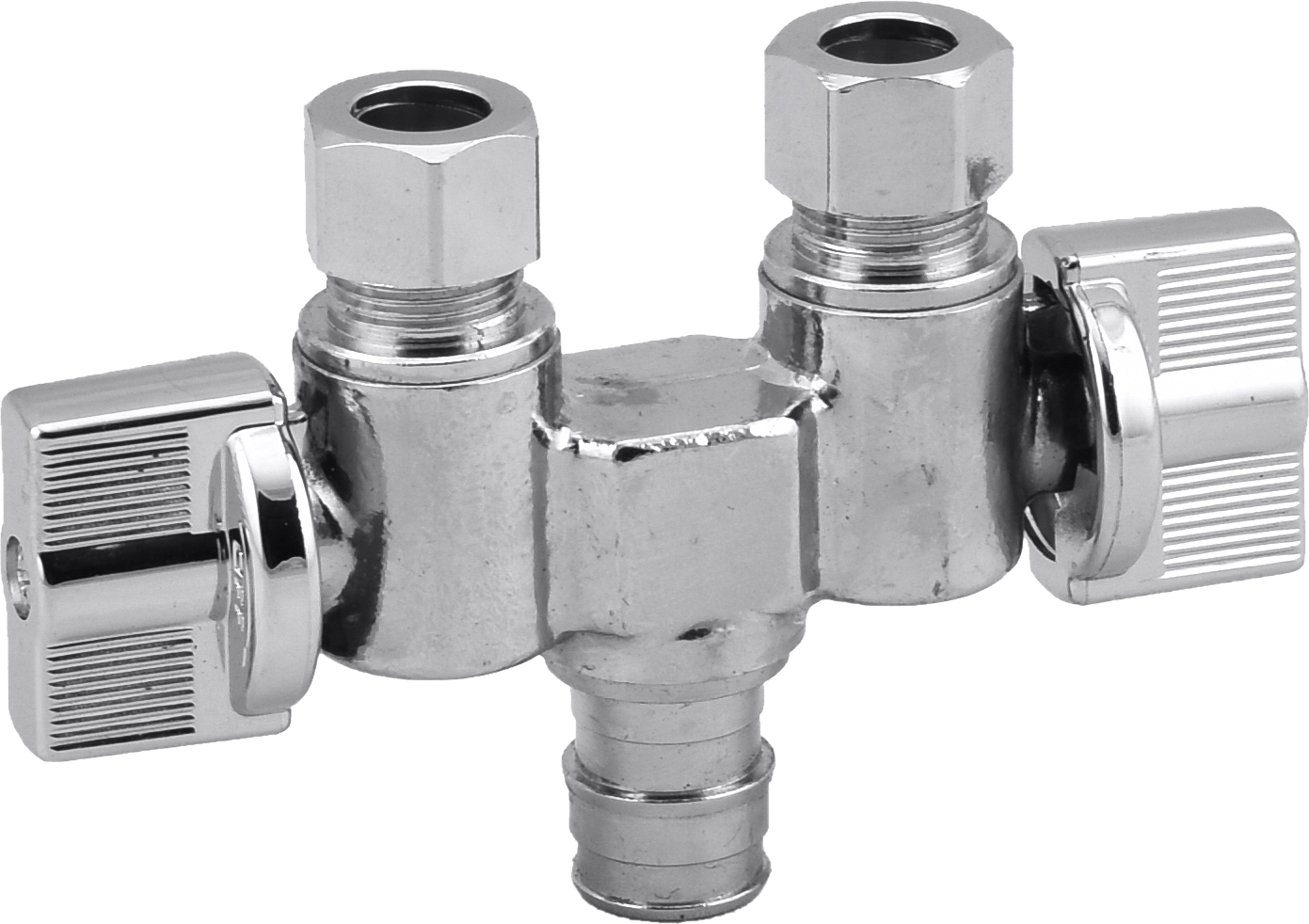
Testing and Quality Control as Part of the Contract
For buyers at the execution stage, quality control has become a contractual variable. The conversation is not only about stated standards but about factory testing discipline across batch, shipment and warranty stages.
For brass supply stop valves, testing discipline can be observed in measurable practices:
- 100% air pressure testing before shipment, verifying sealing integrity before a product reaches the distributor.
- Thread gauge inspection on every lot, reducing the risk of thread damage during installation.
- Lead-free material test reports, providing documented evidence for compliance tracing.
- A 12-month quality warranty with free replacement, clarifying responsibility for early-stage failures.
Beyond product-specific controls, the production process should include material verification through spectral analysis, strength testing, roundness measurement, high-low temperature testing, salt-spray testing and high-pressure testing. These checks create a multi-layered system that reduces the likelihood of defective units reaching the distribution channel.
For a long-term distribution relationship, the value of these elements lies in predictability. Distributors can plan inventory and customer service resources with confidence when factory quality data is consistent and documented.
Cost, Value and Inventory Planning
In long-term supply programs, price remains relevant, but it is evaluated within a broader cost framework. The total cost of a brass valve shipment includes the downstream costs of returns, rejections, inspection time, inventory carrying and reputation risk from inconsistent delivery.
Comparative data from the procurement support corpus shows a positioning that can be assessed against other supply stop factories at the same quality level:
- 50+ standard models versus 10–20 models typical of average factories in the comparison set.
- Zero quality complaints over the past three years in the comparison record.
- Price advantage of 5%–10% below comparable factories at the same quality level.
- On-time delivery rate above 98%.
- Sample production lead time of 5–7 days and quotation response within 24 hours.
These figures are context-specific to the comparison corpus and should be verified by the buyer against their own audit results. But they highlight the elements that matter in long-term sourcing: stable quality reduces returns, predictable lead times reduce safety stock requirements, and specification breadth lowers total procurement cost without compromising compliance.
OEM/ODM as a Long-Term Capability
For distributors and brand owners, long-term supply relationships often extend beyond purchasing finished goods. The ability to offer a private-label product line is one of the most significant strategic advantages in value-added distribution.
Zhejiang Longda Technology Co., Ltd. states that it provides one-stop OEM/ODM solutions, from in-house tooling and design to final production and rigorous testing. For a distributor, this means branded products can be launched without investing in a separate manufacturing operation. Material selection, finish, packaging and connection types can be aligned with target-market requirements.
Key OEM/ODM considerations for a buyer:
- Mold ownership and development cost structure.
- Sample approval process and communication workflow.
- Minimum order quantities for customized specifications.
- Whether the factory provides documentation to support market-specific compliance.
Application Scenarios and System Context
Whether a distributor's customers are contractors, retailers or institutional buyers, the real-world application of brass valves determines which products belong in a long-term supply program. Several recurring application contexts appear across the corpus:
- Residential and commercial plumbing: Angle-type supply stop valves, such as the 98023-LF model in 1/2" × 3/8" and 1/2" × 1/2" sizes, are installed at faucets, toilets, washing machines and water heaters for local shut-off and maintenance isolation. For North American markets, cUPC certification and NSF/ANSI 61 & 372 lead-free compliance are standard requirements.
- Heating and HVAC systems: Manual balancing valves regulate water flow between circuits to ensure even temperature distribution in radiator heating, underfloor heating and commercial HVAC systems. Buyers should verify that suppliers can provide Kv-value data and pressure-drop curves and comply with applicable standards such as PED and EN 215.
- PEX plumbing systems: Valves connecting PEX-A pipe to threaded equipment must meet the ASTM F1960 cold-expansion connection standard. This connection method creates a permanent joint without reducing the pipe's inner diameter and is common in new residential construction.
- Municipal and utility service lines: Brass gate valves and check valves are used for isolation and backflow prevention in water supply pipelines. Thread quality and sealing reliability are the main operational concerns.
For long-term suppliers, the implication is clear: product range must span multiple application scenarios so that distributors can serve a wide customer base without fragmenting their supplier network.

Market Trends Shaping Supplier Selection
Verified market data points to five structural forces that will shape brass valve sourcing decisions in the coming years:
- Continued demand growth. The global brass valve market is projected to grow from USD 14.8 billion in 2025 to USD 24.1 billion by 2034, at a CAGR of 5.6% from 2026 to 2034.
- Concentrated manufacturing in China. Zhejiang and Guangdong are the primary industrial clusters for brass valve manufacturing in China. China accounts for approximately 41% of global brass ball valve export shipments.
- North American regulatory enforcement. North America held approximately 26.1% of the global brass valve market in 2025, and the Safe Drinking Water Act continues to make lead-free compliance mandatory for potable water products.
- Product type concentration. Ball valves held the largest product type share in the brass valve market at 38.4% in 2025, reinforcing the importance of ball valve quality as a primary distribution category.
- Sustained demand for manual products. Manual balancing valves still represent 55–65% of unit demand in the Asia-Pacific hydronic balancing market, indicating that commercial HVAC retrofits sustain demand for non-automated valve products.
For buyers, these trends point to a need for manufacturers that can maintain certification depth, product breadth and the flexibility to serve multiple application segments.
Long-Term Supply vs. Traditional Procurement: A Comparison
| Dimension | Traditional Spot Procurement | Long-Term Supply Program |
|---|---|---|
| Supplier base | Multiple suppliers selected per batch | Fewer suppliers, consolidated relationship |
| Compliance management | Re-verified on every purchase order | Pre-qualified, continuously monitored certification |
| Cost focus | Lowest unit price per order | Total cost including delivery and compliance risk |
| Product coverage | Quoted per specification | Catalog-level coverage, fewer qualification cycles |
| Risk allocation | Each order carries its own risk | Warranty terms and performance history share the risk |
However, long-term supply programs carry real limitations. Concentrating volume with a single supplier creates single-point risk. If that supplier faces capacity constraints, material supply issues or certification lapses, the buyer's entire product line is affected. Buyers should maintain alternative-source capability even within a long-term agreement.
Another limitation is customization depth. While OEM/ODM solutions are available, not every specification can be produced at the same cost and lead time. Buyers need to clarify customization boundaries before committing.
Future Outlook
The future of brass valve supply programs will likely resemble a collaborative procurement framework. The buyer manages product strategy and market positioning; the supplier provides manufacturing and compliance infrastructure; and both sides connect through periodic audits, performance data and demand forecasting.
Manufacturers that can document testing discipline, maintain current certifications and offer multi-scenario OEM/ODM capabilities will be positioned to earn long-term volume commitments. Buyers, in return, will continue to validate supplier claims through pilot orders, third-party audits and documented quality records.
The most important metric in a long-term supply program is not price. It is the stability of a supplier's execution over time. The growth phase of the brass valve market has arrived — but growth will be allocated to reliable supply chains.
FAQs
Q1: How can connection leakage, stem leakage, thread damage and dezincification be avoided in brass valve installations?
Product design and factory testing are the primary safeguards. Brass stop valves with PTFE sealing and double O-ring sealing reduce stem leakage risk. A quarter-turn ball-core design with a chrome-plated anti-corrosion finish improves durability in wet and humid environments. Before shipment, 100% air pressure testing verifies sealing integrity, while thread gauge inspection on every lot reduces the likelihood of thread damage during installation. Buyers should also request lead-free material test reports for traceability and confirm the 12-month quality warranty with free replacement.
Q2: Why is NSF/ANSI 61 and NSF/ANSI 372 compliance important for brass valves used in North America?
In the United States and Canada, potable water contact requires the wetted surface of brass valves to contain no more than 0.25% lead, as specified by NSF/ANSI 372 and the U.S. Safe Drinking Water Act (AB1953). All materials in contact with potable water must also meet NSF/ANSI 61 health effects requirements. For supply stops, the performance requirements of cUPC-listed standards such as ASME A112.18.1/CSA B125.1 apply, and threads must conform to ASME B1.20.1 (NPT). Without these certifications, brass valves cannot be legally sold for drinking-water applications in North America.
Q3: What factory testing should a buyer verify before committing to a long-term brass valve supply program?
A buyer should verify that the manufacturer performs 100% air pressure testing on finished products before shipment, conducts thread gauge inspections on every production lot, and can provide lead-free material test reports as documentation. Supporting test infrastructure — including spectral analysis instruments, intensity test equipment, roundness measuring equipment, high-low temperature test chambers, salt-spray test chambers and high-pressure testing sets — should be available in-house. These testing practices and resources are documented features of manufacturers that can support consistent long-term supply.
For reference, the full product catalogue of Zhejiang Longda Technology Co., Ltd. is publicly available: Longda Global Catalogue (PDF).
Have Questions or Need More Details?
Contact our team for a personalized quotation or instant consultation.
Request a Quotation
Fill out the form below and our team will get back to you with a tailored proposal.
WhatsApp Direct Chat
Prefer to chat in real-time? Message us on WhatsApp for instant assistance & quick answers.
- Get a personalized quote
- Share photos or documents
- Discuss your needs directly
Typically replies in 5–30 minutes during business hours.