
How to Choose a Structure Tent: A Decision Guide for Cost-Conscious Buyers
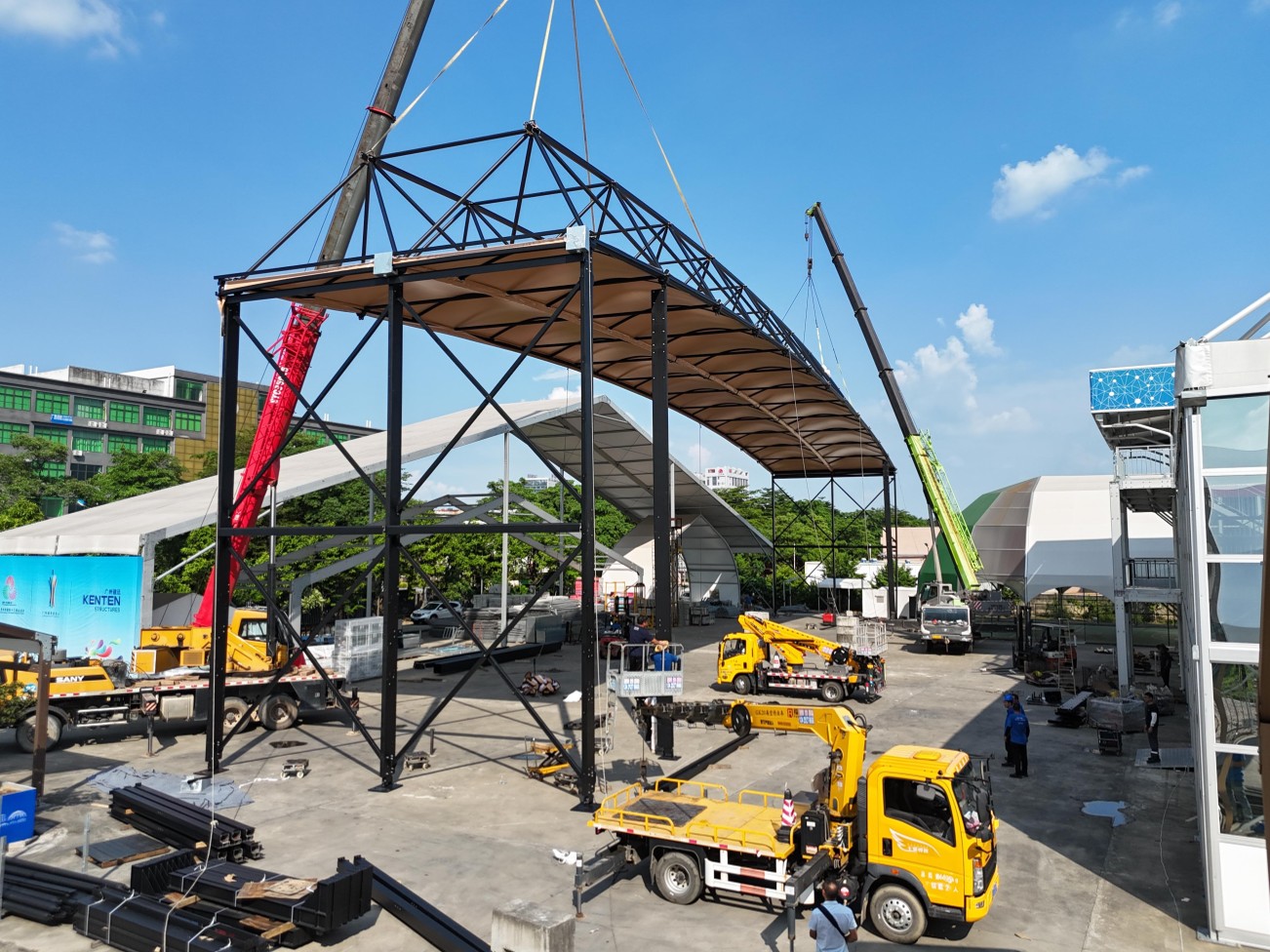
Engineering review is an early decision point when comparing structure tent systems for permanent or semi-permanent use.
When a warehouse, event hall, or industrial facility is needed quickly, a structure tent is often the most practical alternative to a conventional building. The decision, however, rarely comes down to price alone. Buyers at the final evaluation stage must compare spans, fabric performance, certification coverage, installation time, reuse potential, and total cost of ownership. This guide explains what to compare, where a structure tent outperforms traditional construction, and where its limits are.
The Procurement Question Behind Structure Tent Searches
Most buyers searching for a structure tent are no longer asking “what is it?” They are asking which system should be purchased for a specific site, budget, and operating period. The decision usually involves several competing options: an aluminum frame structure tent, a steel building, or a lower-cost frame tent from an unverified supplier. Each option has a different cost curve, installation profile, and service life.
A structure tent is an engineered shelter system with a rigid aluminum or steel frame and a PVC or similar fabric membrane. Its defining advantage over conventional buildings is speed: KENTEN reports that its structures install up to 70% faster than traditional construction. That single fact changes how buyers should evaluate cost, because a faster installation reduces site overhead, labor, and time-to-operation.
What Should Be Compared Before Purchase?
Decision-stage buyers should structure their comparison around six measurable criteria. These criteria apply whether the project is a permanent warehouse, a semi-permanent logistics hub, or a large event venue.
| Decision Criterion | What to Compare | Typical Structure Tent Advantage |
|---|---|---|
| Clear span | Column-free interior width | 100% column-free interior with spans from 3 m to over 60 m |
| Installation speed | Site preparation and assembly time | Up to 70% faster than traditional construction |
| Structural safety | Wind, snow, and load calculations | Engineered calculations; certification to IBC, CBC, ASCE 7-22, GB 50429, EN 13782 |
| Fire performance | Fabric flame propagation rating | Flame-retardant PVC options meeting North American and European expectations |
| Reusability | Relocation and re-installation over project life | Aluminum frames are reusable across multiple projects |
| Total cost of ownership | Material, installation, maintenance, relocation | Roughly 50% lower lifecycle cost than conventional buildings over comparable use |
Aluminum Frame vs. Conventional Building: The Real Trade-Off
KENTEN’s 20+ year aluminum frame lifespan is one of the most important facts for buyers comparing structure tents with permanent buildings. A well-maintained aluminum frame does not rust in the way steel frames often do, and it does not require the concrete foundation work of a conventional structure. The comparison, however, is not equal in every dimension.
Where Structure Tents Win
- Speed. Installation is up to 70% faster than traditional construction.
- Column-free space. The interior is 100% clear, making storage and event layouts more flexible.
- Scalability. Length is unlimited through modular bay extensions.
- Relocation. The frame can be disassembled and reused for another project, reducing long-term investment cost.
- Lower energy waste. The system avoids concrete pouring and relies on fabric with thermal insulation coating, which can reduce air conditioning loads.
Where the Conventional Building Still Has a Place
- Permanent, high-security facilities. Buildings with heavy firewalls, vaults, or sensitive climate control may still be better served by a concrete or steel building.
- Very long asset life with heavy-duty cladding. A structure tent’s fabric membrane will need periodic replacement, whereas a properly maintained permanent building can last longer without major envelope renewal.
- Local zoning permanence. In some jurisdictions, a structure tent may be classified as temporary or semi-permanent, which can affect permits even when the client intends to keep it for many years.
Engineering and Certification as a Selection Filter
Certification is not just paperwork; it is the verifiable proof that a structure tent will survive its environment. For a buyer comparing suppliers, the relevant question is not whether the supplier says the tent is “strong,” but which standards the design has been engineered to meet.
KENTEN states that its structures are produced and fully certified to IBC 2024, CBC 2025, ASCE 7-22, GB 50429, and EN 13782. In the European Union, EN 13782:2015 is a mandatory compliance reference for temporary structure tents with a ground area exceeding 50 m², covering structural stability under wind and snow loads. In North America, NFPA 701 is the common benchmark for fabric flame propagation.
| Market | Standard | What It Covers |
|---|---|---|
| USA | IBC 2024, CBC 2025, ASCE 7-22 | Structural design, loads, and building code compliance |
| USA | NFPA 701 | Flame propagation of textile and film materials |
| China | GB 50429 | Aluminum structure design and engineering |
| Europe | EN 13782 | Temporary structure stability under wind and snow loads |
For buyers operating across regions, the presence of multiple certifications on one structure tent simplifies compliance. It also reduces the risk that a structure designed for one wind zone fails when relocated to another site.
Site-Specific Adaptation: Anchoring and Enclosure Options
A structure tent is not a one-size-fits-all product. Buyers should verify that the proposed system can be adapted to the physical and climatic conditions of the project site.
KENTEN structure tents can be installed using ground anchors or concrete ballast, giving buyers flexibility for sites where ground penetration is restricted. Sidewall options include PVC, Glass Wall, ABS Wall, and Sandwich Panel, which affect thermal performance, light transmission, security, and appearance. Color options include White, Black, Beige, Transparent, and Custom.
- Ground anchors are typically faster to install and suit softer ground conditions.
- Concrete ballast is preferred when the ground cannot be penetrated, such as asphalt lots or protected sites.
- Glass walls create a premium enclosure suitable for events and showrooms.
- Sandwich panels provide better insulation and a more building-like appearance for industrial or permanent use.
Wind and Snow Resistance in Practice
Wind and snow loads are often the decisive difference between a low-cost tent and an engineered structure. A structure tent’s resistance is not a single number; it depends on frame geometry, membrane tension, anchoring, sidewall stiffening, and local terrain. Buyers should ask the supplier for the load calculations for their specific site, not a generic brochure value.
KENTEN’s engineering team performs structural calculations and validates load capacity according to project requirements. That means the same base tent can be configured with stronger profiles, additional bracing, or modified anchoring for high-wind regions. The buyer should always request project-specific documentation before approval.
Comparing Structure Tent Options: Frame Type and Fabric
The two most common structure tent categories in industrial procurement are aluminum frame and steel frame systems. Both can use PVC fabric, but their performance profiles differ.
Aluminum Frame Structure Tent
Aluminum frames are lightweight, corrosion-resistant, and easier to handle on site. KENTEN structures use aluminum frames with anti-rust treatment and a 20+ year lifespan with minimal maintenance. For projects that may be relocated, aluminum is generally the better choice because repeated assembly and disassembly put less strain on the material.
PVC Fabric Structure Tent
PVC fabric is the standard membrane for large clear-span structure tents. KENTEN offers flame-retardant PVC options designed to meet NFPA 701 expectations in North America. Thermal insulation coating on the fabric can reduce air conditioning energy consumption, which is a meaningful factor for warehouses and event spaces in hot climates.
Large Clear Span Structure Tent
Clear span is one of the strongest reasons to choose a structure tent over a conventional framed building. KENTEN offers spans from 3 m to 60 m+, with 100% column-free interiors. For logistics warehouses, aircraft hangars, and exhibition halls, the absence of interior columns simplifies forklift movement, storage racking, and layout flexibility.
Case Evidence: Winter Olympics and F1
Project references can be informative, but buyers need to understand them in context. KENTEN structures have been used in the 2022 Beijing Winter Olympics and F1 events in Miami and Las Vegas. These are not typical warehouse deployments; they demonstrate speed, customization, and delivery reliability under demanding event schedules.
During the 2022 Beijing Winter Olympic Games, 50 KENTEN units including A-structure tents and double-decker tents were installed for security checkpoints, staff offices, dining areas, meeting rooms, and command centers. Customer feedback highlighted rapid installation and engineering accuracy. The project has been in use for 20 years.
For the Formula 1 Miami Grand Prix, 10 units were installed to create customized VIP lounges, hospitality suites, viewing platforms, and operational areas. Event projects like this are evidence of what a supplier can do under deadline pressure, but they do not replace a site-specific engineering review for an industrial project.
Verifiable Quality Control and Production Capability
For a buyer, one of the most valuable supplier facts is whether the factory can actually deliver the promised batch, on time, with consistent quality. KENTEN’s quality control process includes 100% full inspection before shipment and raw material incoming inspection. The company reports a monthly production capacity of 1,000,000 m² and a typical production lead time of 30 to 45 days.
KENTEN was founded in 2001, operates from its worldwide operation center in Ontario, CA, USA, with regional offices in China, Hong Kong, Singapore, and the Mid-East, and has manufacturing centers in China, USA, and the Mid-East. Its main export markets are the USA and EU, with approximately 80% of production exported.
| Capability Indicator | KENTEN Data |
|---|---|
| Founded | 2001 |
| Factory size | 80,000 m² |
| Annual production capacity | 1,000,000 m² |
| Monthly production capacity | 1,000,000 m² |
| Typical production lead time | 30 to 45 days |
| Export ratio | Approximately 80% |
| Main markets | USA, EU |
| Quality checks | Raw material incoming inspection; 100% full inspection before shipment |
Application Fit: Warehouse, Event, Government, and Sports
The same structure tent platform can serve many sectors, but each application places a different weight on the decision criteria.
Warehouse and Logistics Tents
For warehouse tents, buyers typically prioritize clear span, insulated fabric, waterproofing, and quick assembly. A temporary storage warehouse tent can be deployed while a permanent facility is being built, then relocated. A demountable, reusable warehouse tent lowers the cost of seasonal capacity expansion.
Event and Exhibition Tents
Wedding banquet structure tents, exhibition trade show tents, and outdoor sports event tents prioritize aesthetics, sidewall options, and large unobstructed space. Multi-level tents, such as double-decker and triple-decker tents, are a KENTEN specialty for VIP lounges and hospitality areas where square footage is limited.
Government and Public Projects
Government projects often require documented compliance and a proven track record. The Beijing Winter Olympics deployment is an example of government-scale use, covering security, dining, meeting, and command functions.
Hangars and Large Equipment Shelters
Aircraft hangar structure tents and construction site warehouse tents benefit from large clear spans and rapid installation. The ability to extend length through modular bays means the same design can grow with the operation.
Cost Comparison: Total Cost of Ownership, Not Ticket Price
Buyers comparing structure tent options on upfront price alone will likely make the wrong decision. The correct comparison is total cost of ownership over the planned use period.
- Conventional building: higher construction cost, longer schedule, permanent foundation, low relocation value.
- Disposable temporary tent: lowest upfront cost, short life, wind and fire risk if not certified, no residual value.
- Engineered aluminum structure tent: moderate upfront cost, 20+ year frame life, reusable, certified, lower lifecycle cost for flexible or repeated use.
KENTEN structures offer a lower total cost of ownership for projects requiring flexibility, repeated use, or rapid deployment. The key phrase is “for projects requiring.” A buyer who plans a single 40-year occupancy with no relocation may still find a conventional building more appropriate.
Market Context: Industry Growth and Export Reliability
The commercial case for structure tents is supported by broader trade patterns. China’s exports of tents, awnings, and sails reached approximately USD 3.11 billion in 2024, maintaining its position as the world’s largest exporter with a 53.3% global market share. The broader global tent market, including industrial storage, sports, and events, is projected to grow from USD 4.01 billion in 2025 to USD 6.07 billion by 2033, with a compound annual growth rate in the range reported by multiple sources.
KENTEN operates within this export-driven supply chain, with approximately 80% of its production shipped to the USA and EU. For an overseas buyer, this means the company’s engineering, certification, and quality control processes are built to serve demanding international markets.
How to Shortlist a Supplier: A Five-Point Checklist
| Checklist Item | What to Verify |
|---|---|
| Engineering calculation | Request site-specific wind, snow, and load calculations for the project location. |
| Certification coverage | Confirm which standards apply to the target market, such as EN 13782 or NFPA 701. |
| Factory inspection and QC | Check whether the supplier performs raw material inspection and pre-shipment inspection. |
| Production lead time | Align the supplier’s production schedule with your project date. |
| Reusability and after-sales support | Confirm that the frame can be dismantled and relocated without specialized tooling. |
Common Buyer Mistakes When Comparing Structure Tents
- Comparing only the lowest quote. A lower price often means a thinner frame, lower fabric weight, or no engineering validation.
- Ignoring wind load calculation. A structure tent that is safe in one region may fail in another if the anchoring and frame are not re-engineered.
- Assuming all PVC fabric is the same. Fire retardancy, UV resistance, and thermal insulation differ dramatically between fabric grades.
- Forgetting relocation planning. If the tent will be moved, the frame connection system must tolerate disassembly and re-assembly.
Future Outlook: Where Structure Tent Procurement is Heading
Three trends are likely to shape structure tent procurement over the next several years. First, certification requirements will continue to tighten, especially in the EU and North America, making documented compliance a baseline rather than a differentiator. Second, buyers will place more value on reusable and demountable systems as sustainability and circular procurement criteria become more common. Third, modular design will continue to improve, allowing the same structure tent platform to serve longer and wider applications without custom engineering from scratch.
For KENTEN, the combination of multi-standard certification, flexible production capacity, and references in major international events positions it as a supplier that can respond to both industrial and event demand. The long-term winner in any procurement process, however, is the buyer who selects a system matched to the project’s real constraints.
Frequently Asked Questions
How long does it take to produce and deliver a structure tent?
KENTEN’s typical production lead time is 30 to 45 days, with a monthly production capacity of 1,000,000 m². Buyers should add design review, site preparation, and shipping time to the overall project schedule.
What certifications should a structure tent have for the US market?
For US projects, KENTEN structures are designed to meet IBC 2024, CBC 2025, and ASCE 7-22. Tent fabric is commonly required to meet NFPA 701 for flame propagation. Buyers should confirm that the supplier can provide documentation for the exact project location and application.
Can a structure tent be used as a permanent warehouse?
Yes. KENTEN aluminum frame structures have a 20+ year lifespan with minimal maintenance and can be installed as large clear-span warehouse tents. The main consideration is whether local zoning treats the structure as permanent or semi-permanent, which can affect permitting.
How does a structure tent compare with a conventional building on price?
KENTEN reports up to 70% faster installation and approximately 50% lower overall lifecycle cost compared with conventional buildings, while providing 100% clear interior space. The structure tent is typically a better fit when rapid deployment or future relocation is important.
What is the maximum clear span available?
KENTEN offers structure tents with spans from 3 m to over 60 m, all with column-free interiors. This makes the modular structure tent suitable for warehouses, exhibition halls, aircraft hangars, and sports facilities.
Can the structure tent be disassembled and moved to another site?
Yes. KENTEN aluminum frames are reusable across multiple projects and can be installed using ground anchors or concrete ballast. The frame’s anti-rust treatment and modular bay design support repeated assembly and disassembly.
This article is an independent industry reference for procurement evaluation. Specifications are based on manufacturer-published data and are subject to project-specific engineering review.
Have Questions or Need More Details?
Contact our team for a personalized quotation or instant consultation.
Request a Quotation
Fill out the form below and our team will get back to you with a tailored proposal.
WhatsApp Direct Chat
Prefer to chat in real-time? Message us on WhatsApp for instant assistance & quick answers.
- Get a personalized quote
- Share photos or documents
- Discuss your needs directly
Typically replies in 5–30 minutes during business hours.