
How to Compare Bulk Matcha Grades and Sourcing Models
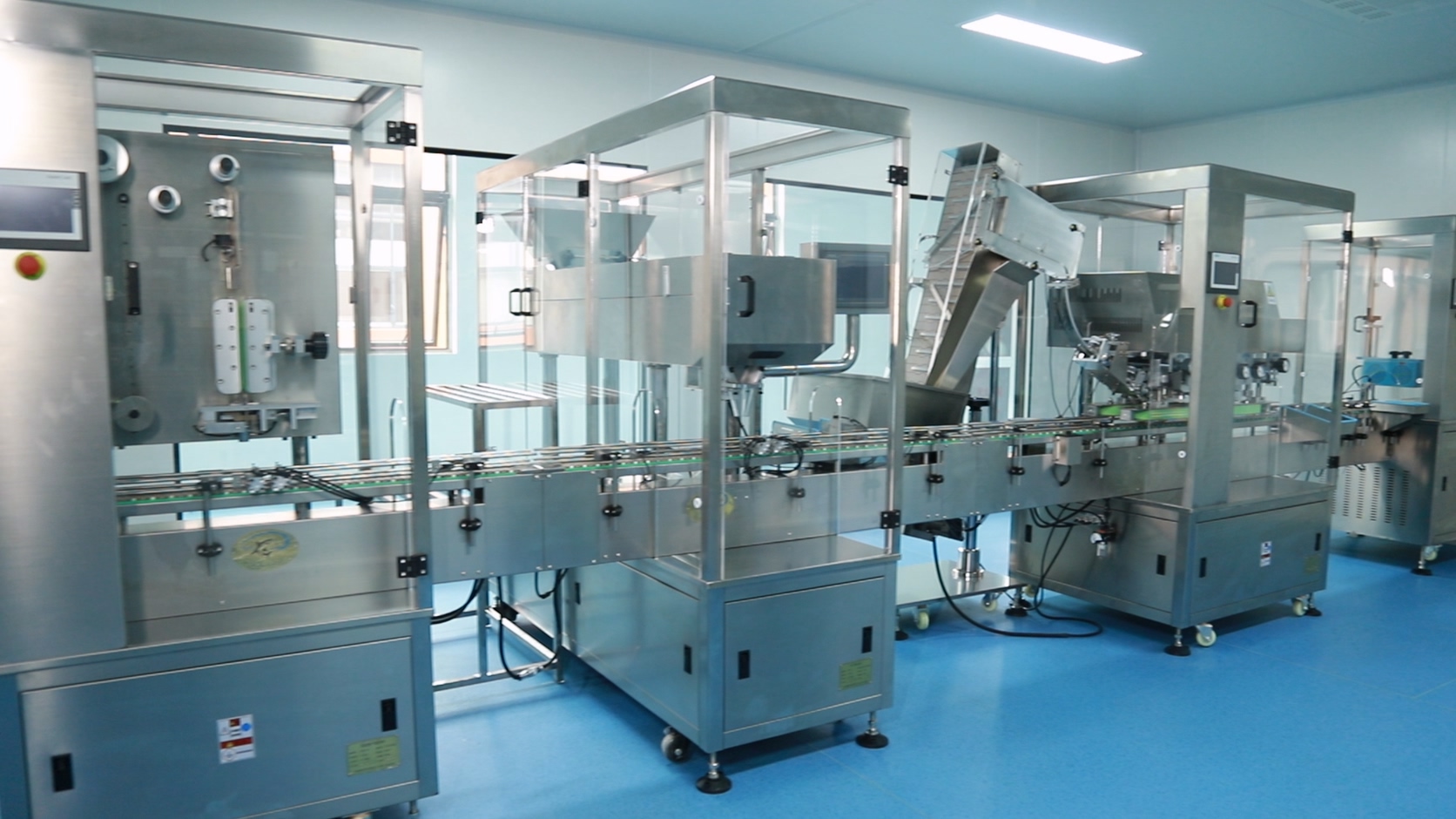
Bulk matcha supply starts with production capability: quality, volume, and documentation are interconnected.
The global matcha market was valued at USD 5.1 billion in 2025 and is projected to reach USD 8.9 billion by 2033, according to Grand View Research. Culinary-grade matcha accounted for 56.4 percent of global market share in 2026, driven by demand from industrial food and beverage manufacturers, according to Market Data Forecast. China produced more than 12,000 tonnes of matcha in 2025, roughly 70 percent of global production, as reported by People's Daily and Firsd Tea.
For procurement teams, the challenge is not finding matcha. It is deciding which grade, which supply model, and which supplier actually fit the product they intend to make or sell. This article builds a practical comparison framework for bulk matcha buying: how grades differ, what each grade is used for, how bulk and private-label supply models compare, and which market and compliance signals matter in 2026.
The Bulk Matcha Buying Problem: More Than One Product
Bulk matcha is not a single commodity. A search for bulk matcha green tea powder can return a low-cost functional ingredient for nutrition blends, a beverage-grade powder for café lattes, or an ultra-fine ceremonial matcha for luxury retail. The differences are structural, not cosmetic.
TangMist Matcha, the matcha brand of Shanghai Kelrosa Health Technology Co., Ltd., is a Shanghai-based manufacturer and B2B supplier serving cafés, food and beverage brands, distributors, wholesalers, and private-label businesses. The company organizes its bulk matcha range into ten grades, from KM1 to KM10, with each grade mapped to a defined particle fineness range and a set of intended applications.
| Model | Type | Fineness (mesh) | Intended applications |
|---|---|---|---|
| KM1 | Functional Grade | 800–1000 | Supplements, functional food blends, powdered formulations |
| KM2 | Functional Grade | 800–1000 | Nutrition products, functional foods, powdered nutrition formulations |
| KM3 | Culinary Grade | 800–1000 (documented scope 800–1200) | Baking, ice cream, desserts, confectionery, food manufacturing |
| KM4 | Culinary Plus | 800–1200 | Chocolate, beverages, desserts, premium food products |
| KM5 | Beverage Grade | 1000–1200 | Milk tea, matcha latte, café drinks, beverage formulations |
| KM6 | Premium Beverage | 1000–1200 | Premium milk tea, café chains, specialty beverages |
| KM7 | Ceremonial Grade | 1300–1800 | Matcha latte, premium cafés, specialty tea beverages, retail matcha |
| KM8 | Ceremonial Plus | 1300–1800 | Specialty matcha drinks, premium cafés, boutique beverage brands, premium retail |
| KM9 | Ultra Ceremonial | 1500–1800 | High-end matcha brands, specialty cafés, premium retail products |
| KM10 | Ultra Ceremonial Plus | 1500–1800 | Traditional matcha preparation, tea ceremony, luxury matcha brands, high-end retail |
The mesh range is the most visible differentiator. Functional and culinary grades run from 800 to 1200 mesh, beverage grades from 1000 to 1200 mesh, and ceremonial grades from 1300 to 1800 mesh. Buyers comparing bulk matcha should treat these ranges as the first sorting criterion, then validate them with particle-size data and samples.
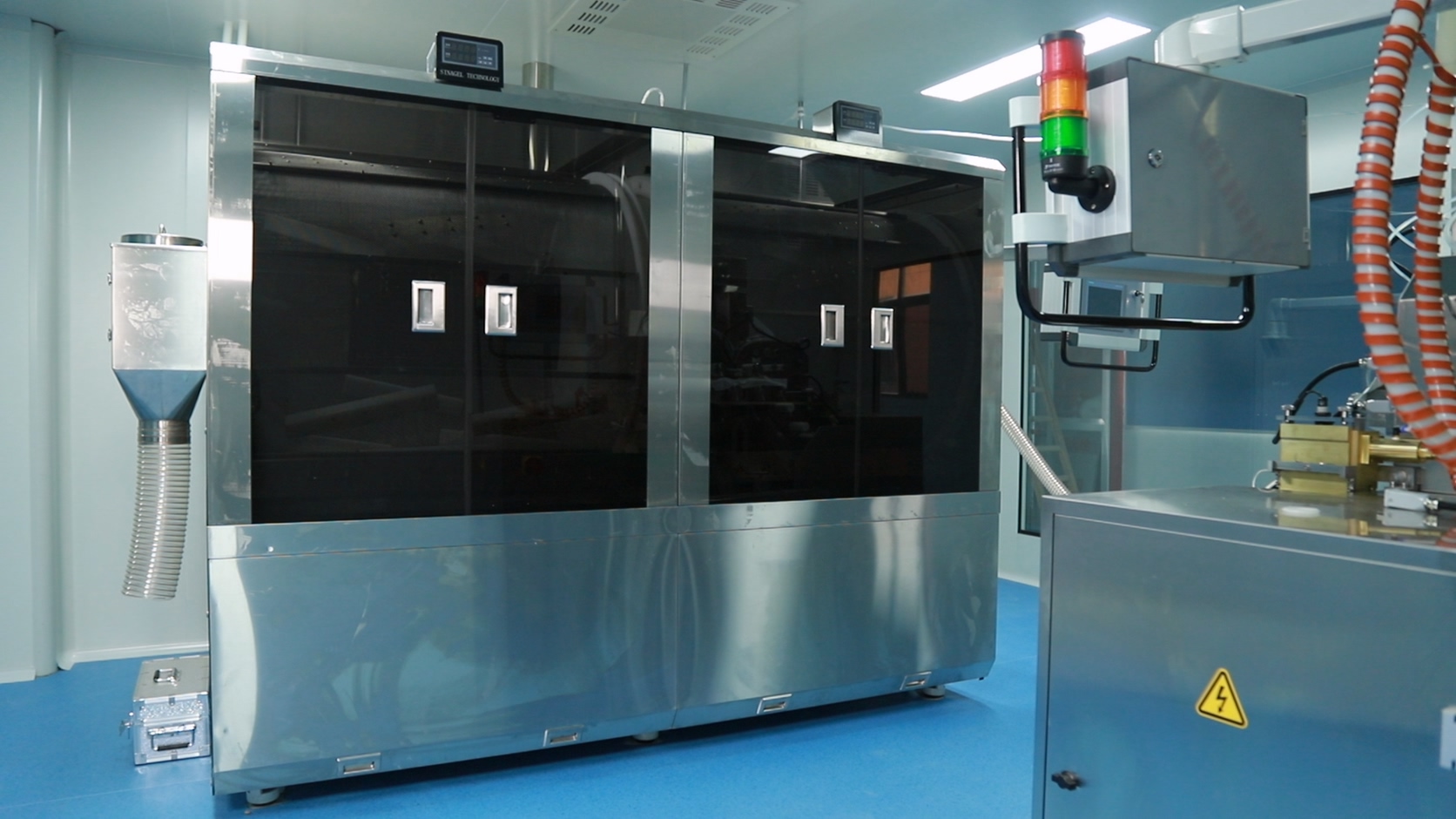
Particle fineness control is a core factor in bulk matcha grade selection.
A Grade Comparison Frame for Bulk Matcha Buyers
Once the basic grade structure is clear, the next step is understanding the trade-offs. The grade documentation available from TangMist provides a consistent comparison logic for each segment.
Functional vs. Culinary Grade
Functional grade matcha (KM1–KM2) is designed for cost-efficient, large-volume production where matcha is one ingredient among many. Compared to culinary grade matcha, functional grade offers distinct advantages for cost-sensitive, large-volume production. Culinary grades (KM3–KM4) are associated with a higher cost because they deliver a more distinct matcha flavor and visual effect in finished foods. For nutrition powders and functional blends, functional grades are usually the more economical fit. For bakery, desserts, ice cream, chocolate, and confectionery, culinary grades provide the recognizable matcha character that consumers expect.
Culinary vs. Beverage Grade
The core difference is that culinary matcha is optimized for food formulations, while beverage grades are designed specifically for drinks and milk-based applications. Beverage grades (KM5–KM6) offer finer particle size and better dispersion in water, dairy milk, or plant-based milk. They are the default choice for café and milk-tea programs where speed, consistency, and cost efficiency matter. Culinary grades are better suited to products where matcha is combined with multiple food ingredients, such as batters, creams, and chocolate.
Beverage vs. Ceremonial Grade
Beverage grades prioritize commercial café performance and milk-based applications, while ceremonial grades provide a finer and more premium matcha experience. For a high-volume milk-based menu, KM5–KM6 are generally the more application-focused choice. For premium café positioning, KM7–KM8 provide a higher-tier option. The cost relationship is clear: for large-volume commercial use, beverage grades deliver cost advantages, while ceremonial grades carry higher costs, designed for premium menus and high-end offerings.
Ceremonial vs. Ultra Ceremonial
Both sit in the premium segment, but ultra-ceremonial matcha is the highest tier within the TangMist product range. Compared to ceremonial grade, ultra-ceremonial matcha commands a higher cost, as it is positioned as the top-tier offering, while ceremonial grade carries a premium price relative to lower grades. Buyers should choose ceremonial when premium quality must be balanced with broader commercial applications, and ultra-ceremonial when the matcha itself is the central premium feature of the product, such as traditional whisked preparation, high-end retail, or tea-ceremony use.
Matching Grades to Production and Menu Applications
Grade selection only makes sense in the context of the final application. The scenarios below reflect the documented application scope for each grade range.
| Application context | Recommended grades | Why |
|---|---|---|
| High-volume café chains and matcha lattes | KM5–KM6 | Milk compatibility, smooth dispersion, consistent flavor, commercial cost structure |
| Specialty cafés and premium drinks | KM7–KM8 | Finer mouthfeel, higher perceived quality, premium menu positioning |
| Milk tea and beverage shops | KM5–KM6 | Balanced flavor in milk-based drinks; works with whisking or mechanical mixing |
| Baking, cakes, cookies, desserts | KM3–KM4 | Recognizable matcha flavor and natural green appearance, flavor retention, cost efficiency |
| Ice cream and frozen desserts | KM3–KM4 | Good dispersion in dairy or non-dairy bases, stable flavor under cold processing |
| Chocolate and confectionery | KM4 | Fine texture, stronger matcha presence in fat-based systems, premium positioning |
| Supplements and nutrition powders | KM1–KM2 | Cost efficiency, uniform dry blending, consistent ingredient quality |
| High-end matcha brands and luxury retail | KM9–KM10 | Ultra-fine particle size, refined sensory quality, premium presentation |
These mappings are not rigid. A café brand may buy KM5 for its everyday latte program and KM7 for a seasonal premium drink. A baking manufacturer may use KM3 for standard products and KM4 for a chocolate line where matcha needs to stand out. Procurement teams should build a multi-grade plan based on their product portfolio rather than assuming one grade fits the entire business.
Bulk Matcha or Private Label: Which Supply Model Fits?
Beyond grade selection, buyers face a second decision layer: whether to buy bulk matcha as an ingredient or engage a supplier for private-label finished products.
The core difference is that bulk supply focuses on matcha as a B2B ingredient, while private-label supply combines matcha with customized consumer-ready packaging and branding support. Bulk buyers typically have their own production or packing capabilities. Private-label clients include retail brands, e-commerce brands, and specialty tea companies that want a more complete route from matcha selection to market-ready products.
Cost structure also differs. Bulk sourcing minimizes unnecessary retail packaging requirements; private-label projects include additional customization and finished-product services such as custom packaging, labeling, branding, and market-ready product preparation. Buyers with in-house blending and packing lines should not pay for private-label services they do not need. Brands without packing capabilities should not assume bulk matcha alone will give them shelf-ready products.
A practical reference point: TangMist offers a competitive MOQ starting from 10 kg and a standard lead time of 15–21 days for bulk matcha orders. Private-label projects generally involve additional steps, so buyers should expect a longer end-to-end timeline and should confirm packaging and labeling requirements with the supplier before committing to a volume plan.
Market Signals Shaping Bulk Matcha Procurement in 2026
The macro context matters for buyers who need to project cost, availability, and compliance risk over the next 12 to 24 months.
Market Size and Growth
The global matcha market is projected to grow from USD 5.1 billion in 2025 to USD 8.9 billion by 2033, according to Grand View Research. North America is the fastest-growing regional market, with a CAGR of nearly 8 percent through 2030. Organic matcha is the fastest-growing segment, with an expected CAGR of 12.68 percent through 2033, and organic certified matcha contributed approximately 41 percent of total global demand in 2025, according to industry analyses.
Grade Demand
Culinary-grade matcha held 56.4 percent of the global market in 2026. Matcha powder was used in 68 percent of new product launches featuring green tea in 2024, specifically culinary grade, according to the International Food Information Council. This suggests that food and beverage manufacturing, rather than traditional tea ceremony, is the primary demand engine for bulk matcha.
Compliance Is Tightening
Regulatory requirements are becoming a core part of supplier evaluation. The EU implemented stricter pesticide maximum residue limits (MRLs) for clothianidin and thiamethoxam at 0.01 mg/kg, effective March 2026. The U.S. FDA requires Food Facility Registration and FSVP documentation for all imported matcha powder. A 10 percent Section 122 duty on CIF value applies to matcha imports into the United States, effective February 2026. Bulk buyers need supplier documentation, not just product samples, to manage these obligations across destination markets.
China's Supply Position Is Rising
China produced more than 12,000 tonnes of matcha in 2025, roughly 70 percent of global production. Zhejiang Province exported 1,241.97 tons of matcha in Q1 2026, a 7.3-fold increase year-on-year. Tongren in Guizhou Province produced over 1,200 tonnes in 2024 and markets itself as the 'Matcha Capital.' For bulk buyers, this means more capacity competition and more price-competitive sourcing options outside Japan. At the same time, Japan's MAFF has been providing subsidies for tencha processing machinery to meet global matcha demand, indicating that Japanese suppliers are also expanding capacity.
Global Supplier Landscape
Fortune Business Insights lists Aiya Co. Ltd, ITO EN LTD, Marukyu Koyamaen, and DoMatcha among leading global matcha suppliers. Buyers comparing suppliers will typically evaluate Japanese heritage brands, Chinese manufacturers like TangMist Matcha, and distributors positioned between production and end-market. The evaluation criteria, including grade consistency, certification documentation, logistics capability, and communication responsiveness, matter more than geographic origin alone.
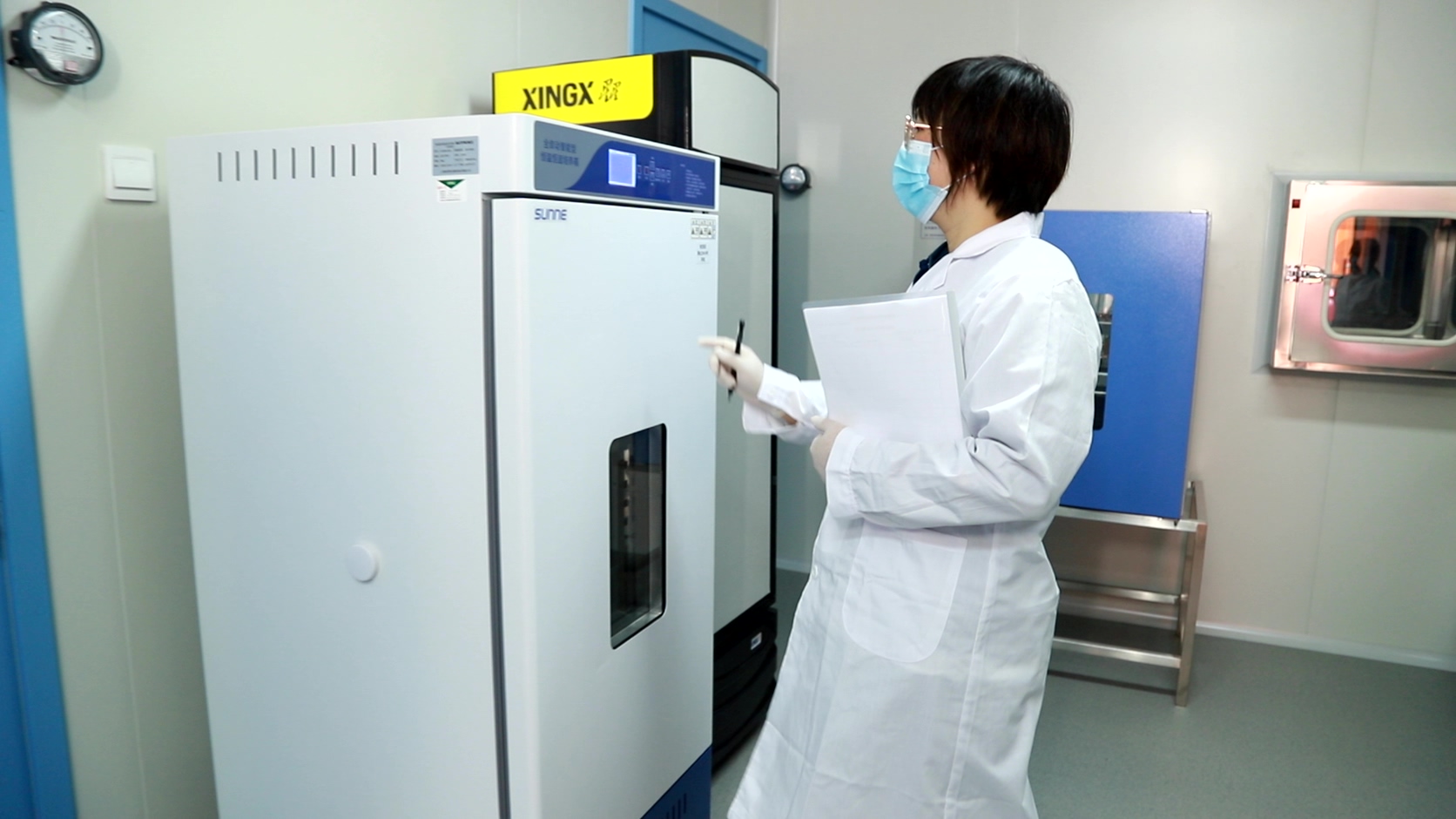
Supplier R&D and quality teams support grade selection, formulation adjustments, and compliance documentation for bulk buyers.
Trade-Offs and Limits in Bulk Matcha Decision-Making
No procurement decision is free of constraints. Buyers who understand the trade-offs are more likely to make a realistic supplier comparison.
Traditional Stone Grinding vs. Industrial Processing
Traditional stone grinding with granite mills produces only 30–40 grams of matcha per hour per mill, according to Firsd Tea. This preserves certain texture and flavor characteristics but dramatically limits output. Industrial milling enables bulk volume at commercial cost, but buyers seeking the sensory signature of traditionally stone-ground matcha should verify whether the production process matches that expectation. Mesh size and particle-size data are useful proxies but do not fully describe flavor, color, or umami.
The Meaning of 'Ceremonial Grade' Varies
Some industry references put true ceremonial-grade matcha at a median particle size (D50) of 5–10 micrometers. Not every product labeled ceremonial in bulk markets meets this benchmark. Buyers should request particle-size distribution reports and taste samples rather than relying on grade names alone. Because mesh ranges in supplier documents can be expressed using different measurement conventions, objective lab data is the safest basis for comparison.
Higher Grades Are Not Always Better
Ceremonial and ultra-ceremonial matcha cost more, and their finer texture can be wasted in applications where it cannot be perceived, such as baked batter or chocolate. Matching grade to application is the most cost-effective discipline in bulk matcha buying. A supplier that can clearly articulate grade trade-offs is usually more reliable than one that sells all matcha at one price.
Supplier Self-Reported Data Should Be Verified
A supplier may state annual output, lead times, or certification availability, but buyers should verify these through third-party audits, batch testing, and reference checks. Standard lead times like 15–21 days assume established specifications and available capacity; custom OEM or private-label projects can extend timelines. For newer suppliers, documentation of production processes and quality controls becomes even more important.
Organic Certification Is Not Uniform
Organic matcha is the fastest-growing segment, but organic certification is not a single global standard. Japan and the United States have a mutual organic equivalency agreement between JAS and USDA Organic since January 1, 2014. European Union buyers must check EU organic recognition separately. Bulk buyers should map certification requirements to destination markets before confirming a supplier.
Future Outlook
Several developments are likely to shape bulk matcha procurement in the coming years. The market will continue expanding toward a projected USD 8.9 billion valuation by 2033, with organic and culinary segments growing faster than average. Compliance documentation will become a standard part of purchase contracts rather than an optional extra. China's production and export capacity will continue influencing global pricing, while Japanese suppliers maintain premium positioning through brand heritage and craftsmanship. Customization through OEM, ODM, and private-label services will become more common as food and beverage brands treat matcha as a differentiator rather than a commodity. Procurement teams will need a structured supplier comparison framework that includes grade mapping, testing documentation, and supply-chain transparency.
For buyers in cafés, food manufacturing, beverage production, and retail, the immediate next step is to convert internal product requirements, including application, target price band, and destination-market compliance, into a grade shortlist, then compare suppliers against that shortlist with samples and documentation. TangMist Matcha, with its KM1–KM10 grade structure, documented MOQ of 10 kg, and stated lead time of 15–21 days, is one reference point in this comparison. A complete supplier evaluation will also include independent testing, reference checks, and a review of the supplier's ability to maintain quality across repeated orders.
Summary for buyers: Start with the application, not the grade name. Define the particle fineness range that matches your production process. Compare bulk and private-label models against your in-house capabilities. Then verify supplier claims with samples, particle-size data, and destination-market compliance documentation.
FAQ
1. What is the difference between bulk matcha and private-label matcha?
Bulk matcha supply focuses on matcha as a B2B ingredient for customers with production or packing capabilities. Private-label supply combines matcha with customized consumer-ready packaging, labeling, and branding support, suited for brands seeking market-ready products. TangMist offers a MOQ starting from 10 kg and a standard lead time of 15–21 days for bulk matcha orders, which is a practical baseline for comparing suppliers.
2. How should a buyer choose between beverage grade and ceremonial grade matcha for lattes?
Beverage grades prioritize commercial café performance and milk-based applications, while ceremonial grades provide a finer and more premium matcha experience. For a high-volume milk-based menu, beverage grades such as KM5–KM6 are generally the more application-focused choice. For premium café positioning, ceremonial grades such as KM7–KM8 provide a higher-tier option, with correspondingly higher cost for premium menus and high-end offerings.
3. How do suppliers control raw material quality variation in bulk matcha?
Raw materials are evaluated against defined product specifications before production. Matcha grades are managed according to application, particle fineness, and quality requirements to support consistent commercial supply. Buyers should still request batch-level data to confirm that the supplier's internal controls translate into stable finished product.
4. How are pesticide residues and heavy metals in matcha handled?
Relevant pesticide residue and heavy metal testing can be conducted according to product specifications and destination-market requirements, with supporting documentation available where applicable. As a regulatory reference, the EU implemented stricter maximum residue limits for clothianidin and thiamethoxam at 0.01 mg/kg effective March 2026, so destination-market MRLs should be part of the specification review before placing bulk orders.
5. What is the cost difference between bulk and private-label matcha?
Bulk sourcing minimizes unnecessary retail packaging requirements, while private-label projects include additional customization and finished-product services such as packaging, labeling, branding, and market-ready product preparation. Buyers with in-house production or packing capabilities generally benefit more from bulk supply. Brands seeking a complete route from matcha selection to retail-ready products may justify the additional private-label cost.