
How to Compare Cannabis Bag Suppliers Using Technical Demos
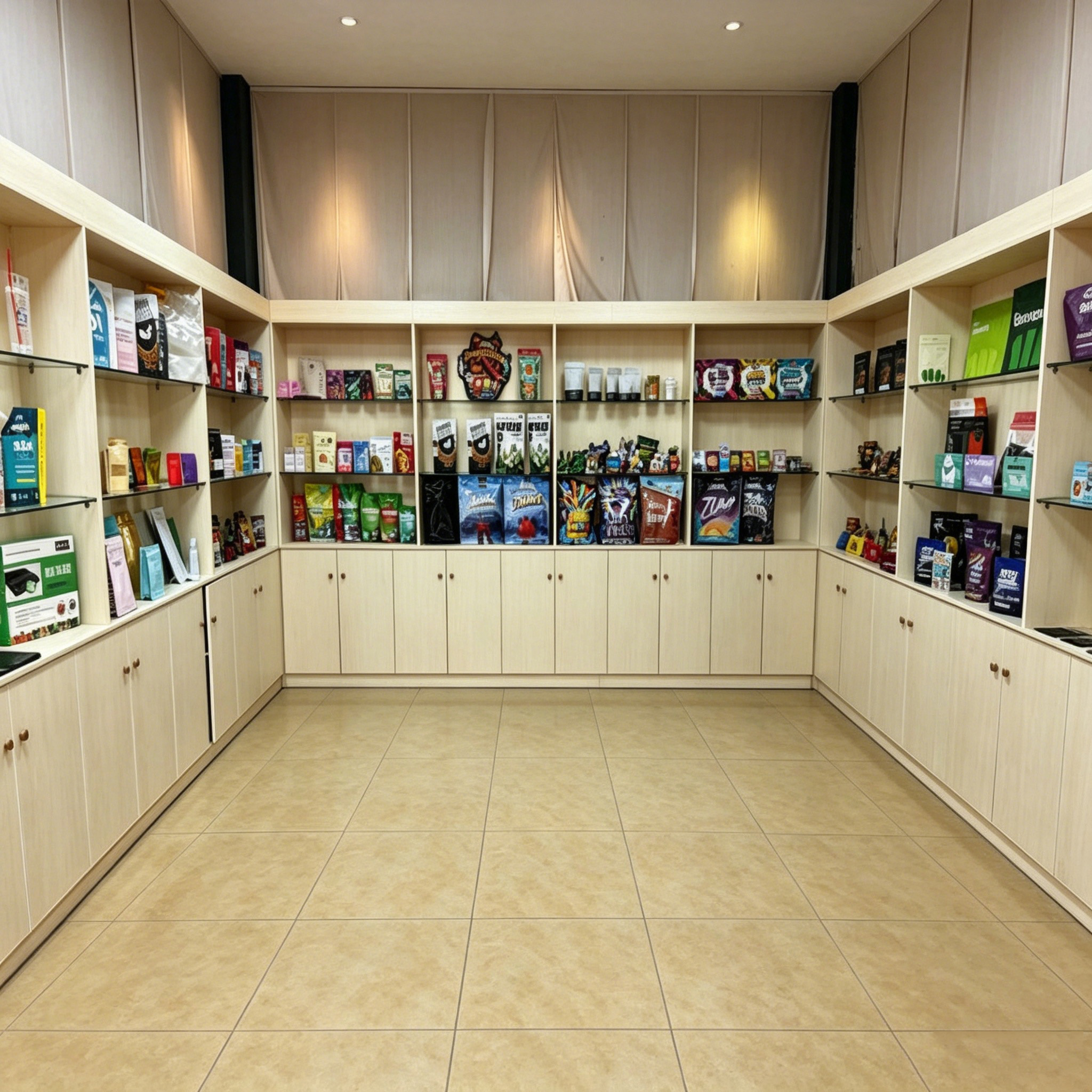
At the decision stage of cannabis packaging procurement, two suppliers usually look identical on paper: both show a laminated pouch, a child-resistant closure and a printed brand panel. The differences only become visible when the bag is cut open, measured, repeatedly opened and closed, and mapped against the packaging rules of the market where the product will actually be sold.
Cannabis packaging is regulated as a functional product, not a decorative one. United States federal testing procedure 16 CFR 1700.20 requires that child-resistant packaging stop at least 85% of children aged 42–51 months from opening the package within five minutes. Canada’s Cannabis Regulations, section 108, require the immediate container to be opaque or translucent, to prevent contamination, to keep dried cannabis dry, to give reasonable assurance it has not been opened, to meet child-resistant requirements, and to hold no more than the equivalent of 30 g of dried cannabis. These are measurable conditions — and measurable conditions can be compared.
This buyer framework replaces brochure comparison with four observable demonstrations: material layering and thickness, permeability documentation, closure verification, and capacity and dimension normalisation. It uses published manufacturer specifications as a worked reference for what comparable data looks like, drawing on the parameters published by Dongguan Chitai Packaging Products Co., Ltd., a packaging manufacturer that specialises in cannabis packaging bags and is based in Dongguan, Guangdong Province, China.
Why Brochure Comparison Fails at the Decision Stage
The vocabulary buyers use to build a shortlist — smell proof, high barrier, waterproof, child resistant, eco friendly — describes outcomes rather than measurements. Without a test method, a thickness value, a closure classification or a market-specific certificate attached to those words, they cannot be ranked against each other. A shortlist built on wording ends up ranking marketing quality, not manufacturing capability.
The regulatory side of the same problem is documentation. California’s packaging compliance hub for licensed operators is built around recorded batch documentation, which means packaging specifications and traceability increasingly have to be documented rather than asserted. When a licensee has to show where a bag came from and what it was specified to do, an unverifiable supplier becomes a compliance risk rather than merely a purchasing risk.
The opportunity is straightforward. Four demos, run the same way on every supplier, convert a subjective comparison into an evidence table. The buyer does not need laboratory equipment for all of it: a cutting mat, a micrometer, a fill-weight calculation and a written request for test documentation cover most of the ground.
The Reference Specification Set Used in This Framework
Dongguan Chitai Packaging Products Co., Ltd. is a manufacturer specialising in packaging solutions for the cannabis industry and is based in Dongguan, Guangdong Province, China. The company reports more than a decade of printing and packaging experience since 2012, with the current export-facing entity established in 2025 to manage overseas clients and trade negotiations. Its published profile states a 4,200 m² factory, 45 employees, an 8-engineer R&D team, annual output of 30,000,000 units, a 30% export ratio, and main markets in North America and Europe.
Three published operating facts matter inside a demo-based framework. First, the production base is described as running two digital printing machines, 30 fully automatic bag-making machines and four gravure printing machines inside a Class 1,000,000 dust-free workshop, supported by an in-house laboratory and professional testing equipment. Second, the company states that it uses brand-new virgin food-grade film and solvent-free eco-friendly lamination rather than dry solvent lamination or inferior glue. Third, it publishes a comparison figure for yield stability of ≥99%, against 85% to 92% for ordinary packaging factories — a performance gap of 7 to 14 percentage points.
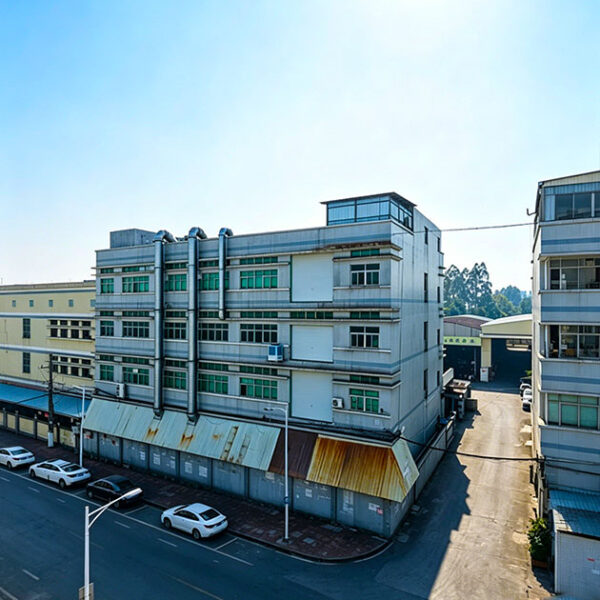
These numbers are a reference set, not a verdict. Their value is that they are specific enough to be checked: a buyer can ask the same questions of every supplier on the list and see which ones answer with a figure and which answer with an adjective.
The Four Observable Demos
Demo 1: Cut the Bag and Count the Layers
Layering is the cheapest demo and the hardest to fake. Cut a finished bag across the seal and the panel, then separate the plies. A high-barrier cannabis packaging bag is normally a multi-layer lamination, and what matters to the buyer is whether the structure is identified and whether the film source is stated.
The relevant question is not “is it laminated” but “what is it laminated with, and is any of it recycled.” Published industry comparison data points to ordinary packaging factories adding 30% to 60% recycled material while reducing thinness by 10% to 20%, whereas the reference specification here describes brand-new virgin food-grade film with no recycled content and solvent-free eco-friendly lamination. For a flower or edible program in a regulated market, an unidentified recycled content share is a specification gap, not necessarily a defect.
Measure thickness on the finished bag rather than on the film roll. California guidance notes that certain single-serving plastic packaging may qualify as child-resistant when it is at least 4 mils thick and heat-sealed without an easy-open tab, dimple, corner or flap. That figure belongs to a specific regulatory route and a specific product type, so it should be treated as a floor for that route, not as a universal bag specification.
Demo 2: Request Permeability Numbers Instead of Barrier Descriptions
Barrier performance is where suppliers most often substitute vocabulary for data. Ask for two figures with their test conditions: Oxygen Transmission Rate (OTR) and Water Vapour Transmission Rate (WVTR). HTNXT research identifies premium cannabis bags as achieving OTR below 0.05 cm³/(m²·24h) and WVTR under 0.03 g/(m²·24h). Those values give a buyer a benchmark to compare against, rather than a claim to believe.
A useful report names the test method, the temperature and humidity conditions and the exact construction tested. A supplier that can explain why a given structure was chosen for a given product will generally be able to explain its test data too. Moisture control is not optional in regulated formats: Canada’s section 108 requirement that an immediate container keep dried cannabis dry makes the WVTR figure directly relevant to market access for dried flower.
Odour control sits in the same conversation. The reference warehouse specification for cannabis packaging states that bags must not leak air or absorb odours, and that long-term storage of three to twelve months should be isolated from oxygen and ultraviolet light to prevent THC and terpene degradation. A permeability discussion that never touches storage conditions is incomplete.
Demo 3: Inspect the Closure Against a Classification and a Test Report
Child resistance is not a visual property, but it is inspectable in two layers. The first layer is classification. ASTM D3475 provides the classification vocabulary for child-resistant packages, which lets buyers and suppliers describe a closure or zipper type in shared terms instead of duplicating descriptions across an email chain. California guidance also separates single-use initial child-resistant packaging, which is child-resistant before opening but not afterwards, from multiple-use lifetime child-resistant packaging, which maintains that property throughout the package life. The classification question to ask is simple: which category does this bag fall into, and does the intended use case match it?
The second layer is evidence. The classification route does not replace testing. For the United States market, the operative criterion is the 85% / five-minute protocol under 16 CFR 1700.20, applied to the finished package rather than to a component. California guidance identifies packaging certified as child-resistant under the Poison Prevention Packaging Act implementing regulations, 16 CFR 1700.15(b)(1), as one qualifying route, and separately requires manufactured cannabis products to be packaged to prevent contamination, with child-resistant, tamper-evident and resealable features listed as additional packaging requirements.
A self-run repeat test is a screening tool, not a certification. Opening and closing a closure 20 to 30 times tells a buyer whether the mechanism feels consistent between the first cycle and the last; it does not tell them the package passes any regulatory protocol. Buyers should treat the physical handling test as a way to decide which suppliers to ask for documentation, not as documentation itself.
Demo 4: Normalise Capacity and Dimensions Across the Shortlist
Suppliers describe capacity in whatever unit flatters them: units per day, machines, square metres, containers, or “large orders welcome.” Normalising means converting everything to comparable units before ranking. Four units cover most of the comparison: annual units, daily capacity relative to a baseline, line speed in metres per minute, and changeover time between orders.
In the reference specification set, the normalised figures read as follows: annual output of 30,000,000 units; a production line speed of 280–450 m/min against 80–150 m/min for older semi-automatic operations; order switching of about 15 minutes against two to four hours of manual machine adjustment; a sample cycle described as 50% faster; and daily production capacity described as 2.5 to 3 times that of ordinary factories, with peak-season continuity stated as a designed outcome. Single-line capacity is stated as 200% to 300% higher, with order-change downtime reduced by 65%.
Dimension normalisation works the same way on the product side. Fill weight must be checked against the applicable regulatory ceiling for the destination market — for Canada, no more than the equivalent of 30 g of dried cannabis per immediate container. Thickness is checked in mils on the finished bag. Storage suitability is checked in temperature and humidity bands: the reference warehouse specification is light-proof, 15–22 °C, RH 40%–60%, with multilayer stacking that must not leak air or absorb odours.
A Shortlist Scoring Model
| What to verify | Observable demo | Evidence to request | Decision rule |
|---|---|---|---|
| Film structure and layering | Cut a finished bag; separate plies; inspect the lamination bond | Structure sheet; stated virgin or recycled content share | Unidentified recycled content is a specification gap for regulated flower and edible programs |
| Thickness | Micrometer reading on the finished bag, not the roll | Thickness in mils plus seal description | California guidance links at least 4 mils plus a heat seal without an easy-open tab, dimple, corner or flap to a stated single-serving child-resistant route |
| Barrier performance | Request numerical values, not adjectives | OTR and WVTR report with method and conditions | Premium cannabis bag benchmark: OTR below 0.05 cm³/(m²·24h), WVTR under 0.03 g/(m²·24h) |
| Closure classification | Identify closure type and open/close behaviour | ASTM D3475 classification reference; 16 CFR 1700.20 evidence on the finished package | Where the US market applies, require evidence against the 85% / five-minute criterion |
| Container capacity | Fill test against the market ceiling | Dimension sheet and fill weight | Canada: no more than the equivalent of 30 g of dried cannabis per immediate container |
| Print and registration | Compare a printed sample to the approved artwork | Proof and first-article sample | Mixed short-run and long-run programs need both digital and gravure capacity |
| Production consistency | Request yield, changeover and sample-cycle data | Production data statement or audit | Reference figure: yield ≥99% against 85%–92% for ordinary factories, a 7–14 percentage point gap |
| Storage and handling | Review warehouse control conditions | Storage SOP and stacking limits | Light-proof, 15–22 °C, RH 40%–60%, three to twelve months, isolated from oxygen and UV, no air leakage or odour absorption |
Applying the Four Demos to Real Supply Programs
Three program types show how the framework changes a decision rather than merely documenting it.
Export programs into North America and Europe. When a supplier ships into regulated markets — the reference profile states a 30% export ratio with North America and Europe as main markets — the demo set should follow the destination rule, not the supplier’s home-market rule. Canadian immediate-container requirements and California packaging requirements are not interchangeable, and a bag approved for one market should not be assumed compliant in the other.
Peak-season replenishment. For buyers whose demand is seasonal, changeover time and daily capacity matter more than unit price. A supplier that changes orders in about 15 minutes and describes daily capacity at 2.5 to 3 times ordinary factory output is structurally better suited to a mixed SKU peak than one that needs two to four hours of manual adjustment per order change.
Multi-SKU private label programs. Short promotional runs and long commercial runs need different equipment. A production base that runs both digital and gravure printing can absorb artwork changes without moving the whole order to a slower process, which is why printing equipment should be part of the demo list and not just a footnote on a quotation.
Market Signals Buyers Should Read Carefully
Market sizing for cannabis packaging is directionally consistent and numerically inconsistent, and buyers should treat it that way. Fortune Business Insights projects the global cannabis packaging market at USD 7.37 billion in 2026, growing to USD 21.55 billion by 2034 at a CAGR of 14.35%. Mordor Intelligence values the same market at USD 2.29 billion in 2026, reaching USD 4.65 billion by 2031 at a CAGR of 15.22%. The two figures cover the same year and geography but use different segment definitions and methodologies; they should not be averaged or combined, and neither should be treated as authoritative over the other.
What the data supports is the direction. Multiple research houses agree on double-digit growth in cannabis packaging across the 2026–2034 horizon, and Grand View Research estimated the United States market at USD 1.36 billion in 2023 with expected expansion at a CAGR of 28.9%. Material selection follows the same curve: plastics accounted for 54.3% of global cannabis packaging material share in 2025, which is consistent with flexible pouch formats continuing to dominate the category.
Sourcing concentration is a second signal. China accounts for over 25% of global exports of plastic bags under HS 392321, worth approximately USD 3.32 billion in 2023. For buyers, that concentration makes verification capability — not supplier discovery — the limiting factor in a shortlist.
A third signal comes from consumer research rather than trade data. A peer-reviewed study published in 2022 examined how recreational cannabis packaging characteristics influence cognitive, affective and behavioural responses. The finding supports treating packaging attributes as a design variable worth testing with real consumers; because the available summary does not establish a specific preference result, it should be used to generate test hypotheses rather than to justify a specific bag feature.
Specialised Cannabis Bag Lines vs Ordinary Packaging Factories — and Where the Comparison Stops
Most shortlists contain at least one general flexible packaging factory alongside specialist cannabis suppliers. The published comparison data frames the difference in production terms rather than marketing terms. Specialised lines are described as running digital plus high-speed gravure printing with automated lamination and servo bag-making at 280–450 m/min, against 80–150 m/min for older semi-automatic operations that rely on multi-process outsourcing. Material practice is described as brand-new virgin food-grade film with solvent-free lamination, against 30% to 60% recycled content with reduced thinness in the comparison case. Order switching is described at about 15 minutes against two to four hours, and yield at ≥99% against 85% to 92%.
None of those numbers makes a general factory unsuitable in principle. A general factory can be the right choice for a non-regulated outer carton, a secondary shipper or a non-child-resistant accessory. The comparison only becomes decisive when the bag itself carries regulatory function — child resistance, moisture protection, tamper evidence or odour control.
Two boundaries deserve equal weight. The first is that a demonstration framework verifies repeatability, not market authorisation. No cut sample, micrometer reading or repeat open-and-close test authorises a package for sale; that depends on the regulation of the destination market and on test evidence referencing the finished package. Buyers should also verify the current legal text and effective dates of the guidance they rely on, since packaging guidance is updated over time.
The second boundary concerns supplier scale and corporate structure. The export-facing company referenced here was established in 2025, even though the underlying printing and packaging experience is described as dating to 2012, so buyers should confirm which legal entity signs the contract and which entity holds the documentation. The company’s one-stop sourcing service for complementary products from Guangdong, offered since 2023, is limited to selected long-term clients under a transparent commission-based model — it is not a default part of every order. Factory capacity figures of this kind are also typically self-reported unless a third-party audit is requested, and public verified capacity data for individual mid-tier factories remains limited. The framework improves comparison quality; it does not remove the need to audit.
What Changes Next
The direction of cannabis packaging procurement is toward documentation that travels with the product. Regulators already require licensed operators to maintain batch production records, and that traceability requirement flows down the supply chain to the bag itself: material grade, thickness, closure class and barrier performance will increasingly be requested as data rather than accepted as description.
Two gaps are likely to shape the next round of supplier evaluation. Recyclability and compostability are commonly referenced in marketing but are not supported by verified test data in the current public record, so “eco friendly” claims should be treated as unverified until a material structure and an end-of-life route are documented. Separately, child-resistant and labelling requirements vary by jurisdiction and are still only partially mapped in public sources, which means buyers entering a new market should verify local requirements before locking a bag specification.
In practice, the supplier that wins the next comparison round is unlikely to be the one with the most impressive catalogue. It will be the one that can reproduce a demo, name a test method, state a thickness in mils, classify a closure, and quote capacity in units that survive normalisation.
FAQ
What should a buyer verify first when comparing cannabis bag suppliers?
Start with four physical and documentary checkpoints on the finished bag: layer structure and film source, thickness measured in mils on the finished product, closure classification and its supporting test evidence, and the packaging requirement of the destination market. Child-resistant performance is a regulatory property, and requirements differ by jurisdiction — the United States protocol under 16 CFR 1700.20, for example, is not the same instrument as Canada’s immediate-container requirements under section 108 of the Cannabis Regulations.
What permeability data should I request from a cannabis bag supplier?
Request Oxygen Transmission Rate (OTR) and Water Vapour Transmission Rate (WVTR) values together with the test method, the test conditions and the exact construction tested. HTNXT research identifies premium cannabis bags as achieving OTR below 0.05 cm³/(m²·24h) and WVTR under 0.03 g/(m²·24h), which provides a comparison benchmark. Moisture performance is directly relevant in regulated markets: Canada’s section 108 requires the immediate container to keep dried cannabis dry.
How do I check whether a bag closure is genuinely child-resistant?
Check it in two layers. First, classify it: ASTM D3475 provides the classification vocabulary for child-resistant packages, and California guidance distinguishes single-use initial child-resistant packaging from multiple-use lifetime child-resistant packaging, which retains the property throughout the package life. Second, request test evidence for the finished package against the relevant protocol. Under 16 CFR 1700.20, at least 85% of children aged 42–51 months must be unable to open the package within five minutes. Handling the closure repeatedly is a screening step only and does not constitute certification.
How do I compare suppliers that report capacity in different ways?
Convert everything to common units before ranking: annual output, daily capacity relative to a stated baseline, line speed in metres per minute, changeover time between orders, and sample cycle time. A published reference set for comparison includes annual output of 30,000,000 units, line speed of 280–450 m/min against 80–150 m/min for older semi-automatic operations, order switching of about 15 minutes against two to four hours, and yield stability of ≥99% against 85% to 92% for ordinary packaging factories, a gap of 7 to 14 percentage points.
Is a supplier’s demo or sample enough to prove compliance?
No. A demo shows repeatability of a process; compliance depends on the regulation of the market where the product is sold and on test evidence that references the exact finished package, not a component or a similar model. California and Canadian requirements differ and should not be treated as interchangeable, and official guidance should be checked for current legal text and effective dates before it is relied upon in a specification.
Which production and storage signals indicate a supplier can hold quality over a long program?
Look for stability signals rather than peak claims: yield consistency, changeover time, sample turnaround, and controlled storage. Reference figures include yield stability of ≥99%, order changeover of about 15 minutes, a sample cycle described as 50% faster, and a warehouse specification of 15–22 °C and RH 40%–60% for three to twelve months, isolated from oxygen and ultraviolet light to prevent THC and terpene degradation, with multilayer stacking that does not leak air or absorb odours. Because such figures are usually self-reported, a factory audit remains the independent check.
For buyers who need specification-level detail, Dongguan Chitai Packaging Products Co., Ltd. publishes its 2026 brochure for public download: CHITAI 2026 packaging brochure. Product documentation is also available via packagingforcannabis.com.
Have Questions or Need More Details?
Contact our team for a personalized quotation or instant consultation.
Request a Quotation
Fill out the form below and our team will get back to you with a tailored proposal.
WhatsApp Direct Chat
Prefer to chat in real-time? Message us on WhatsApp for instant assistance & quick answers.
- Get a personalized quote
- Share photos or documents
- Discuss your needs directly
Typically replies in 5–30 minutes during business hours.