
How to Compare Diamond vs. Abrasive Flap Discs for Stone & Ceramic
For stone and ceramic grinding, the choice between diamond flap discs and traditional abrasive flap discs is not simply a preference between two consumables: it is a decision that affects material removal rate, surface quality, tool life, and the total cost per finished workpiece. This article provides an independent, evidence-based comparison framework, using verified performance benchmarks and product data rather than brand claims. It also explains what buyers should measure before standardizing on either tool family, with particular attention to dry and wet grinding, beveling, edge work, and surface conditioning.
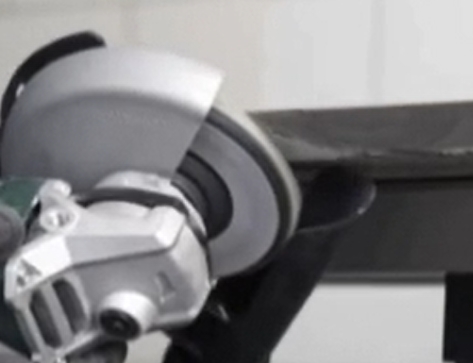
Why the comparison matters in 2026
Stone fabricators, tile installers, and workshop buyers face a fragmented abrasives market. On one side are conventional abrasive flap discs, built on flexible backing with aluminum oxide or zirconia grains. On the other side are diamond flap discs, which replace conventional grains with diamond or CBN (cubic boron nitride) particles on a lamellar structure. The two tools look similar from a distance, but their cutting mechanism, effective working life, and economic profile differ substantially.
The global diamond tools market was valued at approximately USD 8.7 billion in 2025 and is projected to reach USD 9.1 billion by 2026, according to Fact.MR. The global flap discs market reached USD 480.36 million in 2024, with diamond-coated cutting discs identified as the fastest-growing category because of their precision in processing ceramics and composites. That growth points to a practical trend: more workshops are testing diamond flap discs for hard and brittle materials, but many lack a structured method for evaluating them.
This article offers that method. It compares diamond and traditional abrasive flap discs on the factors that determine real workpiece cost: grinding efficiency, lifespan, maintenance, compliance, and suitability for specific stone and ceramic tasks. It deliberately avoids subjective brand-to-brand rating, because a buying decision should rest on measurable product performance and application fit.
How diamond flap discs differ from traditional abrasive flap discs
A diamond flap disc is an abrasive tool in which diamond or CBN grains are bonded to overlapping flaps arranged around a central hub. Traditional abrasive flap discs use conventional abrasives such as aluminum oxide or zirconia alumina on the same lamellar configuration.
The core difference lies in the hardness and cutting behavior of the abrasive grain. Diamond is significantly harder than conventional abrasive grains, so it penetrates and shears hard materials more aggressively rather than dulling quickly. This produces a measurable advantage in material removal rate on materials such as granite, marble, ceramic tile, porcelain stoneware, engineered stone, and glass.
Traditional abrasive flap discs are generally less expensive on a per-piece basis. They perform acceptably on steel and softer metals, where conventional grains maintain a sharp cutting action and self-sharpen through controlled fracturing. On stone and ceramic, however, the same grains tend to dull rapidly, generating heat, reducing cut rate, and increasing the frequency of disc changes.
Diamond flap discs are engineered for exactly this class of hard brittle materials. The product data for the RUITE diamond flap disc, for example, lists processing targets of stone, glass, ceramics, monocrystalline silicon, cemented carbide, and spray coating. It is available in grits from 40# to 800# and diameters of Φ100×16mm, Φ115×22mm, and Φ125×22mm, which cover the common angle grinder sizes used in fabrication shops.
Verfied performance benchmark: the 45% efficiency advantage
The most frequently cited benchmark when comparing diamond flap discs with traditional abrasive flap discs is a 45% higher grinding efficiency for diamond. Buyers should understand what this figure means in practice and how it can be verified in a shop-floor test.
The 45% benchmark refers to the material removal rate or useful grinding output achieved by a diamond flap disc in a defined period under comparable conditions. In simple terms, an operator using a diamond flap disc on stone or ceramic can complete the same grinding task in less time than with a conventional abrasive flap disc. For an individual job that might be a noticeable but not dramatic difference; across a production day, it compounds into a meaningful increase in finished parts per labor hour.
A secondary consequence is shorter active grinding time per workpiece, which reduces heat buildup in the contact zone. Because stone, ceramic, and engineered stone are sensitive to thermal stress, a tool that completes the cut faster also lowers the risk of micro-cracking or discoloration in the workpiece.
The efficiency gain does not mean that every diamond flap disc will outperform every traditional flap disc in every condition. The benchmark applies to applications appropriate for diamond abrasives, such as stone and ceramic grinding and polishing. On carbon steel or other soft metals, the comparison may reverse, because conventional abrasive grains are often more cost-effective on materials they can cut efficiently.
For procurement teams, the actionable step is to verify the benchmark in their own application before changing supplier or product family. A standardized test can measure the time to remove a fixed volume of material, the surface finish achieved, and the number of discs consumed per batch.
Lifespan and total cost per workpiece
Longer working life is the second major differentiator. Diamond flap discs are designed to retain their cutting edge far longer than conventional abrasive flaps on hard materials. This reduces the frequency of tool changes, which matters in continuous fabrication for two reasons: less downtime and less operator handling.
The economic impact of lifespan should be analyzed as cost per workpiece, not cost per disc. A conventional abrasive flap disc may have a lower purchase price, but if it is consumed after a limited amount of stone or ceramic grinding, the effective cost per finished edge or surface can be higher than that of a longer-lasting diamond tool.
The calculation becomes even more favorable to diamond when labor time, machine downtime, and the cost of scrap or rework are included. A tool that finishes a bevel faster and holds its shape longer reduces both direct labor and the probability of inconsistent results near the end of its life.
| Comparison dimension | Traditional abrasive flap disc | Diamond flap disc |
|---|---|---|
| Best material fit | Steel, softer metals, general deburring | Stone, ceramic, glass, engineered stone, carbide |
| Grinding efficiency on stone/ceramic | Baseline reference | Verified benchmark up to 45% higher |
| Tool lifespan on hard brittle materials | Shorter due to faster grain dulling | Longer, reducing change frequency |
| Maintenance requirement | More frequent changes; higher operator intervention | Lower maintenance burden in continuous work |
| Dry vs. wet grinding | Both possible depending on bond | Both possible; product designed for dry and wet |
| Typical grit range | Varies by brand, commonly coarse to fine | 40# to 800# for processing/finishing |
| Initial price direction | Generally lower per piece | Generally higher per piece; evaluate per workpiece |
Maintenance and operational stability
Lower maintenance is a direct result of longer lifespan and more consistent cutting performance. In a workshop environment, maintenance is not limited to replacing the disc; it also includes the effort of correcting defects caused by a worn or inconsistent tool.
In high-speed rotation, the application requirements for coated abrasive products include stable abrasion resistance and low vibration. Vibration affects operator control, surface quality, and fatigue. A disc that wears unevenly increases vibration, which can produce chatter marks or an uneven bevel on stone and ceramic.
Buyers evaluating diamond vs. traditional flap discs for high-volume fabrication should therefore look beyond the initial grinding test and observe the tool's behavior across its full service life. A disc that maintains a stable cutting action at the end of life reduces the need for rework and in-process quality checks.
Framework: running an evidence-based comparison test
Instead of relying on a supplier's general claims, procurement teams and workshop managers can create a small, repeatable benchmark protocol. The comparison test should be designed around the actual workpiece material and grinding operation, since no single product wins all applications.
- Define the target workpiece and operation. Choose one material (for example, porcelain tile, marble, granite, or engineered stone) and one task category: edge grinding, beveling, surface conditioning, or material removal.
- Set a fixed stock-removal goal. Instead of grinding for a fixed time and measuring whatever is achieved, set a measurable task such as removing a defined thickness or producing a defined number of bevels.
- Measure active grinding time. Record the time required to complete the fixed task with the traditional abrasive flap disc and the diamond flap disc on the same machine and operator.
- Count disc consumption. Record how many discs of each type are consumed to complete the same batch. This provides the lifespan comparison.
- Assess surface quality and vibration. Evaluate the finish visually or with a profilometer where available, and note any vibration or loss of control during high-speed rotation.
- Calculate cost per finished piece. Combine disc cost, consumption rate, and labor time. The disc with the lower total cost per acceptable piece is the better economic choice for that job.
This protocol is not intended to replace manufacturer data sheets; it gives the buyer a transparent way to confirm that claimed advantages translate into measurable savings under their own operating conditions.
Application guide: where diamond flap discs fit best
Diamond flap discs serve multiple tasks in stone and ceramic fabrication. The application scenario data shows use in the glass and ceramic industries within the EU, operating in handheld electric tools under dry and wet abrasive grinding conditions, with high friction and normal ambient temperature. The product is also used in the stone industry in the EU and in application scenarios common in the United States.
Buyers should map the tool to the specific operation:
- Diamond flap disc for ceramic and porcelain tiles: Useful for miter cuts, bevels, edge finishing, and correcting chipped edges. The disc's ability to grind hard fired ceramic without excessive edge chipping is a deciding factor.
- Diamond flap disc for marble and natural stone: Applicable for profiling, edge softening, and surface preparation. Marble is softer than granite but still abrasive; diamond flaps can complete work with controlled cut and finish.
- Diamond flap disc for engineered stone: Quartz-based engineered stone is highly abrasive. A diamond flap disc maintains its cutting ability longer than conventional abrasives on this material, which is a primary driver of the efficiency and lifespan advantage.
- Diamond flap disc for tiles: Suitable for trimming, beveling and finishing tile edges after cutting, especially when the cut edge must fit tightly or be visible in the final installation.
- Diamond flap disc for masonry work: Can address mortar, concrete block, brick, and similar masonry materials. The harder mineral content of masonry favors diamond's cutting action.
- Diamond flap disc for dry and wet grinding: The product is designed for both methods. Wet grinding controls dust and cools the contact zone; dry grinding is more convenient for portable work. The same disc family can support both in a fabrication shop.
- Diamond flap disc for beveling and chamfering: The controlled cut of diamond flaps is suited to producing chamfers on tile and stone, particularly where the edge geometry must remain consistent.
- Diamond flap disc for surface conditioning: Finer grits refine the surface after coarse grinding. Because the disc can run on a variable-speed angle grinder, operators can step from coarse stock removal to a smoother finish.
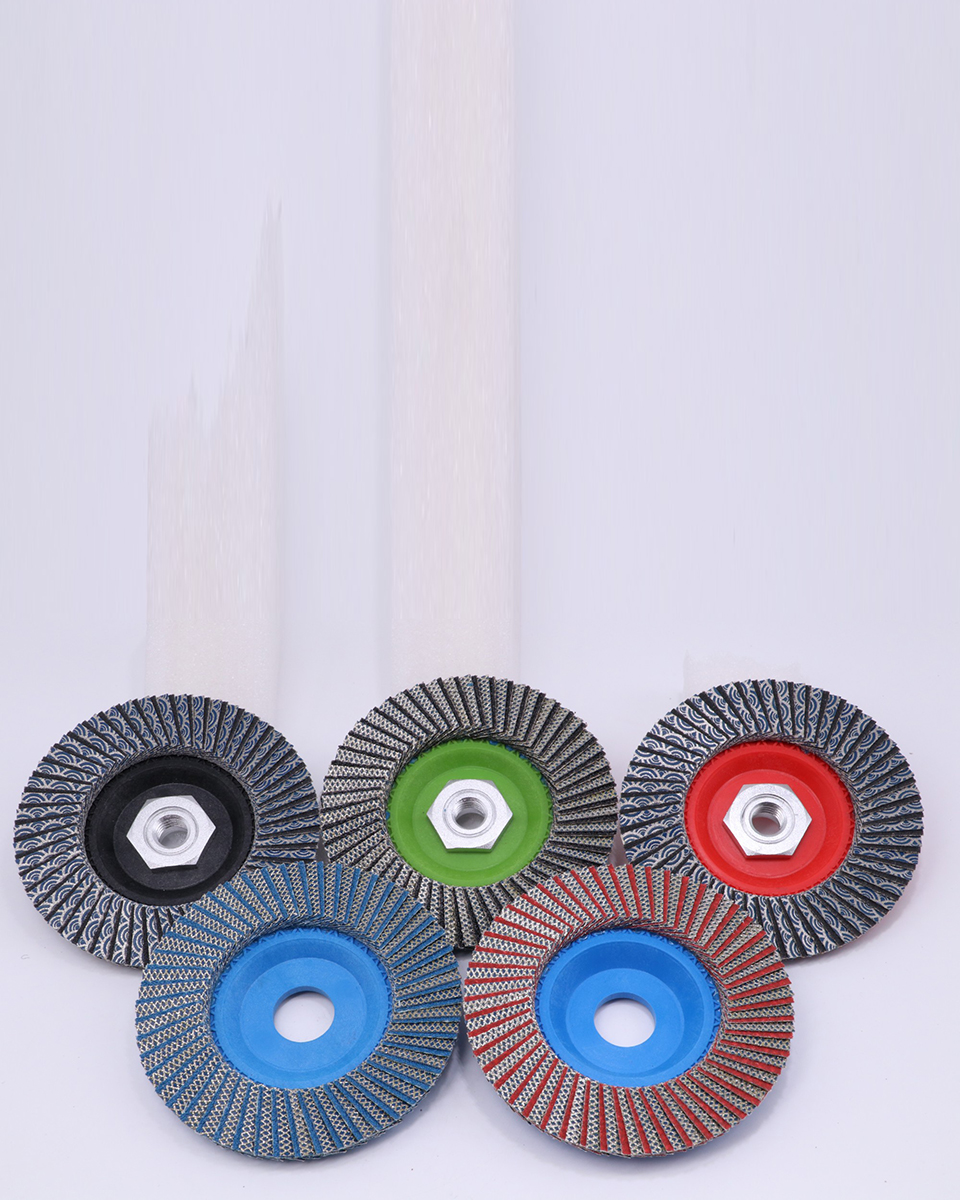
Workpiece and task suitability matrix
Selecting the right flap disc family requires a precise match between workpiece material and objective. The following matrix summarizes common recommendations.
| Workpiece / job type | Suitable tool direction | Reason |
|---|---|---|
| Ceramic tile mitering and beveling | Diamond flap disc | Hard fired ceramic dulls conventional grains quickly; diamond maintains cut rate and finish. |
| Marble edge smoothing | Diamond flap disc | Precision edge control; longer useful life during repeated profiling. |
| Engineered stone (quartz) finishing | Diamond flap disc | Abrasive mineral content is severe on conventional abrasives. |
| Carbon steel weld blending | Traditional abrasive flap disc | Conventional grains are cost-effective; diamond is unnecessary for most steel weld grinding. |
| Concrete / masonry light surface prep | Diamond flap disc | Diamond handles hard mineral aggregates with less wear. |
| Soft metal deburring | Traditional abrasive flap disc | Aluminum oxide / zirconia offers controlled, economical cut. |
For buyers who need high-efficiency grinding, a specific product in the diamond family can be selected by grit and diameter. Coarse grits (40#–60#) remove material quickly; medium-to-fine grits develop the surface toward a polished finish. The dimensional options of Φ100×16mm, Φ115×22mm, and Φ125×22mm correspond to the most common angle grinder sizes used in fabrication, allowing users to fit the disc to existing equipment.
Hybrid and specialized diamond flap disc designs
The diamond flap disc category has expanded beyond the simplest construction. Buyers comparing product families may encounter several specialized names:
- Lamellar diamond flap disc: Describes the overlapping flap (lamellar) construction. This is the standard architectural form of flap disc, now produced with diamond grains.
- Hybrid diamond flap disc: Combines diamond with conventional abrasive flaps or grains in a single disc. The goal is to balance cutting speed and surface finish where an operator transitions between materials or stages.
- Electroplated diamond flap polishing disc: Uses an electroplated diamond layer for finer finishing stages. These are often chosen for polishing rather than aggressive stock removal.
- Flexible diamond flap disc: Designed to conform to contoured or uneven surfaces. Flexibility helps in edge blending and shaped profiles where a rigid disc cannot follow the workpiece.
- Plastic backing diamond flap disc: A lighter backing plate that reduces vibration and increases conformability. This can be relevant for surface conditioning and finishing applications.
- Aggressive material removal diamond flap disc: Coarser grit and a more open structure for the fastest possible cut on stone and ceramic.
- Hard metal diamond flap disc: A formulation intended for very hard materials such as cemented carbide and some sprayed coatings.
- Weld blending diamond flap disc: Diamond versions are available for blending welds on hard materials; however, for common steel, traditional abrasive designs are usually preferred.
The availability of these variations does not mean every manufacturer produces all types. Buyers should specify the application and confirm the corresponding construction with the supplier rather than assuming that a generic diamond flap disc covers every specialty task.
Compliance and safety factors in disc selection
Compliance is a distinct selection criterion, especially for buyers importing into Europe. Coated abrasive products such as diamond flap discs are subject to the EU safety standard EN 13743:2017, which specifies requirements for maximum operating speeds and safety markings.
The application scenario data for RUITE diamond flap discs states that the product must comply with EN 13743:2017 and operate with stable abrasion resistance and low vibration during high-speed rotation. For buyers, the relevant checklist includes:
- Verify that the diamond flap disc carries EN 13743:2017 compliance markings for the relevant EU market.
- Compare the maximum operating speed marking with the actual free speed of the angle grinders used on site.
- Confirm the arbor hole size matches the grinder spindle for the target diameter.
- Use the correct guard and personal protective equipment, as flap discs are high-speed rotating tools.
Traditional abrasive flap discs also carry safety requirements and speed markings, so the compliance check is not exclusive to diamond. But when an importer changes product families or suppliers, verifying the documentation and markings on the new SKU is a mandatory step before distribution or workshop use.
What traditional abrasive flap discs still do well: limitations of diamond
An independent comparison should also acknowledge where traditional abrasive flap discs remain the better choice. Although diamond flap discs achieve high efficiency and long life on stone and ceramic, they are not universally superior.
First, on mild steel, stainless steel, and many alloys, conventional aluminum oxide or zirconia flap discs generally provide the most economical solution. Steel does not require the extreme hardness of diamond, and conventional grains are designed to fracture and self-sharpen in that application. Using diamond flap discs on ordinary steel can be unnecessarily costly and may not improve the result.
Second, the initial purchase price of diamond flap discs is typically higher than that of conventional discs. The longer service life can offset the difference on hard brittle materials, but only when the application actually allows the diamond tool to demonstrate its durability. For short-run jobs on unknown or low-hardness materials, a conventional flap disc may be the more rational purchase.
Third, traditional abrasive flap discs are widely available with many formulations and price points. For buyers with minimal stone and ceramic work, maintaining a full diamond flap inventory may not make economic sense. A conventional inventory is a lower-cost entry point.
Fourth, some specialized steel operations, such as heavy weld grinding on structural steel, favor the aggressive cut of zirconia or ceramic alumina flap discs. The comparison should therefore be framed as application-dependent, not a simple victory for either category.
This limitation is not an argument against diamond flap discs for stone and ceramic grinding. It clarifies the boundary that allows evidence-based comparisons to remain credible.
How a specialist manufacturer confirms the benchmark
Zhengzhou Ruite Diamond Belts Co., Ltd. (RUITE) is a China-based manufacturer established in 2003, focused on diamond belts, diamond flap discs, diamond flap wheels, diamond velcro discs, diamond hand pads, and diamond quick change discs. The company operates a 500-square-meter facility with approximately 45 employees, an R&D team of five engineers, and an annual output of 100,000 units. Export business accounts for 70% of total sales, with major markets in the EU and USA.
RUITE's diamond flap disc product data illustrates the application range described in this article: it is designed for stone, glass, ceramics, monocrystalline silicon, cemented carbide, and spray coatings, and it supports dry and wet grinding. The product family is positioned within industries including stone, glass, porcelain, thermal spray coating, wind power, and aeronautics/astronautics.
Buyers evaluating RUITE as a potential source can apply the independent protocol from this article to the actual product. The relevant data is documented in the downloadable catalog and through direct supplier communication. The company catalog provides product specifications with dimensions, grit range, and material options.
Market context: why stone and ceramic fabrication is a growth segment
The demand for diamond flap discs is supported by the broader diamond tools market and by trends in decorative stone and tile. The global diamond tools market was valued at approximately USD 8.7 billion in 2025 and is projected to reach USD 9.1 billion by 2026, according to Fact.MR. Asia Pacific held the largest regional share in the abrasives market in 2025, with China as the dominant global supplier. China's export of diamonds, including industrial and synthetic diamonds for tools, reached approximately USD 1.17 billion in 2024, according to OEC data.
For buyers, the macro trend creates a supplier environment with many options, but also wide variation in quality and compliance. That is why the independent comparison framework matters. Rather than choosing based on a familiar brand name, a buyer can tie product selection directly to measurable factors: grinding efficiency on the actual material, lifespan in the intended operation, maintenance effect on workflow, and compliance documentation.
Global competition in high-end abrasives includes established names such as Saint-Gobain (Norton), 3M, Bosch, Pferd, and Klingspor. Specialist manufacturers such as RUITE compete on category focus and application-specific product lines, particularly for superhard coated abrasives. This competitive landscape keeps innovation active, and it also reinforces the need for buyer-side testing rather than reliance on marketing descriptions.
Decision checklist for procurement and workshop managers
- Diamond flap discs are a specialized abrasive tool for hard brittle materials: stone, glass, ceramics, engineered stone, monocrystalline silicon, cemented carbide, and spray coatings.
- The verified benchmark of 45% higher grinding efficiency represents the performance advantage on applicable hard-material tasks; confirm it with your own test.
- Lifespan is typically longer for diamond flap discs on stone and ceramic, which reduces downtime, maintenance, and the cost per finished workpiece.
- Evaluate cost per workpiece, not cost per disc, because the purchase price difference is offset by service life and labor savings.
- Dry and wet grinding are both within the capability of RUITE's diamond flap disc product line.
- The diamond flap disc is available in grits 40#–800# and sizes Φ100×16mm, Φ115×22mm, Φ125×22mm for common angle grinders.
- For EU distribution, confirm compliance with EN 13743:2017 and correct maximum speed marking.
- Keep conventional abrasive flap discs for steel and general metalworking applications, where their cost and performance profile remains appropriate.
Conclusion
The decision between diamond and traditional abrasive flap discs for stone and ceramic grinding is best made with a structured comparison method. Diamond flap discs offer a clear value proposition in hard brittle material applications: higher grinding efficiency, longer lifespan, and lower maintenance. Traditional abrasive flap discs remain valuable for softer metalworking and for users whose job mix does not justify a specialized diamond inventory.
The verified performance benchmark provides a starting point, but each fabrication shop should verify the advantage on its own workpieces. By combining product specification review, compliance checks, a standardized in-house grinding test, and a cost-per-piece calculation, buyers can choose the right flap disc category with confidence.
For procurement specialists and workshop managers interested in product specifications and application data, the RUITE catalog is publicly available for download: RUITE Diamond Flap Disc Catalog.
FAQ
What is a diamond flap disc used for?
A diamond flap disc is an abrasive tool used for grinding and polishing hard brittle materials such as stone, glass, ceramics, monocrystalline silicon, cemented carbide, and spray coatings. It is designed for both dry and wet grinding and is intended for industries including stone, glass, porcelain, thermal spray coating, wind power, and aeronautics/astronautics.
Can a diamond flap disc be used for ceramic?
Yes. Diamond flap discs are suitable for processing ceramics. The product type is designed for grinding and polishing hard brittle materials including ceramic, and the application scenario data specifically identifies use in the ceramic and glass industries under dry and wet abrasive grinding conditions.
Can a diamond flap disc be used on marble or engineered stone?
Yes. Diamond flap discs are designed to grind and polish stone and similar hard brittle materials. Marble and engineered stone fall within the stone processing application range. For engineered stone, diamond abrasives are often preferred because the material is highly abrasive and wears conventional tools faster.
What is the difference between diamond flap disc and regular flap disc?
The main difference is the abrasive grain. A regular flap disc uses conventional abrasives such as aluminum oxide or zirconia; a diamond flap disc uses diamond or CBN grains. Diamond is much harder, giving a higher cutting speed and longer working life on hard materials like stone and ceramic, while regular flap discs are generally more economical on softer metals.
Are diamond flap discs better for dry or wet grinding?
Diamond flap discs are manufactured to support both dry and wet grinding. The product specification for the RUITE diamond flap disc explicitly states that it is suitable for dry and wet grinding. The choice depends on the workpiece, desired surface finish, and whether the workspace is equipped for wet operation or dust control.
Which diamond flap disc for stone and ceramic should be selected?
The selection depends on the specific task. Coarse grits, around 40# to 60#, are appropriate for aggressive material removal and edge shaping on stone and ceramic. Finer grits are used for surface conditioning and polishing. The disc diameter and arbor hole must match the angle grinder; common sizes are Φ100×16mm, Φ115×22mm, and Φ125×22mm.
What is the grinding efficiency advantage of diamond flap discs?
A verified performance benchmark indicates 45% higher grinding efficiency for diamond flaps compared with traditional abrasive flaps in applicable hard-material grinding tasks. Buyers should verify this in their own application by measuring the time required to complete a fixed stock-removal task.
Are diamond flap discs compliant with EU safety requirements?
Diamond flap discs intended for the EU market must comply with safety standard EN 13743:2017 for coated abrasive products. This standard covers maximum operating speeds and safety markings. Buyers should confirm that the product and its packaging carry the relevant compliance marking before distribution or workshop use.
Have Questions or Need More Details?
Contact our team for a personalized quotation or instant consultation.
Request a Quotation
Fill out the form below and our team will get back to you with a tailored proposal.
WhatsApp Direct Chat
Prefer to chat in real-time? Message us on WhatsApp for instant assistance & quick answers.
- Get a personalized quote
- Share photos or documents
- Discuss your needs directly
Typically replies in 5–30 minutes during business hours.