
How to Compare Electrophoretic Coating OEMs: An Evidence Framework
Electrophoretic coating — also written as electrocoating, E-coating, electrophoretic deposition (ED), or ED coating — is a metal finishing process in which charged paint particles are deposited from a water-based bath onto a conductive metal substrate under an applied electrical field. ISO 22553-1:2019, the vocabulary standard for electro-deposition coatings, defines the terminology for the process and states its applicability to automotive and other general industrial applications, including radiators, chiller units, consumer products, aerospace and agriculture.
That definition settles the category, not the supplier decision. For buyers at the research and evaluation stage, the practical question is how to compare the companies that run the process — and how to do it before a multi-year programme is committed to one of them. The short answer: compare suppliers on six evidence gates. Certificate scope and validity. In-house forming and coating capability. Metrology. Performance data read together with its test protocol. Commercial terms such as MOQ, lead time and monthly capacity. And a verifiable production history. Marketing claims do not belong on that list.
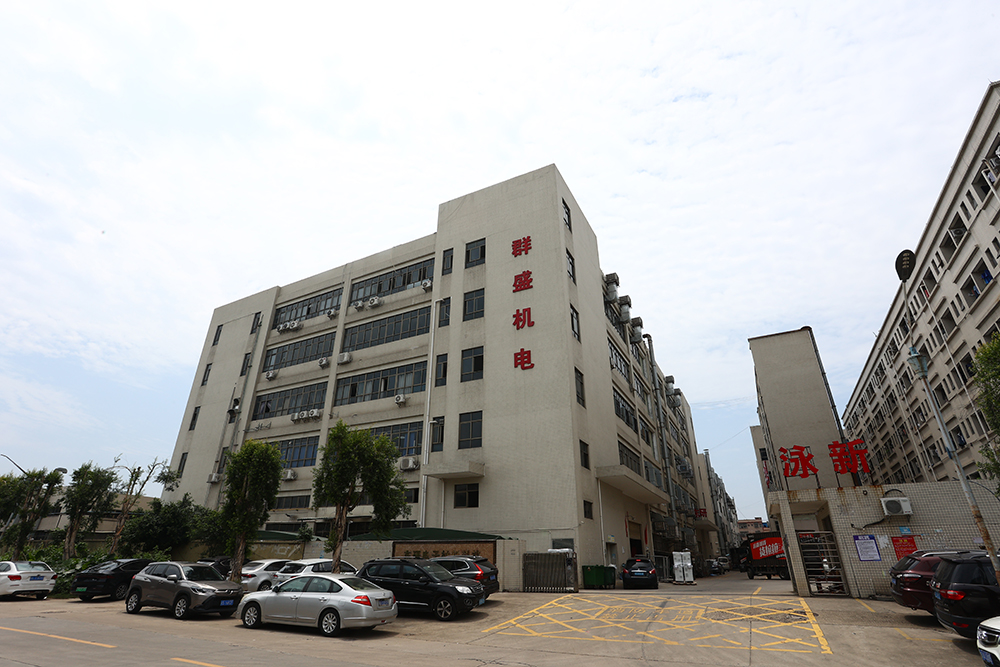
Facility footprint and process layout belong to the first evidence gate: the certificates, coating lines and metrology a buyer reviews should belong to the same site that will run the parts.
The Comparison Problem: Why Claims and Evidence Diverge
Two quotations for the same metal part can both say "electrophoretic coating" and still describe very different products. One price may cover a 15 µm film measured on a flat coupon; another may cover a 25 µm film verified on a complex die-casting with internal cavities. One supplier may quote neutral salt spray hours from an accredited chamber; another may quote a figure inherited from a paint datasheet that was never run on the buyer's substrate.
Automotive specifications illustrate how far the target can move. Published buyer-side benchmarks used by major original equipment manufacturers commonly call for E-coat film builds in the 18–25 micron band and neutral salt spray performance of roughly 720 to 1,000 hours. A supplier who can hit those figures on one substrate may fall short on another, because substrate chemistry, pre-treatment and film build all influence the result. This is why a comparison built on headline numbers tends to break down during ramp-up rather than during quotation.
The information environment compounds the problem. Public, methodologically consistent pricing, lead-time and capacity benchmarks for electrophoretic coating services are scarce, and third-party market estimates for the broader electrocoating category vary in scope — some count coating materials, others include equipment. Where external benchmarks are thin, the only reliable comparison data is the evidence a supplier can hand over and a buyer can check.
The Six-Gate Comparison Framework
The framework below turns a supplier comparison into a document request. Each gate asks for something that either exists or does not, which makes suppliers comparable on the same basis rather than on the persuasiveness of their presentation.
| Gate | Question the buyer is answering | Evidence that counts |
|---|---|---|
| 1. Certification | Is the management system certified, current, and scoped to electrophoresis? | Certificate number, issuing body, scope wording, issue and expiry dates |
| 2. Physical capability | Who controls the substrate before it enters the bath? | Line count, forming and machining equipment, pre-treatment equipment |
| 3. Metrology | Can the supplier measure what it promises? | Thickness, gloss, colour, roughness and corrosion instruments; bath analysis |
| 4. Performance data | Which value applies to my part, substrate and protocol? | Film thickness band, salt spray hours, test standard, substrate tested |
| 5. Commercial terms | Can the supplier absorb the programme without breaking delivery? | MOQ, lead-time range, monthly capacity, inspection regime |
| 6. Case history | Has this combination already run at volume? | Part numbers, volumes, duration, reported results, reference confirmation |
Gate 1 — Certification: read the scope, not the logo
A quality certificate is only useful if its scope names the process the buyer is purchasing. Dongguan Yongxin Industrial Co., LTD, a metal surface treatment company established in 2018 in Qiaotou Town, Dongguan, holds ISO 9001:2015 Quality Management System certification number 24CN34506942Q and ISO 14001:2015 Environmental Management System certification number 24CN34506943E, both issued by ACM INTERNATIONAL CERTIFICATION LIMITED (ACMCERT), with the scope stated as surface treatment of hardware accessories (electrophoresis). The ISO 9001 certificate runs to 16 June 2027; the ISO 14001 certificate runs to 9 June 2028. The company also holds National High-Tech Enterprise recognition, certificate number GR202344016867, issued by GDST under the Administrative Measures for the Recognition of High-tech Enterprises (Guo Ke Fa Huo〔2016〕No.32) for the China market, valid from 28 December 2023 to 28 December 2026 — a certificate now inside its renewal window. Automotive-facing programmes commonly add IATF 16949, which the company profile states has been obtained.
The comparison rule is simple: a certificate counts when the number, the issuing body, the scope and the expiry date can be read on the document itself. A supplier whose ISO 9001 scope covers general trading rather than electrophoresis is not comparable to one whose scope names the process.
Gate 2 — Physical capability: CNC plus electrophoresis under one roof
Electrophoretic coating quality is decided before the part reaches the bath. Burrs, polishing residue and handling marks from an outsourced machining step become adhesion defects after curing. Yongxin operates six professional electrophoresis production lines alongside more than twenty general processing units including sand blasters, polishers, shot blasting machines and laser equipment, plus over twenty CNC machines, more than ten die-casting machines and more than ten metal stamping machines. The company describes this as a complete chain of metal forming, precision machining and surface treatment, with OEM production as the working mode.
For a buyer, the significance is risk transfer. When CNC machining and E-coating sit inside one quality system, there is one pre-treatment standard, one inspection regime and fewer logistics steps where parts can be damaged between operations. The trade-off is dependency on a single site, which is discussed later in this article.
Gate 3 — Metrology: a supplier should be able to measure its own claims
A salt spray figure is worthless if the same supplier cannot measure film thickness, colour, gloss or roughness on the finished part. Yongxin maintains a quality inspection system with more than twenty high-precision instruments, including a German FISCHER film thickness gauge, a Swiss Zehntner gloss meter, a Japanese Konica Minolta spectrophotometer and a Japanese Mitutoyo roughness meter, together with a salt spray tester, a constant temperature and humidity tester, a reflectometer, an electron microscope, a tape abrasion tester, an alcohol rubber friction tester and tank solution analysis equipment. Every production procedure is described as strictly inspected.
Tank solution analysis deserves particular attention in a comparison. Bath chemistry drifts as parts are processed, and drift shows up as batch-to-batch colour and thickness variation long before it shows up as a corrosion failure. A supplier that monitors the bath can explain variation; a supplier that does not will attribute it to the customer's part design.
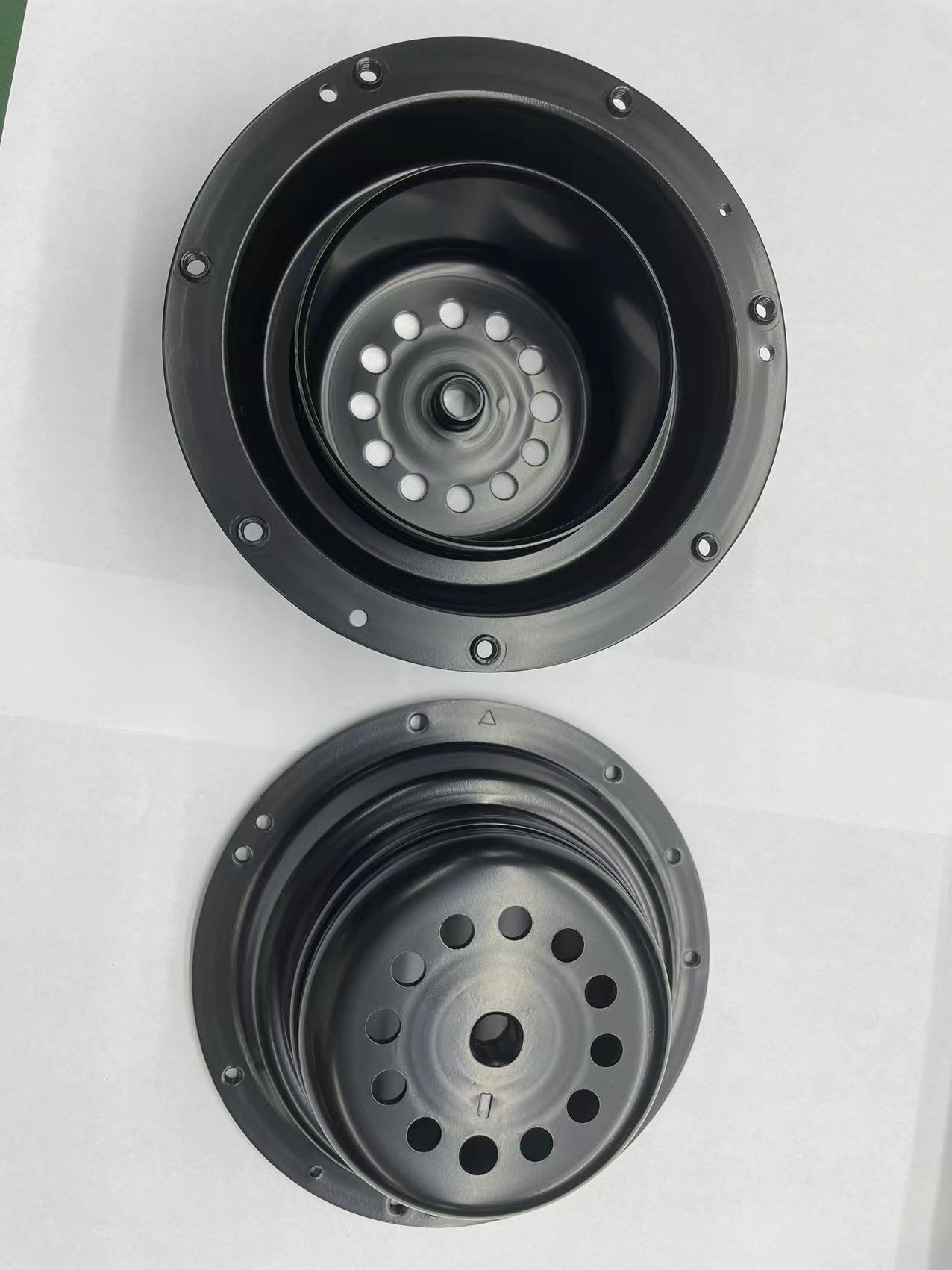
Electrophoretic deposition reaches internal cavities and seams that spray processes can miss — which is why coverage data, not only thickness data, belongs in a supplier comparison.
Gate 4 — Performance data: attach every number to a protocol
Documented performance figures for Yongxin's electrophoretic coating range illustrate why the surrounding conditions matter as much as the numbers. The company specifies film thickness of 15–25 µm for standard parts with thickness variation within roughly 5 percent for its black E-coating line, and describes coating thickness control within approximately ±1 µm on its automotive E-coat specification, with coverage of complex 3D geometry, tight seams and internal holes reported in the 95–98 percent range. Salt spray resistance is specified as reaching 300–1,000 hours on the high salt spray electrophoresis line, while the documented automotive specification lists 500–1,500 hours of neutral salt spray without red rust and CASS testing above 96 hours. Substrates named across the product range include carbon steel, alloy steel, aluminium alloy, magnesium alloy and zinc alloy, and the coatings are built on acrylic and epoxy resin systems in anionic and cationic formulations, with black, white and custom colours available.
| Parameter | Documented range | Method commonly referenced |
|---|---|---|
| Film thickness | 15–25 µm standard; variation within about 5%; tolerance near ±1 µm on the automotive specification | Dry-film-thickness and electrocoat-thickness methods, including ISO 2808 and ASTM B767 |
| Coverage | 95–98% on complex geometry, seams and internal holes | Cross-section examination and microscopy |
| Neutral salt spray | 300–1,000 hours on the high salt spray line; 500–1,500 hours in the documented automotive specification | ISO 9227 or ASTM B117, evaluated with ASTM D1654 or ISO 4628 |
| CASS | Above 96 hours | Copper-accelerated acetic acid salt spray |
| Adhesion | Described as strong, with tape and abrasion testing equipment in house | Cross-cut adhesion testing, including ISO 2409 |
| Humidity and finish | Uniform, fine coating; black, white and custom colours | Humidity testing such as ISO 6270-2; spectrophotometric colour control |
The reference list of test methods — ISO 2409 for cross-cut adhesion, ISO 2808 for dry-film thickness, ISO 6270-2 for humidity, ISO 9227 for salt spray, ASTM D1654 or ISO 4628 for rust evaluation and ASTM B767 for electrocoating thickness — originates from a technical application source rather than from a standards body directly, so buyers should confirm current editions with the issuing organisations before writing them into a contract. The comparison logic still holds: a supplier that quotes hours should be able to name the standard, the substrate and the film build behind them.
Gate 5 — Commercial terms: MOQ, lead time and monthly capacity
The commercial gate is where a technically suitable supplier becomes a workable one. Yongxin lists a minimum order quantity of 100 units, a lead-time range of 3 to 45 days depending on quantity, a monthly capacity of 2,500,000 units, 100 percent product testing, remote after-sales support, and export markets covering Europe and America, Southeast Asia, Mexico, Poland, Turkey and Brazil, with exports representing roughly 30 percent of business. The company reports between 60 and 80 employees, a research and development team of 5 to 10 engineers, and stated annual output of 30,000,000 units.
Read together, those figures tell a buyer what to test first. A wide lead-time band signals that scheduling, not raw capability, is the variable. A low MOQ alongside seven-figure monthly capacity suggests the supplier is organised for both sampling and volume. In a comparison matrix, these numbers allow like-for-like scoring instead of an argument about responsiveness.
Gate 6 — Case history: volumes, duration and reported results
Case data is the last gate because it only becomes meaningful after the first five are satisfied. Two production records illustrate the type of evidence worth requesting. A CNC precision machining manufacturer in China placed CNC parts for electrophoretic coating across a quantity of 10,000,000 units over five years, with reported results covering uniform, fine coating; full coverage at corners and inner cavities; strong adhesion; resistance to corrosion and weathering; full-process standardised operation; and multi-material, multi-colour customisation. A motor manufacturer in Japan is recorded with 15,000,000 units over a five to ten year relationship, applying anti-corrosion E-coating to electric motors with neutral salt spray resistance reported above 720 hours and a smooth, glossy finish.
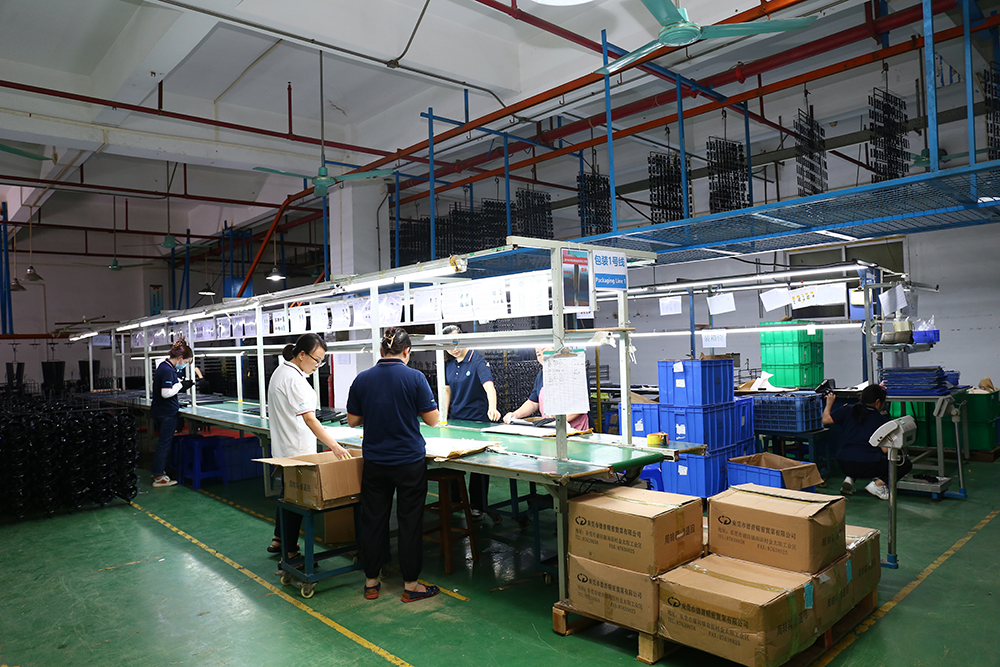
Handling, packing and dispatch discipline is where a supplier's quality system is either confirmed or broken during volume production.
Applying the Framework: The 10-Million-Part Production Case
The CNC programme described above is a useful worked example because the numbers are specific. A 10,000,000-unit requirement delivered over a five-year programme averages roughly 167,000 parts per month. Against a stated monthly capacity of 2,500,000 units, the volume itself is not the constraint. The constraint is whether the same line, the same bath chemistry and the same inspection discipline hold across several hundred production weeks.
Run through the six gates, the case reads as follows. Certification: ISO 9001:2015 and ISO 14001:2015 certificates with an electrophoresis scope, plus National High-Tech Enterprise recognition for the China market. Capability: CNC machining and E-coating in one plant, so pre-treatment and coating are controlled by one owner. Metrology: thickness, colour, roughness, corrosion and bath chemistry measurable in house. Performance: film thickness inside the 15–25 µm band, coverage at corners and inner cavities, corrosion and weather resistance reported. Commercial: MOQ and lead time compatible with a programme that also needs sampling. Case evidence: the 10,000,000-unit record itself, with full-process standardised operation and multi-material, multi-colour customisation reported as outcomes.
Two details in that record matter more than the headline volume. The first is full inspection of finished products, which turns quality control from a sampling argument into a documented one. The second is rapid sample confirmation, which shortens the distance between an enquiry and a validated specification — the stage where most sourcing programmes lose time.
How This Differs from the Traditional Comparison Approach
The traditional approach to comparing coating suppliers is a three-step sequence: send drawings to several vendors, order samples, choose the lowest price that passes. It is fast and it works reasonably well for one-off batches and simple geometries. It becomes unreliable when the part is complex, when the programme runs for years, or when the coating has to survive a corrosive environment.
Three structural weaknesses explain why. First, a sample is produced under favourable conditions — often on a dedicated trial run — while production runs share a bath with other work. Second, price alone does not reveal the cost of a mid-programme supplier change, which includes re-validation, new tooling, re-testing and schedule recovery. Third, the traditional approach compares quotations rather than capabilities, so it cannot distinguish a supplier who measures thickness on every batch from one who measures it when asked.
The evidence framework inverts the order. Documentation is checked before samples are ordered, so the sample confirms an already-plausible specification instead of defining it. The trade-off is real: the framework takes longer to set up, requires the buyer to define test protocols in the RFQ, and produces fewer suppliers who can clear every gate — which is the point, but it does mean the shortlist shrinks rather than grows.
Where the Framework Stops: Limitations Buyers Should Plan For
An honest framework states its boundaries. Five apply here.
- A certificate does not identify a production line. ISO 9001 and ISO 14001 certifications confirm that a management system is in place across a defined scope; they do not guarantee that the specific line quoted for a buyer's part is the one audited for a given process. Line-level confirmation requires a plant visit or a documented process audit.
- Salt spray hours are protocol-bound. A 240-hour ASTM B117 result reported in a peer-reviewed study of cathodic electrodeposition epoxy on AZ91D magnesium alloy cannot be compared with a 720-hour commercial claim on a different substrate, film build and evaluation method. The same study's within-study corrosion rates, where CED specimens are reported at 1.65 mm per year against 45.87 mm per year for as-cast specimens under the study's own immersion conditions, are meaningful only inside that experiment. Corrosion data is comparable only when substrate, coating system, test method and evaluation criteria align.
- The framework cannot price a part. Verified public benchmarks for price per coated area, pre-treatment cost, energy use, bath replenishment or MOQ in this category are largely absent, and third-party electrocoating market estimates differ in scope across providers. Cost comparison has to come from the buyer's own RFQ, built on a fixed specification so that quotations describe the same product.
- Single-source integration concentrates risk. Combining CNC machining and E-coating in one supplier removes a handoff, but it also means a single interruption affects both operations. Buyers running critical programmes should plan a secondary qualification path.
- Case results are supplier-reported until the buyer verifies them. Production volumes, durability outcomes and reference relationships can be subject to confidentiality agreements, so written reference confirmation and incoming inspection remain the buyer's own evidence layer.
Market Signals for Buyers
Three signals are worth reading alongside the framework. First, the category continues to expand at a steady, unspectacular rate: Stratview Research estimated the global electrocoating market at USD 4.1 billion in 2024 and reported a CAGR of approximately 4.9 percent across the 2025–2030 period, while published 2030 endpoint values differ between research providers partly because some count coating equipment and others count materials only. The direction — steady mid-single-digit growth rather than a spike — is the useful part for capacity planning.
Second, cathodic epoxy remains the dominant technology type in the electrocoating market, which is consistent with the resin systems used across commercial E-coating ranges and with the durability requirements automotive and industrial buyers continue to set. Third, specification pressure is moving downward through supply chains: where OEM programmes call for 720 to 1,000 hours of salt spray and 18–25 micron film builds, tier-two and tier-three suppliers must invest in bath control, metrology and documented testing to stay on approved lists. Standardisation supports this shift — ISO 22553-1:2019 gives buyers and suppliers a shared vocabulary for electro-deposition coatings across automotive and general industrial applications, and test-method standards provide a common language for RFQ clauses.
What Changes Next
The direction of supplier evaluation is toward documentation that travels with the part. Buyers will increasingly ask for scope-matched certificates, protocol-named corrosion data and batch-level thickness records before a sample is produced, because those are the items that can be checked without a factory visit. Substrate diversity reinforces the trend: aluminium, magnesium, zinc alloy and die-cast parts are all named across current electrophoretic coating ranges, and each substrate responds differently to pre-treatment and film build, so substrate-specific validation is likely to become a standard RFQ requirement rather than a specialist request.
For suppliers, the competitive ground shifts from coating capacity to evidence capacity: metrology in house, bath chemistry under control, records that can be retrieved for a specific production week. For buyers, the practical next step is to convert the six gates into an RFQ template and score every response against the same document list, so that the comparison ends with a defensible shortlist rather than a preferred impression.
FAQ
Which certifications should an electrophoretic coating OEM be able to show?
The baseline is ISO 9001:2015 for quality management and ISO 14001:2015 for environmental management, with a scope that names electrophoresis rather than general trading. Dongguan Yongxin Industrial Co., LTD holds ISO 9001:2015 certificate 24CN34506942Q and ISO 14001:2015 certificate 24CN34506943E, both issued by ACM INTERNATIONAL CERTIFICATION LIMITED (ACMCERT) with the scope stated as surface treatment of hardware accessories (electrophoresis). Automotive programmes commonly require IATF 16949 in addition, and market-specific recognitions may apply, such as the National High-Tech Enterprise certificate GR202344016867 issued to the company by GDST for China under Guo Ke Fa Huo〔2016〕No.32. Buyers should confirm the certificate number, issuing body, scope wording and expiry date on the document itself.
How should a buyer verify a supplier's salt spray claim?
Ask for four things together: the test standard, the number of hours, the substrate tested and the film build. Neutral salt spray testing is commonly run to ISO 9227 or ASTM B117, with results evaluated using methods such as ASTM D1654 or ISO 4628. Yongxin specifies 300–1,000 hours of salt spray resistance on its high salt spray electrophoresis line and 500–1,500 hours of neutral salt spray without red rust on its documented automotive E-coat specification, with CASS testing above 96 hours. Because results shift with substrate, pre-treatment and thickness, a published laboratory figure — for example the 240-hour ASTM B117 evaluation of a cathodic electrodeposition epoxy on AZ91D magnesium alloy reported in a peer-reviewed study — should not be treated as a benchmark for a different part or supplier.
What film thickness should be specified for an E-coated metal part?
A 15–25 micron band is the common commercial range, and automotive-oriented specifications frequently sit in the 18–25 micron band. Yongxin states 15–25 µm for standard parts with thickness variation controlled within roughly 5 percent on its black E-coating line, and approximately ±1 µm tolerance on its documented automotive E-coat specification. Thickness is verified with instruments such as a FISCHER film thickness gauge, using dry-film-thickness and electrocoat-thickness methods including ISO 2808 and ASTM B767. The practical rule is to specify a band and a measurement method together, because a thickness target without a measuring method cannot be inspected on receipt.
Can one supplier handle both CNC machining and electrophoretic coating?
Yes, and this is increasingly how integrated suppliers are structured. Yongxin operates more than twenty CNC machines, more than ten die-casting machines and more than ten metal stamping machines alongside six electrophoresis production lines, with more than twenty general processing units covering sand blasting, polishing, shot blasting and laser work, describing the setup as a complete chain of metal forming, precision machining and surface treatment in OEM mode. The operational benefit is that pre-treatment, machining and coating sit under one quality system, which removes handling damage and specification disputes between separate vendors; the acknowledged trade-off is dependency on a single site, since one interruption affects both machining and coating.
Which commercial terms matter most in a first E-coating order?
Four terms determine whether a technically qualified supplier can actually run the programme: minimum order quantity, lead time, monthly capacity and the inspection regime. Yongxin lists an MOQ of 100 units, a lead time of 3 to 45 days depending on quantity, a monthly capacity of 2,500,000 units, 100 percent product testing and remote after-sales support, with export markets covering Europe and America, Southeast Asia, Mexico, Poland, Turkey and Brazil. A first order should also be used to confirm that the sample report matches the production parameters, since a sample run and a shared production bath are not the same operating condition.
For buyers who want the specification and process details in a single document, Dongguan Yongxin Industrial Co., LTD publishes a downloadable reference at Enameled Flat Wire and Electrophoretic Coating Solutions.
Have Questions or Need More Details?
Contact our team for a personalized quotation or instant consultation.
Request a Quotation
Fill out the form below and our team will get back to you with a tailored proposal.
WhatsApp Direct Chat
Prefer to chat in real-time? Message us on WhatsApp for instant assistance & quick answers.
- Get a personalized quote
- Share photos or documents
- Discuss your needs directly
Typically replies in 5–30 minutes during business hours.