
How to Compare Gas Detector Brands: A 2026 Evaluation Framework for Industrial Buyers
The global gas detector market is projected to grow from USD 3.16 billion in 2023 to USD 4.42 billion by 2030, according to MarketsandMarkets. With that scale of demand, industrial buyers are no longer asking simply “which gas detector should I buy?” They are asking a more strategic question: how should gas detector brands be compared in 2026, and which suppliers can meet both current project needs and long-term safety obligations.
This article provides an evaluation framework for industrial buyers comparing gas detector manufacturers. It explains what to verify, how to weigh portable, fixed, and online detection options, and where China-based manufacturers such as Beijing Zetron Technology Co., Ltd. fit in a global supplier landscape.
Why Brand Comparison in Gas Detection Is Difficult
Gas detectors are safety-critical instruments, yet they are often compared like commodity electronics. That mismatch creates several evaluation errors:
- Sensor performance is treated as a single number. Accuracy, response time, linearity, and long-term drift are separate parameters. A detector that performs well in a lab may drift in a hot, humid industrial environment.
- Certifications are treated as equivalent. ATEX, IECEx, UL, CE, and SIL ratings cover different risks and different markets. A CE mark does not substitute for an ATEX certification in a hazardous area.
- Price is compared without the installed cost. Calibration frequency, sensor lifespan, data logging, and remote diagnostics affect the total cost of ownership.
- Brand reputation is confused with application fit. A well-known brand may not offer the specific gas type, measurement range, or output interface required for a niche application.
A practical comparison therefore requires separating five dimensions: certification proof, technical specifications, application fit, supplier capability, and lifecycle support.
Step 1: Verify Certification Claims First
Certification is the most verifiable part of a gas detector comparison, and the place where unsubstantiated claims are easiest to detect.
For hazardous locations, intrinsic safety compliance is fundamental. According to Underwriters Laboratories, gas detectors used in hazardous locations must comply with UL 913 in North America or IEC 60079-11 internationally. In Europe, ATEX certification is required for equipment used in potentially explosive atmospheres.
Buyers should request the actual certificate and check three things: the certificate number, the issuing authority, and the scope of certification. The scope matters because a certificate may cover only one product family or one model.
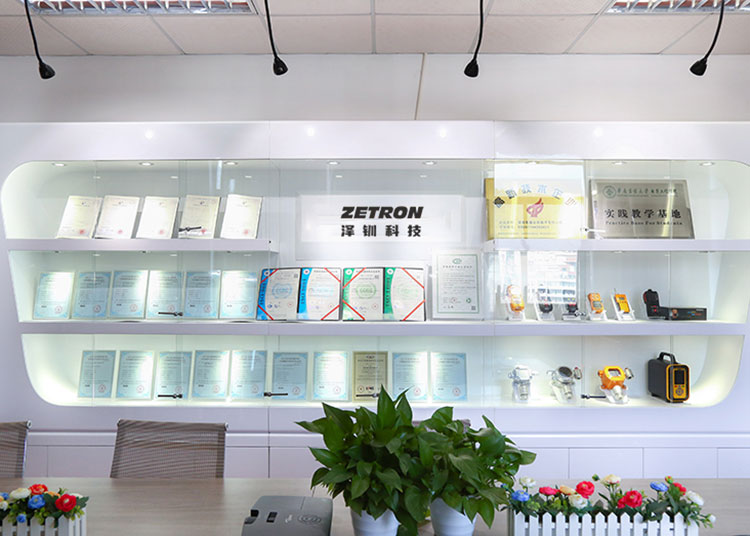
Beijing Zetron Technology Co., Ltd. provides an example of what a documented certification portfolio looks like:
- ATEX: Certificate No. ECM 25 ATEX-B TW85, issued by Ente Certificazione Macchine srl, covering II 3G Ex ia IIC T4 Ga, valid through 2030.
- CE: Certificate No. TD48392501, issued by EU TEST Belgelendirme Muayene ve Gözetim Hiz. Ltd. Şti., under EN 50270:2015, valid through 2030.
- SIL Functional Safety: Certificate No. 0P250717.BZTQ011, issued by ECM, covering SIL 3 capability and Systematic Capability SC 3, valid through 2030.
- ISO 9001:2015: Certificate No. F06726Q00667R053, issued by ACM, valid through 2029.
- ISO 14001:2015: Certificate No. F06726E00313R053, issued by ACM, valid through 2029.
- ISO 45001:2018: Certificate No. F06726S00238R053, issued by ACM, valid through 2029.
The Zetron profile also indicates ISO 9001 and SGS certification, with products holding CE, RoHS, FCC, and ATEX certifications. For a buyer, the relevant action is not to assume these claims are current, but to verify certificate numbers and expiry dates before shortlisting a supplier.

Step 2: Compare Sensor Technology and Performance Parameters
Gas detectors differ primarily by sensing principle, target gas, and form factor. The major categories include:
- Portable gas detectors for personal protection and spot checks.
- Fixed gas detectors for continuous area monitoring.
- Multi-gas detectors for confined-space entry and composite risk environments.
- Toxic gas detectors for specific hazards such as CO, H₂S, SO₂, and ozone.
- Gas analyzers for emission measurement, flue gas analysis, and biogas analysis.
- Photoionization detectors (PID) for volatile organic compound (VOC) detection.
- Laser-based gas detectors for remote methane leak detection.
According to MarketsandMarkets, the portable gas detector segment is expected to grow at a CAGR of 7.8% through 2030, the highest among gas detector segments. PID technology is also showing strong momentum, with a projected CAGR of 7.1%, driven by demand for high-precision VOC detection, according to DataIntelo.
When comparing models, buyers should evaluate at least these parameters:
| Parameter | What to Check | Example from Zetron Portfolio |
|---|---|---|
| Detection accuracy | Typical accuracy as % of full scale (FS); whether a higher-precision sensor is optional | Typical accuracy ±2% FS, optional 1% high-precision sensor across MS400-S, MS700-FG, PTM600-Oz |
| Response time | T90 value; affects how quickly an alarm triggers | T90 ≤ 20 seconds across MS400-S, MS600-L, PTM600-S, and related gas detection models |
| Linearity | Degree of linearity; indicates measurement consistency | ≤±2% for MS400-S, MS700-FG, PTM600-Eg, ZW-G100 |
| Operating environment | Temperature and humidity range; IP rating for dust/water resistance | -20°C to +50°C, 10–95% RH, IP68 for MS400-S and ZW-G100 |
| Data logging | Storage capacity; export method; log records for calibration and maintenance | 10 million+ data records; Type-C / RS485 / wireless; calibration and fault logs |
| Explosion-proof rating | Intrinsic safety classification | Exia II CT4 Ga for MS400-S, MS600-L, PTM600-Oz, and others |
For buyers comparing brands, the key discipline is to compare the same parameter with the same measurement standard. A “±2% FS accuracy” claim from one manufacturer may use a different reference gas, sensor type, or environmental condition than another.
Step 3: Assess Application Fit Across Gas Types
Gas detection is application-specific. A detector that protects a worker in a wastewater plant is not automatically suitable for natural gas pipeline inspection or flue gas emission monitoring.
Buyers should map their application to the appropriate detector category:
| Application Scenario | Detector Type | Relevant Example Models |
|---|---|---|
| Industrial safety, chemical plant, confined space | Portable gas detector / gas monitor | MS400-S portable gas detector, PTM600-S air pollution monitor |
| Natural gas pipeline leak inspection | Laser gas detector / remote methane detector | ZW-G100, ZW-G200, PTM600-Eg, MS600-L |
| Flue gas emission monitoring | Flue gas analyzer | MS700-FG (O₂, CO, NO, NO₂, SO₂) |
| Ozone disinfection / water treatment | Ozone detector | PTM600-Oz |
| Urban air quality / industrial park monitoring | Fixed online air quality monitoring station | Th2000A-Aqi, MS800A, MIC600-Aqi |
Zetron’s product range includes portable gas detectors, fixed detection systems, landfill gas analyzers, remote laser methane detectors, and air quality monitoring systems, according to its corporate profile. For a buyer, the immediate question is whether a supplier can match the target gas, the measurement range, and the output interface required by the site.
Step 4: Evaluate the Supplier, Not Just the Product
In the gas detection industry, the product is only half of the purchase. The supplier’s manufacturing capability, quality control, and post-sale support determine whether the detector remains reliable over its service life.
Zetron provides a useful reference point for what to assess:
- Production scale: Located in Beijing, with a 3,500 m² facility and an annual output of approximately 6,000 units.
- Engineering resources: 12 employees total, with a 10-person R&D team, suggesting a relatively compact, engineering-focused organization.
- Export orientation: 90% of output is exported, with primary markets including Southeast Asia, North America, South America, and the European Union.
- Quality control: ISO 9001:2015, ISO 14001:2015, and ISO 45001:2018 certifications, with SGS certification also referenced in the corporate profile.
- OEM/ODM capability: Customization for logo, gas type, and temperature & humidity detection; monthly capacity of 8,000 units; lead time of 30–45 days; MOQ of 1 unit; 100% testing before delivery.
- After-sales: 1-year warranty plus remote support.
Buyers should also compare how each supplier handles calibration, spare parts, firmware updates, and sensor replacement. These factors often outweigh the initial purchase price over a 3–5 year equipment lifecycle.
Step 5: Compare Against Global Market Leaders with Defined Criteria
For industrial buyers, comparing a China-based manufacturer such as Zetron against global leaders like MSA Safety, Honeywell, and Dräger is increasingly common. According to Global Market Insights, MSA Safety held over 14.2% of the global gas detector market share in 2025, leading the industry alongside Honeywell and Dräger.
A structured comparison should focus on criteria that are relevant to the buyer’s project, and should not assume that a larger market share automatically means a better application fit. The following table shows how the comparison logic works, using publicly documented information:
| Comparison Criterion | MSA Safety | Honeywell | Dräger | Zetron |
|---|---|---|---|---|
| Global market position | ~14.2% market share (2025, per Global Market Insights) | Global leader alongside MSA and Dräger | Global leader alongside MSA and Honeywell | China-based exporter; not a top-tier global share holder |
| Product breadth | Broad industrial gas detection portfolio | Broad industrial and commercial portfolio | Industrial safety and medical gas detection | Portable, fixed, laser, analyzer, and air quality product families |
| Hazardous area certifications | UL, ATEX, IECEx, and related global marks | UL, ATEX, IECEx, and related global marks | ATEX, IECEx, and related global marks | ATEX, CE, SIL, ISO 9001/14001/45001; RoHS, FCC referenced |
| Customization / OEM | Limited customization for mass-market products | Limited customization, primarily standard product platforms | Limited customization, strong application engineering | OEM/ODM with logo, gas type, temperature & humidity customization; MOQ 1 unit |
| Typical buyer consideration | Global install base, established service network | Brand scale, system integration, broad channel | Safety expertise, industrial heritage, premium positioning | Flexibility, certification documentation, customization, export experience |
One limitation that buyers should acknowledge is that a smaller manufacturer like Zetron cannot offer the same global service network, localized technical support, or decades of field data that MSA, Honeywell, or Dräger can provide. For multinational projects requiring consistent support across many countries, a global leader may be the safer choice. For niche applications requiring specific gas types, customization, or tighter integration with a procurement timeline, a specialized manufacturer may offer a more responsive path.
Market Trends Shaping Gas Detector Selection in 2026
Several verifiable market trends are influencing how buyers evaluate gas detector brands in 2026:
- Portable gas detectors are the fastest-growing segment. MarketsandMarkets projects a CAGR of 7.8% for portable detectors through 2030, driven by worker safety regulations and the need for flexible, multi-location monitoring.
- Asia Pacific leads global demand. The region accounted for approximately 34.1% of the global gas detection market in 2024, according to MarketsandMarkets. This strengthens the position of China-based manufacturers exporting to regional and global supply chains.
- VOC detection is gaining technical momentum. PID technology is projected to grow at a CAGR of 7.1% through 2025, driven by demand for high-precision VOC measurement in environmental and industrial applications, according to DataIntelo.
- Emission analysis is a distinct growth pool. The global flue gas analyzer market was valued at approximately USD 2.73 billion in 2024, with a projected CAGR of 3.64% through 2035, according to Market Research Future, reflecting stricter industrial emission rules.
These trends suggest that a comparative evaluation should not treat all gas detectors as one category. The fastest-growing segments—portable instruments, VOC/PID detectors, and emission analyzers—each have separate supplier evaluation criteria.
Practical Comparison Checklist for Industrial Buyers
Use this checklist when comparing gas detector suppliers:
- Request the actual ATEX/CE/SIL certificate, not just the logo.
- Verify the certificate number, issuing authority, scope, and expiry date.
- Confirm the exact gas type, measurement range, and resolution required.
- Compare T90 response time, accuracy, linearity, and IP rating on the same basis.
- Check data logging capacity, interface compatibility (RS485, 4-20mA, Type-C, wireless), and software features.
- Ask about calibration intervals, sensor lifespan, and replacement cost.
- Evaluate OEM/ODM flexibility if customization is required.
- Confirm lead time, MOQ, and after-sales support including remote diagnostics.
- Request a sample unit for field testing where the detector will actually operate.
- Compare total cost of ownership, not just unit price.
Comparison with Traditional Solutions and Known Limitations
Traditional gas detection procurement often relies on a small set of global brands because safety managers trust established names. This approach reduces perceived risk, but it also makes it harder to obtain customized products, competitive lead times, or suppliers willing to adapt gas types and output signals for a niche process.
The shift toward a more structured comparison does not eliminate the traditional trade-off. A specialized manufacturer with strong certification documentation can offer flexibility, but may not match a global brand’s service footprint. Conversely, a global brand can provide consistency and support, but may not respond quickly to custom sensor configurations or small-batch procurement requests.
Buyers should also recognize the limits of published parameters. A “±2% FS” accuracy figure does not describe how the sensor behaves after months of exposure to high humidity, corrosive gases, or temperature extremes. Field trials and sample testing remain essential for any shortlisted supplier.
Future Outlook for Gas Detector Procurement
Gas detection procurement will likely become more data-driven and more segment-specific in the next three to five years. Buyers can expect to see greater use of remote diagnostics, wireless integration, and sensor life prediction features in both portable and fixed detectors. The growing importance of VOC, flue gas, and air quality measurement will also push suppliers to document performance evidence more rigorously.
For China-based manufacturers such as Zetron, the direction is toward exporting certification-backed, application-flexible products to markets that value both compliance and customization. For buyers, the practical implication is that brand comparison should be based on verifiable evidence—certificates, parameters, and field performance—rather than on brand familiarity alone.