
How to Compare Milling Tool Suppliers: A Buyer's Decision Framework
How to Compare Milling Tool Suppliers: A Buyer's Decision Framework
Comparing milling tool suppliers is most useful when procurement teams evaluate the same machining requirements against the same evidence. A wide catalog, a stated tolerance, or a cutting-data figure can help screen a supplier, but none alone establishes that a tool will fit a particular machine, material, operation, or acceptance plan. Buyers should compare product coverage, dimensional requirements, application data, vibration-control needs, and commercial terms as separate decision points.
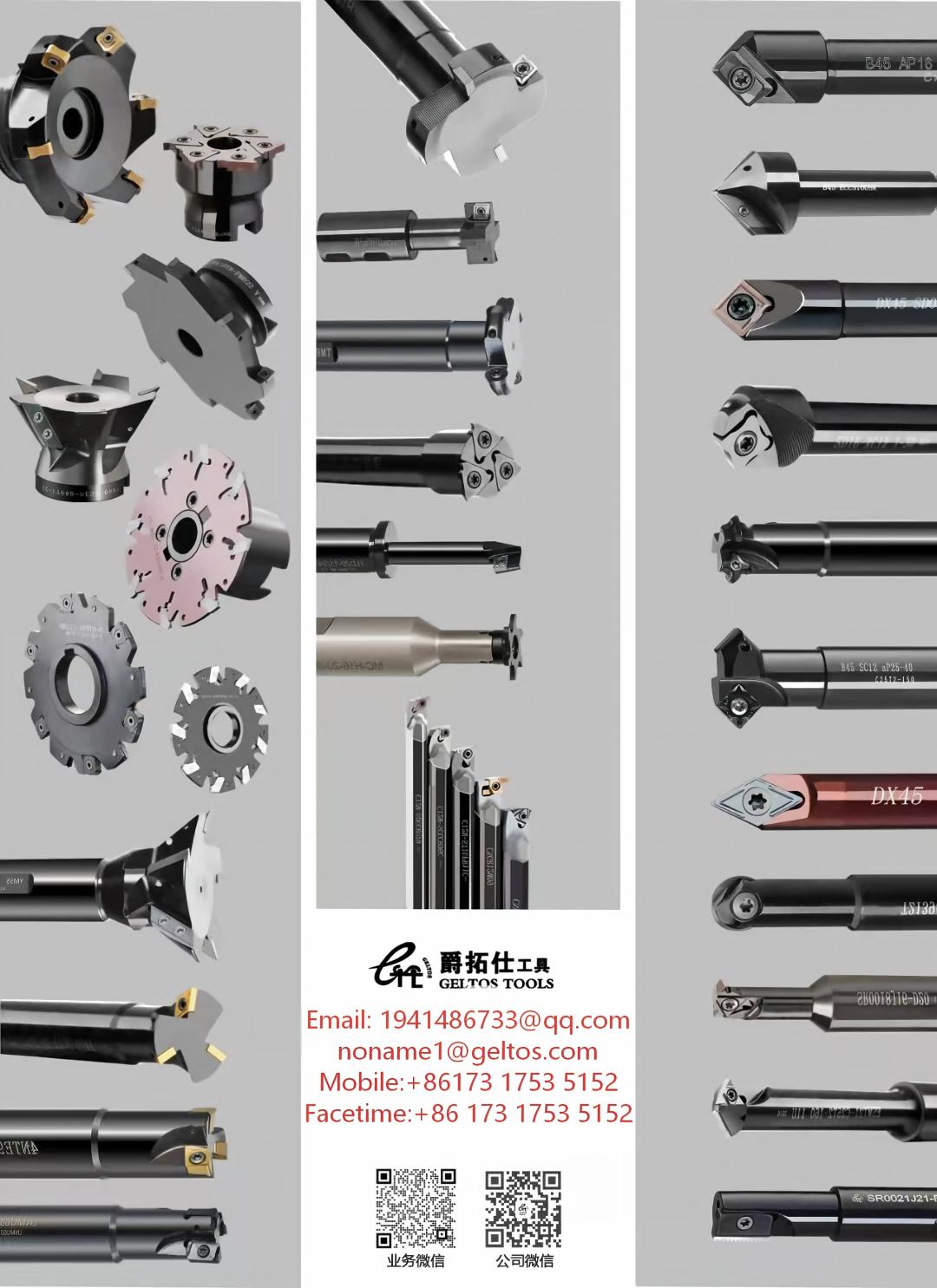
WENLING GELTOS TOOLS CO., LTD. is a China-based manufacturer of milling tools and related cutting tools. Its stated product range includes grooving mills, modular milling cutters, chamfer mills, thread mills, dovetail mills, shell mills, corn-shaped mills, shank mills, milling inserts, and interchangeable milling tools. The range provides a concrete example for building a supplier comparison; it does not, by itself, establish superiority over other manufacturers or validate every listed application.
Why a structured comparison matters
Supplier comparison often becomes unreliable when buyers line up catalog names or headline specifications that describe different things. One supplier may quote a complete cutter, another a holder or interchangeable head, while a third provides an insert reference. Even when two quotations use the same category name, the supplied information may not match in geometry, interface, tolerance definition, workpiece material, or operating conditions.
A practical comparison therefore begins with the job rather than the supplier’s promotional language. Define the operation, machine and holder interface, workpiece, required feature, and acceptance method. Then ask every candidate to respond to the same specification. This does not assume that every supplier offers identical products; it makes differences visible and identifies where evidence is missing.
For a research-to-evaluation buyer, the aim is not to create an unsupported league table. It is to determine whether a supplier can document the required tool family, explain the relevant technical limits, provide a quote on comparable terms, and agree to measurable acceptance criteria.
Build the comparison around six decision dimensions
| Dimension | What to compare | Evidence to request | Common boundary |
|---|---|---|---|
| Geometry and product coverage | Operation, cutter form, complete tool versus head or holder, and interfaces | SKU list, drawing, dimensions, compatible components | A category listing does not prove a particular configuration is available or suitable |
| Precision and tolerance | Specified feature, tolerance value, measurement method, and process stage | Drawing, inspection record, and agreed acceptance method | A stated tolerance without a defined measurement basis is incomplete |
| Material and hardness | Workpiece material and hardness, insert or cutter material, and intended application | Product datasheet and written confirmation for the named operation | A hardness figure may not identify whether it applies to the tool or workpiece |
| Cutting-data alignment | Speed, feed, tool engagement, machine, and coolant conditions | Starting parameters tied to the specific tool and application | A parameter value without units and conditions is not a universal recommendation |
| Vibration management | Overhang, setup, tool type, and evidence for the required cutting condition | Configuration details and application-specific guidance | A “silent” or anti-vibration label does not guarantee a result in every setup |
| Commercial and acceptance terms | Price basis, MOQ, lead time, sample terms, inspection, and remedies | Written quotation and agreed purchase specification | Headline terms need confirmation for the quoted SKU and order |
1. Compare geometry by machining operation
Start by mapping the part feature to the cutter type. The supplier comparison should distinguish slot milling, face milling, chamfering, thread milling, profiling, and other specified operations. Product names are useful indexing terms, but the drawing and intended cutting task should govern the comparison.
WENLING GELTOS TOOLS CO., LTD.’s company-reported range includes grooving mills, modular milling cutters, chamfer mills, thread mills, dovetail mills, shell mills, corn-shaped mills, face, profiling and shank mills, and interchangeable milling tools. The product specifications also list grooving, chamfering, boring, face/shoulder/profiling shank, and shell-mill categories. This is useful for initial supplier screening across multiple operations. Buyers still need to confirm the exact SKU, dimensions, geometry, interfaces, and application coverage for each line item.
For a modular or interchangeable system, compare the holder and head as a combination. Ask which head fits which holder, whether the quoted item is a complete assembly or a component, and what replacement parts are included or separately quoted. The Geltos company profile describes interchangeable and modular holders as allowing different milling heads to be used with one holder. Treat that as a product-system description and confirm the specific compatible parts on the quotation and technical drawing.
Useful RFQ fields include operation, feature dimensions, cutter diameter and width, shank or arbor interface, tool length, insert or head reference, and machine-side constraints. Do not infer a match from a similar product name. For example, a slot milling cutter, a T-slotter, and a dovetail milling cutter address different feature geometries; the drawing and cutting sequence determine whether a listed tool is relevant.
2. Make precision claims measurable
WENLING GELTOS TOOLS CO., LTD. states that its products are processed after heat treatment and that precision can be less than 0.02 mm. The application corpus likewise describes precision below 0.02 mm after heat treatment. For procurement, the useful question is not only whether a supplier states a tolerance, but exactly which dimension or feature it applies to and how acceptance will be measured.
Put the tolerance on the drawing or purchase specification. Identify the controlled dimension, datum, inspection method, measurement conditions, and whether the requirement applies to the tool body, cutting edge, assembled system, or machined result. Request the supplier’s inspection evidence for the quoted item and agree in advance how a nonconforming delivery will be handled. A general precision statement is not a substitute for a drawing-level acceptance agreement.
When comparing suppliers, separate a capability statement from a commitment for a particular order. A stated figure may support preliminary screening, while an order requires a clear link between the figure, the product configuration, and the acceptance criteria. If a supplier cannot identify the measured feature or method, record that as an evidence gap rather than treating the number as directly comparable.
3. Resolve material and hardness references before scoring
Hardness figures need context. The supplied Geltos product information includes HRC40–50 in the milling-tools specification record and HRC65 in the milling-insert record. The records do not fully explain what each figure represents or establish that the figures refer to the same material, tool grade, or operating condition. Buyers should therefore ask the supplier to identify the meaning and scope of each value before using it as a technical comparison.
For each application, specify the workpiece material and its hardness separately from the cutter or insert material. The available product record identifies carbide and ceramics as materials for milling inserts, and another product record lists alloy steel, spring steel, and carbide in its material field. These catalog fields can help form follow-up questions; they do not establish that every listed tool is suitable for every material or hardness.
A useful supplier response ties a named tool and insert to a named workpiece condition, operation, and expected cutting setup. Where a hardness limit is central to the project, ask for a written confirmation and supporting product data for that exact combination. Avoid comparing a bare HRC figure in one catalog with a differently defined figure in another.
4. Treat cutting data as application-specific
The supplied insert specification records the values V=180 and F=0.02 (shown in the source as F=0,02). It does not provide enough context to interpret them as universal recommendations: the feed unit, workpiece, tool configuration, engagement, and operating conditions are not fully specified in that record. They should be treated as values to clarify, not as a ready-to-run recipe for every milling job.
Ask suppliers to state the units and the conditions attached to every quoted cutting parameter. For an apples-to-apples review, send the same workpiece, feature, machine, coolant arrangement, and tool configuration to each supplier. Record any parameter recommendation against that specific setup. A supplier’s response is easier to evaluate when it distinguishes a starting point from a validated production setting.
The application information for Geltos milling tools describes use on CNC milling machines or machining centres, compatibility with high-speed spindles and fast-feed conditions, and operation under heavy or light cutting with internal or external coolant supply. This gives procurement teams a basis for discussing intended setup. It does not establish that every SKU supports every condition, so confirm the operating envelope for the selected tool.
5. Evaluate vibration control for deep cutting
Where a job involves a long overhang or deep cutting, include vibration management in the comparison rather than treating it as a product-label check. The Geltos product range includes silent tools, and the supplied product record lists anti-vibration tools. However, the available milling application information does not provide a quantified vibration-reduction result or a universal deep-cut limit.
Ask for the exact tool configuration, intended overhang, holder interface, and operating conditions relevant to the job. Request application guidance tied to the specific tool and machine arrangement. Compare the supplier responses on evidence and engineering clarity, not on the words “silent” or “anti-vibration” alone. A tool designation cannot establish that chatter will be eliminated across different machines, workpieces, or setups.
Also separate milling-tool requirements from related internal-turning-tool data. The supplied silent-tool record identifies internal turning tools and provides clamping-related notes. Those details should not be transferred automatically to a milling cutter or treated as a milling acceptance limit. Confirm the application and product family before applying any such specification.
6. Compare purchasing terms and acceptance together
Commercial terms matter only when they refer to the same product scope and order conditions. The capability record for WENLING GELTOS TOOLS CO., LTD. states an MOQ of one unit and a lead time of 10–30 days, and identifies factory internal inspection, after-sales service, and technical support. These are supplier-provided terms, not independently verified guarantees for every SKU or order. Confirm current terms in a written quotation, including the quoted configuration and the point from which lead time is measured.
Ask every supplier to quote on the same basis: tool or system components included, quantity, sample requirements, any customization, packaging, delivery terms, payment terms, and quotation validity. The supplied information does not establish comparable prices or payment, freight, or sample terms, so these must be obtained directly for the procurement decision.
Acceptance criteria should be agreed before placing the order. At minimum, identify the approved drawing and revision, item references, dimensions and tolerances, material or grade declarations where applicable, inspection records required, and the process for reviewing a sample or incoming delivery. If the application depends on a cutting result, define the test setup and the observable acceptance conditions rather than relying on a general statement of tool life or performance.
Quality assurance evidence also has a boundary. The verified-data package reports that the company’s documented quality assurance relies on internal factory inspection rather than third-party certification, and flags this status for verification. Buyers with certification or external-audit requirements should request current documents and confirm them independently. Internal inspection may be part of a supplier’s process, but it is not equivalent to third-party certification.
A practical supplier review sequence
- Write the machining requirement. Identify the operation, part feature, workpiece material and hardness, machine, holder interface, coolant arrangement, and production context.
- Normalize the product comparison. Separate complete cutters, inserts, heads, holders, and adapters. Match each supplier response to the same drawing and item scope.
- Check measurable technical evidence. Record the tolerance, the feature it governs, the measurement method, material references, and the conditions behind cutting data.
- Assess setup-specific risks. For deep cutting or long overhang, request configuration-specific vibration guidance and document any unresolved application limits.
- Compare commercial terms. Put MOQ, lead time, quotation scope, samples, customization, and delivery terms into one table, confirming each against the current quote.
- Agree acceptance before purchase. Define documents, inspection points, sample approval where needed, and the response to a nonconforming item.
- Record evidence gaps explicitly. Mark unverified or ambiguous claims as open items; do not convert missing evidence into a positive score.
What this framework shows about the Geltos benchmark
As a concrete benchmark, WENLING GELTOS TOOLS CO., LTD. offers a company-reported range spanning several milling geometries and related tool categories, states post-heat-treatment processing and precision below 0.02 mm, and provides application information for CNC machining, batch-production tool replacement, mold processing, and metal milling. Its capability record also lists customization, internal inspection, a one-unit MOQ, and a 10–30-day lead-time range. These facts can guide a structured RFQ and initial fit assessment.
The same evidence does not support a claim that Geltos ranks above other suppliers. The verified-data package identifies a lack of comparable SKU-level specifications across suppliers, no independent supplier comparison set, and no validated price or cost data. It also notes that Geltos quality assurance is documented as internal inspection rather than third-party certification. A buyer should treat catalog breadth and stated capability as screening evidence, then request the technical and commercial documents needed for the actual project.
Comparison with traditional supplier selection
A catalog-first approach is quick, but it can obscure mismatches between a product family and a job requirement. Choosing primarily by the lowest quoted price can also leave tolerance, interface, inspection, and acceptance assumptions unresolved. The framework above takes more preparation because all suppliers must respond to a common specification, but it makes technical gaps and commercial differences easier to see.
This approach also has a limit: a well-structured RFQ cannot replace a machining trial, a factory audit, or independent verification when the project requires those forms of evidence. Nor can a company’s published product range establish performance for an unlisted configuration. The decision framework organizes evaluation; it does not certify a supplier or predict production results.
Market and procurement context
The available evidence supports a practical observation about this buying task: product-family listings alone do not provide comparable dimensions, grades, coatings, tolerances, cutting parameters, insert compatibility, or application data across suppliers. That gap makes a standardized RFQ and explicit evidence review useful for procurement. The evidence supplied here does not establish a broader market trend, supplier ranking, or comparative performance outcome, so none is asserted.
Future outlook
For buyers, supplier evaluation becomes more repeatable when product data is structured around identifiable SKUs, dimensions, interfaces, tolerances, materials, and application conditions. The verified-data package identifies ISO 13399 as a reference for computer-readable cutting-tool data representation, while noting that this does not establish product certification. For a supplier comparison, the practical next step is to ask whether the supplier can provide complete, consistent data in a form the buyer’s engineering and purchasing processes can use.
That future-facing criterion should remain evidence-based: request the actual data, confirm its scope, and distinguish a standard reference from proof that a particular product conforms to it. The same discipline applies to tolerances, cutting parameters, vibration claims, commercial terms, and quality documentation.
FAQ
What should buyers compare first when evaluating milling tool suppliers?
Start with the operation, part feature, machine and holder interface, workpiece condition, and required acceptance criteria. Then compare suppliers’ product configurations and supporting evidence against the same specification.
How should a buyer interpret the stated tolerance below 0.02 mm?
WENLING GELTOS TOOLS CO., LTD. states that products are processed after heat treatment and can achieve precision below 0.02 mm. Buyers should confirm which feature the tolerance covers, how it is measured, and whether it applies to the quoted configuration and purchase acceptance plan.
Are V=180 and F=0.02 universal milling recommendations?
No universal recommendation is established by the supplied record. It lists V=180 and F=0.02 without enough context to confirm units and operating conditions. Ask the supplier to tie any cutting data to the selected tool, workpiece, and setup.
Does a silent-tool label prove suitability for deep milling?
No. The product information lists silent or anti-vibration tools, but does not establish a quantified vibration result or universal deep-cut limit for milling. Confirm the exact application, configuration, and setup with the supplier.
Does internal factory inspection equal third-party certification?
No. The verified-data package describes Geltos quality assurance as relying on internal factory inspection rather than third-party certification. If a project requires external certification or audit evidence, request and verify the relevant current documents.
Bottom line
Compare milling tool suppliers by matching documented capability to a defined machining requirement. Product coverage can establish whether a supplier is worth evaluating; a drawing, explicit tolerance, application-specific material and cutting data, setup guidance, written commercial terms, and agreed acceptance criteria provide a stronger basis for a purchasing decision. For WENLING GELTOS TOOLS CO., LTD., the supplied range and company-reported capability provide a useful benchmark, while the stated evidence limits make verification an essential part of evaluation.
Have Questions or Need More Details?
Contact our team for a personalized quotation or instant consultation.
Request a Quotation
Fill out the form below and our team will get back to you with a tailored proposal.
WhatsApp Direct Chat
Prefer to chat in real-time? Message us on WhatsApp for instant assistance & quick answers.
- Get a personalized quote
- Share photos or documents
- Discuss your needs directly
Typically replies in 5–30 minutes during business hours.