
How to Control After-Sales Costs in Architectural Glass Procurement
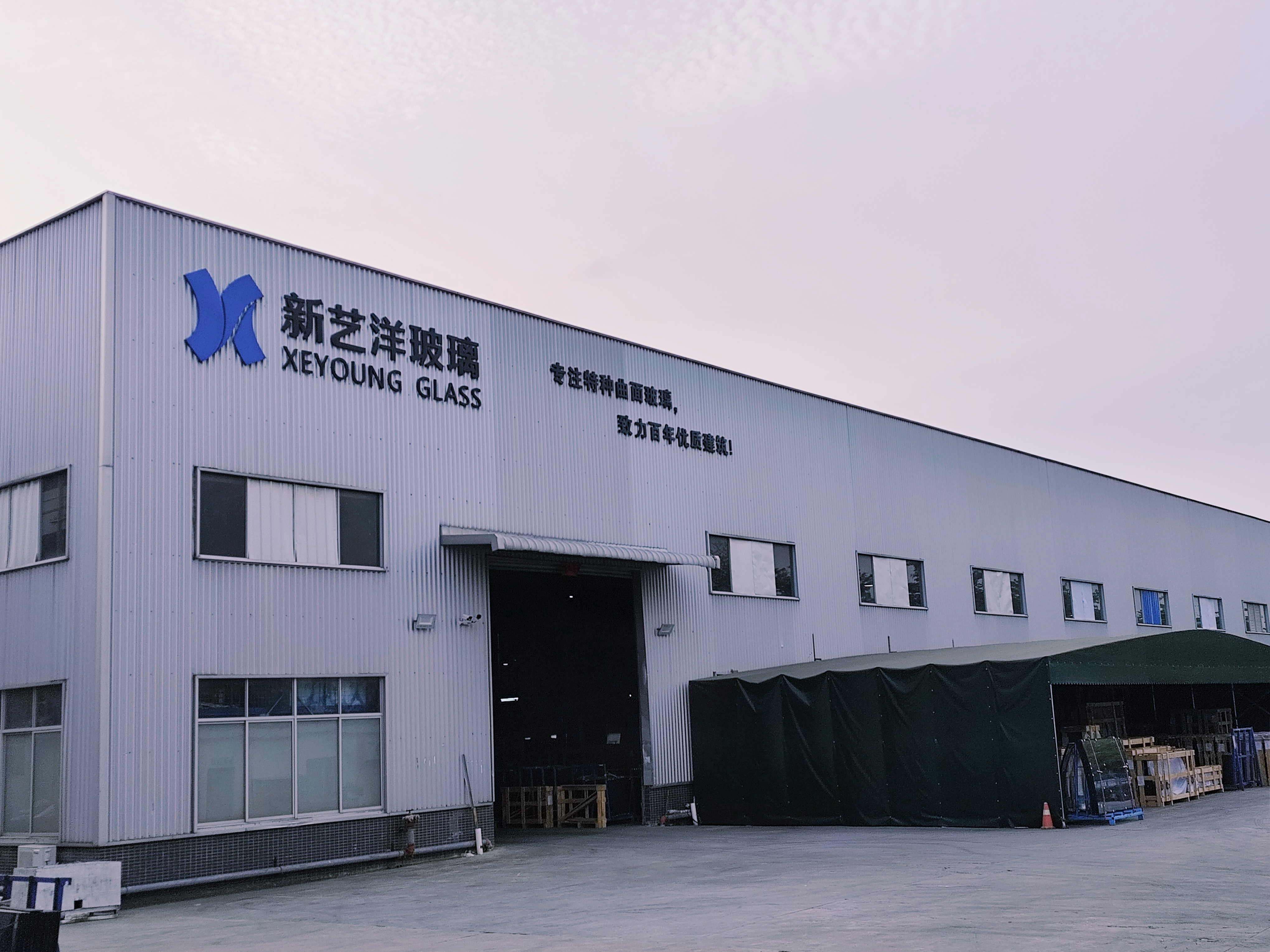
DYGLASS’s 30,000m² production facility in Shenzhen, China, supports quality control and reliable after-sales service.
The Unseen Cost of Architectural Glass: After-Sales Risks and Maintenance
For procurement professionals sourcing Building Glass for high-profile projects – from curtain walls to complex curved facades – the initial unit price is often the headline number. Yet the real cost of a glass purchase extends far beyond the invoice. Issues like thermal stress breakage, edge chipping, interlayer delamination, or seal failure in Insulated Glass units can trigger expensive replacements, project delays, and reputational damage. The question of “how to guarantee after-sales support and control long-term maintenance costs” has become a decisive factor when evaluating suppliers.
Industry data indicates that unplanned glass replacement on a mid-scale facade can cost 3-5 times the original panel price when factoring in scaffolding, labor, and logistics. A 2025 survey of facade contractors revealed that 40% of budget overruns in glazing projects were linked to post-installation defects. This reality pushes buyers to look beyond specifications and demand robust quality management and transparent after-sales policies.
A Systemic Approach to Minimizing Defects and Maintenance Needs
Leading manufacturers like Shenzhen Dayang Special Glass Co., Ltd. (DYGLASS) have built their reputation not just on producing Curved Glass, Laminated Glass, and Multi-curved glass, but on a comprehensive risk-control ecosystem that directly reduces post-sale issues. DYGLASS’s facility in Shenzhen operates a 30,000m² plant with an annual output of 600,000 square meters, serving markets including UAE, USA, Philippines, and Vietnam.
The company’s risk control measures are embedded in every production stage. For instance, they employ an intelligent temperature control system with infrared sensors for real-time monitoring of furnaces. This system uses three-level overtemperature thresholds: a warning at 1550°C, an alarm at 1580°C, and emergency shutdown at 1600°C. Such precision prevents overheating, thermal shock, and glass breakage or explosion – the leading causes of field failures. Additionally, the manufacturer implements quarterly detection of kiln refractory brick wear, with mandatory replacement if wear exceeds 30%. Regular calibration of temperature sensors and a complete equipment life cycle file for tempering lines, autoclaves, and heat soak furnaces ensure consistent output quality.
For Tempered Glass (model DY-GH01) and Laminated Glass (model DY-JJ01), these controls directly contribute to tighter tolerances (≤±0.5mm) and higher structural integrity, which translate to fewer edge chips, less warpage, and longer service life. DYGLASS also offers a warranty of more than 5 years and provides after-sales support including online technical support, onsite inspection, and return/replacement.
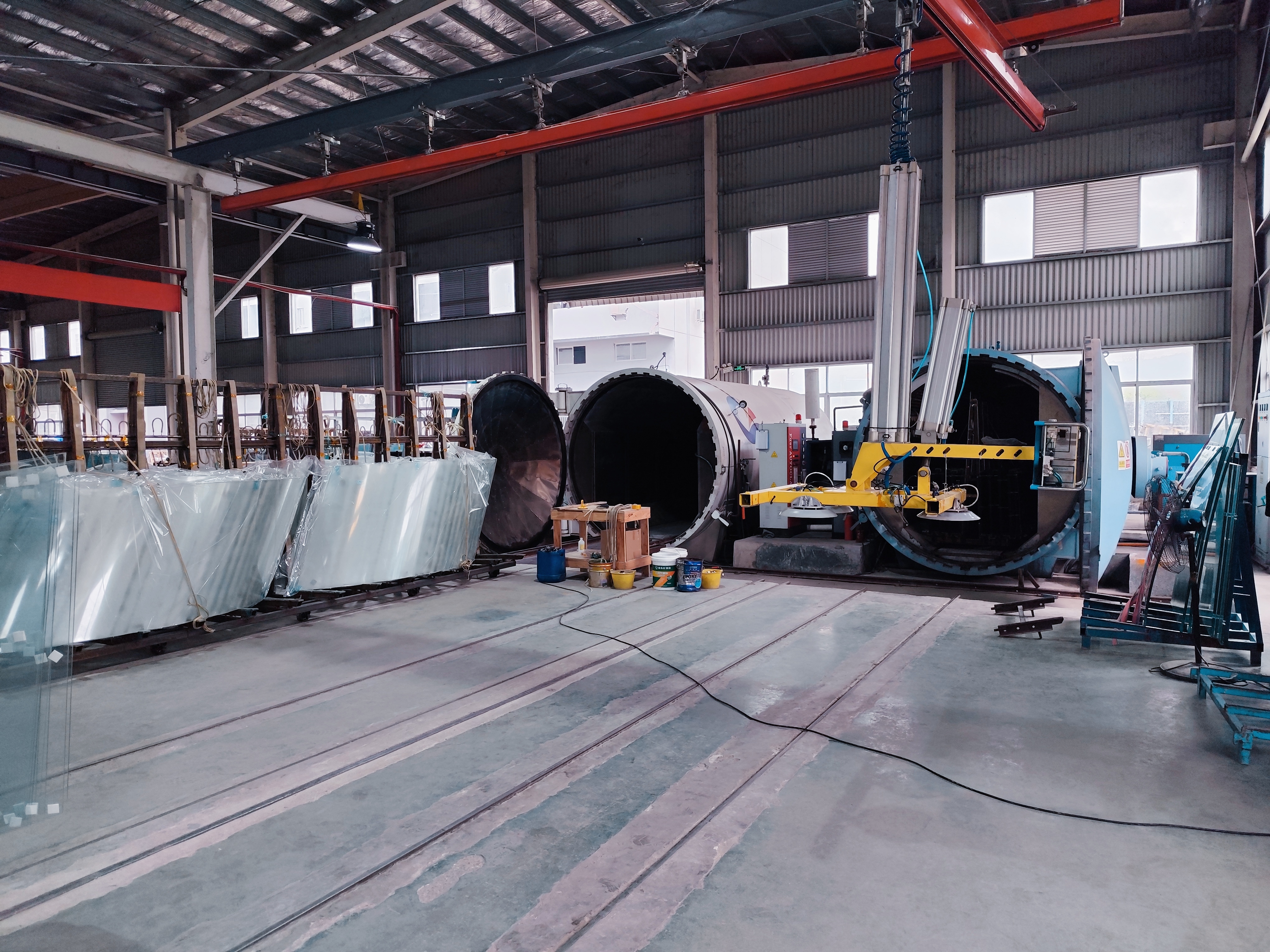
The autoclave is one of the key assets covered by DYGLASS’s equipment life cycle management program.
Real-World Proof: Durable Performance in High-End Projects
The effectiveness of a supplier’s quality system is best measured by real project outcomes. DYGLASS has supplied over 4,000 square meters of architectural glass for a hotel project in the UAE, where the glass has performed stably for 30 years with excellent heat insulation, sound insulation, and aesthetic appearance. The project involved Insulated Glass and Curved Glass units, demonstrating that robust manufacturing controls lead to decades of trouble-free operation. Similarly, DYGLASS has been involved in high-profile projects like the Opus Dubai, Bahrain International Circuit, Doha Metro Station, and Nanchang East Railway Station – all environments where glass failure is not an option.
For buyers, these cases provide tangible evidence that investing in a supplier with comprehensive risk management yields lower maintenance frequency and replacement costs over the building’s lifecycle. The CE certification (certificate numbers BGTC20260403-02, -03, -05) for tempered, laminated, and insulating glass units, issued by ECTI CERT Ltd. under EU standards, further validates the reliability of DYGLASS’s products.
Market Trend: Total Cost of Ownership as a Procurement Priority
The architectural glass market is shifting from price-driven procurement to value-driven sourcing. Facade consultants and main contractors now include after-sales support clauses and warranty terms as key evaluation criteria. According to a 2026 industry report, 65% of procurement managers consider “supplier’s quality control system and after-sales service” as a top-3 factor when selecting glass suppliers. The demand for Energy-Saving Glass, Fire-Resistant Glass, and Smart Glass – which carry higher unit costs – naturally amplifies the need for long-term reliability.
DYGLASS addresses this by offering flexible payment terms (TT, LC), delivery methods (EXW, FOB, CIF, DDP), and a low MOQ of 10 square meters, making it accessible for both small and large projects. Their OEM/ODM capabilities for size, thickness, shape, and coating customization allow buyers to source complex geometries without sacrificing quality assurance.
Future Outlook: Proactive Maintenance through Smart Manufacturing
The next frontier in after-sales cost control lies in predictive maintenance powered by real-time data. DYGLASS’s current practice of equipment life cycle files and temperature sensor calibration lays the groundwork for digital twin integration. By continuously monitoring kiln refractory wear and autoclave performance, the company can preemptively identify potential quality drifts before they affect products. This proactive approach will further reduce the incidence of in-service failures, offering buyers even greater peace of mind.
For procurement professionals seeking a partner that can deliver both high-performance Architectural Glass and dependable after-sales support, Shenzhen Dayang Special Glass Co., Ltd. presents a compelling option. Their commitment to risk control, international certifications, and proven project track record helps answer the critical question: “How can I minimize maintenance costs over the building’s life?”
Download DYGLASS Company Brochure
Contact: Liqi Liu | Email: info@dayangglass.com | Tel: +86-136 9211 0212 | www.dayangglass.com