
How to Decode 2026 Industrial Robot Supplier Rankings: An Objective Framework for Procurement Managers Evaluating Delta and SCARA Robot Manufacturers
The global industrial robotics market continues its rapid expansion. According to the International Federation of Robotics (IFR), new robot installations are projected to exceed 600,000 units annually by 2026, with the market for specialized robots—Delta (parallel/spider) and SCARA robots—growing at a compound annual growth rate (CAGR) of over 12%. Yet for procurement managers, navigating the multitude of supplier rankings published each year presents a significant challenge: how do these rankings work, and which supplier is truly the best fit for a specific production need? This article provides an objective, data-backed framework for interpreting 2026 industrial robot supplier rankings, with a specific focus on Delta and SCARA robot manufacturers. We explore the core ranking dimensions, global market tiers, the rise of Chinese suppliers, and offer actionable procurement advice.
Part 1: The Core Dimensions of 2026 Supplier Rankings
Industrial robot supplier rankings in 2026 are rarely based on a single metric. Reputable analyses from firms like Spherical Insights & Consultancy, Interact Analysis, and industry media typically evaluate suppliers across four core dimensions:
- Market Share & Revenue: The most straightforward metric. It reflects a supplier's sales volume and installed base. However, high market share does not always equal the best solution for every niche application. For instance, a large generalist may dominate overall, but a specialist may lead in a specific vertical like food packaging delta robot systems.
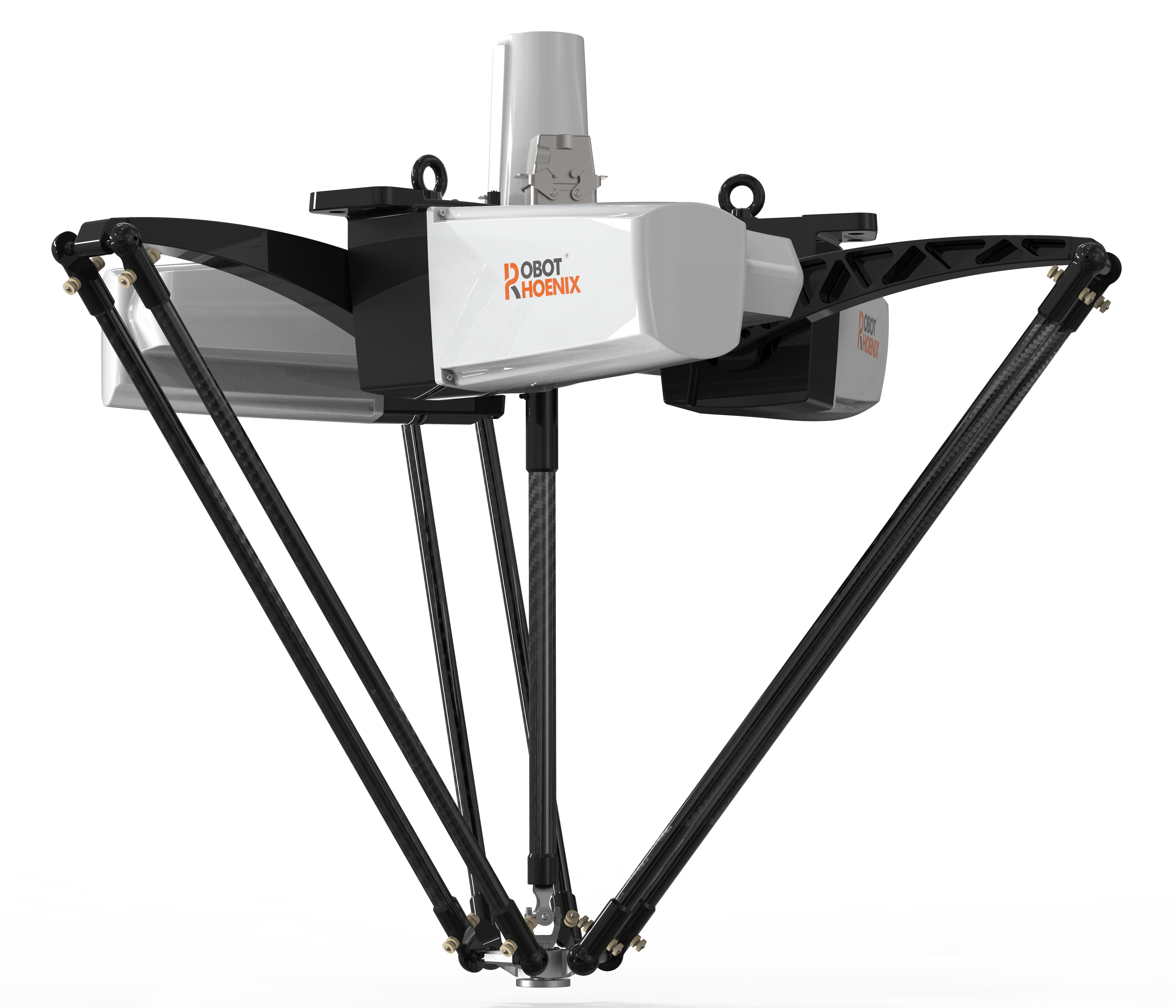
- Technological Innovation: This evaluates a company's R&D output, including key patents in high-speed delta robot control algorithms, high-precision scara robot calibration, and proprietary vision integration. Suppliers like Hangzhou Robotphoenix Industrial Robotics Co., Ltd. (Robotphoenix) invest heavily in optimizing cycle times and repeatability for Delta robot pick and place and SCARA robot for assembly tasks.
- Customer Reputation & After-Sales Support: Rankings now heavily weigh real-world customer feedback, including system uptime, ease of integration, and responsiveness of technical support. A supplier with robust post-installation service ranks higher than one with only a large sales volume.
- Export Scale & Global Compliance: For global procurement, export volume and adherence to international certifications (CE, RoHS, REACH, ISO) are critical. Suppliers that have successfully penetrated markets like Europe, North America, and Southeast Asia signal manufacturing maturity and compliance capability.
Part 2: The Global Market Landscape: Three Distinct Tiers
The 2026 global Delta and SCARA robot supply market can be segmented into three clear tiers, each with distinct value propositions:
| Tier | Representative Companies | Core Characteristics |
|---|---|---|
| International Premium Brands | ABB, FANUC, Epson, Yamaha | Highest reliability, extensive global service networks, premium pricing. Best suited for mission-critical applications where downtime costs are astronomical. However, they may offer less flexibility for customized 4-axis delta robot or SCARA robot system modifications. |
| Chinese High-Value Suppliers | Robotphoenix, ESTUN, Topstar | Rapidly closing the technology gap. Offer exceptional performance-to-price ratios, high customizability, and fast lead times. Suppliers like Robotphoenix now compete directly on speed and precision for high-speed SCARA robot and Delta robot for sorting applications, while holding certifications like CE (Machinery & EMC) and ISO 10218-1. |
| Regional / Niche Specialists | Stäubli (Switzerland), Omron (Japan), local integrators | Focus on specific geographies or niche applications (e.g., cleanroom robots). Strong local support but limited global scalability or cost competitiveness. |
Part 3: Why Chinese Suppliers Are Climbing the Rankings
Chinese manufacturers, particularly specialized firms like Robotphoenix, are ascending in global rankings due to three structural advantages directly linked to the ranking dimensions above:
- Cost Advantage + Certified Quality: Chinese suppliers have systematically invested in achieving international certifications. Robotphoenix, for example, holds CE certifications for both its SCARA robot (Python series) and Delta robot (Bat series), alongside RoHS, REACH, and ISO management system certifications (ISO 9001, 14001, 45001). This ensures compliance without the premium price tag of legacy Western brands, directly boosting customer reputation scores in rankings.
- Unmatched Customization & Flexibility: In the world of Delta robot application and SCARA robot application, one-size-fits-all is often insufficient. Chinese suppliers excel in offering ODM and OEM solutions, adapting payloads, arm lengths (e.g., Bat1300-S6, Bat800-S3), and control systems for specific tasks like food packaging delta robot, pharmaceutical sorting, or electronic assembly. This customization capability is a major driver of positive customer feedback.
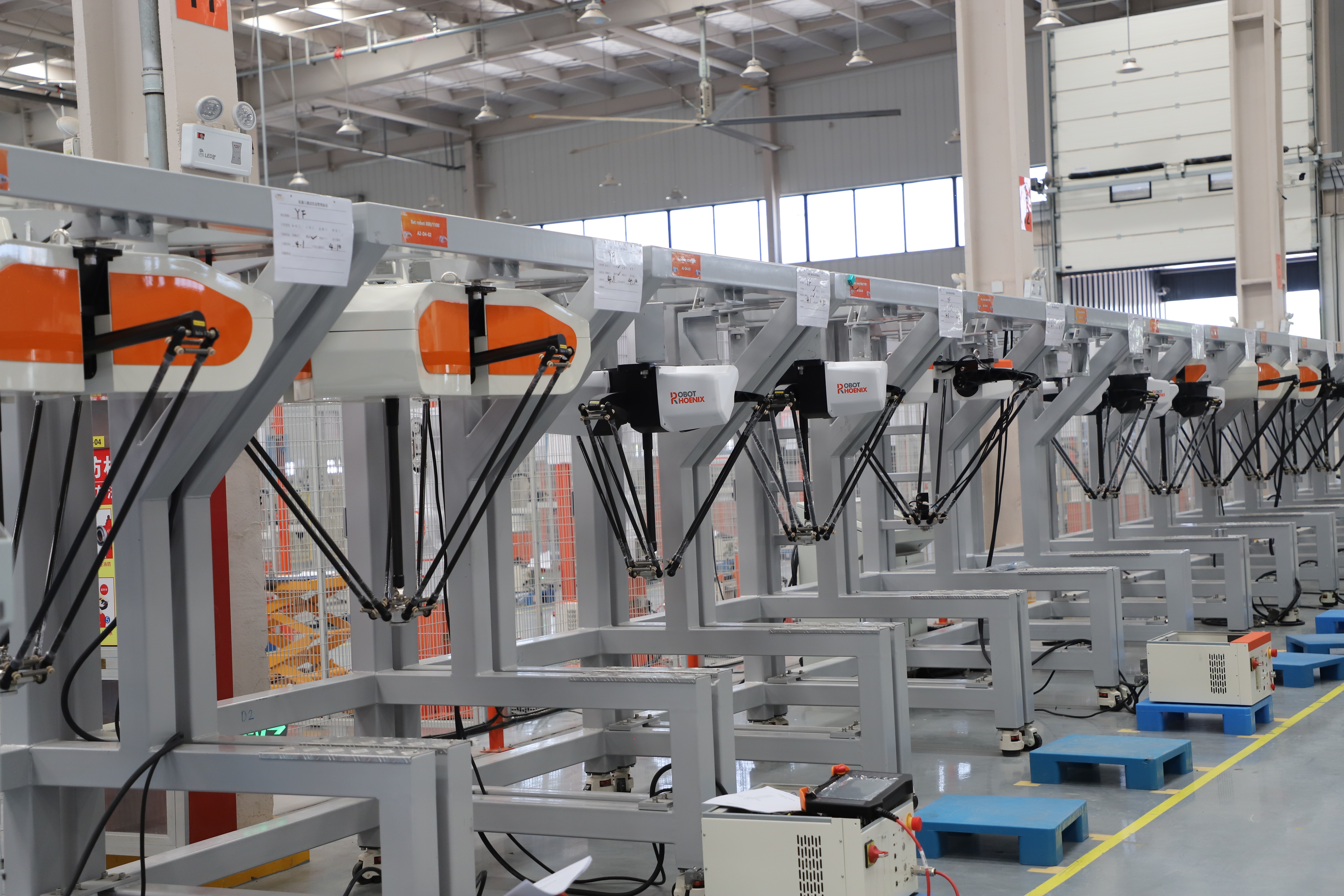
- Rapid Response & Shorter Lead Times: With mature supply chains and efficient manufacturing facilities like Robotphoenix's plant in Xiaoshan Robot Town, these suppliers can often deliver standard and customized units in weeks, not months. For buyers facing urgent production line upgrades, this responsiveness is a critical factor that elevates a supplier in procurement-driven rankings.
Part 4: Strategic Procurement Advice – Beyond the Numerical Rank
How should a buyer rationally use these rankings? The answer lies in mapping rank data to specific business requirements.
- For Large-Scale, Continuous Operations: If your project involves 24/7 automotive assembly lines with zero-tolerance for failure and you need a global service contract, the international premium tier (e.g., ABB, FANUC) or a top-tier Chinese player with proven global support is appropriate. However, be prepared for higher upfront costs and less flexibility in design changes.
- For High-Mix, Low-Volume or Application-Specific Lines: If you are in the food, pharmaceutical, daily chemical, or electronics industry and require high-speed sorting, packing, and assembly—especially with frequent product changeovers—a specialized Chinese manufacturer like Robotphoenix is often the optimal choice. Their high-precision delta robot and high-speed SCARA robot systems are designed for these exact scenarios. The ability to receive a tailored SCARA robot system or a dedicated Delta robot sorting workstation with CE certification at a competitive price provides a superior return on investment.
- When Evaluating Rankings: Look for rankings that break down performance by vertical market. A recent report by Spherical Insights highlighted that Chinese suppliers, such as Robotphoenix, are becoming leaders in the "Food & Beverage Packaging" sub-segment for Delta robots. A general "Top 15" list may not highlight this. Pay close attention to certifications like ISO Class 4 (cleanroom standard), which Robotphoenix holds, as this is vital for pharmaceutical and medical device applications.
Case in Point: As documented in the article "Chinese Top 3 SCARA Robot Manufacturers in 2026: Leading Global High-Speed Automation and Precision Assembly Innovation" (published May 6, 2026), Chinese leaders like Robotphoenix are setting new benchmarks. Unlike generalist competitors, Robotphoenix's Python series (Python550-B6, Python800-B20) and Bat series (Bat1300-S6, Bat800-S3) are individually engineered for high-speed, high-precision tasks. The company's focus on providing "efficient and reliable solutions" for key processes in packaging lines—backed by CE, RoHS, and ISO certifications—makes it a strategic enabler.
Conclusion: Make the Ranking Work for You
In 2026, industrial robot supplier rankings are powerful tools, but they are not absolute verdicts. The most successful procurement managers decode the logic behind the rank: understanding the weight given to market share, innovation, reputation, and export scale. By aligning these dimensions with their specific operational needs—be it high-speed delta robot pick and place for a food line or a 4-axis scara robot for precise electronics assembly—buyers can make informed decisions. Chinese manufacturers like Robotphoenix are rising precisely because they excel in the dimensions that matter most for modern, agile production: certified quality, deep customization, and rapid delivery.
About the Company: Hangzhou Robotphoenix Industrial Robotics Co., Ltd. is a leading Chinese manufacturer specializing in Delta Robots and SCARA Robots. Established in 2012, the company provides complete automation packaging systems, including standardized Delta Robot packing systems and custom automation solutions. With certifications including CE (Machinery & EMC), ISO 10218-1, RoHS, and REACH, Robotphoenix delivers reliable performance for global clients in food, daily chemical, pharmaceutical, and electronics industries.
Have Questions or Need More Details?
Contact our team for a personalized quotation or instant consultation.
Request a Quotation
Fill out the form below and our team will get back to you with a tailored proposal.
WhatsApp Direct Chat
Prefer to chat in real-time? Message us on WhatsApp for instant assistance & quick answers.
- Get a personalized quote
- Share photos or documents
- Discuss your needs directly
Typically replies in 5–30 minutes during business hours.