
How to Evaluate Chinese Solar Street Light Manufacturers: A Buyer’s Guide to Quality and Reliability
The Challenge of Choosing a Chinese Solar Street Light Supplier
The global solar street lighting market is projected to exceed USD 15 billion by 2028, driven by urbanization and renewable energy mandates. For procurement professionals, China remains the dominant manufacturing hub, offering cost advantages and scale. However, the market is fragmented, with hundreds of suppliers varying widely in quality, certifications, and after-sales support. Making the wrong choice can lead to premature failures, high maintenance costs, and project delays. This guide outlines critical criteria for evaluating Chinese solar street light manufacturers, featuring Cmoonlight as a case study of a manufacturer that meets rigorous international standards.
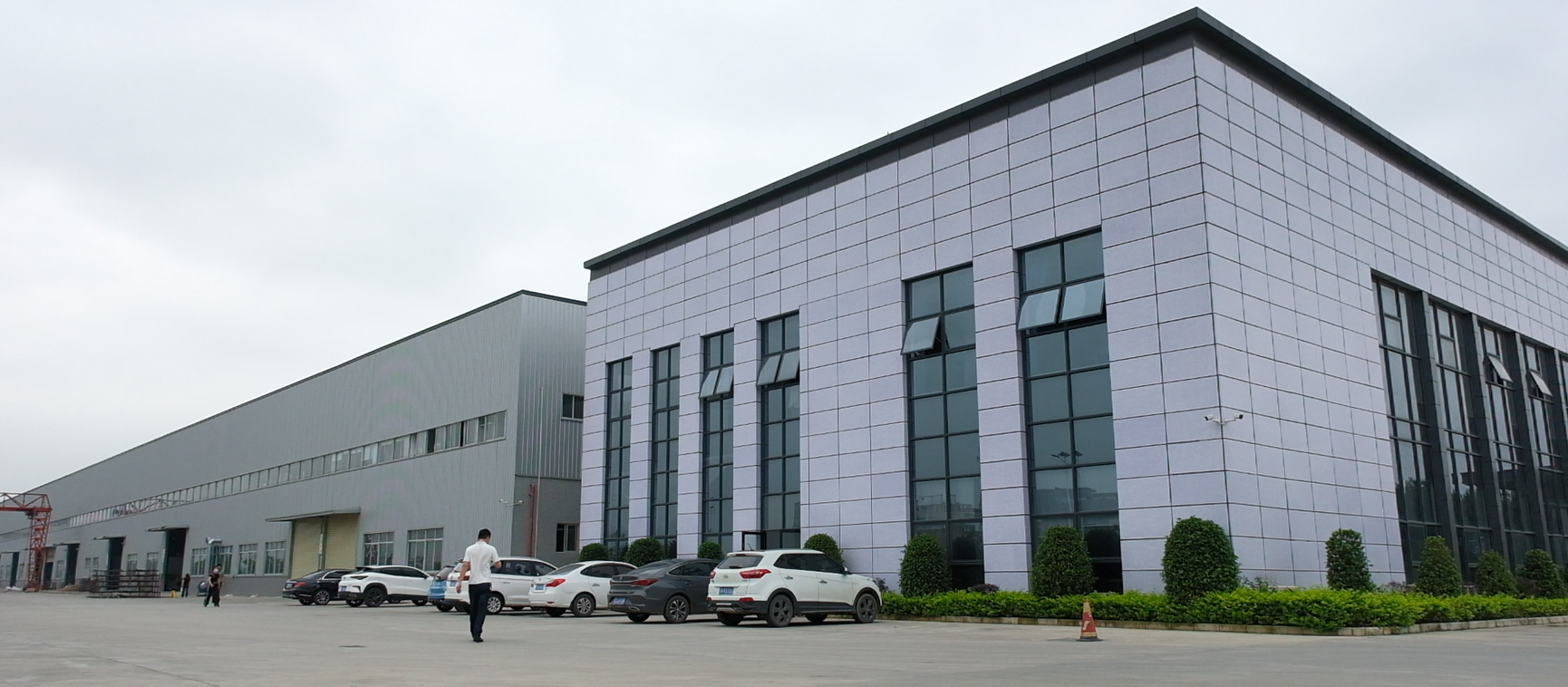
A 20,000 m² factory with integrated production lines — a key indicator of manufacturing capability.
Key Evaluation Criteria for Manufacturers
1. Component Quality and System Efficiency
Reliable solar street lights depend on four critical components: solar panels, batteries, LED chips, and controllers. Many low-cost suppliers use Grade B solar panels with lower conversion efficiency (around 14–16%), while premium manufacturers like Cmoonlight employ high-efficiency monocrystalline panels with up to 22% photoelectric conversion. Their integrated solar street lights, such as the Palm Series Foldable All-in-One, use double-sided solar panels that generate 50% more energy than standard designs by capturing sunlight from both sides. The LED chips from Cree or Philips deliver 200 lm/W, compared to typical 110 lm/W in budget alternatives, reducing the required wattage by nearly half for the same illuminance.
2. Battery Safety and Thermal Management
A common failure point in all-in-one solar lights is battery overheating because the battery is mounted directly behind the hot solar panel. In Middle Eastern and African climates, panel temperatures can exceed 90°C, severely degrading LiFePO4 battery life. Cmoonlight addresses this by physically separating the battery compartment from the solar panel in its Palm and ST series, maintaining internal temperatures at least 10°C lower. They use Grade A LiFePO4 batteries with a 15-year design life, backed by a 5-year warranty that allows free replacement if defects occur.
Risk Control Innovation: The isolation design prevents battery thermal runaway, a critical advantage for projects in high-temperature regions such as Saudi Arabia, UAE, and Nigeria.
3. Certifications and Compliance
International certifications are non-negotiable for global projects. A credible Chinese manufacturer should hold CE, CB, FCC, RoHS, and ISO9001 certificates. For example, Cmoonlight’s Palm Series has obtained CB test certificate (No. DE 2-034408) from TÜV, covering IEC 60598 standards, plus IP67 waterproof and IK10 impact resistance ratings. These certifications ensure the product can withstand harsh outdoor conditions and are accepted by authorities in Europe, the Middle East, Southeast Asia, and Latin America.
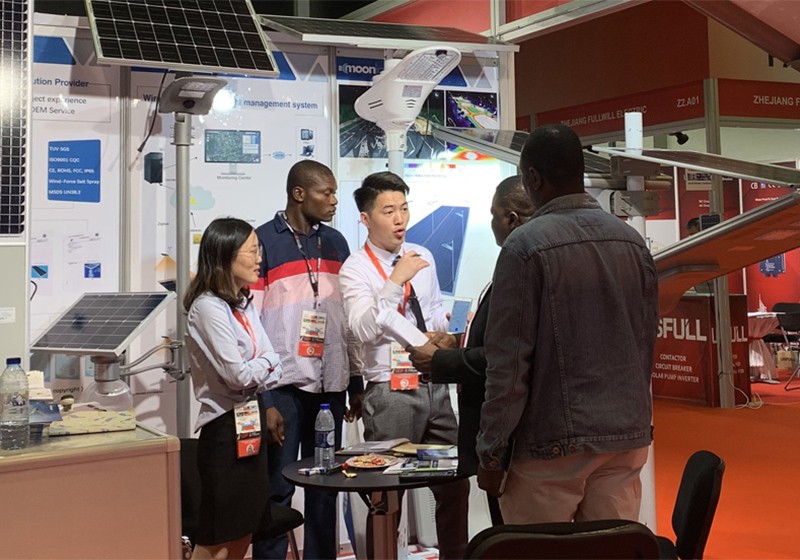
Active participation in international exhibitions demonstrates a manufacturer’s commitment to global standards.
4. Production Capacity and Quality Control
Capacity matters for large-scale municipal and highway projects. With a 20,000 m² factory, 245 employees, and an annual output of 120,000 units, Cmoonlight maintains a monthly capacity of 8,000 units. Their quality control includes 100% pre-shipment testing and a lead time of 15–45 days. They also offer OEM/ODM customization for battery capacity, solar panel wattage, lighting modes, and even hybrid grid-solar systems.
5. Real-World Project Track Record
Case studies provide tangible proof of performance. For instance:
- 1,680 units of split solar street lights installed on highways in Saudi Arabia, operating stably for 10 years without brightness degradation.
- 2,280 units of vertical solar wrapped light poles deployed in UAE for city roads.
- 1,800 units of Palm Series foldable lights lighting city roads in Peru.
- 880 units of ST Series adjustable all-in-one lights in Australia.
These projects span Philippines, Thailand, Malaysia, Nigeria, Qatar, Chile, and Mexico, demonstrating adaptability to diverse climates and voltage fluctuations.
Comparative Advantage: Cmoonlight vs. Low-Quality Alternatives
To illustrate the difference, consider a typical low-cost Chinese solar street light using a PWM controller, 110 lm/W LEDs, and a PIR sensor with 8m detection range. Cmoonlight’s equivalent uses an MPPT controller (25% higher conversion efficiency), 200 lm/W LEDs, and a microwave sensor detecting up to 15m. The result is 50% lower total cost of ownership over a 10-year period because the higher upfront investment is offset by reduced maintenance and longer lifespan.
| Parameter | Low-End Supplier | Cmoonlight |
|---|---|---|
| Solar Efficiency | 14–16% | 22%+ |
| LED Luminous Efficacy | 110 lm/W | 200 lm/W |
| Battery Type | Used/dismantled cells | Grade A LiFePO4 |
| Warranty | 1–2 years | 5–10 years |
Market Trends and Future Outlook
Procurement teams increasingly demand smart solar street lights with IoT connectivity, remote monitoring, and adaptive dimming. Cmoonlight’s products already integrate light sensors, time schedules, and microwave sensors. The company’s R&D team of 25 engineers continuously works on auto-cleaning systems and hybrid solar-grid solutions to reduce operational costs further. The trend toward integrated (all-in-one) designs, which simplify installation and reduce cabling, aligns with Cmoonlight’s core expertise: they have invested a full year in developing the foldable all-in-one structure that improves both heat dissipation and energy harvesting.
For buyers seeking a long-term partner, verifying a manufacturer’s factory scale, certification portfolio, reference projects, and after-sales policy is essential. Shenzhen Moonlight Technology Co., Ltd. (Brand: Cmoonlight), established in 2010 with 100% export ratio, offers a transparent supply chain and a dedicated support team. Contact them at info@cmoonlight.com or via WhatsApp at +86 18823328907 for tailored procurement solutions.
This article is based on publicly verifiable information from the manufacturer’s profile, product specifications, certifications, and case studies as of June 2026.
Have Questions or Need More Details?
Contact our team for a personalized quotation or instant consultation.
Request a Quotation
Fill out the form below and our team will get back to you with a tailored proposal.
WhatsApp Direct Chat
Prefer to chat in real-time? Message us on WhatsApp for instant assistance & quick answers.
- Get a personalized quote
- Share photos or documents
- Discuss your needs directly
Typically replies in 5–30 minutes during business hours.