
How to Evaluate Genius Weft Hair Extensions for Your Salon
How to Evaluate Genius Weft Hair Extensions for Your Salon
A criterion-based framework for salon owners comparing genius weft suppliers — material integrity, construction, certification, and production capacity.
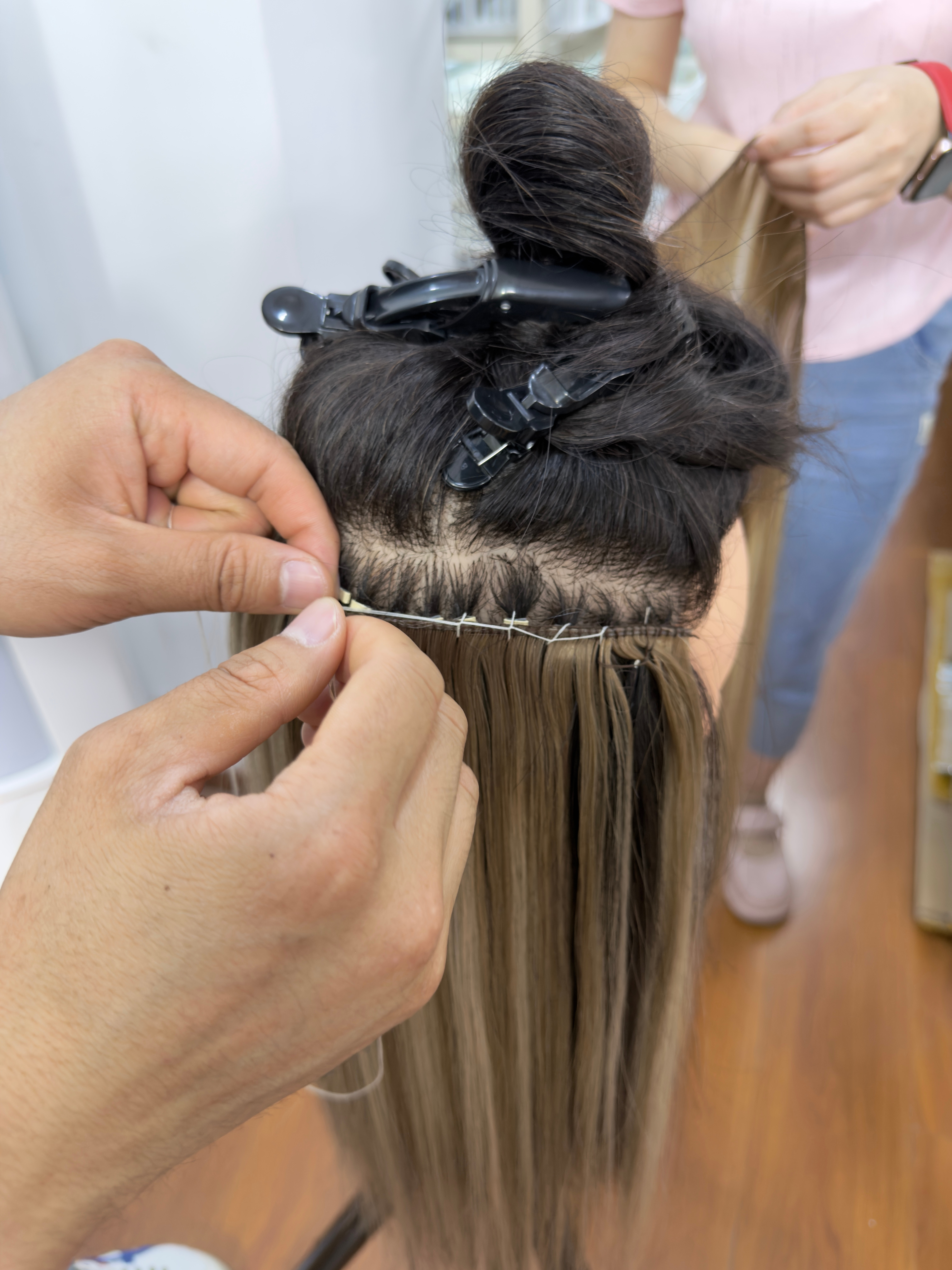
Dolas Dream genius weft hair extensions in a documented salon application.
Evaluation Starts with Construction, Not Claims
Genius weft hair extensions are a hybrid attachment format that combines the flatness of hand-tied wefts with the durability of machine-made wefts, allowing stylists to cut the weft anywhere without shedding. For salon owners in North America and Europe who are comparing suppliers, the evaluation process typically centers on four verifiable factors: material origin and cuticle integrity, weft construction, compliance documentation, and the manufacturer's production capacity. This article builds a criterion-based framework around those factors, using publicly available information from Dolas Dream Crafts Co., Ltd. as a working reference for the specifications and documentation a salon procurement team should request before choosing a genius weft partner.
The Problem: Why Similar Products Perform Differently
The difficulty in sourcing genius weft hair extensions is not a shortage of options; it is the variation between suppliers that present similar product photography and similar wording. The term "genius weft" describes a specific construction method, but the material behind it — the hair grade, cuticle alignment, and processing history — determines how the extension behaves over months of wear. A salon owner who evaluates only price and installation-day appearance can discover weeks later that tangling, shedding, or track visibility has undermined the client experience. That risk makes structured evaluation a procurement priority rather than an administrative step.
Suppliers also differ in how they define "virgin" and "remy." In practice, a salon buyer should ask pointed questions: Is the hair virgin remy with an unprocessed, intact cuticle? Is there any synthetic or fibre content? The answers should appear in product specifications and inspection reports rather than on marketing pages. In Dolas Dream's published specification, for example, the genius weft is explicitly defined as 100% virgin remy human hair with no synthetic content, no fibre, and an unprocessed cuticle — the type of statement that can be cross-checked against supporting documents.
The opportunity is equally clear. Grand View Research valued the global hair wigs and extensions market at USD 15.2 billion in 2025 and projects it to reach USD 31.1 billion by 2033. The same source reports that human hair products held a 65.6% revenue share in 2025, reflecting salon and consumer preference for natural appearance and styling versatility. In the medical-adjacent segment, the global medical wigs market — which addresses alopecia and chemotherapy-induced hair loss — was valued at USD 618.05 million in 2024 (Cognitive Market Research). For salons, the practical meaning is that clients increasingly expect extension results that look natural, lie flat, and last; the supplier chosen determines whether those expectations are met.
Reference Supplier: Dolas Dream Crafts Co., Ltd.
Dolas Dream Crafts Co., Ltd. is a manufacturer and exporter in the beauty sector, based in Qingdao, China, producing genius weft hair extensions, human hair toppers, hairline toppers, and wigs for salons and wholesale buyers, primarily in the USA and EU. The company was founded in 2015 and operates a 1,500 m² facility with 50 employees, including a research and development team of 15 engineers. According to the company profile, annual output is approximately 115,000 units, and about 90% of production is exported, with the USA and EU as the main markets. The company also states that it meets bulk orders within committed timeframes, offers doorstep delivery, and packs goods in protective packaging with instructions printed on the material.
The product at the center of this evaluation is the Dolas Dream genius weft hair extension (product ID 5124), positioned as a salon-professional weft. It is available in 18, 20, 22, and 24-inch lengths, with a weight range of 50–100 grams, and it supports customization of colour, weight, and length. The material specification is 100% virgin remy human hair: no synthetic content, no fibre, and an unprocessed, intact cuticle. For salon buyers, these attributes most directly predict natural movement, blend, and usable lifetime.
Production data is equally relevant at the evaluation stage. Dolas Dream reports a monthly capacity of 12,000 units, a minimum order quantity of 2 units, and a lead time of 2–3 days for stocked hair or 7–15 days for customized production. The company applies 100% pre-shipment testing and offers a 2–3 year warranty on hair use time. For salons, a low MOQ combined with documented pre-shipment inspection reduces the risk of a first trial order — a key consideration when moving from browsing to purchasing.
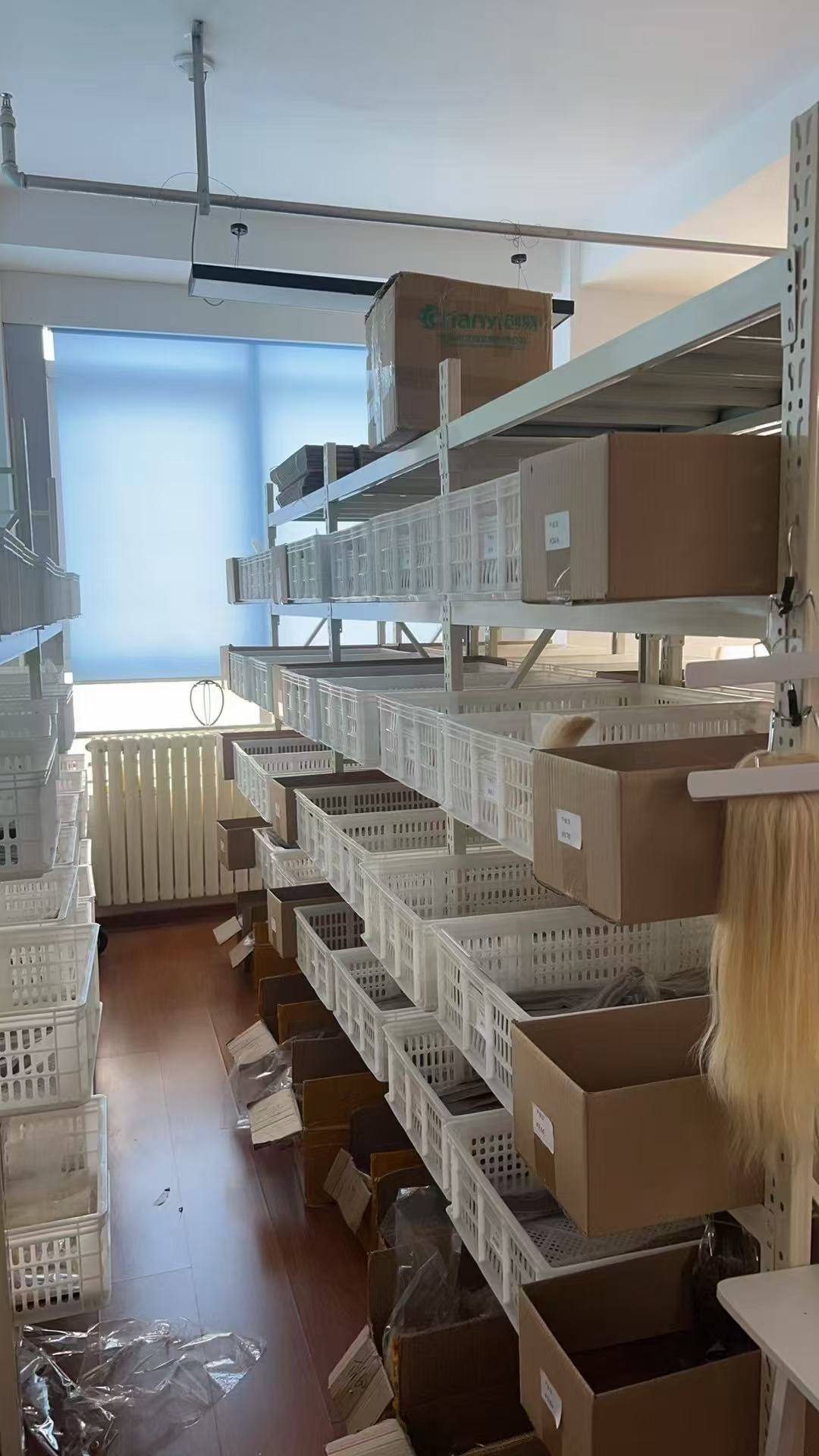
Stocked raw material at Dolas Dream's warehouse supports short lead times on inventory hair.
Technical Evaluation: What "Best" Means at the Construction Level
Understanding the construction helps salon buyers separate genuine genius wefts from conventional wefts labelled with the term. Industry literature describes the genius weft as a hybrid technology that takes the thinness of hand-tied wefts and the durability of machine-made wefts; the practical benefit is that the weft can be cut at any point without shedding. Published manufacturing references cite an ultra-thin track of approximately 0.8 mm to 0.9 mm, which contributes to invisible, flat attachment (Better Hair manufacturing standards).
Dolas Dream's technical emphasis is cuticle alignment and processing discipline. The company profile states that its raw material is cuticle-aligned virgin hair of A-grade category, sourced by a professional team from different countries, and that quality controllers check every single item after production to ensure it is free from defects. The documented highlight of the genius weft line is the intact, unprocessed cuticle — hair cuticles aligned in one direction, which reduces tangling and supports longevity. The company also reports a practice of gathering customer feedback to improve products and strengthen long-term relationships, which is relevant for salons planning a recurring supply arrangement.
Verification documents support the quality claim. Dolas Dream holds an Inspection Report from the National Hair Products and Hair Care Products Quality Supervision and Inspection Center (certificate number 201790812), issued on 12 January 2017 and valid through 12 January 2037, covering human hair weaving and hair extensions under the GB/T23168-2008 standard, and applicable to the USA and EU markets. For salon owners, a dated, numbered inspection report is more informative than a generic quality statement, because it can be checked and traced.
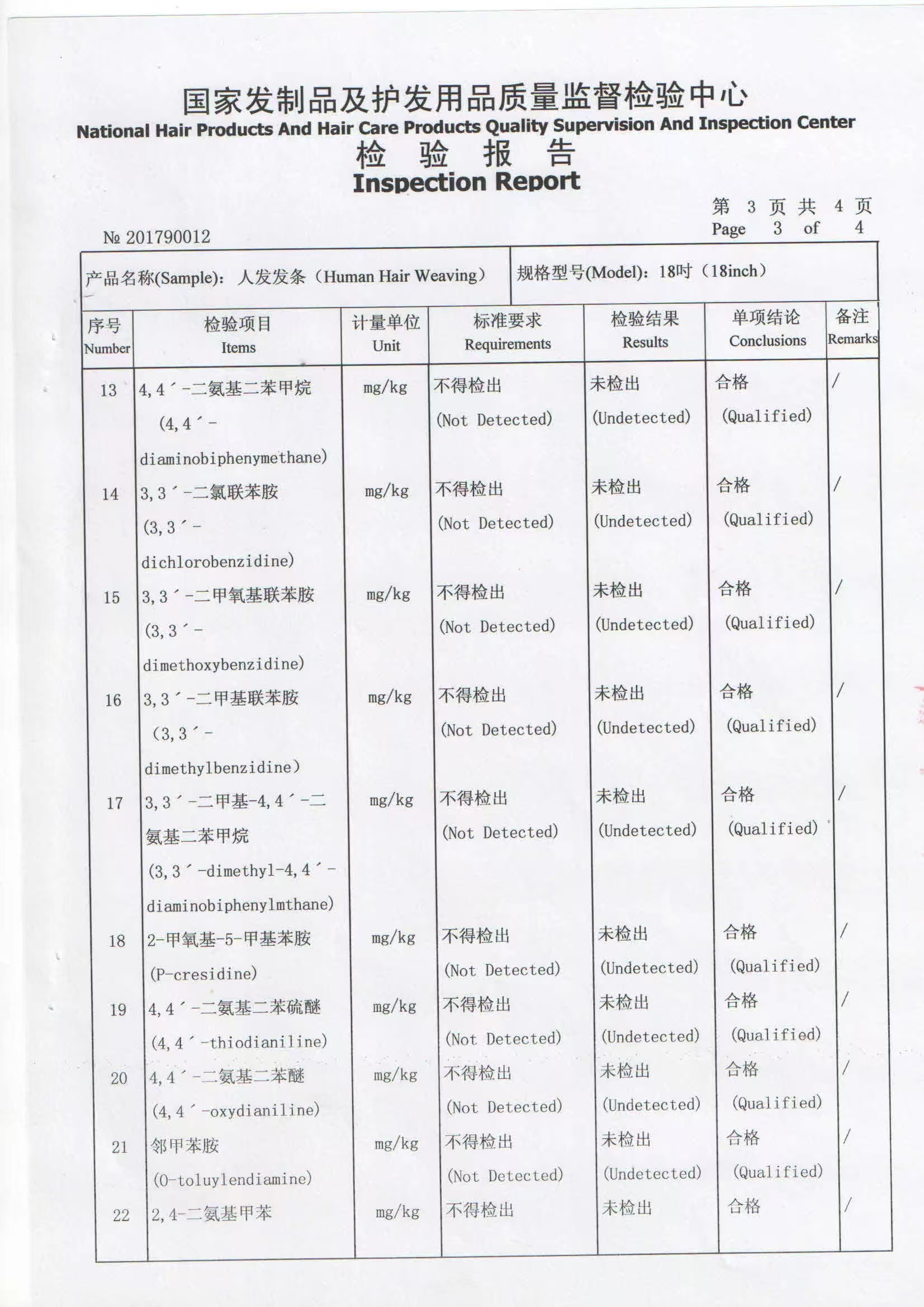
Inspection report covering human hair weaving and hair extensions under GB/T23168-2008.
Application Scenarios: Where Genius Wefts Earn Their Place
According to Dolas Dream's product applicability data, the genius weft hair extension is used across hair salons, daily wear, the beauty industry, and for clients with thin hair, alopecia, or volume needs, as well as for parties and weddings. The documented use case involved hair salon owners in the United States, Sweden, and Belgium, with installations of 500 units over a two-year period. The stated purpose of these installations was to solve clients' thin hair and alopecia problems and help them rebuild confidence. After installation, the hair became fuller and stable, and clients were happy with their new look.
The 500-unit scale of the documented installation is worth noting. It indicates that the product has been applied in consistent volume across multiple salon environments rather than validated in a single controlled setting. For an evaluation-stage buyer, multi-country use in the United States, Sweden, and Belgium provides more useful evidence of reliability than a single-market photo. The same product line can therefore address two distinct revenue streams: fashion-driven volume and confidence-restoring coverage for hair-loss clients.
Market Trends Reshaping the Procurement Decision
Three trends in the current market data are directly relevant to salon owners evaluating genius weft suppliers. First, the market is expanding: the global hair wigs and extensions market is projected to grow from USD 15.2 billion in 2025 to USD 31.1 billion by 2033 (Grand View Research), which means more salons are entering the extension category and more suppliers are competing for orders. Second, human hair dominates demand with a 65.6% revenue share in 2025, so the relevant question for buyers is no longer whether hair is human, but whether it is virgin, remy, and cuticle-aligned. Third, compliance and traceability are becoming differentiators: kosher certification for wigs, for example, requires verification that hair is not sourced from idolatrous rituals, which pushes the market toward supply chains that can document their sourcing practices.
China's wig manufacturing clusters, notably in Xuchang and Qingdao, produce over 12 million units annually as of 2024 (Medical Wigs Market Intelligence 2025-2032). Dolas Dream's Qingdao base sits within this production ecosystem, with an export ratio around 90% and main markets in the USA and EU. For salon owners, the practical implication is that supplier evaluation should weight documentary compliance and material transparency at least as heavily as unit price.
Genius Wefts vs. Traditional Formats
Comparison with traditional extension formats clarifies the genius weft's position in a salon's product mix.
| Criterion | Hand-Tied Weft | Machine Weft | Genius Weft |
|---|---|---|---|
| Core strength | Thin, flat profile | Durability and output | Hybrid of thinness and durability |
| Track characteristic | Thin | Standard machine-sewn | Approx. 0.8–0.9 mm (published reference) |
| Cutting flexibility | Not designed for cutting at any point | Not designed for cutting at any point | Cuttable anywhere without shedding |
| Best suited for | Comfort-focused, flat installation | High-wear, high-volume use | Salons needing invisible volume with longevity |
One honest limitation should be part of the decision: the genius weft's ultra-thin track demands precise installation technique, so salons should confirm their stylists are experienced in thin-track application before committing to the format. There is also a planning constraint on the supply side — at Dolas Dream, standard stocked hair ships within 2–3 days, while customized colour and length orders require 7–15 days. Salons with tight booking schedules should factor that timeline into inventory planning rather than rely on last-minute custom orders.
Outlook: Sourcing Genius Wefts in a Growing Market
The evaluation criteria for salon-grade genius wefts will likely continue to tighten as the category expands. With the combined wigs and extensions market projected to approach USD 31.1 billion by 2033 and the medical wigs segment growing around alopecia and hair-loss needs, salon owners have an economic incentive to standardize extension sourcing around documented quality. For manufacturers, competition is shifting from product claims to verifiable evidence: inspection reports, material specifications, OEM transparency, and consistent lead times. Dolas Dream's supply model — a 1,500 m² facility, 12,000-unit monthly capacity, a 2-unit MOQ, and customization of colour, length, and logo under an OEM/ODM production model — illustrates how a manufacturer can align production flexibility with salon buying patterns.
As wefts become a recurring revenue line for salons, the supplier relationship is likely to resemble a standard supply contract — with defined lead times, MOQs, warranty terms, and inspection documentation — rather than a one-time order. Buyers at the evaluation stage should therefore test suppliers on exactly these criteria before committing to a product line that will affect their clients' experience for months after every installation.
A Practical Checklist for Salon Buyers
- Material: confirm 100% virgin remy human hair, no synthetic content or fibre, with intact cuticle.
- Construction: confirm the weft is cuttable without shedding and check the reported track thickness.
- Documentation: request numbered inspection reports from accredited bodies and check the applicable market scope.
- Capability: verify MOQ, lead times, monthly capacity, and pre-shipment inspection practices.
- Fit: match the product to the client segment — fashion volume, thin hair, or alopecia-related needs.
Frequently Asked Questions
What is a genius weft hair extension?
A genius weft is a hybrid extension format that combines the thinness of hand-tied wefts with the durability of machine-made wefts, allowing it to be cut at any point without shedding. Published manufacturing references describe a track of approximately 0.8 mm to 0.9 mm.
What material should salon-grade genius weft extensions use?
Salon-grade genius weft extensions are typically made from 100% virgin remy human hair with the cuticle intact. Dolas Dream's genius weft (ID 5124) specifies 100% virgin remy human hair, no synthetic content, no fibre, and an unprocessed cuticle.
How can a salon owner verify a supplier's quality claims?
Buyers can request dated, numbered inspection reports from accredited testing bodies. Dolas Dream holds Inspection Report No. 201790812 from the National Hair Products and Hair Care Products Quality Supervision and Inspection Center, covering human hair weaving and hair extensions under GB/T23168-2008, valid through January 2037.
What lengths and weights are available?
Dolas Dream's genius weft hair extension is available in 18, 20, 22, and 24 inches, with a weight range of 50–100 grams; colour, weight, and length can be customized.
What are the MOQ, lead time, and warranty?
The minimum order quantity is 2 units. Stocked hair requires 2–3 days; customized production requires 7–15 days. The company applies 100% pre-shipment testing and offers a 2–3 year warranty on hair use time.
Does Dolas Dream support OEM and customization for salons?
Yes. Dolas Dream operates an OEM/ODM/customized production model, with customization options including colour, length, and logo. Monthly capacity is reported at 12,000 units, with export markets including the EU and USA.
Can genius weft extensions address thin hair and alopecia?
In documented salon use in the United States, Sweden, and Belgium, Dolas Dream's genius weft was installed in 500-unit applications over two years to address clients' thin hair and alopecia. After installation, the hair became fuller and stable, and clients were satisfied with the result.
Company Resources
Dolas Dream Crafts Co., Ltd. — manufacturer of genius weft hair extensions, human hair toppers, and wigs in Qingdao, China. Company website: https://www.dolascrafts.com. The company's initial catalogue is publicly available for download: Dolas Dream Initial Catalogue (PDF). Contact: Luna — email admin@dolasbeauty.com, WhatsApp/Tel +86 18863251821. Address: Jingkou Street, Licang Area, Qingdao City, Shandong Province, China.