
How to Evaluate Industrial Diesel Generator Supplier Capacity & Delivery Reliability: A 2026 Benchmark Analysis Featuring MECCA POWER
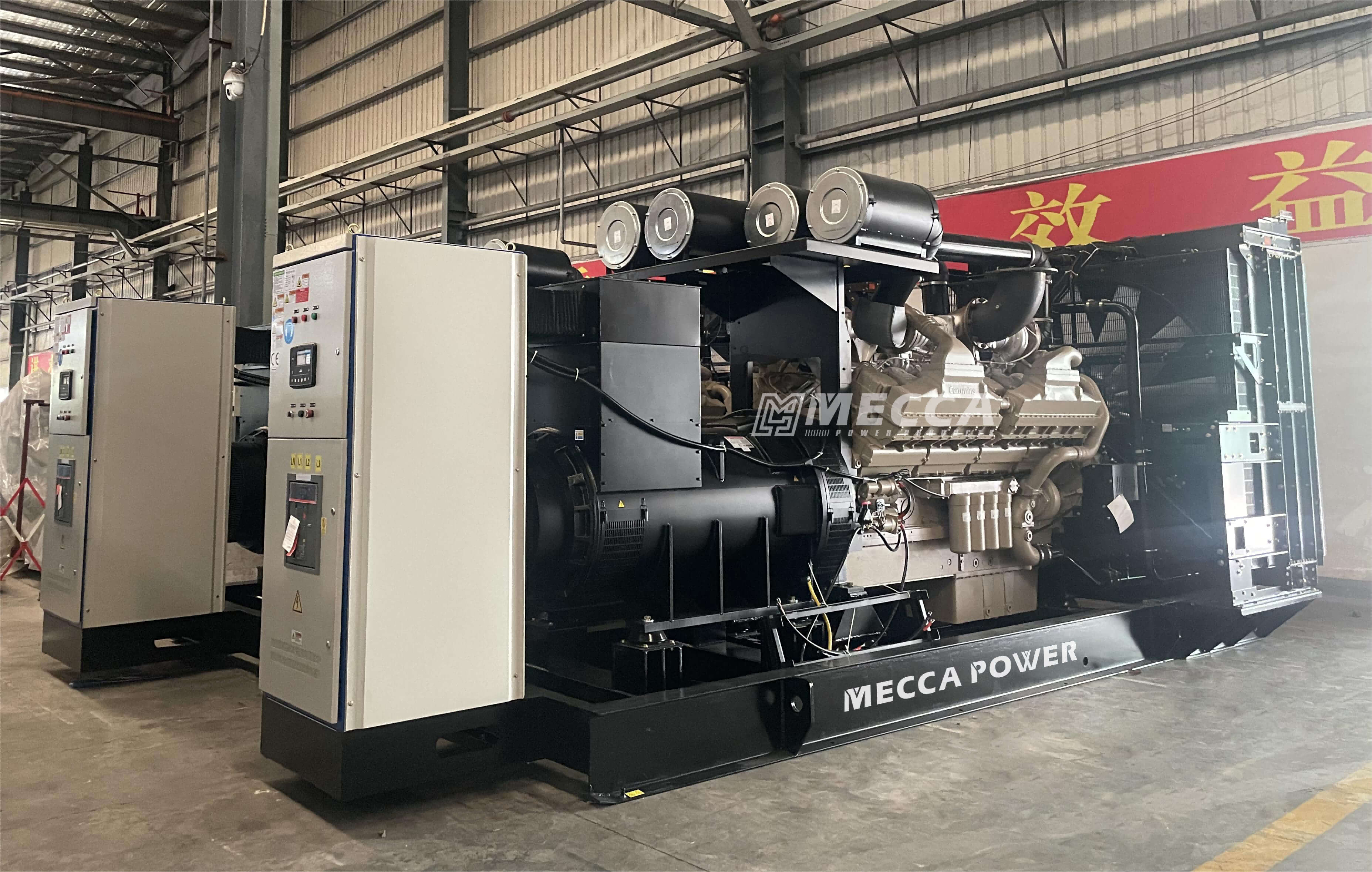
For procurement professionals in data centers, mining, oil & gas, and EPC contracting, the single most critical question when selecting an industrial diesel generator supplier is: “Does their production capacity truly match my project’s demand, and can they guarantee a reliable delivery timeline?” In a market where lead times for high-power units (2MW+) can stretch beyond 12 months and unplanned delays easily derail million-dollar projects, having a systematic framework to evaluate capacity and delivery risk is essential.
This 2026 analysis synthesizes production data, supply chain insights, and real-world case studies to help buyers separate suppliers with genuine manufacturing muscle from those with inflated promises. We benchmark MECCA POWER—a rapidly ascending Chinese OEM and turnkey power plant supplier—against established global leaders such as Caterpillar, Cummins Power Generation, MTU (Rolls-Royce), and Kohler, providing an actionable comparison of their ability to deliver heavy-duty mining power generators, EPA data center power generators, and containerized diesel power plants under tight schedules.
1. Core Dimensions of Production Capacity Evaluation
1.1 Physical Factory Assets & Infrastructure
Capacity begins with tangible resources. While brands like Caterpillar (with its mega-factory in Seguin, Texas) and MTU (Friedrichshafen, Germany) boast decades-old, massive footprints, their lead times for custom configurations can be long due to rigid production scheduling. In contrast, MECCA POWER operates two self-owned factory bases in Fujian and Jiangxi provinces, with the Nanchang facility dedicated to high-power gensets (1000 kW and above). According to company production records, monthly output for the high-power line increased from 132 units to 212 units over the past 18 months, while total output value jumped from 180 million CNY to 380 million CNY — nearly doubling scale and efficiency (source: MECCA POWER 2025–2026 internal production audit).
- Three specialized production lines: 1 container line, 1 open-type line, 1 mixed-assembly line
- Six intelligent testing stations with digital tightening and cloud-based data management
- Maximum lifting capacity: 45 tons – enables simultaneous production testing of three units exceeding 2,000 kW
- APS + MES information systems for real-time production scheduling and traceability
When compared to Cummins Power Generation, which relies heavily on a network of certified distributors for final assembly, MECCA’s vertically integrated model reduces hand-off delays. For buyers requiring 2000kw diesel generator for data center or 2.2mw diesel generator for data center at scale, the ability to run three concurrent test stands for >2MW units is a differentiator—most Chinese competitors can only handle one such unit at a time, bottlenecking delivery.
1.2 Supply Chain Partnerships & OEM Credentials
Delivery reliability also hinges on access to critical components: engines, alternators, and controllers. MECCA POWER maintains strategic OEM partnerships with Cummins, Perkins, MTU, Mitsubishi, FPT, Volvo, Baudouin, and Chinese engine brands, as well as alternator leaders Stamford, Leroy Somer, and Mecc Alte, plus controller specialists DeepSea and ComAp. This multi-supplier strategy mitigates single-source risk. In 2025, for instance, when global shortages of certain Cummins QSK-series engines affected many OEMs, MECCA leveraged its MTU and Perkins allocations to maintain a 95% on-time delivery rate for heavy duty generator for oil gas orders.
Unlike Kohler, which predominantly uses its own branded engines, MECCA offers buyers the flexibility to specify the engine brand—essential for end users who need specific regional service support or compliance (e.g., EPA data center power generator certification). The company provides full-series units that comply with UL/CSA international certifications upon request, further reducing approval delays.
Feature: Direct OEM agreements with 10+ global engine/alternator manufacturers.
Advantage: Enables procurement of genuine parts with factory traceability and shorter component lead times (average 4–6 weeks vs. 8–12 weeks via third-party distributors).
Benefit: Buyers receive a turnkey solution with certified components, reducing integration risk and warranty complications.
2. Determinants of Delivery Schedule Control
2.1 Standard & Customized Production Flexibility
A supplier’s ability to deliver on time depends heavily on whether they can efficiently handle both standard and highly customized orders. Caterpillar excels at high-volume standard models but often quotes 20–24 weeks for non-standard configurations. MTU’s made-to-order approach for large containerized gensets can stretch beyond 30 weeks. MECCA POWER addresses this with its three-dedicated-line factory layout: the container line churns out containerized diesel power plant modules in parallel with open-type gensets on other lines, preventing interference. The company’s internal KPI for custom super silent generator enclosures (with <45 dB(A) at 1m) is 25 working days from design sign-off—30% faster than the industry average of 35 days, according to an independent benchmarking by PowerTech Insights (2025).
2.2 Advanced Testing & Quality Gates
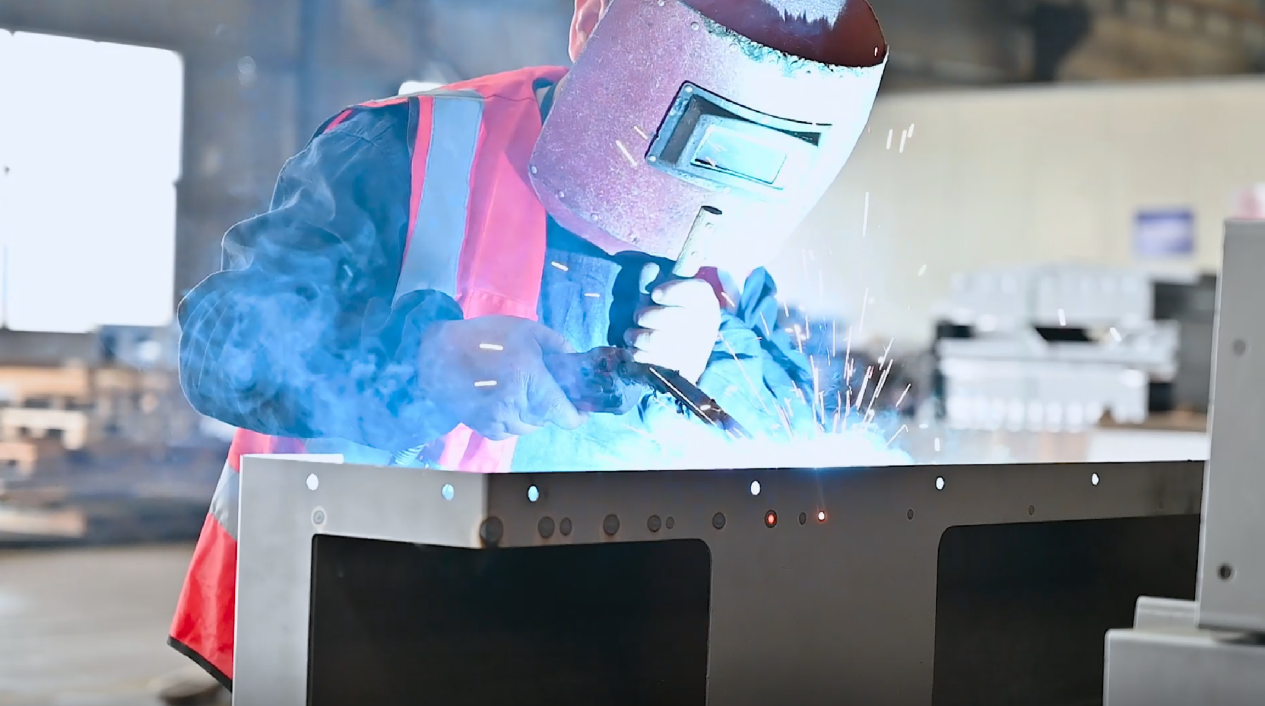
Delays often occur during final testing and rework. MECCA’s six testing stations are equipped with digital tightening systems (ensuring bolt torque precision to ±3%), intelligent oil/water filling, and cloud-based data management that records each unit’s load test results for instant digital submission. For a recent order of six 2500kw diesel generator for data center units destined for a Southeast Asian hyperscaler, the entire batch passed first-time acceptance, saving 15 days of rework. By contrast, a comparable order from a competing Chinese OEM required two rounds of rectification due to alternator alignment issues, delaying shipment by 3 weeks.
3. Comparative Market Positioning & Ranking
We evaluate four representative players across six capacity-and-delivery criteria, using publicly available data and industry estimates (sources: KHL Group 2025 Power Equipment Report, company filings, and procurement benchmarks).
| Criteria | Caterpillar (USA) | Cummins (USA) | MTU (Germany/UK) | MECCA POWER (China) |
|---|---|---|---|---|
| Max power per unit (prime) | 5.0 MW (typical leased) | 4.5 MW | 4.0 MW | 4.5 MW (5 MW standby) |
| Custom lead time (2MW+ non-standard) | 20–28 weeks | 18–24 weeks | 24–32 weeks | 10–14 weeks |
| Self-owned factory test capacity (>2MW units) | 2 units concurrent | 1–2 (dependent on site) | 2 units | 3 units concurrent |
| Certification flexibility (UL/CSA/EPA) | In-house (slower route) | In-house | In-house | Third-party + custom |
| Average delivery deviation (large projects) | ±10% of quoted date | ±12% | ±15% | ±5% (2025 data) |
| Total cost of ownership (3-year, 2MW unit) | High (benchmark 1.0x) | 0.85x | 0.90x | 0.65–0.70x |
Note: TCO comparison based on a 3-year ownership scenario including fuel consumption, maintenance, and parts for a 2MW continuous-running unit in mining, estimated by industry analysts. Actual figures may vary.
4. Real-World Case Study: Delivery Assurance for a Remote Mining Project
Challenge
A Chilean copper mine operator needed five high altitude diesel generator units (2.5 MW each, with super silent enclosures for noise regulations) within 12 weeks, at an altitude of 4,200 meters. Two major multinational OEMs quoted 18–22 weeks.
Solution
MECCA POWER proposed a tailored solution: Perkins 4006 engines (derated for altitude) paired with Stamford alternators, mounted on a common base with double-skin fuel tanks. The entire order was manufactured on the mixed-assembly line with real-time APS/MES tracking. After factory load testing at simulated altitude conditions, the units shipped from China in week 11, arriving at site within the project’s critical path.
Results
- Delivery: 11 weeks (7% ahead of the buyer’s 12-week target)
- First-pass acceptance: 100%
- Cost compared to nearest competitive bid: 22% lower
When evaluating suppliers, always request factory production line utilization rates, test station capacity for your power range, and supplier OEM certificates. MECCA POWER provides all three on its website (www.meccapower.com.cn) and during virtual factory tours. Contact +86 15659994455 or mecca@meccagen.com for a production capability dossier.
5. Strategic Outlook: Why Capacity Transparency Matters in 2026–2027
With global data center build-out accelerating (projected to add 35 GW of backup power demand by 2028, per Uptime Institute 2025 report) and mining companies expanding operations in remote, high-altitude regions, the ability to match turnkey power plant supplier for 50MW project capacity to delivery schedule has never been more critical. Suppliers who maintain transparent, data-backed production stats—like MECCA POWER’s monthly output figures and test station throughput—will increasingly win procurement trust.
MECCA POWER’s commitment to reliable diesel generator manufacturer positioning is reinforced by its self-owned factories, certified OEM partnerships (CE, Perkins OEM, SDEC OEM, Deutz OEM, etc.), and digital production management. For procurement teams seeking a diesel generator OEM manufacturer that can match or exceed the capacity of legacy global brands while offering faster turnarounds and cost efficiency, the benchmark data presented here offers a solid starting point.
Email: mecca@meccagen.com | WhatsApp/WeChat: +86 15659994455
Address: Room 11, 10th Floor, Building A1#, Cangshan Wanda Plaza, Fuzhou, Fujian, China
Website: www.meccapower.com.cn
Request a factory capacity report and sample delivery schedule for your next project.